
Review · JAPAN
E-Bike Nara Highlights – Todaiji, Knives, Deer, Shrine
Nara’s famous deer, temples, and lantern-lit shrines are spread across a large park. The smart move here is to cover the distance by e-bike, saving your legs for Todaiji’s giant Buddha and Kasuga Taisha’s forest paths. You also get a look at Japanese knife-making, a stop most standard Nara visits skip.
I like the mix of major sights and useful local details. Your guide can explain how to feed the deer, help with knife shopping, and point out places you might pass without noticing. I also like that guides such as Chris, Remi, Robert, Melody, and Elodie are repeatedly praised for clear explanations and thoughtful help. The main caution is pace: this is not a slow, leisurely pedal, and one report found a bike poorly suited to a taller rider.
Key points
- E-bikes turn a full day of walking into a 3.5-hour outing, with time for temples, shrines, deer, and scenic stops.
- Todaiji entrance is included, along with a guided visit to the Nandaimon Gate.
- Deer cookies and feeding advice are provided, so you learn the respectful Nara method rather than simply handing food around.
- Kikuichimonjushirokanenaga offers a different side of Japan, with an introduction to traditional cutlery and its sword-making connection.
- Kasuga Taisha adds a quieter, more spiritual stop, with stone and bronze lanterns among the trees.
- The tour works best for confident cyclists, including families with children who can use an available child seat.
Why an e-bike makes sense in Nara Park
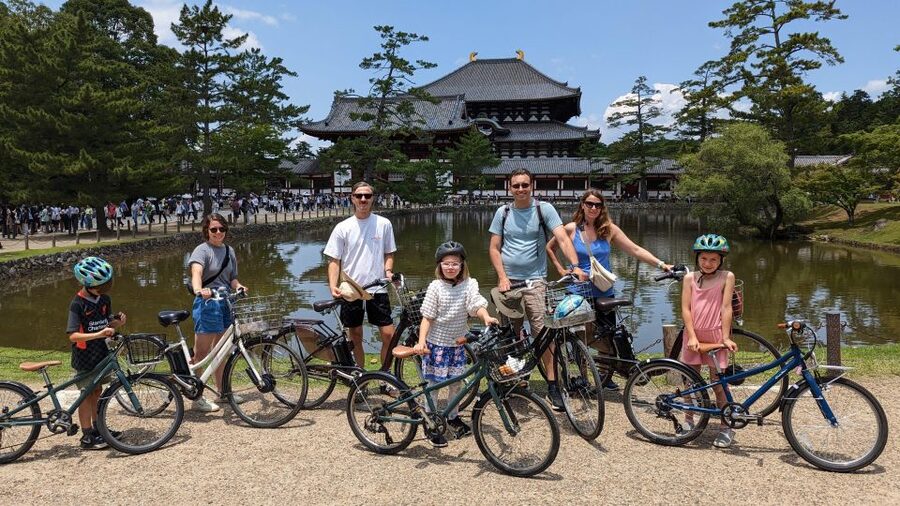
Nara Park looks compact on a map, but the key sights are spread out. Todaiji, Kasuga Taisha, Mount Wakakusa, Ukimido, and the deer areas take time to connect on foot. At $90 per person, this is not the cheapest way to see Nara, but you are paying for transport, a local guide, temple admission, deer cookies, and a planned route that removes much of the guesswork.
I like the way the bicycle changes the day. You get fresh air and open views, yet you do not spend your entire visit walking from one gate to the next. The e-bike assistance is especially useful around the gentle slopes near Mount Wakakusa. A 60-year-old rider who described being out of shape still managed the route comfortably, which gives you a fair idea of how helpful the electric motor can be.
The bikes have generally been reported as being in good condition, though one experience raised concerns about maintenance and fit for taller riders. Before leaving, check the saddle height, brakes, and controls. If the bicycle does not feel right, speak up at the base rather than hoping it will improve halfway through the tour.
The riding pace is usually forward-moving. You will stop often, but the cycling sections are designed to cover ground. If you want a gentle outing with long pauses and little riding, a walking tour may suit you better. If you have limited time in Nara and want to see several major sites in one morning or afternoon, the e-bike format is a strong choice.
More City Bike Tours in Japan
- Tokyo Top Highlights 3h Guided E-bike Tour
★ 5.0 · 714 reviews - 5 Top Highlights of Kyoto Full Day Bike Tour (E-bike option)
★ 5.0 · 511 reviews - Tokyo: 3-Hour Bike or E-Bike City Highlights Tour
★ 4.8 · 435 reviews
Starting near Kintetsu Nara Station

The meeting point is at 16-1 Takamaichicho, in front of Building LIFE 21, less than a five-minute walk from Kintetsu Nara Station. This is an important detail: the meeting point is near Kintetsu Nara Station, not JR Nara Station.
Arrive 15 minutes early. Your guide wears a navy cap and red polo shirt marked with the company uniform, making the meeting easier. You will receive the e-bike there, with a helmet available if requested and if one is available.
The route returns to the same bicycle base after about 210 minutes. That makes this convenient if you are using Kintetsu trains or want to continue exploring central Nara after the tour. Bring comfortable clothes, comfortable shoes, cash, and your passport. Extra snacks, drinks, and additional deer cookies cost extra.
The experience can run as a private tour or a small group. A single person may book, but the tour requires at least two participants to operate. If that minimum is not reached, the session may be cancelled with an offer to reschedule or receive a full refund.
Cruising through Nara Park and meeting the deer
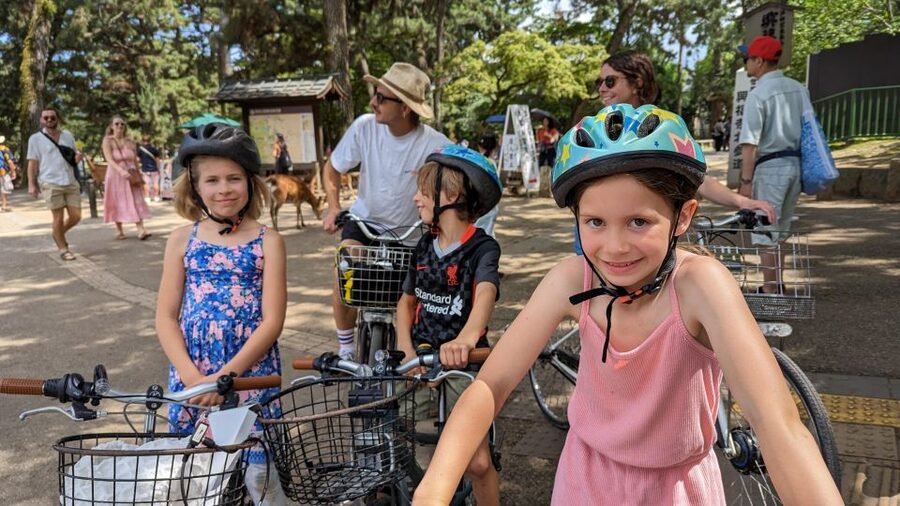
The first major stretch takes you through Nara Park, where deer wander freely around paths, lawns, temples, and shrine approaches. The bicycle lets you see the park as a connected place rather than a series of isolated stops.
Deer cookies are included. Your guide explains how to feed the deer in the Nara way, which usually means offering small pieces and showing empty hands once the food is gone. That advice matters because the deer are accustomed to people, but they can become impatient when they expect more food.
Keep your maps, paper, and anything edible secure. The deer are part of the experience, but they are not tame pets. The guide’s instructions help you enjoy the encounter without treating the animals carelessly.
The park is also one reason the tour changes with the season. Summer can be hot, so the bike saves real effort. Winter can feel cold, but the route remains appealing on a clear day. Rain does not automatically end the outing, though wet weather makes the cycling less comfortable. One group had a good experience in the rain, but you should bring suitable clothing and avoid assuming the weather will stay dry.
Nandaimon Gate, the grand approach to Todaiji
The Nandaimon Gate is your introduction to Todaiji. This enormous wooden gate creates a proper sense of arrival, with towering guardian statues and a broad approach that also attracts deer.
You get time for photographs, a guided visit, and some free time. That balance works well. Your guide can explain what you are seeing, then give you room to look closely and take pictures without a constant stream of commentary.
The gate is more than a quick photo stop. It frames Todaiji and shows how Buddhist temple design uses scale to impress visitors before they even reach the main hall. You can also see how closely daily life in Nara overlaps with its religious sites, with deer moving through the same spaces.
More E-Bike Tours in Japan
- Hidden Kyoto E-Biking tour
★ 5.0 · 1,843 reviews - 3h Tokyo E-Bike Tour: Hidden Gems, and Local Life with guide
★ 5.0 · 670 reviews - Kyoto: Memory Kyoto E-Bike Tour
★ 4.8 · 297 reviews - Kyoto: Hidden Gems E-Bike Tour with Local Japanese Guide
★ 4.9 · 189 reviews
Todaiji and the Great Buddha
Todaiji receives about 45 minutes on this route. The admission fee is included, which simplifies the day and adds useful value to the $90 price.
The temple’s main hall is famous for its enormous bronze Buddha. Even if you have visited major temples elsewhere in Japan, Todaiji feels different because of its size and the direct approach through the Nandaimon Gate. You have time for the main hall, photographs, sightseeing, and a little shopping.
This is a self-guided portion, so do not expect the guide to stay beside you for every minute inside. That can be an advantage. You can move at your own speed, then regroup as arranged. If you want a long, detailed study of every building and object, 45 minutes may feel brief. For a first visit that also includes several other places, it is a sensible allocation.
Your guide can add context about Buddhism, Nara’s place in Japanese history, and the role of the temple. Guides such as Robert and Remi have been praised for explaining Japanese culture beyond a simple list of dates and names. That broader background helps the temple feel like part of Nara’s living identity, not just an old building on a sightseeing schedule.
Mount Wakakusa and the value of moving on two wheels
The route passes by Mount Wakakusa for about 15 minutes. You do not spend the day climbing it, but you get views and a sense of how the hill shapes Nara’s eastern edge.
This is a good example of what the e-bike adds. On foot, you might decide that a hill or distant viewpoint is too much trouble during a short visit. By bicycle, you can pass through the area without sacrificing the rest of the route.
The stop is scenic rather than a long walk. Treat it as a chance to look around, take a photograph, and enjoy the open space before continuing toward the cutlery shop.
Japanese knives at Kikuichimonjushirokanenaga
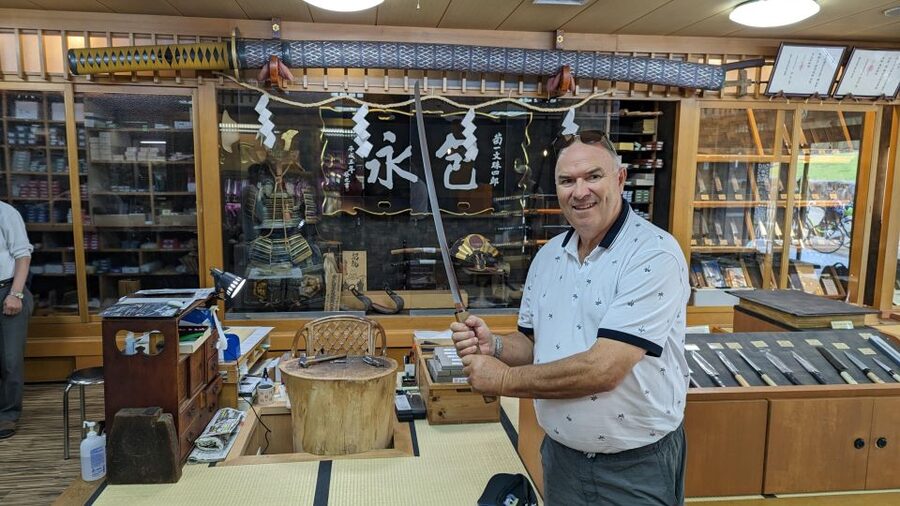
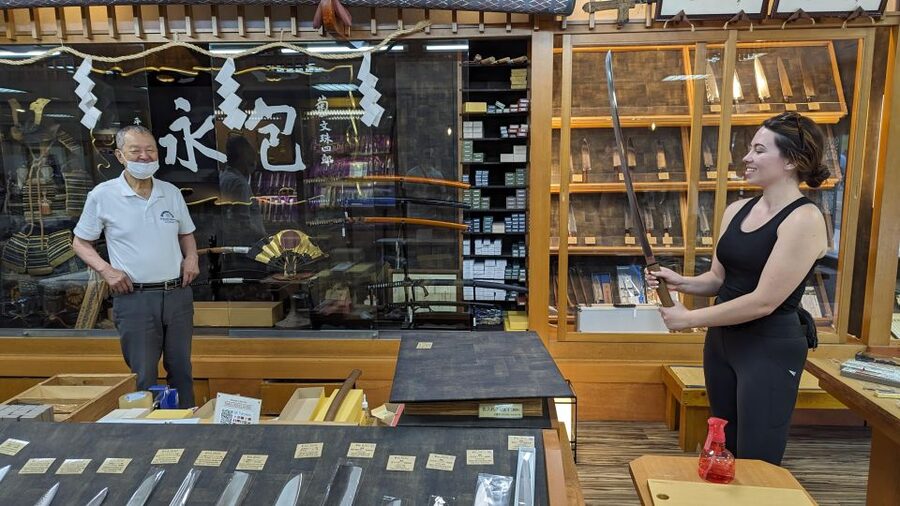
The 30-minute stop at Kikuichimonjushirokanenaga is the tour’s most distinctive addition. Here you receive an introduction to Japanese cutlery and its connection to the country’s older sword-making traditions. You can browse, ask questions, and get help if you are considering a purchase.
I like this stop because it adds something practical and local to a day otherwise focused on famous monuments. A good kitchen knife can be a useful souvenir, but you should buy only if you genuinely want one. The guide can assist with shopping, which helps when you need explanations about styles, uses, or gifts.
Several guides have been praised for their help in the shop, including assistance with communication and choosing products. The relationship between the tour company and the store appears to make the stop more useful than simply wandering into a shop alone.
Remember that knife purchases involve transport rules and packing concerns. The supplied information does not specify shipping arrangements, so ask the shop and your guide about the correct way to take a purchase home. Bring cash as requested, and keep your souvenir plans in mind before spending the rest of your budget.
You also receive one Japanese snack called Kanoko. It is a small but welcome extra during a fairly active outing. Additional food and drinks are not included.
Kasuga Taisha and its rows of lanterns
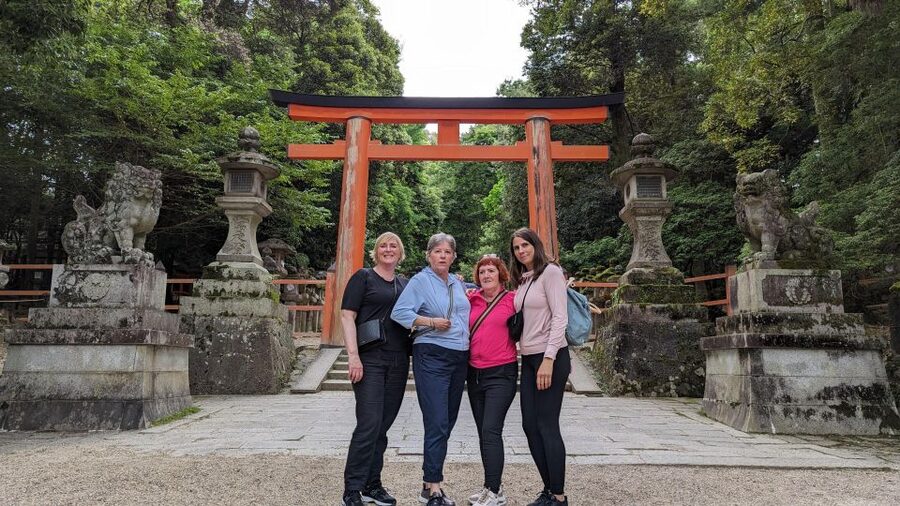
Kasuga Taisha is the spiritual heart of the route for many people. The shrine is known for its long approach, stone lanterns, and bronze lanterns. The 30-minute visit gives you time to walk, take photographs, and observe the setting among the trees.
This stop feels different from Todaiji. Todaiji is monumental and strongly associated with Buddhist architecture. Kasuga Taisha offers a Shinto setting with a quieter rhythm, especially as you move away from the busiest approach.
The guide can explain basic differences between Shinto and Buddhism, along with the meaning of the shrine’s spaces and lanterns. Guides who can place both sites in context add real value here, since the visual details are easy to admire but harder to understand without background.
The deer remain part of the experience around Kasuga Taisha. That connection between shrine, forest, and animals is one of the reasons Nara feels unlike a standard city sightseeing stop. You are not simply moving from one indoor attraction to another.
Ukimido and the final ride through the park

After Kasuga Taisha, the group cycles back through Nara Park before reaching Ukimido. This scenic pavilion offers a short 15-minute stop for photographs and views. It is a useful pause after the temple and shrine visits, with a different mood from the crowded approaches.
The final ride takes you through the park and back to the starting point. The route includes around 20 minutes of cycling, another short park section, and the return to the bicycle base. The timing is structured enough to keep the day moving, but guides may adjust the pace based on the group, weather, and interests.
One group found that its tour ran long because the guide allowed extra time. That can be welcome if you are enjoying the day, but leave some space afterward. Do not schedule a tight train connection or a fixed lunch reservation immediately after the stated finish.
Guides, languages, and group style
The tour operates in English and French. English is the safer choice for a shared group because a French-speaking guide cannot be guaranteed when people of different nationalities are combined. Contact the provider ahead of time if French guidance is essential.
The named guides include Chris, Christian, Christoph, Remi, Robert, Melody, Elodie, Elodie spelled as Elody in one account, Jean-Yves, and Mattheus. The strongest pattern is clear explanation, patience, local familiarity, and help with photographs or shopping. Robert and Remi receive especially frequent praise for explaining Japanese history and culture, while Chris is described as friendly and flexible.
A private or small-group format gives you more room to ask questions and may make the cycling feel less pressured. Still, the tour is not a private chauffeur service. You must ride as part of a group and follow the guide’s route and safety instructions.
Children under 10 can be accommodated with a child seat, with up to one seat per e-bike. Ask about this before booking, since the information does not specify other child-bike arrangements. Bicycle insurance is not included, and you should book only if you can ride a bike properly.
Is $90 good value for this Nara tour?
At $90, the tour costs more than renting a bicycle and visiting Nara independently. The comparison is not quite equal, though. Your price includes the e-bike, Todaiji entrance, deer cookies, a guide, the knife introduction, shopping help, and a Japanese snack.
The biggest value is time. A walking route covering Nandaimon, Todaiji, Mount Wakakusa, the knife shop, Kasuga Taisha, and Ukimido could take much of a day, especially if you stop for photographs and deer. The e-bike lets you see that range in 3.5 hours.
I would call it good value for a first visit, a short stay, or a hot day when you do not want to walk for hours. It is less convincing if you already know Nara well, prefer slow independent wandering, or are uncomfortable paying for a guided route when you could rent a bicycle yourself.
The overall rating is 4.8 from 186 reviews, with repeated praise for the guides, bike quality, route planning, and amount covered. One person considered it somewhat expensive, and another found a bike unsuitable for a taller rider. Those are fair cautions, not reasons to dismiss the experience.
Practical advice before you reserve
Book this if you can ride confidently and want a broad look at Nara without spending the whole day on foot. Morning departures can help you avoid some crowds, while afternoon departures may give you changing light and, depending on timing, sunset views.
Wear shoes you can walk in comfortably at temples and shrines. Bring cash, water, weather protection, and a small bag that closes securely around deer. Ask for a helmet if you want one, since helmets are available only within supply.
Free cancellation is available up to 24 hours before departure, and you can reserve now and pay later. Check the start time before booking, since availability changes by date.
Should you book the Nara e-bike tour?
Book it if you have limited time, want a guide to connect the history, and like the idea of seeing more than the standard deer photo. The knife shop and Kasuga Taisha make the route broader than a simple Todaiji visit, while the e-bike keeps the distance manageable.
Skip it if you want a very slow pace, dislike cycling in a group, or cannot comfortably ride without bicycle insurance. Also check the fit of the bike at the start, especially if you are tall.
For most first-time visitors, this is a practical way to organize a busy Nara day. You get the major sights, a useful local introduction to Japanese cutlery, and enough time with the deer without letting the deer take over your entire itinerary.
FAQ
Where does the Nara e-bike tour start?
It starts at 16-1 Takamaichicho, in front of Building LIFE 21, near the bicycle base.
Is the meeting point near JR Nara Station?
No. The meeting point is less than a five-minute walk from Kintetsu Nara Station, not JR Nara Station.
How long does the tour last?
The scheduled duration is 210 minutes, or 3.5 hours.
What languages are available?
The tour is available in English and French. French guidance is not guaranteed for shared tours, so contact the provider ahead of time if you need a French-speaking guide.
Is Todaiji admission included?
Yes. The entrance fee for Todaiji is included in the tour price.
Are deer cookies included?
Yes. Deer cookies are provided for feeding the deer. Extra cookies are not included.
Does the tour include a helmet?
A helmet is available if requested, subject to availability.
Can children under 10 join?
Yes. Child seats can be provided for young riders, with up to one child seat per e-bike.
Is bicycle insurance included?
No. Bicycle insurance is not included, and you should be able to ride a bicycle properly before booking.
Can I cancel for a refund?
You can cancel up to 24 hours before departure for a full refund. The reserve-now, pay-later option is also available.
New rides added around Japan
- Osaka E-Bike Tour With A Local Guide★ 4.7 · 75 reviews
- Osaka: City Highlights Bike Tour★ 4.7 · 20 reviews
- Okinawa: Afternoon Cycling Tour with Local Guide★ 4.8 · 39 reviews
- Nara: City Highlights Shared Group or Private Bike Tour★ 4.9 · 34 reviews
- Nara: Bike Tour in Ancient Capital UNESCO World Heritage★ 5.0 · 43 reviews
- Naha: Guided E-Bike Tour of the 12 Zodiac Temples★ 4.9 · 50 reviews
- Kyoto: Tailored E-Bike Tour to Highlights & Hidden Gems★ 4.9 · 32 reviews
- Best of Kyoto: Ginkakuji & Path of Philosophy E-Bike Tour★ 4.9 · 79 reviews
Japan Bike Tours, compared.

3h Tokyo E-Bike Tour: Hidden Gems, and Local Life with guide
Read our review →
Arashiyama Bamboo Forest & Hidden Gems Bike Tour (Early Bird)
Read our review →
Hiroshima in a Nutshell: Morning Bike Adventure
Read our review →Browse the lists this tour appears in