
Review · JAPAN
Nara: Bike Tour in Ancient Capital UNESCO World Heritage
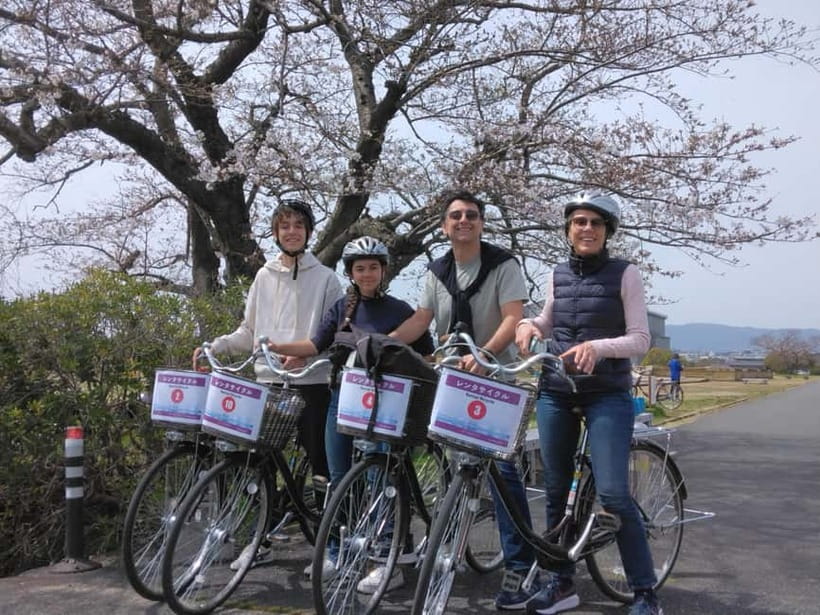
Heijo Palace is not a single grand building waiting behind one gate. It is a wide archaeological site where reconstructed halls, ancient foundations, museums, gardens, and open green space spread across the former capital. A bike is the smart way to connect these pieces, and guide Kay brings the Nara period to life as you ride.
I like the quiet pace around Mizukami Pond, where ducks, turtles, birds, and a light breeze provide a welcome break from temple crowds. I also like the mix of stops: you get big ceremonial buildings, a formal Japanese garden, an excavation hall, an ancient tomb, and a chance to wear Tenpyo clothing for photos.
The main consideration is the site itself. Some structures are reconstructions, while other stops show foundations, earthworks, or preserved excavation areas. Summer heat can also be tough on a bicycle, and anyone seeking Nara’s famous deer will not find them here.
Key points at a glance
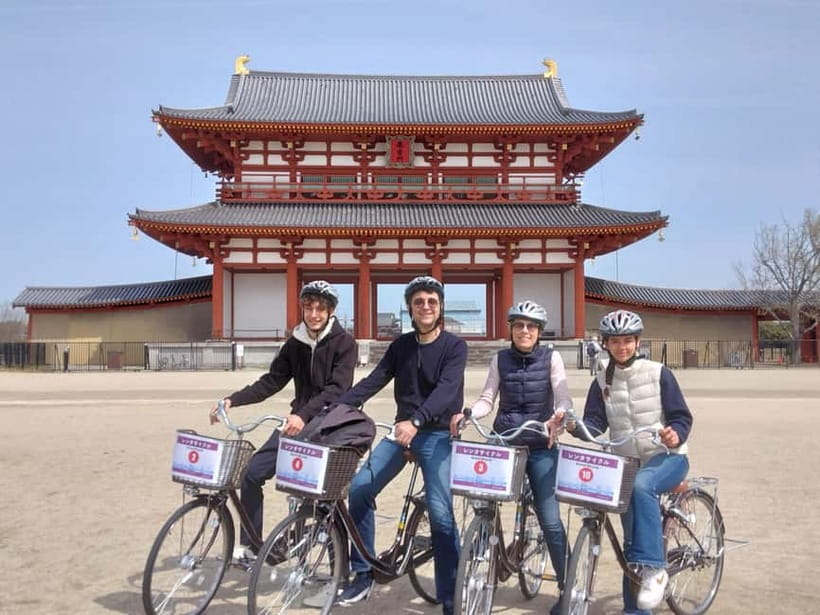
- Ride across the former imperial capital: A bicycle lets you cover the broad Heijo Palace grounds without spending the tour walking between distant sites.
- Guide Kay leads in English or Japanese: She is praised for patience, clear explanations, and a warm approach with families and first-time visitors.
- See more than reconstructed buildings: The route includes a Japanese garden, ancient tomb, excavation museum, palace halls, and old roof tiles and wooden tablets.
- Small groups keep the ride personal: The group is limited to eight people, with time for questions and photographs.
- Traditional costume adds a playful touch: You can wear Tenpyo period clothing and take memorable pictures at the palace site.
- Good value at $22: Bikes, helmets, admissions, the guide, and costume experience are included.
Why a bike makes sense at Heijo Palace
Heijo Palace occupied a huge area, and its attractions are spread across open grounds. On foot, you can see the main buildings, but the distances between them take time and energy. On a bicycle, you move from gate to garden to museum with less effort and more time to stop.
The riding is part of the experience, not just transport. You pass through open space instead of moving from one indoor attraction to another. The route around Mizukami Pond adds birdsong and fresh air, while the palace grounds give you wide views of the reconstructed buildings and surrounding nature.
The tour lasts two hours, which is enough for a useful introduction without turning the visit into an all-day history lesson. Kay has been praised for adjusting her pace, answering questions, and being especially patient with children. One family found the length right for a six-year-old, while another group appreciated that she continued slightly beyond the scheduled time so they did not feel rushed.
The group limit of eight matters here. A large group would make cycling less comfortable and explanations harder to follow. With fewer people, you can stop for photos, ask about details, and keep a steady pace.
More Historic Bike Tours in Japan
- 5-Hour Osaka Bike Tour to the Neighborhood of Osaka Castle
★ 5.0 · 319 reviews - Historical Kyoto E-Bike Tour
★ 5.0 · 181 reviews - Half-day Himeji Castle Town Bike Tour with Lunch
★ 5.0 · 81 reviews
Starting at Suzaku Gate
Meet at the rental bike reception counter inside Miharashi-Kan in Suzaku-Mon Square. Arrive 10 minutes before departure so you have time to check in and prepare. The meeting point coordinates are 34.68628944048124, 135.7926401146025.
Your first major stop is Suzaku-Gate, the main entrance to Heijo Palace. This is the right place to begin because the gate introduces the scale and purpose of the ancient capital. It also gives you one of the tour’s strongest photo opportunities, with the broad grounds and surrounding nature behind the red structure.
The guide explains Nara’s role during the Nara period and helps you picture how the palace functioned. That context is useful because the site can otherwise feel scattered. The gate, halls, foundations, and museums make more sense once you understand that this was a planned capital, not simply a collection of isolated ruins.
You spend about 15 minutes here. That is enough for photographs and an introduction without using too much of your limited riding time.
To-in Garden and the roots of Japanese garden design
To-in Garden, also called the East Palace Garden, offers a different view of the palace complex. Instead of focusing on military or political power, it shows how formal space, water, bridges, buildings, and rocks worked together for state occasions.
The garden is connected with the role of the state guest house. Your guide points out the arrangement of the bridges and buildings, helping you read the garden as a designed setting rather than simply a pleasant green space.
You have around 10 minutes here. That is brief, but it keeps the tour moving. If gardens are your main interest, you may wish you had longer to linger. Still, the stop gives you a useful contrast with the large ceremonial buildings and archaeological displays that come later.
Excavation evidence at the palace site museum
The Nara Palace Site Museum and the Excavation Site Exhibition Hall show two sides of archaeological work. The excavation hall is particularly unusual because remains are preserved and displayed in the condition in which they were found.
This is one of the most valuable stops for understanding what lies beneath the reconstructed palace. Large gates and halls can look polished and complete, but the excavation displays show the physical evidence used to work out how the ancient capital was built and used.
The Nara Palace Site Museum adds objects and models to the story. Expect ancient roof tiles, wooden tablets, and models that make the site easier to understand. The museum is described as the oldest museum at the Heijo Palace site, so it provides an important base for reading the rest of the visit.
Each museum stop is scheduled for about 10 minutes. You will not have time for a slow, detailed museum visit, but the guide helps you focus on the displays that matter most.
Same wheels, a different route:
- Hidden Kyoto E-Biking tour
★ 5.0 · 1,843 reviews - Tokyo Guided Small-Group Biking Tour
★ 5.0 · 1,250 reviews - Bike Tour Exploring North Kyoto plus Lunch
★ 5.0 · 1,087 reviews - Tokyo Great Cycling Tour
★ 5.0 · 811 reviews
A peaceful ride around Mizukami Pond
The route around Minakami, or Mizukami, Pond is the tour’s quietest stretch. You can feel the breeze, hear birds, and look for ducks and turtles. After the formal gate and archaeological displays, this pause gives the ancient capital a more everyday feeling.
This is also where the bicycle works especially well. You are not simply looking at a site from one viewpoint. You are moving through it at an easy pace, with open views and small details appearing along the way.
The pond section is a good reason to avoid thinking of the tour as only a history lesson. You get nature, exercise, and a peaceful break from the busier parts of Nara. If you are visiting Nara Park first, this area will feel notably calmer and less crowded.
Hishiage Kofun and the ancient tomb
Hishiage Kofun introduces another layer of the area’s past. The ancient tomb and its grave goods connect the palace grounds with an older period of Japanese history.
You spend about 10 minutes here, enough to examine the tomb and hear how it fits into the broader story. This stop is less visually dramatic than Suzaku-Gate or the Imperial Audience Hall, but it adds archaeological depth. You see that the site was important before the Nara-period palace was built.
For visitors with an interest in archaeology, this may be one of the most rewarding stops. For everyone else, the guide’s explanation is important because the shape of an ancient tomb may not tell you much on its own.
The Imperial Audience Hall and South Gate
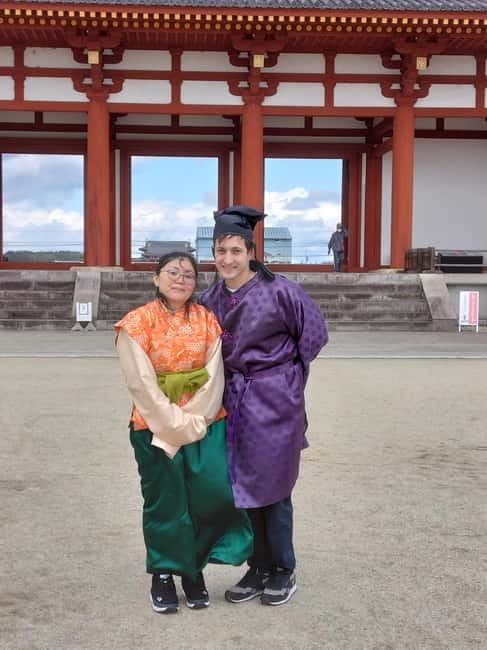
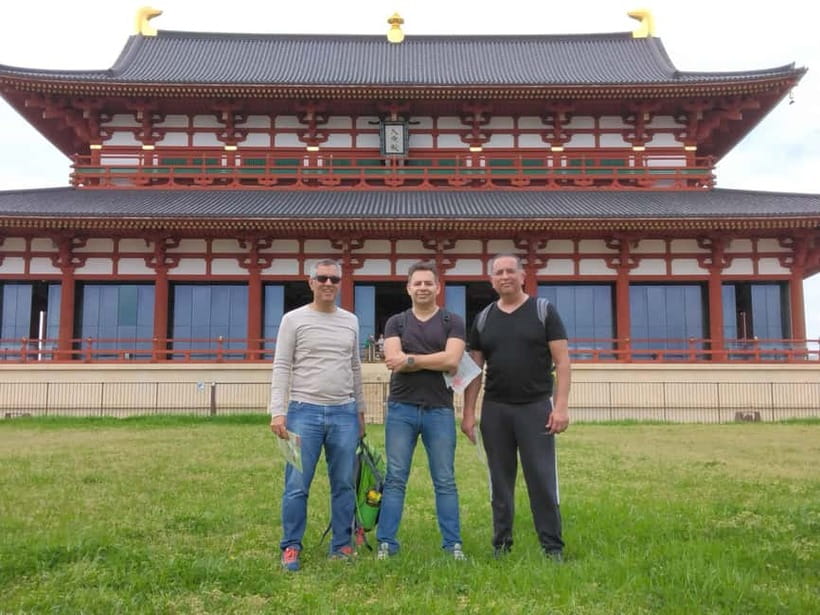
Daiichiji Daigokuden, the Imperial Audience Hall, is the tour’s grandest building. It is a reconstruction of a major Nara Palace structure used for special ceremonies. Inside, you can see paintings, ornaments, and exhibitions that explain the hall’s formal role.
The building gives you a strong sense of imperial ceremony, but you should know what you are seeing. It is reconstructed, not an untouched ancient structure. That does not make it worthless, but it changes the experience. You are looking at a careful recreation supported by archaeological research rather than an original palace interior.
The tour allows about 15 minutes here, followed by a short stop at the Daiichiji Daigokudenin Daigokumon, also called the South Gate. The gate provides another good view across the palace grounds and helps you understand how the ceremonial buildings related to one another.
The Imperial Audience Hall is also one of the best places for broad photos. If you want images that show the scale of Heijo Palace, keep your camera ready here.
Heijo Palace Site Museum and the final stretch
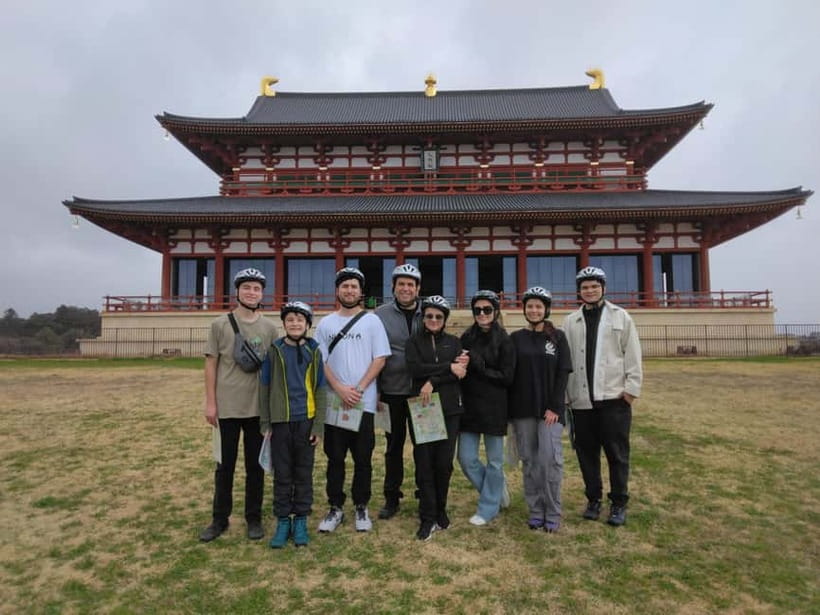
The last museum stop returns to smaller, more tangible objects. Ancient tiles and wooden tablets help connect the grand buildings with ordinary construction and administration.
I find this part useful because large reconstructions can make the past seem too clean. Roof tiles, wooden tablets, and models show the working materials and written records behind the capital. They also give you details to remember after the tour ends.
The route then returns to the rental bike reception at Miharashi-Kan. Since the tour begins and ends at the same place, you can continue exploring from there or head back toward central Nara for lunch.
Tenpyo costume photos
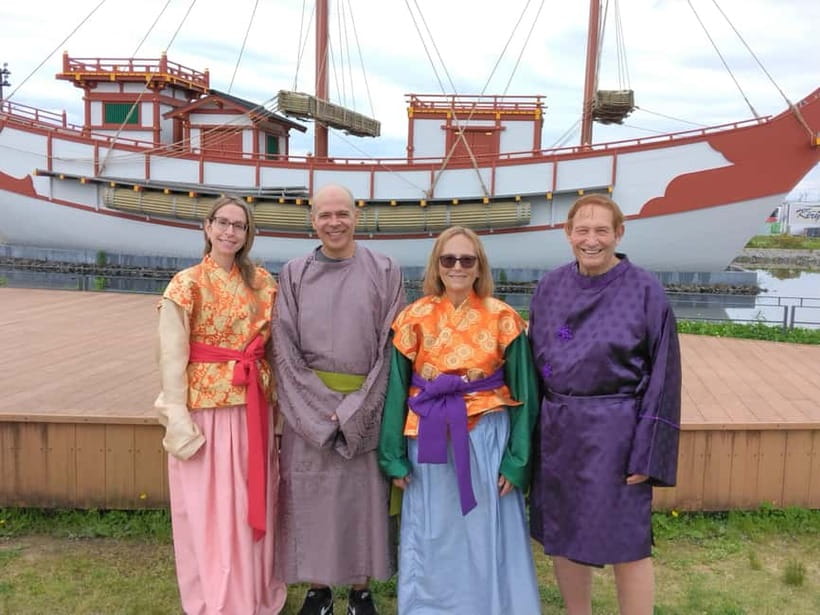
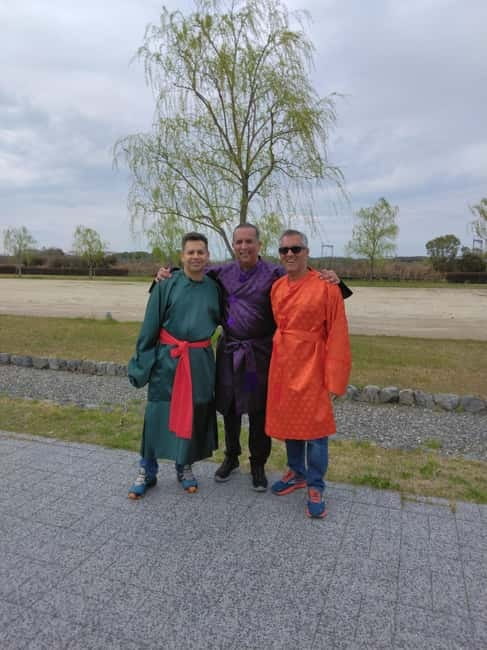
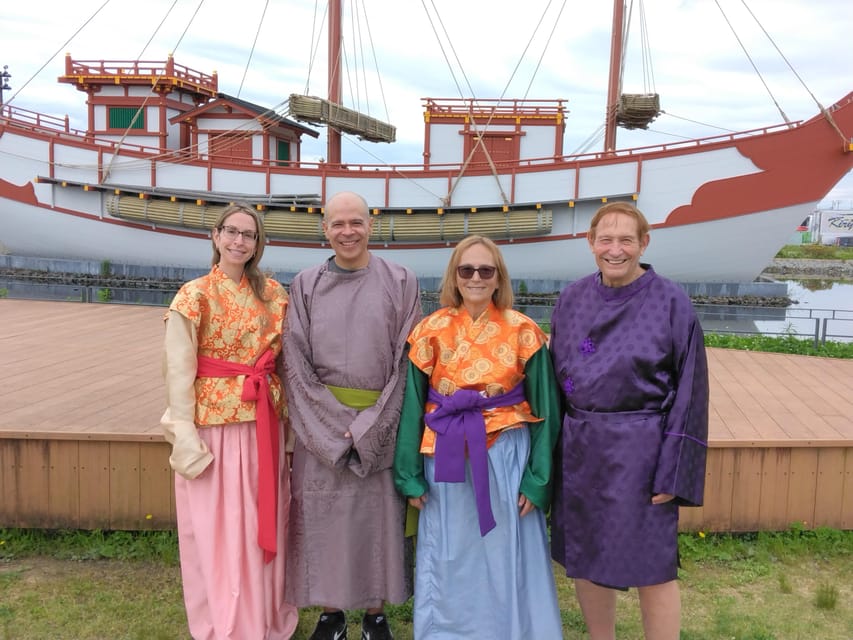
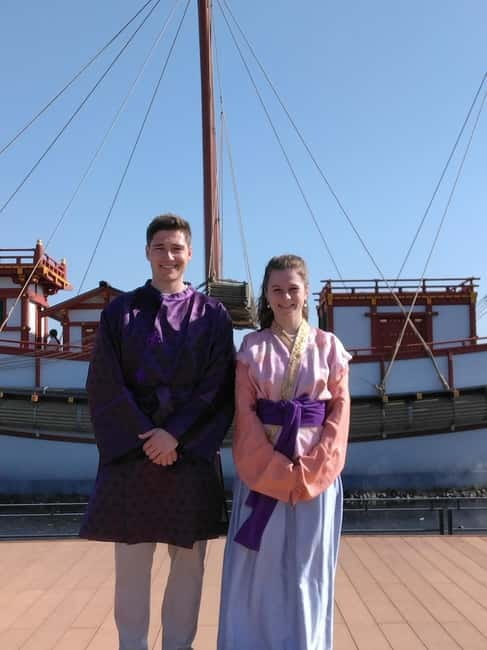
The costume experience lets you wear traditional Tenpyo, or Nara period, clothing and take photos. It is a lighthearted part of the tour, but it also gives you a more personal connection to the period being discussed.
Do not expect a full historical reenactment. The value is in the photos and the chance to see how clothing becomes part of the story. Families and couples may especially enjoy this stop, while solo visitors can ask the guide to help capture the moment.
The costume experience is included in the $22 price, along with the bike, helmet, admission fees, and guide. That makes the overall cost unusually modest for a small-group cultural tour.
Guide Kay and the tour’s teaching style
Guide Kay receives repeated praise for her friendly manner, patience, and strong command of Nara’s past. Her approach seems particularly suited to people who want explanations without an academic lecture.
She has helped families with young children, answered repeated questions, arranged a taxi for one group after the ride, and kept the pace comfortable. Several people also appreciated her willingness to offer photo opportunities and explain the meaning of each site.
The experience is available in English and Japanese. A national government licensed guide leads the tour, which gives you a useful level of structure at a site that can otherwise be difficult to interpret.
You should still arrive with realistic expectations. A two-hour tour cannot explain every period of Japanese history or cover every corner of the palace grounds. Its strength is the overview: you leave knowing how the gates, gardens, tomb, museums, and ceremonial halls fit together.
Price, timing, and practical fit
At $22 per person, this is strong value. The fee includes the rental bike, helmet, guide, all admission costs, and traditional costume experience. Many sightseeing activities charge separately for transport or entry, so the included items make the price easy to justify.
You will need to pay for your own food and drinks, and bike insurance is not included. Hotel pickup is also not provided. The meeting point is accessible by Nara Kotsu bus:
- From Kintetsu Nara Station, the bus ride takes about 16 minutes to Suzakumon-hiroba-mae, followed by a five-minute walk north.
- From Kintetsu Yamato-Saidaiji Station, the bus takes about 10 minutes from the South Exit, followed by a five-minute walk north.
- From JR Nara Station’s West Exit, the bus takes about 10 minutes, followed by a five-minute walk north.
- You can also walk about 20 minutes from Kintetsu Yamato-Saidaiji Station’s South Exit or from Shin-Omiya Station.
The tour is not suitable for pregnant people, wheelchair users, people who cannot ride a bicycle, or people with visual impairments. The supplier may cancel in heavy rain, storms, or other bad weather, with a full refund in that case.
You can cancel up to 24 hours before the start for a full refund, and the reserve-now-pay-later option keeps your plans flexible. Missing the tour or arriving too late is not refundable, so allow extra time for the bus and walk.
Who should book this Nara bike tour?
I would choose this tour if you want Nara’s palace history without spending your day in the busiest sightseeing area. It is a good fit for history fans, families with children who can ride, first-time visitors wanting an introduction, and anyone who prefers a calm outdoor activity to a long museum visit.
It also works well as a first activity in Nara. You get your bearings, learn why the palace site matters, and can then decide how much time to give other parts of the city.
I would think twice if your main goal is original architecture. Much of the palace has been reconstructed, while some archaeological stops consist of foundations, earth, or preserved excavation areas. The site may feel underwhelming if you are not interested in ancient Japanese culture or archaeology.
Weather matters too. A ride in August can be very hot, and the tour offers limited shelter while moving between sites. Spring and autumn are likely to feel more comfortable, but the tour operates year-round subject to conditions.
Should you book it?
Book this tour if you want an affordable, well-organized introduction to Heijo Palace, especially if you like gentle cycling, archaeology, gardens, and open space. Kay’s patient guiding and the small group make the experience feel personal, while the route covers far more ground than you could comfortably manage on foot in two hours.
Skip it if you are looking for deer, original palace interiors, or a major temple experience. For everyone else, the combination of bicycles, quiet pond views, reconstructed ceremonial buildings, excavation evidence, and Tenpyo costume photos makes this a practical and unusually good-value way to meet Nara’s ancient capital.
FAQ
How long does the Nara bike tour last?
The tour lasts two hours, including the guided stops and cycling around the Heijo Palace site.
What is included in the tour price?
The price includes the bike, helmet, guide, all admission fees, the biking tour, and the Tenpyo traditional costume experience.
How much does the tour cost?
The listed price is $22 per person.
Where does the tour meet?
Meet at the rental bike reception counter at Miharashi-Kan in Suzaku-Mon Square. The coordinates are 34.68628944048124, 135.7926401146025.
Which languages are available?
The tour is offered in English and Japanese.
How large is the group?
The tour is limited to eight participants.
Is hotel pickup included?
No. You must make your own way to the rental bike reception counter.
What happens if the weather is bad?
The supplier may cancel because of heavy rain, storms, or other bad weather. Canceled tours receive a full refund.
Can anyone join the bike tour?
No. The activity is not suitable for pregnant women, wheelchair users, people who cannot ride a bike, or visually impaired people.
New rides added around Japan
- Osaka E-Bike Tour With A Local Guide★ 4.7 · 75 reviews
- Osaka: City Highlights Bike Tour★ 4.7 · 20 reviews
- Okinawa: Afternoon Cycling Tour with Local Guide★ 4.8 · 39 reviews
- Nara: City Highlights Shared Group or Private Bike Tour★ 4.9 · 34 reviews
- Naha: Guided E-Bike Tour of the 12 Zodiac Temples★ 4.9 · 50 reviews
- Kyoto: Tailored E-Bike Tour to Highlights & Hidden Gems★ 4.9 · 32 reviews
- Best of Kyoto: Ginkakuji & Path of Philosophy E-Bike Tour★ 4.9 · 79 reviews
- Kyoto: Hidden Gems E-Bike Tour with Local Japanese Guide★ 4.9 · 189 reviews
Japan Bike Tours, compared.

3h Tokyo E-Bike Tour: Hidden Gems, and Local Life with guide
Read our review →
Arashiyama Bamboo Forest & Hidden Gems Bike Tour (Early Bird)
Read our review →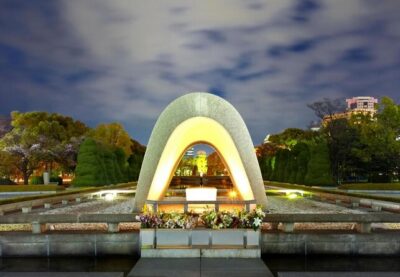
Hiroshima in a Nutshell: Morning Bike Adventure
Read our review →Browse the lists this tour appears in