
Review · KYOTO
Kyoto: Fushimi Inari Shrine and Tofukuji Temple E-Bike Tour
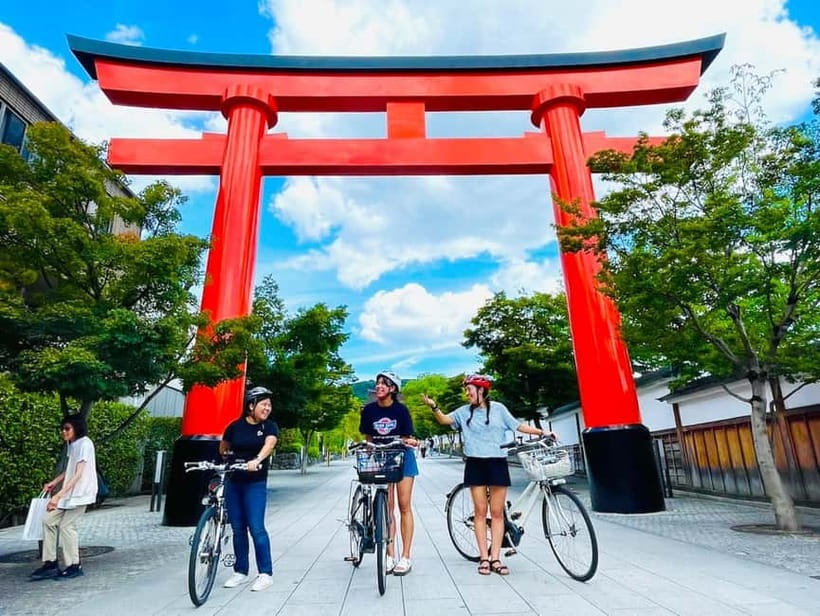
Kyoto is best understood at street level, and this tour gives you that chance without making you pedal hard. You ride from the Gion area through quieter lanes and along the river, then reach Fushimi Inari Shrine and Tofukuji Temple with a local guide who explains what you are seeing.
I like the small group, limited to eight, and the way the route mixes famous sights with ordinary Kyoto neighborhoods. I also like Maki’s personal approach: she uses stories, humor, pictures, and local knowledge to make Japanese customs easier to grasp. The main drawback is time. Four hours moves quickly, and one stop at Fushimi Inari may feel brief if you want to explore far up the mountain.
Key points to know before booking
- Maki is the guide most often named by guests: Expect clear English, lively storytelling, personal anecdotes, and plenty of chances to ask questions.
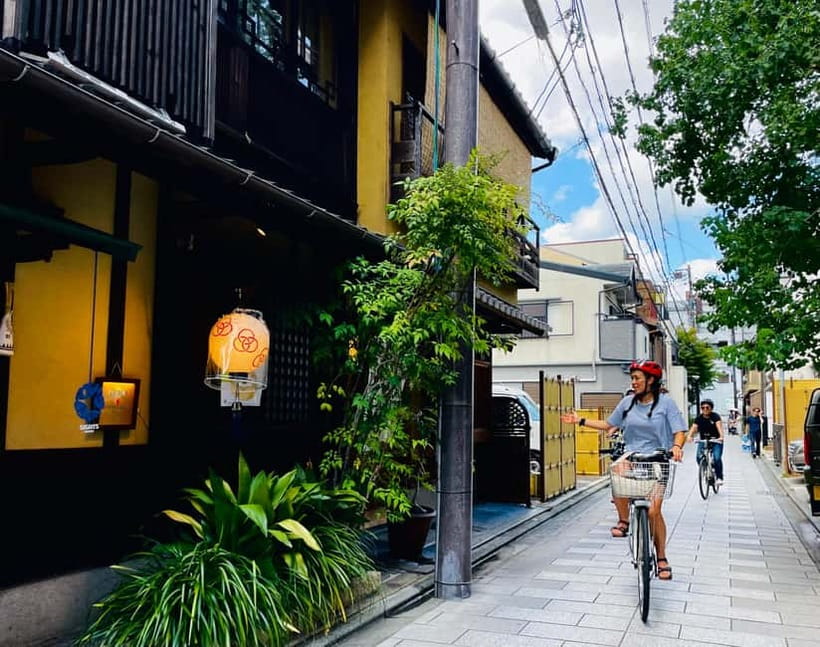
- The route balances major sights and local streets: You see Gion, suburban Kyoto, riverside paths, smaller shrines, Fushimi Inari, and Tofukuji.
- Electric assistance keeps the ride manageable: The bikes help on steeper sections and late in the tour, though you still need to cycle and walk.
- Fushimi Inari is only one part of the experience: The quieter lanes and less visited religious sites often give you more room to absorb Kyoto.
- The small group matters: With no more than eight people, it is easier to hear the guide, stay together, and ask questions.
- The package is fairly complete: Bike, helmet, insurance, water, snack, and entrance fees for two places are included.
Why an e-bike is a smart way to see Kyoto
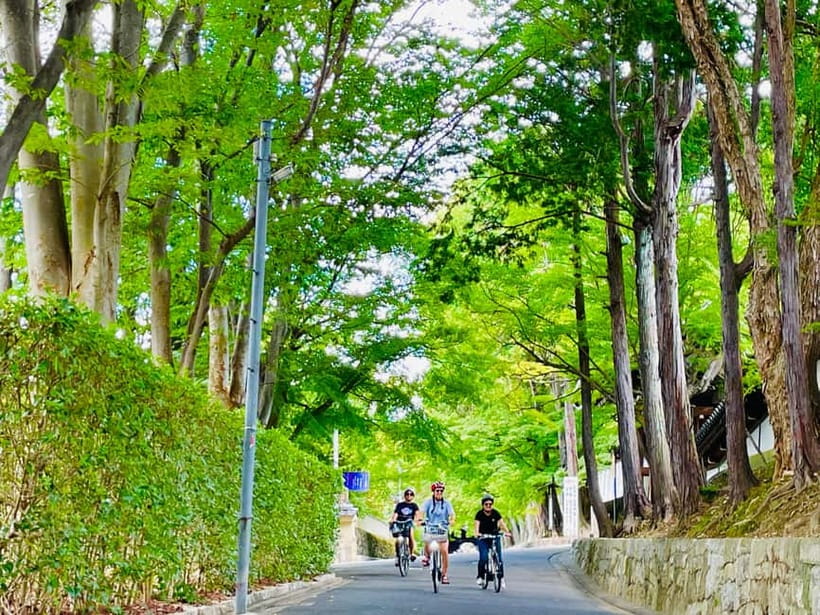
Kyoto has a compact center, but its sights are spread across several districts. Walking between Gion, Fushimi, and Tofukuji can take valuable sightseeing time, while buses can be crowded and less direct. An e-bike gives you a better middle ground.
You cover more ground than you could on foot, but you still move slowly enough to notice wooden homes, narrow lanes, small shrines, streams, and residential streets. The route is not just a ride from one famous attraction to another. It shows you parts of Kyoto that are easy to miss from a bus window.
The electric motor is especially useful on inclines and toward the end of the four-hour outing. You still need to know how to balance, steer, brake, and ride in a group, but the assistance takes much of the strain out of the journey. Several people with little confidence about city cycling found the pace manageable, thanks to the orientation and frequent stops.
You begin with instructions on using the bike in Japan. That matters because the guide needs to explain how the group will handle traffic, busy stretches, and stops. The route uses quieter roads where possible, though you should not expect a completely car-free ride. You may cycle through some busy areas, and you need to follow directions carefully.
The bikes have been described as clean, sturdy, and well maintained. Helmets and insurance are included. Wear comfortable clothing and shoes, and bring sunscreen and water, even though a bottle is supplied. In warm weather, the combination of cycling and walking can feel tiring.
More E-Bike Tours in Japan
- Hidden Kyoto E-Biking tour
★ 5.0 · 1,843 reviews - 5 Top Highlights of Kyoto Full Day Bike Tour (E-bike option)
★ 5.0 · 511 reviews - Kyoto: Memory Kyoto E-Bike Tour
★ 4.8 · 297 reviews
Gion reveals more than geisha folklore
The tour takes you through Gion, Kyoto’s best-known traditional district. This is where you begin to connect the polished image of Kyoto with the customs behind it.
Your guide explains geisha culture and local manners in plain terms, helping you separate real traditions from the simplified version often presented to visitors. The value here is not just spotting old buildings. It is learning how Kyoto’s customs, neighborhoods, and social rules fit together.
The ride also passes through less tourist-focused areas. You might see ordinary homes, small streets, and the places where local life continues away from the major sights. That contrast is useful. Gion can feel carefully preserved and highly visited, while nearby residential areas show that Kyoto is also a working city, not an open-air museum.
The route appears designed with frequent stops rather than one long, hard ride. You may pause while Maki explains a shrine, a custom, or a piece of local history. This makes the tour suitable for families with older children and teenagers, as well as adults who want cultural context without spending a full day inside temples.
Maki is a major part of the experience. Her style combines humor, strong English, historical detail, and personal stories. She is also known for taking photographs of participants, which is helpful if you want group or family pictures without handing your phone to a stranger.
Fushimi Inari, with context instead of a quick photo stop
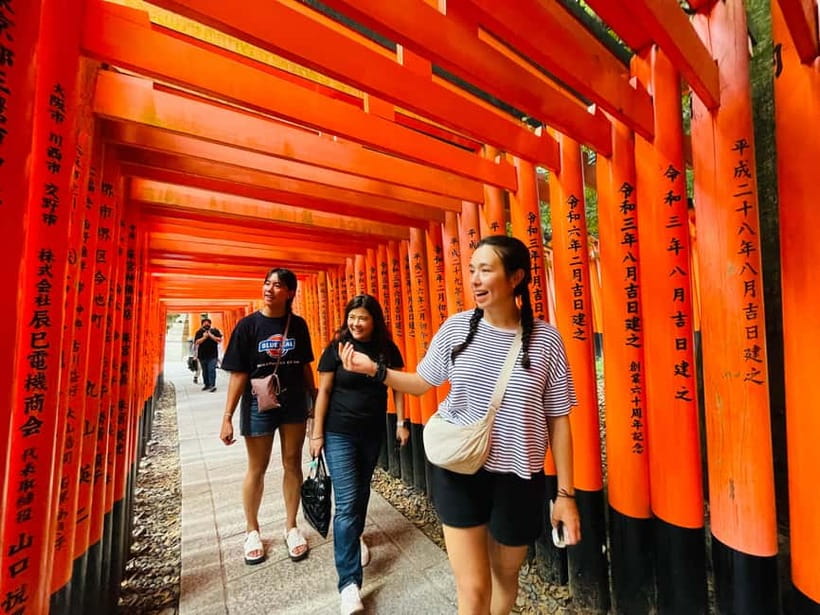
Fushimi Inari Shrine is the tour’s most famous destination. Its rows of orange torii gates have made it one of Japan’s most recognizable sights, and the shrine is often crowded.
A guide changes the experience. Instead of treating the gates as a colorful background, you learn about the shrine’s role in Shinto and the meaning behind the site. Maki also explains Japanese religious customs, including how Shinto shrines differ from Buddhist temples.
You should set your expectations carefully. This is a four-hour tour with several stops, so you are not likely to spend hours walking deep into the torii-covered mountain trails. One person felt that more time at the shrine would have been useful, though the shorter visit is understandable when the group includes riders with different speeds.
That limitation may suit you if you want an introduction rather than an exhaustive visit. Fushimi Inari can easily consume half a day on its own. Here, you see one of Kyoto’s central sights, learn how to approach it respectfully, and still have time for other parts of the city.
Bring a camera, but do not let photography become the whole stop. The best part is understanding why the shrine matters and knowing what to look for when you return on your own.
Tofukuji offers a quieter Buddhist pause
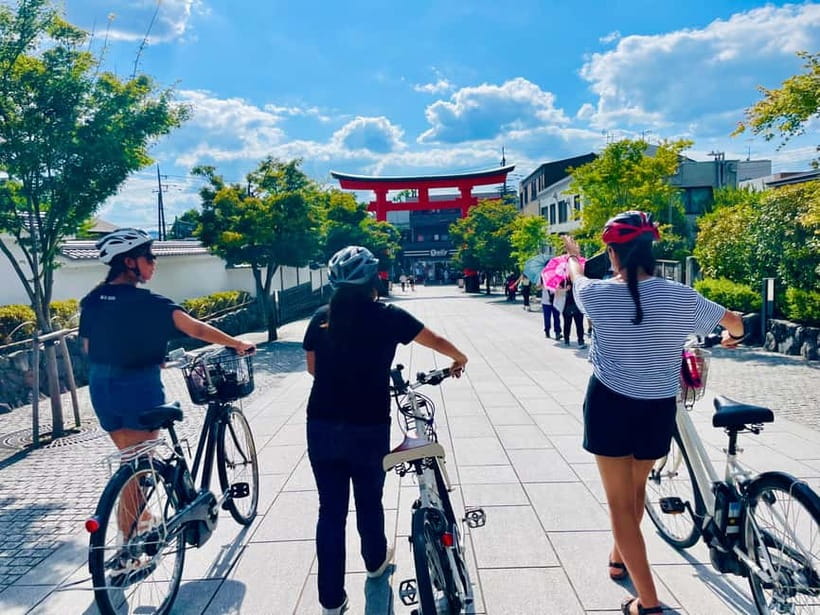
Tofukuji Temple provides a useful change of mood after Fushimi Inari. Instead of the torii gates and constant movement, you get time in a Zen garden and a calmer Buddhist setting.
The garden is not treated as a rushed photo stop. The guide allows a period to sit, look, and take in the quiet. That pause gives the tour some balance. You spend part of the morning or afternoon learning and moving, then have a chance to slow down.
This is also where the difference between Shinto and Buddhism becomes clearer. The guide can explain the roles of shrines and temples, the customs associated with each, and how both traditions appear in Japanese life. You do not need prior knowledge to follow the discussion, and you can ask questions as they arise.
Tofukuji may appeal most to people who prefer atmosphere to a checklist of famous sights. The tour does not simply add another major stop. It gives you a different way to experience Kyoto, with attention to silence, gardens, and reflection.
More Historic Bike Tours in Japan
- Historical Kyoto E-Bike Tour
★ 5.0 · 181 reviews - 4.5-hr Kyoto Historical Highlights Bike Tour with UNESCO
★ 4.7 · 13 reviews - 5-Hour Osaka Bike Tour to the Neighborhood of Osaka Castle
★ 5.0 · 319 reviews - Half-day Himeji Castle Town Bike Tour with Lunch
★ 5.0 · 81 reviews
The route’s real strength is the space between sights
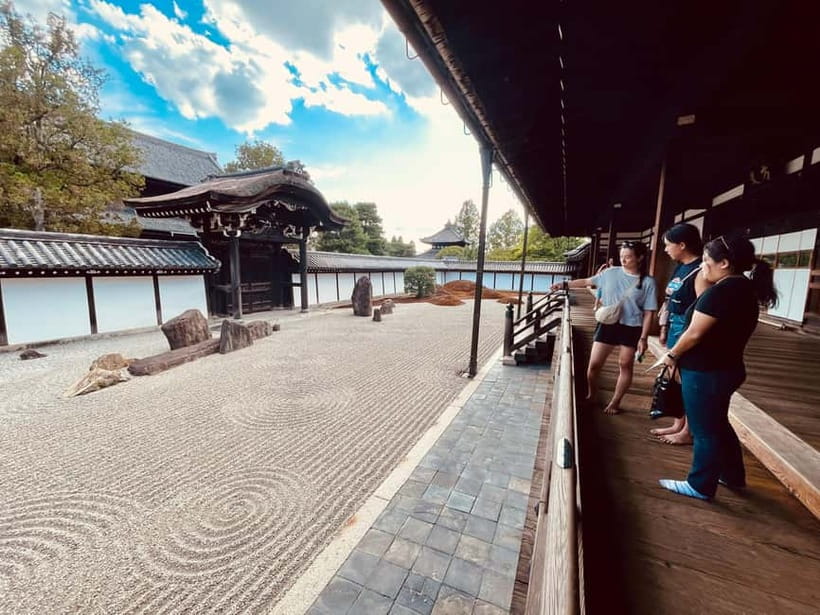
The most memorable parts may be the stretches between the headline destinations. The ride includes quieter streets, local neighborhoods, small religious sites, and routes beside the river. These sections give you a sense of how Kyoto is laid out and how people use the city day to day.
Cycling also makes the transitions part of the sightseeing. You are not deposited at a temple after a bus ride. You see the city change block by block, from traditional streets to suburban areas and then back toward the center.
The return route along the river is often described as a pleasant finish. It gives you a more open view after narrow streets and crowded attractions. You can enjoy the scenery without needing to plan the route, watch a map, or work out how to get back to the shop.
You should still be comfortable riding in a line and stopping when asked. The guide’s directions help the group feel safe, but city cycling requires attention. One useful improvement would be a microphone or earpiece during stops, since a group spread out along the road may need to gather close to hear every story.
A four-hour pace with plenty packed in
The schedule has a sensible shape:
- Bike orientation and safety instructions near Higashiyama-Sanjyo
- Cycling through Gion and discussion of geisha customs
- Riding through quieter Kyoto neighborhoods
- Visit to Fushimi Inari Shrine
- Stop at Tofukuji Temple and its Zen garden
- Return ride, often including a riverside stretch
The exact order and timing can vary, but the structure gives you a broad introduction to Kyoto in half a day. You are not spending seven or eight hours moving between temples, and you do not need to arrange transport between each stop.
The pace is generally easy, with breaks for explanations and drinks. Still, this is active sightseeing. You will cycle, walk around religious sites, and spend time outdoors. It is not suitable for children under 12, pregnant women, or people with mobility impairments.
I would book it early in a Kyoto visit. The tour helps you understand the rituals, neighborhoods, and landmarks you will see during the rest of your stay. You can then return to Fushimi Inari or another temple with a better sense of what you are looking at.
What the $83 price includes
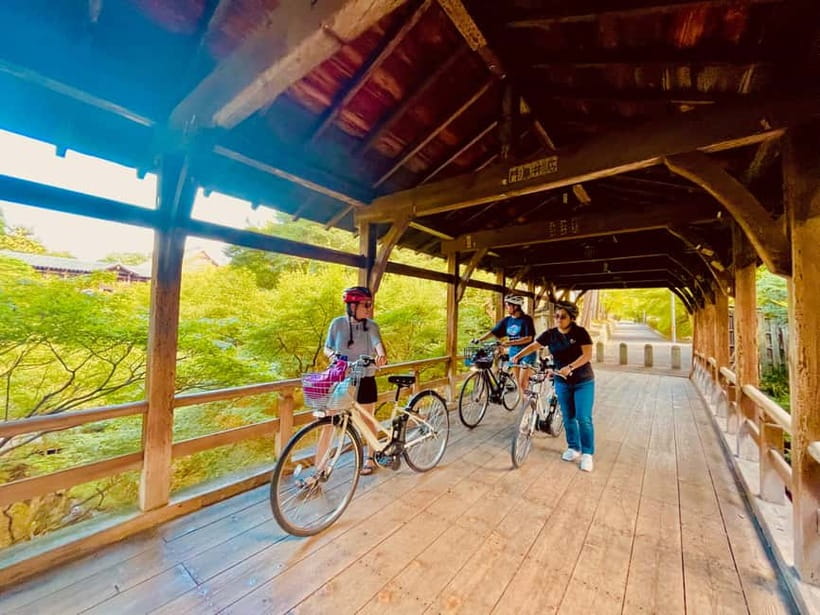
At $83 per person, the tour is not the cheapest way to reach Fushimi Inari. You could use public transport and visit the shrine independently for much less. The real question is what you want the money to buy.
Here, the price includes a four-hour guided route, an electric bicycle, helmet, insurance, a snack, a water bottle, and entrance fees for two places. You are also paying for route planning, bike handling instructions, cultural interpretation, and the convenience of moving between several areas without arranging transport yourself.
The strongest value comes if you want more than a photo at Fushimi Inari. Maki’s explanations cover Shinto, Buddhism, geisha culture, Japanese customs, samurai history, infrastructure, and daily life. That range makes the tour feel like both a city ride and a cultural orientation.
It is less useful if your main goal is a long, quiet visit to Fushimi Inari or Tofukuji. Independent visitors can set their own pace and stay as long as they wish. This tour trades that freedom for structure, local guidance, and access to less visited streets.
The small group improves the value. With a maximum of eight people, the guide can give safety instructions, answer questions, and take pictures without managing a large crowd. If the group is full, you still need to accept a shared pace and occasional waiting.
Who will enjoy this Kyoto bike tour most
I would choose this tour for a first visit to Kyoto, especially if you want an overview before exploring on your own. It suits couples, families with teenagers, and adults who enjoy learning while moving.
It is also a good choice if you like cycling but do not want a demanding ride. The electric bikes help, and the route is described as easy by people with different levels of cycling experience. You should still be comfortable on roads and able to walk around temples and shrines.
Families may find the mix of activity and storytelling more engaging than a long temple tour. Teenagers can ride, ask questions, and see several parts of the city in one outing. Maki’s humor and personal style also help keep the cultural explanations from feeling like a formal lecture.
You may want another option if you dislike group tours, have limited cycling experience and feel uneasy around traffic, or need a fully accessible route. The tour includes roads, walking, and outdoor stops. It is also not a good match if you want to spend most of the day at one site.
The meeting point is Pedal Adventure Kyoto, and hotel pickup and drop-off are not included. Check the start time and allow enough time to reach the shop independently.
Practical tips for a smoother ride
Wear shoes you can walk and cycle in for four hours. Loose, comfortable clothing is better than anything restrictive, and sunscreen is wise on sunny days.
Bring a camera, but keep your hands free while riding. A water bottle is provided, and cold drink breaks are built into the rhythm of the tour, but staying hydrated is still your responsibility.
Listen closely during the first riding briefing. The guide leads the group through both quiet lanes and busier areas, so staying together matters. If you are worried about keeping up, tell Maki at the start. The electric assistance and regular stops make the route approachable, but the guide needs to know your comfort level.
Avoid smoking and alcoholic drinks during the activity. Free cancellation is available up to 24 hours before the start, and you can reserve now and pay later, which helps if your Kyoto plans are still shifting.
Should you book this tour?
Book it if you want a practical, active introduction to Kyoto with strong cultural explanation. The combination of Gion, local streets, Fushimi Inari, Tofukuji, and the riverside return gives you a useful first look at the city in four hours.
The tour’s greatest strength is Maki’s guiding. Her humor, personal stories, clear English, and care with safety turn a standard bike route into something more memorable. The bikes and included extras are solid value, but the guide and the carefully chosen route are the real reasons to go.
Skip it if you need a slow, independent visit at Fushimi Inari or cannot comfortably cycle and walk. For everyone else, especially families and first-time visitors, this is a well-paced way to see more of Kyoto while learning how its religious traditions and everyday streets fit together.
FAQ
How long is the Kyoto e-bike tour?
The tour lasts four hours. It includes cycling, walking, stops at cultural sites, and time for explanations from the guide.
Where does the tour meet?
The meeting point is Pedal Adventure Kyoto. Hotel pickup and drop-off are not included.
What is included in the price?
The price includes a live English-speaking guide, electric bicycle rental, helmet, insurance, a snack, a water bottle, and entrance fees for two places.
Does the tour visit Fushimi Inari Shrine?
Yes. The route includes Fushimi Inari Shrine, where the guide explains its history, customs, and connection to Shintoism.
Is Tofukuji Temple included?
Yes. The tour stops at Tofukuji Temple and gives you time to relax in its Zen garden.
Who can take this tour?
The tour is limited to people age 12 and older. It is not suitable for pregnant women or people with mobility impairments. Comfortable clothes and shoes suitable for cycling are recommended.
More Historic Bike Tours in Kyoto
- Historical Singapore Bike Tour on Full-Sized Bicycles
★ 5.0 · 1,421 reviews - Barcelona: 2.5-Hour Bike or E-Bike Historical Tour
★ 4.5 · 1,262 reviews - Asheville Historic Downtown Guided Electric Bike Tour with Scenic Views
★ 5.0 · 1,234 reviews - Krakow: Bike Tour of Old Town, Jewish Quarter and the Ghetto
★ 4.9 · 1,155 reviews
More E-Bike Tours in Kyoto
- Kyoto: Hidden Gems E-Bike Tour with Local Japanese Guide
★ 4.9 · 189 reviews - Arashiyama Bamboo Forest E-Biking Tour
★ 5.0 · 183 reviews - Best of Kyoto: Ginkakuji & Path of Philosophy E-Bike Tour
★ 4.9 · 79 reviews - Kyoto: Hidden Gems E-Bike Tour Through Backstreets & Temples
★ 4.9 · 54 reviews
New rides added around Kyoto
- Kyoto: Tailored E-Bike Tour to Highlights & Hidden Gems★ 4.9 · 32 reviews
- Best of Kyoto: Ginkakuji & Path of Philosophy E-Bike Tour★ 4.9 · 79 reviews
- Kyoto: Hidden Gems E-Bike Tour with Local Japanese Guide★ 4.9 · 189 reviews
- Kyoto: Memory Kyoto E-Bike Tour★ 4.8 · 297 reviews
- Kyoto: Hidden Gems E-Bike Tour Through Backstreets & Temples★ 4.9 · 54 reviews
- Kyoto: Half-day Guided Bike Tour with Fushimi Inari★ 4.9 · 21 reviews
- Kyoto: Full-Day City Highlights Bike Tour with Light Lunch★ 5.0 · 52 reviews
- Kyoto: Full Day Bike Tour★ 4.9 · 39 reviews
Kyoto Bike Tours, compared.
Arashiyama Bamboo Forest & Hidden Gems Bike Tour (Early Bird)
Read our review →
5 Top Highlights of Kyoto Full Day Bike Tour (E-bike option)
Read our review →
Full Day Biking Tour Exploring the Best of Kyoto
Read our review →

Afternoon Kyoto Bike Tour: Bamboo Forest, Monkeys & Hidden Spots
Read our review →
Hidden Gems E-Bike Tour with Local Japanese Guide
Read our review →Browse the lists this tour appears in