
Review · OSAKA
Eat, Drink & Cycle: Osaka Foodie Bike Tour
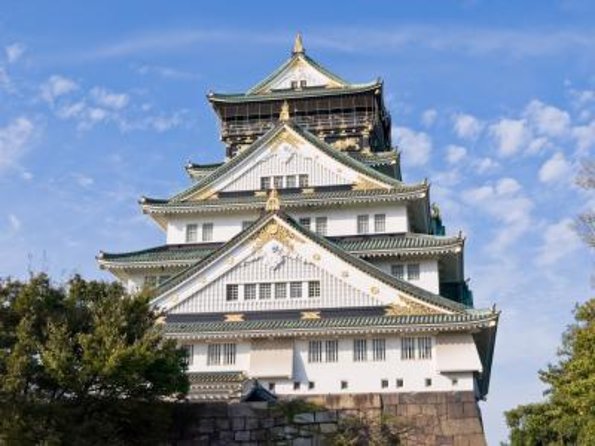
Osaka is best understood with your appetite switched on, and this tour pairs that appetite with a bicycle. In roughly three and a half hours, you can pedal through South Osaka, stop for local food, visit Shitennoji, browse Tsuruhashi Market, and finish with sushi and kushikatsu. It is a smart way to cover ground without spending the whole morning underground.
I like the small maximum group of seven, which gives your guide room to explain unfamiliar dishes and adjust the pace. I also like the mix of food, neighborhood streets, and major sights. Guides such as Mako, Matt, Peter, Erik, and Mayco have been praised for their warmth, local stories, and restaurant tips.
The main caution is value. At $99.49 per person, this is not a cheap way to buy lunch. You are paying for the bicycle, guide, route planning, tastings, and access to places you may not find alone, but one review found the food stops fewer than expected for the price. Also confirm the meeting time and place before you go, since the supplied details list both Tsutenkaku at 9:30 a.m. and Tenma at 10:30 a.m.
Key points to know before booking
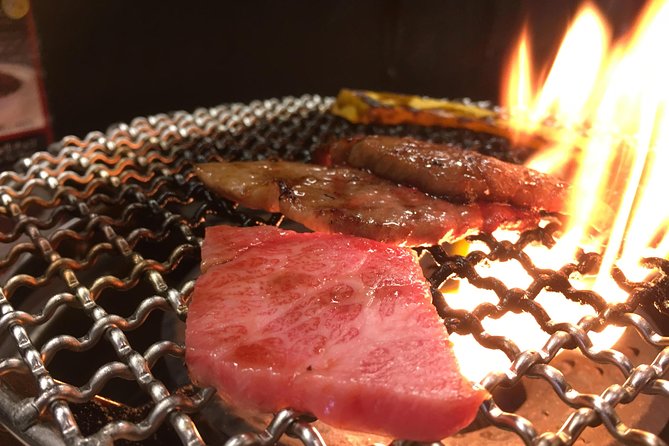
- Three to four food stops: Expect a moving meal with oden, tofu, doteyaki, market snacks, wagyu, sushi, and kushikatsu, with the exact mix shaped partly by the group.
- Shitennoji and Tsuruhashi: The ride links one of Japan’s oldest temples with a market district known for Japanese and Korean food.
- Easy Osaka cycling: The city is mostly flat, and several riders found the route relaxed rather than strenuous.
- Guides make the difference: Mako, Matt, Peter, Erik, Mayco, and others have been praised for food advice, history, humor, and thoughtful route choices.
- Small-group format: With no more than seven people, you get more chances to ask questions and less waiting at stops.
- Weather matters: The tour requires good weather, and rain can make the ride less comfortable. Bring suitable rain gear if the forecast looks doubtful.
Why a bike is the right tool for this Osaka food tour
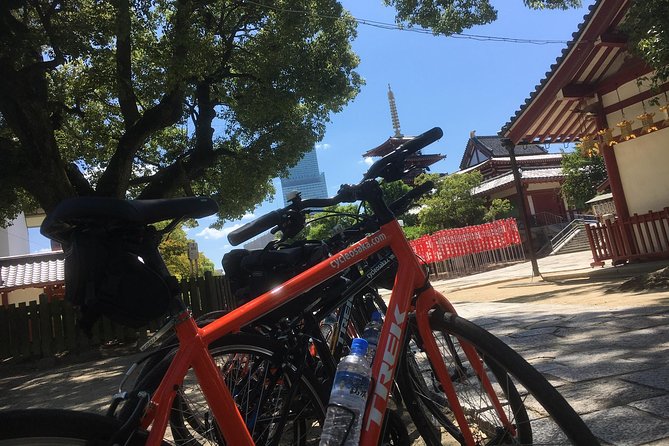
A walking food tour can keep you close to one district. This one gives you a wider slice of Osaka. You ride between neighborhoods, so the food is connected to the streets, temples, markets, and small businesses where it belongs.
The cycling is part transportation and part sightseeing. You are not racing from one attraction to the next. The route is described as easy, and Osaka’s mostly flat streets make it manageable for anyone with a moderate level of fitness. You still need to be comfortable riding in an urban setting, stopping and starting, and keeping pace with a group.
The bikes and helmets are included. Several riders found the bikes solid and easy to use, with different sizes available. Some older participants requested e-bikes and found the day comfortable, but you should confirm e-bike availability rather than assume it is included. Riders under 140 centimeters cannot join, and the experience is not recommended for children aged 12 and under.
The small group is a real plus. A seven-person limit means your guide can explain what you are eating instead of simply pointing at a plate and moving on. It also helps at market stalls, where large groups can block counters and make conversation difficult.
More Food Bike Tours in Japan:
- Versailles Palace Bike Tour with Market & Marie-Antoinette hamlet
★ 5.0 · 2,680 reviews - Madrid: 3 h. Guided Highlights Bike Tour with Optional Tapas
★ 4.9 · 1,623 reviews - Rome: Appian Way & Aqueducts E-Bike Tour (Catacombs & Food)
★ 4.9 · 1,498 reviews
Starting near Tsutenkaku, then eating in Shinsekai
The published route begins under the Tsutenkaku tower, the tall landmark associated with Shinsekai, before heading to the bike storage area for a quick fitting. The ride to the first food stop is short, which gives you time to settle into the bike before dealing with longer city streets.
Shinsekai is a fitting place to start. This old entertainment district is famous for its food culture and strong local character. Your first bite may be street oden, tofu, or doteyaki, depending on the group’s tastes and the day’s plan.
That flexibility is useful. Japanese food names can be familiar to one person and completely new to another. Oden offers a gentle introduction to simmered ingredients, tofu keeps the first stop light, and doteyaki gives you a more savory local taste. If you are hoping for a fixed menu, this may feel less predictable. If you like letting the guide choose, it makes the meal feel more like a local food crawl.
You receive bottled water, and the food tastings are included. Alcohol is not included, so budget separately if you want a drink along the way.
One practical issue needs attention before arrival. The information supplied for this experience gives two different starting details: Tsutenkaku at 9:30 a.m. in the route description, and 1-chōme-10-7 Tenma, Kita Ward, at 10:30 a.m. in the meeting-point section. Check your confirmation carefully and contact the operator if the details do not match.
Shitennoji adds a quiet pause to the ride
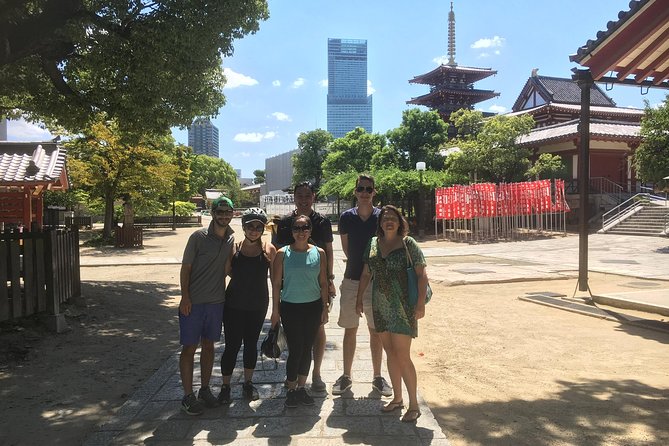
After the opening food stop, the group rides toward Shitennoji. The temple is presented as one of Japan’s oldest, and the route includes time for photographs and a short explanation of the area.
This pause matters. Without it, the tour could become a sequence of snacks connected by bike lanes. Shitennoji gives the morning a cultural anchor and a chance to step off the saddle. You can take pictures, listen to the guide, and let the meal settle before the next food-heavy section.
The stop is not designed as a long temple visit. Expect a brief orientation rather than a full guided tour of every building and detail. That is fine if you want a broad introduction to Osaka. If Shitennoji is high on your sightseeing list, plan a separate visit so you have more time.
Several guides have been praised for adding small pieces of Osaka and Japanese history along the route. That personal explanation is one of the better reasons to choose this tour instead of simply renting a bicycle. You are not only being shown a road to the next restaurant. You are given context for the places you pass.
Tsuruhashi Market is the food heart of the morning
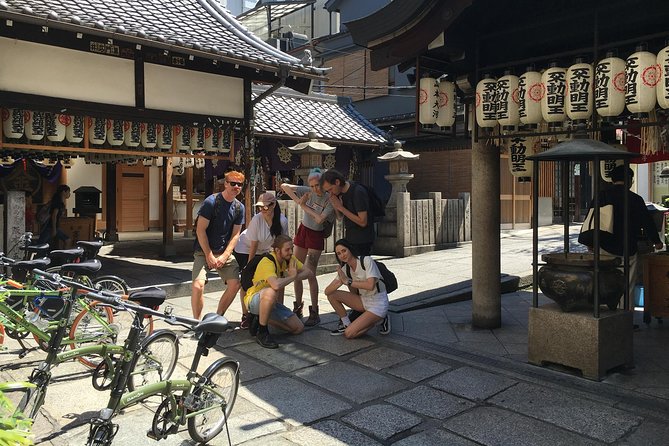
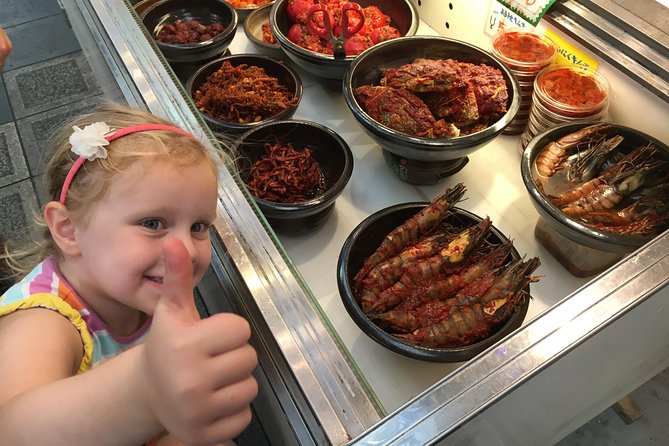
From Shitennoji, the route heads downhill toward Tsuruhashi Market. The group spends about 40 to 60 minutes here, meeting stall holders and trying a range of market snacks.
This is likely the most distinctive part of the experience. Tsuruhashi is closely associated with Osaka’s Korean community and food traditions, so the market adds flavors and cultural detail that you may not get from a standard Osaka highlights tour. One review also describes time in Korea Town, with Japanese and Korean dishes appearing during the day.
The market stop is long enough to feel like a visit rather than a quick photo break, but do not expect unlimited grazing at every stall. The exact number of tastings can vary. One person felt the tour included only two main food locations and wanted more market eating, while other descriptions include several dishes and enough food to leave some people completely full.
That difference points to an important booking question: your idea of a food tour matters. If you want a large number of tiny samples at many counters, this may not meet your hopes. If you want a guided route with selected tastings, a sit-down food stop, and cycling between districts, the format makes more sense.
Your guide is especially useful here. Market food can be hard to order when you do not know the names, ingredients, or customs. Guides such as Mayco and Mako have been praised for explaining unfamiliar dishes and pointing out places to eat later in the trip. I would treat this market section as both lunch and a practical lesson in what to look for during the rest of your Osaka stay.
More bike tours around Japan:
- Hidden Kyoto E-Biking tour
★ 5.0 · 1,843 reviews - Tokyo Guided Small-Group Biking Tour
★ 5.0 · 1,250 reviews - Bike Tour Exploring North Kyoto plus Lunch
★ 5.0 · 1,087 reviews - Tokyo Great Cycling Tour
★ 5.0 · 811 reviews
Wagyu gives the tour a proper sit-down stop
After the market, the route includes a seated wagyu beef tasting. This changes the rhythm of the morning. Instead of eating while standing near a stall, you get a chance to pause, sit, and focus on one of Osaka’s better-known luxury foods.
The word wagyu can make any food tour sound more expensive, but the portion and preparation are not specified. Think of this as a tasting, not a full yakiniku meal. One guide was specifically praised for selecting a strong yakiniku restaurant, while another review noted that food quality was excellent across the day.
This stop adds value because it gives you a more polished food experience alongside the street snacks. It also helps balance the menu. Oden, market bites, sushi, and skewers are casual foods. Wagyu offers something more deliberate.
If you have dietary restrictions, ask before booking. The supplied details do not give a full allergy, vegetarian, or substitution policy, and the food list includes meat, fish, tofu, and dishes with possible mixed ingredients.
A quick stop at Tower Knives breaks up the eating
The ride then includes a stop at Tower Knives, where you get to try your hand with an Osaka knife. This is a welcome change of pace. A food tour can become repetitive when every stop involves another plate, so a hands-on activity adds variety.
The description calls knives one of Osaka’s sharpest exports, and this stop connects the city’s food culture with the tools behind it. Do not expect a long workshop. It is a short experience folded into the cycling route, but it gives you something to do rather than simply look at.
This is also the kind of small detail that can make the tour useful after the day ends. You leave with a better sense of how Osaka’s food identity includes markets, restaurants, ingredients, and kitchen craft.
Sushi and kushikatsu finish the tasting circuit
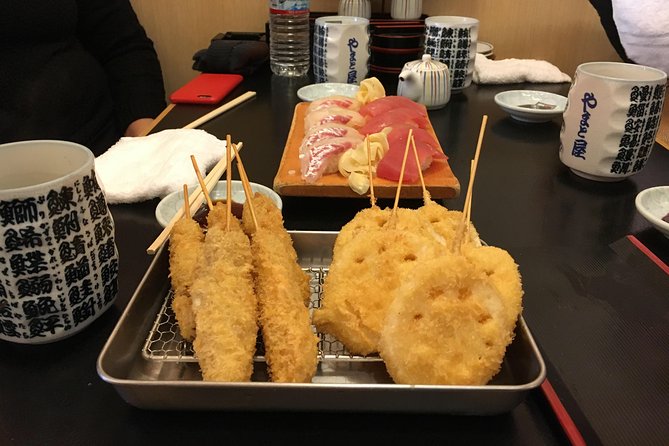
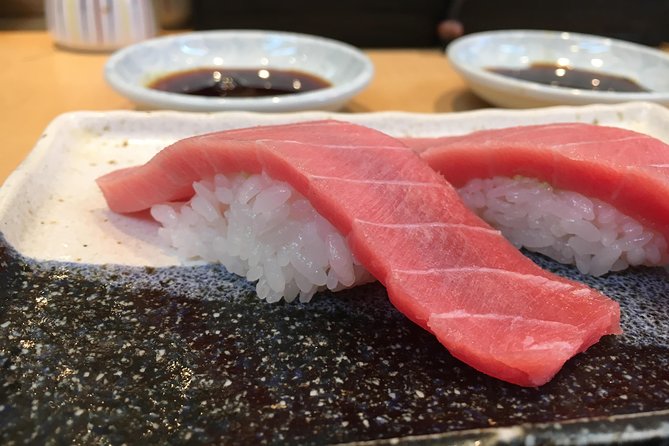
The final food stop is a locally run sushi shop. Your guide recommends a set of nigiri rolls, with assorted kushikatsu skewers delivered from next door.
That pairing gives you two very different Osaka staples. Sushi is clean and precise, while kushikatsu is casual, fried, and associated with Osaka’s street food culture. Ending with both means you get a broader idea of the city’s everyday eating than you would from a tour focused only on sushi.
The food volume can be substantial. Some people felt stuffed by the end, especially when the day included pastries, noodles, rice dishes, Japanese pancakes, sweets, and other regional foods. The exact menu appears to vary, so arrive hungry but not expecting a set tasting list identical to every other departure.
A dessert is not guaranteed. One person would have liked the tour to finish with something sweet, while another received a pastry treat made by the guide’s Japanese wife. That tells you the ending can have personal touches, but you should not book this expecting a formal dessert course.
From the sushi shop, it is about a two-minute ride back to the base. You return the bicycles and leave for the afternoon, with the rest of the day free for more sightseeing.
What the $99.49 price really covers
At $99.49, the tour asks you to value more than the food itself. Your fee covers the bicycle, helmet, English-speaking guide, bottled water, and tastings at three or four eateries. It also pays for a route that joins several districts and for the time spent translating local food culture into something you can understand and enjoy.
If you bought every dish separately, you might spend less. Osaka is full of affordable food, and one critical review felt the experience was too expensive after eating at only two locations. That is a fair concern, especially if your main goal is simply to eat as much as possible.
The price makes more sense if you value the guide and the time saved. You do not need to research which stalls to visit, work out how to reach Tsuruhashi, or guess what to order. You also get sightseeing between meals, plus restaurant recommendations for later in your stay.
The strongest value comes for first-time visitors with limited time. You can cover several areas in one morning, learn what foods to seek out, and finish early enough for Osaka Castle, Dotonbori, museums, or an afternoon nap.
Guides, pace, and the small-group feel
The guide is central to this experience. Names that appear repeatedly in the tour feedback include Mako, Matt, Peter, Erik, Mayco, Maiko, Akira, Yuki, and Danyk. Their strengths are described in practical terms: clear English, humor, local food advice, history, photos, and the ability to keep the ride relaxed.
Matt receives particular praise for careful food choices and Osaka and Japanese history. Mako is described as funny and helpful with questions. Peter is noted for being friendly and informative. Mayco is praised for excellent English and for explaining Osaka, Japan, and Korea Town.
Of course, you cannot choose your guide from that list unless the operator allows it. But these details show what the tour depends on. A good guide turns a food schedule into a morning with character. The maximum of seven people helps because you can actually talk with that guide.
The pace is generally easy, but the ride is not entirely passive. You need moderate fitness and enough confidence to cycle through Osaka streets. One group had a minor bike accident, and the guide had a first-aid kit and handled the situation attentively. That is not a reason to expect trouble, but it is a reminder to wear the helmet and follow directions.
Weather, timing, and what to bring
The experience requires good weather. If poor weather causes cancellation, you are offered another date or a full refund. Rain does not automatically make the tour impossible, but it can make cycling less pleasant. One group rode in the rain and still enjoyed the route, while the guide adjusted the experience as needed.
Bring comfortable clothing, shoes suitable for cycling, and rain protection when the forecast is uncertain. You should also leave room for food. The combination of wagyu, sushi, kushikatsu, market snacks, and possible sweets is more filling than the short duration might suggest.
Cancellation is free up to 24 hours before the start time for a full refund. Changes or cancellations inside that window are not refunded, so check the forecast and your schedule early.
Who should book this Osaka bike tour?
I would recommend it most strongly to a first-time Osaka visitor who wants food and sightseeing in one package. It suits you if you like trying dishes you might not order alone, enjoy a relaxed bike ride, and want a guide to explain local neighborhoods.
It is also a good match for older riders who are comfortable on a bicycle, especially if an e-bike can be arranged. Several people found the route easy, and the city’s flat streets help. Families with children should note the age and height limits before paying.
I would be more cautious if you are a serious food hunter who wants a long list of independent stalls and large portions. You may find the number of stops too limited for the price. I would also skip it if you dislike cycling, need a tightly fixed menu, or want a deep temple visit rather than a quick cultural stop.
Should you book Eat, Drink & Cycle?
Book it if you want an efficient, social introduction to Osaka that combines local food, Shitennoji, Tsuruhashi, and neighborhood cycling. The food is varied, the route covers useful ground, and the guide can save you hours of planning.
Before booking, confirm the meeting location and start time, ask about e-bikes if needed, and clarify food restrictions. If you see the $99.49 fee as payment for a guided half-day experience rather than just lunch, the value is solid. If you mainly want the cheapest possible meal, spend that money on Osaka restaurants instead.
FAQ
How long does the Osaka Foodie Bike Tour last?
The experience lasts approximately three hours and 30 minutes. It ends back at the meeting point after the final food stop.
What food is included?
The tour includes tastings at three or four eateries. Possible foods include oden, tofu, doteyaki, market snacks, wagyu beef, sushi, nigiri, and kushikatsu skewers. The exact selection can vary.
Are bicycles and helmets included?
Yes. The tour includes use of a bicycle and safety helmet. Some participants arranged e-bikes, but e-bike availability should be confirmed before booking.
How many people can join the tour?
The maximum group size is seven travelers.
Is the tour suitable for children?
The experience is not recommended for children aged 12 and under. Riders under 140 centimeters cannot participate.
What happens if the weather is bad?
The experience requires good weather. If the operator cancels because of poor weather, you are offered another date or a full refund.
New rides added around Japan
- Osaka E-Bike Tour With A Local Guide★ 4.7 · 75 reviews
- Osaka: City Highlights Bike Tour★ 4.7 · 20 reviews
- Okinawa: Afternoon Cycling Tour with Local Guide★ 4.8 · 39 reviews
- Nara: City Highlights Shared Group or Private Bike Tour★ 4.9 · 34 reviews
- Nara: Bike Tour in Ancient Capital UNESCO World Heritage★ 5.0 · 43 reviews
- Naha: Guided E-Bike Tour of the 12 Zodiac Temples★ 4.9 · 50 reviews
- Kyoto: Tailored E-Bike Tour to Highlights & Hidden Gems★ 4.9 · 32 reviews
- Best of Kyoto: Ginkakuji & Path of Philosophy E-Bike Tour★ 4.9 · 79 reviews
Osaka Bike Tours, compared.
5-Hour Osaka Bike Tour to the Neighborhood of Osaka Castle
Read our review →
Browse the lists this tour appears in