
Review · HIROSHIMA
Hiroshima 2hr Peace Cycling Tour with Local Guide
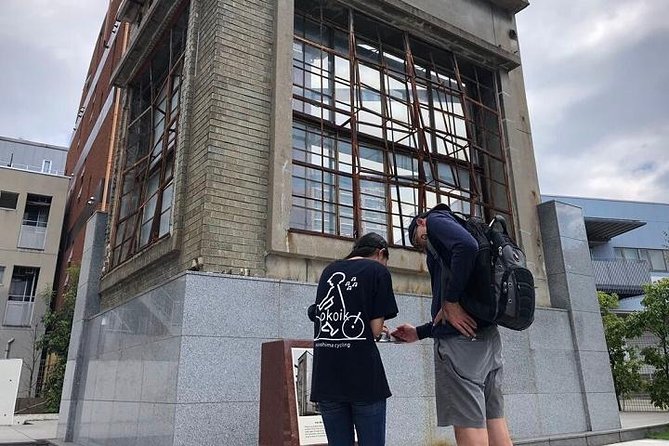
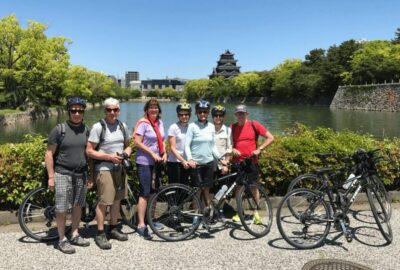
Hiroshima’s story is difficult to take in on foot alone. This two-hour electric-bike tour links the major memorials with ordinary streets, suburban views, and surviving traces such as the A-bombed streetcars. Guides including Shin and Kana bring local family stories to the history, giving the places a human scale.
I like the easy pace and the chance to see more than the central memorials without wearing yourself out. I also like the small group, capped at 10, which gives you room to ask questions. The main drawback is the short time: two hours moves quickly, and the ride may slow down if other riders, especially children, need extra help.
Key points to know before booking
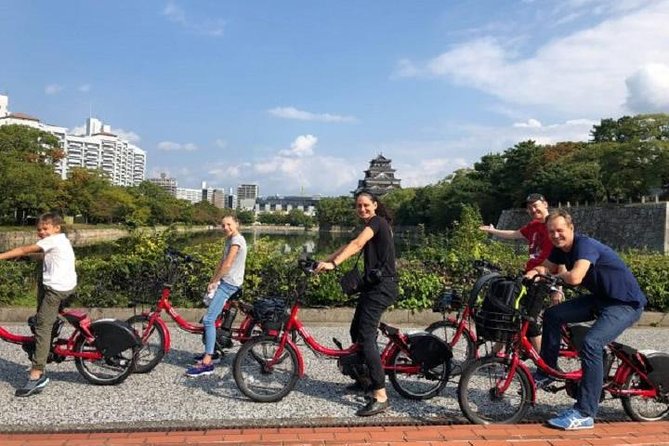
- Electric bikes make the route manageable: Hiroshima is flat, and the bicycles require little effort, even if you are not a regular cyclist.
- The guide adds personal context: Shin has shared family connections to the bombing, while Kana and other guides explain the memorials with care and strong local knowledge.
- You see more than the Peace Park: The route includes city streets, views of the A-Bomb Dome, bombed streetcars, and parts of reconstructed Hiroshima.
- The meeting point is simple: Start and finish at the Rest House in Hiroshima Peace Memorial Park, with 11:00 and 15:00 departures.
- Rain does not always end the experience: You may switch to a walking Peace Route, change dates, or receive a refund if cycling is canceled for weather.
- The price is reasonable for a small group: At $59.69 per person, the tour combines a bicycle, guide, bicycle accident insurance, and two hours of focused sightseeing.
Why cycling changes your view of Hiroshima
Hiroshima Peace Memorial Park is compact enough to walk, but a bicycle changes the rhythm. You can move from one memorial to the next without spending much of your limited sightseeing time crossing the park. Then you can ride beyond the formal memorial grounds and see how the city rebuilt itself around those reminders.
That contrast matters. The A-Bomb Dome and memorial monuments tell you about destruction. The surrounding streets show a functioning modern city, with trains, homes, shops, and daily life continuing around the sites. This tour places both parts of Hiroshima in the same frame.
You do not need to be a serious cyclist. The route is described as leisurely, and Hiroshima is relatively flat. The electric bikes do most of the hard work. One rider in their sixties found the riding manageable despite not being a cyclist, while another appreciated how easy it was to cover ground without dealing with steep climbs.
The guide leads the group through city streets and adjusts the pace when needed. That is useful for families and mixed-age groups, though it means a confident cyclist should not expect a fast ride.
More guided departures in Japan:
- Tokyo Guided Small-Group Biking Tour
★ 5.0 · 1,250 reviews - Tokyo Top Highlights 3h Guided E-bike Tour
★ 5.0 · 714 reviews - 3h Tokyo E-Bike Tour: Hidden Gems, and Local Life with guide
★ 5.0 · 670 reviews
Meeting at the Peace Park Rest House
The tour begins at the Hiroshima Peace Memorial Park Rest House, at 11:00 or 15:00. Plan to arrive early. If you are late without contacting the operator, the tour can be canceled with a same-day, nonrefundable charge. Even advance notice does not guarantee that a late arrival can be accommodated, since this is a shared activity.
The Rest House is a practical meeting point in the middle of the memorial area, but it does not offer luggage storage. If you have larger bags, use coin lockers at the International Conference Center Hiroshima or the Hiroshima Peace Memorial Museum, both about a six-minute walk away.
After a short meeting, you receive your bicycle and safety guidance. Adult electric bicycles are available for riders at least 145 centimeters tall. Children between 110 and 145 centimeters can use one of the two children’s bicycles available for a booking, or an adult bicycle at the child rate. Electric bicycles with child seats are listed for children under 22 kilograms and under 115 centimeters.
The tour includes bicycle accident insurance. Free Wi-Fi is not provided at the meeting point, although Hiroshima Free Wi-Fi is available around the city.
The memorials inside Peace Memorial Park
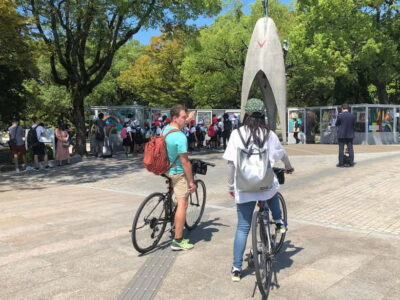
The first major part of the ride lasts about 55 minutes in Peace Memorial Park. This is the emotional core of the tour. You will visit or learn about the Atomic Bomb Dome, the Cenotaph for the A-Bomb Victims, the Children’s Peace Monument, and the Peace Bell.
A guide can help you understand how these monuments relate to one another. The park is not simply a collection of photo stops. Each site carries a different message about those who died, the children affected by the bombing, and Hiroshima’s continuing call for peace.
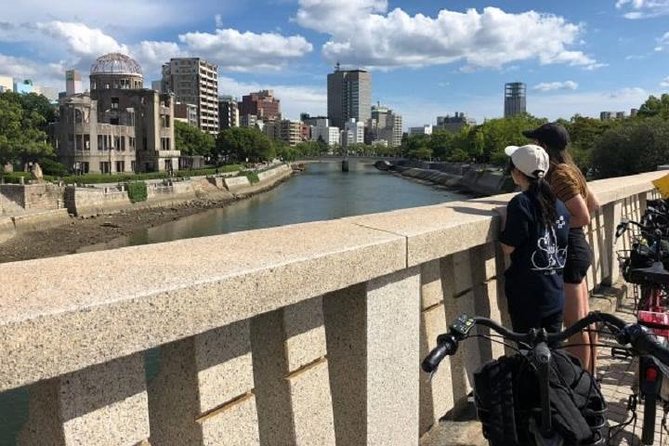
The A-Bomb Dome is especially powerful because of its physical presence. It is a surviving structure close to the hypocenter, and seeing it from different points around the city gives you more than the standard front-facing view. The tour specifically seeks viewpoints away from the usual path, which makes the ride useful even if you have already seen the dome or visited the Peace Memorial Museum.
The Children’s Peace Monument brings the story down to an individual level. The Peace Bell offers a quieter moment, while the Cenotaph connects the many personal losses to the city’s wider remembrance. Your guide explains the memories held by each place rather than rushing you through a checklist.
This section is serious. The tone is respectful, and several guides, including Shin, have shared family accounts connected to the bombing. His family stories have been especially meaningful for people who wanted to understand Hiroshima through personal experience rather than dates and military facts alone.
The tour does not replace the Peace Memorial Museum. If you want detailed exhibits, documents, photographs, and a longer account of the bombing, you should visit the museum separately. The bicycle tour works better as a guided setting around the city, where the spaces themselves and the guide’s stories do much of the teaching.
Beyond the park: streetcars, suburbs, and recovery
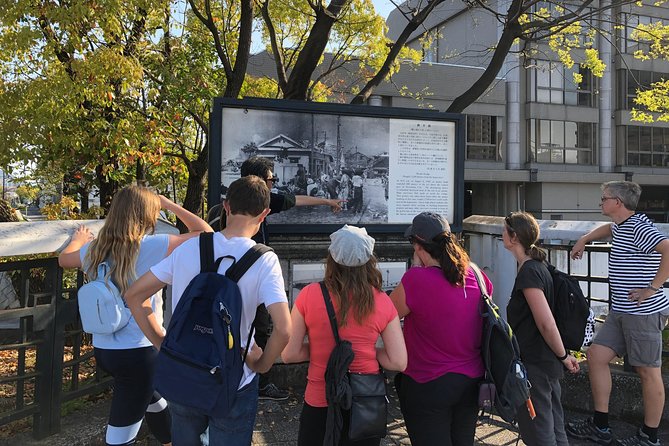
At around the one-hour mark, the route moves beyond the park and into Hiroshima itself. This is where the experience becomes different from a standard memorial walk. You ride through parts of the rebuilt city and learn how Hiroshima changed after the bombing.
One memorable detail is the A-bombed streetcar system. Hiroshima still has a train running today that survived the atomic bombing. Seeing the actual city transport network helps connect the historic event to everyday life. It is not an isolated museum object. It is part of the city’s working streets.
The guide may also take you to views of the A-Bomb Dome from less expected angles and through areas that you could easily miss if you stayed only around the park. You see the memorial district, then the ordinary city around it. That movement gives the tour its strongest idea: Hiroshima remembers the past while continuing to live in the present.
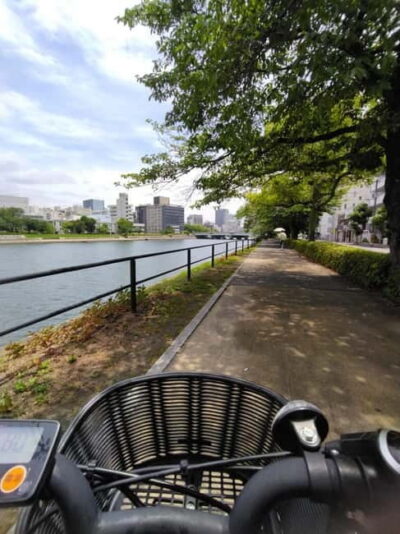
This part is also the most pleasant cycling. The route is described as easy and leisurely, and the electric assistance keeps the focus on the streets and stories rather than on your legs. The city is less congested than Tokyo or Osaka, according to one rider, and the cycling felt manageable even around streets and sidewalks.
Do keep your expectations in check. This is not a long city sightseeing ride. The tour finishes back at the Rest House after two hours, so the suburban section gives you a useful sample rather than a full tour of Hiroshima.
More bike tours around Japan:
- Hidden Kyoto E-Biking tour
★ 5.0 · 1,843 reviews - Bike Tour Exploring North Kyoto plus Lunch
★ 5.0 · 1,087 reviews - Tokyo Great Cycling Tour
★ 5.0 · 811 reviews - Arashiyama Bamboo Forest & Hidden Gems Bike Tour (Early Bird)
★ 5.0 · 613 reviews
Guides who make the history personal
The guide is the biggest variable in any shared tour, but the strongest experiences here come from guides who combine facts with a personal connection to Hiroshima.
Shin has been praised for sharing family memories tied to the bombing. In one account, his mother was in the womb when the bomb fell, and in another, his grandparents survived. These stories do not replace historical evidence, but they can help you understand how the bombing remains part of family memory across generations.
Kana has been described as clear, warm, and highly informed, with strong English and a good sense of timing. She has also helped turn a rainy cycling day into a walking tour while keeping the experience worthwhile. Bella has been noted for taking riders beyond the familiar memorial stops and for offering helpful local suggestions, including places to eat.
Other guides, including Tomas and Moet, have also received praise for combining serious history with warmth and encouragement. The assigned guide can vary, so you should not book on the assumption that one particular person will lead your group. Still, the repeated strength of the guiding team is a good reason to choose a guided ride instead of simply renting a bicycle.
The best guides do not treat the bombing as a distant chapter. They explain suffering, survival, reconstruction, and Hiroshima’s focus on peace. Expect a mix of solemn conversation, practical city information, and time to ask questions.
What the two-hour timing really gives you
The schedule is tightly organized:
- 11:00 or 15:00: meet at the Peace Park Rest House
- About 55 minutes: Peace Memorial Park and its key monuments
- About one hour: Hiroshima streets, city views, streetcars, and postwar recovery
- 13:00 or 17:00: return to the Rest House
The advantage is efficiency. You can fit the ride before or after another Hiroshima activity, and the 15:00 departure leaves the morning free for the museum or Miyajima plans. The disadvantage is that you will not have much spare time at each stop.
If you want a slow, reflective visit to every memorial, two hours may feel short. One rider specifically wished the tour had lasted longer. I would schedule the Peace Memorial Museum separately rather than trying to squeeze it into this outing.
The operator also offers a three-hour version. That longer route includes the two-hour sights plus places such as Hiroshima Castle, with more attention to prewar Hiroshima and postwar recovery. Choose the longer option if you want more conversation with the guide or prefer a fuller historical route.
Rain, cold, and practical comfort
The activity depends on safe cycling conditions. Rain, snow, cold wind, or other poor weather can affect the route. One group completed a walking version in heavy rain, and another rode in snowfall, so weather does not always end the day. The operator can switch the activity to a rainy-day walking route, offer another date, or provide a refund if the cycling plan cannot run.
The rainy-day route includes Peace Memorial Park, the A-Bomb Dome, the hypocenter, the Former Bank of Japan, Fukuromachi Elementary School, and a main street. The walk covers the area around the hypocenter, where the city was reduced to scorched ground in an instant. It is a serious alternative, not simply a shortened version of the bicycle ride.
Wear clothing suited to the forecast and shoes you can walk or pedal in comfortably. The tour does not promise indoor shelter throughout, and the timetable can change depending on conditions. The group may also slow down for children or riders who are less comfortable on bicycles.
The bicycles are described as easy to operate and in good condition, but you should still feel comfortable riding in a city setting. If you are unsure, tell the guide at the start so the pace and route can be handled safely.
Is $59.69 a fair price?
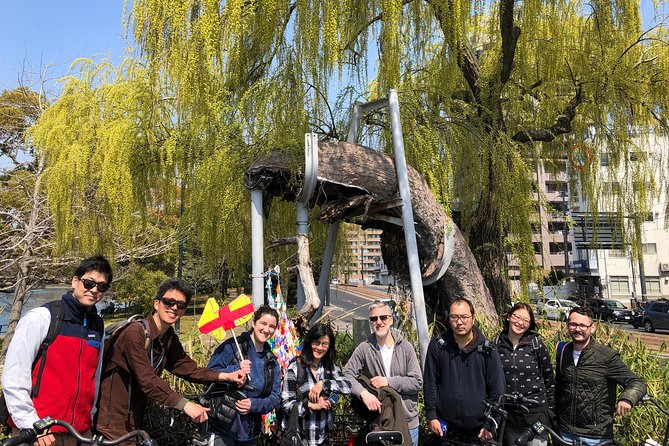
At $59.69 per person, this costs more than simply walking through the Peace Park, but it includes an electric bicycle, a local guide, a small group of no more than 10 people, and bicycle accident insurance.
The value comes from the combination. You are not only paying for transport. You are paying to connect the memorial park with the living city, find viewpoints you might miss, and ask questions during the ride. For a first visit to Hiroshima, that combination is useful.
The price is less compelling if you already know the city well, plan to rent a bicycle independently, or prefer to spend several quiet hours inside the museum. It is also worth remembering that the two-hour format is focused rather than extensive. You are buying a well-organized introduction, not a full-day tour.
Free cancellation is available up to 24 hours before the start time. Cancellations or changes made inside that window are not refundable, except when the operator cancels for poor weather and offers a refund or another arrangement.
Who should book this Hiroshima ride?
I would choose this tour for a first visit, especially if you want the memorial sites explained by someone from Hiroshima. It suits couples, families, and solo visitors who like active sightseeing but do not want a demanding cycling day.
It is also a strong choice if you have already visited the Peace Memorial Museum. The museum gives you detailed evidence and exhibits; this ride gives you streets, monuments, city views, and personal explanation. The two experiences work well together.
Families should note the child-bike and child-seat limits carefully. Riders under 110 centimeters may not meet the listed bicycle arrangements, and children’s equipment is limited. If your group includes young children or anyone nervous about city cycling, ask about the practical setup before booking.
I would skip it if you strongly dislike bicycles, need a slow pace at every memorial, or have only enough time for the museum. In those cases, a walking plan may suit you better.
Should you book it?
Yes, if you want Hiroshima’s memorial park and present-day streets in one focused outing. The electric bikes make the route easy, the small group keeps the guide accessible, and the best guides, especially Shin and Kana, bring a personal and thoughtful sense of place.
Book with realistic expectations. The tour is short, the subject is heavy, and the group pace may vary. Treat it as a moving introduction to Hiroshima, then give the museum and the memorials more time on your own.
FAQ
Where does the Hiroshima cycling tour begin?
The tour begins at the Hiroshima Peace Memorial Park Rest House in Naka Ward, Hiroshima.
Where does the tour finish?
It finishes back at the same Rest House meeting point.
How long does the tour last?
The cycling tour lasts about two hours. Departures are scheduled for 11:00 and 15:00, returning at about 13:00 or 17:00.
What sites are included?
The route includes Hiroshima Peace Memorial Park, the A-Bomb Dome, the Cenotaph, the Children’s Peace Monument, and the Peace Bell. It also includes city streets, views away from the main route, and information about the A-bombed streetcars.
Are the bicycles electric?
Yes. Adult electric bicycles are provided, and the route is described as easy because Hiroshima is relatively flat.
What height is required for an adult bicycle?
Adult bicycles are available for people at least 145 centimeters tall.
Are children’s bicycles available?
Yes. Two children’s bicycles are available for one booking for children from 110 to 145 centimeters tall. Children under 15 can use children’s or adult bicycles at the child rate.
What happens if it rains?
The cycling route may change to a rainy-day walking route. You may also choose another date or receive a refund if the planned activity is canceled because of poor weather.
Can I leave luggage at the meeting point?
No luggage storage is available at the Rest House. Coin lockers are available at the International Conference Center Hiroshima and Hiroshima Peace Memorial Museum, about a six-minute walk away.
What happens if I arrive late?
If you are late without prior notice, the tour may be canceled and the full same-day fee may be charged. Even with advance notice, the operator may not be able to hold the tour for a late arrival.
Can I cancel for a refund?
You can cancel for a full refund up to 24 hours before the local start time. Cancellations or changes made less than 24 hours before the tour are not accepted for a refund.
New rides added around Japan
- Osaka E-Bike Tour With A Local Guide★ 4.7 · 75 reviews
- Osaka: City Highlights Bike Tour★ 4.7 · 20 reviews
- Okinawa: Afternoon Cycling Tour with Local Guide★ 4.8 · 39 reviews
- Nara: City Highlights Shared Group or Private Bike Tour★ 4.9 · 34 reviews
- Nara: Bike Tour in Ancient Capital UNESCO World Heritage★ 5.0 · 43 reviews
- Naha: Guided E-Bike Tour of the 12 Zodiac Temples★ 4.9 · 50 reviews
- Kyoto: Tailored E-Bike Tour to Highlights & Hidden Gems★ 4.9 · 32 reviews
- Best of Kyoto: Ginkakuji & Path of Philosophy E-Bike Tour★ 4.9 · 79 reviews
Hiroshima Bike Tours, compared.
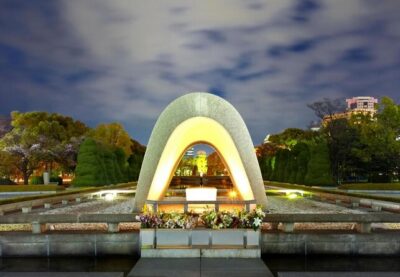
Hiroshima in a Nutshell: Morning Bike Adventure
Read our review →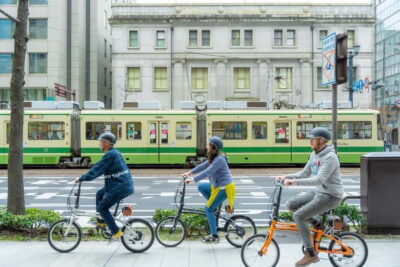
Peace Park, Castle, and Mitaki Temple E-Bike Tour
Read our review →Browse the lists this tour appears in