
Review · HIROSHIMA
Hiroshima and Miyajima by Bike and Boat
Hiroshima and Miyajima are often treated as separate day trips, but this tour links them in one active, well-planned outing. You pedal along rivers and through city neighborhoods, pause at the Peace Memorial Park and Cenotaph, then ride the train and ferry to Miyajima for shrine views, deer, and lunch.
I like the small maximum group of eight, which gives guides room to adjust the pace and answer questions. I also like the mix of transport: bike, train, and ferry make the day feel varied rather than like one long walk. The main concern is time. Miyajima includes a fair amount of walking, and the tour can run well beyond the advertised seven to eight hours, especially in hot weather or with a long lunch.
Key points to know before you book
- Two major destinations in one day: Cover central Hiroshima and Miyajima without arranging separate transport.
- A thoughtful bike route: Ride beside rivers, through parks, and around neighborhoods rather than sticking to a bus route.
- A serious history stop: Hear guided explanations at the Peace Memorial Park and Cenotaph, but note that the museum is not included.
- Lunch is part of the plan: Eat local Hiroshima dishes, with vegetarian options available if requested ahead of time.
- Small groups make a difference: The tour accepts no more than eight people and may adapt the route to your interests.
- Expect a full day: The listed duration is seven to eight hours, but one version ran close to ten hours.
Why the bike, train, and ferry combination works
This is not simply a bicycle ride with a few photo stops. It is a full-day introduction to Hiroshima, using several ways to move through the city and reach Miyajima.
The bicycle is useful in Hiroshima because it lets you cover more ground than walking while still moving slowly enough to notice canals, bridges, parks, and ordinary neighborhoods. You are not sealed inside a coach. You can hear the city, stop near monuments, and get a better sense of how the memorial district fits into modern Hiroshima.
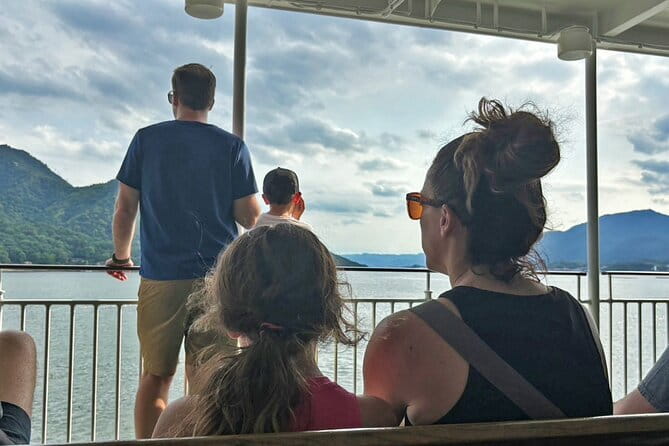
The train and ferry then change the rhythm. After the city portion, you board the JR Miyajima Ferry, with the fare included, and cross to the island. The ferry ride gives you a break from pedaling and opens up views across the water toward Miyajima.
The group size matters here. With no more than eight people, the guide can keep the bikes together and make small changes based on energy, weather, or interests. Several guides have also adjusted the order of the day. One especially practical approach is to visit Miyajima first and the memorial area later, though the exact order may vary.
More Bike and Boat Tours in Japan:
- Hiroshima: City and Miyajima Bike and Boat Tour
★ 5.0 · 20 reviews - Ninh Binh Full-Day Tour from Hanoi to Hoa Lu, Tam Coc & Mua Cave Via Boat & Bike
★ 5.0 · 4,384 reviews - From Perth: Rottnest Island Full-Day Bike and Ferry Trip
★ 4.7 · 2,548 reviews
Starting at Cycle Hiroshima at 9:30 a.m.
You meet at Cycle Hiroshima, at 4-chōme-5-4 Ōtemachi in Hiroshima’s Naka Ward. The tour begins at 9:30 a.m. and ends back at the same meeting point.
The first step is choosing and fitting a bicycle. The available bikes include Trek models, and guides have taken time to match bike size to riders, including shorter adults. This is worth handling carefully before departure. A comfortable saddle and correctly sized frame matter more than speed on a day that includes several hours of riding and walking.
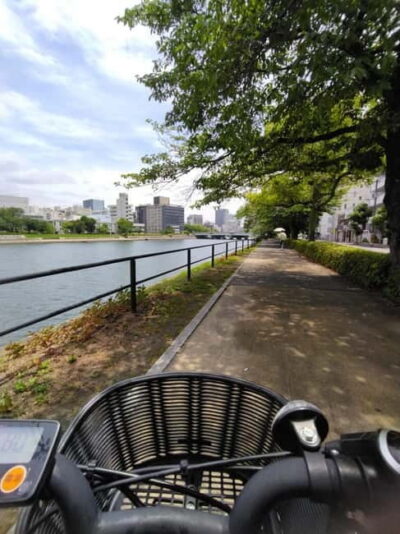
The route starts with about an hour of cycling around Hiroshima. You follow rivers, pass through parks, and ride through neighborhoods. This opening section is less about checking off a single sight and more about getting your bearings in the city.
You should still expect city riding, not a countryside cycling holiday. The ride is designed for people who want an active way to see Hiroshima, but you do not need to be a serious cyclist. Guides have kept a gentle pace, added water breaks, and adjusted the schedule during hot and humid weather.
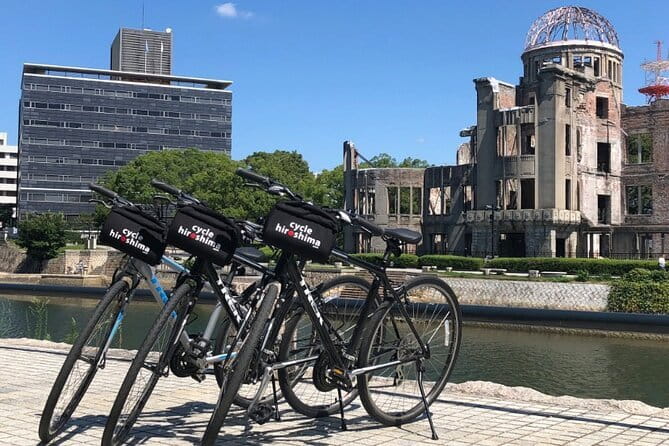
Peace Memorial Park and the Cenotaph
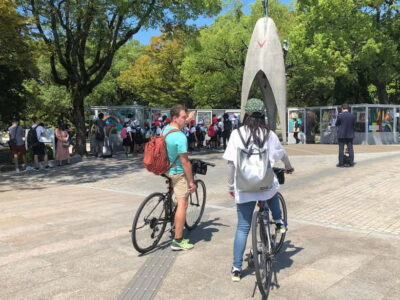
The Hiroshima portion becomes more reflective at the Peace Memorial Park. You spend about an hour exploring the park and nearby memorial sites with commentary from the guide.
This is where the quality and tone of your guide matter most. The subject requires care, and strong guides such as Aimee, Alex, Ishan, James, and Melissa have been praised for explaining the events leading up to the atomic bombing and its aftermath in a clear, respectful way. James, in particular, has been noted for explaining the wider wartime background, while Melissa has been described as balancing difficult material with a calm sense of humor.
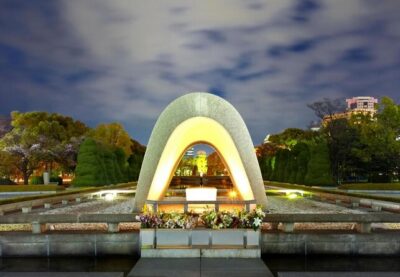
The Cenotaph for the Atomic Bomb Victims receives its own short stop of about 15 minutes. You have time to stand at the monument, reflect, and hear why it matters. This is not a rushed drive-by photo stop, but it is also not a long museum session.
That distinction is important. The Hiroshima Peace Memorial Museum is not included. If the museum is a priority, you need to arrange it separately, perhaps before or after the tour. Several versions of the day moved quickly through the Hiroshima sights because Miyajima took longer than expected, so adding the museum on the same day may be difficult.
The park works best when you allow yourself to slow down. This is not a place to treat like a standard sightseeing checklist. The guide provides context, but you will get more from the stop if you are prepared for a quiet and serious hour.
Hiroshima Castle and a glimpse of feudal Japan
The tour then turns to Hiroshima’s earlier past at Hiroshima Castle. The castle grounds, moats, and restored main tower offer a sharp contrast to the memorial district.
You have about 30 minutes here. That is enough for a look at the exterior, photos, and a short visit into the world of feudal Japan, but not enough for a long museum visit or a leisurely study of every exhibit.
This quick contrast is one of the tour’s strengths. Hiroshima is not only a modern city marked by 1945. The castle stop gives you a reminder of its prewar and feudal identity. Still, if castles are your main interest, you may find this portion brief.
The exact sequence can change. Some guides begin with Miyajima and leave Hiroshima’s memorials for later. That can work well because it puts the lighter sightseeing first, but it may also mean reaching the Peace Memorial Park late in the day. Ask your guide about the day’s order if you have a strong preference.
More bike tours around Japan:
- Hidden Kyoto E-Biking tour
★ 5.0 · 1,843 reviews - Tokyo Guided Small-Group Biking Tour
★ 5.0 · 1,250 reviews - Bike Tour Exploring North Kyoto plus Lunch
★ 5.0 · 1,087 reviews - Tokyo Great Cycling Tour
★ 5.0 · 811 reviews
The JR Miyajima Ferry and island arrival
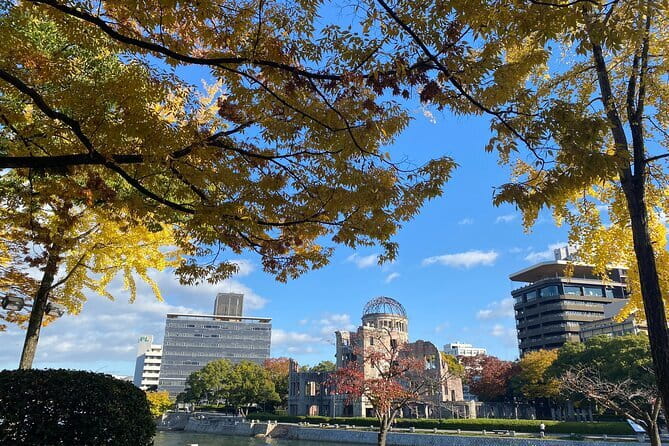
The included train and ferry ride takes you from Hiroshima toward Miyajima. The ferry crossing itself lasts about 30 minutes and is one of the pleasant transitions of the day.
You are not responsible for piecing together separate tickets or figuring out the island connection during the tour. That saves time and reduces the small stresses that can eat into a short visit.
Miyajima has a different feel from central Hiroshima. You walk through streets lined with orange buildings, see wooded hills, and encounter deer around the island. The guide explains local customs, legends, and the island’s role in Japanese culture while leading you toward Itsukushima Shrine.
You should expect walking once you arrive. This is the part of the tour where the bicycle becomes less important. The island portion lasts about an hour and a half before or around the shrine and lunch, but some groups spend longer here. One important tradeoff is that a day advertised as a bike tour can feel more like a walking tour during the Miyajima section.
Itsukushima Shrine, deer, and lunch
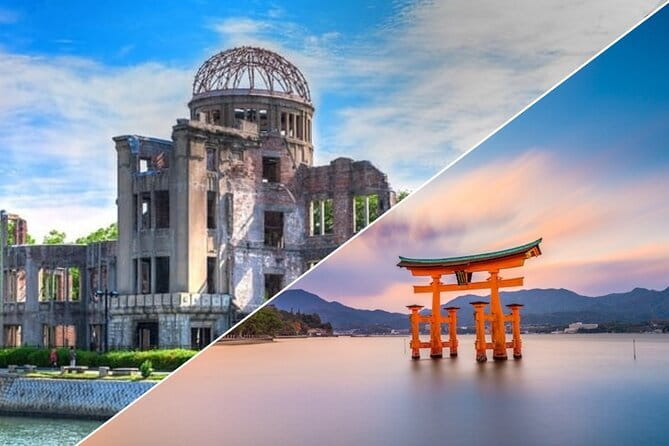
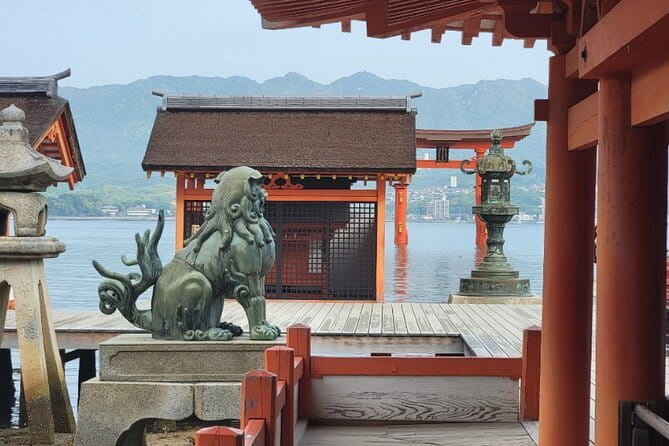
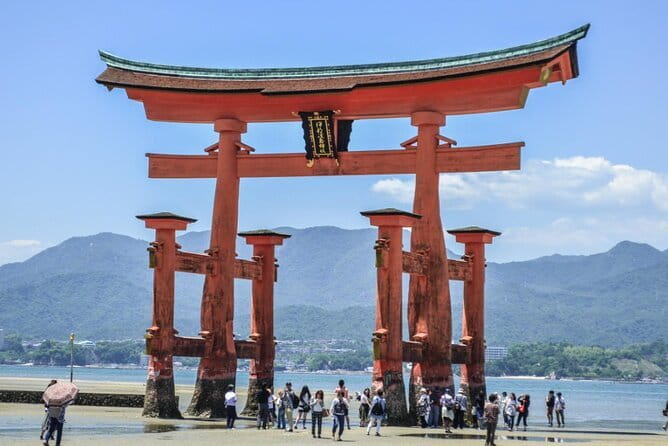
Itsukushima Shrine is the visual centerpiece of Miyajima. The orange buildings, water setting, and famous torii gate make it one of the most memorable stops in the region.
The tour takes you around the shrine area and nearby monuments, with time for photographs and local wildlife encounters. Deer are part of the island experience, but you should treat them as wild animals and follow your guide’s instructions around them.
Lunch is included at a nearby eatery. The meal features regional Hiroshima dishes, and several people have singled out the food as a high point. Hiroshima-style okonomiyaki is one dish you might receive or be guided toward, and local noodles or other regional food may also feature, depending on the restaurant and day.
Vegetarian choices are available, but you need to request them before the tour. Other dietary restrictions require advance contact. Do not assume that a last-minute change will be easy during a tightly timed group day.
Lunch is also where the schedule can stretch. A sit-down meal is more enjoyable than eating while rushing between sights, but a long lunch leaves less time for Hiroshima’s memorial area or Miyajima’s side streets. If you care most about the island, this is a benefit. If the Peace Memorial Park is your main reason for booking, keep the time issue in mind.
What the guides add to the day
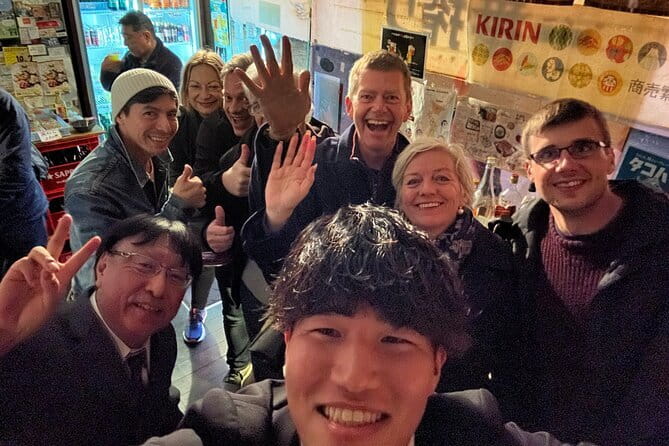
This tour depends heavily on the guide. The route is useful, but the interpretation is what turns a transport-heavy day into a meaningful one.
Aimee has been especially strong at keeping the mood warm without making light of serious subjects. She has adjusted itineraries, kept a gentle pace in extreme heat, arranged suitable bikes, and even used small practical touches such as extra water and cooling strips. Her English has been described as clear, and she has helped solo participants feel comfortable.
Alex has drawn praise for his long experience living in Japan and his ability to explain the city beyond the obvious monuments. Ishan has been especially effective at discussing the war from several perspectives and connecting the sites to the larger story of Hiroshima.
James combines strong English with careful attention to bike setup, local food, photographs, and Japanese names and phrases. Melissa has been valued for her clear speech, good humor, and sensitive handling of difficult history. Sage has been praised for a calm cycling pace and useful explanations, though one long version of the tour felt too focused on Miyajima and not serious enough about wartime history.
The practical lesson is simple: the guide can shape the experience as much as the itinerary. The company assigns the guide, so you cannot count on a particular person unless the provider confirms it. Still, the consistently strong guide feedback suggests that the staff is a major part of the tour’s appeal.
Heat, rain, and the physical effort
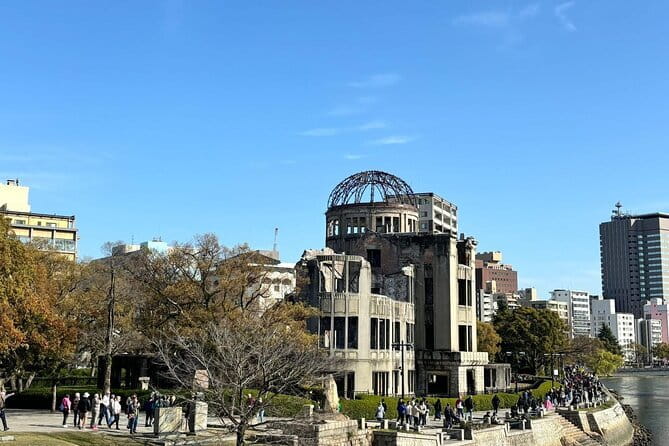
Hiroshima summers can be hot and humid, and this is not a passive sightseeing day. You cycle, walk around the Peace Memorial Park, board public transport, walk across Miyajima, and cycle back to the meeting point.
The pace is not intended to be athletic. Guides have stopped for water, allowed breaks, and adapted the route for heat. Even so, you should wear comfortable clothes, bring water, and be ready for a long day on your feet.
Rain can change the activity. One tour switched from cycling to walking because of a heavy forecast, while still covering the planned sights. The experience requires good weather, and the provider may offer another date or a full refund if poor weather forces cancellation.
The return section is short, about 20 minutes by bike, after you retrace the ferry and train route. You return to Cycle Hiroshima to collect stored luggage and receive suggestions for your next stop in the city.
Is $142.05 a fair price?
At $142.05 per person, this is not the cheapest way to see Hiroshima and Miyajima. You are paying for the bicycle, guide, lunch, train and ferry rides, and a full day of planning.
The value is strongest if you have only one day and want both destinations without handling the transport yourself. The guide also brings historical context that is difficult to gain by simply riding between monuments.
The value is weaker if you prefer a slow museum visit, long free time, or independent exploration. The tour does not include the Peace Memorial Museum, and the schedule can feel packed. You may also spend close to ten hours out if the island visit and lunch run long.
The small group helps justify the price. A maximum of eight people allows more conversation and flexibility than a large coach tour. If your guide is Aimee, Alex, Ishan, James, Melissa, or another strong staff member, the historical explanations and practical help add real value.
Who should book this experience?
I would choose this tour if you want a broad first look at Hiroshima and Miyajima, enjoy moderate physical activity, and appreciate a guide who can explain difficult history with care.
It suits couples, friends, solo visitors, and families with adults who can manage cycling and walking. The small group can also work well if you prefer company without the feel of a large tour.
You should think twice if you want a dedicated museum day, dislike heat, need a slow schedule, or mainly want to cycle rather than walk. You may also prefer separate visits if Miyajima deserves a full day on its own.
Should you book Hiroshima and Miyajima by Bike and Boat?
Book it if your priority is seeing the main parts of both Hiroshima and Miyajima in one day, with transport, lunch, bikes, and interpretation handled for you. The mix of river cycling, memorial sites, castle grounds, ferry travel, shrine views, and local food gives you a useful picture of the city and island.
Skip it if you want a long museum visit or plenty of unplanned time. If you do book, request vegetarian food or other dietary needs early, wear shoes suited to walking, prepare for heat, and ask at the start how the guide plans to divide time between Hiroshima and Miyajima.
Free cancellation is available up to 24 hours before the 9:30 a.m. start. The tour requires a minimum number of participants, and poor weather can lead to a new date or full refund.
FAQ
How long does the tour last?
The listed duration is approximately seven to eight hours. The day can run longer, with one version lasting close to ten hours because of extended time on Miyajima and lunch.
Where does the tour start and end?
It starts and ends at Cycle Hiroshima, 4-chōme-5-4 Ōtemachi, Naka Ward, Hiroshima, 730-0051, Japan.
What time does the tour begin?
The start time is 9:30 a.m.
What is included in the price?
The price includes lunch, use of a bicycle, train and ferry rides, and all fees and taxes.
Is the ferry fare included?
Yes. The JR Miyajima Ferry fare is included.
Is the Peace Memorial Museum included?
No. The tour visits the Peace Memorial Park and the Cenotaph for the Atomic Bomb Victims, but the museum is not included.
Can I request vegetarian food?
Yes. Vegetarian options are available, but you should request them before the tour. For other dietary restrictions, contact the provider in advance.
How many people can join the tour?
The maximum group size is eight people. The tour also requires a minimum number of participants to operate.
New rides added around Japan
- Osaka E-Bike Tour With A Local Guide★ 4.7 · 75 reviews
- Osaka: City Highlights Bike Tour★ 4.7 · 20 reviews
- Okinawa: Afternoon Cycling Tour with Local Guide★ 4.8 · 39 reviews
- Nara: City Highlights Shared Group or Private Bike Tour★ 4.9 · 34 reviews
- Nara: Bike Tour in Ancient Capital UNESCO World Heritage★ 5.0 · 43 reviews
- Naha: Guided E-Bike Tour of the 12 Zodiac Temples★ 4.9 · 50 reviews
- Kyoto: Tailored E-Bike Tour to Highlights & Hidden Gems★ 4.9 · 32 reviews
- Best of Kyoto: Ginkakuji & Path of Philosophy E-Bike Tour★ 4.9 · 79 reviews
Hiroshima Bike Tours, compared.
Hiroshima in a Nutshell: Morning Bike Adventure
Read our review →
Hiroshima 2hr Peace Cycling Tour with Local Guide
Read our review →
Peace Park, Castle, and Mitaki Temple E-Bike Tour
Read our review →Browse the lists this tour appears in