
Review · HIROSHIMA
Hiroshima: Peace Cycling Tour with Local Guide
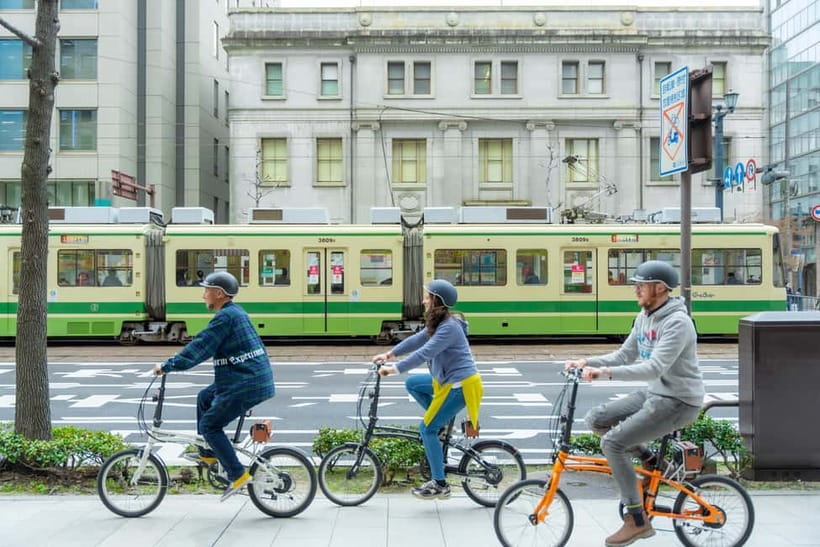
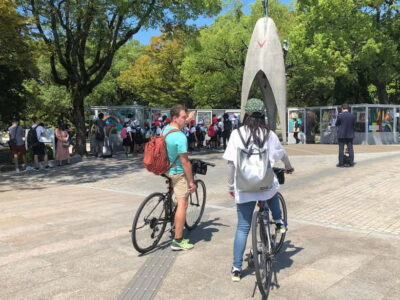
Hiroshima’s Peace Memorial Park tells the essential story, but this electric-bike tour carries you beyond the usual memorial circuit. You ride through the city that grew back around the bomb sites, stopping at bridges, parks, hospitals, streetcars, and surviving trees that are easy to miss on foot.
I like the personal scale of the tour. Guides such as Shin, Kana, Moe, Bella-Kana, and Mai bring family memories and local stories into the history. I also like the efficient route: in two to three hours, you cover much more ground than you could walking, with time to ask questions.
The main consideration is emotional weight. This is not a light sightseeing ride with a few memorial stops. The subject is serious, and the pace may slow for children or anyone less used to cycling. Tall riders should also check the bike size, since one rider found the adult bicycle small for a height of 6 feet 1 inch.
What makes this Hiroshima cycling tour worth your time
- A-bomb sites beyond Peace Park: Visit places such as Hiroshima Red Cross Hospital, Miyuki Bridge, the surviving weeping willow, and the original streetcar route.
- Local guides with family connections: Shin and other guides share stories passed through parents and grandparents, adding a human layer to the history.
- Comfortable electric bicycles: The motor assistance makes the ride manageable even if you are not especially fit.
- Two useful route lengths: Choose a two-hour version focused on Peace Park and nearby suburbs, or a three-hour loop with Hiroshima Castle and more outlying sites.
- Small groups of up to 10: The group size leaves room for questions and makes it easier to keep together on city streets.
- A view of recovery: You see not only destruction, but also the greenery, neighborhoods, railways, and daily life that followed.
Why a bicycle changes your view of Hiroshima
Hiroshima is often reduced to one solemn district: the Atomic Bomb Dome, the cenotaph, the museum, and the river. Those places deserve time, but the city’s story does not end at the edge of Peace Memorial Park.
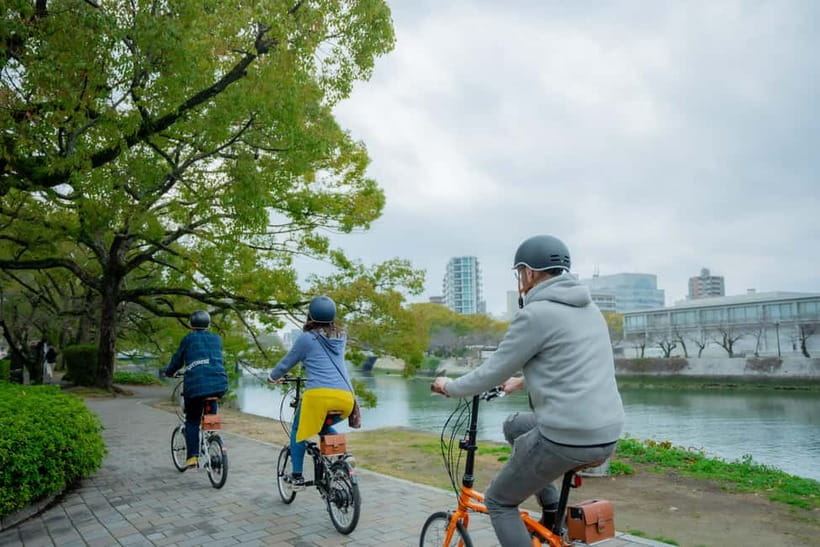
The bombing severely damaged the area within roughly 2.5 kilometers of the hypocenter. A bicycle lets you trace that wider zone without spending the whole day on foot. You move from the central memorial area into ordinary streets where the evidence is less obvious, but where individual sites still carry a connection to August 6, 1945.
I like this approach because it shows two Hiros h imas at once. One is the city of memorials and international symbolism. The other is a functioning Japanese city with trams, parks, hospitals, bridges, homes, and leafy boulevards. The contrast is central to the experience.
The ride itself is not presented as exercise. The electric bicycles handle much of the effort, and the route covers relatively short distances between stops. Guides adjust the pace if someone in the group is less comfortable on a bike. You still need to know how to ride and control a bicycle in a city, but you do not need to be especially athletic.
More guided departures in Japan:
- Tokyo Guided Small-Group Biking Tour
★ 5.0 · 1,250 reviews - Tokyo Top Highlights 3h Guided E-bike Tour
★ 5.0 · 714 reviews - 3h Tokyo E-Bike Tour: Hidden Gems, and Local Life with guide
★ 5.0 · 670 reviews
The two-hour route: a focused introduction
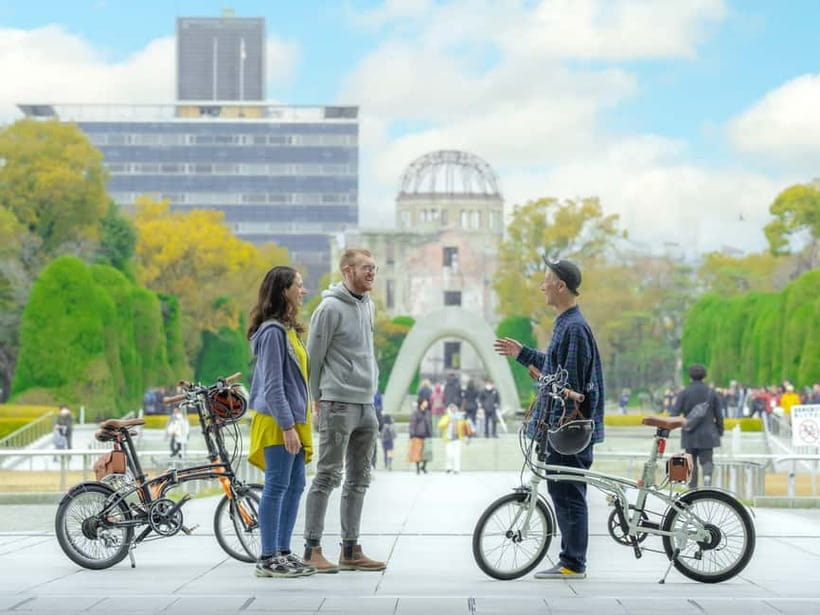
The shorter version begins at the Rest House in Hiroshima Peace Memorial Park, with departures listed at 11:00 and 15:00. After a quick start, you begin in the park and learn how its monuments fit together.
The guide explains what the park means to local people, not only what each structure represents. You will hear about the Atomic Bomb Dome, the memories attached to the monuments, and the destruction of the city. This opening gives the ride a clear purpose before you head into the streets.
At about noon, the route moves away from the most familiar sightseeing area. One of the memorable details is the surviving streetcar system. Hiroshima still has a streetcar connected with the bombing, often described as an A-bombed streetcar. Seeing a working piece of transport history makes the past feel less distant than a display behind glass.
The route then continues through parts of Hiroshima that many first-time visitors would pass without noticing. You stop at several A-bomb heritage sites and hear stories handed down in the city. The point is not to collect monuments as quickly as possible. It is to understand how destruction reached into neighborhoods and how those neighborhoods returned.
The two-hour course finishes back at the meeting point around 13:00 or 17:00, depending on departure. I would choose this option if you have limited time, want the main historical theme, or plan to visit the Peace Memorial Museum separately.
The three-hour route: a wider circle of memory
The longer course begins at 10:00 or 14:00 and adds a fuller circuit through central Hiroshima. It starts at Hiroshima Castle, followed by Hiroshima Gokoku Shrine and its shrine gate.
The castle and shrine provide useful context for the city before the route reaches the best-known atomic-bomb sites. Hiroshima Central Park follows, giving you a sense of the open public spaces around the center. From there, the ride continues to Aioi Bridge, the Atomic Bomb Dome, and the Motoyasu River.
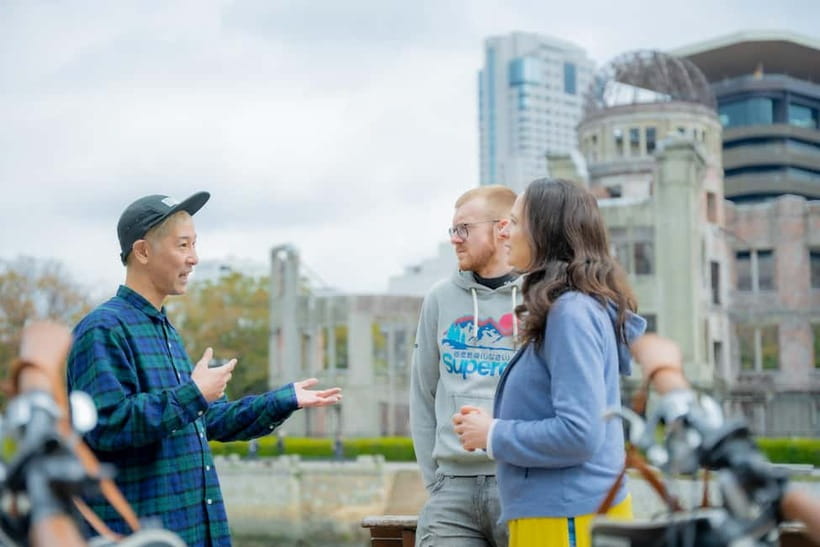
At the Atomic Bomb Dome, you encounter the most recognizable symbol of Hiroshima’s destruction. The guide places it within the surrounding streets and waterways rather than treating it as an isolated photo stop. The nearby Peace Bridge and river help you understand the geography of the blast and the city’s later memorial planning.
The group then rides toward Higashisenda Park and Hiroshima Red Cross Hospital. The hospital is especially useful for understanding the human aftermath of the bombing. It connects the large historical event to medical care, injury, and the work of treating survivors.
Next comes Hiroshima Railway, another reminder that transport was part of the city’s recovery. The route continues to Miyuki Bridge and the Kobayashi River before reaching a surviving weeping willow tree. Such a stop can seem modest beside the Atomic Bomb Dome, but that is exactly its value. The tree gives you a small, tangible marker of survival amid a story that can otherwise feel too large to grasp.
The final section follows Peace Boulevard before returning to the meeting point around 13:00 or 17:00. The three-hour route is the better choice if you want the fuller historical circuit or have only one day in Hiroshima and want to see the central area efficiently.
The guides are a major part of the experience
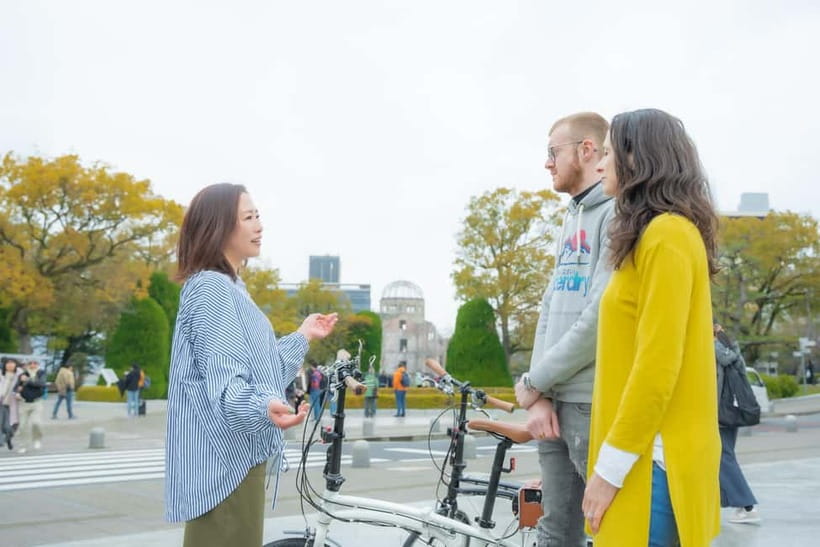
The route matters, but the person leading it matters just as much. The guides are local Japanese staff who grew up in or around Hiroshima, and several bring family connections to the bombing.
Shin is often described as energetic, warm, and willing to explain the history at length. His family stories, passed from grandparents to parents and then to him, add a personal connection to the peace message. He is also comfortable balancing the sorrow of the subject with humor and an approachable manner.
Kana receives similar praise for being passionate, organized, and careful with explanations. She has been especially good at connecting individual monuments with local stories, while keeping the ride moving. Moe and Bella-Kana are also noted for their personal approach, English ability, and attention to the group.
That personal connection does not replace historical evidence, and you should still visit the Peace Memorial Museum for a fuller documentary record. What it does provide is a sense of how memory continues within families. The guides explain not only what happened, but how Hiroshima has carried the event across generations.
The tone is generally centered on peace, hope, courage, and recovery rather than anger. That does not make the subject less serious. It gives the tour a clear emotional direction and helps prevent the ride from ending in despair.
More bike tours around Japan:
- Hidden Kyoto E-Biking tour
★ 5.0 · 1,843 reviews - Bike Tour Exploring North Kyoto plus Lunch
★ 5.0 · 1,087 reviews - Tokyo Great Cycling Tour
★ 5.0 · 811 reviews - Arashiyama Bamboo Forest & Hidden Gems Bike Tour (Early Bird)
★ 5.0 · 613 reviews
What the ride feels like in practice
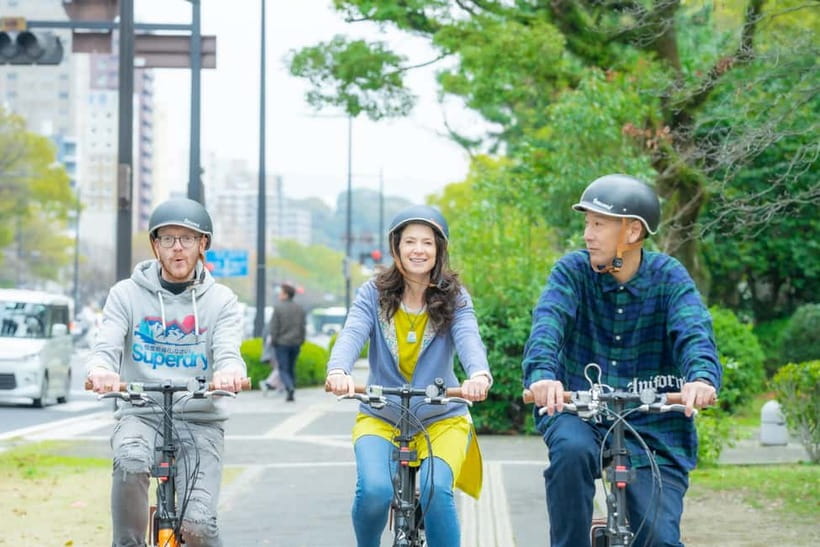
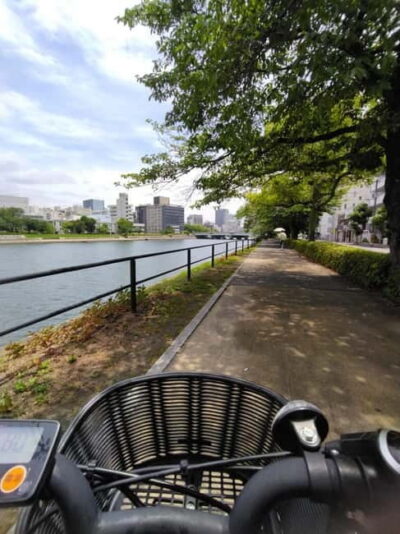
The electric bicycles are one of the strongest practical features. Several riders found them easy to operate, and the motor assistance helps on a route with frequent stops and starts. You will not spend the full tour pedaling hard, but you should still be comfortable balancing, braking, and following a guide through city streets.
The group can include up to 10 people. That is small enough for direct contact with the guide, though the pace is not entirely yours. If someone has little cycling experience, the group may slow down. Families with older children can find this a good way to keep young minds engaged, especially since one 11-year-old considered the ride a highlight.
The bikes have different options for children. Adult electric bicycles are for riders at least 145 centimeters tall. Children from 110 to 145 centimeters may use a children’s cross-bike, with two children’s bicycles available per booking. Child seats on electric bicycles are available for children under 22 kilograms and under 115 centimeters, but these options are limited, so you should ask before booking.
The tour is not suitable for anyone under 145 centimeters unless a child bicycle or seat has been arranged. Children aged 1 and older can be booked, but the equipment restrictions matter more than the age rule.
Wear comfortable clothes and shoes. Bring water and a towel, especially in warm weather. One guide carried cold towels, salt candies, wet wipes, and cooling items during a hot September ride, but you should not assume every departure will have the same supplies. High heels are not allowed, and they would be a poor match for the bicycles in any case.
Weather, comfort, and the city streets
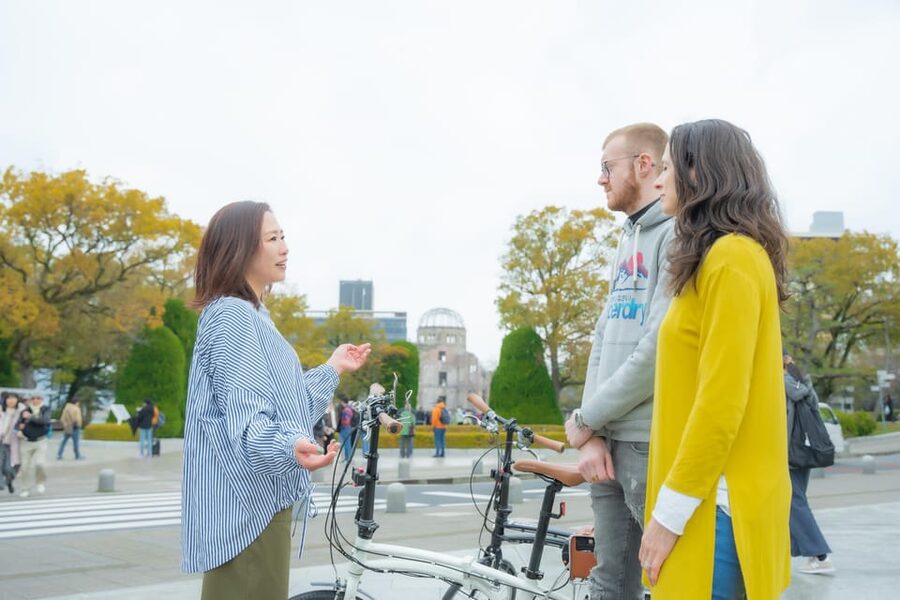
Hiroshima can be hot, and cycling adds sun exposure even when the ride feels easy. A guide may seek shade at traffic lights or pause near a convenience store if someone feels unwell, but bring your own drink and plan for the weather.
The route uses city streets and crossings. One rider specifically appreciated that drivers obeyed crossing signals and watched for cyclists, while another noted that the group felt safe on well-maintained bikes. That is encouraging, but normal cycling awareness still applies. You need to follow the guide, stay alert, and be ready for ordinary urban traffic.
The timetable can change on the day. The guide may adjust the pace, order of stops, or route according to conditions and the group’s ability. This flexibility is helpful, though it means you should not treat the listed times as a minute-by-minute guarantee.
Photos taken during the tour are provided as data afterward. That is a useful touch because it lets you stay focused on the guide instead of constantly stopping to take pictures.
Is $52 a fair price?
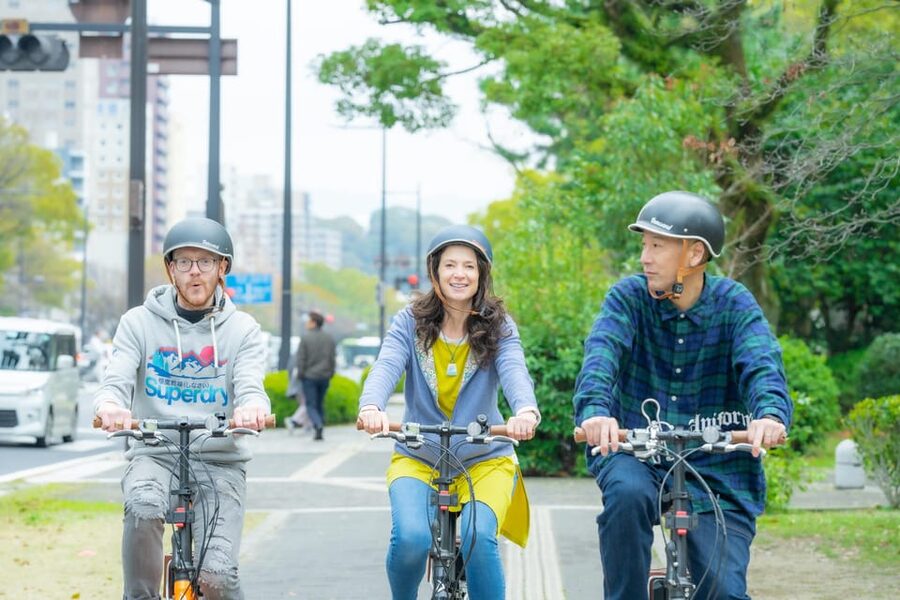
At $52 per person, the tour is priced above a simple bicycle rental, but the comparison is not really with renting a bike. You are paying for the bicycle, electric assistance, insurance for bicycle accidents, and an English-speaking guide who links a wide group of sites into one coherent story.
The value is strongest if you have only a short time in Hiroshima. In two hours, you can connect Peace Park with suburban heritage sites that would take more planning and navigation on your own. In three hours, you add Hiroshima Castle, the shrine, central parks, bridges, the hospital, railway history, and the surviving willow.
The price is less compelling if you want a slow, self-guided visit focused on the museum. In that case, you may prefer to walk through Peace Memorial Park and spend several hours indoors with the exhibits. This cycling tour is a supplement or alternative, not a replacement for every part of Hiroshima’s memorial experience.
The included bicycle accident insurance adds some practical value. Food and drinks are not included, so bring water and plan your meal before or after the ride.
Getting to the Rest House
The meeting point is the Rest House of Hiroshima Peace Park. From Hiroshima Station, take the Hiroshima Electric Railway tram and get off at Atomic Bomb Dome Station. The ride takes about 20 minutes, followed by a walk of roughly five minutes.
Give yourself enough time to find the meeting point. If you arrive late without contacting the operator, the tour can be canceled and the full same-day fee may be charged. The booking terms allow free cancellation up to 24 hours in advance, and you can reserve now and pay later if that option is offered at booking.
The tour is conducted in English. Since it is shared, you may ride with families, solo participants, or couples. The group size is capped at 10, but the actual number can be smaller.
Who should book this ride?
I would choose this tour for a first visit to Hiroshima when you want a strong overview without spending the entire day walking. It suits solo visitors, couples, families with older children, and anyone who likes history best when it is tied to real streets and places.
It is also a good fit if you have already seen photographs of the Atomic Bomb Dome and want to understand the wider city. The suburbs and less famous sites give the story scale.
I would think twice if you dislike cycling, have difficulty riding in traffic, or want a completely private and unhurried experience. A shared group means the pace must work for several people. Tall riders should ask about bicycle fit, and families needing child seats or small bicycles should confirm availability early.
Should you book the Hiroshima Peace Cycling Tour?
Book it if you want local storytelling, a wider route, and an easy way to connect Hiroshima’s memorial sites. The guides’ personal family accounts are the feature that makes this more than a city ride with historical labels.
Choose the three-hour version if Hiroshima is a major stop on your trip and you want the broadest route. Choose two hours if you plan to visit the museum afterward or need to keep the morning or afternoon open.
The ride is moving, practical, and sometimes heavy. It also shows a city that rebuilt itself with parks, trams, bridges, hospitals, and ordinary neighborhoods. That balance is the tour’s real strength.
FAQ
Where does the Hiroshima Peace Cycling Tour meet?
The tour meets at the Rest House of Hiroshima Peace Park. From Hiroshima Station, take the Hiroshima Electric Railway tram to Atomic Bomb Dome Station, then walk about five minutes.
How long does the tour last?
You can choose a two-hour or three-hour course. The available starting times depend on the date and current schedule.
Is the tour conducted in English?
Yes. The tour includes a live English-speaking guide.
How many people are in the group?
It is a shared small-group tour with up to 10 participants.
Are electric bicycles included?
Yes. Rental bicycles are included, along with bicycle accident insurance.
What height is needed to ride an adult electric bicycle?
Adult electric bicycles are for riders who are at least 145 centimeters tall. Riders between 110 and 145 centimeters may use a children’s bicycle if one is available.
Can young children join the tour?
Children aged 1 and older can be booked. Infant seats are available for children under 22 kilograms and under 115 centimeters, while children’s bicycles are intended for riders between 110 and 145 centimeters. These options are limited, so contact the operator before booking.
What should I bring?
Bring comfortable shoes, comfortable clothes, drinking water, and a towel. High-heeled shoes are not allowed.
Can I cancel the booking?
You can cancel up to 24 hours in advance for a full refund. If you arrive late without prior notice, the tour may be canceled with a non-refundable same-day cancellation fee.
New rides added around Japan
- Osaka E-Bike Tour With A Local Guide★ 4.7 · 75 reviews
- Osaka: City Highlights Bike Tour★ 4.7 · 20 reviews
- Okinawa: Afternoon Cycling Tour with Local Guide★ 4.8 · 39 reviews
- Nara: City Highlights Shared Group or Private Bike Tour★ 4.9 · 34 reviews
- Nara: Bike Tour in Ancient Capital UNESCO World Heritage★ 5.0 · 43 reviews
- Naha: Guided E-Bike Tour of the 12 Zodiac Temples★ 4.9 · 50 reviews
- Kyoto: Tailored E-Bike Tour to Highlights & Hidden Gems★ 4.9 · 32 reviews
- Best of Kyoto: Ginkakuji & Path of Philosophy E-Bike Tour★ 4.9 · 79 reviews
Hiroshima Bike Tours, compared.
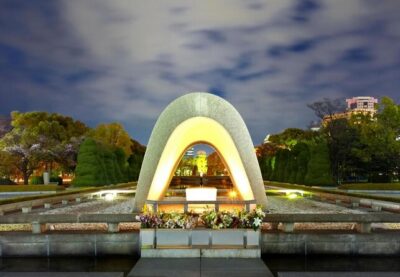
Hiroshima in a Nutshell: Morning Bike Adventure
Read our review →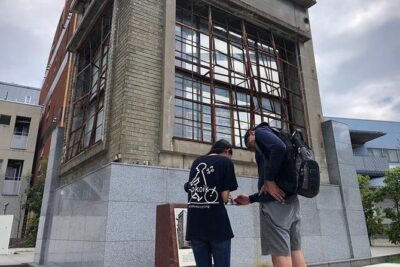
Hiroshima 2hr Peace Cycling Tour with Local Guide
Read our review →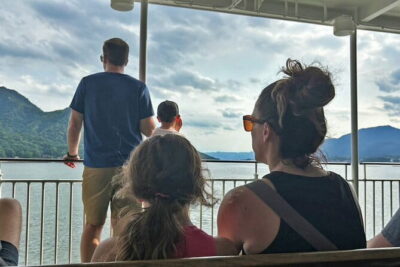
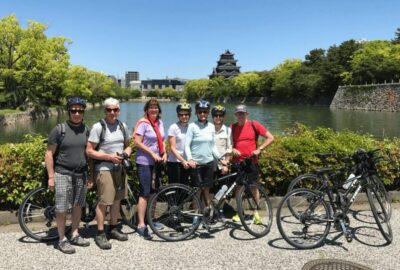
Peace Park, Castle, and Mitaki Temple E-Bike Tour
Read our review →Browse the lists this tour appears in