
Review · HIROSHIMA
Hiroshima: Best of Hiroshima Guided Bike Tour
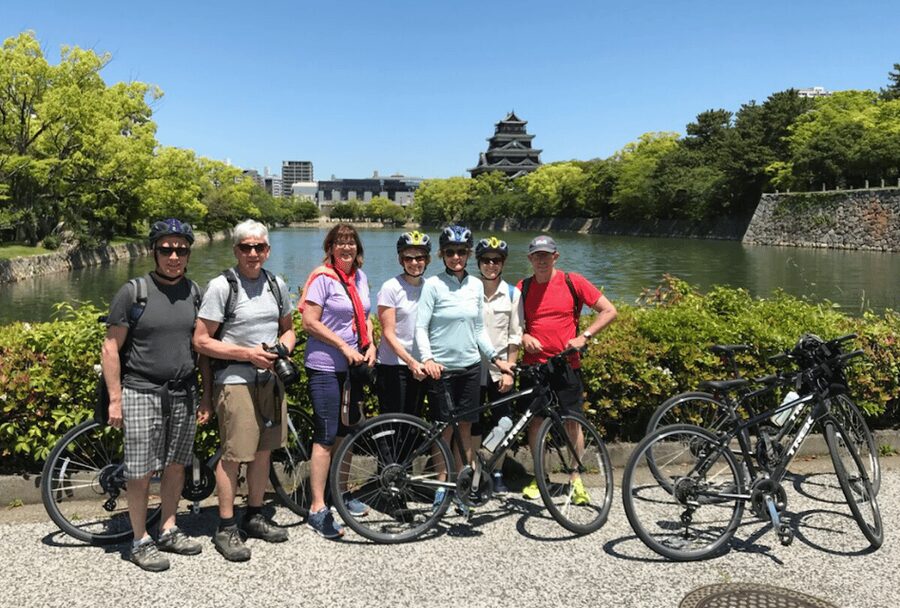
Hiroshima is easy to explore by bicycle because many of its most important sights sit within a compact, flat part of the city. This 3.5-hour guided ride links the Atomic Bomb Dome, Peace Memorial Park, Gokoku Jinja, Hiroshima Castle, and Shukkei-en Garden without making you spend the whole day on foot.
I like two things in particular: the route reaches quiet riverside paths and places that buses cannot, and the guides bring clear historical context to the stops. Awais, Aimee, Miyu, James, and Ehsan are among the guides praised for their warm English and thoughtful storytelling. The bikes are well maintained, and step-through models and e-bikes are available.
The main consideration is the weather. You are outside for the full tour, so summer heat, rain, or a chilly morning can shape the experience. The pace is gentle, but this is still a cycling activity, and some riders may prefer walking or public transport.
Key points to know before booking
- A flat route covers about 10 kilometers: You get broad city coverage without serious hills.
- The Atomic Bomb Dome and Peace Memorial Park come first: This gives the tour its strongest historical focus.
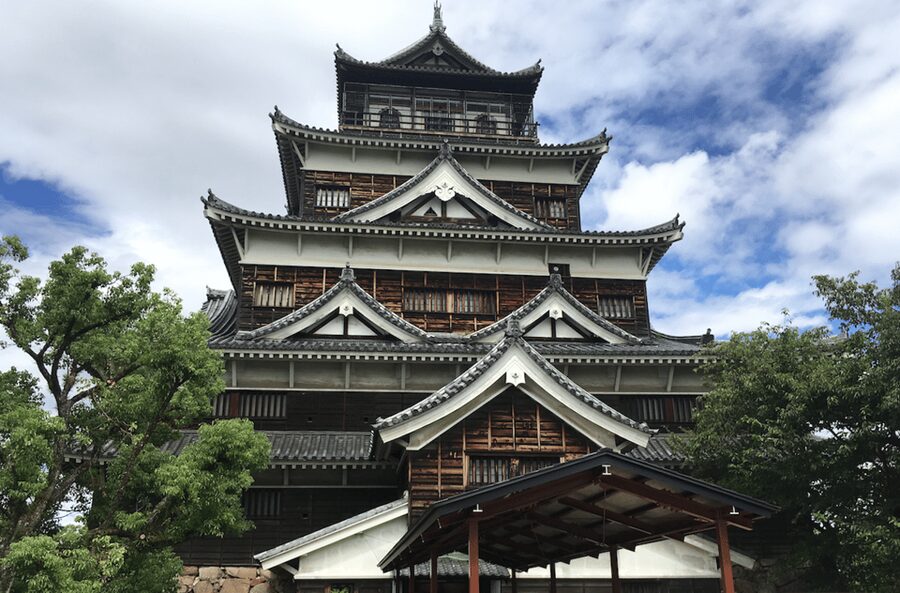
- The route goes beyond the Peace Park: Hiroshima Castle, Gokoku Jinja, and Shukkei-en show other sides of the city.
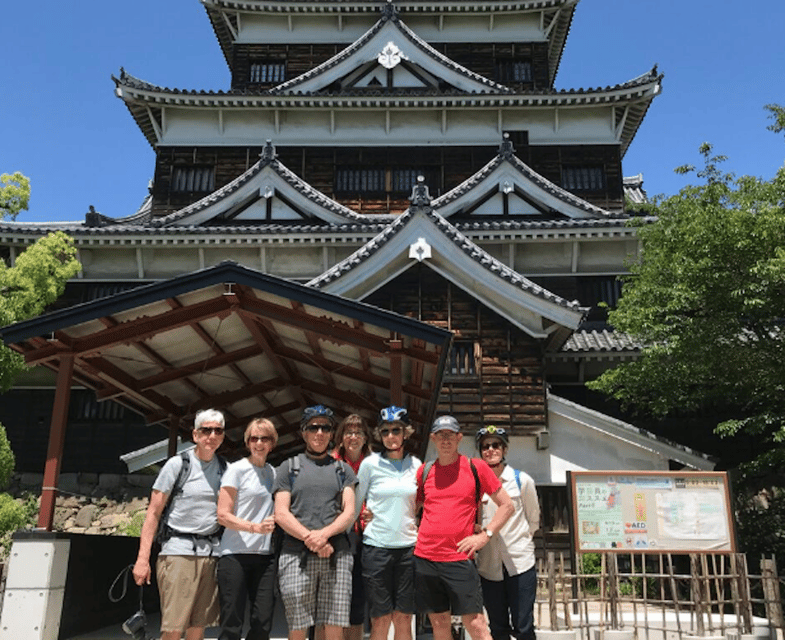
- Small groups keep the ride personal: Numbers are capped at eight people.
- Bike choice matters: Trek bikes, step-through bikes, e-bikes, and child-sized bikes are available.
- The tour costs $70: That is fair value if you want transport, a guide, bike rental, helmet, water, and Shukkei-en admission bundled together.
Why a bicycle works so well in Hiroshima
Hiroshima can look spread out on a map, but its central sights are close enough to connect by bike. Walking between them is possible, yet the distance adds up quickly, especially after spending time at the Peace Memorial Museum or other serious sites.
This tour uses a mostly flat route and includes riverside riding, park paths, and quieter stretches away from heavy traffic. You are not simply pedaling from one photo stop to the next. The movement gives you a better sense of how the Peace Park relates to the rest of the city.
I also like the rhythm of a bicycle tour here. You ride for a while, stop for a story, take photos, ask questions, then move on. The pace is active without feeling like exercise training. Several guides have adjusted the speed and added breaks during hot weather, and the route is suitable for anyone who can ride a bike, subject to the stated age and health limits.
The small-group format helps. With no more than eight people, the guide can check that everyone is comfortable, answer questions, and pause when the group needs a closer look. It is a better setup for discussion than a large coach tour.
More guided departures in Japan:
- Tokyo Guided Small-Group Biking Tour
★ 5.0 · 1,250 reviews - Tokyo Top Highlights 3h Guided E-bike Tour
★ 5.0 · 714 reviews - 3h Tokyo E-Bike Tour: Hidden Gems, and Local Life with guide
★ 5.0 · 670 reviews
Starting at Cycle Hiroshima HQ
You meet at Cycle Hiroshima HQ, identified by the large Cycle Hiroshima sign at the front. Allow time for the initial orientation and bike fitting rather than arriving at the last moment. A proper fit makes a noticeable difference during three and a half hours in the saddle.
The shop provides a high-quality bike and helmet, with Trek bikes in several sizes. Step-through bikes help riders who prefer an easier mount, while e-bikes are available for anyone who wants extra support. Child-sized bikes are also offered, though children under 12 are not accepted on this experience, so check the age rule carefully if you are planning a family outing.
Comfortable clothes and shoes are the sensible choice. Bottled water is included, but on a hot day you may still want extra water of your own. The tour does not include hotel pickup, so you need to make your own way to the shop.
Riverside riding to the Peace Memorial Park
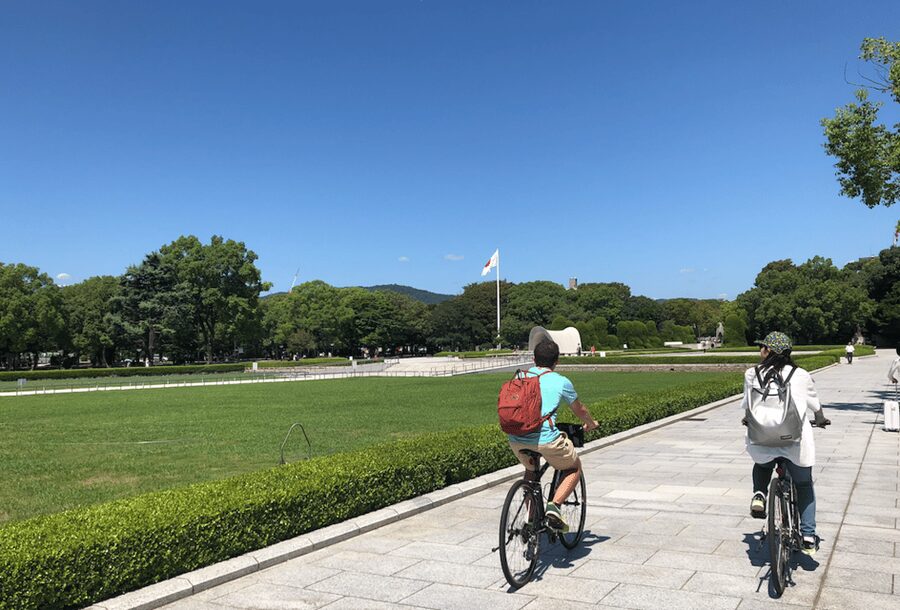
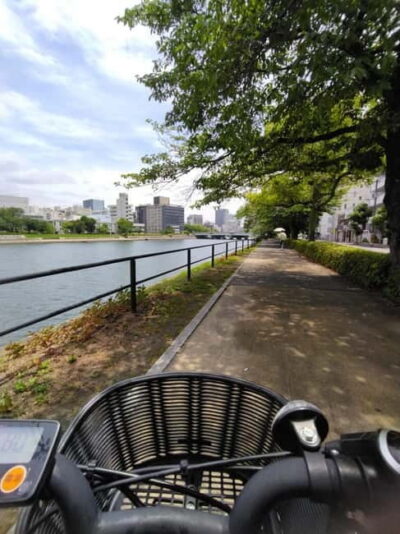
The opening ride is deliberately relaxed. You follow the river toward the Peace Memorial Park, with the city passing at a human pace rather than through a vehicle window. This is a useful introduction to Hiroshima because you begin to see the waterways and open spaces that shape the central area.
The cycling itself is not the main event here. The route gives you time to settle onto the bike and get used to following the guide before the history becomes more demanding. If you have not cycled for years, this gentle start should help, though you still need to feel comfortable controlling a bike.
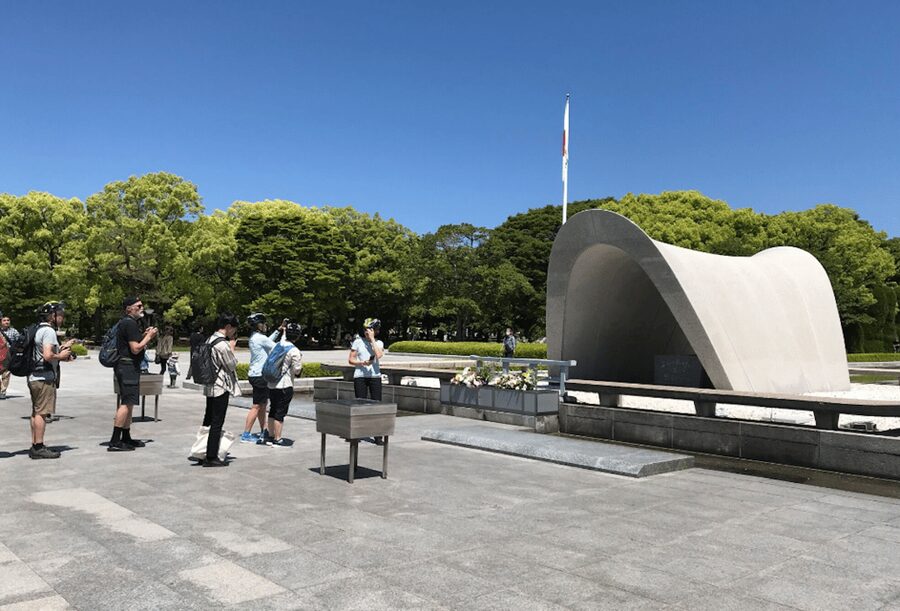
Once you reach the Peace Memorial Park, the tour changes tone. The guide discusses the atomic bombing of August 6, 1945, and explains the meaning of the monuments around you. This is not a quick photo stop. You should expect pauses, questions, and time to take in the place.
The Atomic Bomb Dome and the meaning of the Peace Park
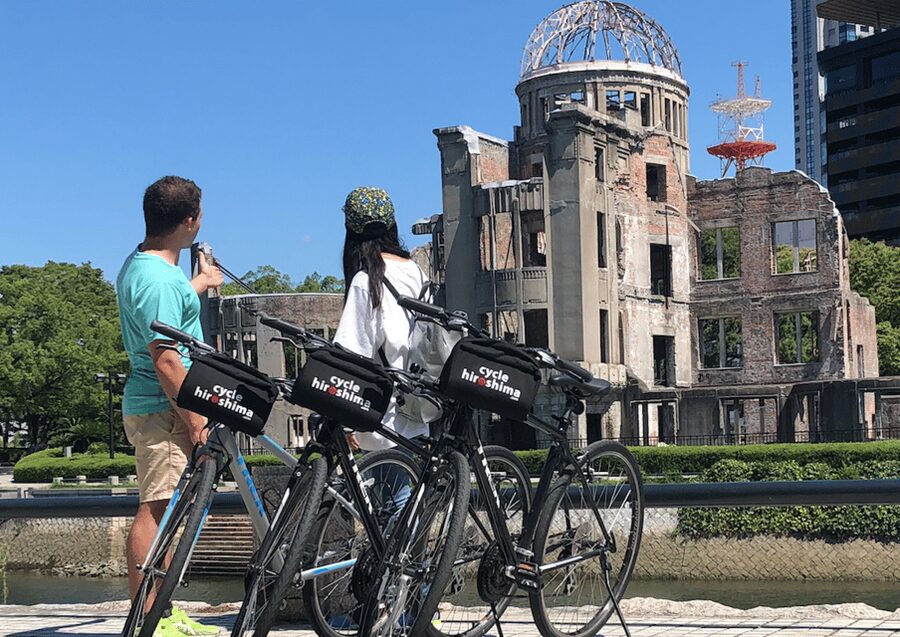
The Atomic Bomb Dome is the most recognizable sight on the route. Its damaged structure remains one of the few buildings left standing near the bomb’s hypocenter, and it is now a UNESCO World Heritage Site.
Seeing it by bicycle has one practical advantage: you arrive without having spent your energy walking across the city. You can focus on the building and the surrounding memorial area rather than worrying about how far you still have to go.
The guide’s role matters most here. The strongest parts of this tour come from explanations that connect the physical sites with the lives affected by the bombing. Guides have discussed survivors, the destruction of 1945, the city’s recovery, Sadako and the paper cranes, and Hiroshima’s later identity as the City of Peace.
The subject deserves a respectful pace. The guides named in feedback, including Miyu, Aimee, Awais, Ehsan, and James, have been praised for combining facts with personal or local perspectives. Some have shared family stories, while others have presented different viewpoints to encourage thought rather than force a single response.
You will not get the same depth as a full museum visit, and the bike tour should not replace the Peace Memorial Museum if you have time for it. Instead, it gives you a strong framework for understanding the outdoor monuments and the city around them.
More bike tours around Japan:
- Hidden Kyoto E-Biking tour
★ 5.0 · 1,843 reviews - Bike Tour Exploring North Kyoto plus Lunch
★ 5.0 · 1,087 reviews - Tokyo Great Cycling Tour
★ 5.0 · 811 reviews - Arashiyama Bamboo Forest & Hidden Gems Bike Tour (Early Bird)
★ 5.0 · 613 reviews
Gokoku Jinja brings a different side of Hiroshima
After the Peace Memorial Park, the route continues north to Gokoku Jinja. This is the city’s most popular Shinto shrine, and the change in mood is useful. Hiroshima is not only a place of twentieth-century memory. It is also a living Japanese city with religious traditions, local customs, and ordinary daily life.
At the shrine, you can expect the guide to explain what makes the site important and how it fits into the city. The tour does not treat Hiroshima as one single historical moment. That broader view is one of its strengths.
The shrine stop also gives you a break from the more intense material in the Peace Park. You continue learning, but the setting feels calmer and more connected to present-day Japan.
Hiroshima Castle and a glimpse of samurai-era Japan
The next major stop is Hiroshima Castle. The grounds offer a look at the city before the twentieth century and before the atomic bombing. Cycling through the grounds makes the transition from modern Hiroshima to its samurai-era past especially clear.
The castle was part of the old power structure of the region, and the grounds provide a setting for understanding Hiroshima as a feudal city. You may not spend as much time here as you would on a dedicated castle visit, so think of this stop as an introduction rather than a full museum tour.
This is also where the bike route proves its worth. The group can move through the surrounding area without finding parking or waiting for a bus. You see how the castle relates to the nearby city rather than viewing it as an isolated attraction.
Shukkei-en Garden is a calm finish
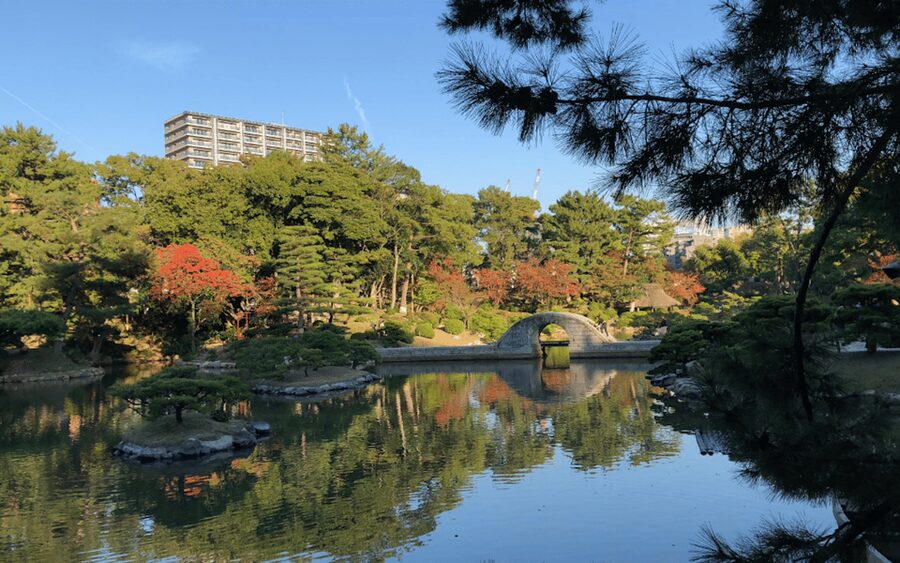
The final major stop is Shukkei-en Garden, built during the Edo Period and regarded as one of the finest traditional gardens in western Japan. Entry is included, which adds real value to the $70 price.
Ending here is a smart choice. After the solemn Peace Park and the historical focus of Hiroshima Castle, the garden offers quiet paths, carefully arranged scenery, and a slower final pause. The garden is not just an extra attraction added to fill time. It changes the emotional pace of the day.
You should allow yourself to look around rather than rushing through for a single photograph. The tour’s garden visit is still limited by the overall schedule, but it gives you enough time to appreciate the setting and finish on a peaceful note.
What the guides add to the experience
The route is fixed, but the guide can shape the experience. The feedback names several guides, including Awais, Aimee, Miyu, James, Ehsan, Hasan, Ihsan, Melissa, Ali, Alex, Sage, and Issam. The repeated praise is for clear English, patience, humor, historical detail, and a willingness to answer questions.
Awais is repeatedly singled out for explaining the bombing, monuments, and Japanese cycling culture in an accessible way. Aimee has been praised for combining warmth, humor, local suggestions, and respect at the memorial sites. Miyu has shared family stories that gave the history a personal connection.
That does not mean every guide will use exactly the same stories or style. It does mean the tour depends heavily on the person leading it, and the available guides have a strong record of making the information easy to follow.
Some guides have taken photos for the group, and some have extended the outing when time allowed. Do not book on the assumption that an extension is guaranteed. Treat it as a possible extra, not part of the promised schedule.
Is $70 a fair price?
At $70 per person, the tour is not the cheapest way to see Hiroshima’s central sights. You could walk through several of these areas for free, use public transport, and rent a bike separately.
The value comes from the combination of services. Your fee covers a live English-speaking guide, a quality bike, a helmet, bottled water, and admission to Shukkei-en Garden. You also get a planned route that connects several sights efficiently, with the guide handling navigation and interpretation.
I think the price is fair for a first visit, especially if you have only one day in Hiroshima. The tour saves time and reduces the effort of working out how to connect the Peace Park, castle, shrine, and garden yourself.
It is less useful for you if you already know the city, prefer to spend several hours inside the Peace Memorial Museum, or want to linger at each attraction. The 210-minute schedule gives you a broad view, not unlimited time at every stop.
Weather, fitness, and who should book
Good weather is required. If conditions force a cancellation, you are offered another date or a full refund. Rain does not always ruin the experience, but it can make cycling and photography less pleasant. Summer heat also matters, and guides have used regular breaks on very hot days.
The route is flat, but flat does not mean effortless. You need to be able to ride for several hours, stop and start safely, and keep with the group. The experience is not suitable for children under 12, pregnant women, people with back or heart problems, people under 140 centimeters, or people with pre-existing medical conditions as stated by the operator.
You should also consider the emotional weight of the subject. The tour deals directly with the atomic bombing, mass loss, survival, and recovery. If you want only a light sightseeing ride, choose a different cycling route. If you want to understand Hiroshima beyond its famous photographs, this combination of movement and history is a strong fit.
My verdict on the Hiroshima bike tour
I would choose this tour for a first visit, a short stay, or anyone who wants to see more than the Peace Memorial Park without wearing out their feet. The flat route, small group, and excellent bike provision make it approachable, while the guides add the context that turns a list of sights into a connected story.
Book it if you value explanation, want to cover several central landmarks in one morning or afternoon, and are comfortable cycling outdoors. Skip it if you need a fully indoor activity, want a slow museum-focused day, or cannot meet the age and health requirements.
For most suitable riders, the $70 fee buys a useful overview of Hiroshima: its wartime memory, its older traditions, its gardens, and its life as a modern city. That is a lot to cover in 210 minutes, and the bicycle is what makes the plan work.
FAQ
How long is the Hiroshima bike tour?
The tour lasts 210 minutes, or about three and a half hours.
What sights are included?
The route includes the Peace Memorial Park, Atomic Bomb Dome, Gokoku Jinja, Hiroshima Castle, and Shukkei-en Garden.
Is the route difficult?
The route is completely flat and is described as suitable for anyone who can ride a bike. You still need to be comfortable cycling for the tour’s full duration.
How many people are in the group?
The group is limited to a maximum of eight participants.
Is the tour offered in English?
Yes. The live guide speaks English.
Are bikes and helmets included?
Yes. A high-quality bike and helmet are included in the price.
Are e-bikes available?
Yes. E-bikes, step-through bikes, Trek bikes in different sizes, and child-sized bikes are available.
Is admission to Shukkei-en Garden included?
Yes. Entry to Shukkei-en Garden is included.
Where does the tour meet?
You meet at Cycle Hiroshima HQ, which has a large Cycle Hiroshima sign at the front.
What happens if the weather is bad?
The tour requires good weather. If it is canceled because of poor weather, you are offered another date or a full refund.
New rides added around Japan
- Osaka E-Bike Tour With A Local Guide★ 4.7 · 75 reviews
- Osaka: City Highlights Bike Tour★ 4.7 · 20 reviews
- Okinawa: Afternoon Cycling Tour with Local Guide★ 4.8 · 39 reviews
- Nara: City Highlights Shared Group or Private Bike Tour★ 4.9 · 34 reviews
- Nara: Bike Tour in Ancient Capital UNESCO World Heritage★ 5.0 · 43 reviews
- Naha: Guided E-Bike Tour of the 12 Zodiac Temples★ 4.9 · 50 reviews
- Kyoto: Tailored E-Bike Tour to Highlights & Hidden Gems★ 4.9 · 32 reviews
- Best of Kyoto: Ginkakuji & Path of Philosophy E-Bike Tour★ 4.9 · 79 reviews
Hiroshima Bike Tours, compared.
Hiroshima in a Nutshell: Morning Bike Adventure
Read our review →
Hiroshima 2hr Peace Cycling Tour with Local Guide
Read our review →
Peace Park, Castle, and Mitaki Temple E-Bike Tour
Read our review →Browse the lists this tour appears in