
Review · HIROSHIMA
Hiroshima: City and Miyajima Bike and Boat Tour
Hiroshima and Miyajima make a strong one-day pairing: one is a modern city shaped by tragedy and peace, the other a wooded island with orange Shinto buildings and old religious traditions. This tour links them by easy cycling, train, ferry, and walking, so you see far more than you would on foot alone.
I like the small group of up to eight, which gives you room to ask questions, and I like the flat bike route, especially if you want to cover Peace Park without wearing out your legs. Guides including Ishan, Melissa, Sage, and Aimee-Linh have been praised for clear explanations, humor, and patient support for slower riders.
The main drawback is the long, full-day schedule. At 450 minutes, you need comfortable shoes, steady energy, and an ability to ride a bike. Miyajima can also feel like a quick introduction rather than a slow, open-ended island visit.
Key points to know before booking
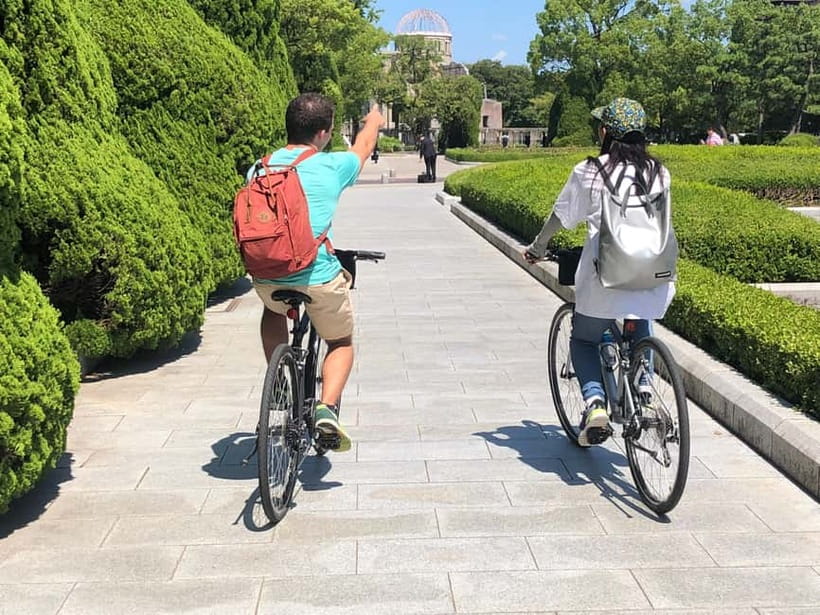
- The cycling route is completely flat: You only need basic cycling ability, not mountain-bike skill or athletic fitness.
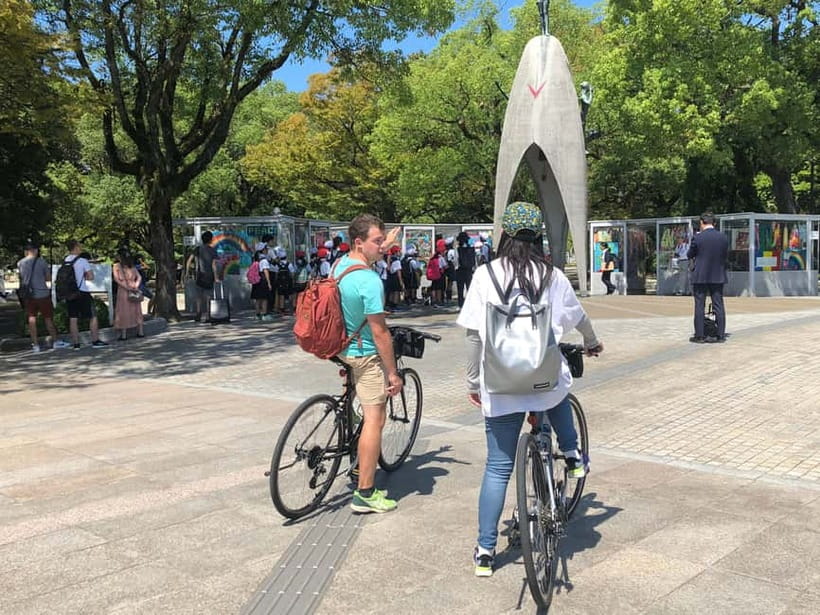
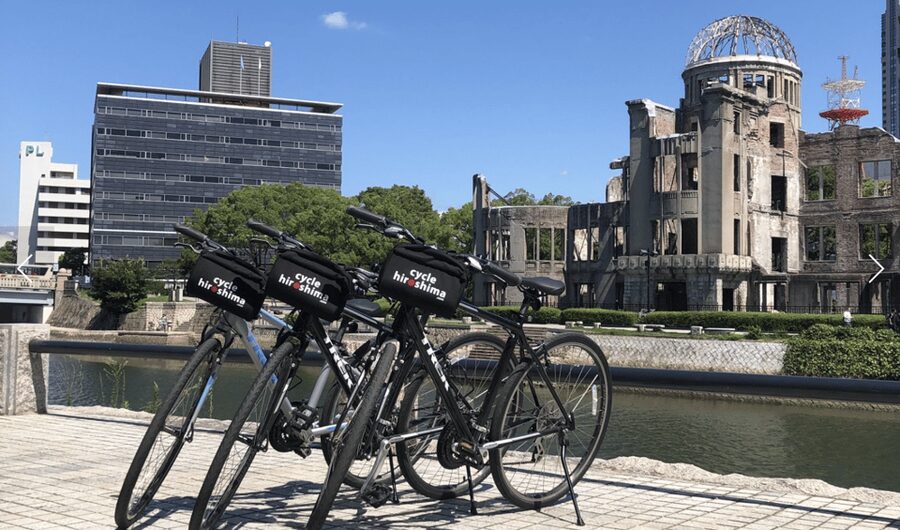
- Peace Park receives serious, thoughtful attention: Expect guided commentary on the A-bomb Dome, the bombing, remembrance, and Hiroshima’s recovery.
- Miyajima is the day’s scenic change of pace: The ferry takes you from the city to wooded slopes, orange Shinto buildings, and lanes shaped by centuries of religious use.
- Transport is built into the day: The tour includes the train to the ferry, the ferry ride, a bike, helmet, lunch, and water.
- The group stays small: With a maximum of eight people, it is easier to ask questions and receive help on the route.
- Rain plans are clear: You may switch to a walking tour around Peace Park or request a full refund if rain affects the cycling portion.
Why this Hiroshima day works so well
Hiroshima is not a city you understand from a single memorial or a quick photograph. Its story includes the atomic bombing, the work of remembrance, the city’s earlier feudal past, and its present-day life. This tour gives each part a place in the day.
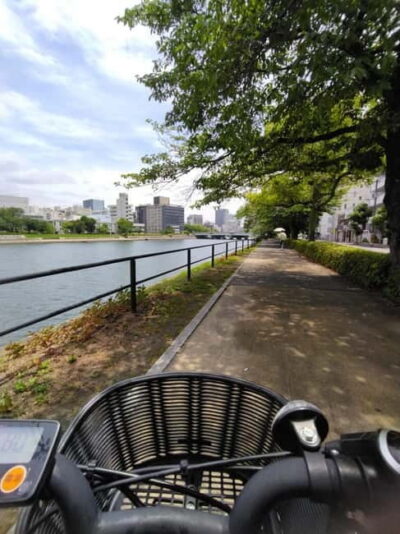
The bicycle is useful here because the route is flat and the pace is easy. You can move between major sights without spending much of the day waiting for transport. I like that the cycling is not presented as a sporting challenge. You ride to see the city, not to prove anything.
The switch from bicycle to train, ferry, and walking also gives the day a natural rhythm. Hiroshima’s urban streets lead to the quiet water crossing and then to Miyajima’s wooded setting. That contrast is one of the best reasons to choose this combined tour instead of booking only a city sightseeing walk.
More Bike and Boat Tours in Japan:
- Hiroshima and Miyajima by Bike and Boat
★ 5.0 · 172 reviews - Ninh Binh Full-Day Tour from Hanoi to Hoa Lu, Tam Coc & Mua Cave Via Boat & Bike
★ 5.0 · 4,384 reviews - From Perth: Rottnest Island Full-Day Bike and Ferry Trip
★ 4.7 · 2,548 reviews
Peace Park and the A-bomb Dome by bike
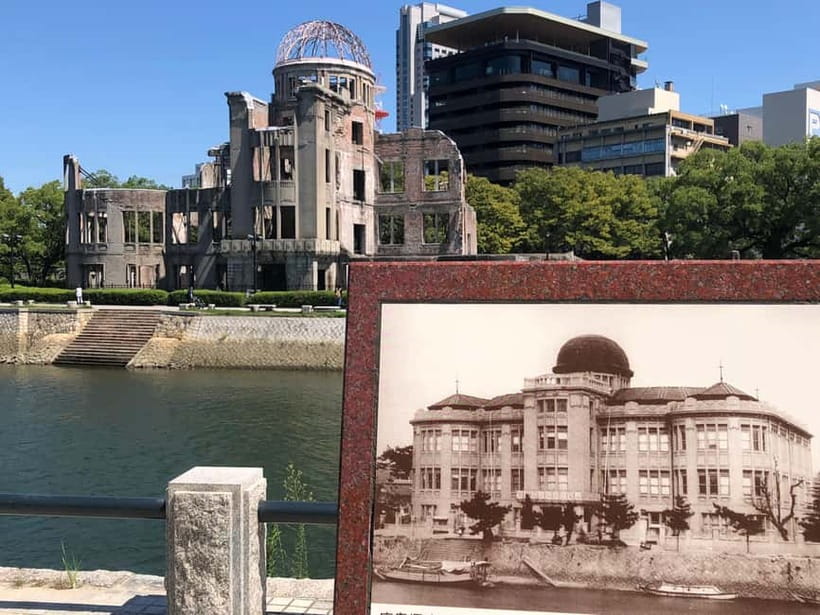
The day begins with a guided cycle around Peace Park and the A-bomb Dome. This is the most emotionally weighty section, and the guide’s role matters. You are not simply passing a famous structure for a photograph. You receive context about Hiroshima’s bombing, its aftermath, and the ways the city remembers what happened.
The A-bomb Dome is especially powerful because it is both a physical ruin and a symbol. Seeing it during a moving bike route lets you understand its place within the wider park rather than treating it as an isolated stop.
The cycling itself is slow and accessible. The route is completely flat, and the available Trek bikes come in several sizes. Step-through bikes and child-sized bikes are also available, which makes the setup more flexible for mixed-age groups.
The tour is not suitable for anyone who cannot ride a bike, and wheelchair users cannot take part. Pregnant women are also listed as unsuitable for this activity. If everyone in your party can ride at a basic level, though, you should not worry about speed. Slower riders are supported, and the route is designed for ordinary cycling rather than intense exercise.
Expect the Peace Park commentary to be serious. Guides such as Sage have explained the bombing, the park, and Hiroshima’s later recovery in detail while keeping the ride manageable in wet conditions. This is a good part of the day to ask questions, since the small group makes conversation easier than on a large coach tour.
Hiroshima Castle and the city before 1945
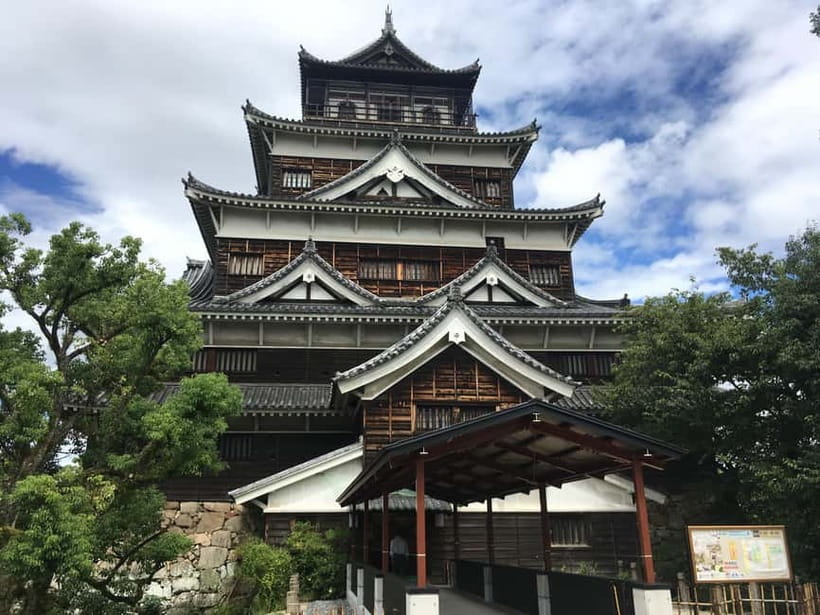
The visit to Hiroshima Castle adds an important layer. Without it, a Hiroshima tour can make the city seem defined only by the events of 1945. The castle points you toward the city’s feudal past and the political and social history that came before the modern era.
This stop also breaks up the solemn mood of Peace Park. You move from a place of remembrance to a site connected with earlier power and governance. That change helps you see Hiroshima as a living city with a long story, not only as a memorial destination.
The castle visit is included as part of the city portion before you leave for Miyajima. The available details do not promise a long independent visit or a particular interior program, so think of it as a guided historical stop within a larger day. If you want hours inside every museum and site, this is not that kind of tour. Its strength is the broad view.
Guides including Melissa have covered Hiroshima’s pre-Meiji past as well as the bombing. That range is useful because it keeps the day from becoming too narrow. You get a city story with several chapters, even though the schedule must keep moving.
Train and ferry to Miyajima
After the city sights, you take the train and then board a ferry for Miyajima. The boat ticket is included, and the change in transport gives you a welcome pause after the cycling section.
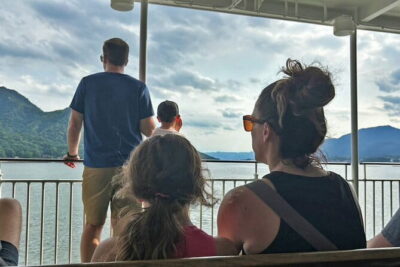
The crossing is part of the experience, not just a transfer. Hiroshima’s city setting gives way to open water and a wooded island. You begin to understand why Miyajima feels so different from the mainland before you even start the walking tour.
The transport is also a practical advantage. You do not need to arrange separate train and ferry tickets or work out the route on your own. The guide keeps the group together and explains what comes next.
Still, this is a long day with several moving parts. You should expect some time spent changing from bike to train, then from train to ferry, and finally to walking. That is the tradeoff for seeing both destinations in one booking. If you prefer a slow day with long café stops, separate city and island visits may suit you better.
More bike tours around Japan:
- Hidden Kyoto E-Biking tour
★ 5.0 · 1,843 reviews - Tokyo Guided Small-Group Biking Tour
★ 5.0 · 1,250 reviews - Bike Tour Exploring North Kyoto plus Lunch
★ 5.0 · 1,087 reviews - Tokyo Great Cycling Tour
★ 5.0 · 811 reviews
Miyajima’s religious setting and Itsukushima Shrine
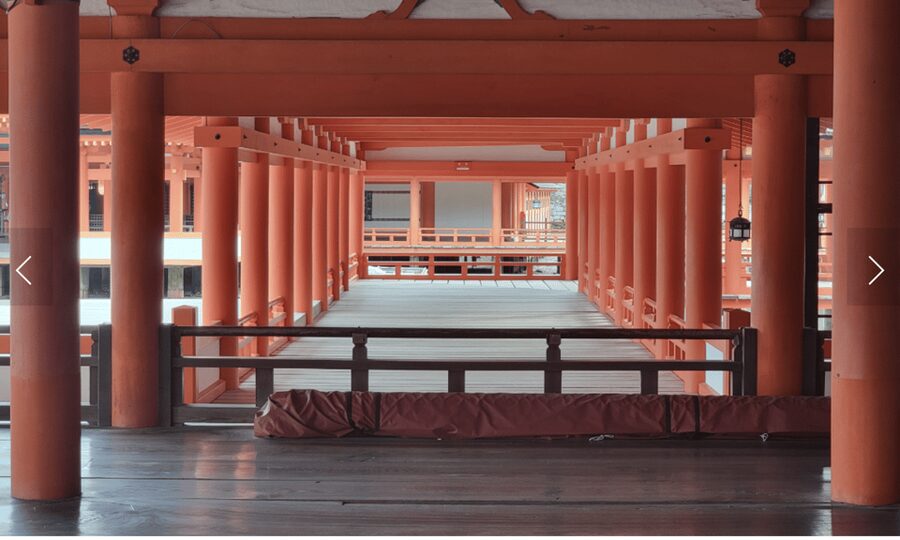
Miyajima provides the clearest visual contrast of the day. After Hiroshima’s roads and memorial spaces, you find wooded surroundings, orange Shinto buildings, and lanes that feel closely tied to the island’s religious role.
The walking tour explains how Miyajima developed as a religious center. That context makes the buildings more meaningful. You are not just looking at attractive architecture. You learn why the island became important and how its sacred identity shaped the way it was built and used.
Itsukushima Shrine is included, giving you the central cultural sight on the island. The orange structures are especially striking against the island’s greenery and water. Bring a camera, but give yourself time to look beyond the most familiar views. The guided explanation is what turns a photo stop into a place you can better understand.
The island portion also includes lanes with plenty of photo opportunities. You might find this section more relaxed than the Peace Park visit, but it still follows a schedule. The tour must eventually return you to Hiroshima, so you will not have unlimited time to wander.
This is where the tour’s value is strongest for many people. Miyajima can require planning, transport research, and careful timing when visited independently. Here, the island comes after a full city introduction, and the train and ferry connections are handled as part of the day.
Bikes, lunch, water, and the small-group difference
The $138 price looks high if you compare it with a simple walking tour or a self-guided visit to one sight. The comparison changes when you count what is included: a guide for 450 minutes, bike rental, helmet, city cycling, Hiroshima Castle, train and ferry transfers, a Miyajima walking tour, Itsukushima Shrine, lunch, and water.
You are paying for structure as much as admission or transport. The guide helps connect the sights, keeps the day moving, and gives you historical background in English. That matters in Hiroshima, where the right context can change how you see a place.
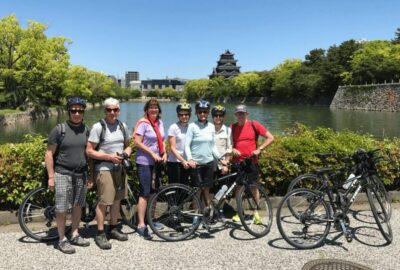
The group limit of eight is another part of the value. A small group is easier to manage on bicycles and public transport. It also gives you a better chance to ask about the bombing, the castle, Miyajima’s religious traditions, or practical questions about the route.
The bikes are Trek models in a range of sizes, with step-through and child-sized options. You need to provide the heights of everyone in your group when booking. This is a small but useful step, since the right bike fit affects comfort over a full day.
Lunch and water are included, but the details of the meal are not specified. You should provide information about dietary restrictions in advance. That is especially important because you will be away from the starting point for much of the day.
What the guides add to the experience
The strongest part of a history-focused tour is often the person leading it. This one has received particularly warm feedback for guide enthusiasm, humor, preparation, and patience.
Ishan has been praised for answering many questions and keeping the group engaged. Aimee-Linh brings historical detail along with humor, which can help a long day feel lighter. Melissa has handled the difficult subject of the atomic bombing with care while also explaining Hiroshima’s earlier history. Sage has supported the group through wet weather and helped slower riders stay comfortable.
These details matter because the day covers emotionally heavy material and several different sites. A guide who can explain the bombing without flattening Hiroshima into a tragedy, then shift to the castle and Miyajima, gives the day balance.
You should still expect the content around Peace Park to be serious. Humor belongs more naturally in the transitions and lighter parts of the day. The value of a good guide here is not entertainment alone. It is clarity, sensitivity, and the ability to answer questions without rushing you.
Weather, comfort, and who should book
Rain is the main practical concern. If bad weather affects the cycling, the operator will contact you and offer either a walking tour around Peace Park or a full refund. Keep your phone reachable before the tour, since this option depends on communication.
Bring comfortable clothes, comfortable shoes, and a camera. The day combines cycling, public transport, and walking, so shoes that work for all three are more useful than anything stylish. Smoking is not allowed.
I would recommend this tour to you if you want a guided introduction to both Hiroshima and Miyajima in one day, especially if you like history but do not want to spend the whole day inside museums. It also suits couples, small families with children who can ride, and solo visitors who prefer a planned route.
I would be more cautious if you want extensive free time, have mobility limitations, cannot ride, or find full-day schedules tiring. The tour is not suitable for wheelchair users or pregnant women, and it is not designed for someone who wants to choose every stop independently.
The tour has earned a perfect 5.0 rating from 20 reviews, with repeated praise for the guides, the range of places visited, the easy route, and the way the day is organized. Those are the areas I would give the most weight to when deciding. The scenery is attractive, but the real benefit is the combination of thoughtful explanation and efficient transport.
Should you book this Hiroshima and Miyajima tour?
Book it if you want the major Hiroshima themes in one carefully arranged day: the A-bomb Dome and Peace Park, the city’s feudal past, and Miyajima’s religious and natural setting. The flat cycling route keeps the city portion manageable, while the small group and English-speaking guide make it easier to ask questions.
Skip it if you want a slow Miyajima visit, cannot ride a bike, or prefer to explore each site at your own pace. For most active visitors with one day in Hiroshima, though, the $138 cost is reasonable because it covers equipment, lunch, water, train and ferry transport, and a full day of guiding.
FAQ
How long does the Hiroshima and Miyajima bike and boat tour last?
The tour lasts 450 minutes, or 7.5 hours. It includes cycling, a visit to Hiroshima Castle, train and ferry transfers, and a walking tour of Miyajima.
Is the cycling route difficult?
The cycling route is completely flat and suitable for anyone who can ride a bike. The pace supports slower riders, and bikes are available in several sizes, including step-through and child-sized models.
What is included in the price?
The tour includes a guided cycle tour, English-speaking guide, bike, helmet, commentary on Hiroshima’s history, Hiroshima Castle, train and ferry transfers to Miyajima, a walking tour, Itsukushima Shrine, lunch, and water.
Is hotel pickup included?
No. Hotel pickup and drop-off are not included.
What happens if it rains?
If rain affects the cycling, you may be offered a walking tour around Peace Park or a full refund. You should remain reachable so the operator can contact you.
Can I cancel the tour?
You can cancel up to 24 hours in advance for a full refund. You can also reserve now and pay later.
New rides added around Japan
- Osaka E-Bike Tour With A Local Guide★ 4.7 · 75 reviews
- Osaka: City Highlights Bike Tour★ 4.7 · 20 reviews
- Okinawa: Afternoon Cycling Tour with Local Guide★ 4.8 · 39 reviews
- Nara: City Highlights Shared Group or Private Bike Tour★ 4.9 · 34 reviews
- Nara: Bike Tour in Ancient Capital UNESCO World Heritage★ 5.0 · 43 reviews
- Naha: Guided E-Bike Tour of the 12 Zodiac Temples★ 4.9 · 50 reviews
- Kyoto: Tailored E-Bike Tour to Highlights & Hidden Gems★ 4.9 · 32 reviews
- Best of Kyoto: Ginkakuji & Path of Philosophy E-Bike Tour★ 4.9 · 79 reviews
Hiroshima Bike Tours, compared.
Hiroshima in a Nutshell: Morning Bike Adventure
Read our review →
Hiroshima 2hr Peace Cycling Tour with Local Guide
Read our review →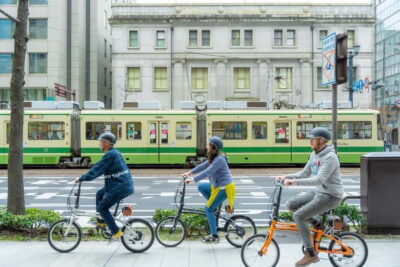
Peace Park, Castle, and Mitaki Temple E-Bike Tour
Read our review →Browse the lists this tour appears in