
Review · SEVILLE
Seville: Relaxing City Bike Tour with a Tour Guide
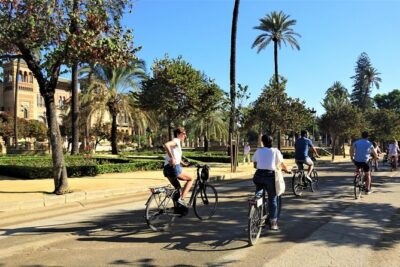
Seville makes a fine city for two wheels. The route links the narrow lanes of Barrio Santa Cruz with open gardens, grand plazas, the Guadalquivir riverfront, and Triana, giving you a broad look at the city without spending the day on foot. Guides such as Carmen, Juan, and Alvarito have a knack for mixing history with practical tips about food and flamenco.
I like the easy pace and the way the tour covers places that are spread across Seville. I also like the small-group limit of 15 people, plus the flat route, comfortable bikes, bottled water, and regular stops. The main consideration is that you will still cycle through busy tourist areas, and the ride may take closer to three hours than the advertised two and a half.
Key points to know before booking
- About 10 kilometers on mostly flat ground: You cover a lot of Seville without a hard workout.
- Santa Cruz is the starting point: Meet at Plaza de Santa Cruz 4, behind the Jardines de Murillo.
- The route connects major sights: Expect María Luisa Park, Plaza de España, Torre del Oro, Triana, the cathedral area, Giralda, and Las Setas.
- Guides add useful local detail: Carmen and Juan are especially praised for clear storytelling, pace control, restaurant advice, and flamenco suggestions.
- Busy sections require care: Some cycling takes place around crowded tourist zones, so the guide may slow the group or stop often.
- Check the exact departure details: The information supplied gives different times and durations, including 10:00, 10:30, and 14:00 departures.
Why a bike is a smart way to see Seville
Seville’s main sights are not packed into one small square. Santa Cruz, Plaza de España, the riverfront, Triana, and the city center all reward a visit, but walking between them takes time, especially in warm weather. A bike lets you connect the pieces while keeping the day active without turning it into an athletic challenge.
The route covers about 10 kilometers and is described as flat and suitable for all levels. That matches the general feel of Seville, where long, level stretches and cycle paths make riding fairly simple. You are not expected to race. The guide adjusts the pace, waits for the group, and brings everyone together after busier sections.
You should still be comfortable riding a bike in an urban setting. Some parts of the city can be crowded, and one particularly useful detail is that the ride includes frequent stops every few minutes in certain areas. That makes the tour manageable for people who have not cycled recently, but it also means you need to pay attention when moving through pedestrian-heavy streets.
At $35 per person, the value is good if you want an introduction to Seville rather than a simple bike rental. You receive the bike, an optional helmet, water, insurance, and a guide who explains the city as you go. The tour also saves you the planning work of linking distant sights yourself.
More City Bike Tours in Spain
- Highlights & Hidden Spots of Barcelona Bike Tour w/ Local Guide
★ 4.5 · 3,009 reviews - Valencia: City Highlights Guided Bike Tour
★ 4.7 · 2,373 reviews - Seville Highlights Bike Tour (English)
★ 5.0 · 2,225 reviews
Starting among the lanes of Barrio Santa Cruz
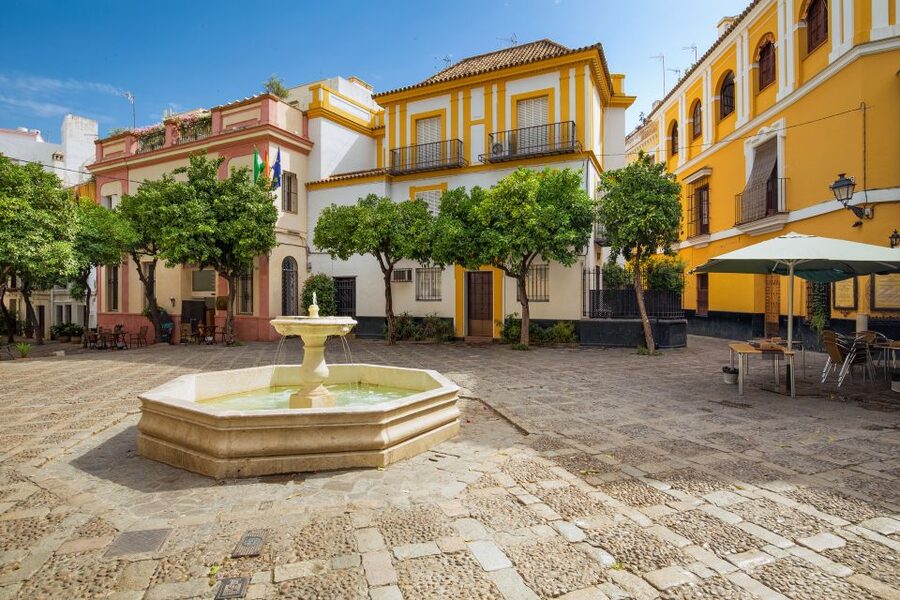
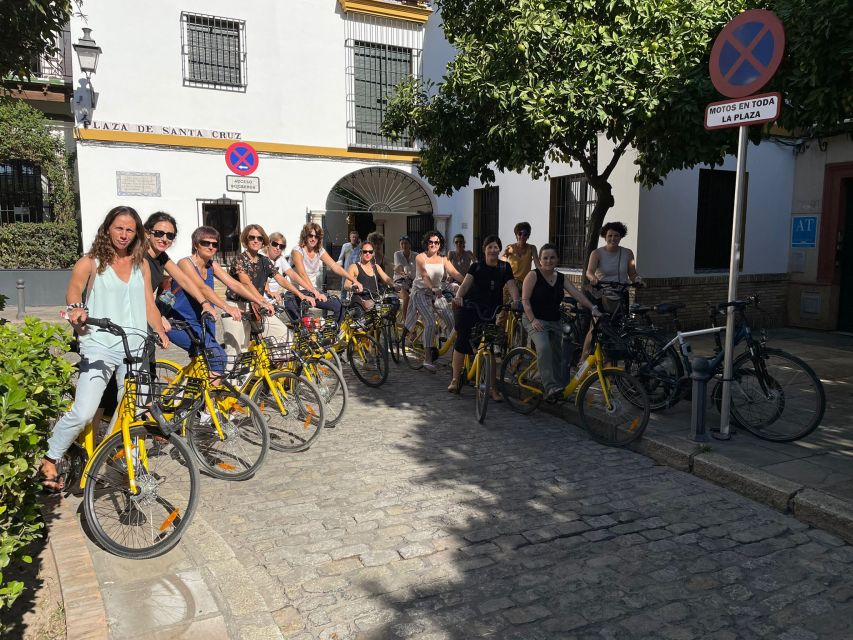
The meeting point is Plaza de Santa Cruz 4, behind the Jardines de Murillo. This puts you right in the old quarter, a useful location because the first part of the ride immediately feels like Seville rather than a standard transport transfer.
Barrio Santa Cruz is known for narrow lanes, small plazas, tiled details, and whitewashed buildings. A bike gives you a quick sense of the area, but you should not expect to cycle quickly through every lane. The streets are compact and can have people walking in several directions, so the guide may lead you at a careful pace or ask you to dismount briefly.
This opening section is good for orientation. You begin seeing how the city’s older quarters connect with the larger avenues and gardens beyond them. Guides often use the early stops to explain Seville’s past, architecture, religion, and daily life, giving you some context before the grand sights arrive.
If you are staying near Santa Cruz, the meeting point is convenient. If you are coming from elsewhere, allow time to find Plaza de Santa Cruz, since the old quarter’s smaller streets can be confusing on your first morning.
Orange trees and open space in the Murillo Gardens
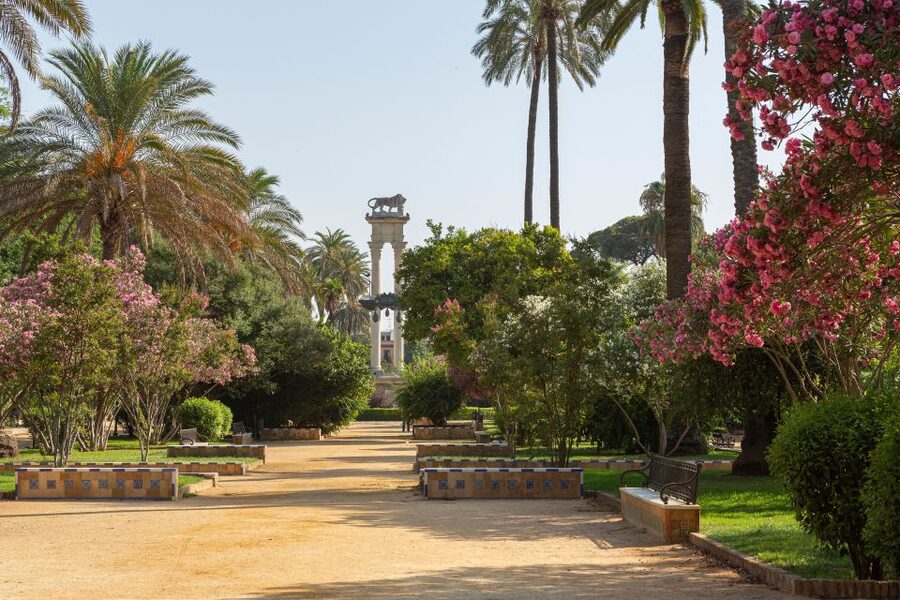
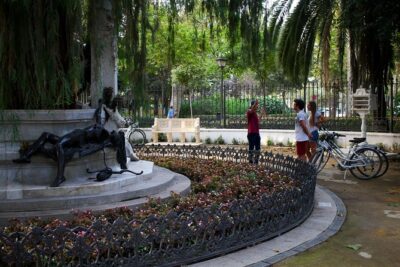
The route then moves into the Jardines de Murillo, where the mood changes quickly. Instead of tight streets, you ride beneath orange trees and palms, with more room to breathe and look around.
This is one of the tour’s quieter stretches. You can enjoy Seville’s garden style without having to commit to a long garden visit on foot. The guide may stop to point out details that are easy to miss while riding, and the group can gather without blocking a narrow street.
The gardens also show why Seville is so pleasant for cycling. Shade matters here, especially in late spring and summer, though you should still wear sunscreen and bring comfortable clothing. Bottled water is included, but it is wise to arrive hydrated.
María Luisa Park and Plaza de España
Parque de María Luisa is one of the main rewards of the route. The park provides broad paths, leafy corners, fountains, and a break from the denser city center. You get time to enjoy the setting rather than simply passing it in a taxi.
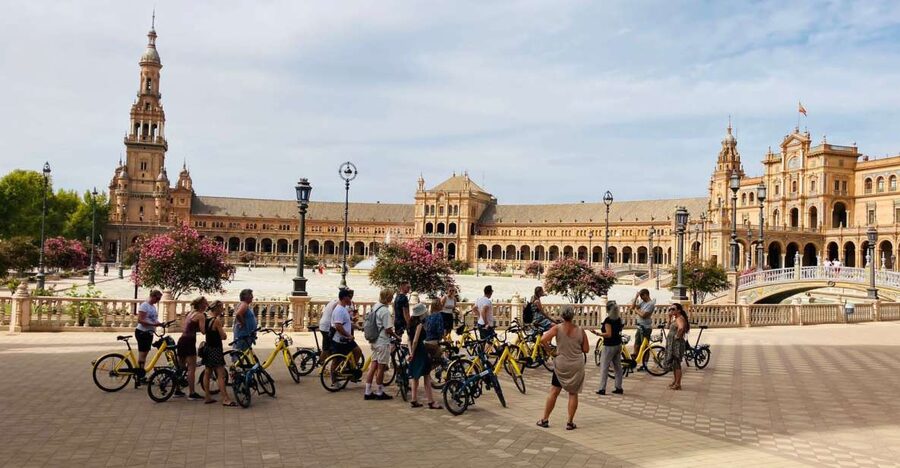
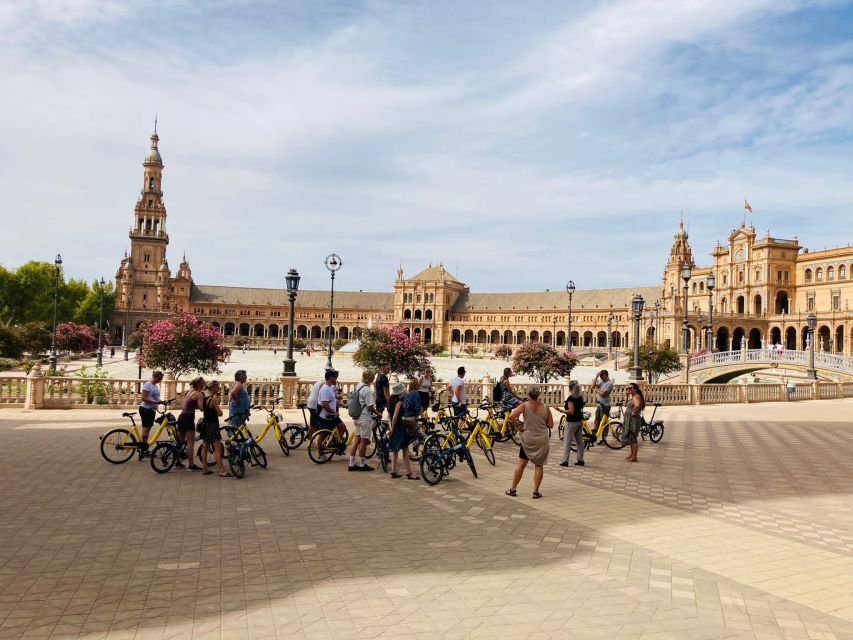
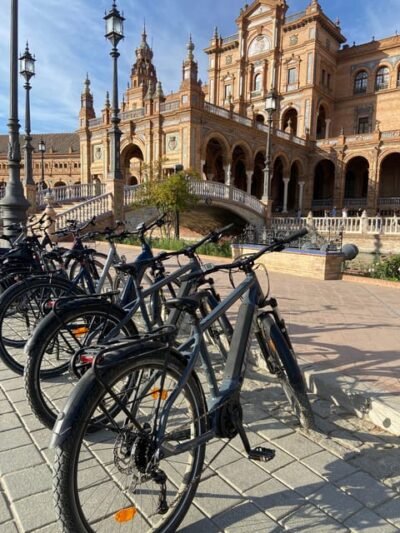
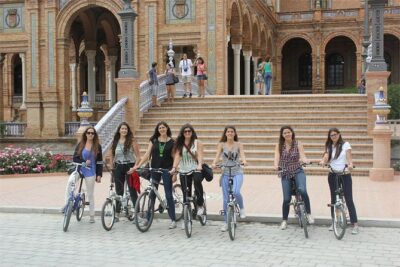
The nearby Plaza de España is the tour’s grand visual centerpiece. Built for the 1929 Iberian-American Exposition, it is lined with colorful ceramic tiles representing Spain’s provinces. The curved complex, bridges, water, and tiled alcoves make it one of Seville’s most photographed places, but a guide adds value by explaining why it was built and how it fits into the city’s story.
This is a good place to slow down. You will likely spend more time off the bike here, taking pictures and listening to the guide. The stop also shows the difference between Seville’s older medieval quarter and its early twentieth-century public architecture.
One practical point: the plaza can be crowded, particularly during popular visiting hours. That does not spoil the stop, but it makes the morning departure attractive if you prefer a calmer ride. The supplied information gives several departure times, so check the time attached to your booking rather than relying on a general schedule.
Same wheels, a different route:
- Seville: Highlights City Bike Tour
★ 4.8 · 2,168 reviews - Madrid Highlights Bike Tour
★ 5.0 · 1,731 reviews - Madrid: 3 h. Guided Highlights Bike Tour with Optional Tapas
★ 4.9 · 1,623 reviews - Barcelona 3-hour Bike or E-Bike Tour: Highlights and Hidden Gems
★ 5.0 · 1,429 reviews
The former tobacco factory and Seville’s grand buildings
The route includes the Antigua Fábrica de Tabacos, the former royal tobacco factory. This is a large historic building with an important place in Seville’s story and is now associated with the University of Seville.
You may not go inside during the bike tour, so think of this as an exterior stop and a piece of city context rather than a museum visit. The guide can help you understand how Seville’s buildings have changed function over time. That sort of explanation is useful because the city’s major structures often carry several layers of political, artistic, and social history.
Guides named Carmen, Juan, and others have been praised for discussing more than dates and façades. You can expect references to local culture, politics, religion, flamenco, architecture, and everyday life. The depth depends on the guide and group, but the strongest part of this experience is the personal explanation at each stop.
Following the Guadalquivir to Torre del Oro
The ride toward the Guadalquivir opens another side of Seville. From the riverside, you get broad views and a clearer sense of how the water shaped the city’s trade, defenses, and growth.
The Torre del Oro is an octagonal defensive tower beside the river. It is a straightforward photo stop, but its position makes it more useful than a quick landmark check. You can see the relationship between the historic center, the river, and the bridges leading toward Triana.
Riverside riding is generally more open than Santa Cruz, though conditions can change with foot traffic. The guide’s job matters here. Several riders specifically value guides who check that the whole group is together before moving on, especially in busy areas.
If you want a silent scenic ride, this may not be the perfect tour. The guide often talks at stops, and the group moves as one. If you prefer a clear introduction to Seville’s layout, the river section is one of the most useful parts.
Crossing into Triana, home of ceramics and flamenco
Triana gives the route a different character. Across the river from the central sights, the district is linked with flamenco, ceramics, and a strong neighborhood identity. You get a glimpse of Seville beyond the postcard center.
The guide may point out ceramic work and explain Triana’s role in local culture. Several guides are also keen on flamenco, and some offer suggestions for shows later in your stay. That advice can be more useful than a generic list because you can ask what fits your schedule and interests.
Do not expect a full flamenco performance or a long neighborhood walk. This is a moving overview, with stops designed to help you understand the area. You will want to return to Triana later if you plan to eat, browse, or attend a performance.
The district can also add a little traffic and street complexity. You should follow the guide closely and avoid treating this as a freewheeling ride. The tour is relaxed, not completely carefree.
Cathedral, Giralda, and Las Setas
The route also takes in Seville Cathedral and the Giralda, two of the city’s defining landmarks. You see them as part of the wider city ride rather than entering for a detailed indoor visit, so book a separate timed visit if you want to tour the cathedral or climb the Giralda.
Seeing these buildings from the bike helps you place them in relation to Santa Cruz and the surrounding streets. The guide can explain the mix of architectural styles and the importance of the complex, while you save your energy for a later visit inside.
The final city-center landmark is Metropol Parasol, widely called Las Setas. Its modern wooden form contrasts sharply with Seville’s older stone, tile, and plaster buildings. That contrast makes it a worthwhile stop even if contemporary architecture is not your main interest.
This section may be the busiest part of the ride. The upside is that you cover a large portion of central Seville in one outing. The downside is that you need patience around pedestrians, crossings, and narrow routes.
What the guides add to the ride
The quality of this tour depends heavily on the guide, and the guide names that appear most often include Carmen and Juan, along with Alvarito, Pablo, Daniel, Leo, Paulo, Ale, Ally, and others. That is not a promise that you will receive a particular person, but it gives you a sense of the team’s range.
Carmen is described as friendly, clear, and careful about matching the pace to the group. Juan is often praised for local stories, history, flamenco knowledge, and food suggestions. Alvarito is particularly good with families and brings a strong sense of enthusiasm to Seville’s past.
The best guides do not simply point at buildings. They explain why a place matters, then give you room to look. Many also offer suggestions for tapas bars, flamenco performances, and places to explore after the ride.
Language choices include Spanish, English, French, Italian, and Dutch in the main activity details. Other supplied information also lists German, Russian, and Portuguese, so confirm the available language and request your preference when booking.
Bikes, pace, and comfort
The city bikes are included, as is a helmet if you want one. The equipment is described as comfortable and easy to handle. The route has no major sustained climbs according to the main details, though one family group noted a few more challenging hills, so do not assume every meter is perfectly level.
You will not pedal continuously for three hours. The route includes stops at major sights and short stretches between them. That makes it suitable for people who want to see more than they could on foot but do not want a strenuous cycling excursion.
Wear comfortable clothes and sunscreen. A hat may be useful when you are stopped in open areas, though you should make sure it does not interfere with the helmet if you choose to wear one. Bring a passport or ID card, as requested in the practical information.
People who cannot ride a bike should not book this activity. For children, the supplied experience includes a successful family outing with seven- and nine-year-old boys, but no specific minimum age or child-bike information is given. Ask the provider before booking for younger children.
Timing, group size, and the small print
The advertised price is $35 per person, and the group can reach 15 people. That is a reasonable price for a guided overview that combines transport, local explanation, water, and equipment. A private tour would give you more control, but this option keeps the cost moderate.
The published details are not fully consistent. One section says 2.5 hours, another says 3 hours, and departure information includes 10:00, 10:30, and 14:00. Treat the confirmed booking time and duration as the reliable information, and allow a little flexibility afterward.
A morning ride is likely the better choice if you want cooler conditions and fewer people around the main sights. An afternoon departure can work well if your morning is busy, but heat and crowd levels may be higher depending on the season.
Cancellation is free up to 24 hours before departure, and reserve-now-pay-later booking is available. Those terms help if your plans are still shifting, but check the final booking conditions before paying.
Who should book this Seville bike tour?
I would choose this tour for a first day in Seville. It gives you a working map of the city, shows you the main districts, and helps you decide where to return for longer visits.
It suits:
- First-time visitors with limited time
- Couples and families who can ride comfortably
- People who find long city walks tiring
- Visitors who want history mixed with local food and flamenco advice
- Anyone who prefers a relaxed group activity over a formal lecture
I would think twice if you dislike cycling near pedestrians or want extended time inside museums and monuments. This is an outdoor overview, not a substitute for visiting the cathedral, Alcázar, or other sights at length.
Should you book it?
Book it if you want to cover a large part of Seville in one easy morning or afternoon, with a guide who can explain the city and point you toward good choices for the rest of your stay. The $35 price is fair, particularly because the bike, water, helmet option, insurance, and guide are included.
Choose the morning if possible, confirm the exact departure time, and expect a few crowded sections. If you can ride a bike and enjoy stopping often for stories and photos, this is a practical, pleasant way to get your bearings fast.
FAQ
Where does the Seville bike tour meet?
The meeting point is Plaza de Santa Cruz 4 in Barrio Santa Cruz, behind the Jardines de Murillo.
How long does the bike tour last?
The activity information gives a duration of 2.5 hours, while the detailed tour description says 3 hours. Check the confirmed duration when booking and allow flexibility in your schedule.
What departure times are available?
The supplied details list departures at 10:00 and 14:00, and another note gives a daily departure at 10:30. Confirm the exact time for your chosen date.
What sights does the tour visit?
The route includes Barrio Santa Cruz, Jardines de Murillo, María Luisa Park, Plaza de España, the former tobacco factory, the Guadalquivir riverside, Torre del Oro, Triana, Seville Cathedral, the Giralda, and Metropol Parasol.
Is the route difficult?
The route covers about 10 kilometers on mostly flat terrain and is described as suitable for all levels. You should still be able to ride a bike in city conditions, including some busy areas.
What is included in the price?
The tour includes a city bike, helmet, local guide, bottled water, and liability insurance.
New rides added around Spain
- Penedès/BCN: Self-Guided eBike Tour with guided Winery Visit★ 5.0 · 19 reviews
- Barcelona | StreetArt Bike Tour Moco Museum★ 4.6 · 13 reviews
- Maspalomas: Rent 4 or 8 hours untill 7-Day Mountain Bike★ 4.5 · 14 reviews
- Maspalomas: Southern Coast E-Bike Tour Option Tapas Tasting★ 4.8 · 14 reviews
- Mallorca: Touring or electric bike rental in Cala Millor★ 5.0 · 22 reviews
- Málaga E-Bike Tour with Full Day Rental★ 4.2 · 54 reviews
- Rent a bike in Malaga★ 4.5 · 84 reviews
- Malaga: City Bike Rental with Self-Guided Cycling Route★ 4.7 · 21 reviews
Seville Bike Tours, compared.
Browse the lists this tour appears in