
Review · SEVILLE
Seville Bike Tour with Full Day Bike Rental
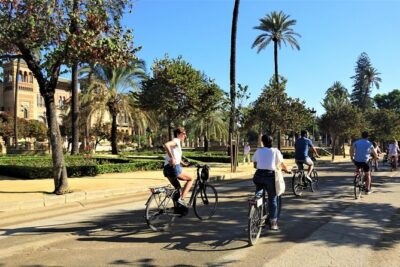
Seville opens up nicely on two wheels. This small-group bike tour takes you from the old center to Triana, the Guadalquivir riverfront, Plaza de España, Santa Cruz, La Macarena, and Alameda de Hércules without making you cross the same ground on foot all day. You also keep the bike for the rest of the day, which gives the outing real practical value.
I like the mix of a guided route and free time. You get useful city orientation from an English-speaking local guide, then have a bicycle for your own exploring. I also like the broad route: it covers major sights, but includes Triana and La Macarena, places you might skip if you only follow the usual cathedral-and-palace circuit.
The main caution is bike condition and fit. Some riders received good-quality bikes, while others dealt with small cruiser-style bicycles, uncomfortable seats, or a seat that slipped during the ride. The tour is also listed as three hours, but one rider finished closer to two and a half hours, so allow some flexibility.
Key points at a glance
- A noon start from C. Trajano 6: Meet in Seville’s old center and return to the same place at the end.
- A wide city route: See Triana, the Guadalquivir, Maestranza, Torre del Oro, Plaza de España, María Luisa Park, Santa Cruz, La Macarena, and Alameda de Hércules.
- A full day of cycling for one price: Keep the bicycle after the guided portion if you want more independent sightseeing.
- English small-group format: The guide leads the ride and explains Seville’s monuments, neighborhoods, and Expo history.
- Bike choice matters: Different bicycle types are available, but check the fit, seat, and brakes before leaving.
- Good overall approval with a few real cautions: The experience is rated 4.7 out of 5, with 96 percent recommending it.
Why Seville works so well by bicycle
Seville is a city of grand monuments, narrow old streets, river views, and separate neighborhoods that feel quite different from one another. A bicycle helps connect these areas without spending your whole day walking between them.
The route begins on C. Trajano, in the Casco Antiguo, or old center. From there, you head into the historic core before reaching the river and crossing toward Triana. That is a useful pattern for a first look at Seville. You see the central sights, then get a sense of how the city extends beyond the usual tourist center.
I like this format for a first or second day in town. The guide gives you a map in your head, while the bicycle lets you notice how the neighborhoods fit together. You are not stopping for a full visit at every monument, so plan to return later to the places that deserve more time.
The ride is in English and takes about three hours. It requires a moderate level of fitness, but it is not presented as a hard athletic excursion. You will be cycling through city streets and stopping at several sights, so the main challenge is staying comfortable and alert rather than riding long distances at speed.
More Bike Rentals in Spain
- Corralejo: E-Bike Rental with Map to Popcorn Beach
★ 4.9 · 221 reviews - Malaga: Electric Bike Rental
★ 4.3 · 110 reviews - Malaga: Bike Rental for City Discovery Route & Beaches
★ 4.7 · 97 reviews
Starting in the old center at noon
The meeting point is C. Trajano, 6, in Seville’s old center. The activity begins at 12:00 pm and ends back at the meeting point. Public transportation is nearby, which makes the starting point fairly practical if you are staying outside the center.
A noon start has both strengths and weaknesses. You avoid an early morning rush, and it leaves time for breakfast or a short visit before the tour. In warm weather, though, the middle of the day can feel hot, especially on open stretches near the river. Bring water and dress for the conditions.
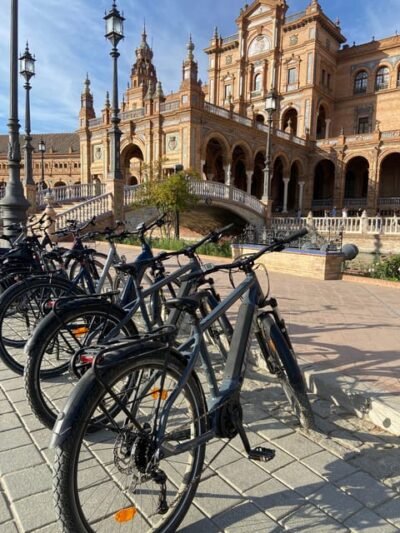
The provider supplies the bicycle, a padlock, and some other accessories. Different types of bicycles are available, so ask to see the choices before you set off. If you are tall, short, or simply particular about saddle height, this is the moment to speak up.
One past rider who was 5 feet 11 inches found a small cruiser uncomfortable, and a loose seat caused trouble during the ride. Another rider praised the bicycles as good quality. Those two experiences point to the same practical lesson: test the bicycle before departure. Check that the seat stays fixed, the brakes work, and the frame feels right for you.
Triana and the Expo 1992 story
One of the tour’s better features is that it does not stay entirely inside Seville’s old center. You learn about Triana and Expo 1992 as the route moves through the city.
Triana sits across the Guadalquivir and has a separate identity within Seville. The neighborhood is known in the tour description as an important part of the route, and past guides have spent useful time there. Thresea, for example, was praised for taking the group through parts of Triana that a visitor might not reach alone.
The Expo 1992 material adds a more modern layer to the city. Seville is not only palaces, churches, and old lanes. The exhibition changed parts of the city and left a major mark on its public spaces. A bicycle is a handy way to connect this modern story with the older neighborhoods nearby.
Guide quality can shape this section. Jiminez was singled out for friendly and detailed explanations, while Arianna was praised for her understanding of Seville, Spain, and Triana. Guide assignments can change, so do not book solely around a particular person. Still, the strongest part of this tour seems to be the human explanation of the city, not simply the act of riding.
Following the Guadalquivir to Maestranza
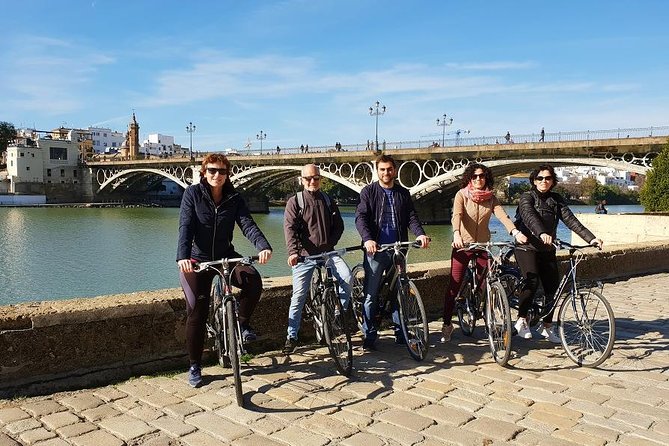
The route then follows the Guadalquivir and stops at several important riverfront sights. This is one of the more comfortable parts of the outing because the river gives you space after the tight lanes of the old center.
The Maestranza is among the landmarks you will see. Even if you do not plan to attend a bullfight, its place beside the river helps explain Seville’s public life and architecture. The tour gives you a look from the outside and a chance to hear context from the guide, but it is not a dedicated visit inside.
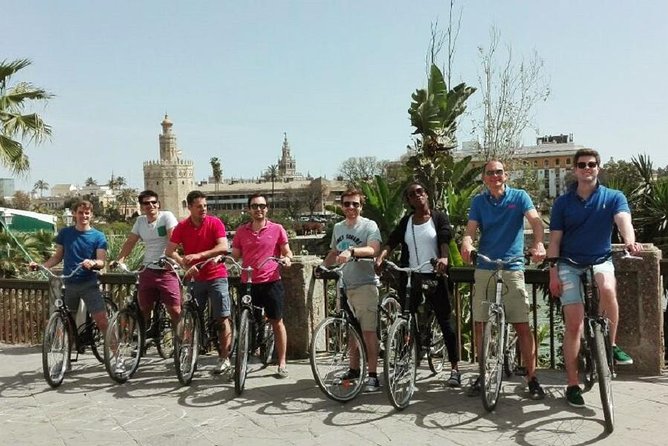
You also pass the Torre del Oro, one of Seville’s best-known riverfront monuments. From a bicycle, you can appreciate its position beside the water and its role in the old defensive system. Treat this stop as an orientation point rather than a full museum visit.
This part of the route is also useful for photographs and city views. You can stop, listen, and get your bearings without the fatigue of walking several kilometers. Keep in mind that group cycling means the pace is shared. You may not linger as long as you would on your own.
Same wheels, a different route:
- Highlights & Hidden Spots of Barcelona Bike Tour w/ Local Guide
★ 4.5 · 3,009 reviews - Valencia: City Highlights Guided Bike Tour
★ 4.7 · 2,373 reviews - Seville Highlights Bike Tour (English)
★ 5.0 · 2,225 reviews - Seville: Highlights City Bike Tour
★ 4.8 · 2,168 reviews
Plaza de España and María Luisa Park
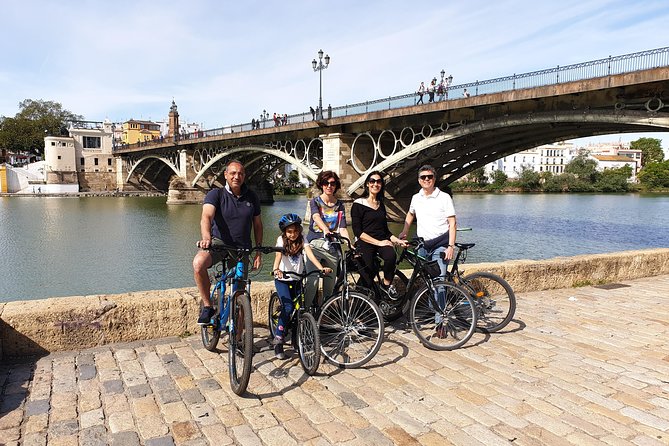
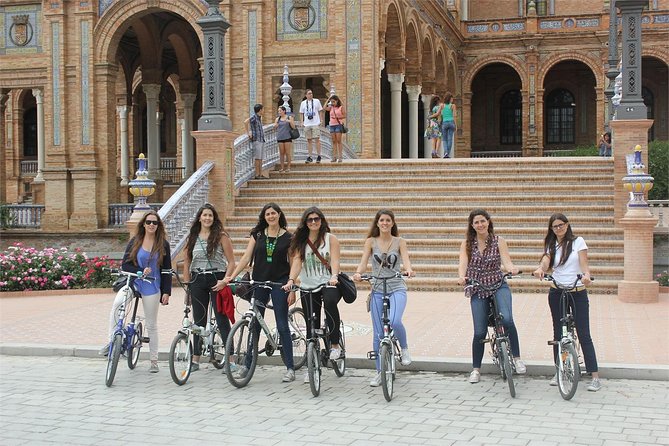
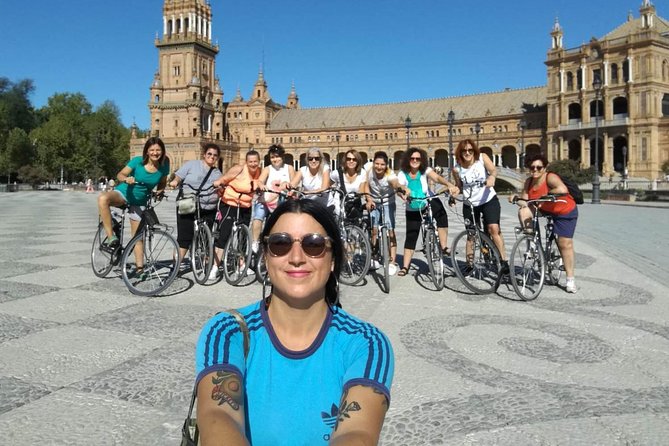
The itinerary includes the 1929 exhibition area, especially Plaza de España and María Luisa Park. These are major Seville sights, and including them makes the tour more useful for a first-time visitor.
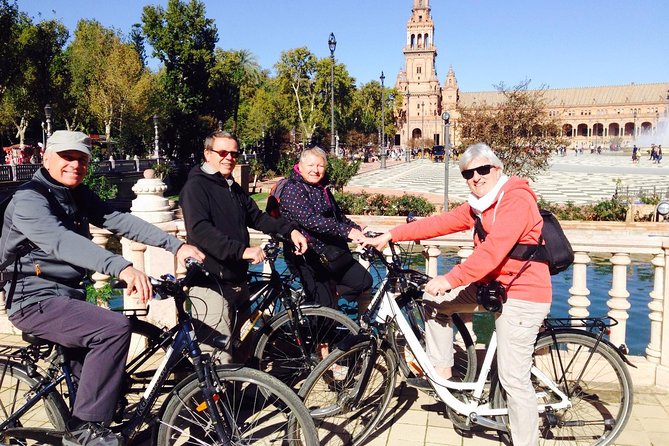
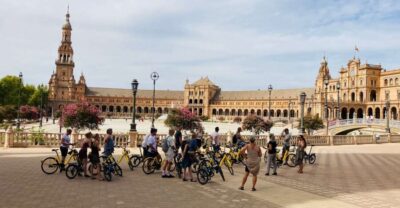
Plaza de España is a large, theatrical space built for the Ibero-American Exposition of 1929. Its curved form, tiled alcoves, waterways, and open plaza make it very different from the narrow lanes of Santa Cruz. A guide can help place it in the story of Seville’s exhibitions and public architecture.
María Luisa Park provides a greener setting and a change of pace. You will see the area as part of the cycling route, not as a long park visit. If you want time to study the tilework, take photographs, or wander through the park, use the complimentary bicycle rental after the tour and return independently.
That free rental is more than a small extra. At $87.07 per person, the price is higher than a basic short sightseeing ride, but you are paying for the guided portion, the bicycle, accessories, and the option to continue using it for the day. The value improves if you actually use the bike afterward.
Santa Cruz, La Macarena, and Alameda de Hércules
The route continues into Santa Cruz, Seville’s old Jewish quarter. This is a part of town where bicycles can be both useful and awkward. The lanes are narrow and can feel crowded, so the group will need to move carefully and stop at suitable points.
You will pause at important monuments in the quarter rather than simply passing through. The guide’s role matters here because the streets can look charming without explaining how the district fits into Seville’s past. Expect an overview, not a detailed walking tour of every lane.
After Santa Cruz, the ride heads toward La Macarena and Alameda de Hércules. This broadens the picture again. La Macarena is a popular neighborhood with its own local character, while Alameda de Hércules is one of Seville’s notable public gathering areas.
This final stretch can be especially useful if you have more than a day in Seville. It points you toward parts of town that are less likely to appear on a basic monument checklist. Use the end of the guided route to decide where you want to return later.
The full-day bicycle rental is the main bonus
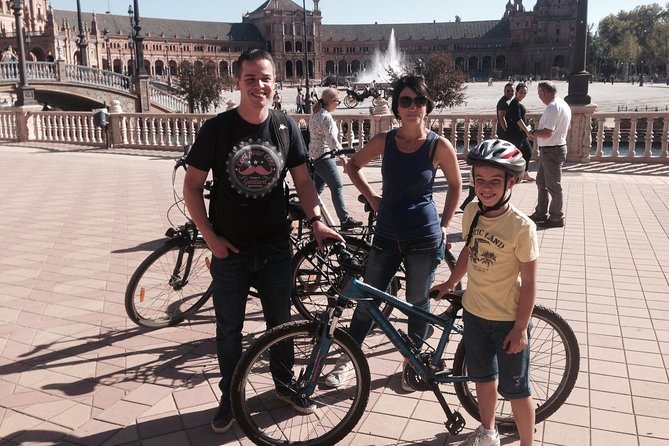
Once the guided tour ends, you may keep the bicycle for the rest of the day at no extra cost. You receive a padlock and other accessories, so you can continue sightseeing without immediately returning to the shop.
You do not have to keep riding. The bicycle rental is optional, which is helpful if the heat, seat, or your energy level makes you want to stop. If the bike feels uncomfortable during the tour, though, do not assume a full afternoon will improve things. Ask for an adjustment or a different bicycle before leaving the meeting point.
The extra time works best when you already have a loose plan. You might revisit Plaza de España, spend longer in María Luisa Park, or return to a riverfront area for photographs. You could also use the bike to explore a neighborhood introduced during the morning or afternoon route.
Do not count on the free rental as a substitute for a planned museum visit. The tour provides a bicycle and general orientation, not admission to the monuments along the way. Food and drinks are also not included, so plan a stop of your own after the guided portion.
Guide quality, group size, and language
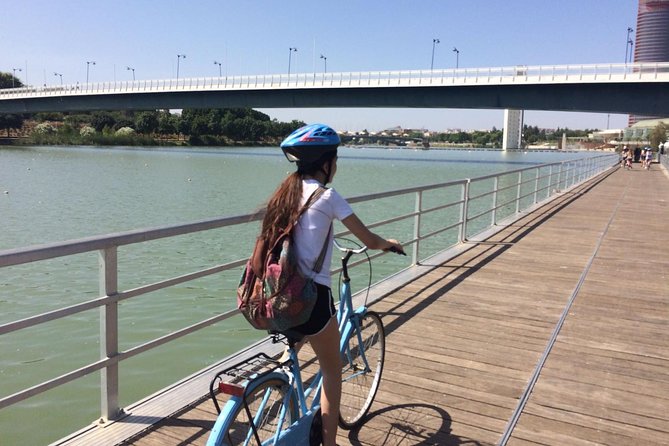
The experience is sold as a small-group guided tour in English. That format is a good middle ground. You get personal explanation without the expense of a private tour, and the group can move more easily than a large coach party.
The strongest praise has focused on the guides. Jiminez was described as friendly and well informed, and Arianna received similar praise for her explanations of Seville and Triana. Thresea was particularly effective at showing less obvious parts of Triana. These details suggest that the best departures feel like a local introduction rather than a list of monument names.
There is also one warning about guide consistency. Adrian was described as trying hard after a booking problem led to a substitute operator, but the rider felt he was not really a trained guide and found the historical detail vague. That appears tied to a supplier change rather than the normal plan, but it shows why reconfirming the pickup details matters.
The activity information asks you to reconfirm the meeting details with the local supplier. Do that before the day of the ride, especially if your schedule is tight. It can help avoid confusion over the operator, meeting point, or bicycle arrangements.
Price, comfort, and who should book
At $87.07 per person, this is not the cheapest way to see Seville. Its value depends on how you use it. If you only complete the guided ride and return the bicycle, the price may feel high compared with a simple walking route. If you keep the bicycle for several more hours, the package becomes more attractive.
I would consider it good value for a first-time visitor who wants an overview and intends to explore independently afterward. It also suits anyone who finds Seville’s distances tiring on foot but still wants to move at street level.
The tour is less suitable if you want a slow, detailed visit inside monuments, a private guide, or a polished cycling experience with guaranteed premium bicycles. You should also think twice if you dislike riding in city streets or need a very specific bicycle fit.
Children must be accompanied by an adult. All riders should have moderate physical fitness. Since the tour depends on good weather, poor conditions can lead to a different date or a full refund.
My call: book it if you will use the bike afterward
I would book this Seville bike tour if you want a broad introduction to the city and plan to keep the bicycle for the rest of the day. The route covers more than the central monument cluster, and the combination of Triana, the river, Plaza de España, Santa Cruz, La Macarena, and Alameda de Hércules gives you a useful sense of Seville’s different sides.
Before setting out, check the bicycle carefully and ask for a comfortable fit. Reconfirm the meeting details, bring water, and leave room in your schedule for the ride to run slightly shorter or longer than three hours.
Choose it for orientation, local explanation, and easy movement around town. Skip it if your priority is a long, detailed monument visit or if bicycle comfort is a major concern. The overall score of 4.7 from 117 ratings and the 96 percent recommendation rate point to a strong experience, but the equipment warnings deserve equal attention.
FAQ
Where does the Seville bike tour start?
It starts at C. Trajano, 6, in the Casco Antiguo of Seville, Spain.
What time does the tour begin?
The listed start time is 12:00 pm.
How long does the guided bike tour last?
The guided portion is approximately three hours.
Where does the activity end?
The tour ends back at the meeting point on C. Trajano.
Is the tour offered in English?
Yes. The activity is offered in English.
Can I keep the bicycle after the guided tour?
Yes. You may use the bicycle for the rest of the day at no extra cost. This part is optional.
What sights and neighborhoods does the route include?
The route includes Triana, the Guadalquivir River, Maestranza, Torre del Oro, the 1929 exhibition area at Plaza de España, María Luisa Park, Santa Cruz, La Macarena, and Alameda de Hércules.
Are food and drinks included?
No. Food and drinks are not included.
Can I cancel for a full refund?
Yes, if you cancel at least 24 hours before the local start time. Cancellations or changes made less than 24 hours before the start are not refunded or accepted. If bad weather causes the provider to cancel, you can choose another date or receive a full refund.
More full-day rides in Spain
- Rent a City Bike: Full Day 24 hours
★ 5.0 · 509 reviews - Barcelona: Full-Day Bike/E-Bike Rental with Helmet and Lock
★ 4.8 · 92 reviews - Málaga E-Bike Tour with Full Day Rental
★ 4.2 · 54 reviews - Valencia: Full-Day Bike Rental
★ 4.5 · 44 reviews
New rides added around Spain
- Penedès/BCN: Self-Guided eBike Tour with guided Winery Visit★ 5.0 · 19 reviews
- Barcelona | StreetArt Bike Tour Moco Museum★ 4.6 · 13 reviews
- Maspalomas: Rent 4 or 8 hours untill 7-Day Mountain Bike★ 4.5 · 14 reviews
- Maspalomas: Southern Coast E-Bike Tour Option Tapas Tasting★ 4.8 · 14 reviews
- Mallorca: Touring or electric bike rental in Cala Millor★ 5.0 · 22 reviews
- Málaga E-Bike Tour with Full Day Rental★ 4.2 · 54 reviews
- Rent a bike in Malaga★ 4.5 · 84 reviews
- Malaga: Private Bike Rental★ 4.7 · 36 reviews
Seville Bike Tours, compared.
Browse the lists this tour appears in