
Review · INDONESIA
Kuta: Kintamani Culture and Nature Guided Cycling Tour
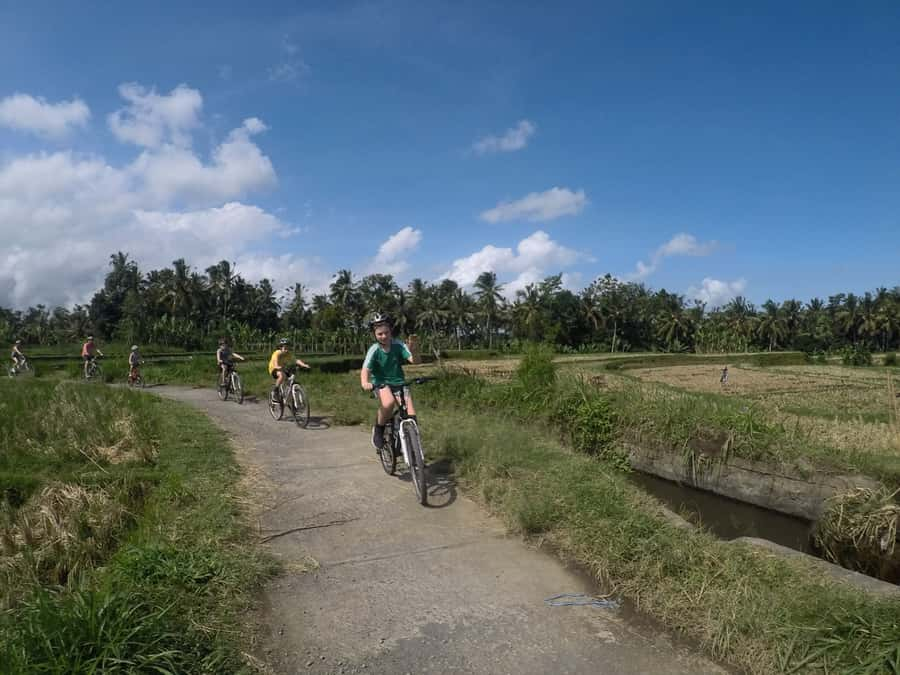
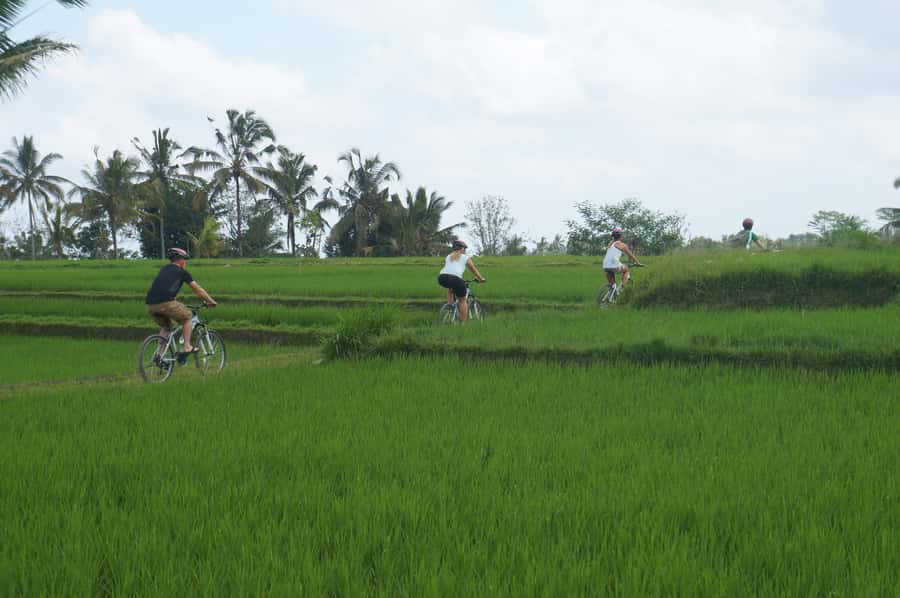
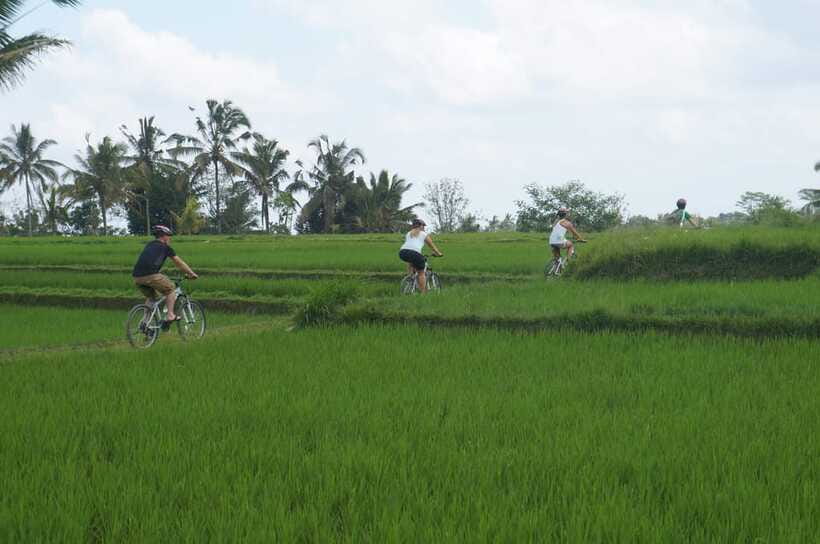
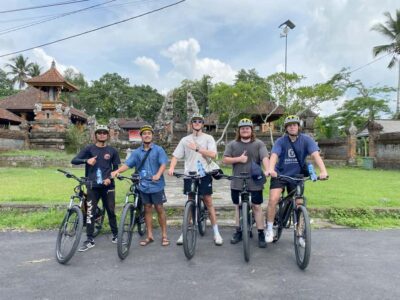
The best thing about this tour is the route: about 22 kilometers, mostly downhill, through villages, gardens, forest paths, and rice fields far from busy roads. You get a moving view of rural Bali rather than a quick stop at one famous sight.
I like the visit to a real Balinese house compound, where the guide explains how the buildings fit together. I also like the simple coffee break under palm trees, followed by lunch in the middle of a rice field. These are small touches, but they make the ride feel connected to daily life.
The main consideration is that this is a seven-hour outing with hotel transfers, so a good part of the day goes to transport. The route is gentle rather than athletic, but you still need to be comfortable on a bicycle and able to manage uneven sections and short off-road stretches.
Key points at a glance
- Mostly downhill cycling: Ride around 22 kilometers from Abuan Kintamani toward Tegallalang, with only a modest physical challenge.
- Balinese home visit: Learn about the layout and purpose of a traditional house compound from an English-speaking guide.
- Palm-tree coffee stop: Pause for coffee and a traditional Balinese cake in a garden setting.
- Rural route: Pass through villages, gardens, forest trails, and rice fields instead of spending the ride on busy roads.
- Small group format: The group is limited to six participants, useful for questions and a calmer pace.
- Lunch in the rice fields: Finish at Greenkubu Cafe in Tegallalang, with lunch included and soft drinks extra.
Why the downhill route matters
Cycling tours in Bali can sound more demanding than they are. This one begins in Abuan Kintamani and follows a route that is mostly downhill for roughly 22 kilometers. That makes it a reasonable choice if you want to see the countryside by bike without signing up for a hard climb.
You should not read mostly downhill as effort-free. You still need balance, control, and enough confidence to ride for around three hours. The path includes villages, gardens, forest trails, rice fields, and brief off-road sections. Conditions can change, and wet weather may make surfaces less predictable.
The route keeps you away from heavy traffic for much of the ride. That matters in Bali, where a bicycle tour beside busy roads can feel tense. Here, you have more time to look around, take photographs, and listen to the guide without constantly watching vehicles.
The guides give a short safety explanation before you set off. Helmets, bicycles, mineral water, and wet-weather gear are provided. Equipment was described as well maintained, which is reassuring, though you should still use the safety briefing to check that you understand the riding conditions.
More guided departures in Indonesia:
- 3-Hour Porto Highlights on a Electric Bike Guided Tour
★ 5.0 · 4,392 reviews - Small Group Guided Bike Tour of Amsterdam’s Hidden Gems
★ 5.0 · 3,936 reviews - Porto: City Highlights 3-Hour Guided Electric Bike Tour
★ 4.8 · 3,092 reviews
Hotel pickup from Kuta and nearby resorts
The day starts with pickup at your hotel lobby. Pickup areas include Kuta, Seminyak, Ubud, Sanur, and Nusa Dua Beach, with the same areas available for drop-off. The precise start time depends on availability, so check it carefully before booking.
Transport is a practical part of the package. You do not need to arrange your own way to Abuan Kintamani, and you return to your chosen drop-off area after lunch. The tradeoff is time. A seven-hour tour includes driving to the starting point and back from Tegallalang, so this is not seven straight hours on a bicycle.
One useful detail comes from a typical morning schedule: a group was collected at 7:00 a.m. and driven north of Ubud before reaching the cycling start. A coffee and breakfast stop was included in that outing, but the standard tour details specifically promise a coffee break and traditional cake, plus lunch. If breakfast matters to you, confirm it when booking rather than counting on it.
Small groups are another strength. With a maximum of six people, the guide can usually explain things without shouting across a large pack. It also gives you a better chance to stop for photographs or ask about a house, temple, crop, or village custom.
Starting in Abuan Kintamani
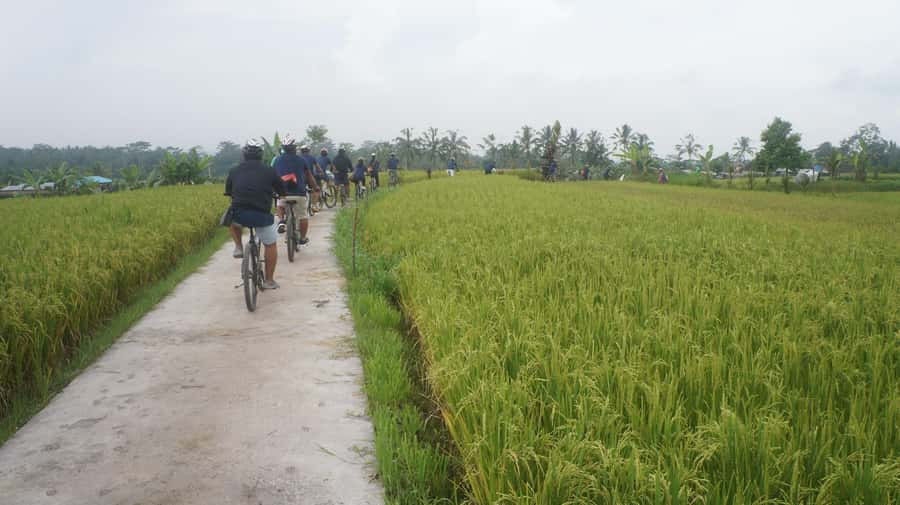
After the transfer, you begin in Abuan Kintamani village. The setting gives you a quick change of pace from the resort areas around Kuta and the south coast. Instead of starting beside shops or a major attraction, you begin in a village setting and work your way through rural Bali.
The guides first cover basic safety. This is brief, not a long classroom session, but it is important because the ride mixes ordinary village paths with forest trails and some rougher sections. Use this moment to adjust your helmet, check the bicycle, and tell the guide if you are uneasy on loose or uneven surfaces.
The ride lasts about three hours. You are not simply pedaling from one attraction to another. Stops break up the route and give the guide time to explain what you are seeing. That rhythm works well: ride for a while, pause for context, take photographs, then continue.
The route can suit a mixed group because the downhill profile reduces the strain. Solo participants can join without needing to form their own group, and a small private-feeling group is possible even when you book as an individual. Still, cyclists with limited balance or serious health concerns should choose carefully.
Inside a Balinese house compound
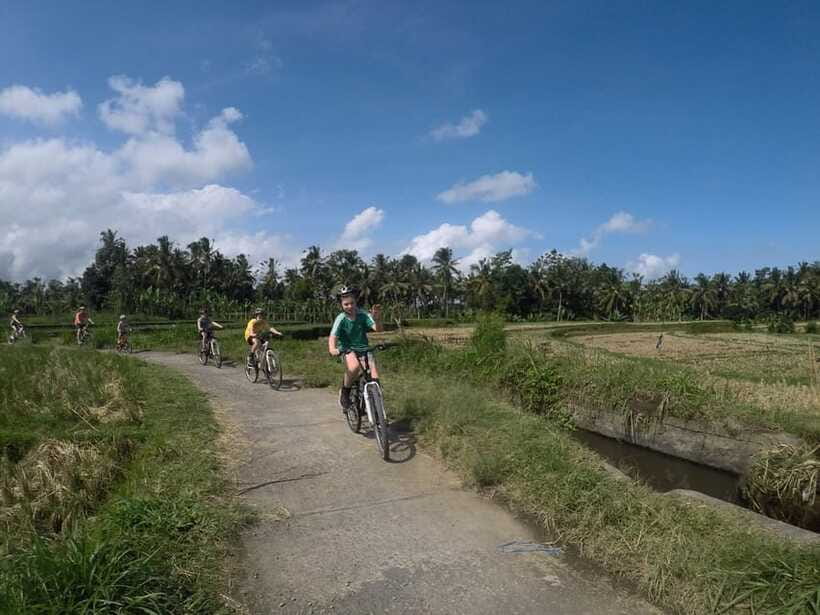
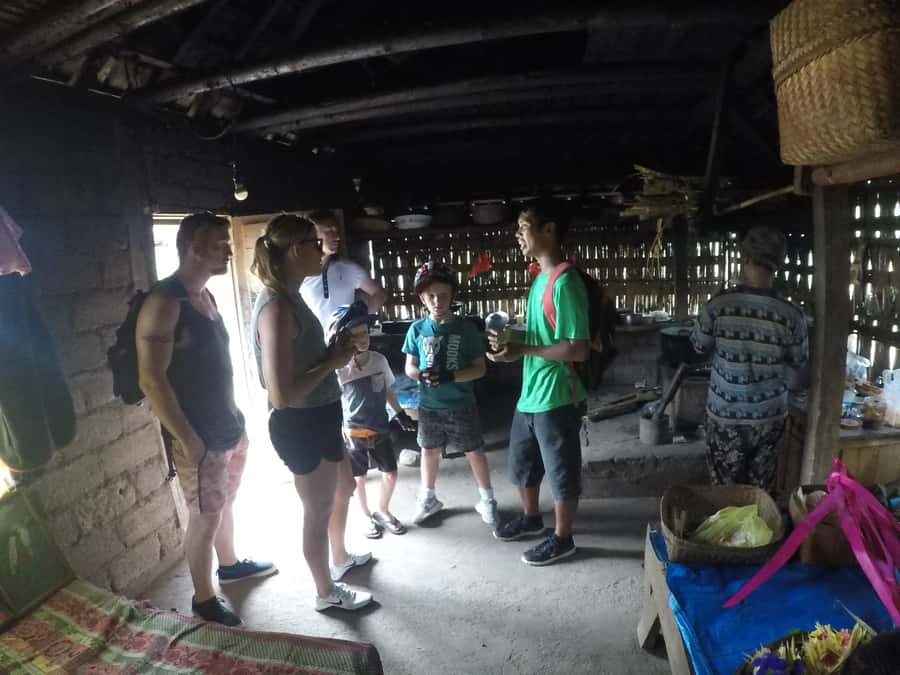
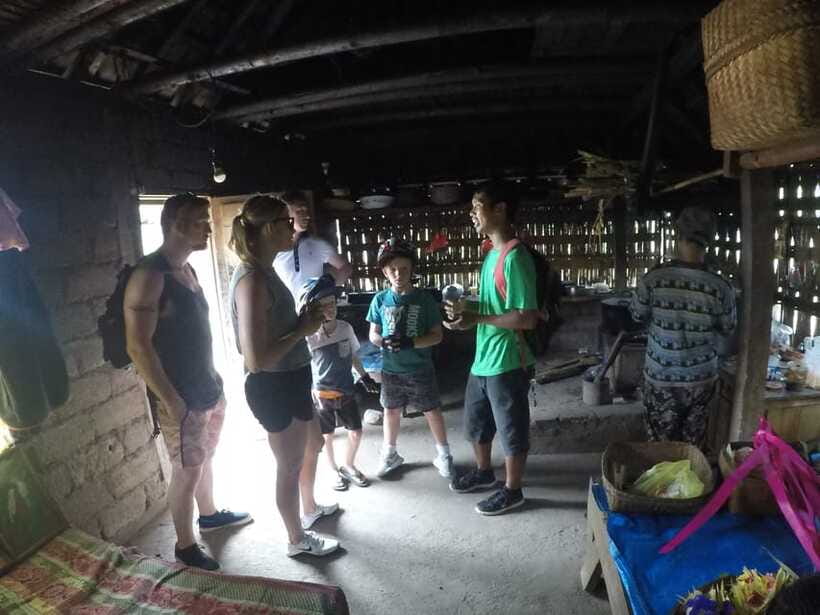
The first major stop is a traditional Balinese house. This is one of the most useful parts of the tour because it gives you context that a ride through rice fields cannot provide on its own.
A Balinese compound is not simply one house in the Western sense. The guide explains the arrangement of the buildings and offers information about how the compound works. That makes the stop worthwhile even if you have already seen temples or photographed village streets.
I prefer this kind of visit to a quick photo stop because it connects architecture with daily routines. You are not only looking at walls, gates, and courtyards. You are learning how local homes are organized and how the compound fits into Balinese life.
The details provided do not promise a staged performance or a long cultural demonstration. Expect an explanation and a chance to see the compound, not a full museum visit. That keeps the stop grounded, but it also means you should value the guide’s interpretation rather than expect a large attraction with many exhibits.
More bike tours around Indonesia:
- Electric Cycling Tour of Ubud with Free Hotel Transfer and Lunch
★ 5.0 · 1,397 reviews - From Ubud: Downhill Bike Tour with Rice Terraces and Meal
★ 4.9 · 664 reviews - Menoreh Village Cycling
★ 5.0 · 611 reviews - Ubud: Rice Terraces & Villages Half-Day Fat Tire E-Bike Tour
★ 4.9 · 602 reviews
Coffee, cake, and a palm-tree pause
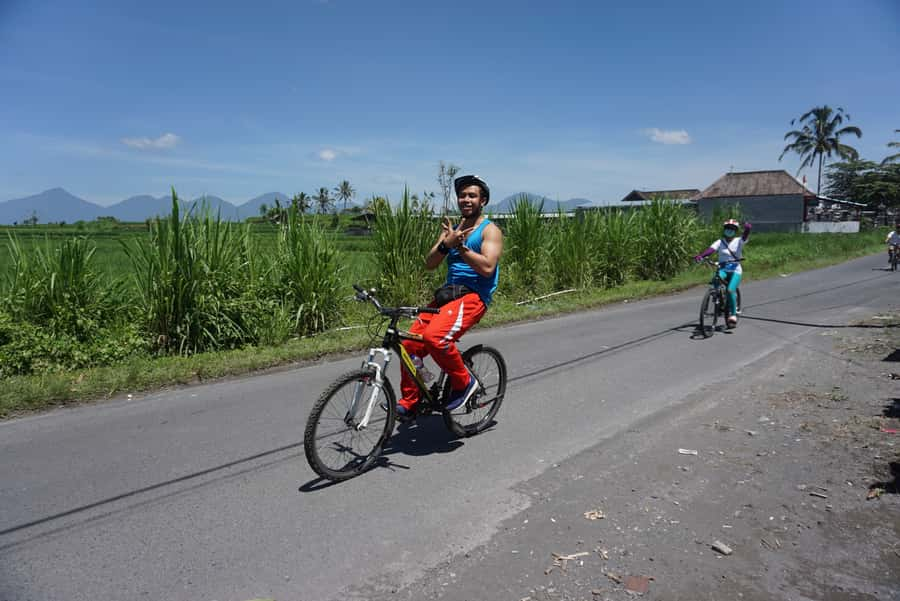
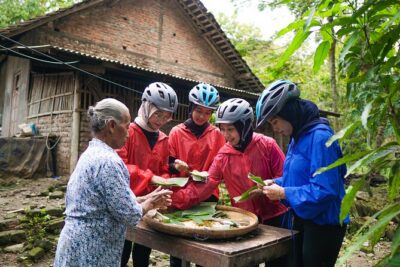
The next stop takes place in a palm-tree garden. Here you have coffee and a traditional Balinese cake. It is a modest break, but it is perfectly timed after the first stretch of cycling.
This stop gives you a chance to slow down and notice the setting. A drink under the palms feels more connected to the countryside than a refreshment stop at a standard roadside cafe. It also lets you ask the guide questions while everyone is off the bicycles.
The food is part of the price, and mineral water is included as well. Soft drinks at lunch are not included, so bring some cash if you want one. You should also carry a daypack for personal items, a camera, sunscreen, and a change of clothes.
The cake is a traditional Balinese item, but no specific type is named. If you have allergies or dietary restrictions, ask the provider before the tour. The same practical caution applies to lunch, since the supplied information confirms lunch is included but does not describe the menu.
Gunung Raung Temple in Taro
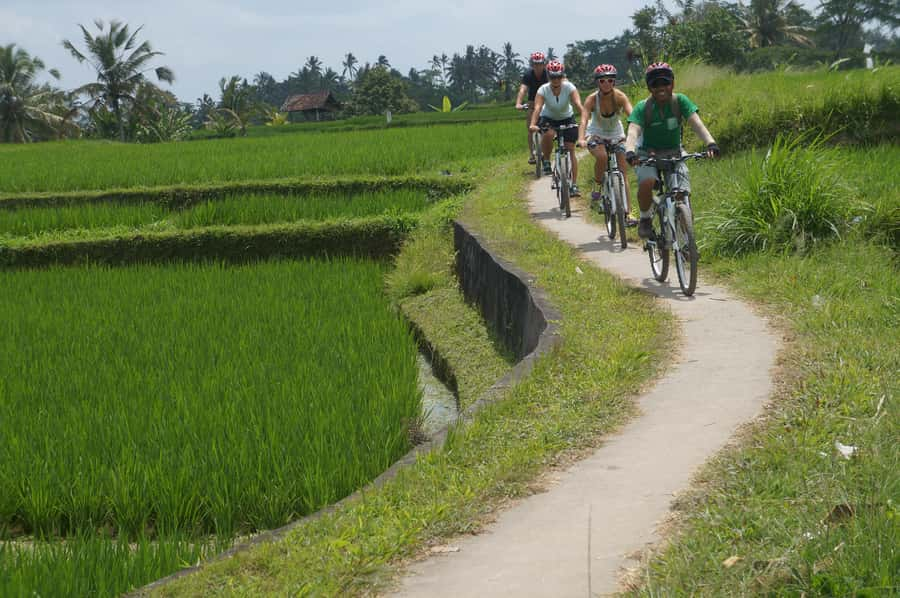
The route then reaches the historical Gunung Raung Temple in Taro village. The stop is positioned in front of the temple, giving you time to take in the setting and hear the guide’s explanation.
This stop adds a cultural marker to what could otherwise be only a nature ride. You move from a private residential compound to a place connected with Balinese worship and local history. The information supplied does not promise entry inside the temple, so plan on viewing it from the stopping point unless your guide tells you otherwise.
As with the house visit, the value comes from having a guide explain what you are seeing. A photograph alone tells you little. A short explanation can help you understand why the temple matters and how it fits into the village around it.
Keep your clothing comfortable and respectful. The tour instructions do not set out a formal dress code, but a temple stop is a good reason to avoid beachwear.
Bresela village and the rice-field view
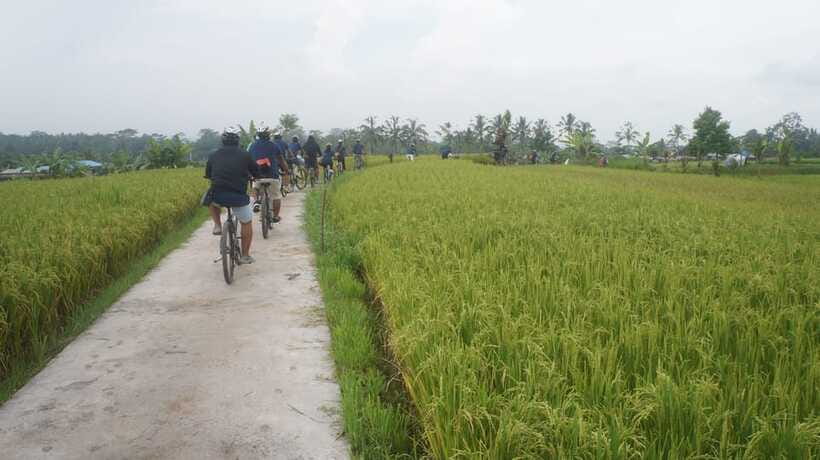
The final major stop before lunch is in Bresela village, described as the most striking rice-field viewpoint on the route. This is the place to keep your camera ready.
The view gives the tour its broad visual payoff. Earlier sections focus on village life, gardens, and shaded paths. Bresela opens the scene up, allowing you to see the patterned fields and the way farming shapes the countryside around Tegallalang.
You will have several opportunities to stop for photographs during the ride, but Bresela is the planned viewpoint rather than an accidental roadside pause. If you like taking pictures, this is also a good place to ask the guide about the fields and the villages nearby.
The practical point is that viewpoints can become crowded or feel rushed on large group excursions. The six-person limit helps here, though the length of each stop is not specified. Keep your camera accessible, and do not bury it at the bottom of your bag.
Lunch at Greenkubu Cafe in Tegallalang
The cycling ends at Greenkubu Cafe, located in the middle of a rice field in Tegallalang. Lunch is included, and the setting gives you a relaxed finish after the ride.
This is more than a meal added to a schedule. Ending among rice fields lets you continue the rural theme rather than returning immediately to a busy town. You can sit down, cool off, and take a proper break before the drive back to your hotel.
Lunch lasts about one hour. Soft drinks cost extra, so mineral water is the included drink to count on. Bring cash if you want additional beverages or small personal purchases.
The lunch stop also makes the tour easier for less athletic participants. You are not expected to cycle all the way back to the starting point. Once the route reaches Tegallalang, the transport takes you to your selected drop-off area.
What the $36 price covers
At $36 per person, this tour offers good value if you want transport, equipment, food, and a guide bundled together. The price includes hotel pickup and drop-off, a bicycle, helmet, wet-weather gear, mineral water, coffee, traditional cake, lunch, insurance, and an English-speaking guide.
Many cycling outings become less attractive once you add transfers, equipment rental, and meals. Here, those costs are already covered. That makes the tour especially useful if you are staying in Kuta, Seminyak, Sanur, Nusa Dua Beach, or Ubud and do not want to organize a separate driver.
The price does not include soft drinks at lunch. That is a small extra, but it is worth knowing before you leave. Cash is listed among the recommended items, so bring some.
The strongest value comes from the combination of a small group and a varied route. You are not paying only for a bicycle ride. You receive cultural explanations, refreshments, a rice-field lunch, and transport between the south and central Bali. If you want a private guide for just your own party, confirm that arrangement separately, since the stated format is a small group of up to six.
Who should book this ride
I would suggest this tour to you if you want to see Bali beyond resort streets but do not want a demanding cycling challenge. It fits couples, solo participants, and small groups who like a mixture of scenery, local life, food, and light activity.
It is also a strong choice for people who prefer a guided route. The English-speaking guide helps explain the Balinese house, temple, village routines, and farming areas. Guides named Kadek and Jack have led outings in this style, with clear explanations and a strong focus on safety.
You should think twice if you dislike early starts, long transfers, or riding on any uneven surface. The downhill route helps, but it does not remove the need for basic cycling confidence. The tour is not suitable for pregnant women, people with heart problems, vertigo, or epilepsy. It is also not suitable for people over 110 kilograms or over 95 years old.
Wear comfortable clothes and shoes. Pack a change of clothes, biodegradable sunscreen, a camera, cash, and a daypack. Wet-weather gear is supplied, but a dry change of clothes can make the return drive much more pleasant after rain or perspiration.
Should you book the Kintamani cycling tour?
Book it if your ideal Bali day includes a quiet rural route, a few well-spaced cultural stops, and lunch among rice fields. The mostly downhill ride makes it approachable, while the house visit, Gunung Raung Temple, palm-garden break, and Bresela viewpoint keep the day varied.
Skip it if you want a serious cycling workout, a short activity close to Kuta, or a tour with no vehicle time. For most visitors who want good value and a practical introduction to inland Bali, the mix is hard to fault. The experience earns its strongest marks for safety, gentle riding, well-maintained equipment, and the chance to see ordinary village settings instead of only famous sights.
FAQ
How long does the tour last?
The full activity lasts seven hours, including hotel pickup, transport, cycling, stops, lunch, and drop-off.
How far do you cycle?
The route covers about 22 kilometers, mostly downhill, and the bike portion takes about three hours.
Where does the cycling begin?
The ride begins in Abuan Kintamani village.
Where does the tour end?
The cycling ends at Greenkubu Cafe in Tegallalang, where lunch is served in a rice-field setting. Transport then returns you to your selected drop-off area.
Is hotel pickup included?
Yes. Pickup and drop-off are included from Seminyak, Ubud, Nusa Dua Beach, Kuta, and Sanur. Wait in your hotel lobby.
What language does the guide speak?
The live guide speaks English.
What food and drinks are included?
Lunch, coffee, a traditional Balinese cake, and mineral water are included. Soft drinks at lunch are not included.
Is bicycle equipment provided?
Yes. The bicycle, helmet, wet-weather gear, and insurance are included.
How large is the group?
The activity uses a small-group format limited to six participants.
What should I bring?
Bring comfortable shoes, comfortable clothes, a change of clothes, a camera, biodegradable sunscreen, cash, and a daypack.
New rides added around Indonesia
- Mount Batur: Black Lava Cycling Tour w/ Natural Hot Spring★ 3.8 · 63 reviews
- Jatiluwih (UNESCO Site) 2-Hour E-Bike Cycling Tour★ 4.3 · 49 reviews
- Bali: Jatiluwih Rice Terraces 1 Hour Electric Bike Tour★ 4.7 · 41 reviews
- E-Bike: Ubud Rice Terraces & Traditional Villages Cycling★ 4.6 · 37 reviews
- Jogja Hidden Gems – Cycling Tour★ 5.0 · 12 reviews
- Bali: Kintamani Downhill Bike Tour, Jungle and Waterfalls★ 4.9 · 20 reviews
- Ubud: Downhill Cycling with Volcano, Rice Terraces, and Meal★ 4.9 · 189 reviews
- Bali Downhill Cultural Cycling Tour★ 4.8 · 42 reviews
Indonesia Bike Tours, compared.
Electric Cycling Tour of Ubud with Free Hotel Transfer and Lunch
Read our review →
Rice Terraces & Villages Half-Day Fat Tire E-Bike Tour
Read our review →
Downhill Cycling with Volcano, Rice Terraces and Meal
Read our review →
Downhill Bike Tour with Rice Fields, Volcano and Meal
Read our review →Browse the lists this tour appears in