
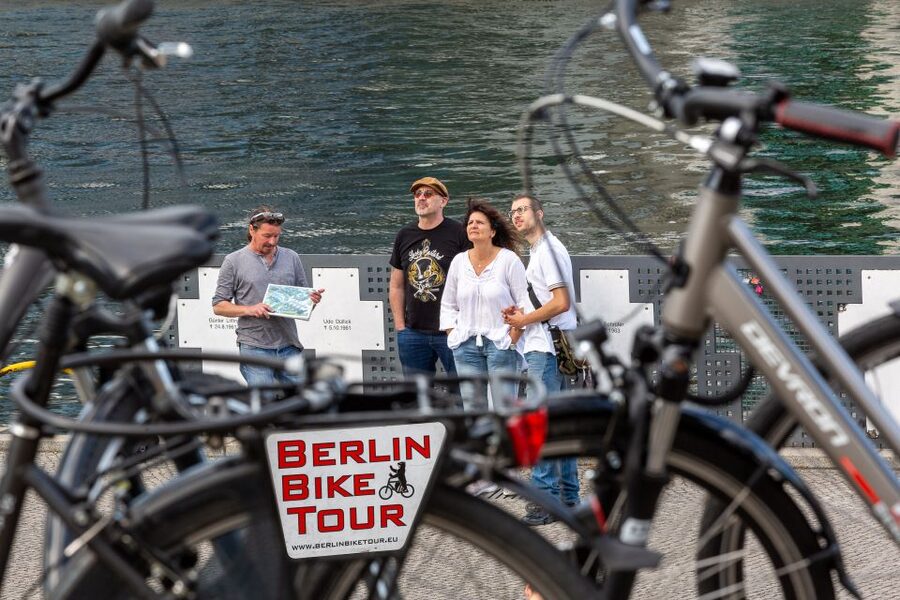
Review · BERLIN
Berlin Wall History Small Group Cycling Tour
The Berlin Wall is easiest to understand when you see how it cut through ordinary streets, cemeteries, parks, and government ground. This four-hour bicycle tour starts at Bornholmer Straße, where East Germans first crossed the border on November 9, 1989, then follows surviving traces toward Checkpoint Charlie.
I like the small group of no more than eight, which gives a guide room to explain personal stories rather than recite dates. I also like the route’s range, from watchtowers and the former Death Strip to the Brandenburg Gate and Parliament of the Trees. The main consideration is that the tour is conducted in German, and it runs in all weather, so it is best for visitors comfortable cycling in rain or sun.
Key points for your four hours in Berlin
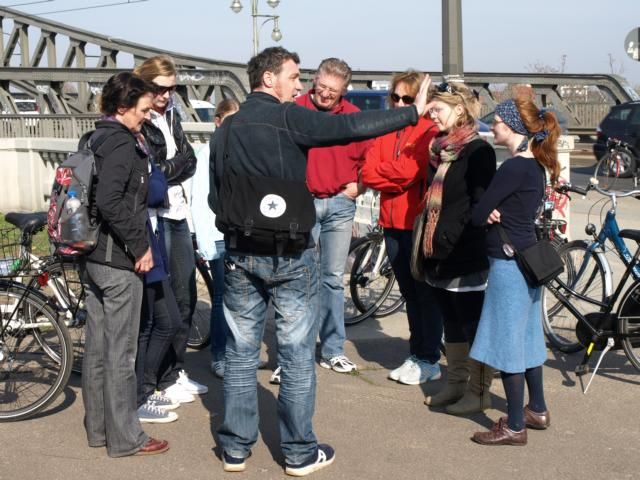
- Start at the first open crossing: Begin at Bornholmer Straße, the place where the Wall first opened to East German citizens.
- See more than the famous painted sections: The route includes watchtowers, former border crossings, the Death Strip, cemeteries, memorials, and fragments that are easy to miss on foot.
- Visit Bernauer Straße and Mauerpark: These stops show both the Wall’s human cost and how former border ground has changed.
- Ride through central Berlin: The route connects the Wall story with the Brandenburg Gate, Potsdamer Platz, Checkpoint Charlie, Museum Island, and the Palace of Tears.
- Keep the group personal: With only 3 to 8 people, you can hear explanations clearly and ask questions along the way.
- Pay one straightforward price: At about $40 per person, the fee includes a bicycle, guide, entrance fees where applicable, and a rain poncho if needed.
Starting where the Wall first opened at Bornholmer Straße
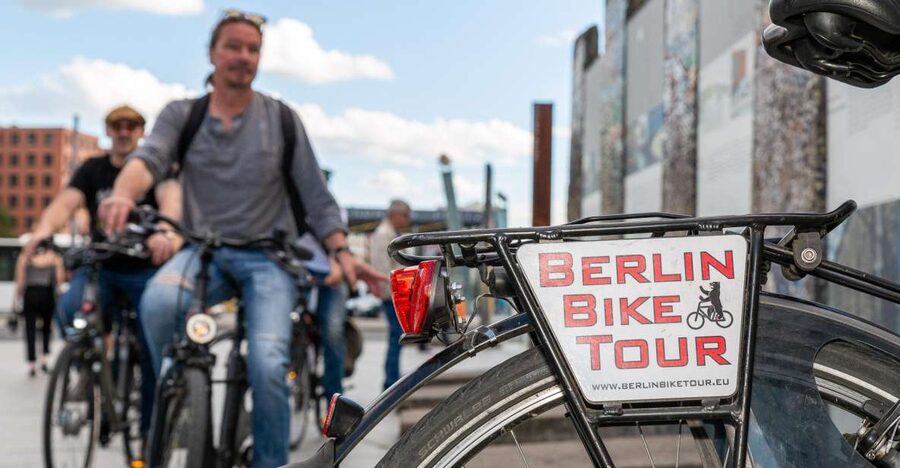
You meet at 75 Bornholmer Straße, at the Berlin Bike Tour shop. This is a handy starting point, especially if you arrive by public transport. The Björnsonstraße tram stop is about one minute away, while Bornholmer Straße S-Bahn station is roughly two minutes on foot.
The tour begins at the Square of November 9, 1989. This is not just a convenient place to pick up a bicycle. It is where the first East German citizens crossed through the border after the Wall opened. Starting here gives the day a clear shape: you begin at the moment the divided city started to come together, then cycle back through the places and stories that explain why the Wall had been built.
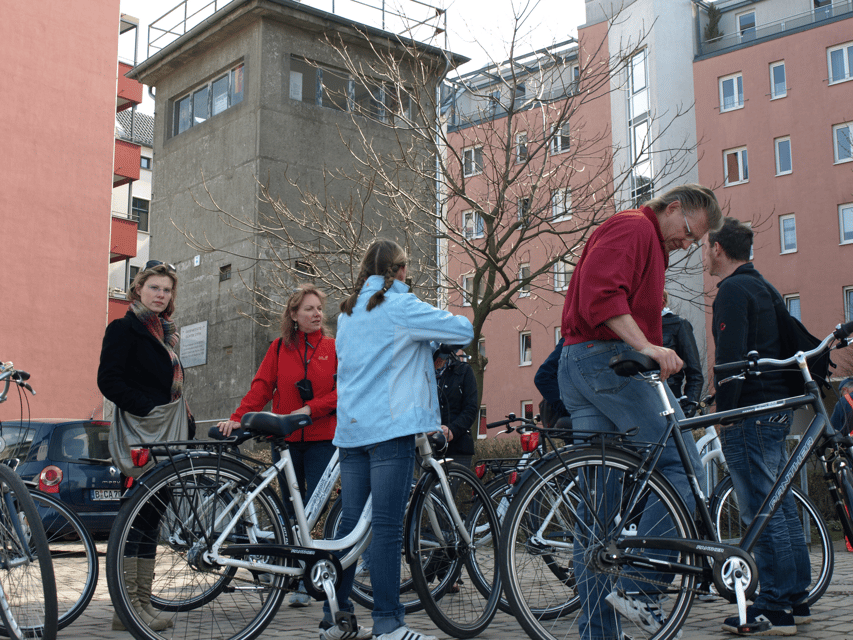
You will hear about the cherry trees along Bornholmer Straße, a small but memorable reminder of how public spaces were reshaped after reunification. You also see an original watchtower and part of the former Death Strip. The remains are not grand. That is part of their power. You are looking at a narrow strip of land that once held fences, patrol routes, watchtowers, and lethal barriers, now surrounded by normal city life.
More Historic Bike Tours in Germany
- Berlin: Cold War & Berlin Wall History Guided Bike Tour
★ 4.8 · 422 reviews - Berlin (E)Bike Tour Historical Highlights in Small groups
★ 4.5 · 24 reviews - Neuschwanstein Castle by Bus Incl. Bike Ride or Hohenschwangau
★ 5.0 · 607 reviews
Mauerpark and the Wall’s human scale
The ride continues through Mauerpark, a name that means Wall Park. It occupies part of the old border zone and gives you a useful sense of how the former barrier moved through Berlin’s northern districts.
Mauerpark is also a good reminder that the Wall was not a single solid structure dividing a city in a simple line. It was a border system with multiple barriers and a wide restricted strip between them. On a bicycle, you can cover this ground quickly and see how the route connected neighborhoods, railway lines, open ground, and homes.
The cycling itself matters here. You are not confined to one museum room or one preserved section. You move from site to site at street level, with time to notice gaps and changes in the urban setting. The guide fills in the parts that are no longer visible.
The tour also uses images of rabbits painted on the ground as a route marker toward the Brandenburg Gate. That detail adds a lighter visual thread to a serious subject, though the stories remain focused on border deaths, failed escapes, and the effect of division on ordinary families.
Bernauer Straße and the Chapel of Reconciliation
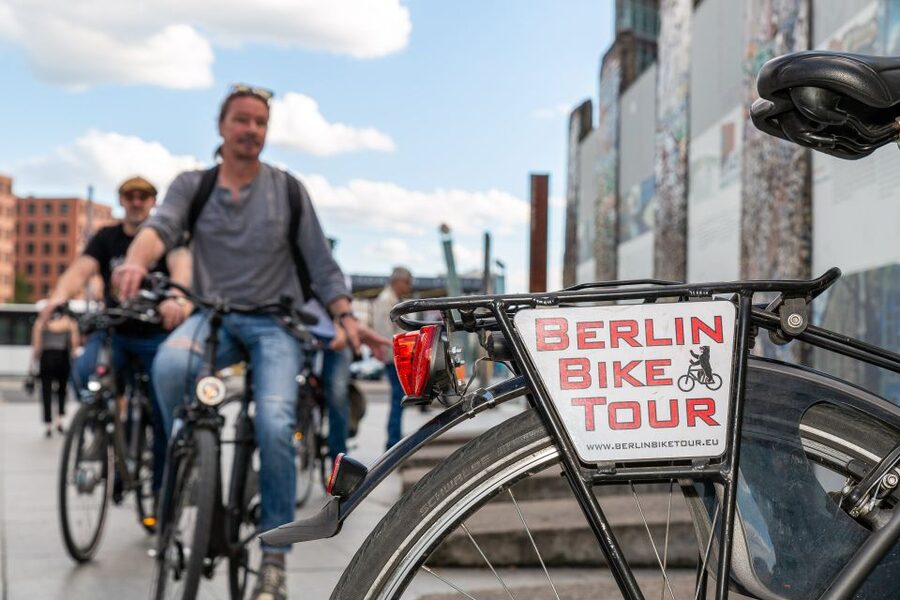
Bernauer Straße is one of the most important Wall memorial areas in Berlin. The former border ran directly through a built-up neighborhood, and this area preserves several pieces of the story in one place.
The tour includes the Wall Memorial at Bernauer Straße and the Chapel of Reconciliation. You can expect explanations about the former border zone and the people who tried to escape across it. The chapel occupies the site of an earlier church that was caught in the restricted area and later demolished, making it a particularly direct reminder that the Wall cut through more than roads and political boundaries.
This section can be emotionally heavy. The tour does not treat the Wall as a colorful sightseeing backdrop. It deals with tragic and fateful stories, including escape attempts and the human cost of the border. If you want only postcard views and famous landmarks, this may feel intense. If you want to understand how the division affected Berliners, it is one of the most useful parts of the route.
Chausseestraße, Invalidenstraße, and a former border cemetery
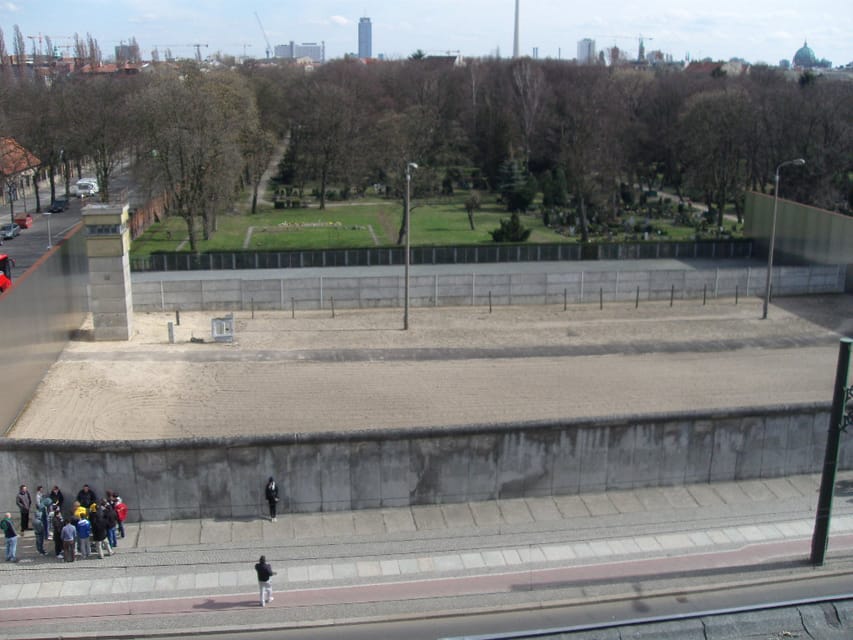
The bicycle route then reaches the former Chausseestraße border crossing. Border crossings were not all alike, and seeing more than one helps you understand the different ways people moved, or failed to move, between East and West Berlin.
At Invaliden Cemetery, the tour shifts from a border crossing to a site shaped by earlier military history and the Wall era. The cemetery sits beside the former Invalidenstraße border crossing, linking the physical remains of the city with the lives and deaths connected to its divided past.
The stop at the Günter Litfin Memorial gives the tour another personal focus. Günter Litfin was one of the first people killed while trying to cross the Berlin Wall. The memorial is a reminder that the Wall was enforced with real violence, not simply paperwork and concrete.
These sites are less familiar than Checkpoint Charlie, which is a benefit. They give you a less polished and more local view of the border. You may find fewer obvious photo opportunities, but you gain a clearer sense of how the Wall worked away from the center of the tourist circuit.
More Historic Bike Tours in Berlin:
- Historical Singapore Bike Tour on Full-Sized Bicycles
★ 5.0 · 1,421 reviews - Barcelona: 2.5-Hour Bike or E-Bike Historical Tour
★ 4.5 · 1,262 reviews - Asheville Historic Downtown Guided Electric Bike Tour with Scenic Views
★ 5.0 · 1,234 reviews - Krakow: Bike Tour of Old Town, Jewish Quarter and the Ghetto
★ 4.9 · 1,155 reviews
Government ground and the Parliament of the Trees
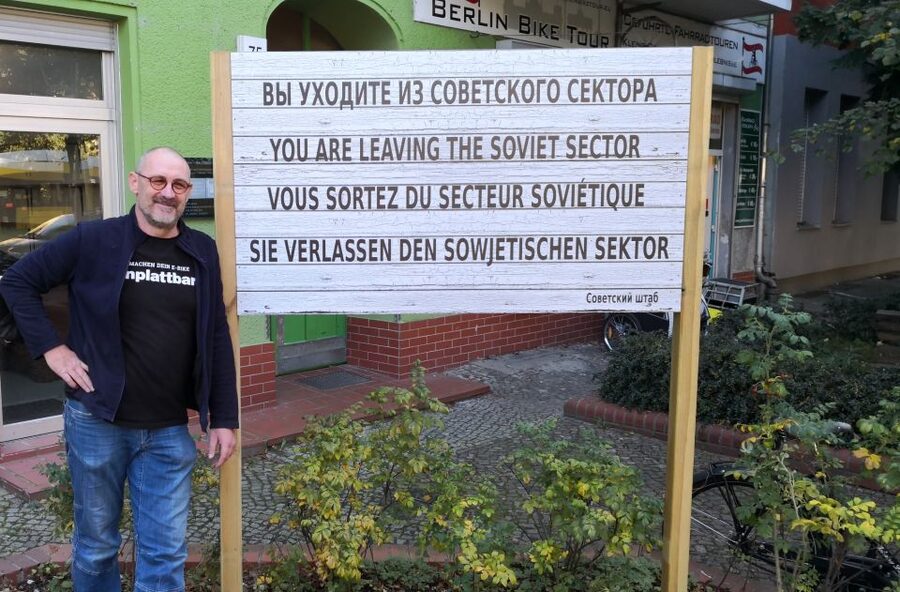
The route follows the Government Bank toward the Parliament of the Trees. This section brings the Wall story into the modern political heart of Berlin.
The Parliament of the Trees is a memorial made from trees, artwork, and sections of the Wall. Its design connects the natural world with the names and dates associated with those who died at the border. It is a quiet contrast to the concrete barriers and watchtowers seen earlier.
I like this part because it avoids repeating the same type of Wall display. The tour moves from original border structures to memorial art, showing how Berlin has chosen to remember the division. You are still following the former route, but the meaning has shifted from control and escape to public memory.
Brandenburg Gate and the route into central Berlin
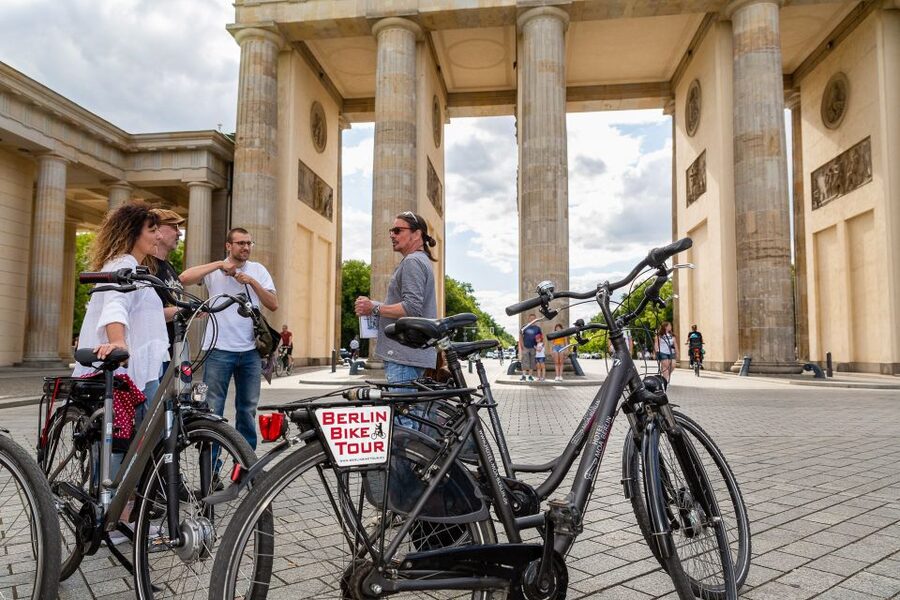
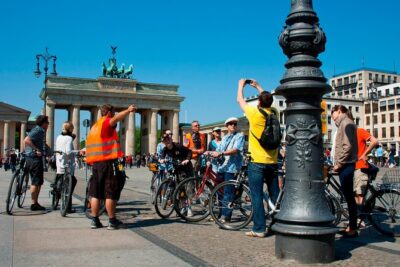
The ride reaches Brandenburg Gate, perhaps Berlin’s most recognizable landmark. The gate once sat close to the divided city’s border and later became a symbol of reunification. Seeing it after the northern Wall sites gives it more meaning than it has on a quick photo stop.
You then continue through the gate toward the Tränenpalast, or Palace of Tears, on Friedrichstraße. Along the way, the route passes the Friedrichstadt Palace, Museum Island, the New Synagogue, and the Old Berlin Post Office.
This is one of the tour’s strongest features. You are not only visiting Wall memorials. You are also connecting them with Berlin’s major civic, cultural, and religious landmarks. The city’s divided past becomes part of a much broader story about changing neighborhoods and the rebuilding of central Berlin.
The route can also help you get your bearings. Berlin’s key sights are spread out, and a bicycle lets you connect them without spending the whole day on trains or walking long distances between stops.
Potsdamer Platz and Checkpoint Charlie
Potsdamer Platz shows the dramatic contrast between old division and post-reunification Berlin. The area was heavily affected by the Wall and later became one of the city’s most visible modern development zones.
The tour does not treat Potsdamer Platz as a separate architecture outing. Instead, you see it as part of the former border route. That context is useful because it explains why this central area changed so sharply after 1989.
Checkpoint Charlie comes later in the ride. It is the best-known former crossing point in Berlin, and it attracts plenty of attention. The site can feel more commercial and crowded than Bernauer Straße or the quieter memorials, but it remains important because of its role as a crossing between East and West Berlin.
A guide is particularly useful here. Without context, Checkpoint Charlie can seem like a guardhouse placed in the middle of a busy street. With the wider route behind you, it becomes one piece of a much larger border system.
The Palace of Tears and the ride back
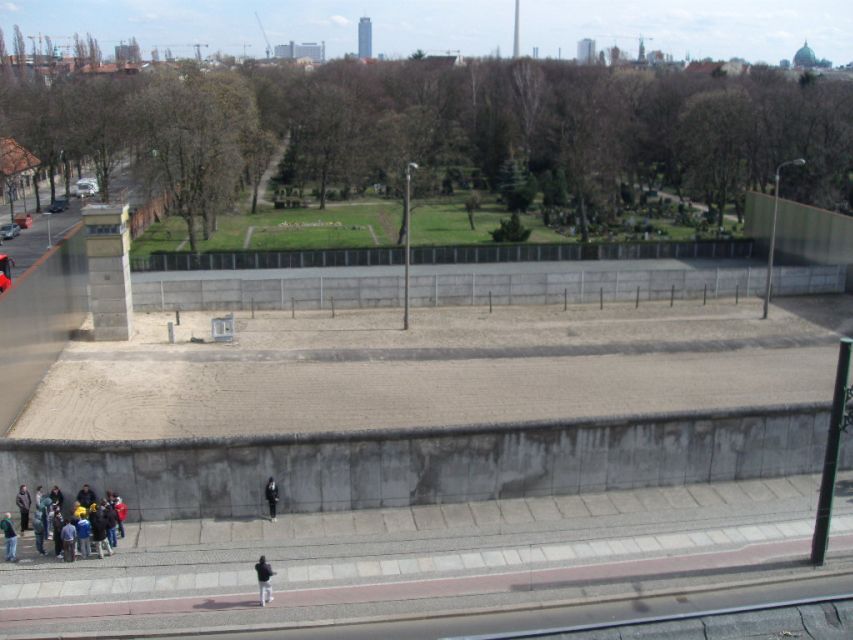
The final major stop is the Tränenpalast, or Palace of Tears, on Friedrichstraße. This former departure hall became known for the painful goodbyes that took place there. Families and friends could meet, but East German visitors often had to leave West Berlin through this controlled point.
The name captures the emotional side of border travel better than a technical label would. The building dealt with documents and departures, yet its lasting meaning comes from separation. On this route, it works as a fitting late stop because you have already seen the barrier, the watchtowers, the escape memorials, and the major crossings.
After the Palace of Tears, you cycle back to the original meeting point at Bornholmer Straße. Four hours is enough to cover a lot of ground, but not enough for long museum visits at every stop. Think of this as a guided outdoor history tour with many short explanations, not a museum tour on wheels.
What the small group adds
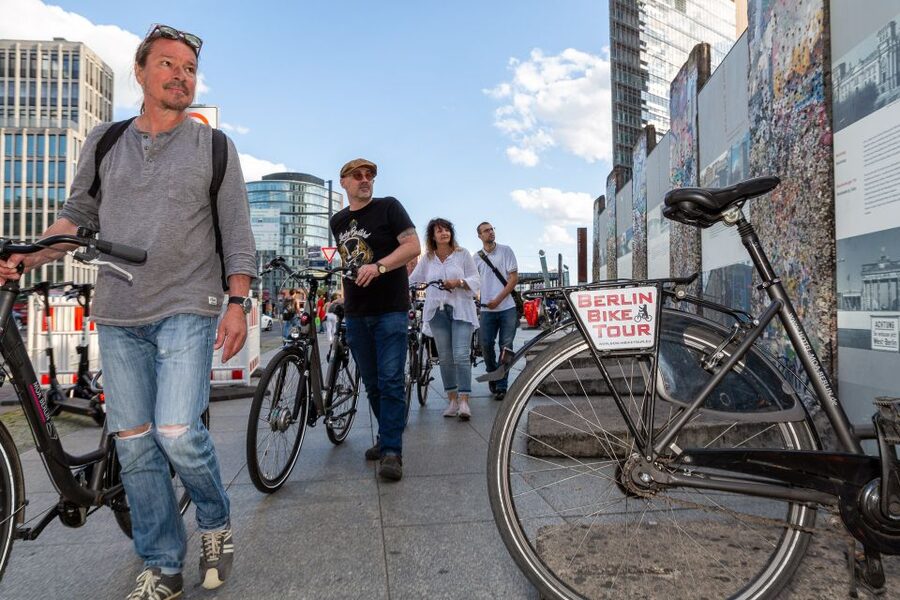
The group size is limited to eight people, with at least three participants. That matters on Berlin streets. A smaller group is easier to keep together, and the guide can stop without creating a large crowd at each memorial.
You also have a better chance to ask about specific escape stories, the former border crossings, or the changes you see along the route. Several of the strongest comments about this experience focus on the guide’s clear explanations and the personal quality of the storytelling.
Guide Ferenz has been singled out for combining friendly conversation, factual explanations, and a personal glimpse into the period around reunification. That kind of connection can make the history stick, especially for teenagers and adults who know the Wall mainly from textbooks or photographs.
The advertised language is German. That is the most important practical limitation. If you do not understand German well, you may miss much of the value, since the guide’s explanations are the heart of the tour.
Bikes, weather, and what to bring
A bicycle is included, as are fees and a rain poncho when necessary. Food and drinks are not included, so plan to eat before or after the four-hour ride. The tour takes place in all weather, which means you should dress for the forecast rather than assume it will be postponed.
Bring a passport or ID card, sunglasses, a sun hat, and a camera. Large bags and luggage are not allowed. A small personal bag is the practical choice, but the supplied information specifically warns against large bags, so leave suitcases at your accommodation.
The ride is likely to suit you if you are comfortable spending four hours on a bicycle while stopping often for explanations. The route is not presented as a race, but it does cover a substantial stretch of Berlin. If cycling is difficult for you, this may not be the right way to see the Wall.
Is $40 a fair price?
At about $40 per person, the cost is reasonable for a four-hour guided experience in a group capped at eight. You receive the bicycle, a live guide, applicable fees, and a rain poncho if needed. You are also paying for a route that links scattered sites you would have to organize yourself.
The real value is the connection between places. A self-guided visit to Checkpoint Charlie or Brandenburg Gate is easy enough, but finding the watchtower at Bornholmer Straße, the Death Strip remains, the less obvious memorials, Invaliden Cemetery, and the Parliament of the Trees takes more planning.
You should not choose this tour for food, museum entry, or a leisurely café stop. None of those are included. Choose it for efficient movement, context, and the chance to see lesser-known Wall locations in one morning or afternoon.
Free cancellation up to 24 hours before the start and reserve-now, pay-later booking add flexibility, especially when Berlin weather is uncertain. Still, check the starting time before booking, since availability controls the exact departure.
Who should book this Berlin Wall ride?
I would recommend it to anyone who wants the Wall explained as a connected story rather than a list of famous sights. It is especially suitable for history-minded adults, families with older children or teenagers, and first-time visitors who want to cover several central areas without spending the day underground on public transport.
It is also a good choice if you have already seen Brandenburg Gate and Checkpoint Charlie but feel you have missed the harder, quieter parts of the story. The northern sections at Bornholmer Straße, Bernauer Straße, Chausseestraße, and Invalidenstraße give the experience its weight.
I would hesitate if you need an English-speaking guide, dislike cycling in bad weather, carry substantial luggage, or want extended time inside museums. The tour is conducted in German, runs in all weather, and keeps moving.
Should you book it?
Book this tour if you want a focused, personal introduction to Berlin’s Wall history and can follow a German-speaking guide. The combination of a small group, included bicycle, four-hour route, and stops beyond the usual center makes about $40 good value.
The best reason to choose it is the route itself. You start where the border first opened, pass through former Death Strip ground and memorial sites, then finish among the landmarks that define modern Berlin. That arc turns scattered sights into a story you can follow with your own eyes.
FAQ
Where does the Berlin Wall cycling tour start?
The tour starts at BERLIN BIKE TOUR, 75 Bornholmer Straße, Berlin 10439.
How long does the tour last?
The tour lasts four hours.
How many people are in the group?
The group has a minimum of three participants and a maximum of eight.
What language is the tour conducted in?
The live tour guide conducts the tour in German.
Is a bicycle included?
Yes. A bicycle is included in the tour price.
Is a rain poncho provided?
Yes. A rain poncho is provided if necessary.
What sights does the route include?
The route includes Bornholmer Straße, Mauerpark, the Wall Memorial at Bernauer Straße, the Chapel of Reconciliation, Chausseestraße, Invaliden Cemetery, the Günter Litfin Memorial, the Parliament of the Trees, Brandenburg Gate, Potsdamer Platz, Checkpoint Charlie, and the Palace of Tears.
Is food included?
No. Food and drinks are not included.
What should I bring?
Bring a passport or ID card, sunglasses, a sun hat, and a camera.
Can I bring luggage or a large bag?
No. Luggage and large bags are not allowed.
Does the tour run in rainy weather?
Yes. The tour runs in all weather, and a rain poncho is provided on rainy days.
New rides added around Berlin
- From Berlin: Gardens & Palaces of Potsdam Bike Tour★ 5.0 · 61 reviews
- Berlin: Top secret bike tour and hidden gems of the city★ 4.8 · 411 reviews
- Berlin: Small Group Bike Tour Through City Center★ 4.9 · 64 reviews
- Berlin: From East to West & Wall Tour by Bike with a Guide★ 4.8 · 171 reviews
- Berlin: Green City Guided Bike Tour★ 4.6 · 29 reviews
- Berlin: Experience the Alternative Kreuzberg on a Bike Tour★ 4.8 · 395 reviews
- Berlin: Illuminated Berlin by Bike Taxi★ 4.8 · 162 reviews
- Berlin: 3-hour bike tour – A journey through time in the capital★ 4.8 · 24 reviews
Berlin Bike Tours, compared.
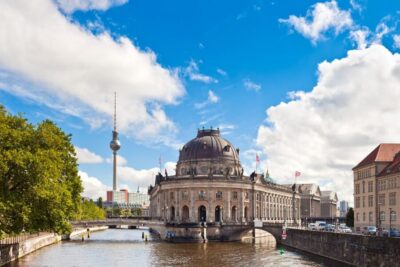
Sights and Highlights Bike Tour with a Local Guide
Read our review →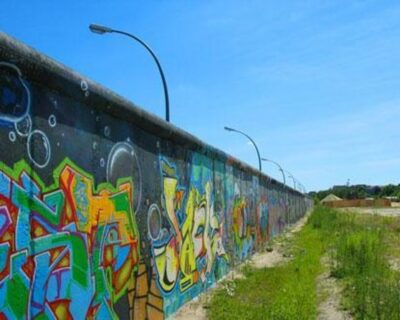
Berlin Highlights Sightseeing Bike Tour in Small Groups
Read our review →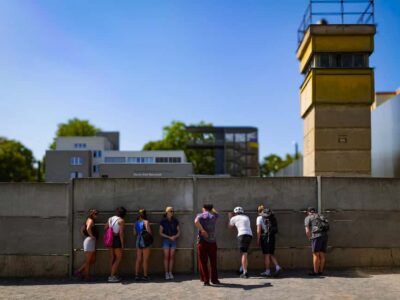
Alternative Bike Tour of Kreuzberg & Friedrichshain
Read our review →
Browse the lists this tour appears in