
Review · BERLIN
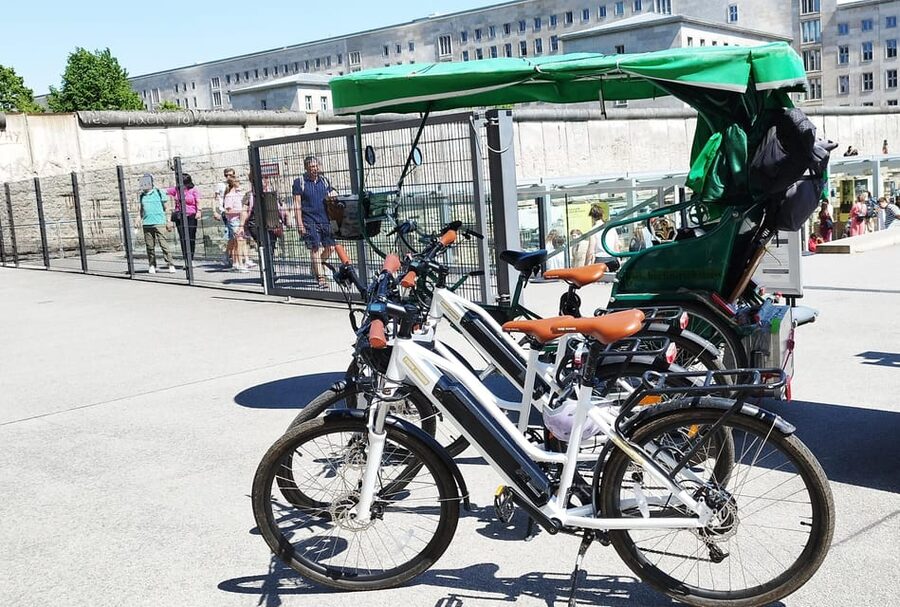
Berlin (E)Bike Tour Historical Highlights in Small groups
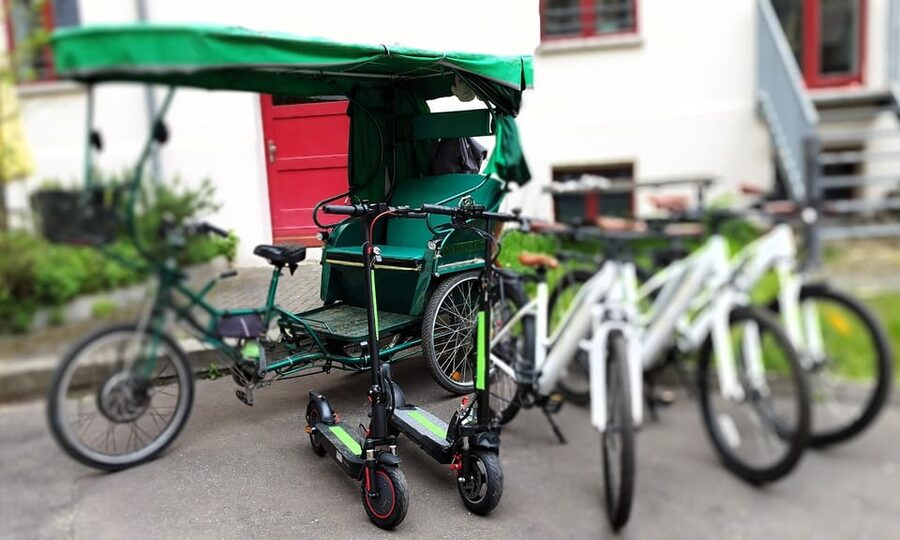
Berlin’s central sights are too spread out for a pleasant walk, yet often too close together for a bus tour. This small-group e-bike and rickshaw outing solves that neatly, linking the TV Tower, Museum Island, the Berlin Wall, Checkpoint Charlie, Brandenburg Gate, and the Reichstag in three and a half hours. The rickshaw option is the clever part: grandparents, young children, or a less-mobile companion can stay with the group instead of sitting out.
I like the mix of major sights and quieter historical stops, especially the 1933 book-burning memorial and the Führer bunker site. I also like the easygoing pace and photo help from guides such as Levent and Jakob. The main caution is practical: one e-bike reportedly lost power during a ride, and a mixed group with the guide on a rickshaw can feel slightly awkward if you expect a tightly led cycling formation.
Key things to know before you book
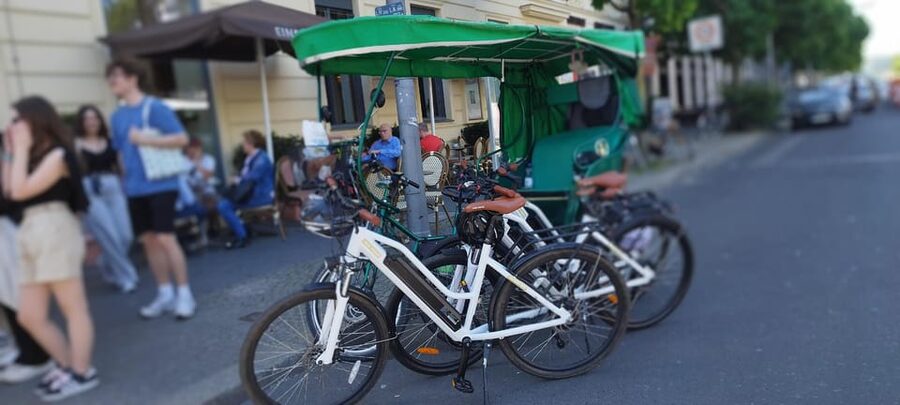
- One route, several ways to ride: You can use an e-bike while a companion travels in a traditional rickshaw.
- A strong first-day orientation: The route covers much of central Berlin before you have to work out the city on your own.
- Good for mixed-age groups: Rickshaws accommodate up to two people and require only a few steps to board.
- History comes in quick, useful chapters: You move from Prussian Berlin to Nazi Germany, the Cold War, and modern reunification.
- Small groups keep the guide close: The maximum is six participants, with English instruction.
- Check the bikes before leaving: Confirm the battery charge and ask how the e-bike and rickshaw group will travel together.
Why this route works well in Berlin Mitte
Berlin Mitte is a history book spread across a large city center. The Reichstag sits west of the Brandenburg Gate. Museum Island and the TV Tower lie farther east. Checkpoint Charlie, the Berlin Wall remains, and the Topography of Terror are south of the main boulevard.
Walking between all these places takes time and energy. Public transport can get you close, but you lose the visual connection between the stops. On a bike, you pass government buildings, broad avenues, memorials, and fragments of the old city as part of one moving story.
The e-bike matters because Berlin is flat but not tiny. You still need to cover several miles, and pedal assistance makes the journey easier. You are not racing. The point is to arrive at each site without using up your best energy before the history begins.
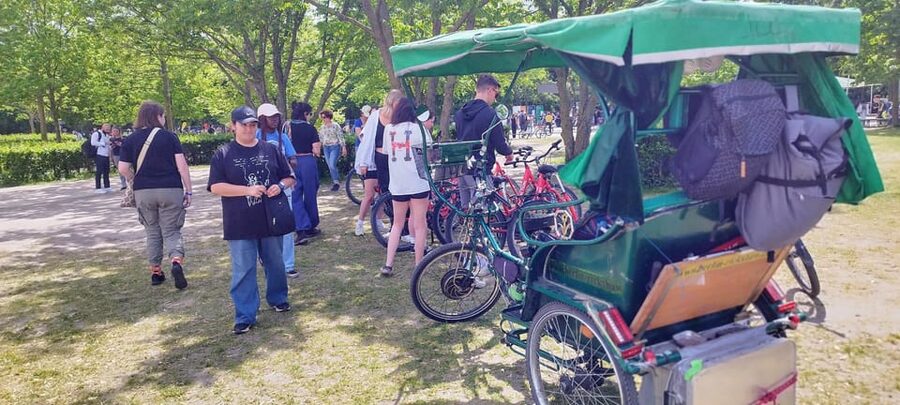
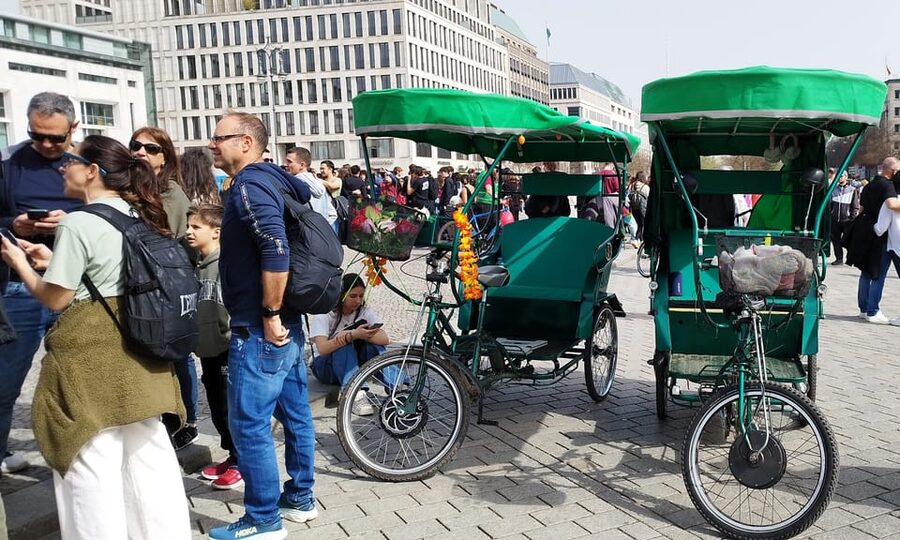
A rickshaw makes this format unusually flexible. Up to two people can sit together, making it practical for a grandparent and child, a less-mobile partner, or anyone who simply prefers a seated ride. The design allows easy access with only a few steps, though you should still mention any mobility concerns before departure.
The group limit of six is another advantage. You are not trying to hear a guide from the back of a large crowd, and stops should feel more personal. The tour is conducted in English, with guides described as friendly and well informed about Berlin’s history, art, architecture, culture, and daily life.
More City Bike Tours in Germany
- Berlin: Sights and Highlights Bike Tour with a Local Guide
★ 4.8 · 2,698 reviews - Berlin Highlights 3-Hour Bike Tour
★ 5.0 · 948 reviews - Berlin City Bike Tour with Beer Garden Stop
★ 5.0 · 917 reviews
Starting at Rosenthaler Platz
The meeting point is Weinbergsweg 6, close to the U-Bahn station at Rosenthaler Platz. This is a handy place to begin, with cafes, shops, street art, and Weinbergspark nearby.
Arrive ready to ride, wearing comfortable shoes. The area itself is worth a few minutes if you are early. Weinbergspark offers a calm patch of green near a busy part of Mitte, and Rosenthaler Platz gives you a quick taste of contemporary Berlin before the tour turns toward older and darker chapters.
The outing lasts 210 minutes, or three and a half hours. That is long enough to connect the main sights, but not long enough for full interior visits. Think of it as a guided city circuit with photo stops and outdoor explanations, not a museum tour.
The guides also help with photographs. This is useful for families and couples, since the person taking the pictures does not have to miss every group portrait. Free bottled water is included, which is a small but welcome touch on a long ride.
From the TV Tower to Museum Island
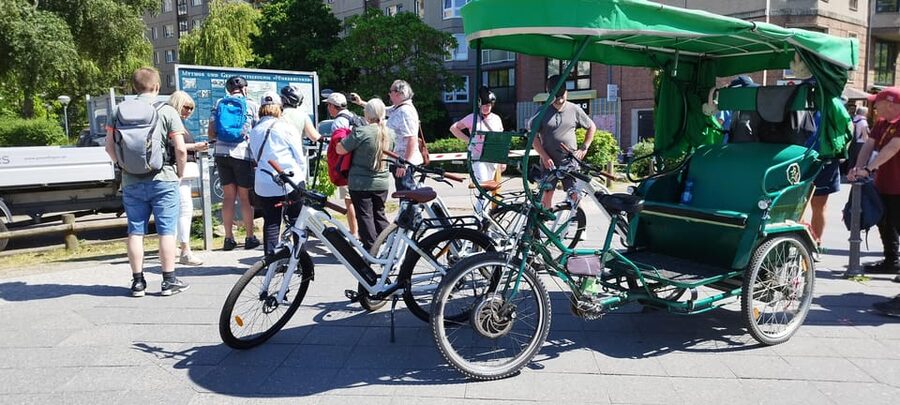
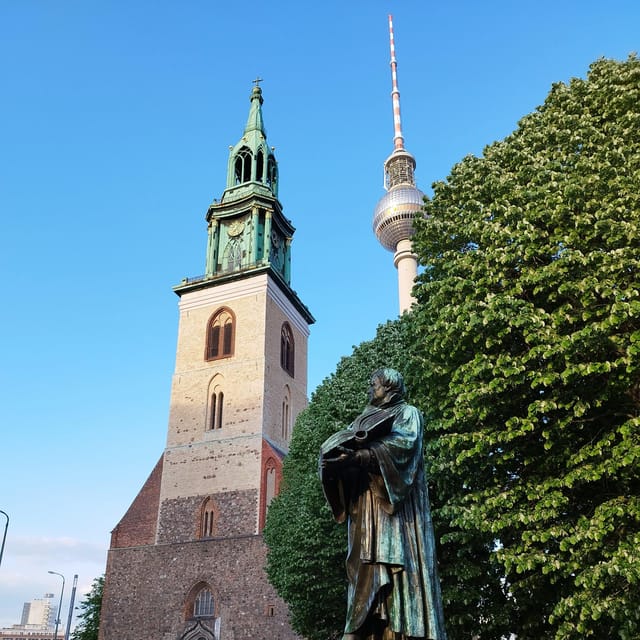
The first major stop is the TV Tower, Berlin’s unmistakable needle above Alexanderplatz. You get a photo stop, a guided introduction, and scenic views along the way. The tower is a useful visual marker for understanding Berlin’s former East German center.
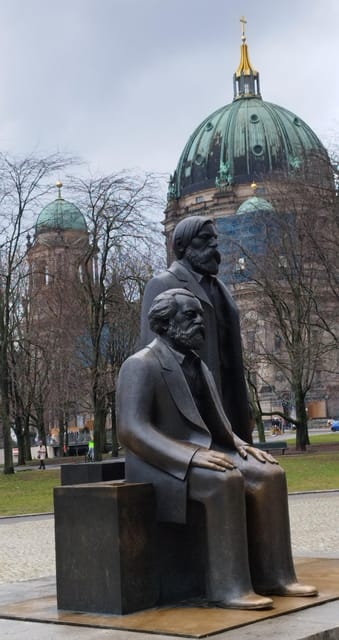
From there, the route continues to Museum Island. The island holds several of Berlin’s best-known museums, and its position on the River Spree gives this part of the ride a more open feel than the crowded streets around Alexanderplatz.
You will see the Berlin Cathedral here as part of the central-city route, although the tour does not include a cathedral interior visit. The same applies to the museums. Your guide can explain what you are seeing and help you decide which places deserve a return visit, but you will need a separate ticket and extra time for the interiors.
This opening section works well because it gives you a sense of Berlin’s geography. You see how the old royal center, East Berlin’s monumental heart, and the modern city sit close together, even though they belong to very different periods.
Unter den Linden and the book-burning memorial
The route follows Unter den Linden, Berlin’s grand east-west boulevard. It connects Museum Island with the Brandenburg Gate and the government district, passing landmarks and formal buildings along the way.
The boulevard is not just a pretty avenue. It helps explain how Berlin’s power center developed around the royal court, state offices, universities, and ceremonial routes. From a bike or rickshaw, you can take in more of that connection than you would on foot.
One of the more important stops is the memorial for the Nazi book burning of May 10, 1933. This is easy to miss when rushing between Berlin’s famous landmarks. The underground room of empty bookshelves, visible through a glass panel in the pavement, refers to the books destroyed by Nazi supporters.
The stop is brief, but it adds needed context. Berlin’s story is not only about palaces, walls, and impressive public buildings. It is also about censorship, persecution, and the deliberate destruction of ideas. A guide can provide the background, while you have time to pause and take in the memorial.
More Historic Bike Tours in Germany
- Berlin: Cold War & Berlin Wall History Guided Bike Tour
★ 4.8 · 422 reviews - Berlin Wall History Small Group Cycling Tour
★ 4.9 · 152 reviews - Neuschwanstein Castle by Bus Incl. Bike Ride or Hohenschwangau
★ 5.0 · 607 reviews - Munich: Neuschwanstein Castle by Bus with Alpine Bike Ride
★ 4.9 · 217 reviews
Checkpoint Charlie and the Cold War
Checkpoint Charlie is one of Berlin’s most recognizable Cold War sites. The famous guardhouse and sign recall the former crossing point between the American and Soviet sectors.
The area is now heavily visited and commercial in character. You may find souvenir shops, photo opportunities, and a busy street rather than a preserved border crossing. That is worth knowing in advance. The power of the stop comes from its history, not from an untouched setting.
A guide helps separate the real history from the staged atmosphere. You can learn why this crossing mattered, how Berlin was divided, and how the wall shaped daily life. The e-bike format also helps you understand that the former border was not a single isolated barrier. It cut through neighborhoods, streets, and ordinary routines.
This is one of the places where a short explanation makes a major difference. Without context, Checkpoint Charlie can feel like a quick photograph. With context, it becomes a reminder of how close the Cold War came to becoming a shooting conflict.
Hitler’s bunker and the Holocaust Memorial
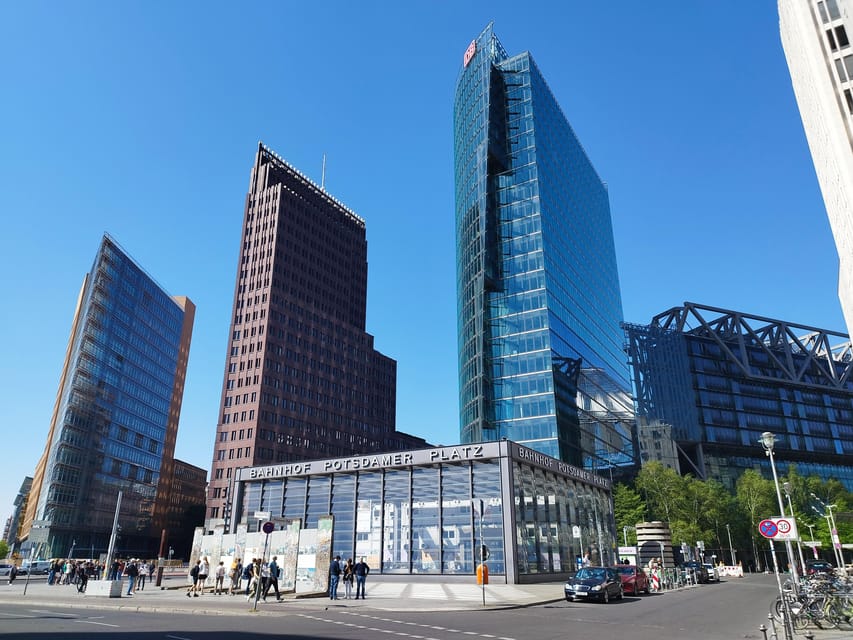
The route then reaches the site of Hitler’s bunker. There is no grand entrance or preserved underground chamber to visit. The location is marked in an ordinary urban setting, and that plainness is part of the point.
The site can feel anticlimactic if you expect a dramatic ruin. In fact, the absence of a monumental memorial reflects a careful approach to a place connected with Nazi leadership and the final days of the regime. Your guide provides the setting and explains what happened there.
Nearby, the Holocaust Memorial offers a very different physical experience. Its field of concrete blocks creates narrow paths, changing sightlines, and an uneasy sense of uncertainty as you move through it. You will have a photo stop and a guided explanation, but the experience benefits from a little quiet reflection.
The memorial is outdoors and easy to reach by bike or rickshaw. It is also close to other central sights, so you can understand the physical relationship between the Nazi government district, the bunker site, and today’s memorial landscape without spending a full day crossing town.
The Berlin Wall and the Topography of Terror
The tour includes a Berlin Wall stop, allowing you to see a remaining section or associated historical site along the route. Berlin’s wall story is spread across the city, so a single stop cannot explain everything. Still, the guide can connect the physical barrier to the separation of families, neighborhoods, and political systems.
You will get a better sense of the wall’s role by seeing it alongside Checkpoint Charlie. One is the broad system of division, while the other was a specific crossing point. Together, they make the Cold War easier to picture.
The Topography of Terror adds another layer. Built near the former headquarters of the SS and Gestapo, it documents the machinery of Nazi persecution. The tour lists a photo stop and bike stop rather than an indoor museum visit, so plan a separate return if you want to read the exhibitions carefully.
This is a key distinction for planning. The tour introduces many serious sites, but it cannot give each one the time of a dedicated museum visit. I see that as a strength for a first orientation, provided you choose one or two places to revisit afterward.
Brandenburg Gate and the Reichstag
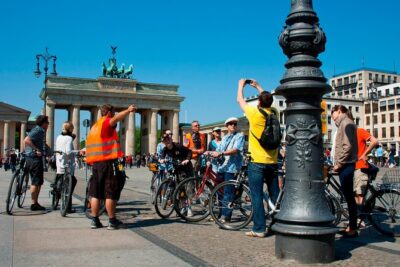
Brandenburg Gate is the classic Berlin photograph, but it also carries political meaning. Once part of the route into the city, it later sat near the divided border and became a symbol of reunification.
The open space around the gate can be busy, so the bike and rickshaw help you reach it without a long walk from another distant stop. Your guide can point out the gate’s place in Prussian history, Nazi ceremony, the Cold War, and modern Germany.
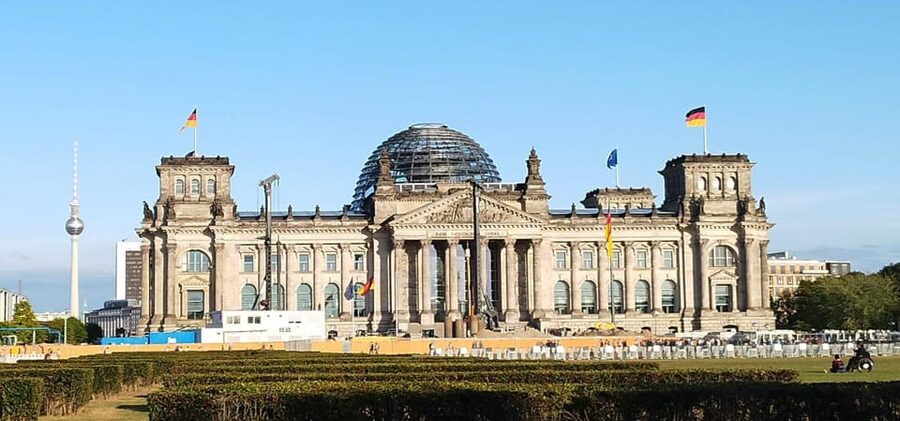
The final major stop is the Reichstag, home of the German parliament. You will see the exterior and hear about its role in German political history. The tour does not include entry to the glass dome or an interior parliamentary visit, so you should arrange that separately if it interests you.
Ending near the Reichstag gives the route a satisfying arc. You begin with Berlin’s East German TV Tower and move through royal, Nazi, divided, and reunified Berlin before arriving at the seat of the present government.
After the Reichstag, you return to Weinbergsweg 6. That return makes the trip easy to fit into a day of sightseeing, though you should allow time afterward if you want to visit a museum or memorial at greater length.
What the guide and transport add
The strongest part of this experience is the guide’s narration between the famous stops. You are not simply being carried from monument to monument. You get a sequence of explanations that helps connect Berlin’s many eras.
Levent has been praised for an enthusiastic approach and for guiding in Dutch on one outing, though the advertised tour language is English. Jakob has also been singled out for strong guiding. If a particular guide or language matters to you, confirm it before booking, since guide assignments can change.
The transport is part of the appeal. A traditional rickshaw adds a slower, more personal way to see the city, while the e-bike gives you more range. It is especially useful for a family group where not everyone can or wants to cycle.
There is one operational point I would take seriously. One rider reported that an e-bike lost electrical assistance during the ride and that communication about the problem was poor. I would check the battery before leaving and ask what happens if assistance cuts out.
A second consideration concerns group formation. When a guide rides a rickshaw while e-bike participants follow, the arrangement may feel less formal than a standard cycling tour. Ask how the group will stay together, particularly if you are riding with children or are not comfortable navigating city streets.
Is $82 a fair price?
At $82 per person, this is not the cheapest way to see Berlin’s center. You are paying for a three-and-a-half-hour guided route, an e-bike or rickshaw, a small group capped at six, bottled water, and photo assistance.
The value improves if you want to cover many sights in one morning or afternoon. Renting a bike on your own may cost less, but you would need to plan the route, find the memorials, manage navigation, and supply the historical context yourself.
The rickshaw option also changes the value calculation. A group with a grandparent, young child, or less-mobile companion might otherwise need taxis, separate transport, or a much slower walking plan. Keeping everyone together can be worth the extra cost.
The tour is less suitable if you want long museum visits, a quiet walking experience, or detailed time at every memorial. You are buying breadth and guidance, not exhaustive time inside each attraction.
Free cancellation up to 24 hours before departure and the option to reserve without paying immediately add useful flexibility. The advertised group size and transport choices make this best viewed as a specialty city orientation rather than a basic sightseeing transfer.
Who should book this Berlin ride?
I would recommend it most strongly for first-time visitors who want a fast, well-organized look at central Berlin. It is also a smart fit for families and mixed-age groups who need one plan that works for cyclists and non-cyclists.
It suits you if:
- You want to cover many central landmarks in one outing.
- You prefer outdoor explanations to a long indoor tour.
- You are comfortable riding an e-bike in a city setting.
- Someone in your group needs a seated alternative.
- You want photo help from the guide.
- You are visiting Berlin early in your stay and want help choosing where to return.
I would think twice if your main goal is a museum-heavy day, a slow architectural walk, or a fully private experience. Also, if reliable e-bike assistance is essential, test the bike and clarify the backup plan before setting off.
Should you book it?
Book this tour if you want a broad, practical introduction to Berlin’s central history and your group includes people with different mobility levels. The mix of e-bikes and traditional rickshaws is its most useful feature, not a gimmick.
For the best result, schedule it near the beginning of your stay. You will see the major landmarks, learn which ones deserve a longer visit, and get a clearer map of Berlin Mitte. Just confirm the bike battery, ask how the group will travel together, and remember that the memorials and museums receive brief outdoor coverage rather than full visits.
FAQ
Where does the Berlin e-bike and rickshaw tour begin?
It begins at Weinbergsweg 6, near the U-Bahn station at Rosenthaler Platz in Berlin Mitte.
How long does the tour last?
The tour lasts 210 minutes, or three and a half hours.
What language is the tour offered in?
The advertised live tour language is English.
How many people are in the group?
The group is limited to six participants.
Can someone who does not cycle join the tour?
Yes. The tour offers traditional rickshaws for non-cyclists, less-mobile participants, and children under 14.
How many people can sit in one rickshaw?
Each rickshaw accommodates up to two people.
Which landmarks are included?
The route includes the TV Tower, Museum Island, Unter den Linden, the 1933 book-burning memorial, Checkpoint Charlie, Hitler’s bunker site, the Holocaust Memorial, the Berlin Wall, the Topography of Terror, Brandenburg Gate, and the Reichstag.
Is bottled water included?
Yes, complimentary bottled water is provided.
What should I bring?
Bring comfortable shoes. You should also check the e-bike before departure if you are relying on electrical assistance.
Can I cancel the booking?
You can cancel up to 24 hours in advance for a full refund. The activity also offers a reserve-now, pay-later option.
More City Bike Tours in Berlin
- Berlin Highlights: 3-Hour Bike Tour
★ 4.9 · 809 reviews - Berlin Highlights Sightseeing Bike Tour in Small Groups
★ 5.0 · 652 reviews - Berlin: Guided Bike Tour to Explore the Highlights
★ 4.8 · 506 reviews - Berlin City Bike Tour with Beer Garden Stop
★ 4.9 · 308 reviews
More Historic Bike Tours in Berlin
- Historical Singapore Bike Tour on Full-Sized Bicycles
★ 5.0 · 1,421 reviews - Barcelona: 2.5-Hour Bike or E-Bike Historical Tour
★ 4.5 · 1,262 reviews - Asheville Historic Downtown Guided Electric Bike Tour with Scenic Views
★ 5.0 · 1,234 reviews - Krakow: Bike Tour of Old Town, Jewish Quarter and the Ghetto
★ 4.9 · 1,155 reviews
New rides added around Berlin
- From Berlin: Gardens & Palaces of Potsdam Bike Tour★ 5.0 · 61 reviews
- Berlin Wall History Small Group Cycling Tour★ 4.9 · 152 reviews
- Berlin: Top secret bike tour and hidden gems of the city★ 4.8 · 411 reviews
- Berlin: Small Group Bike Tour Through City Center★ 4.9 · 64 reviews
- Berlin: From East to West & Wall Tour by Bike with a Guide★ 4.8 · 171 reviews
- Berlin: Green City Guided Bike Tour★ 4.6 · 29 reviews
- Berlin: Experience the Alternative Kreuzberg on a Bike Tour★ 4.8 · 395 reviews
- Berlin: Illuminated Berlin by Bike Taxi★ 4.8 · 162 reviews
Berlin Bike Tours, compared.
Sights and Highlights Bike Tour with a Local Guide
Read our review →
Berlin Highlights Sightseeing Bike Tour in Small Groups
Read our review →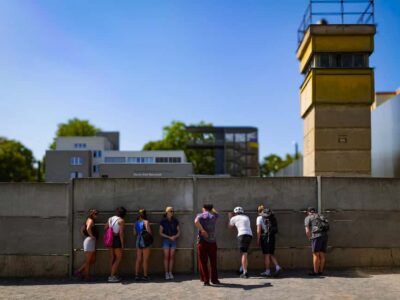
Alternative Bike Tour of Kreuzberg & Friedrichshain
Read our review →
Browse the lists this tour appears in