

Review · AUSTIN
Austin Electric Bike Tour: Let it Ride
Austin Electric Bike Tour: Let it Ride covers a lot of ground in about three hours, from Barton Springs and Zilker Park to South Congress, downtown, the Capitol, and Congress Bridge. You get a quick lesson, a pedal-assist bike, and a guide who keeps the group moving without turning the outing into a bus tour.
I like the small maximum of 13 riders, which gives guides such as Michael, Peter, Mark, Rob, and Peter room to answer questions and adjust the pace. I also like the mix of Austin: murals, parks, music landmarks, city views, neighborhoods, and the famous bats at Congress Bridge.
The main consideration is traffic. Parts of the route use bike paths and lanes, but other stretches run on city streets. Street noise can make the guide hard to hear, and riders who are not comfortable on a bike may slow the group.
Key points to know before you ride
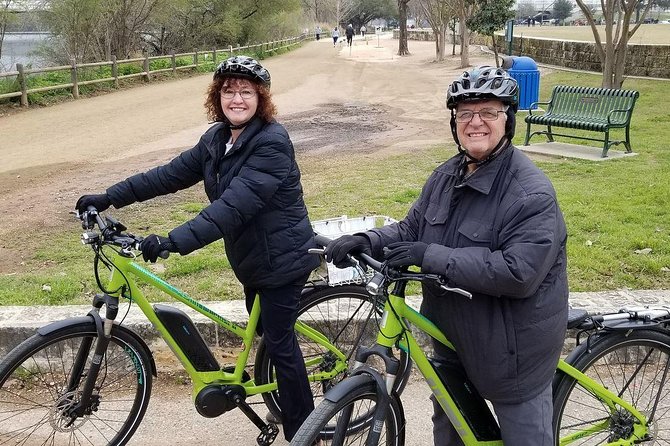
- A three-hour sampler of Austin: Cover Barton Springs, Zilker Park, Bouldin Creek, South Congress, downtown, the Capitol, and Congress Bridge in one outing.
- Electric assistance does the heavy work: The pedal-assist bikes are easy to learn, but you still need to balance, steer, brake, and ride confidently.
- A genuinely small group: The tour is capped at 13 riders, a useful size for city cycling and guide interaction.
- Strong guide reports: Michael, Peter, Mark, Rob, and others are praised for clear instruction, local stories, safety checks, and good pacing.
- Coffee is a break, not a freebie: Water, the bike, and helmet are included. Coffee, snacks, and alcoholic drinks cost extra.
- Best for active first-time visitors: You see far more than on foot, but this is not a passive sightseeing ride.
Why an e-bike works so well in Austin
Austin spreads its attractions across parks, neighborhoods, downtown streets, and the Lady Bird Lake area. Walking between all these places would take much of a day, while a standard bike could leave you working hard in the heat. The pedal-assist motor gives you a practical middle ground.
You still pedal, so the ride feels active, but the motor helps when you need it. That matters on a tour with several stops and a fairly broad route. The e-bike also lets you look around instead of spending every minute watching your effort.
You should still be comfortable riding a bicycle. The guide covers the controls and safety before departure, and you get time to get used to the bike. But this is city riding, not a closed course. You steer, brake, watch other riders, and pay attention to traffic.
The ride uses dedicated bike paths through parts of Austin’s parks, bike lanes on city roads, and some quieter streets. That variety is part of the appeal, since you get a better feel for the city than you would from a vehicle. It also means the experience can become slower or noisier in busy areas.
More E-Bike Tours in the USA
- Red Rock Canyon eBike Half-Day Tour
★ 5.0 · 1,870 reviews - Austin Biker Gang E-Bike Tour
★ 5.0 · 1,399 reviews - Asheville Historic Downtown Guided Electric Bike Tour with Scenic Views
★ 5.0 · 1,234 reviews
Starting at Barton Springs and Zilker Park
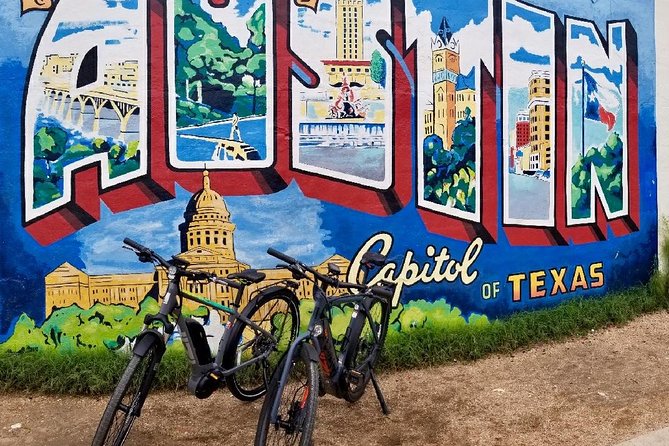
You meet at Barton Springs Bike Rental & Tours, at 1707 Barton Springs Road, 15 minutes before departure. Arrive on time. The staff fits you to a pedal-assist electric bike, provides a helmet, and explains how the bike works.
The opening stretch heads toward Barton Springs Pool and Zilker Park. Barton Springs is one of Austin’s signature outdoor places, and the park gives the tour an easy start away from the densest downtown traffic. This part helps you settle into the bike before the route becomes more urban.
Your guide also checks how the group is handling the bikes. This is useful for first-time e-bike riders, since pedal assistance can feel different from a regular bicycle at first. Guides such as Mark and Peter have been especially careful about explaining the mechanisms and checking that riders are comfortable.
You receive bottled water during and after the tour. Austin weather can make that small detail important, especially on a sunny afternoon. Wear comfortable shoes suitable for cycling, and bring a camera because the route includes several photo stops.
Stevie Ray Vaughan and Bouldin Creek
From the park area, the route moves toward the Stevie Ray Vaughan Memorial and Bouldin Creek. This section adds Austin’s music identity and neighborhood character to the tour.
The Stevie Ray Vaughan stop connects the city’s public spaces with its famous music culture. You do not have to be a serious blues fan to appreciate the setting, but music lovers will find this part especially useful. The tour gives you a quick orientation to a side of Austin that is easy to miss if you stick only to downtown attractions.
Bouldin Creek brings a more local feel. Instead of looking at Austin only through major landmarks, you ride through an established neighborhood and see how the city’s public sights fit alongside everyday streets. Guides often add personal details here, particularly those who grew up in or have spent years around Austin.
The exact amount of time at each point can vary with traffic, group pace, and the guide’s judgment. That is normal on a bike tour. You are covering ground, stopping for stories and photographs, rather than spending long periods inside one attraction.
South Congress murals and skyline views
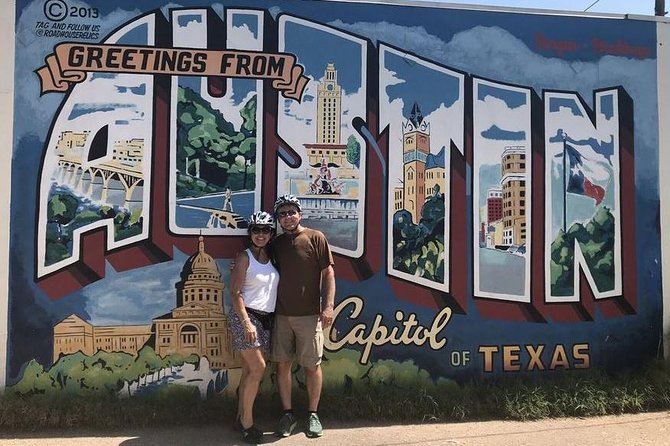
The tour then heads into south Austin for two of the city’s best-known photo stops: the Greetings from Austin mural and the I love you so much mural. These are quick, colorful ways to capture Austin’s modern personality.
The murals are popular, so the area may feel crowded. Take care when stopping and follow the guide’s instructions about where to position your bike. The reward is a pair of recognizable Austin images and a chance to see the South Congress area beyond a single postcard view.
South Congress also provides one of the tour’s best skyline perspectives. From this side of the city, you can look toward downtown rather than simply riding through it. I like this pause because it helps you understand Austin spatially. You see how the parks, neighborhoods, towers, and major roads relate to one another.
If you want a tour focused almost entirely on old buildings and dates, this may not be your ideal choice. The route leans toward current Austin life, public art, parks, music, neighborhoods, and useful orientation. Guides still share history, but it is usually delivered through short stories and local facts rather than a long lecture.
Same wheels, a different route:
- NYC: Central Park Bike Rentals
★ 4.2 · 2,528 reviews - NYC: Central Park Bike Rental
★ 4.1 · 1,651 reviews - Central Park Bike Rental
★ 4.7 · 1,509 reviews - Siesta Key Electric Bike Sunset Tour
★ 5.0 · 1,075 reviews
Downtown, the Capitol, and Congress Bridge
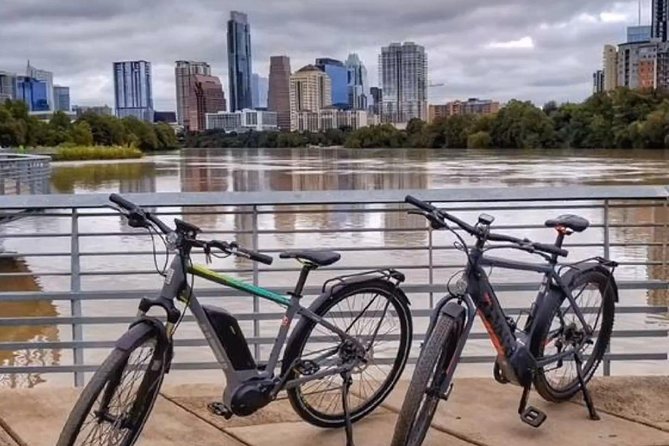
From South Congress, the group continues downtown. You ride through the center of Austin toward the Congress Bridge, home to the city’s well-known bat colony, and the Texas State Capitol.
The downtown stretch is where traffic and noise matter most. One rider found it hard to hear some of the information beside busy streets. Stay close to the group, watch for vehicles, and ask the guide to repeat anything you miss during a noisy section.
The Texas State Capitol is included as an outdoor stop on the riding route. The supplied details do not promise an interior visit or a guided building tour, so think of this as a chance to see the Capitol during a broader city circuit. If touring inside the building is a priority, you would need to arrange that separately.
Congress Bridge is another major highlight. It is associated with Austin’s famous bats, and the timing can sometimes add extra appeal. One evening outing ended at the bridge in time for a rider to watch the bats, though bat viewing is not guaranteed as part of every departure.
The bridge also gives the tour a strong sense of place. You are not just checking off a landmark. You are seeing one of Austin’s most recognizable public spaces after riding through parks, neighborhoods, murals, and downtown streets.
The coffee stop and the pace of the ride
About halfway through, the group stops at a local Austin spot for coffee and snacks. This is a useful rest rather than a formal meal. You pay for your own coffee or food, so bring a payment method if you want something.
The break also gives you a chance to ask questions, adjust your position on the bike, and cool down. Water is included, but coffee, tea, snacks, and alcohol are not.
Pacing is one of the tour’s strengths when the group is moving well. Several guides are praised for stopping often enough to explain points of interest without making the ride feel rushed. A three-hour schedule gives you time to see a broad part of Austin, but it does not allow for long visits at every stop.
A slower group can affect the route. One rider noted that novice cyclists caused delays and that part of the planned sightseeing had to be skipped to return on time. This is worth keeping in mind if you want a tightly controlled itinerary. Group cycling always involves compromise.
Guides, instruction, and group size
The guide can shape this experience more than any single landmark. Michael is praised for helpful explanations, city stories, and a clear concern for safety. Peter is known for bike instruction, humor, local history, and taking time to get riders comfortable before setting off.
Mark receives strong praise for explaining the bike carefully, checking on riders, sharing fun facts, and keeping the group cool and entertained. Rob is appreciated for local information, flexibility, and taking good group photographs. Other guides, including Jordan and Toby, add their own local stories and personal connection to Austin.
The tour’s cap of 13 riders is a real advantage. A group this size can stop more easily than a large cycling convoy, and it gives you a better chance to speak with the guide. The experience is still shared, though, so do not expect a private tour unless your booking happens to include only your party.
The company also appears able to handle a mechanical problem when one occurs. During one ride, a bike broke down and the guide, who was also a bike mechanic, repaired it on the spot. That does not mean problems are impossible, but it does show why an experienced guide and a well-run rental shop matter.
Price, practical value, and who should book
At $55.20 per person, this is a good-value way to get a first look at Austin. The price includes the e-bike, helmet, guide, taxes, fees, handling charges, and bottled water. You do not need to rent a bike separately or pay for each landmark along the way.
The value comes from the range of the route. In roughly three hours, you see several neighborhoods, major outdoor sights, murals, skyline views, the Capitol, and Congress Bridge. A self-guided rental could cost less in some situations, but you would need to plan the route, navigate traffic, find the murals, and supply your own context.
I would choose this tour early in an Austin visit. It gives you a useful map of the city and helps you decide where to return later. The tour is booked about 13 days ahead on average, so advance planning is sensible, especially for a particular date or a popular departure time.
This outing suits you best if:
- You are at least 16 and comfortable on a bicycle.
- You want to cover many Austin sights in one morning or afternoon.
- You like a mix of parks, neighborhoods, murals, music, and landmarks.
- You prefer local stories and orientation over a long, formal history lecture.
- You are happy riding near traffic and listening carefully in noisy areas.
- You want a small group rather than a bus.
It may not suit you if you dislike cycling, have trouble balancing or braking, or want to spend a long time inside the Capitol. It is also less appealing if your main goal is a slow food tour, a dedicated music-history tour, or a quiet ride far from city streets.
Weather, cancellation, and simple preparation
The experience requires good weather. If poor weather cancels the ride, you are offered another date or a full refund. You can cancel for a full refund up to 24 hours before the start time, while cancellations or changes within 24 hours are not refunded or accepted.
Wear comfortable shoes, bring a camera, and arrive 15 minutes early at 1707 Barton Springs Road. Helmets are required. Most people can participate, but you should be able to ride a bicycle and manage city cycling.
Public transportation is nearby, and the tour ends back at the starting point. That makes the ride easier to fit into a day based around Barton Springs, South Congress, or downtown.
Should you book the Austin e-bike tour?
I would book this tour if you want a lively, active introduction to Austin and prefer seeing the city in connected pieces rather than isolated stops. The combination of electric assistance, a small group, strong guide attention, and a wide route makes the $55.20 price reasonable.
Book it early in your stay so you can use the neighborhood tips later. Choose another activity if you want a fully relaxed ride, an indoor Capitol visit, or a tour with no traffic and no need to listen over street noise. For most active visitors who want to see a lot in three hours, this is one of the more efficient ways to get your bearings in Austin.
FAQ
Where does the Austin Electric Bike Tour begin?
The tour begins at Barton Springs Bike Rental & Tours, located at 1707 Barton Springs Road, Austin, Texas 78704.
Where does the tour end?
The activity ends back at the meeting point on Barton Springs Road.
How long does the tour last?
The tour lasts approximately two to three hours. The listed itinerary gives a duration of about three hours.
What is included in the price?
The price includes the local guide, pedal-assist e-bike, helmet, bottled water, and all taxes, fees, and handling charges.
Are coffee and snacks included?
No. The mid-tour coffee and snack stop is included in the route, but anything you purchase there is your own expense. Alcoholic beverages are also excluded.
What sights does the tour visit?
The route includes Barton Springs Pool, Zilker Park, the Stevie Ray Vaughan Memorial, Bouldin Creek, the Greetings from Austin mural, the I love you so much mural, South Congress, downtown, Congress Bridge, the bat colony area, and the Texas State Capitol.
What is the minimum age?
The minimum age is 16.
How many people can join the tour?
The tour has a maximum of 13 riders.
What happens if the weather is poor?
If the tour is canceled because of poor weather, you are offered a different date or a full refund. You can also cancel at least 24 hours before the start time for a full refund.
New rides added around the USA
- Portland: Food Carts of the Eastside Bike Tour★ 4.9 · 16 reviews
- Portland: E-Bike Tour at Multnomah Falls★ 4.8 · 20 reviews
- Essential Portland: 2-Hour Guided Bike Tour★ 4.8 · 43 reviews
- Pittsburgh: Beauty of the Burgh Bike Tour★ 4.9 · 37 reviews
- Oahu: Waikiki E-Bike Ride and Manoa Falls Hike★ 4.9 · 28 reviews
- Oahu: Kualoa Electric Bike Tour★ 4.6 · 14 reviews
- NYC: Central Park Guided Bike Tour★ 4.8 · 11 reviews
- NYC: Central Park Guided Electric Bike Tour★ 4.9 · 25 reviews
Austin Bike Tours, compared.
Austin in a Nutshell Bike Tour with a Local Guide
Read our review →

Browse the lists this tour appears in