
Review · HAMBURG
Hamburg: Downtown, Alster & Creative Neighborhoods by Bike
Hamburg shows its personality best when you pedal between its Alster villas and alternative quarters in the same afternoon. This tour links polished shopping streets, parks, artists’ projects, multicultural neighborhoods, harbor-side streets, and former industrial districts rather than staying only around the postcard sights.
I like the small group limit of 12, which should make it easier to hear the guide and keep the ride together. I also like the route’s social focus: you get the stories behind places such as the artist cooperative Komm in de Gänge and Münzviertel, not just a quick list of monuments. The main consideration is language consistency. One English-booked participant had trouble when the guide was not prepared to conduct the tour fully in English, so confirm your language at the start.
Key points at a glance
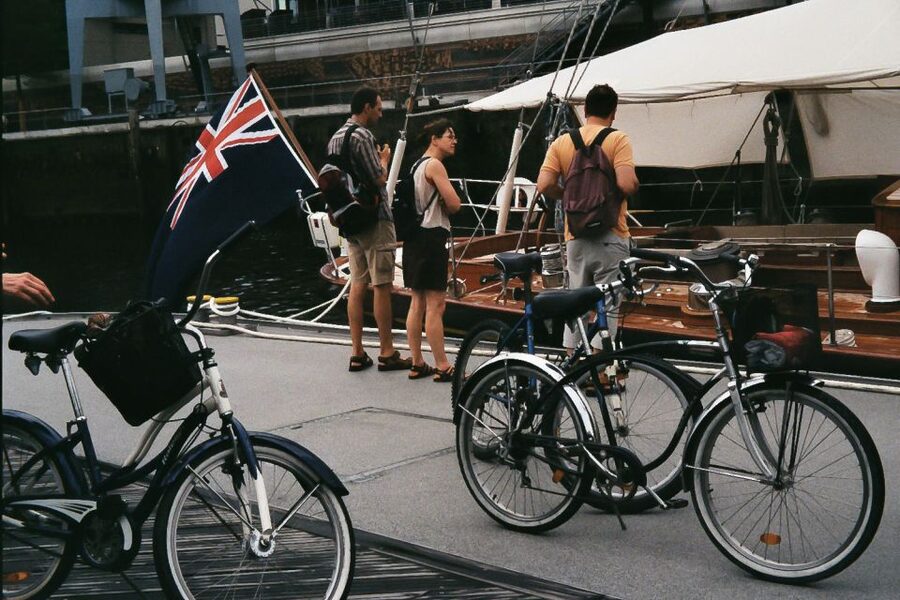
- Alster contrasts: See boutiques, villas, parks, rowing clubs, and consulates around the Inner Alster.
- Alternative Hamburg: Ride through Sternschanze, Karolinenviertel, St. Pauli, and streets linked with artists and independent culture.
- City stories on two wheels: Hear about Hamburg’s street life, music, pubs, shopping, housing, and changing neighborhoods.
- A social-use case study: Visit Münzviertel in Hammerbrook, an area tied to questions about responsible city planning.
- Small-group format: The usual group is limited to 12 people, with larger groups possible by request.
- Weather backup: Rain brings a replacement program using public transport instead of bicycles.
A three-and-a-half-hour look at Hamburg’s contrasts
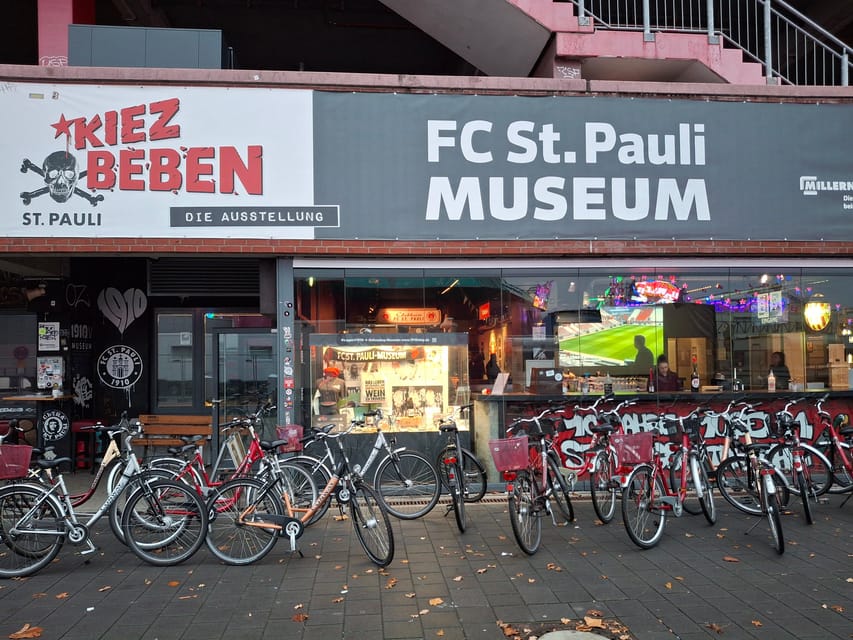
This is not a standard ride past Hamburg’s biggest sights. The route is built around comparison. One moment you are beside the Inner Alster, looking toward elegant homes and high-end shops. Later, you are in a neighborhood known for alternative culture, street life, or debates about how the city should use its land.
That makes the tour useful early in a Hamburg visit. You get a broad sense of how the city fits together, and you can mark places to return to later. The route covers enough ground to save you several separate walks, yet the bike keeps the pace moving.
The tour lasts 210 minutes, or three and a half hours. You meet outside the Fahrradstation of the University of Hamburg at Schlüterstraße 11. The route begins after you choose a suitable bicycle, and a city map is included. The schedule is daily at 10:00 and 14:00 when available.
At $43 per person, I see fair value if you want more than a rental bike and a few general facts. You are paying for the bicycle, a live guide, route planning, and access to districts that are spread across central Hamburg. It is less attractive if you only want a quick ride around the Alster or prefer to explore at your own pace.
More City Bike Tours in Germany
- Berlin: Sights and Highlights Bike Tour with a Local Guide
★ 4.8 · 2,698 reviews - Berlin Highlights 3-Hour Bike Tour
★ 5.0 · 948 reviews - Berlin City Bike Tour with Beer Garden Stop
★ 5.0 · 917 reviews
From Schlüterstraße to Sternschanze
The starting point near the University of Hamburg is practical for a city tour. After fitting yourself with a bicycle, you head toward Sternschanze, one of the first places where the tour shifts away from conventional sightseeing.
The route includes the historical Schröderstift and Sternschanzenpark before entering the district itself. The exact emphasis will depend on the guide, but this opening section sets up the tour’s main idea: Hamburg is not one uniform city. Its streets change in mood, architecture, and social character over a short distance.
Sternschanze is particularly useful for travelers who want to understand Hamburg’s alternative cultural side. You can expect commentary on local activities and neighborhood life rather than a long lecture about dates and rulers. That approach suits me because a bicycle tour works best when the guide helps you read the streets around you.
The drawback is that a moving city tour cannot offer a long stop at every place. If a particular building or park catches your eye, make a note of it. You may not have time to explore it fully during the group ride.
Karolinenviertel and the city’s creative edge
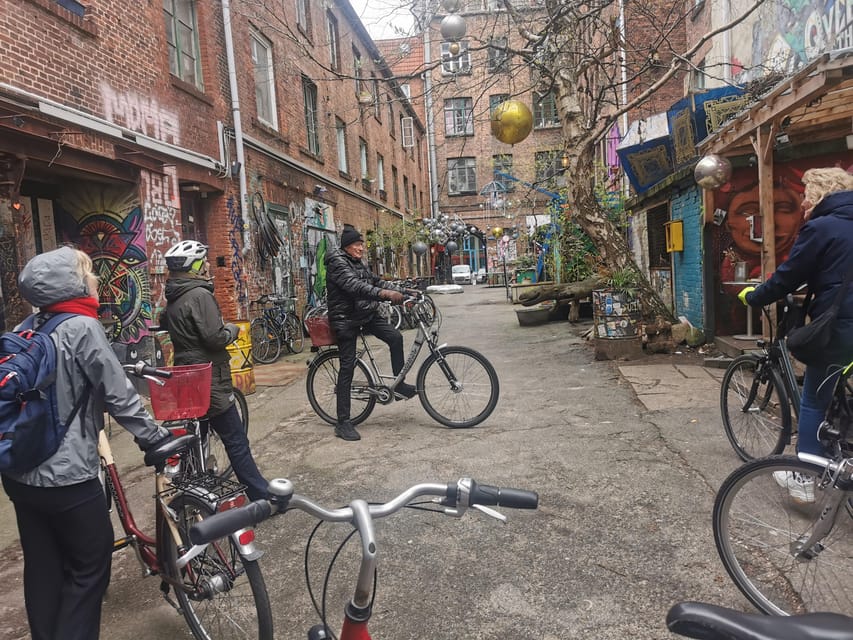
The route continues through Karolinenviertel, another stop that gives the tour its character. This district is included as part of the alternative and creative side of Hamburg, so you should expect street-level observations about culture, local activity, and the way people use the neighborhood.
I like this part because it helps explain Hamburg beyond the harbor and historic center. You are not simply looking at old façades. You are considering how shops, artists, residents, and visitors share a central district.
The tour’s wording places strong emphasis on music, pubs, unusual shopping, and street life. Those subjects matter here because they give you a feel for the city after the major sights close for the day. If you enjoy independent places and neighborhoods with their own identity, this section will likely be more rewarding than a ride focused only on landmarks.
Still, the experience is not presented as a dedicated nightlife tour. The route gives you an introduction during daylight hours. You will need to return on your own if you want to spend a full evening in the area.
St. Pauli and Hafenstrasse
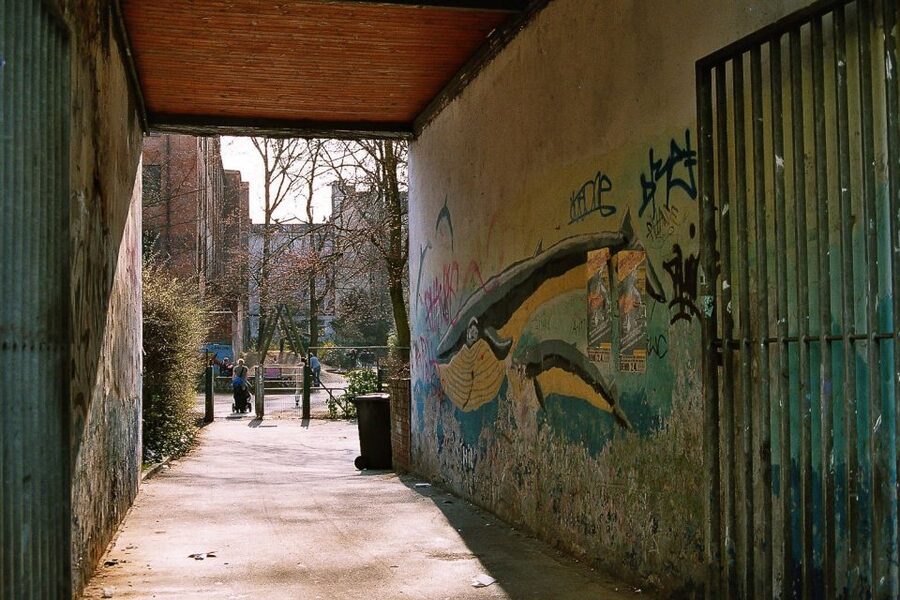
From the central neighborhoods, the tour heads toward St. Pauli and Hafenstrasse. This is one of the route’s strongest transitions. St. Pauli is often reduced to a few famous streets, but this ride places it within a larger story about housing, culture, music, and public space.
Hafenstrasse adds another layer. The area is associated with Hamburg’s harbor-side identity, yet the tour does not treat it as a single postcard view. Instead, you ride through a place shaped by different lifestyles and competing ideas about how the city should develop.
You then continue through the Portuguese quarter toward Neustadt. This keeps the route varied. You are not circling one attraction, but moving through connected districts that show how Hamburg changes from one street to the next.
The ride can be especially useful for first-time visitors who want orientation. You cover ground quickly, and the guide can point out where the central shopping areas, harbor-side neighborhoods, and cultural districts sit in relation to one another. I would not choose this section if you want a quiet scenic ride, since the appeal is the urban setting and its contrasts.
Same wheels, a different route:
- Munich 3-Hour Guided Bike Tour
★ 4.5 · 1,731 reviews - Hamburg 3-Hour Bike Tour
★ 4.8 · 1,583 reviews - Classic Mike’s Bike Tour daily @ 11.30 incl Beer Garden & Surfers
★ 5.0 · 1,246 reviews - Cologne: 3-Hour Guided Bike Tour
★ 4.8 · 878 reviews
Neustadt and the Komm in de Gänge project
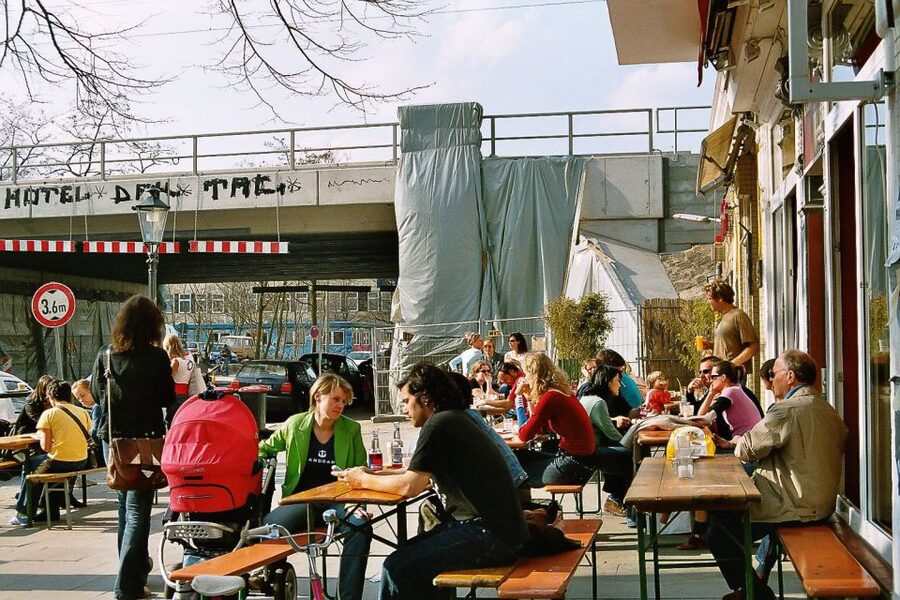
Neustadt receives a longer visit, listed at about 30 minutes. The tour includes the artist cooperative Komm in de Gänge, a project that gives the route a more specific cultural focus.
This stop matters because it turns a broad theme into a real example. Rather than simply hearing that Hamburg has an alternative scene, you learn about a cooperative project and the people trying to keep space for creative activity in the city.
The visit also offers a useful pause in the middle of a long ride. Three and a half hours on a bicycle is manageable for many people, but a stop lets you listen without constantly watching the road. The guide can explain the project in context, and you can ask questions before moving on.
One practical point: the tour is not designed around lengthy interior visits. The information supplied describes a visit and sightseeing stop, but does not promise admission to specific buildings or exhibitions. Think of Neustadt as a guided neighborhood visit, not a museum tour.
The Inner Alster: boutiques, villas, and polished Hamburg
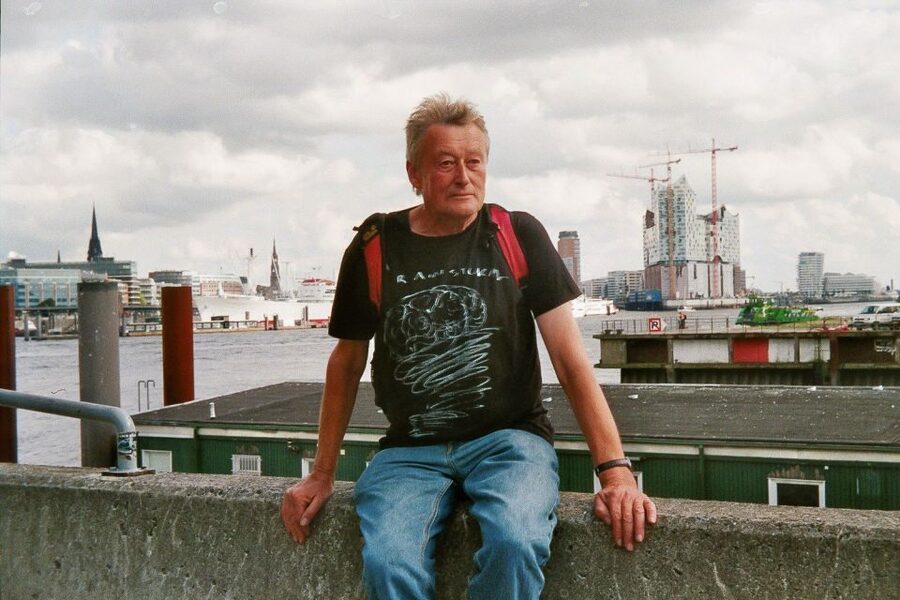
The mood changes again as you pass through the sophisticated boutique area along the Inner Alster. Here the route brings in the city’s high-society side, with boutiques, villas, parks, and waterside scenery.
This is where the tour’s contrast becomes easy to see. Earlier, the guide has been discussing alternative culture, street life, and neighborhood change. Around the Alster, the focus shifts toward established wealth, leisure, and Hamburg’s refined public image.
I like having both sides in one outing. If you explored only the creative districts, you could miss why Hamburg is also known for elegance and affluence. If you stayed only around the Alster, you might leave with an incomplete picture of the city.
The Alster section includes the area under the Lombard Bridge, where campers are mentioned as part of the local scene. You also pass rowing clubs and consulates. These details broaden the view beyond scenery. The lake is not just a pretty backdrop; it is tied to sport, diplomacy, recreation, housing, and different ways of occupying valuable central space.
The route does not promise a long lakeside break. You should expect to keep moving with short stops for explanation and photographs.
Kontorhaus district and 1920s Hamburg
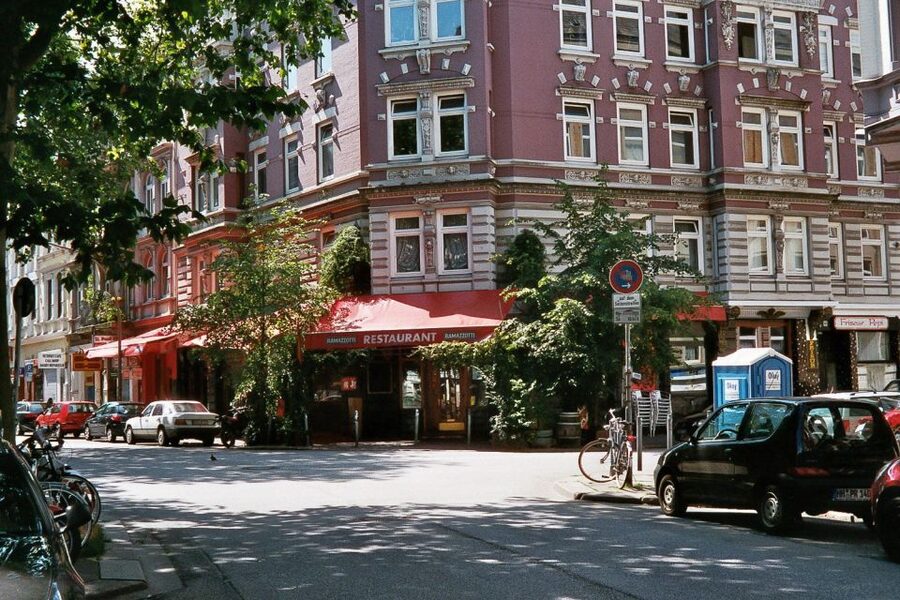
The ride also reaches the Kontorhaus district, known for its office buildings from the 1920s. This provides an architectural change from the villas and neighborhood streets.
The district helps connect modern Hamburg with its commercial past. Kontorhäuser were built for trade and business, and their presence reflects the city’s long role as a major port and commercial center. The tour places this architecture alongside newer debates about housing and city use, which gives the ride more purpose than a simple architecture loop.
For you, the main benefit is variety. You are not asked to spend the whole afternoon studying one period. Instead, the guide uses different parts of Hamburg to explain how the city developed and who each area serves.
Because the route includes several districts, the commentary may be more important than the time spent at any one building. If you are passionate about architecture, ask the guide which façades or streets deserve a later return visit.
Münzviertel and responsible city use

In Hammerbrook, the route visits Münzviertel, described as a clear case in the discussion about socially responsible city use. This is one of the most distinctive elements of the tour.
Many city rides stop when the scenery becomes less polished. This one uses a district like Münzviertel to ask harder questions about land, housing, social needs, and who gets to benefit from redevelopment. You may not agree with every interpretation, but the subject gives you a more grounded picture of Hamburg.
It also helps explain why the tour is called a study in contrasts. You have seen expensive-looking areas around the Alster, then creative neighborhoods, then a district connected with a discussion about social responsibility. The point is not to label one area good and another bad. It is to show that the city contains competing priorities.
This stop may appeal most to you if you enjoy urban planning and contemporary city issues. If you want only scenic attractions, it may feel less immediately exciting. I would still keep it in the route because it gives the afternoon some substance.
St. Georg and multicultural Hamburg
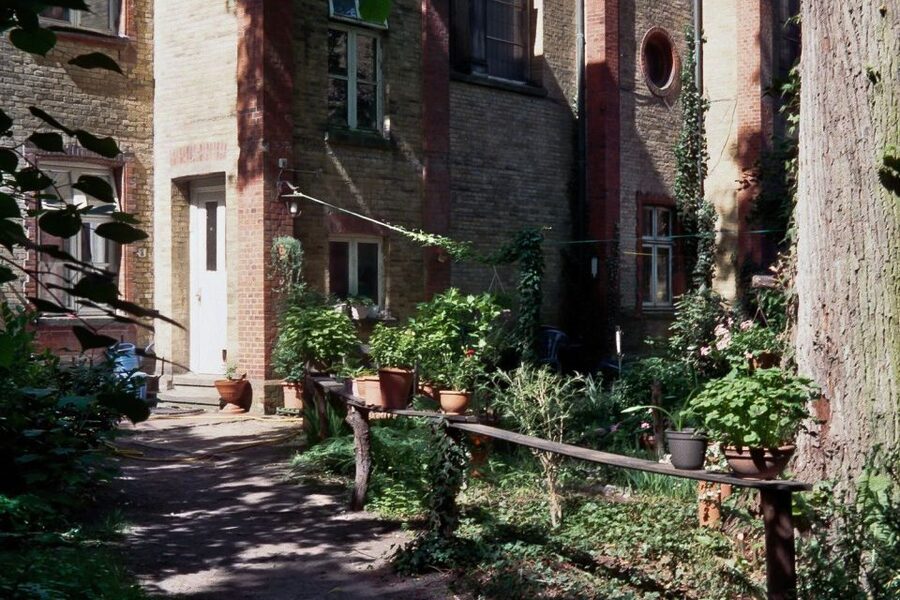
The route continues to St. Georg, where the focus turns to multicultural life. This is another place where the tour moves beyond the standard center-city story.
St. Georg adds human variety to the ride. Rather than presenting Hamburg as a wealthy Hanseatic city with a harbor attached, the tour shows a district shaped by different communities and everyday city life. That perspective is useful because it places the polished Alster and historic commercial areas within a wider urban setting.
The tour then returns toward the Inner Alster and the Lombard Bridge before passing the rowing clubs and consulates. These final sections bring earlier themes back together: sport, wealth, international connections, public space, and the different groups that use the center.
You finish back at Schlüterstraße 11. Since the route returns to its starting point, you do not need to plan a separate pickup or work out public transport from the far side of town.
Guide quality and language choice
The guide has a large effect on this experience because the value lies in explanation. Bernd is specifically associated with enthusiastic, story-filled tours and with showing less familiar parts of Hamburg. His style appears to suit people who enjoy local anecdotes and an informal afternoon rather than a formal historical lecture.
The available languages are English and German. I would state your preferred language clearly when you arrive and make sure the guide understands it before the bicycles leave. One English booking went badly because the guide had not been informed properly and spoke only limited English, leaving other German participants to translate.
That appears to be a communication failure rather than a reason to dismiss the route, but it is a real consideration. If you are not comfortable following German, language clarity is essential. A guide who can adjust to the group makes a major difference on a ride with so many different subjects.
The usual group size is limited to 12. That is small enough for questions and easier road coordination than a large coach group. Additional participants can be accommodated on request, so ask about the final group size if a quieter outing matters to you.
Rain plans, timing, and who should book
The tour runs daily at 10:00 and 14:00 when booked. The morning departure leaves the rest of your day open, while the afternoon option works well if you want a slower start. The choice may also affect how you use the Neustadt and Alster stops, since the route is planned as a continuous half-day outing.
Rain does not simply cancel the experience. A replacement program uses public transport without bicycles. That keeps the city and neighborhood focus, but it is not the same as cycling through Hamburg. If riding is the main reason you are booking, check the weather and ask what the alternative program will include.
I would recommend this tour to:
- First-time visitors who want a city orientation with a social angle
- People who prefer neighborhoods, street life, and local projects to a checklist of monuments
- Active travelers comfortable spending three and a half hours on a bicycle
- Visitors curious about the difference between Alster affluence, creative districts, and multicultural Hamburg
- Anyone who wants a guide to connect districts that are too spread out for one easy walk
I would be more cautious if you dislike cycling, need a fully guaranteed English-speaking guide, or want extensive time inside museums and historic buildings. The tour is about moving through the city and listening along the way.
Free cancellation up to 24 hours before the start and the option to reserve now and pay later make the $43 commitment easier to manage. Those policies do not change the central question: do you want a guided ride through Hamburg’s social and cultural contrasts, or would you rather rent a bike and choose your own route?
Should you book this Hamburg bike tour?
Book it if you want Hamburg explained through neighborhoods rather than reduced to the harbor, the Rathaus, and a few famous streets. The combination of Sternschanze, Karolinenviertel, St. Pauli, Neustadt, the Inner Alster, Kontorhaus district, Münzviertel, and St. Georg gives you an unusually broad view in one afternoon.
The best reason to choose it is the route’s range. You see elegant Hamburg, creative Hamburg, multicultural Hamburg, and a city still arguing about how it should use its space. Confirm the English arrangement, arrive ready for a substantial ride, and you should get good value from the price.
FAQ
How long does the bike tour last?
The tour lasts 210 minutes, which is three and a half hours.
Where does the tour start?
Meet outside the Fahrradstation of the University of Hamburg at Schlüterstraße 11.
Where does the tour finish?
The tour returns to Schlüterstraße 11, the starting location.
What languages are available?
The live guide operates in English and German.
What time does the tour run?
The tour takes place daily at 10:00 and 14:00 when booked.
Is bicycle rental included?
Yes. Bicycle rental is included in the tour price, along with a tour guide and city map.
How large is the group?
The group is limited to 12 participants. Additional participants can be accommodated on request.
What happens if it rains?
A replacement program takes place without bicycles and uses public transport.
Which Hamburg neighborhoods does the route visit?
The route includes Sternschanze, Karolinenviertel, St. Pauli, Neustadt, Hammerbrook’s Münzviertel, and St. Georg. It also visits the Inner Alster, the Kontorhaus district, Hafenstrasse, and the Portuguese quarter.
Can I cancel for a refund?
You can cancel up to 24 hours in advance for a full refund. You can also reserve now and pay later.
New rides added around Germany
- Munich: Street Art Bike Tour★ 4.6 · 66 reviews
- Munich Essentials Bike Tour★ 4.9 · 401 reviews
- Munich by Bike: Half-Day Tour with Local Guide★ 4.7 · 417 reviews
- Munich: Bike Tour with Beer Garden Break★ 4.9 · 391 reviews
- Munich: Mini Classic Bike Tour with Beer Garden Stop at 4 PM★ 4.8 · 28 reviews
- Leipzig: 3-Hour Guided Bike Tour★ 4.7 · 52 reviews
- Leipzig: 3-Hour Bike Tour★ 4.8 · 207 reviews
- Hanover: Crime Tour by Bike★ 4.8 · 25 reviews
Hamburg Bike Tours, compared.
City Tour by Bike with Elbphilharmonie incl. Bike
Read our review →
Bike tour around the Alster – Celebs, water, and nature
Read our review →
Browse the lists this tour appears in