
Review · USA
2-Hour Explore Savannah Bike Tour
Savannah is easiest to understand from a bike seat. In two hours, you move from the fountain at Forsyth Park to the old port on River Street, with historic squares and grand homes between them. Steve, Michael, Will, and Nico are among the guides leading these rides, each bringing a different mix of stories, humor, and local advice.
I like the flat, easy route and the frequent stops, which let you cover much more ground than walking without feeling rushed. I also like the small group size, capped at 10 people, since it gives the guide room to answer questions and help with photos. The main consideration is weather: Savannah heat, rain, and humidity can change the feel of an outdoor ride quickly.
Key points to know before you pedal
- Eight useful stops: The route links Forsyth Park, City Market, Johnson Square, the cathedral, Monterey Square, SCAD buildings, and River Street.
- Easy cycling: The ride is described as flat, comfortable, and suitable for both novice and experienced riders.
- Strong guides: Steve is often praised for energetic storytelling, while Michael, Will, and Nico bring their own friendly styles.
- Small group setting: The maximum is 10 people, giving you a more personal experience than a trolley or large bus.
- Good first-day activity: You get restaurant, drink, shopping, and sightseeing suggestions to use after the ride.
- Plan for the forecast: The tour needs good weather, and cancellation terms become strict within 24 hours.
Why a bike is a smart way to see Savannah
Savannah’s historic center rewards slow travel, but it is spread across many squares and districts. Walking gives you more time to study details, yet you may spend much of a short visit covering the same few streets. A bike lets you connect the main areas in one outing.
This ride is not built around speed. The route has regular stops, short talks, photo breaks, and time to get comfortable with the bike. Several accounts describe the pace as leisurely and low effort, with one ride lasting more than two hours because the group paused often.
That makes this a good choice if you want orientation rather than an athletic workout. The city is flat, and the bikes are described as comfortable beach cruisers. You still need to be comfortable riding in an urban setting, but the tour is designed for a broad range of riders.
The green angle is modest but worthwhile. You are using a human-powered way to move around the city, while also reaching places that can be awkward to connect by car. You will see more than you could on foot, without the closed-in feel of a vehicle tour.
More two-hour rides in the USA:
- From Manhattan: 2-Hour Brooklyn Bridge Bike Tour
★ 4.4 · 230 reviews - Hole in the Rock & Tempe Lake E-Bike Tour – 2 Hours
★ 5.0 · 173 reviews - Miami: 2-Hour Art Deco Bike Tour
★ 4.6 · 155 reviews
Starting at 502 East Broughton Street
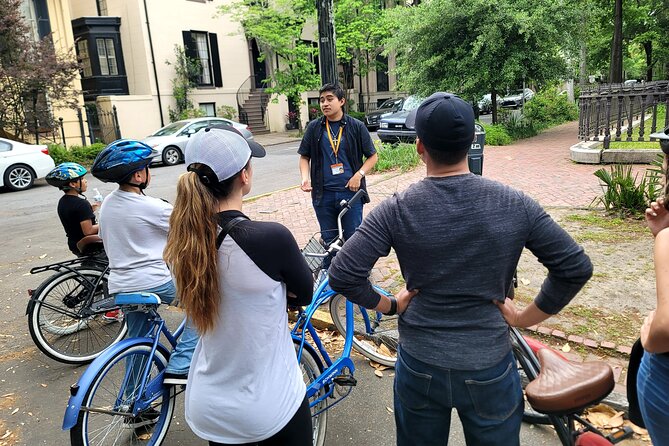
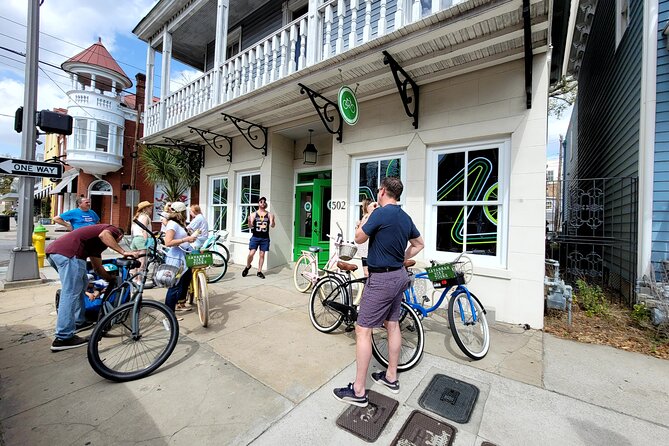
The tour begins at 502 E Broughton St and returns there after about two hours. You receive a bike and a helmet, then join the guide and the rest of the group. Bottled water is provided during the ride, and some feedback also notes sunscreen and bug spray as useful touches available during the experience.
The group limit is 10 people. That matters in Savannah, where a guide needs to position a group safely, keep everyone together, and find room for short talks near busy attractions. A smaller group also makes it easier for the guide to learn names and adjust the pace.
Allow a few minutes at the start for bike fitting and basic orientation. The supplied details do not promise a formal riding lesson, so you should be reasonably comfortable on a bicycle before booking. Service animals are allowed, and the meeting point is near public transportation.
Forsyth Park and the famous fountain
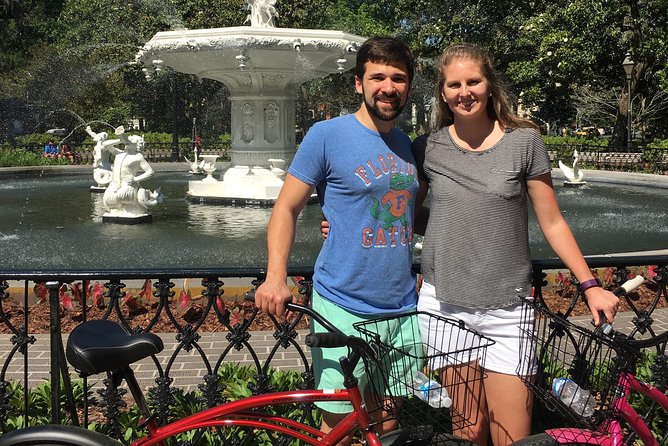
The first stop is Forsyth Park, where you see Savannah’s best-known fountain. The planned stop is about 10 minutes, enough for photos and a short explanation of the park’s role as a meeting place.
This is a smart opening stop because it gives you the city’s visual shorthand right away: a broad green park, historic surroundings, and a fountain that appears on countless Savannah postcards. The guide also points out what lies beyond the fountain, helping you read the park as part of the city rather than as an isolated photo stop.
The timing is brief, so do not expect a long walk through every corner of the park. You get an introduction and a chance to take pictures. If the weather is hot, this early stop also helps you settle into the pace before the route moves on.
City Market and planning the rest of your visit
At City Market, you get roughly 10 minutes to understand the area’s food, drink, shops, and entertainment options. This stop is less about entering venues and more about deciding where you may want to return later.
That is one of the tour’s practical strengths. A guide who explains where to eat and have a drink can save you time later, especially on a first visit. Several guides are also praised for sharing restaurant suggestions and nearby activities.
Do not treat this as a shopping tour. The stop gives you an overview, not a long browsing session. I would note the places that catch your eye, then come back after the ride when you are not trying to keep up with a group.
More bike tours around the USA:
- NYC: Central Park Bike Rentals
★ 4.2 · 2,528 reviews - Red Rock Canyon eBike Half-Day Tour
★ 5.0 · 1,870 reviews - NYC: Central Park Bike Rental
★ 4.1 · 1,651 reviews - Central Park Bike Rental
★ 4.7 · 1,509 reviews
Johnson Square and Savannah’s city plan

Johnson Square is where the tour turns from sightseeing toward city design. The stop lasts about 12 minutes and explains Savannah’s beginnings, the plan created by the city’s founder, and why the layout still matters.
This is one of the most useful historical stops because Savannah’s squares are not random patches of green. They form part of the city’s original structure, and the bike route helps you see how one square connects to the next.
A short talk cannot cover every part of Savannah’s past. Still, this stop gives you a framework for understanding the streets you ride through afterward. Once you know the basic plan, the repeated squares and blocks make more sense.
The cathedral and the Andrew Low House
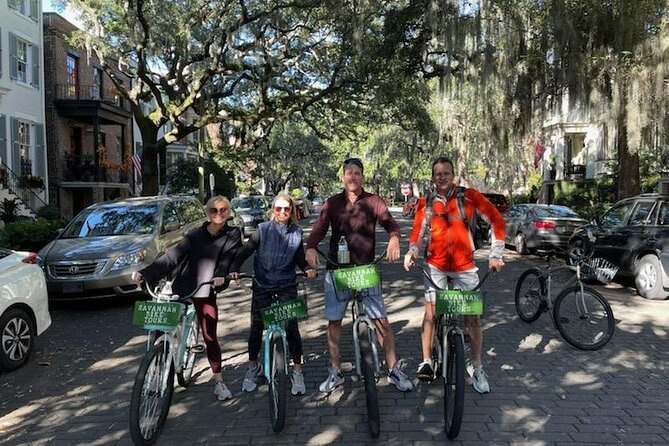
The Cathedral of St. John the Baptist receives about eight minutes. You can photograph its spires and hear about the role of Irish immigrants in Savannah’s growth.
The stop is primarily exterior viewing. Admission is not listed as included, so you should not expect an interior visit as part of the standard route. That is not a flaw, but it is important to know if you want time inside the cathedral.
The Andrew Low House comes next, with another eight-minute stop. Here, the guide connects the house to the founding of the Girl Scouts of America and to the city’s tradition of welcoming accomplished troops.
Again, this is an outside look rather than a museum visit. Admission is not included. The value comes from the context and the building’s place in the surrounding historic district, not from a full house tour.
Monterey Square and stories with a darker edge
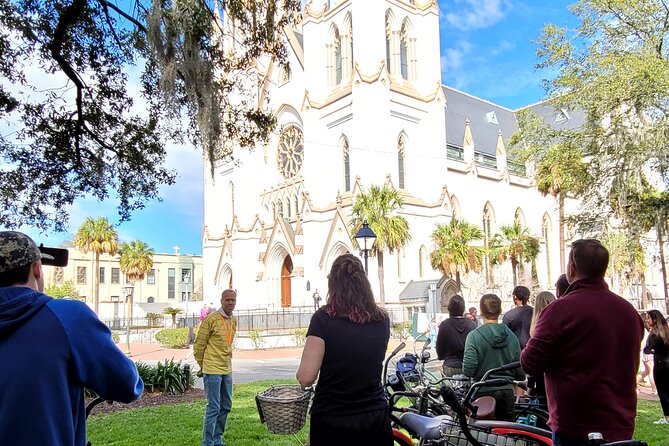
Monterey Square takes about 10 minutes. The guide presents it as one of the city’s most desirable squares and connects it with the mystery of Midnight.
The supplied details do not spell out the entire story, which is part of the appeal of a live guide. You get a local tale tied to a real Savannah setting, rather than a list of dates delivered without a place to anchor them.
This is also where the guide’s style matters. Steve is frequently described as energetic, funny, and good at handling sensitive or controversial subjects with care. That balance is useful in Savannah, where the past includes wealth, slavery, immigration, war, religion, and changing ideas about public memory.
SCAD and the city’s changing identity
The stop at the SCAD Museum of Art area lasts about eight minutes. You see reused buildings connected with the Savannah College of Art and Design and hear how the school has affected the city’s identity and economy.
This adds a modern layer to a route otherwise filled with older buildings and historical stories. You are not only looking backward. You are also seeing how students, art, education, and restored buildings shape present-day Savannah.
Admission to the museum is not included, and the stop is an overview rather than a museum visit. If art interests you, make a note to return on your own. The tour gives you enough context to understand why SCAD matters before you decide how much time to spend inside its museums and galleries.
River Street and Savannah’s working waterfront
The final major stop is historic River Street, with about 15 minutes devoted to the port and maritime side of the city. The guide discusses modern and historic port activity, plantations, goods traded through Savannah, and the lasting role of shipping in the local economy.
This is a strong finish because it broadens the story beyond elegant squares and beautiful façades. Savannah was not built only as a place of grand homes and public gardens. Its location and port shaped its work, wealth, trade, and connection to the wider world.
The riverfront also changes the feel of the ride. You move from shaded streets and squares toward a more open waterfront setting. The stop is free, and you have time for photos and a short explanation before returning to the starting point.
Guides who make the two hours work
The most praised part of this experience is the guiding. Steve, sometimes nicknamed Non-fiction Steve or No-lies Steve by his own style, is described as high-energy, funny, patient, and alert to group needs. He remembers names, uses photos to support stories, and offers ideas for restaurants and activities.
Michael is described as personable and full of local stories, including details about familiar landmarks and less obvious corners of town. Will is praised for explaining history, commerce, and culture with humor. Nico is described as enthusiastic and informative.
You cannot select a particular guide from the information provided, so book this for the tour format first, not for a guaranteed personality. Still, the range of positive guide comments suggests that the company’s strength is not tied to one person alone.
The best guides do more than recite facts. They help you understand why a square matters, how a port shaped the city, and where to return after the ride. They also make practical decisions about shade, pace, stops, and group comfort. That can matter as much as the historical content on a hot Savannah day.
Price, pace, and what the $49 buys you
At $49 per person, the tour sits in a reasonable range for a two-hour guided city activity. You are paying for the bike, helmet, guide, route planning, water, and a compact introduction to many parts of central Savannah.
The value is strongest if this is your first visit or if your time is limited. You see eight different locations and receive suggestions for what to do afterward. A walking tour may offer more time at each building, while a trolley may reduce physical effort. This ride gives you a middle ground: more ground covered than walking, and more active contact with the city than sitting in a vehicle.
The tour does not include admission to the Andrew Low House Museum or the SCAD Museum of Art. Since the itinerary only allocates a few minutes at each, that is sensible. You can choose later which interior visits deserve your time and money.
Group discounts are available, and the activity is offered in English with a mobile ticket. The tour is commonly booked about 14 days ahead, so advance planning is sensible during busy periods.
Heat, rain, and the best time to ride
Savannah can be hot, and several accounts point to the benefit of a morning departure. One rider specifically chose a 9 a.m. tour in summer to avoid the worst heat and found the shady historic district pleasant by bike.
That is practical advice. A bike creates a breeze, but it does not erase humidity or sun. Choose the coolest available time if you can, drink the provided water, and use the stops to catch your breath.
Rain can also change the experience. The tour requires good weather, and poor conditions may lead to a different date or a full refund. If you cancel, you must do so at least 24 hours before the start time for a full refund. Changes or cancellations inside that window are not refunded.
Wear clothes suited to outdoor activity and bring a phone for photos. The tour includes a helmet, and one account describes the ride as comfortable even for older riders. Your own comfort still depends on the day’s temperature and your cycling ability.
Who should book this ride
I would choose this tour for a first morning in Savannah. It quickly shows you the shape of the city, points out places worth revisiting, and gives you useful food and activity suggestions before you commit the rest of your schedule.
It also suits couples, families, and friends who want an active outing without a hard workout. The flat route, easy bikes, regular stops, and small group make it more approachable than a long-distance cycling excursion.
You may prefer another option if you want long interior visits, a serious architectural study, or a completely enclosed ride. The stops are short, and the tour focuses on seeing many areas rather than spending half an hour at one landmark.
Should you book the 2-hour Savannah bike tour?
Book it if you want a friendly, efficient introduction to Savannah and feel comfortable riding a bike. The best reasons are the flat route, small group, strong guide personalities, and the mix of classic squares, historic buildings, modern SCAD influence, and the working waterfront.
Choose a morning departure during hot months if possible. Treat the tour as an orientation, then return on foot to the places that deserve more time. At $49, it offers solid value for seeing a wide slice of central Savannah in two easy hours.
FAQ
How long is the Savannah bike tour?
The tour lasts approximately two hours, though individual rides may run a little longer because of frequent stops.
Where does the tour start and finish?
It starts at 502 E Broughton St in Savannah and ends back at the same meeting point.
What places does the bike tour visit?
The route includes Forsyth Park, City Market, Johnson Square, Cathedral of St. John the Baptist, Andrew Low House, Monterey Square, the SCAD Museum of Art area, and historic River Street.
Is the tour suitable for beginner riders?
The route is described as flat, easy, and comfortable for novice and experienced riders. Most people can participate, but you should be comfortable riding a bicycle.
Are bikes, helmets, and water provided?
A bike, helmet, and complimentary bottled water are provided. The bikes are described as comfortable beach cruisers.
Are admission tickets included for the Andrew Low House or SCAD Museum of Art?
No. Admission to the Andrew Low House Museum and SCAD Museum of Art is not included. The standard tour provides an outside view and an introduction to each location.
What happens if I need to cancel?
You receive a full refund if you cancel at least 24 hours before the start time. Cancellations within 24 hours are not refunded. If bad weather or an insufficient minimum group causes the operator to cancel, you can receive a different date or a full refund.
New rides added around the USA
- Portland: Food Carts of the Eastside Bike Tour★ 4.9 · 16 reviews
- Portland: E-Bike Tour at Multnomah Falls★ 4.8 · 20 reviews
- Essential Portland: 2-Hour Guided Bike Tour★ 4.8 · 43 reviews
- Pittsburgh: Beauty of the Burgh Bike Tour★ 4.9 · 37 reviews
- Oahu: Waikiki E-Bike Ride and Manoa Falls Hike★ 4.9 · 28 reviews
- Oahu: Kualoa Electric Bike Tour★ 4.6 · 14 reviews
- NYC: Central Park Guided Electric Bike Tour★ 4.9 · 25 reviews
- NYC: Central Park Guided Bike Tour★ 4.8 · 11 reviews
USA Bike Tours, compared.



Asheville Historic Downtown Guided Electric Bike Tour with Scenic Views
Read our review →

Monterey’s 17 Mile Drive Guided Electric Bike Tour, 3 hr
Read our review →Browse the lists this tour appears in