
Review · KRAKOW
Highlights of Krakow Bike Tour – Small group
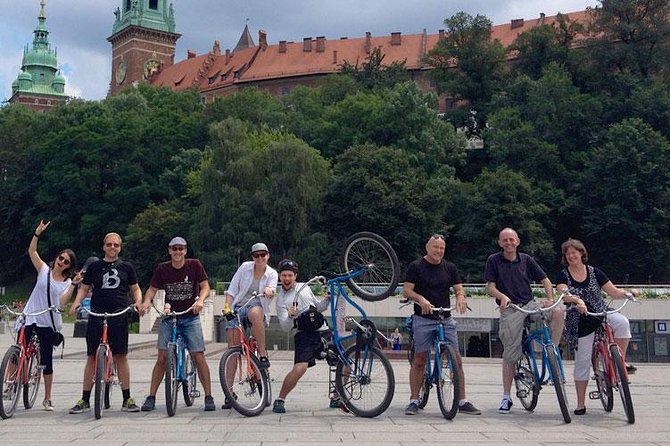
Krakow is compact, but its key sights spread across several districts. This small-group bike tour links the Old Town, Wawel Hill, the Vistula, Podgórze, and Kazimierz in about four hours, saving you a lot of shoe leather. The flat route and comfortable beach cruisers make it an easy ride rather than a sporting challenge.
I especially like the way the tour mixes grand sights with quieter corners, including the ghetto wall fragment, Jewish cemeteries, and the river path. I also like the guides’ personal touch: Mike is praised for humor and clear English, while Zoe and Chris add their own stories and local suggestions. The main consideration is time. With more than 20 stops, some visits are brief, and you usually see buildings from outside rather than going in.
Key points to know before you book
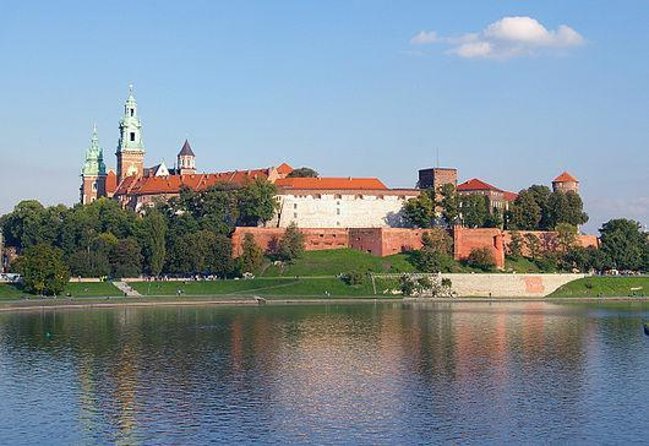
- A four-hour route covers several districts: Old Town, the university quarter, Wawel, Podgórze, and Kazimierz.
- The riding is mostly flat: You can expect an easy pace, with much of the route on cycle tracks and shorter sections on roads.
- The group is capped at 15 people: That is small enough for a more personal guide experience without the price of a private tour.
- The tour includes a lunch break: Food and drinks cost extra, so bring money or a card for the restaurant stop.
- The historical range is unusually broad: Medieval Krakow, Polish royalty, the Jewish quarter, and the Nazi occupation all appear on the route.
- Children need to be at least 128 centimeters tall: The bicycles are suitable for taller children, and helmets are offered for kids.
Why a bike is a smart way to see Krakow
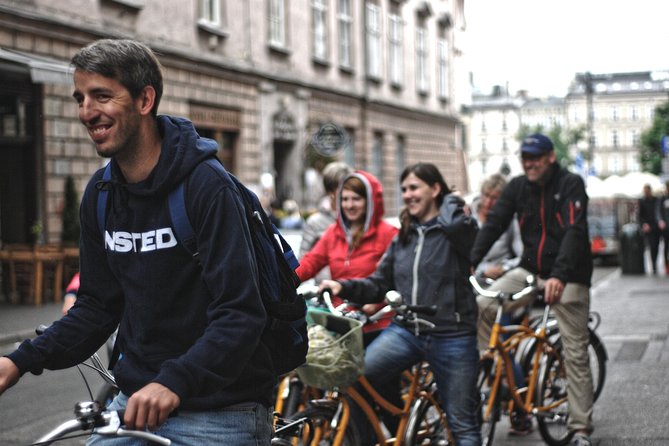
Krakow rewards walking, but walking can make the city feel like a series of separate visits. By bicycle, you connect those pieces quickly. You can leave the Main Square, pass through the Planty Gardens, reach Wawel Castle, follow the Vistula, and continue into Kazimierz without spending much of the day crossing streets on foot.
The route is mostly flat, and the bikes have comfortable seats. Several riders covered about eight miles, though the exact distance can vary with the guide and pace. You stop often, so you are not pedaling for four straight hours.
The ride is also broken into manageable sections. That matters for families and for anyone who wants history without a punishing physical workout. One family with children aged eight and eleven found the route manageable, while older teenagers enjoyed the mix of cycling and sightseeing.
You should still be comfortable on a bicycle and able to follow a group through city streets. Most of the riding is on cycle paths, with some short stretches on roads. The route felt safe to many participants, but it is still an urban ride, not a traffic-free park excursion.
More City Bike Tours in the world:
- Lion City Bike Tour of Singapore
★ 5.0 · 6,211 reviews - 3-Hour Porto Highlights on a Electric Bike Guided Tour
★ 5.0 · 4,392 reviews - Porto: City Highlights 3-Hour Guided Electric Bike Tour
★ 4.8 · 3,092 reviews
Starting at the Main Square and Planty Gardens
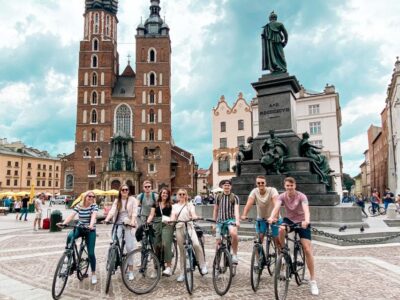
The meeting point is by the Adam Mickiewicz Monument on Rynek Główny, Krakow’s enormous medieval market square. This is an excellent place to begin because the square gives you an immediate sense of Krakow’s scale and importance.
You get only a short introduction here, so do not expect time to tour every building. The value is orientation. Your guide can point out the square’s main sights before leading you away from the crowds and into the Planty Gardens.
Planty forms a green belt around the Old Town where the medieval defensive walls once stood. The ride here is pleasant and relatively calm, and it helps you understand Krakow’s old center as a contained historic district rather than a collection of unrelated streets.
The route includes the Barbican and surviving sections of the old city defenses. These stops are brief, usually around five to 15 minutes. That is enough for an explanation and photographs, but not enough for a full museum visit. If you want to explore the Barbican in detail, plan to return independently.
University buildings, bishops, and Polish history
From Planty, the tour moves toward Jagiellonian University, founded in 1364. You see the University Collegiate Church of St. Anne, the university buildings, and the courtyard of Collegium Maius, the university museum.
Collegium Maius is one of the most attractive stops on the route. The courtyard and its clock offer good photographs, while the guide gives context about the university’s long role in Polish intellectual life. The stop is short, so you should think of it as an introduction rather than a museum tour.
The Jadwiga and Jagiello Monument brings in the story of the Polish-Lithuanian Commonwealth. This is one reason a bike tour can be useful early in your stay: the guide supplies the basic historical framework that helps later visits make more sense.
You also pass the Bishop’s Palace, associated with Pope John Paul II. The guide explains his connection with Krakow and Poland. These short stops add human stories to the grander political history, though the quick schedule means you will not linger at each site.
Wawel Castle and the Vistula River
Wawel Castle was the seat of Polish royalty for centuries and remains one of Krakow’s essential sights. The tour takes you to the castle area, but admission to the castle interiors is not included. You get an outside view and an explanation of its importance, followed by time near the Wawel Dragon Monument.
The dragon is one of Krakow’s best-known legends. The guide explains the fire-breathing creature connected with the city, giving the tour a lighter moment after the formal history of kings and bishops.
The ride then reaches the Vistula River. This is one of the route’s most enjoyable changes of scene. You leave the dense Old Town behind and get a more open ride along the water. The river section also gives you a break from close-packed monuments and cobbled streets.
If you visit Krakow in warm weather, this part can be especially welcome. One family rode in temperatures around 32 degrees Celsius and found cycling more comfortable than walking because the route kept moving and included a lunch break. Rain ponchos are available if needed, but the tour requires good weather and can be rescheduled or refunded if conditions are poor.
More bike tours around the world:
- Big Bike tour Amsterdam – See all in 3 unforgettable hours
★ 4.7 · 4,929 reviews - Ninh Binh Full-Day Tour from Hanoi to Hoa Lu, Tam Coc & Mua Cave Via Boat & Bike
★ 5.0 · 4,384 reviews - Small Group Guided Bike Tour of Amsterdam’s Hidden Gems
★ 5.0 · 3,936 reviews - 3-hour Complete Prague Bike Tour
★ 5.0 · 3,674 reviews
Podgórze and the wartime ghetto
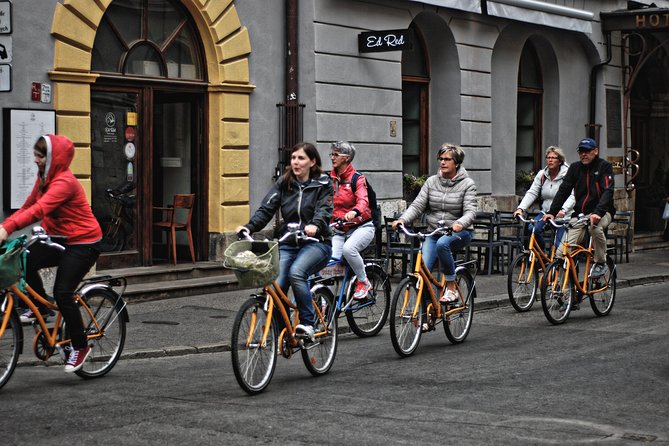
The tour crosses toward Podgórze, the district where the Krakow Ghetto was established during the Second World War. This part changes the tone of the day. The focus moves from medieval and royal Krakow to persecution, occupation, and the destruction of the city’s Jewish community.
At Plac Bohaterów Getta, the guide explains the wartime ghetto. You also see a fragment of the ghetto wall, one of the few remaining physical traces of the boundary. These are short stops, but they are important ones. The guide’s role here is not just to point out a landmark, but to connect the place with the people who were confined there.
The route continues to Oskar Schindler’s Enamel Factory. You see the site connected with Schindler and the story made famous by his list. Museum admission is not included, and the schedule does not allow time for a full visit inside. If this subject is a major reason for your trip, you should reserve a separate museum visit.
That is one of the tour’s useful limits to understand. It gives you a strong first orientation to Krakow’s wartime story, but it cannot provide the same depth as a dedicated Jewish heritage or occupation tour.
Kazimierz, the Jewish quarter, and Szeroka Street
The tour then enters Kazimierz, Krakow’s historic Jewish quarter. The district has a different feel from the Old Town, with religious landmarks, former Jewish streets, cemeteries, and places that now serve as restaurants and nightlife spots.
You pass the New Jewish Cemetery and continue to Szeroka Street, one of the quarter’s central historic streets. The schedule allows more time here, which makes sense. Kazimierz is best understood through several connected sites rather than one quick monument.
The Old Synagogue receives the longest stop, about 40 minutes. You can see the synagogue and the surrounding quarter, but the supplied schedule does not state that admission is included, so treat this as an exterior sightseeing stop unless your guide says otherwise. The nearby Remuh Cemetery adds another layer, with its old gravestones and connection to Krakow’s Jewish past.
Plac Nowy provides a change of mood. It is known for its food stalls, including the famous pizza baguettes, and for its evening social scene. This is a useful place to note for a later return, especially if you want to eat or explore Kazimierz after the tour.
Lunch and the return through Krakow
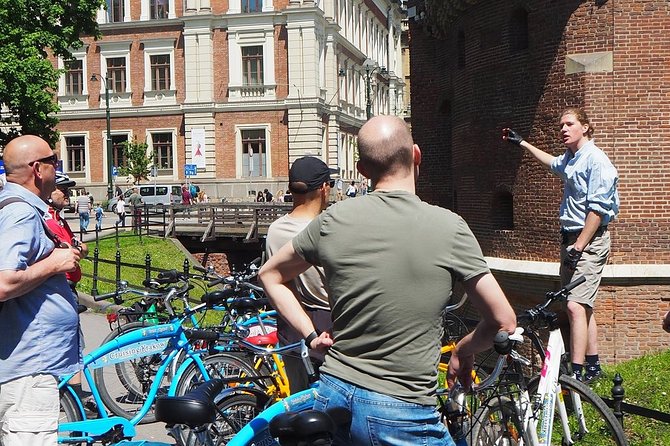
Lunch is taken at an authentic Polish restaurant, with food and drinks paid separately. The stop is not just practical. It breaks up the ride and gives you time to ask the guide about restaurants, bars, and places to visit later.
Several guides are praised for useful dining suggestions. Mike, in particular, is noted for restaurant and bar recommendations. You should use the lunch stop as a chance to gather ideas, but remember that the exact restaurant is not specified in the tour details.
After lunch, the route heads back toward the original departure area. The final sights include the Little Market Square and the Słowacki Theatre. The theatre is a favorite piece of local architecture and makes a fitting final stop before the tour ends near the center.
The return route means you finish with a better mental map of Krakow. You will know where the Old Town ends, how Kazimierz connects to the river, and where Podgórze sits in relation to Wawel.
The guides make a real difference
The strongest part of this experience is the guide. Mike is repeatedly singled out for clear English, humor, personal stories, and a good pace. His Canadian-Polish background helps him explain Krakow in a way that is easy to follow for English-speaking visitors.
Zoe, sometimes listed as Zoey, is praised for balancing detail with movement. Chris is noted for adding humor and personal anecdotes to the historical material. The exact guide depends on the departure, so you should not book solely on the expectation of one particular person.
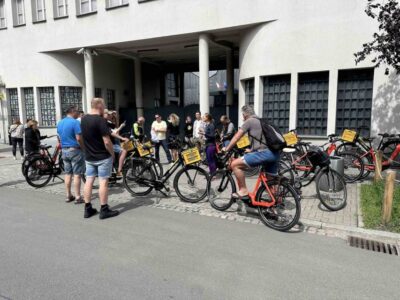
A small group capped at 15 helps. The guide can answer questions, keep the pace together, and make minor adjustments for families. One particularly small departure had only five people, which allowed for a more flexible experience.
Some tours overload you with dates and names. This one appears to aim for a more conversational style. You get stories, legends, historical facts, and practical advice without spending every stop listening to a lecture.
Price, pace, and who gets the best value
At $36.28 per person, the tour is priced reasonably for four hours of bike rental, a guide, and a route that reaches several separate districts. You are paying for access to a city overview, not for entry to Krakow’s museums or a full meal.
The value is strongest if you have only one or two days in Krakow. You can see the major areas early in your visit, then decide where to return for longer visits. It also works well on the first day because the route helps you get your bearings quickly.
The tour suits families with children over 128 centimeters, couples, first-time visitors, and anyone who finds long walking days tiring. It is also a good choice for people who want history presented with humor rather than a formal lecture.
You may prefer another experience if your main goal is detailed time inside Wawel Castle, Schindler’s Factory, or the Old Synagogue. You may also want a walking tour if cycling in city traffic makes you uneasy. The bike is a tool for seeing more, but it also means some sights receive only a short explanation.
Practical details for a smoother ride
The tour starts at the Adam Mickiewicz Monument in the Main Square. Confirmation is provided when you book, and the experience is offered in English.
Bikes are provided, and rain ponchos are available when necessary. Helmets are offered for children. Service animals are allowed, and the departure point is near public transportation.
The tour requires good weather and a minimum number of participants. If bad weather or low enrollment cancels the departure, you can choose another date or receive a full refund. For your own cancellation, cancel at least 24 hours before the start time to receive a full refund. Changes or cancellations inside that window are not refunded.
Should you book this Krakow bike tour?
I would book it if you want a broad first look at Krakow without spending all day walking. The route covers the city’s most important areas, the riding is mainly flat, and the frequent stops keep the physical effort modest.
Book it early in your stay, especially if you are in Krakow for only a short visit. Let the guide show you the geography, listen for restaurant suggestions, and return later to the museums and interiors that deserve more time.
Skip it if you want a slow, in-depth visit to every major attraction. The tour’s strength is its reach. In four hours, you see a great deal of Krakow, but you must accept brief stops and mostly exterior sightseeing.
FAQ
How long does the Krakow bike tour last?
The tour lasts approximately four hours. Some departures may run closer to three and a half hours depending on pace and conditions.
How much does the tour cost?
The listed price is $36.28 per person. Group discounts may be available.
Where does the tour start?
It starts at the Adam Mickiewicz Monument in Krakow’s Main Market Square, Rynek Główny.
What is included in the price?
The price includes the bicycle, an English-speaking city guide, and a rain poncho if necessary.
Is lunch included?
No. The tour stops at a Polish restaurant for lunch, but food and drinks are at your own expense.
How many people can join the group?
The maximum group size is 15 travelers.
Are children allowed on the tour?
Yes. The bicycles are suitable for children over 128 centimeters tall. Helmets are offered for children.
Does the tour enter Wawel Castle or Schindler’s Factory?
The route visits Wawel Castle and Oskar Schindler’s Enamel Factory, but admission tickets are not included in the tour details. The schedule is mainly for seeing the sites and hearing their history.
What happens if the weather is poor?
The experience requires good weather. If the operator cancels because of poor conditions, you can choose another date or receive a full refund.
New rides added around the world
- Prague: E-Scooter HUGO Bike Rental★ 4.8 · 11 reviews
- Prague Electric Scooter and eBike Grand Tour★ 5.0 · 15 reviews
- Prague E-Bike City Ride tour : 2hrs★ 4.5 · 36 reviews
- Prague: E-Bike or E-Scooter Tour with A Local Guide★ 4.8 · 154 reviews
- Prague: Classic City Bike Tour★ 4.7 · 149 reviews
- Prague: City Viewpoints Tour by Electric Fat Bike★ 5.0 · 43 reviews
- Prague City Bike guided tour★ 3.7 · 10 reviews
- Prague: Stunning Viewpoints, Castle, City & Park Bike Tour★ 4.6 · 38 reviews
Krakow Bike Tours, compared.
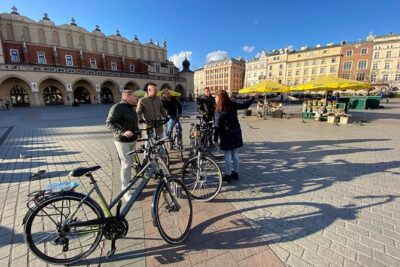
Complete Cracow Bike Tour (small group of maximum 15 people!)
Read our review →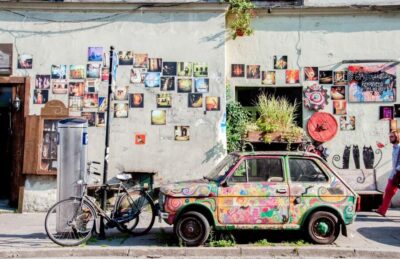
Bike Tour of Old Town, Jewish Quarter and the Ghetto
Read our review →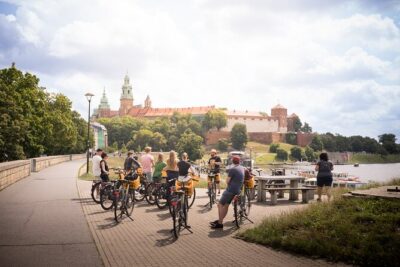
Full Bike Tour – the Old Town, Jewish Qtr & the Ghetto NEW BIKES
Read our review →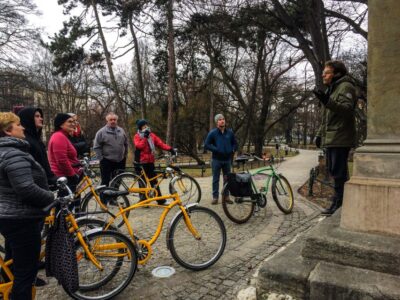
Browse the lists this tour appears in