
Review · KRAKOW
Complete Cracow Bike Tour (small group of maximum 15 people!)
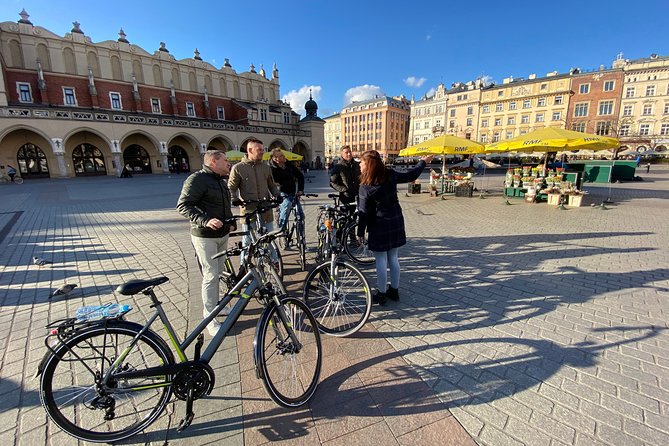
Krakow is wonderfully compact, but its sights are spread across grand squares, riverside paths, old lanes, and former Jewish streets. This three-hour bike tour links those pieces neatly, giving you a fast introduction to the city without confining you to a bus or asking you to cover every mile on foot.
I like the small maximum of 15 people, which makes it easier to hear the guide and stay together. I also like the mix of major sights and useful orientation, from the Barbican and Main Market Square to Kazimierz and the Vistula River. The main consideration is cycling near busy areas, where you need to stay alert, and the quality of the experience depends heavily on your guide’s English and grasp of Polish history.
The best reasons to consider this Krakow bike tour
- A compact city overview: Cover the Old Town, Planty, Wawel area, the Vistula, and Kazimierz in about three hours.
- A small group format: The tour is limited to 15 people, a useful size for questions and clear instructions.
- Several praised guides: Brian, Bram, Nikki, and Mir are singled out for humor, personal attention, and strong storytelling.
- Comfortable bikes: The bicycles are described as being in good condition and comfortable for the ride.
- Helpful first-day orientation: You get practical ideas about places to revisit, restaurants, and other sights.
- A fair introduction price: At $39.30 per person, you are paying for a guided overview rather than a full-day sightseeing program.
Starting at Józefa Dietla 59
The tour begins at Józefa Dietla 59 in Krakow at 10:00 a.m. It also ends there, so you do not need to arrange a return transfer from another part of the city.
That start point is near public transportation, which makes it practical if you are staying outside the central districts. You receive a mobile ticket, and confirmation is normally sent when you book. If you reserve within 12 hours of departure, confirmation arrives as soon as possible and remains subject to availability.
The group limit matters here. Fifteen riders is not tiny, but it is far more manageable than a large procession of bicycles. You should be able to hear the guide at stops and ask a question without having to fight for attention.
The experience is offered in English. That sounds straightforward, but the guide makes a real difference. Brian is praised for clear English, humor, and personal connections. Bram is described as mixing jokes with useful facts. Nikki is noted for her enthusiasm, friendliness, and clear explanations, while Mir receives credit for helping participants learn things they would otherwise miss.
There is also an important caution. One account describes a friendly guide whose English and understanding of Polish history were not strong enough for a truly engaging tour. That appears to be an exception among the supplied comments, but it is worth keeping in mind. You are buying a guided history experience, so communication matters as much as the bicycle.
More bike tours around the world:
- Lion City Bike Tour of Singapore
★ 5.0 · 6,211 reviews - Big Bike tour Amsterdam – See all in 3 unforgettable hours
★ 4.7 · 4,929 reviews - 3-Hour Porto Highlights on a Electric Bike Guided Tour
★ 5.0 · 4,392 reviews
The Barbican and Planty: a smart opening loop
The Old Town section takes about two hours and begins with some of Krakow’s most recognizable sights. The Barbican is a natural first stop, giving you an immediate sense of the city’s former defenses and its position at the edge of the historic center.
From there, you cycle through Planty, the green belt that follows the route of Krakow’s old fortifications. A bicycle is especially useful here. You move through the center without repeatedly retracing your steps, and the ride gives you a better sense of how the old city fits together.
This is not a tour built around racing from one photo stop to the next. The guide pauses at churches, statues, and notable buildings, explaining what you are seeing and adding stories about the people and events connected with them. You should expect a spoken tour with frequent stops rather than a long, uninterrupted bike ride.
Planty also helps the tour feel less like a checklist. You get a change of pace between the busier streets and the major landmarks. Still, Krakow is an active city center. Some areas can be crowded, and you need to watch pedestrians, other cyclists, and traffic while following the group.
Main Market Square: Krakow’s grand central stage
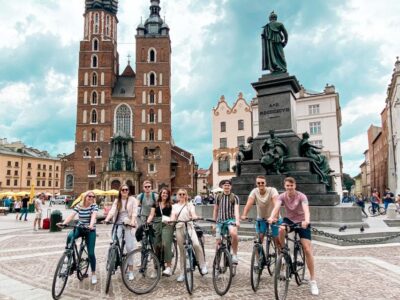
The route continues to Rynek Glówny, Krakow’s Main Market Square. This is the place where the city’s size, wealth, and past importance become easiest to read. The surrounding buildings give the guide plenty to explain, and the tour spends time discussing them rather than treating the square as a quick backdrop for photographs.
That added context is one of the strongest reasons to take this tour early in your stay. A first look at the square can leave you with a blur of grand facades and church towers. A good guide helps you sort out what you are seeing and points to details you may otherwise walk past.
The supplied comments repeatedly praise the storytelling here and elsewhere. Brian is described as mixing humor with useful facts, while another account credits him with adding context from his time living in Eastern European cities. Those details matter because Krakow’s past is easier to understand when the guide connects buildings and people instead of giving you isolated dates.
You may also receive suggestions for places to revisit after the ride. That turns the tour into more than a three-hour circuit. You can return to a church, square, or street later when you have time to look more closely.
The university, churches, and Wawel area
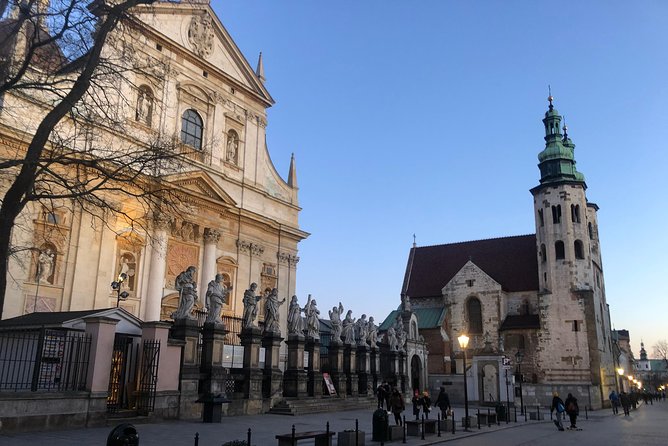
The Old Town route includes the university, several churches, statues, and other important buildings. It also circles the castle area, giving you a useful outside view of one of Krakow’s main symbols.
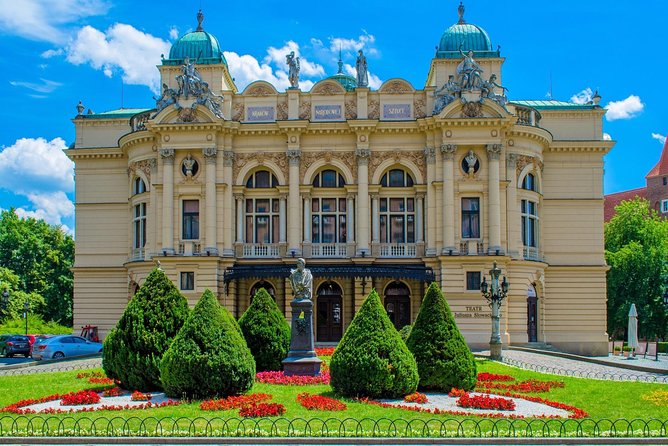
The university stop adds a different layer to the tour. The Old Town is not only about royal power and medieval defenses. It is also a place of learning, religious life, public monuments, and everyday city activity. Moving between these subjects helps you see Krakow as a living center rather than a collection of preserved facades.
The Wawel section is especially useful for orientation. You are not spending the day inside the castle complex, and admission to the bike tour’s stops is free, so this is not a substitute for a dedicated Wawel visit. Instead, you get an introduction to the setting and a sense of how the castle relates to the Old Town and the river.
That division of labor is sensible. The bike tour shows you what deserves more of your time. You can then return on your own for interior visits or a slower walk, without spending the entire day in a guided group.
Same wheels, a different route:
- Ninh Binh Full-Day Tour from Hanoi to Hoa Lu, Tam Coc & Mua Cave Via Boat & Bike
★ 5.0 · 4,384 reviews - Small Group Guided Bike Tour of Amsterdam’s Hidden Gems
★ 5.0 · 3,936 reviews - 3-hour Complete Prague Bike Tour
★ 5.0 · 3,674 reviews - Bangkok: Temples, Canals & Local Life Bike Tour
★ 4.9 · 3,511 reviews
Along the Vistula River
The route reaches the Vistula, Krakow’s major river. Riding beside the water gives you a break from the tight streets of the historic center and lets you see the city from a broader angle.
The river section also makes the tour feel more varied. In one morning, you move from fortifications and market buildings to university streets, castle views, and open riverside space. That range is hard to get from a walking tour of the Old Town alone.
The exact cycling conditions can change with the day’s traffic and crowds. You should not expect a quiet countryside ride. This is a city tour, and the point is to connect Krakow’s central districts efficiently. Keep your attention on the guide and the people around you, particularly in busy sections.
Kazimierz in one focused hour
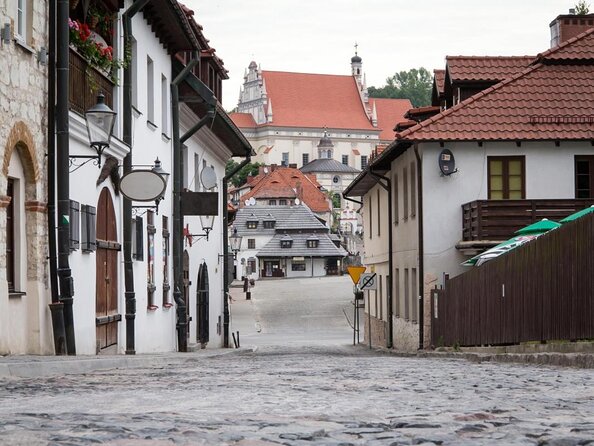
The final major part of the route is Kazimierz, Krakow’s former Jewish district. The tour allows about an hour here, enough to introduce the area’s streets, synagogues, and long Jewish presence in the city.
Kazimierz is not simply another old quarter. Jewish communities lived here from the 14th century until the Second World War, and the district carries the marks of that long period. A guide can help you understand why the streets and religious buildings matter, rather than reducing the neighborhood to a fashionable place for food and nightlife.
The synagogues are a key part of the route. The tour does not promise interior admissions, and the stops are free, so you should think of this as an outdoor introduction. If Kazimierz interests you, use the ride to identify places for a separate visit.
The one-hour timing is both a strength and a limit. It gives you meaningful coverage without letting one district consume the whole morning. But Kazimierz has enough history and detail for a much longer visit, so you will only get the main framework here.
What the guides add to the ride
A bike tour succeeds or fails on the guide. The bicycle gets you from place to place, but the stories give the route its value.
The strongest feedback centers on guides who are friendly, funny, and well informed. Brian is praised several times for making personal connections, explaining Krakow clearly, and adding humor. Bram receives similar comments for his mix of facts and jokes. Nikki is described as enthusiastic and engaging, while Mir is credited with making the city’s past accessible.
One particularly nice detail is the refreshment break noted by one participant. It gave the group a chance to pause, have a drink, and keep talking about the places along the route. The exact format of that break is not specified, so I would treat it as a pleasant possibility rather than a guaranteed feature.
The guide can also help after the tour ends. Restaurant tips and suggestions for places to see again are useful because you will have a better sense of where each district sits and what deserves more time.
Bikes, pace, and comfort
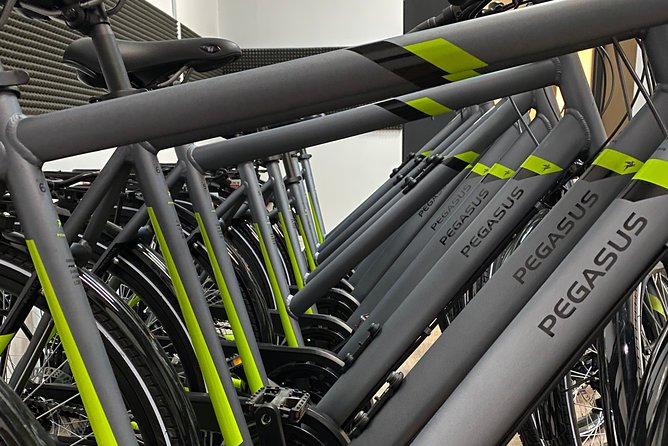
The bicycles receive strong marks for comfort and condition. That is important on a three-hour ride, even though the route is designed for sightseeing rather than speed.
You do not need to be a serious cyclist to see the appeal. The tour is built around stops, explanations, and short rides between landmarks. Most people can participate, according to the activity information, but you should still be comfortable riding a bicycle in a city setting.
The main practical issue is awareness. Certain streets and central areas can be busy. You need to follow the guide, leave room for other road users, and avoid treating the ride like a private cycling path.
Weather is another simple factor. One account describes an enjoyable tour despite poor weather, thanks in part to the guide’s energy. Still, rain, wind, or cold can affect your comfort. Dress for the forecast and remember that you will be outdoors for roughly three hours.
Is $39.30 good value?
At $39.30 per person, this is a reasonably priced introduction to Krakow. You are not paying for museum admissions or a full day of guided sightseeing. You are paying for a bicycle, a city route, an English-speaking guide, and the time saved by linking distant central sights in one outing.
The value is strongest if you are new to Krakow. In three hours, you get an outline of the Old Town, the Wawel area, the river, and Kazimierz. You also receive ideas for where to return later, which can prevent you from wasting time finding your bearings.
The value is less clear if you already know these districts well or want detailed indoor visits. The tour does not replace a full exploration of Wawel, the synagogues, or the churches. It gives you the framework, then leaves the deeper visits to you.
Compared with paying separately for several short activities, the bike tour offers a useful amount of coverage for one morning. The small group adds to that value, since you are less likely to lose the guide’s explanations in a crowd.
Who will enjoy this tour most?
I would choose this tour early in a Krakow visit, especially if you have only a few days. It gives you a mental map quickly and helps you decide which sights deserve a second look.
It suits adults, families with riders who can manage city cycling, and anyone who likes history delivered through stories rather than a long indoor lecture. It is also a good fit if walking tours leave you tired or if you want to cover more ground without using a vehicle.
You may want another option if you dislike cycling around pedestrians and city traffic, need a fully indoor activity, or want extended time inside museums and religious buildings. The tour is also not ideal if you require a very specific guide language, since the available language is English.
Free cancellation is available when you cancel at least 24 hours before the 10:00 a.m. start. Cancellations or changes made within 24 hours are not refunded, and the activity requires a minimum number of participants. If that minimum is not reached, you are offered another date or experience, or a full refund.
Should you book the Complete Cracow Bike Tour?
Book it if you want a well-priced first look at Krakow and like the idea of combining movement with local stories. The route covers the city’s essential central districts, the group is capped at 15, and several guides have been praised for humor, personal attention, and strong explanations.
Go in with realistic expectations. This is an outdoor overview, not a deep visit to every church, castle room, or synagogue. Check the weather, stay alert in crowded areas, and remember that your guide’s communication style will shape the morning.
For a first day in Krakow, I think the tour makes a lot of sense. It helps you get your bearings, shows you where the city’s main stories are located, and leaves you with enough time afterward to return to the places that caught your interest.
FAQ
Where does the Complete Cracow Bike Tour start?
The tour starts at Józefa Dietla 59, 31-054 Kraków, Poland.
What time does the tour begin?
The scheduled start time is 10:00 a.m.
Where does the tour finish?
The tour ends back at the starting meeting point.
How long does the bike tour last?
The experience lasts approximately three hours.
What language is the tour offered in?
The tour is offered in English.
How many people can join the tour?
The group has a maximum of 15 participants.
What parts of Krakow does the tour visit?
The route includes Stare Miasto, the Barbican, Planty, Main Market Square, the university, the Wawel Castle area, the Vistula River, and Kazimierz.
Are admission tickets included for the stops?
The listed stops have no admission ticket required as part of the tour.
Is the tour close to public transportation?
Yes. The meeting point is near public transportation.
Can I cancel for a full refund?
Yes, if you cancel at least 24 hours before the experience begins. Cancellations made less than 24 hours before the start time are not refunded.
New rides added around the world
- Prague: E-Scooter HUGO Bike Rental★ 4.8 · 11 reviews
- Prague Electric Scooter and eBike Grand Tour★ 5.0 · 15 reviews
- Prague E-Bike City Ride tour : 2hrs★ 4.5 · 36 reviews
- Prague: E-Bike or E-Scooter Tour with A Local Guide★ 4.8 · 154 reviews
- Prague: City Viewpoints Tour by Electric Fat Bike★ 5.0 · 43 reviews
- Prague City Bike guided tour★ 3.7 · 10 reviews
- Prague: Classic City Bike Tour★ 4.7 · 149 reviews
- Prague: Stunning Viewpoints, Castle, City & Park Bike Tour★ 4.6 · 38 reviews
Krakow Bike Tours, compared.
Bike Tour of Old Town, Jewish Quarter and the Ghetto
Read our review →
Full Bike Tour – the Old Town, Jewish Qtr & the Ghetto NEW BIKES
Read our review →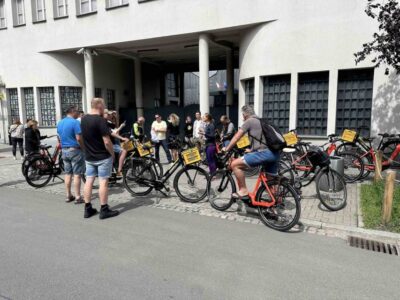
Browse the lists this tour appears in