
Review · BERLIN
Berlin: The Wall and Third Reich Guided Bike Tour
Berlin’s 20th-century story makes more sense when you follow it by bike. This three-hour ride links Wall fragments, former border paths, Nazi bunkers, memorials, and streets that buses often pass without explanation. The route covers about 15 kilometers, but the pace is relaxed, with frequent stops for stories and questions.
I like the way the tour gets you away from the main traffic for much of the ride, using quiet streets and cycle paths to reach places such as Bernauer Straße and Humboldthain. I also like the human scale of the guiding. Carl, Juliet, Jake, Fabian, and other guides have been praised for clear storytelling, personal Berlin connections, and adjusting the route to suit the group. The main consideration is that 15 kilometers is still a physical outing, and the tour gives you short visits at many stops rather than a long museum-style treatment of each one.
Key points before you book
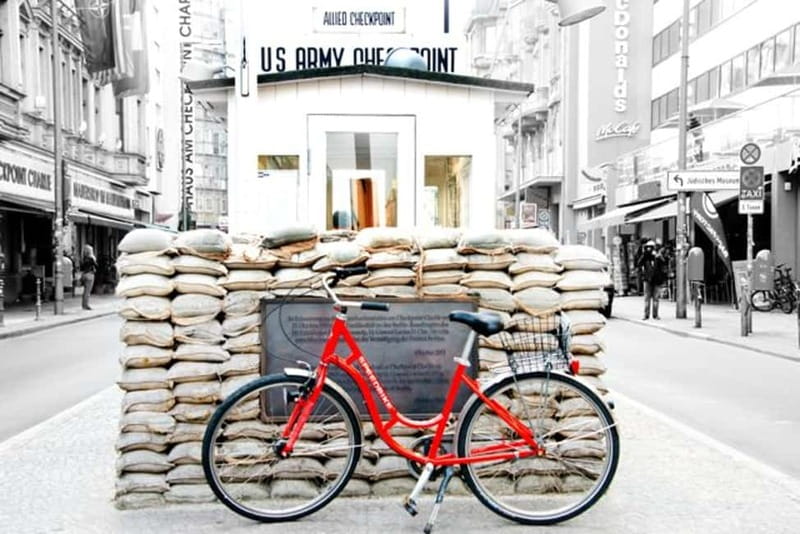
- A 15-kilometer route with real remains: See Wall sections, an East German watchtower, border paths, bunkers, and the first person killed while trying to cross.
- Quiet cycling through a large city: Much of the route uses backstreets and cycle paths, though you will encounter a few busy roads.
- History beyond the famous sights: The ride covers ghost stations, Nazi Germania plans, Invalids’ Cemetery, and the Führerbunker site.
- Guides who adapt the day: Guides including Carl, Juliet, Jake, Fabian, and Bjorn have adjusted explanations and routes around group interests.
- Useful equipment included: Rental bikes, baskets, optional helmets, and waterproof ponchos are provided.
- Good for families and small groups: Children are welcome, and infant seats can be requested.
Starting in Nikolaiviertel and picking up your bike
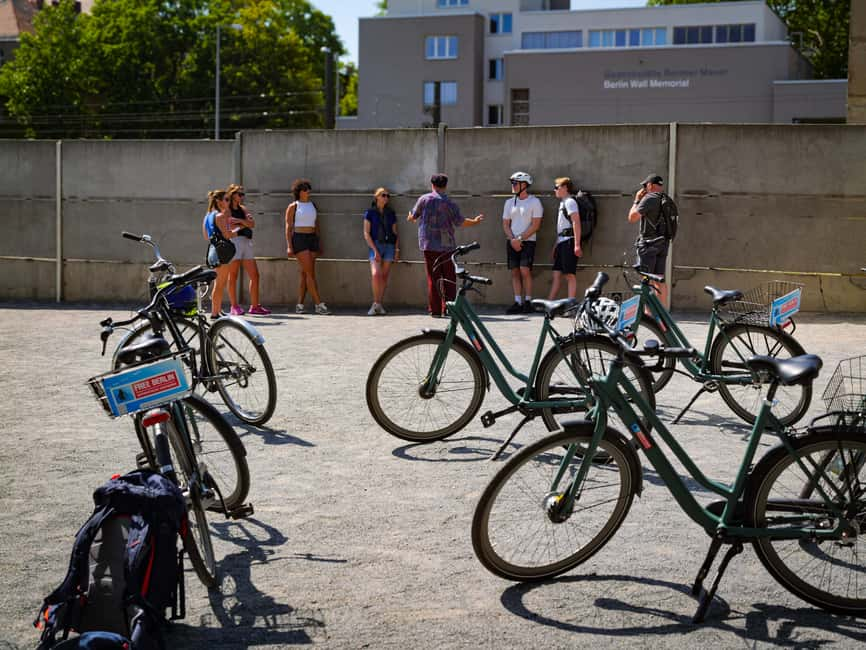
You meet at the Free Berlin Bike Tours and Rental office at Poststraße 11. Enter the courtyard and look for the FREE BERLIN sign. The starting point is in Nikolaiviertel, about five minutes from Berlin’s TV Tower, so it is easy to pair with central Berlin sightseeing.
The operator provides the bike, and the rental bicycles have baskets and are checked regularly by a certified mechanic. Helmets are available on request rather than automatically placed on every bike. Large luggage can also be left with the operator during the tour if you arrange it.
This is a practical start for a history ride. You do not need to spend time finding a separate rental shop or working out a route on your phone. After a quick choice of bike, you set off with a guide who handles the navigation and keeps the group together.
The tour is offered in English, German, or French. You may join a small group, or arrange a private ride with a personal starting time and a route shaped around your interests. The private option makes particular sense if your group already knows a lot about Berlin and wants more discussion rather than a standard presentation.
More guided departures in Berlin:
- Berlin: Sights and Highlights Bike Tour with a Local Guide
★ 4.8 · 2,698 reviews - Berlin: Guided Bike Tour to Explore the Highlights
★ 4.8 · 506 reviews - Berlin: Cold War & Berlin Wall History Guided Bike Tour
★ 4.8 · 422 reviews
Nikolaiviertel, the New Synagogue, and Berlin’s layered past
The first stop in Nikolaiviertel provides a useful contrast. This central area sits close to major tourist sights, yet the tour uses it as a starting point for a much broader story about Berlin’s changing streets and political past.
The short stop at the New Synagogue Berlin, Jewish Centre, adds an important Jewish history thread before the ride focuses more heavily on Nazism and the Cold War. You should expect a brief guided visit rather than a long indoor museum session. The value here is the connection between landmarks that can otherwise feel separate when seen independently.
The schedule lists around five minutes at many locations. That keeps the ride moving and lets you cover a lot of ground, but it also means you should not expect extended time for exhibits, quiet reflection, or detailed photography at every stop.
Bernauer Straße and the Wall Memorial
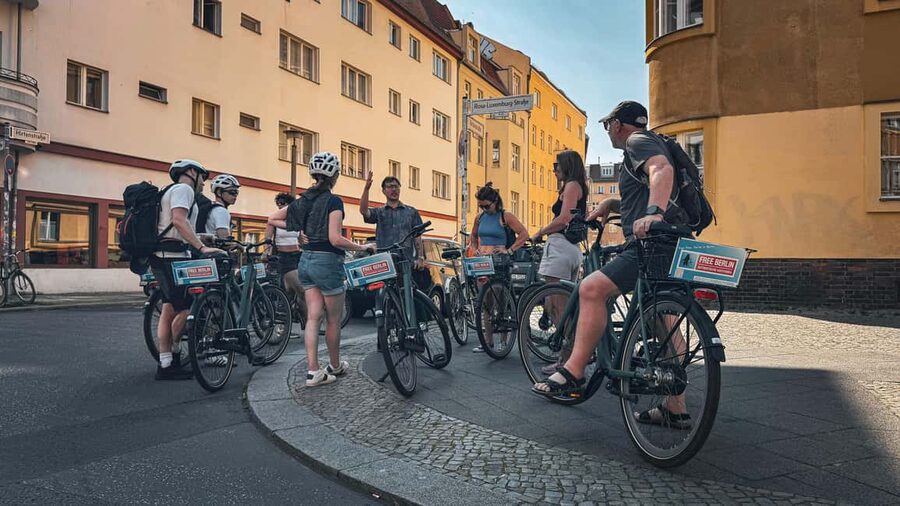
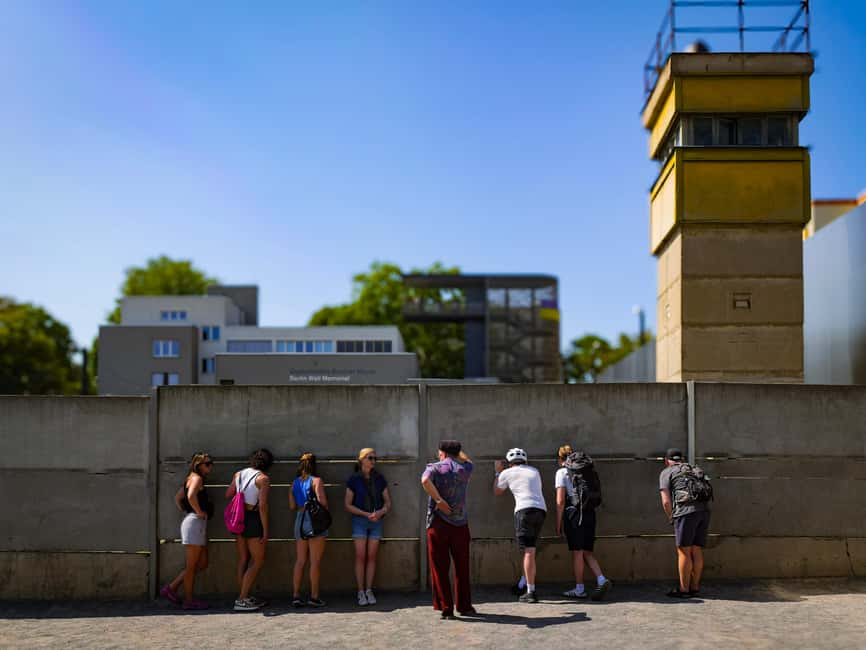
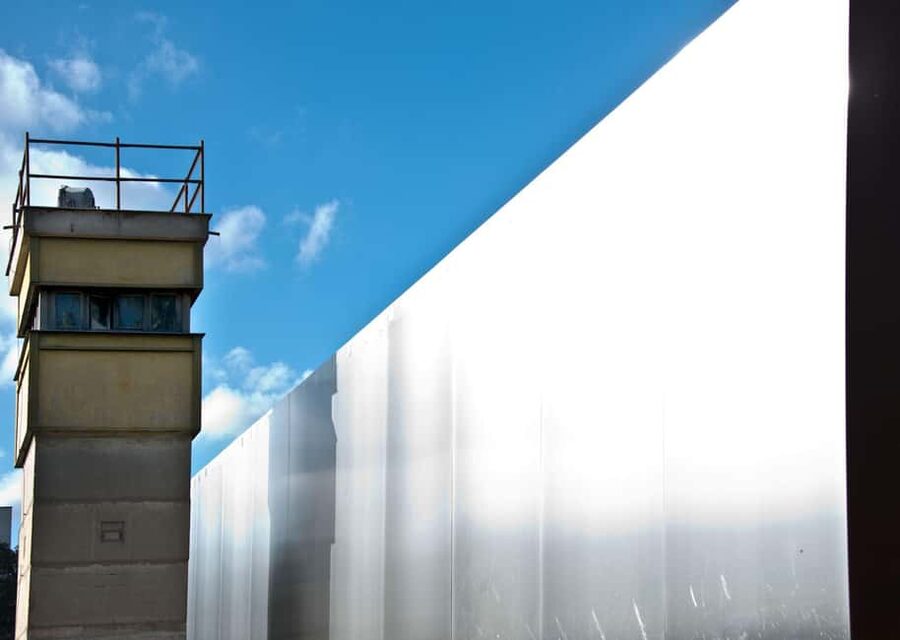
Bernauer Straße is one of the strongest parts of the route. The Berlin Wall Memorial preserves a stretch of the former border area and helps you understand how the barrier affected homes, streets, churches, and families.
By bike, you can follow more of the old line than you would on foot in a short visit. The route also reaches Ruppiner Straße, Mauerpark, and sections of the Berliner Mauerweg, the path that follows the former Wall. These places show how the borderland has been reused. Formerly restricted ground is now linked to parks, paths, and everyday city life.
The guide explains daily life in the divided city, along with escape attempts and the controls that shaped movement between East and West Berlin. One especially useful element is the use of historic comparisons. The guide may show you how a site looked during the Wall era beside what you see today.
Mauerpark can feel very different from the grim border zone it once formed. That contrast is part of the lesson. Berlin did not erase its past, but it has allowed many former border spaces to become ordinary public places. The ride makes that change visible.
Behmstraßenbrücke and the view along the old border
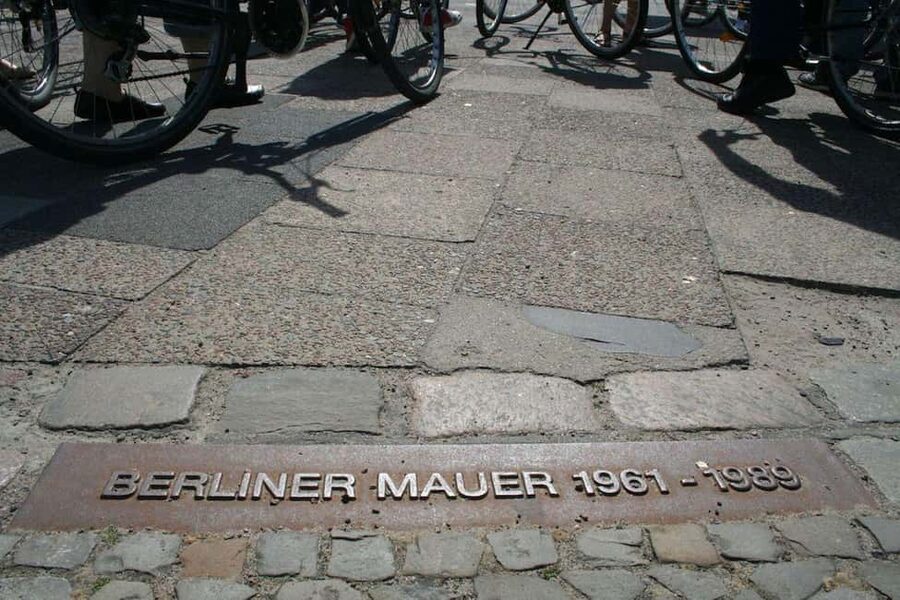
At Behmstraßenbrücke, the tour continues tracing the former Wall route. Bridges and elevated crossings matter here because they help you picture how the border cut through the city and how people moved around it.
You will hear about escape routes, border installations, and ghost stations. Ghost stations were underground stops that trains passed through without allowing East Berlin passengers to get off. These details help turn a map of divided Berlin into a story about daily inconvenience, fear, and restricted movement.
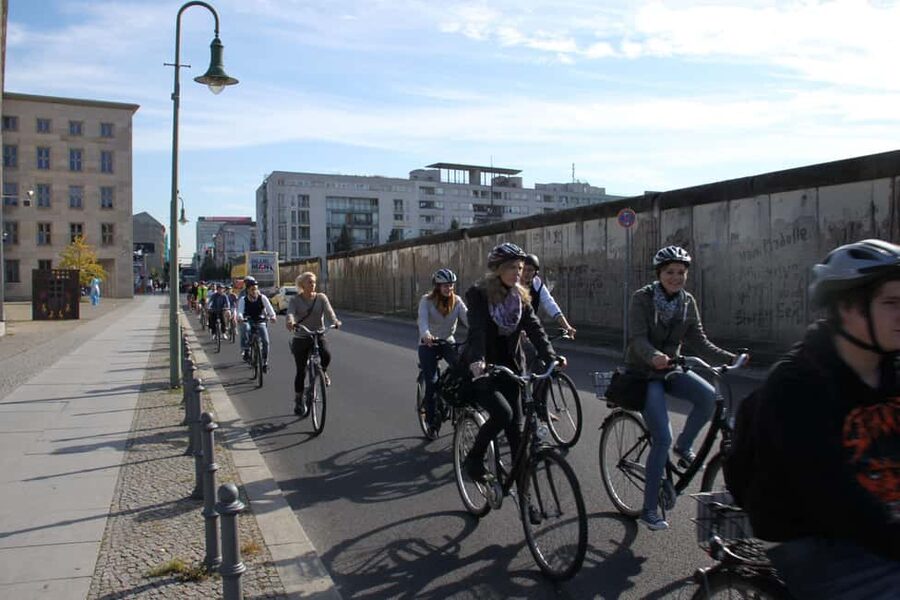
The cycling format works well for this section. You are not simply standing beside one preserved Wall panel. You are moving through the spaces between sites, which gives you a better feel for the scale of the former border. At the same time, pay attention to traffic. The route is mainly quiet, but one rider specifically noted a couple of busy roads, and the guide must keep the group together through those sections.
More bike tours around Berlin:
- Berlin Highlights 3-Hour Bike Tour
★ 5.0 · 948 reviews - Berlin City Bike Tour with Beer Garden Stop
★ 5.0 · 917 reviews - Berlin Highlights: 3-Hour Bike Tour
★ 4.9 · 809 reviews - Berlin Highlights Sightseeing Bike Tour in Small Groups
★ 5.0 · 652 reviews
Humboldthain’s Flak Tower and Berlin’s bunkers
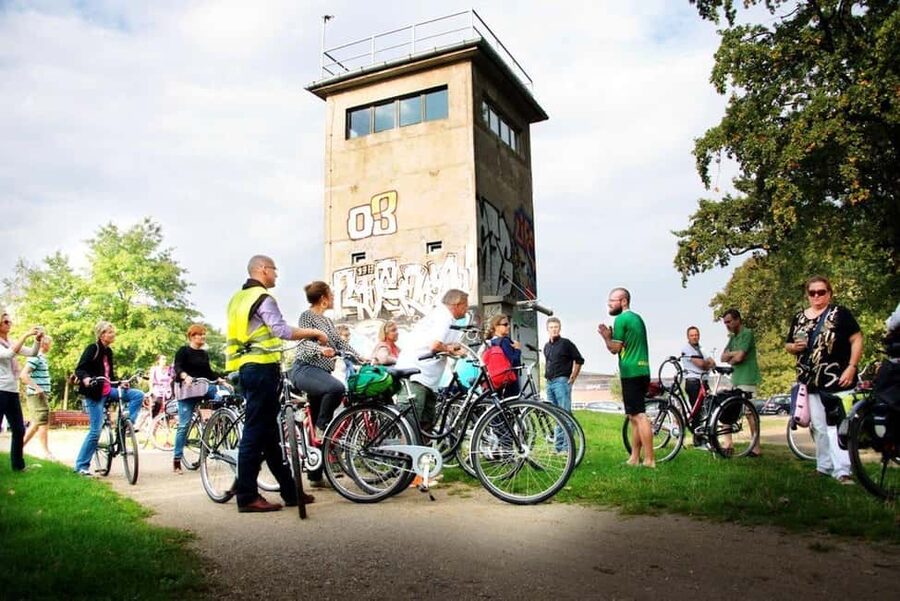
Flak Tower III in Volkspark Humboldthain is one of the more unusual stops. The remains point to Berlin’s wartime defensive structures and offer a different kind of historical evidence from the Wall memorials.
The tour also includes discussion of underground bunkers and the enormous bunker remains connected with Berlin’s Nazi period. You do not simply hear about famous leaders and military decisions. You see the heavy physical traces left behind in parks, streets, and buildings.
This is where the guide’s storytelling matters most. A well-run explanation can connect the concrete remains to the Nazi vision of Germania, the never-realized plan to rebuild Berlin as a monumental capital. The plan was tied to a grand political image, but the ride also shows the practical and human costs of the regime that pursued it.
The stop is listed as both a photo stop and a guided visit. Bring a camera if you want a record of the site, but expect the guide to spend more time explaining what remains and why it matters than staging a long photo session.
Wall fragments, Günter Litfin, and Invalids’ Cemetery
The route returns to the Wall at another preserved piece, then reaches the Günter Litfin Memorial. Günter Litfin was the first person killed while trying to cross the Berlin Wall, and this stop gives the border story a clear human focus.
It is one thing to hear that people attempted escapes. It is another to stand at a place connected with a specific death and consider what the border meant for an individual. The guide can place the event in the wider pattern of escape attempts, border enforcement, and the dangers faced by people trying to leave East Berlin.
Invalids’ Cemetery adds another layer. It is a historic burial ground, and its position along the former border makes it part of the city’s changing geography. The tour does not treat Berlin as a collection of isolated attractions. It shows how cemeteries, roads, bridges, parks, and government areas were all affected by the Wall.
The short stop format can feel fast here. If you want a long pause at memorials, you may need a private tour or should plan to return independently. On a standard three-hour ride, the benefit is breadth: you see more locations and learn how they connect.
Boros Bunker and the Nazi plan for Germania
The Boros Bunker, also known as the Boros Collection, brings you back into central Berlin and shows how old structures have been given new uses. The tour does not promise an interior visit to the private art collection, so think of this as an exterior and historical stop within the larger route.
The bunker is a useful example of Berlin’s habit of building new life around difficult remains. You see how a wartime structure can be preserved, adapted, or placed within a modern neighborhood without losing its connection to the past.
Nearby discussions of Germania explain Hitler’s intended reshaping of Berlin. The plan was never completed, but its scale reveals how the Nazi leadership imagined architecture as a tool of power. Your guide can point out where parts of this proposed city were meant to stand and explain why the project failed to become the capital it promised.
This section is best for people who want more than a basic Wall tour. The Cold War is the main thread, but the Nazi-era sites keep the ride from becoming a single-period history lesson.
The Holocaust Memorial and Hitler’s bunker site
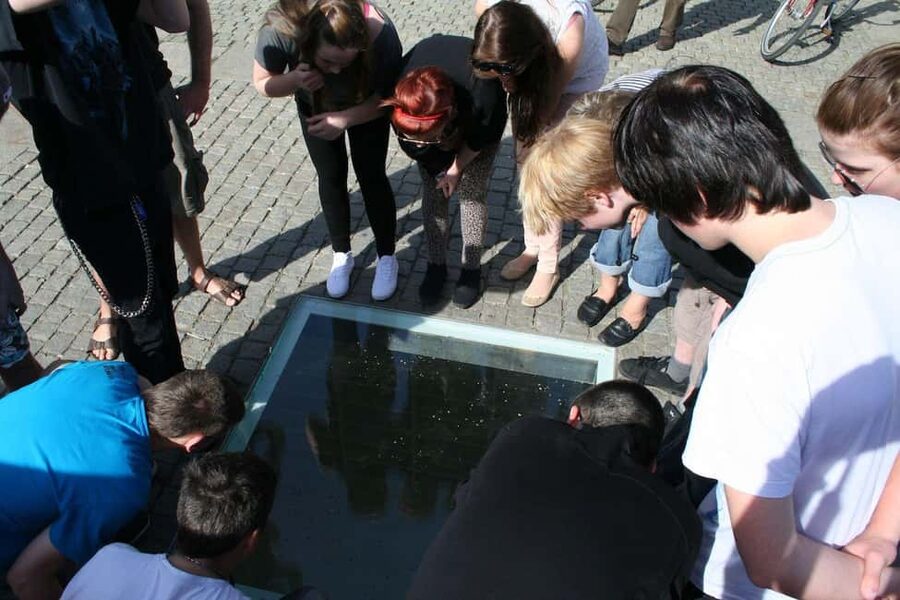
The Holocaust Memorial is among the most recognizable stops on the route. The concrete blocks invite a quiet, personal response, and the guide provides context without turning the visit into a long formal ceremony.
The next stop is Hitler’s bunker location. The bunker itself is not open to visitors. The site is associated with the underground headquarters where Hitler spent his final days, but the structure was destroyed and the location is not accessible as an intact historic interior. You see the area and learn why the bunker is no longer available for public entry.
This is an important point for booking expectations. If you want to walk through a preserved Nazi bunker, this tour does not provide that. Instead, it explains the site, its destruction, and the decision not to turn it into a shrine or conventional attraction.
A past participant was disappointed at not seeing the bunker site, so it is worth confirming the exact route with your guide at the start if this stop matters to you. The published route includes Hitler’s bunker and the guide discusses it, but conditions and route choices can vary because guides have freedom to adjust the ride.
The Justice Ministry and the ride back
The Bundesministerium der Justiz, or Federal Ministry of Justice, is the final listed stop before you return to Poststraße 11. It adds a present-day government connection to a tour centered on dictatorship, war, and division.
That ending works well because Berlin’s story did not stop in 1945 or 1989. The city’s current institutions occupy spaces shaped by earlier regimes, and the ride leaves you with a sense of how the past remains part of ordinary civic life.
The route then returns to the Free Berlin office. Because the ride begins and ends in central Berlin, you can continue sightseeing without arranging a separate transfer. The full experience lasts three hours, including stops, explanations, and cycling.
What the $41 price buys you
At $41 per person, this is a fair price for a guided three-hour outing. You are paying for the bicycle, guide, route planning, local interpretation, and a way to connect sites that would take much longer to find and reach alone.
The value is strongest if you want both coverage and context. You could walk to the Berlin Wall Memorial, visit the Holocaust Memorial, and find the bunker site independently, but you would miss much of the connective tissue: ghost stations, border paths, escape stories, Germania plans, and the quieter remnants around Humboldthain.
The price is less compelling if you already know Berlin’s 20th-century sites well and prefer long museum visits. The standard route gives roughly five minutes at many stops, so it favors movement and conversation over extensive time at one location.
A private tour costs more than the advertised per-person price, but it may be worthwhile for families, history enthusiasts, or groups with a specific focus. Guides have adjusted routes and explanations around questions and prior knowledge, which can make a private booking feel more personal.
Bikes, weather, and physical effort
You do not need racing-bike fitness for this outing. The pace is described as manageable, and one rider who was not used to cycling found it enjoyable rather than excessively hard. Still, the distance is about 15 kilometers, and you will be outdoors for three hours.
A sunny day is ideal. One rider noted that some paths can become slippery when wet, while another group completed the ride in poor weather with help from an excellent guide. Waterproof ponchos are available, but you should still dress for the forecast.
Winter requires proper clothing. Bring warm layers and gloves, especially because cycling exposes you to wind even when walking around the city would feel comfortable.
The ride is family-friendly, and infant seats can be provided on request. Children need to be comfortable cycling for the duration or using the arranged seat. If anyone in your group has concerns about traffic, tell the guide before setting off. Most of the route uses quiet streets and cycle paths, but the ride is not completely separated from city traffic.
How the guiding shapes the experience
The strongest feature is the guiding. Carl has been praised for making history feel alive while leading groups through quieter corners. Juliet has been singled out for answering questions and adding detail. Jake has been described as funny and engaging, while Fabian has been noted for clear answers and compelling stories.
Other guides bring different strengths. Bjorn has connected Berlin’s past with personal family experience, and former East Berlin guides have helped explain what daily life felt like before reunification. That personal angle can add something a textbook cannot, especially when discussing movement restrictions, divided families, and the changes after 1989.
The operator allows guides to shape the route around the group, current conditions, and local events. That means no two rides need to be identical. It also means you should tell the guide what interests you: Wall escapes, Nazi architecture, East German daily life, bunkers, Jewish Berlin, or modern urban change.
Should you book the Berlin Wall and Third Reich Bike Tour?
Book this tour if you want to cover a wide stretch of Berlin’s 20th-century story in one active morning or afternoon. It suits first-time visitors, families with older children, history fans, and anyone who learns better by seeing places in sequence rather than sitting in a museum.
I would choose it early in a Berlin visit. The ride gives you a useful map of the city’s historical zones, and you can return later to the Wall Memorial, Holocaust Memorial, or museums that deserve more time.
Skip it if cycling 15 kilometers sounds tiring, if rainy weather would spoil your day, or if you want long, quiet visits at each memorial. For most people who can manage the distance, the $41 fee buys a practical route, solid equipment, and access to stories you might miss on your own. The chance to request a private or small-group format makes it even more useful when your group has focused questions or different levels of historical knowledge.
FAQ
How long is the Berlin Wall and Third Reich bike tour?
The tour lasts three hours and covers about 15 kilometers by bike.
Where does the tour start?
You meet at Free Berlin Bike Tours and Rental in the courtyard entrance at Poststraße 11. Look for the FREE BERLIN sign. The office is in Nikolaiviertel, about five minutes from the TV Tower.
What languages are available?
The tour is available in English, German, and French.
Is bike rental included?
Yes. The rental bike is included, and the bikes have baskets. Helmets are available if requested.
Does the tour operate in rainy weather?
Waterproof ponchos are available in case of rain. You should still dress for the weather, since the tour takes place outdoors and some paths may become slippery when wet.
Can children join the tour?
Yes. The tour is family-friendly. Infant seats can be provided on request.
Can I book a private tour?
Yes. Private tours are available, with the option to choose a starting time and customize the route around your interests.
New rides added around Berlin
- From Berlin: Gardens & Palaces of Potsdam Bike Tour★ 5.0 · 61 reviews
- Berlin Wall History Small Group Cycling Tour★ 4.9 · 152 reviews
- Berlin: Top secret bike tour and hidden gems of the city★ 4.8 · 411 reviews
- Berlin: Small Group Bike Tour Through City Center★ 4.9 · 64 reviews
- Berlin: From East to West & Wall Tour by Bike with a Guide★ 4.8 · 171 reviews
- Berlin: Green City Guided Bike Tour★ 4.6 · 29 reviews
- Berlin: Experience the Alternative Kreuzberg on a Bike Tour★ 4.8 · 395 reviews
- Berlin: Illuminated Berlin by Bike Taxi★ 4.8 · 162 reviews
Berlin Bike Tours, compared.
Sights and Highlights Bike Tour with a Local Guide
Read our review →
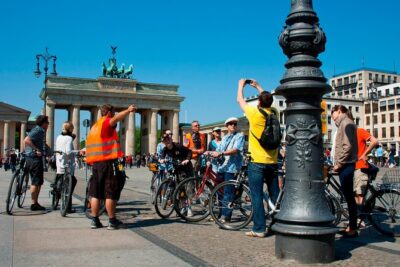
Berlin Highlights Sightseeing Bike Tour in Small Groups
Read our review →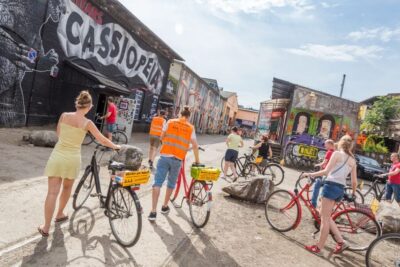
Alternative Bike Tour of Kreuzberg & Friedrichshain
Read our review →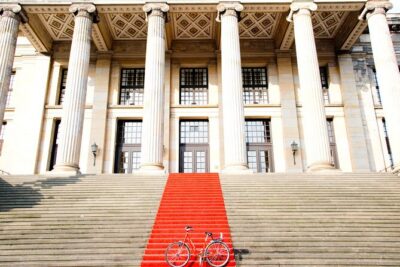
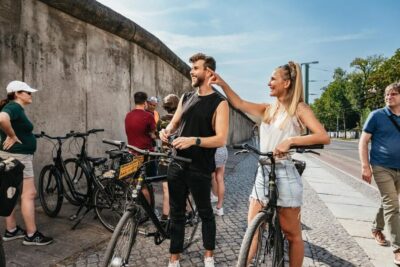
Cold War & Berlin Wall History Guided Bike Tour
Read our review →Browse the lists this tour appears in