
Review · BERLIN
Berlin: Green City Guided Bike Tour
Berlin’s green side is easy to miss from a tour bus. This three-hour bike ride takes you north from Kulturbrauerei into parks, former industrial spaces, and neighborhoods where Berlin’s past and future sit side by side. You’ll follow the Panke River, see a WWII bunker at Humboldthain, and get a fresh view of the city’s Wall-era story.
I like the relaxed pace and the chance to see places that are not standard postcard stops. I also like the practical touch of a large bicycle fleet, with baskets, sunscreen, trouser clips, gloves, and rain ponchos available. The main caution is that the route may feel quiet if you want a fast-moving tour packed with major sights and dramatic history.
Key points to know
- A green route through northern Berlin: Ride from Kulturbrauerei toward Gesundbrunnen and Pankow along parks, waterways, and former industrial areas.
- Mauerpark with local context: See a popular community space while learning how Berlin’s open land, housing, and culture continue to compete for room.
- Humboldthain’s WWII bunker: Stop at a park with a major wartime remnant and broad city views.
- A relaxed, photo-friendly pace: The ride includes regular stops rather than a race through the city.
- A useful bike setup: Choose from a large fleet, with baskets and safety items available.
- Best for adults and older children: The tour is not suitable for children under 10 or people over 95.
Starting at Kulturbrauerei in Prenzlauer Berg
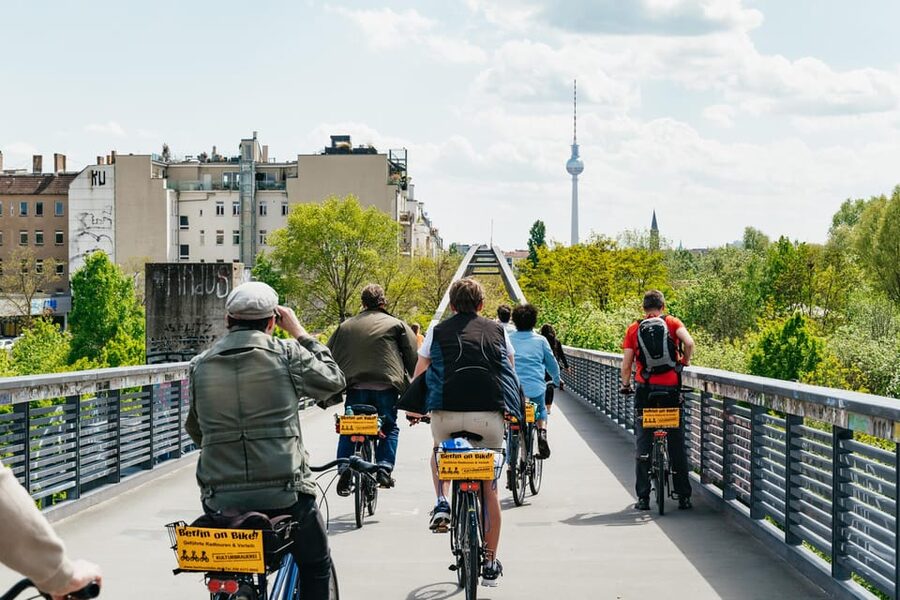
The tour begins at Kulturbrauerei, a former brewery complex in Prenzlauer Berg that now serves as a cultural center. The meeting point is at Knaackstraße 97, near Danziger Straße. Look for the yellow signs marked Berlin on Bike.
Getting there is simple. Eberswalder Straße is the nearest metro station, only three stops from Alexanderplatz. That makes this a handy morning or afternoon activity if you are staying near central Berlin and want to avoid a long transfer.
Arrive ready to ride, not dressed for a formal sightseeing outing. Comfortable clothes and shoes are the sensible choice. You can select the bicycle that fits you best from a large fleet, which matters more than it sounds on a three-hour route. A bike that feels wrong in the first ten minutes can make the final hour tiresome.
Bikes have baskets for a lightweight bag. Helmets and gloves are available on request, and trouser clips can help keep loose clothing away from the chain. Sunscreen is provided, and rain ponchos are available if the weather turns sour. These are small details, but they make the ride easier to manage.
The guides speak German and Dutch. The guide’s role here is not just to point out buildings. The focus is on how Berliners use public space, how former industrial sites find new lives, and how green projects fit into a city under pressure from new development.
More guided departures in Berlin:
- Berlin: Sights and Highlights Bike Tour with a Local Guide
★ 4.8 · 2,698 reviews - Berlin: The Wall and Third Reich Guided Bike Tour
★ 4.8 · 578 reviews - Berlin: Guided Bike Tour to Explore the Highlights
★ 4.8 · 506 reviews
Following the Panke toward Gesundbrunnen
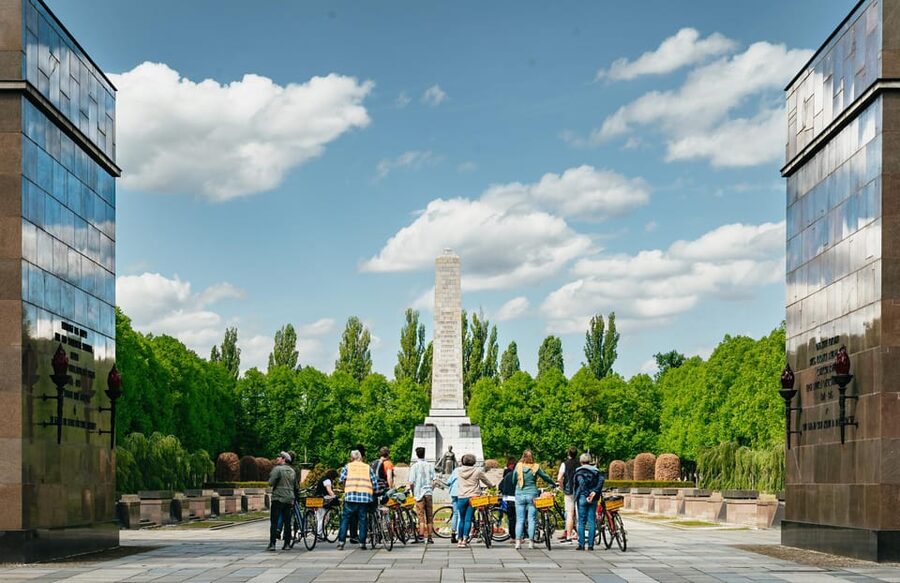
From Kulturbrauerei, the route heads northeast toward Gesundbrunnen. This is a useful change of pace from central Berlin, where the grand avenues and famous monuments can make the city seem more polished and orderly than it really is.
The ride follows the Panke River for part of the way. The Panke is not a great sweeping waterway, but that is part of the point. Its banks show the kind of modest urban nature that can change how a neighborhood feels. Small waterways, paths, planted edges, and open spaces give residents somewhere to walk and pause without leaving the city.
You will also hear about the river’s renaturation. That means efforts to restore a more natural setting rather than treating the water as a hard-edged drainage channel. It is a practical example of Berlin’s wider question: how can a crowded city add nature without giving up land needed for homes, work, or culture?
I like this section because it gives the ride a clear subject. You are not simply pedaling from one park to another. You are seeing how Berlin tries to repair older urban spaces and make them more useful today.
The drawback is that this part of the tour may not satisfy you if you want a nonstop list of famous monuments. The value lies in the explanation and the changing feel of the city. You need to enjoy ordinary streets, local public spaces, and urban planning issues to get the most from it.
Mauerpark and the changing face of Berlin
Mauerpark is one of the route’s most recognizable stops. The name refers to the former Wall strip that once divided Berlin. Today, the area is a popular community space, and its use says a lot about the city’s transition from division to public recreation and informal culture.
The tour uses Mauerpark to connect the physical remains of the Wall with the larger story around it. You will not only hear about where the barrier once ran. You will consider what happens after a border disappears, when valuable open land becomes attractive for parks, housing, art, and commercial development.
This is also where the discussion of gentrification becomes especially useful. Berlin’s creative districts have drawn new residents and investment, but that success can make housing harder to afford. Public parks and cultural spaces need protection, while the city also needs more homes. The tour treats this as an ongoing balance rather than a neat historical lesson.
That approach gives Mauerpark more meaning than a quick photo stop. You can take pictures, but you also get a way to read the neighborhood around it. Look for the contrast between informal outdoor culture, new construction, and the older urban fabric.
Do not expect a long stop devoted only to Wall memorials. If your main goal is a detailed political history of the Wall, a dedicated walking tour may be a better match. Here, the Wall is one part of a wider conversation about land, memory, and city life.
Humboldthain’s bunker and high views
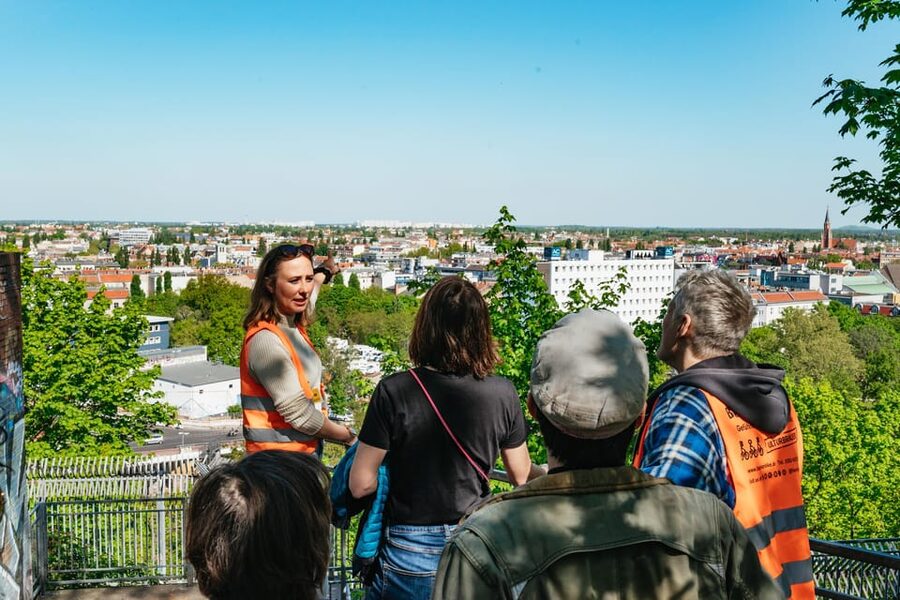
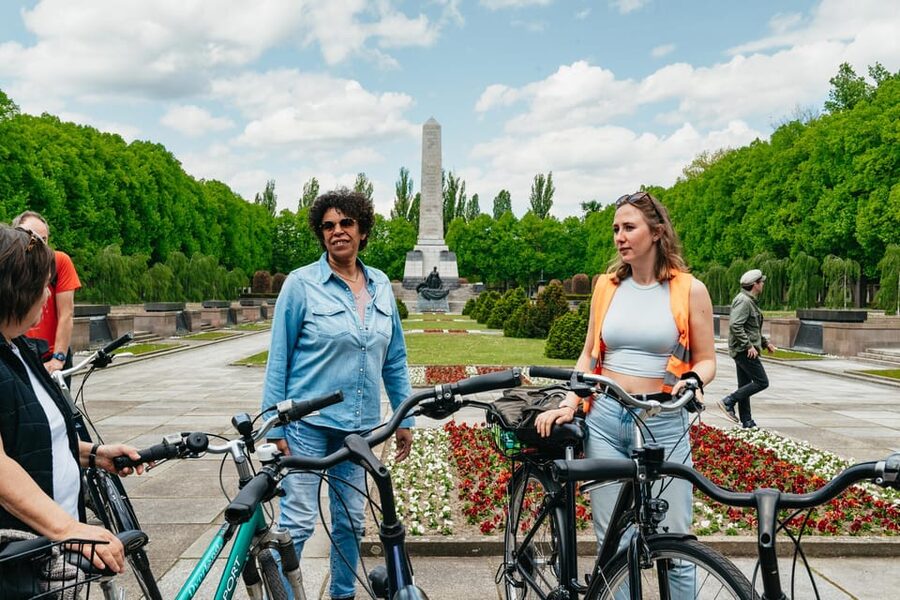
The route continues to Volkspark Humboldthain, one of the more striking green spaces on the ride. Its appeal comes from the mix of parkland, wartime remains, and views across Berlin.
The WWII bunker is the important historical feature. It is a solid reminder that Berlin’s parks are not always peaceful by origin. Much of the city’s open space carries traces of conflict, reconstruction, and later attempts to make difficult places useful again.
You may find this stop more memorable than a standard garden visit because the park does not hide the city’s harder history. The bunker gives the guide a chance to explain how war reshaped Berlin and how remnants of that period remain part of everyday surroundings.
The views are another reason to welcome the stop. After riding through streets and along the river, a higher vantage point helps you understand the city’s scale. It also gives you a good place for photographs, especially if you want something different from the usual Brandenburg Gate image.
The pace remains relaxed, so the stop should not feel like a quick glance while trying to keep up with a group. Still, remember that this is a bike tour, not a full bunker visit or museum program. The historical context is part of the route, but the bicycle remains the main way you experience the city.
More bike tours around Berlin:
- Berlin Highlights 3-Hour Bike Tour
★ 5.0 · 948 reviews - Berlin City Bike Tour with Beer Garden Stop
★ 5.0 · 917 reviews - Berlin Highlights: 3-Hour Bike Tour
★ 4.9 · 809 reviews - Berlin Highlights Sightseeing Bike Tour in Small Groups
★ 5.0 · 652 reviews
Bürgerpark Pankow and Schönholzer Heide
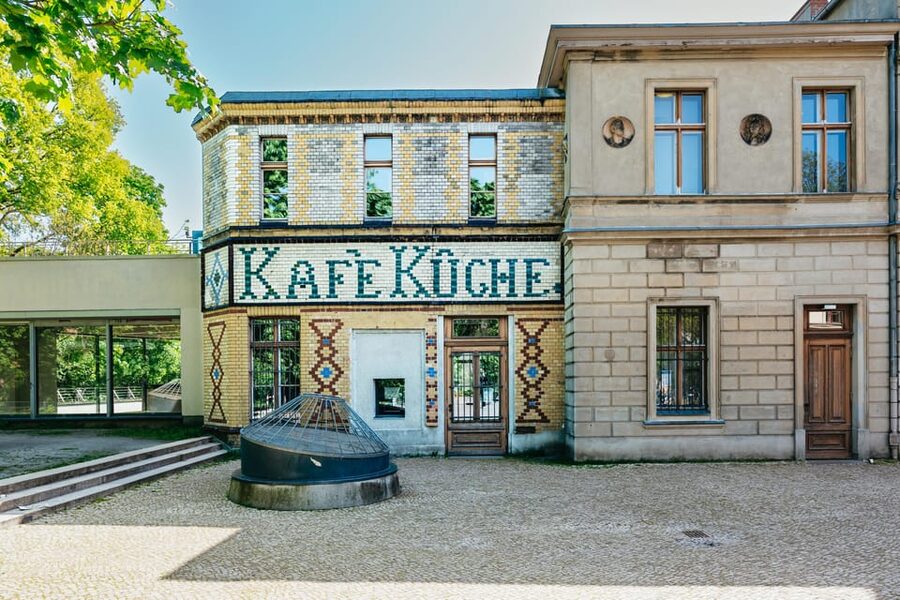
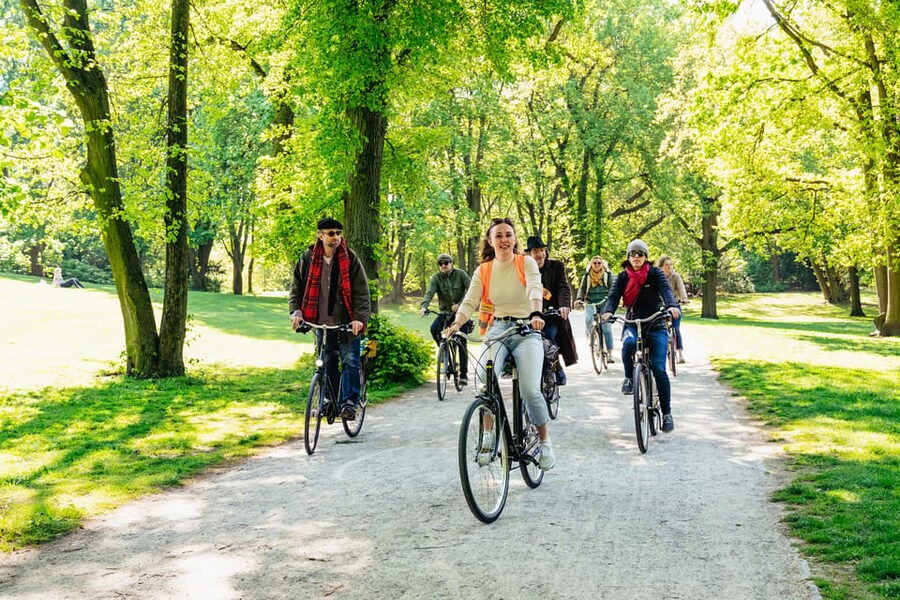
The ride then moves farther into Pankow, with stops at Bürgerpark Pankow and Schönholzer Heide. These spaces offer a calmer side of Berlin and show how much open land exists beyond the central districts.
Bürgerpark Pankow is a handsome public park where you can slow down and enjoy the contrast with the denser streets near Prenzlauer Berg. The route gives you room to notice how residents use these spaces for a break from traffic and buildings.
Schönholzer Heide adds another stretch of nature to the journey. Together, these parks make the tour feel less like a city-center sightseeing circuit and more like a ride through Berlin’s northern green belt.
This portion will suit you if you like a tour that leaves room to look around. The guide can point out green oases and explain how public land fits into the city’s growth. You will also have more chances to take photos without stopping at every famous building.
There is a tradeoff. The farther the route moves into parks and residential areas, the fewer iconic Berlin sights you will see. The reward is a better sense of how the city works away from the central tourist zone. I would choose this route for texture and context, not for a greatest-hits checklist.
Creative spaces, old factories, and Berlin’s next chapter
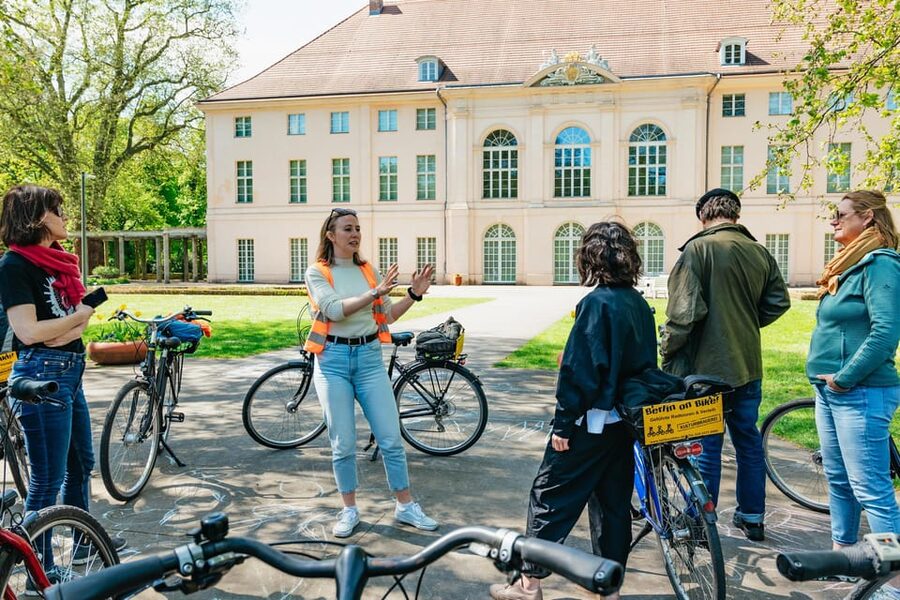
A strong part of the tour is its attention to former factories and creative urban spaces. Berlin has many buildings that no longer serve their original industrial purpose but have found new cultural uses.
The point is not simply that an old factory looks interesting. These places show how Berlin has often reused what it already has rather than starting over from scratch. Creative groups, cultural projects, and public uses can bring new life to worn buildings, but they can also help make nearby areas more desirable and expensive.
That is why the tour’s focus on gentrification fits the route. You will be looking at the same spaces from two angles. They may offer culture, jobs, and better public areas, yet the changes can also put pressure on long-time residents and independent businesses.
I appreciate that the ride connects sustainability with social questions. A green city is not only one with more trees and restored rivers. It also needs room for affordable homes, local culture, and public access. The route gives you a grounded look at those competing needs without turning the ride into a classroom lecture.
The exact balance will depend on your guide and group. The guides speak German and Dutch, and the experience is built around conversation and local interpretation. If the group is small, the route can feel more personal. One recent booking was for only two participants and was adjusted closely to their interests, which suggests that a small group can make the experience especially flexible. That is not guaranteed, but it is worth asking questions during the ride.
What the $41 price buys you
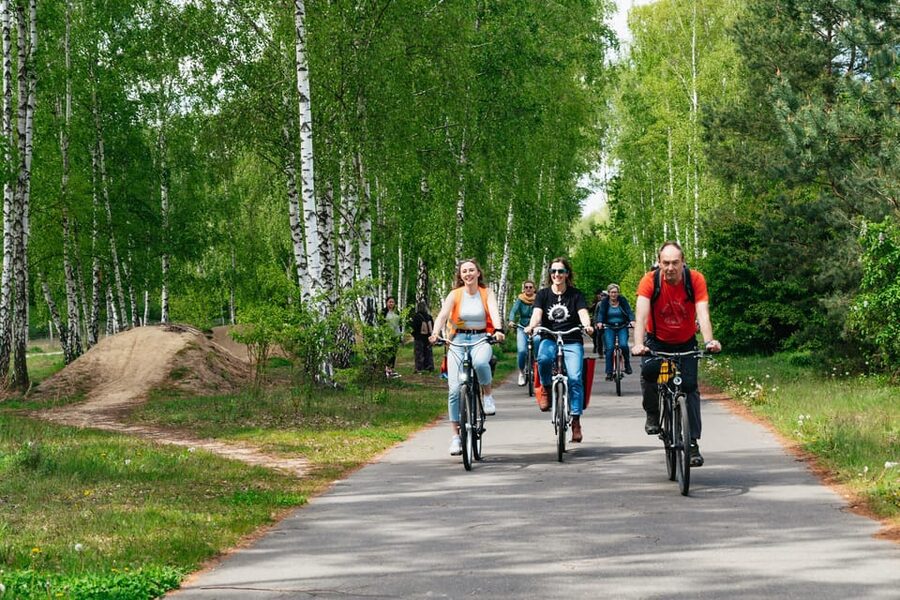
At $41 per person, this is reasonably priced for a three-hour guided ride with a bicycle included. You are paying for more than bike rental, since the guide adds context about Berlin’s parks, public space, history, architecture, urban art, and sustainability.
The value is strongest if you would otherwise rent a bicycle and ride without knowing where to go. You get a planned route, a suitable bike, a guide, and basic weather and riding extras. The route also reaches places you might not choose on your own, especially along the Panke and in the northern parks.
It is less compelling if you already know northern Berlin well or mainly want to cover central landmarks quickly. A self-guided ride could cost less, especially if you already have a bicycle. In that case, the main reason to book is the local explanation and the route planning.
The 210-minute duration is long enough to feel substantial but not so long that it takes over your entire day. Because the pace is relaxed, you should have time to see the surroundings and take photographs. You will still be riding for several hours, so choose this over a walking tour only if you are comfortable spending that time on a bicycle.
Free cancellation is available up to 24 hours before the start, and you can reserve now and pay later. Those terms are useful if your Berlin schedule is still shifting.
Who should book this bike tour
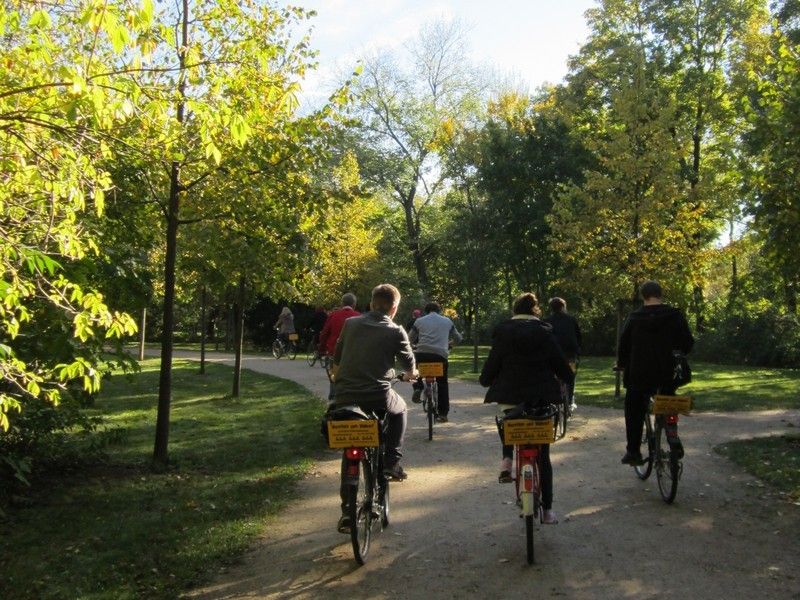
I would recommend the tour to you if you want to see Berlin through parks, waterways, former industrial sites, and local public spaces. It suits repeat visitors especially well, but first-time visitors can also use it to understand parts of the city that a central walking route does not cover.
It is a good choice for:
- Adults and children aged 10 or older who can manage a three-hour ride
- Visitors interested in urban planning, sustainability, public art, and social change
- People who prefer a relaxed route with regular stops
- Anyone who wants a different angle on the Berlin Wall and its surroundings
- Visitors who value a guide’s local perspective more than a long list of major monuments
I would be cautious if you want a fast ride, a tightly packed history tour, or only the most famous sights. One booking described the experience as pleasant but somewhat boring compared with other European bike tours, so the slower, reflective style will not suit every personality.
The tour is not suitable for children under 10 or people over 95. Alcohol and drugs are not allowed. Comfortable clothes and shoes are essential, and a lightweight bag works best because the bike baskets are not designed for heavy luggage.
Should you book the Green City Guided Bike Tour?
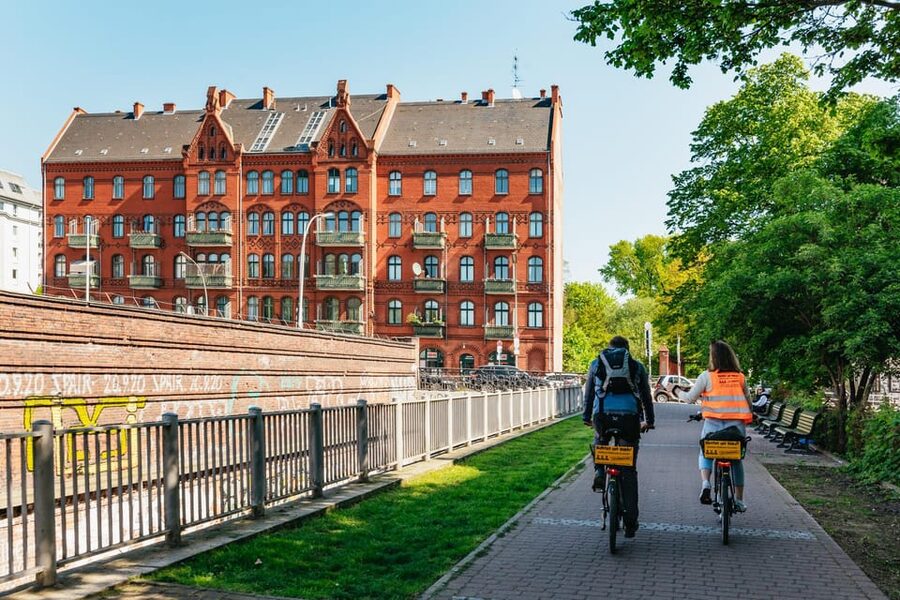
Book it if you want to understand how Berlin’s nature, history, and cultural life overlap. The Panke, Mauerpark, Humboldthain, Bürgerpark Pankow, and Schönholzer Heide create a varied route, while the talks about river restoration, old factories, and housing pressure give the ride a clear purpose.
Skip it if your ideal bike tour is a rapid tour of central monuments. This experience is quieter and more local in character. Its best moments come from seeing how Berlin reuses space and debates what kind of city it wants to become.
For $41, the tour offers solid value when you count the bicycle, three hours of guiding, equipment options, and a route that would take effort to plan alone. Choose a comfortable bike at the start, bring light luggage, and expect a thoughtful ride rather than a highlight sprint.
FAQ
Where does the Berlin Green City Guided Bike Tour start?
It starts at the Kulturbrauerei in Prenzlauer Berg. The best entrance is at Knaackstraße 97, near the corner of Danziger Straße. Follow the yellow Berlin on Bike signs.
How do I reach the meeting point?
The nearest metro station is Eberswalder Straße. It is three stops from Alexanderplatz.
How long does the tour last?
The tour lasts 210 minutes, or three and a half hours.
What languages are available?
The live guide speaks German and Dutch.
Is a bicycle included?
Yes. A reliable bicycle is included, and you can choose a bicycle that fits you from a large fleet. Bikes have baskets for lightweight bags.
Are helmets and rain gear available?
Helmets and gloves are available on request. Sunscreen and trouser clips are provided, and rain ponchos are available in bad weather.
Who cannot take this tour?
The tour is not suitable for children under 10 or people over 95. Alcohol and drugs are not allowed.
New rides added around Berlin
- From Berlin: Gardens & Palaces of Potsdam Bike Tour★ 5.0 · 61 reviews
- Berlin Wall History Small Group Cycling Tour★ 4.9 · 152 reviews
- Berlin: Top secret bike tour and hidden gems of the city★ 4.8 · 411 reviews
- Berlin: Small Group Bike Tour Through City Center★ 4.9 · 64 reviews
- Berlin: From East to West & Wall Tour by Bike with a Guide★ 4.8 · 171 reviews
- Berlin: Experience the Alternative Kreuzberg on a Bike Tour★ 4.8 · 395 reviews
- Berlin: Illuminated Berlin by Bike Taxi★ 4.8 · 162 reviews
- Berlin: 3-hour bike tour – A journey through time in the capital★ 4.8 · 24 reviews
Berlin Bike Tours, compared.
Sights and Highlights Bike Tour with a Local Guide
Read our review →
Berlin Highlights Sightseeing Bike Tour in Small Groups
Read our review →
Alternative Bike Tour of Kreuzberg & Friedrichshain
Read our review →
Browse the lists this tour appears in