
Review · FRANCE
Strasbourg: Guided Bike Tour with a Local Guide
Strasbourg makes excellent sense from a bicycle seat. In 150 minutes, this guided ride links Petite France, the German-built Neustadt, the cathedral, the European Institutions, and Parc de l’Orangerie without making you retrace the same streets on foot. It is a quick way to understand how this border city fits together.
I especially like the wide historical sweep, from the covered bridges and Vauban Dam to the 19th-century avenues of Neustadt. I also like the local touch: guides such as Katarina, Joshua, Vivienne, and Jean explain the city’s past while pointing out small streets, stork-themed details, parks, and corners you could easily miss alone.
The main consideration is cycling confidence. Most of the route is described as easy and Strasbourg is flat, but weaving around pedestrians in the Old Town can feel tense if you are not comfortable riding in traffic or keeping pace with a group.
Key points to know before you book
- See several sides of Strasbourg in one ride: Petite France, the imperial Neustadt, the cathedral area, and the European Quarter all make the route.
- Expect a history-led tour: Guides explain Strasbourg’s changing French and German identity, architecture, Alsace, and European role.
- The Old Town is not the whole experience: A fair portion reaches the modern European district, which some visitors may find less compelling than medieval sights.
- Regular stops keep the pace manageable: The ride includes time for photos and explanations rather than nonstop cycling.
- Guides work in English, German, or Dutch: Katarina, Joshua, Vivienne, Jean, Barbara, and others have led this experience at different times.
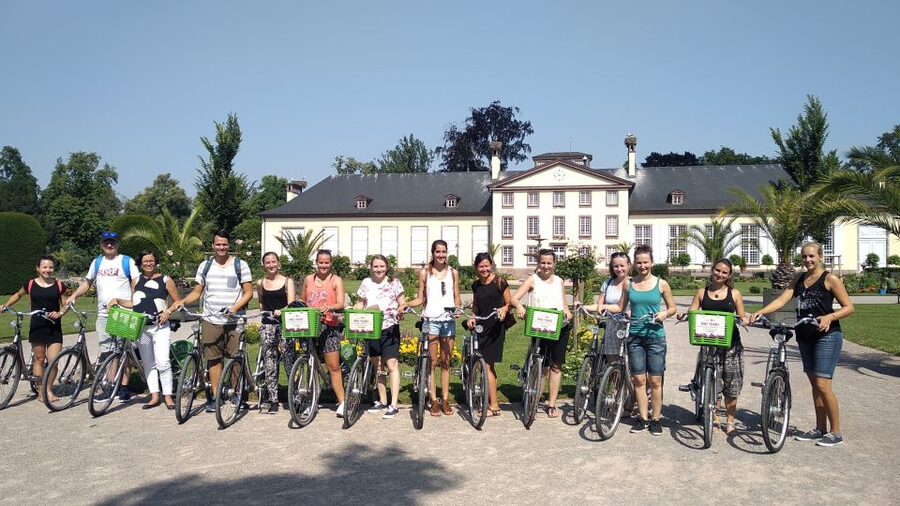
- Bikes are included: Helmets and baskets have been available, though the meeting point depends on the option you choose.
Why a bike is the right way to meet Strasbourg
Strasbourg is compact enough to explore on foot, but a bicycle gives you a broader first look. You can cross from the medieval center to Neustadt, continue to the European Quarter, and reach the Orangerie in the same outing. That range is the real value here.
A walking tour can explain the cathedral and Petite France well, but it usually leaves you with less sense of the city beyond the old center. This ride shows the contrast between narrow historic lanes, formal German-era boulevards, political institutions, parks, and traces of the old fortifications.
The route also helps you get your bearings. After the tour, you will know where the cathedral sits in relation to Place Broglie, Place d’Austerlitz, the European buildings, and Petite France. That makes the rest of a short Strasbourg stay easier to plan.
The ride begins with a short introduction to Strasbourg. That opening matters because the city’s story is not simple French postcard material. Its border position, German imperial chapter, Alsace identity, and role in modern Europe all appear in the streets you ride through.
More guided departures in France:
- Paris Local Districts and Stories Off the Beaten Track Guided Bike Tour
★ 5.0 · 1,264 reviews - Highlights of Paris Bike Tour w/ a Local Guide (English or Dutch)
★ 4.5 · 1,176 reviews - Versailles Bike Tour with Market, Gardens & Guided Palace Tour
★ 5.0 · 1,121 reviews
From Petite France to the covered bridges
The Old Town section brings you into Strasbourg’s most familiar setting: Petite France, with its canals, timber-framed buildings, and compact lanes. This is the part most visitors picture before arrival, and a bicycle lets you cover the area quickly before moving on to less obvious districts.
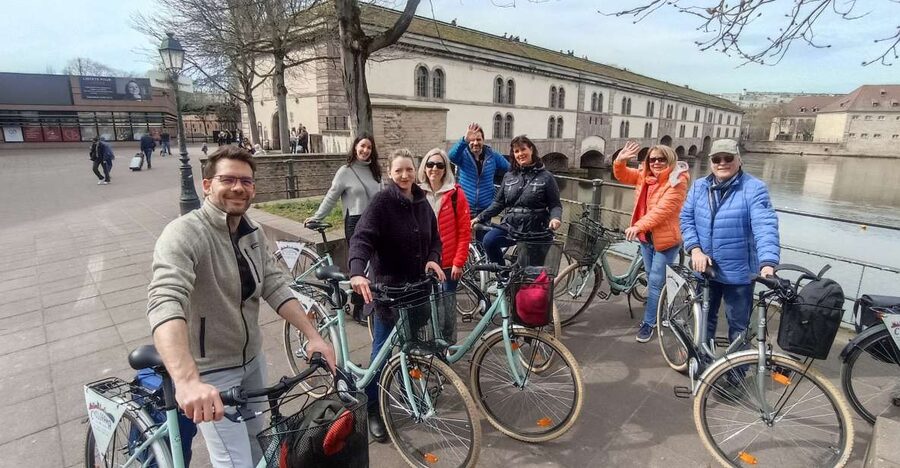
You ride toward the covered bridges and Vauban Dam, two important parts of the city’s defensive story. The bridges are no longer covered in the old practical sense, but the name remains, and the setting gives you a clear view of how water and fortifications shaped Strasbourg.
The Vauban Dam is especially useful as a stop because it connects the city’s beauty with its military past. You are not simply admiring canals and façades. You are seeing how the river approaches helped defend the city.
The route then crosses Pont du Corbeau and passes Gutenberg Place. These crossings bring you back toward the central island and the cathedral district. The streets can be busy with pedestrians, so this is one place where you need to handle your bicycle confidently and follow the guide closely.
The cathedral and the streets around Place Broglie
The arrival in front of Notre Dame de Strasbourg is one of the clearest high points of the ride. The cathedral is hard to miss, but approaching it as part of a moving city route gives you a different sense of scale. You first see it as a landmark guiding your way through the streets, then stop to take in the façade and surrounding square.
The ride continues through smaller streets near the cathedral, including less obvious corners close to Place Saint Etienne. This is where a local guide adds real value. You might pass these streets on your own without understanding why a building, square, or architectural detail matters.
At Place Broglie, you see the Opera House and another side of central Strasbourg. The area shifts away from the tight medieval feel of Petite France toward more formal urban planning. The changing street pattern makes the city’s growth easier to read.
Do not expect an interior visit to the cathedral or Opera House. The experience is a city ride, not a series of admissions. You stop for context, views, and photographs, then continue.
Neustadt and Strasbourg’s German chapter
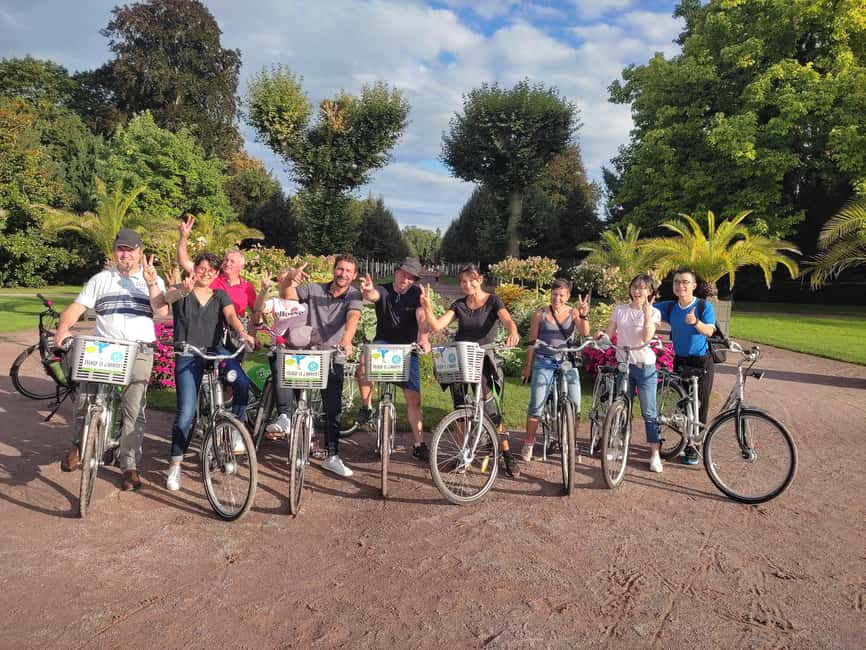
The route then passes through Neustadt, the imperial German district built largely in the late 19th century. This is one of the tour’s most useful features because it shows a side of Strasbourg that can get less attention than Petite France.
Here the streets are broader and the buildings more imposing. The district reflects a period when Strasbourg was part of the German Empire, and its architecture gives you a visual lesson in that political shift. The guide’s explanation helps connect the stone façades and planned avenues to the city’s past.
I would pay close attention during this section if you are interested in architecture or European border history. The Neustadt portion also gives you a break from the tight pedestrian flow of the Old Town, although it may feel less immediately charming if your main goal is medieval Strasbourg.
That is the chief tradeoff in the itinerary. One visitor wanted more Middle Ages sites and less time among newer districts. Another enjoyed seeing areas missed on other tours. Your reaction will depend on whether you want a broad introduction or a concentrated old-center tour.
More bike tours around France:
- Versailles Palace Bike Tour with Market & Marie-Antoinette hamlet
★ 5.0 · 2,680 reviews - Paris: Charming Nooks and Crannies Bike Tour
★ 4.8 · 2,585 reviews - Versailles Full Day Bike Tour with Palace, Gardens, & Picnic
★ 5.0 · 2,217 reviews - From Paris: Versailles Bike Tour w/ Palace, Gardens, & Picnic
★ 5.0 · 2,150 reviews
The European Quarter and Parc de l’Orangerie
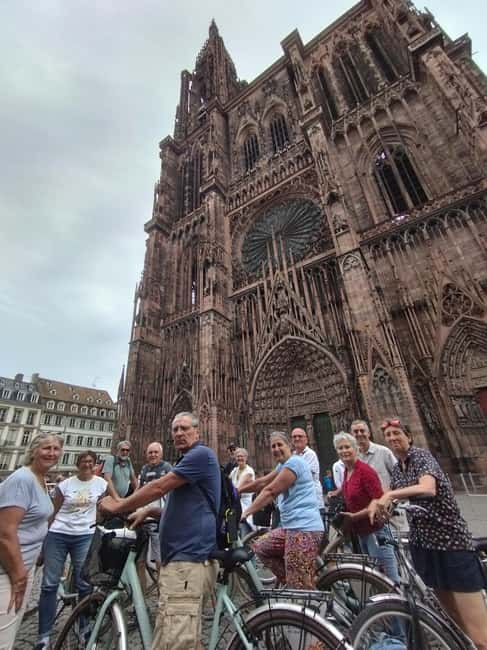
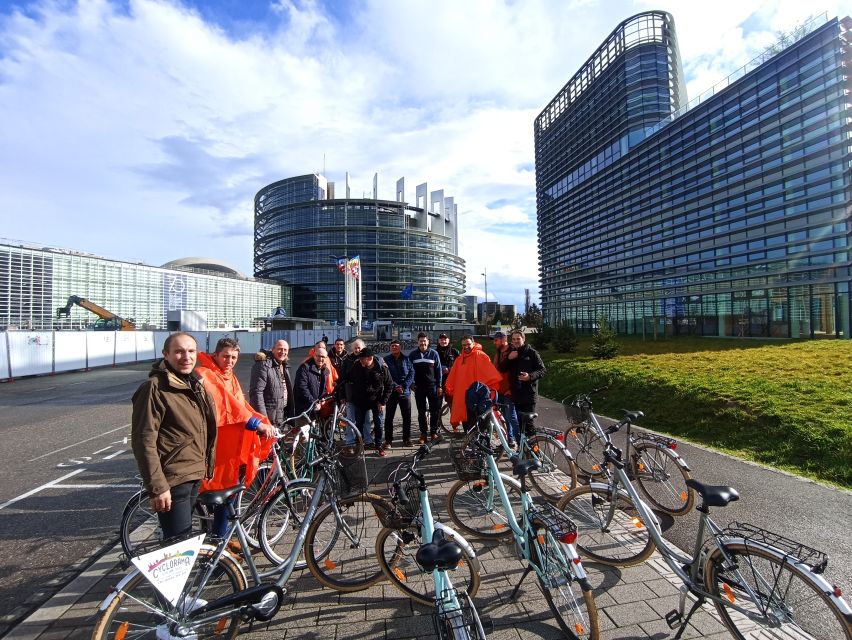
From Neustadt, the bicycle route reaches the heart of Strasbourg’s European district. You see the European Parliament, the Council of Europe, and the European Court for Human Rights. These buildings give Strasbourg a modern political identity that is easy to miss if you stay around the cathedral.
The European Quarter is not a traditional sightseeing area in the same way as Petite France. Its appeal comes from what the institutions represent and from the contrast with the old city. The tour gives you enough context to understand why Strasbourg matters beyond its architecture and Alsatian food.
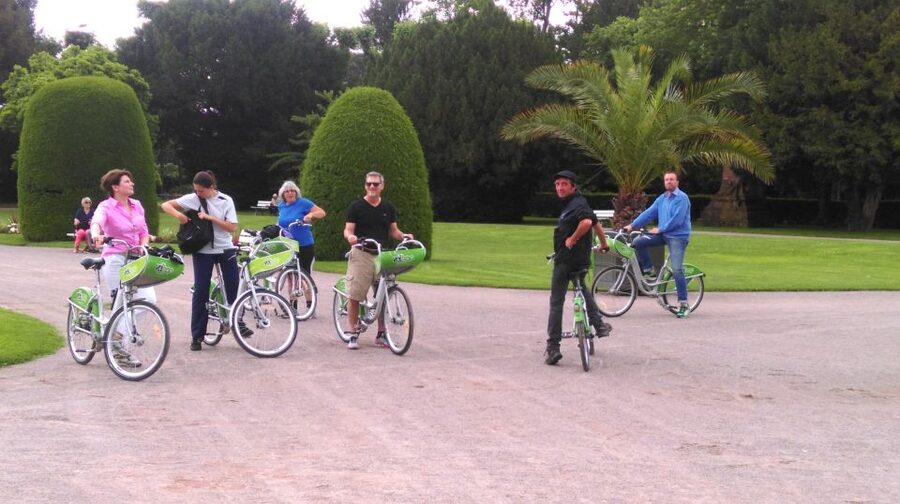
After the institutional buildings, the route reaches Parc de l’Orangerie for a short breath of fresh air. The park softens the pace after the formal European district and provides a pleasant change from streets and traffic. The itinerary lists roughly 10 minutes here, so think of it as a brief stop rather than a long park visit.
A particular detail worth watching for is the stork theme and park area. One guide-led route highlighted Stork Street and the park as a favorite part of the ride. That kind of stop is exactly why a local guide can add more than a basic map route.
Returning through the old city and along the wall
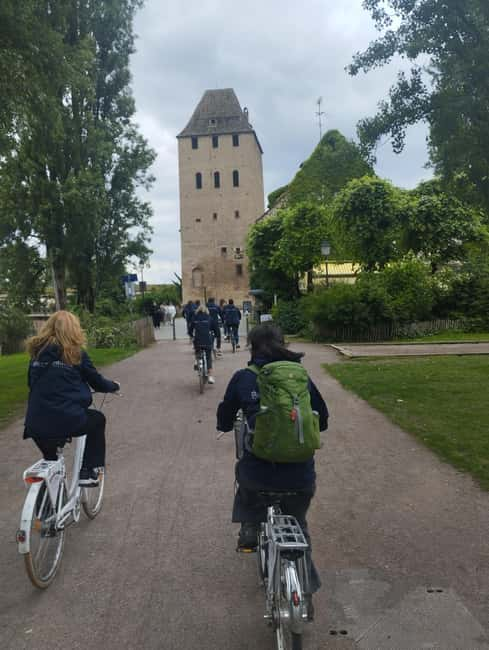
The return toward Place d’Austerlitz brings the ride back to central Strasbourg. Along the way, you cycle beside a section of the city’s 14th-century wall. This is a useful reminder that the city is more than its best-known façades. Small surviving fragments can reveal the shape of earlier Strasbourg better than a polished landmark does.
The return also reconnects the separate parts of the tour. After seeing the German district and European institutions, Petite France feels different. You now have a clearer sense of where the old center sits within the larger city.
The final route includes Petite France again, with drop-off options listed at Café Lové or La Pépinière, depending on the booking option. Since the meeting point can vary, check your confirmation carefully rather than assuming every departure begins at the same café.
Guides, languages, and the feel of the ride
The tour runs with a live guide in English, German, or Dutch. Several guides have led it over time, including Katarina, Katerina, Joshua, Vivienne, Jean, Barbara, Catherine, and Maude. The strongest pattern is a guide-led experience with plenty of history, humor, and answers to questions.
Katarina has been especially well regarded for a friendly manner, clear explanations, and a good riding pace. One German-language participant appreciated that she checked comprehension and rephrased points in simpler German when needed. Joshua has also been praised for adjusting a start time to help with a travel connection, though you should not assume every timing request can be accommodated.
The route is not simply a recorded script. Guides have added local details, stopped for photographs, answered questions, and adjusted the pace to the group. That makes a difference on a bicycle, where you need enough time to stop safely and listen.
Language availability also makes this a good choice for mixed-language groups. If you book the German tour to practice the language, you can expect the guide to explain the city in German, but confirm the chosen language before paying.
Bikes, pace, and practical comfort
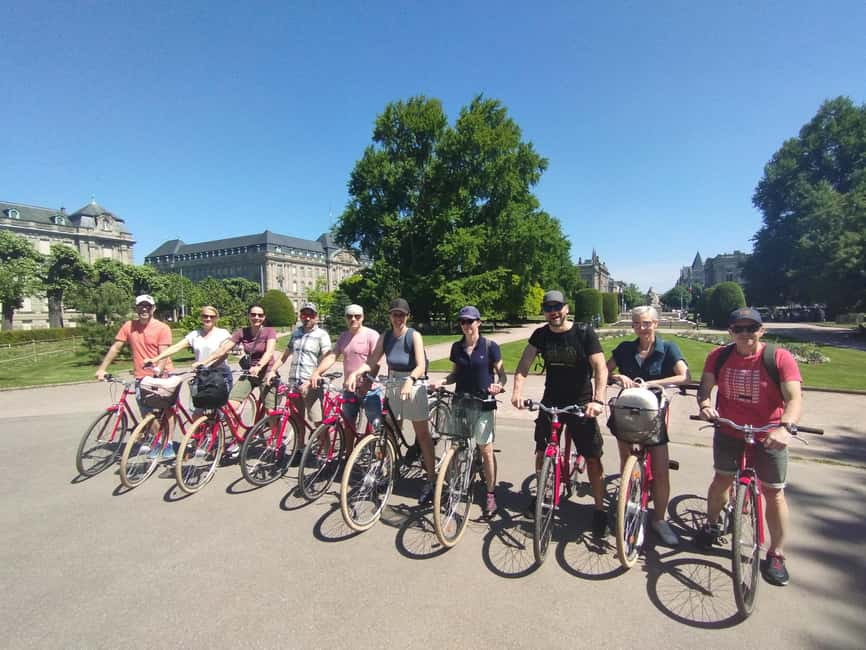
A bicycle is included in the $46 per-person price. The bikes have been described as well maintained and easy to ride, and baskets have been available for a small bag. Helmets are also available.
The ride is mostly flat, which keeps the physical effort reasonable. The challenge is less about hills and more about control, attention, and sharing streets with pedestrians. You should feel comfortable braking, steering around people, and staying with the group.
Regular stops make the 2.5-hour duration feel less demanding than a nonstop ride. The route mixes cycling with explanations at major sights, and several stops allow photographs. Families can enjoy it, and one 16-year-old particularly liked the experience, but younger riders need to manage the full distance and urban traffic.
Rain does not automatically ruin the outing. One participant still enjoyed the ride in wet weather, but you should dress for conditions and accept that photographs and comfort may suffer. The tour operates across much of the year, with bookings recorded in spring, summer, autumn, and winter.
Is $46 a fair price?
At $46, this is not the cheapest way to see Strasbourg, but it offers more than a short Old Town spin. You get a bicycle, a live multilingual guide, and a route that covers several districts in one session.
The value is strongest if you have only a day or two in Strasbourg. You can see the headline sights, learn the city’s broad story, and mark places to revisit later. The ride also saves you from working out the route between Petite France, Neustadt, the European Quarter, and the Orangerie.
The value is weaker if you want detailed time inside each monument or a slow architectural study of the medieval center. This is an overview with stops, not a cathedral interior tour or a specialist seminar. Visitors focused only on the Middle Ages may prefer a walking tour concentrated on the old island.
Flexible booking helps reduce the risk: you can cancel up to 24 hours before departure for a full refund, and the reserve-now, pay-later option lets you hold a place without paying at once. Those policies are useful when your Strasbourg plans depend on trains, weather, or a tight regional itinerary.
Who should book this Strasbourg bike tour?
I would choose this tour for a first visit, a short stay, or a return visit when you want to see districts beyond the usual center. It suits adults, confident teen riders, and anyone who prefers covering ground rather than standing in one square for a long lecture.
It is also a smart follow-up to a boat trip or self-guided Old Town walk. The route reaches different areas and adds historical context, so it should not feel like a simple repeat of the central sights.
I would think twice if you dislike cycling near pedestrians, need a very slow pace, or want almost all your time among medieval buildings. You should also check the selected meeting point, tour language, and starting time because those details vary by option.
Should you book it?
Book it if you want a broad, efficient introduction to Strasbourg and feel comfortable on a bicycle. The strongest parts are the contrast between Petite France and Neustadt, the European institutions, the cathedral approach, and the local stories that turn ordinary streets into meaningful stops.
Skip it if your main goal is an in-depth Old Town visit with long pauses at medieval monuments. For most first-time visitors, though, $46 is a reasonable price for a flat, well-paced ride that shows how Strasbourg’s French, German, Alsatian, and European identities fit side by side.
FAQ
How long does the Strasbourg bike tour last?
The activity lasts 150 minutes, or 2.5 hours. Some past outings have taken around three hours depending on the pace and stops.
What areas of Strasbourg does the tour visit?
The route includes Petite France, the covered bridges, Vauban Dam, Pont du Corbeau, Gutenberg Place, Notre Dame de Strasbourg Cathedral, Place Broglie, Neustadt, the European Quarter, Parc de l’Orangerie, and a section of the 14th-century wall.
Which languages are available?
The live guide is available in English, German, or Dutch.
Is the bicycle included in the price?
Yes. The bicycle is included. Helmets and baskets for a small bag have also been available.
Where does the tour start and finish?
The listed starting and drop-off options include Café Lové and La Pépinière. The exact meeting point may vary according to the option booked.
How much does the tour cost?
The listed price is $46 per person.
Can I cancel for a refund?
Yes. You can cancel up to 24 hours in advance for a full refund.
Can I reserve now and pay later?
Yes. The reserve-now, pay-later option allows you to book a place without paying at the time of reservation.
New rides added around France
- Paris: Versailles Palace and Queen Hamlet E-Bike Tour★ 5.0 · 126 reviews
- Paris: Versailles Golf Cart & Bike Tour with Palace Entry★ 4.8 · 58 reviews
- Paris: Street Art Open-Air Museum Bike Tour★ 4.8 · 51 reviews
- From Marseille: Calanques National Park E-Mountain Bike Tour★ 4.7 · 123 reviews
- Paris: Night Small-Group Bike Tour & Boat Cruise★ 4.9 · 57 reviews
- Paris : Private guided tour in Rickshaw bike – Napoléon★ 4.5 · 23 reviews
- Paris : Private guided tour Rickshaw bike – Saint-Germain★ 4.7 · 15 reviews
- Paris Marais Bike Tour with Cheese & Sweet Tastings★ 4.7 · 18 reviews
France Bike Tours, compared.
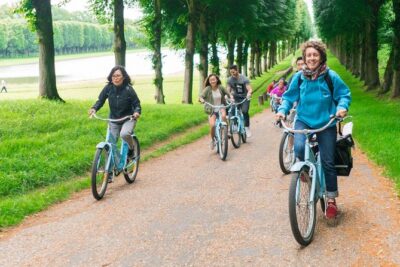
Versailles Palace Bike Tour with Market & Marie-Antoinette hamlet
Read our review →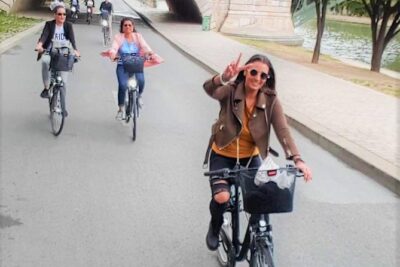
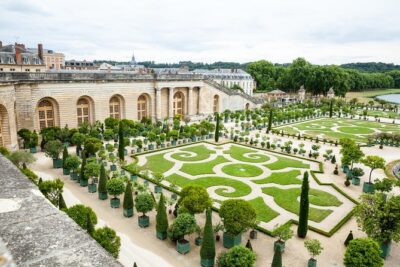
Versailles Full Day Bike Tour with Palace, Gardens, & Picnic
Read our review →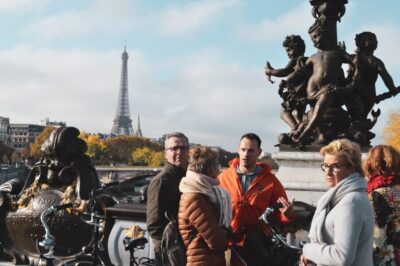
Paris Local Districts and Stories Off the Beaten Track Guided Bike Tour
Read our review →
Highlights of Paris Bike Tour w/ a Local Guide (English or Dutch)
Read our review →Browse the lists this tour appears in