
Review · SOUTH AFRICA
Johannesburg: Inner City Guided Cycling Tour
Johannesburg makes more sense when you see its neighborhoods link together, and this 10-kilometer cycling route gives you that broad view in a few hours. You’ll pass street art in Braamfontein, jazz landmarks in Newtown, old mining districts in Marshalltown, and working creative spaces in Maboneng and Victoria Yards. I like the local focus, and I like that the mostly flat route covers far more ground than a walking tour.
The catch is traffic. One rider found the roads chaotic and the single-gear bikes hard work, while others praised guides such as Lebo, Franck, and Rambo for keeping the group safe. You should be comfortable riding in city traffic, not just on a quiet cycle path.
Key points at a glance
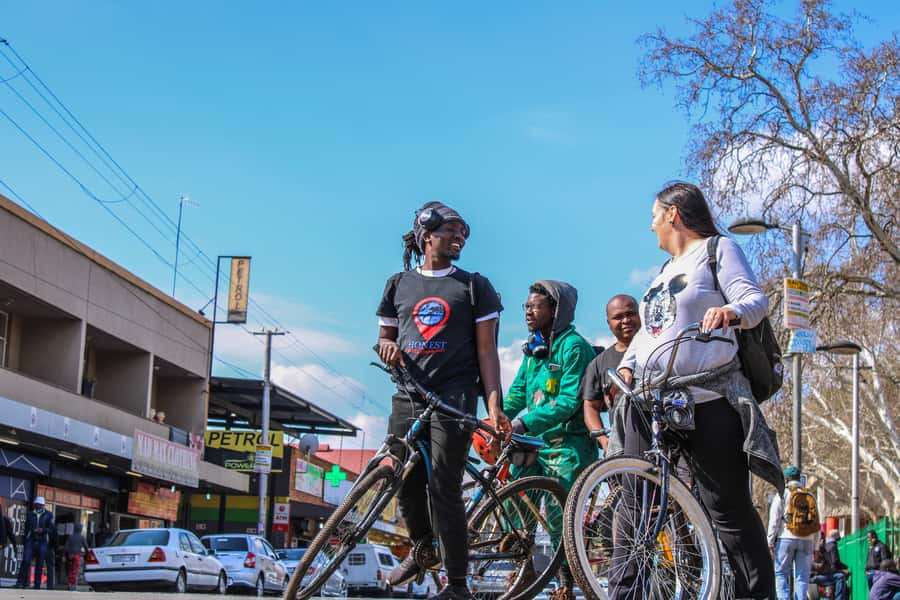
- A 10 km inner-city route: See Braamfontein, Newtown, Marshalltown, Jeppestown, Maboneng, Victoria Yards, and Ellis Park Stadium in roughly two to four hours.
- A clear look at Johannesburg’s changes: The guide explains the city’s mining beginnings and its transformation from the 1990s to today.
- Street art and creative spaces: Braamfontein and Maboneng bring art, studios, and public culture into the ride.
- Mostly flat riding: The route has few hills and does not demand a high level of fitness, though city traffic adds its own challenge.
- Local guiding matters: Guides including Lebo, Franck, and Rambo have been praised for safety, local insight, and attentive care.
- Good value for active sightseers: At $84 per person, the price makes most sense if you want a guided overview of several inner-city districts rather than a single attraction.
Why a bicycle works well in Johannesburg
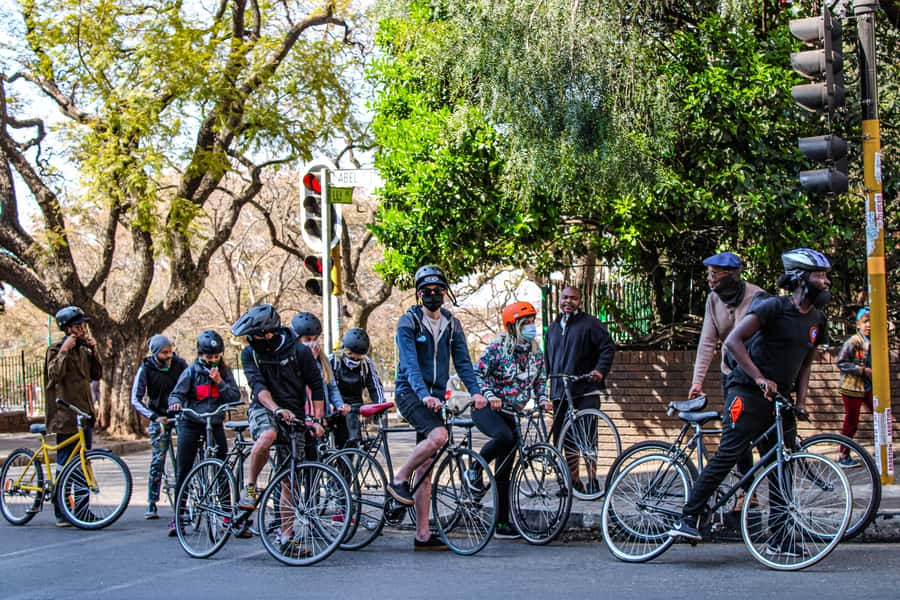
Johannesburg is spread out. Its central districts are close enough to connect, yet far enough apart that walking the full route would take a good part of the day. A bicycle lets you move between them while still noticing street life, building styles, painted walls, and changes in the road.
That is the main strength of this experience. You are not confined to one museum or viewpoint. You get a moving introduction to the inner city, with a guide explaining why each district matters.
The route is about 10 kilometers and mostly flat. That makes it approachable for anyone who rides a bike with reasonable confidence. You do not need an athlete’s level of fitness, but you do need to pedal for several hours and stay alert around traffic.
I would think of this as an active city orientation. It is especially useful near the start of a Johannesburg stay, when you want to understand how the central neighborhoods fit together.
More guided departures in South Africa:
- Cape Town: Guided Bike Tour
★ 4.9 · 193 reviews - Franschhoek: E-Bike Guided Winery Tour
★ 4.6 · 96 reviews - Stellenbosch: Wine Farm E-Bike Guided Tour
★ 4.6 · 88 reviews
Getting started with the bike and guide
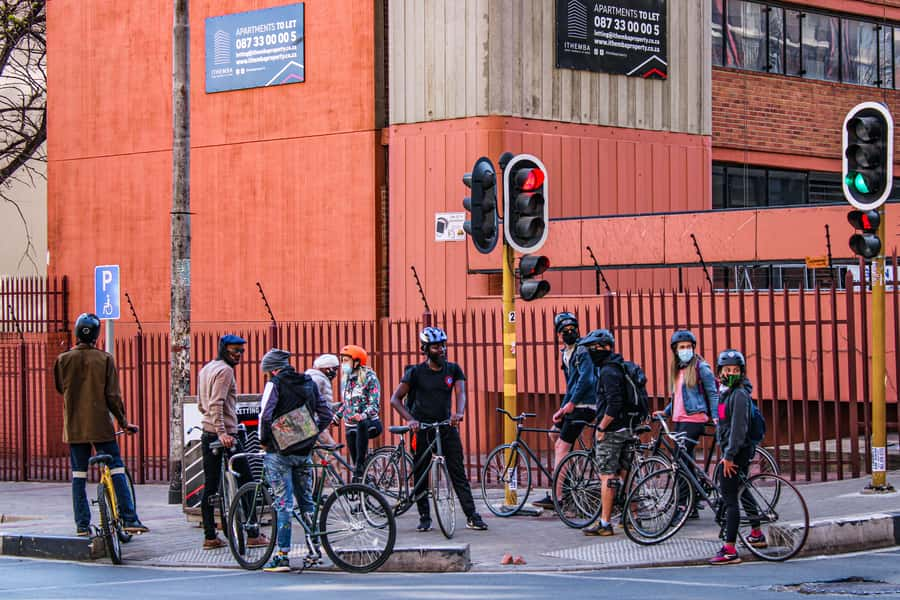
You meet the guide at a location that can vary according to the option you book. Allow time to get fitted with the bicycle and helmet, and listen closely to the opening briefing. The guide explains the plan for the day before you set off.
A bicycle, helmet, guide, and water are included. Lunch and hotel pickup are not included, so plan those separately. Comfortable clothing and shoes are the right choice, and you should bring enough personal water if you tend to drink a lot while riding.
The guides are part of the experience’s appeal. Lebo is praised for guiding riders safely through traffic. Franck is described as an enthusiastic guide who provides a great deal of explanation, while Rambo is noted for taking good care of the group. The guide assigned to your departure may be different, and the available guiding languages are English and French. An English audio guide is also listed.
One practical point deserves attention: the bikes may have only one gear. That is fine on a flat route, but it can feel less comfortable than a modern multi-speed bicycle. If you are used to shifting gears, ask about the bike before setting off.
Braamfontein’s walls and student energy
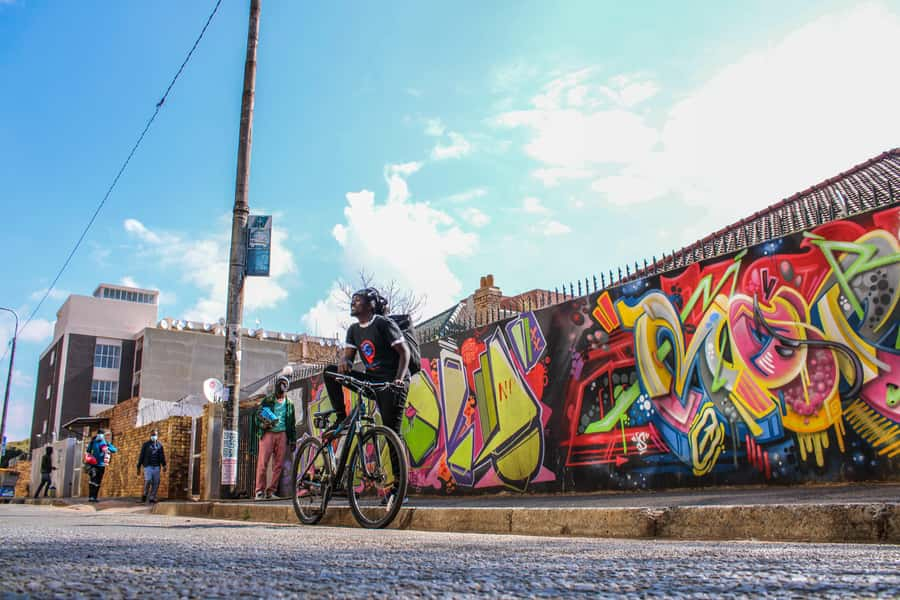
Braamfontein is one of the first places where the art side of the tour comes into view. The stop focuses on street art, giving you a chance to look at Johannesburg through color, murals, and public expression rather than only through formal landmarks.
A bicycle suits this neighborhood because you can cover several blocks quickly, then pause when the guide points out a wall or local detail. The art also gives the guide a way to talk about present-day Johannesburg, its young culture, and the way parts of the inner city have changed.
If street art is your main interest, tell the guide early. One rider specifically valued the guide’s willingness to give extra attention to street art. The exact murals can change, so think of Braamfontein as a street-level art district rather than a fixed outdoor gallery.
Newtown and the sound of jazz
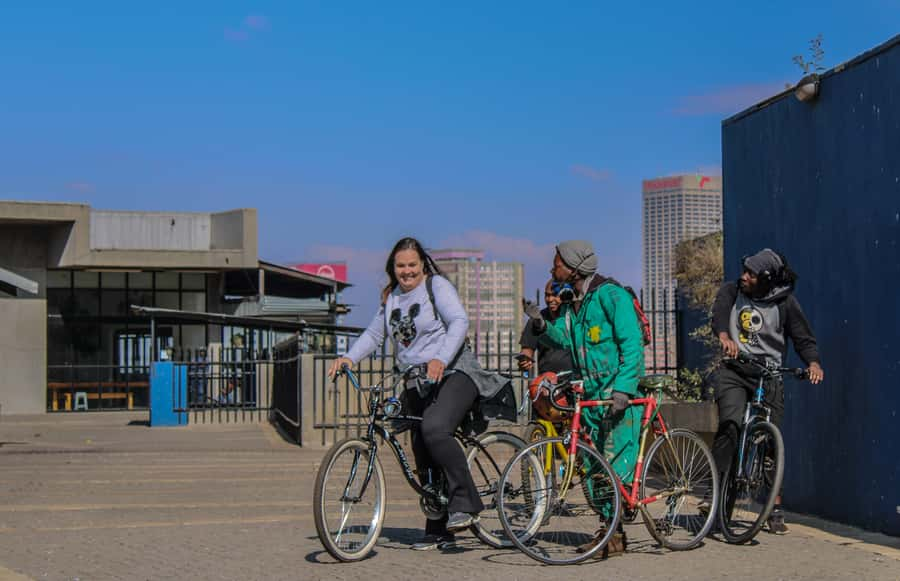
Newtown is presented as the home of jazz on this route. That gives the neighborhood a cultural role beyond its buildings. You are hearing how music helped shape Johannesburg’s identity and how the district fits into the city’s wider creative life.
The ride gives you a quick view rather than a long music-history lecture. That is useful if you want context while moving through the city, but it may feel brief if jazz is your central reason for visiting. I would pair this ride with a separate music venue or cultural visit if you want a fuller look at Johannesburg’s jazz story.
Still, Newtown is an important counterpoint to the mining story. The tour does not present Johannesburg as only a business center or a gold-mining city. It connects work, music, art, and neighborhood life.
More bike tours around South Africa:
- Stellenbosch: Historical Bike Tour & Wine Tasting
★ 4.9 · 248 reviews - Cape Town City Cycling Tour
★ 5.0 · 199 reviews - Cape Town: E-Bike City Tour
★ 4.8 · 76 reviews - Cape Town: Guided eBike Tour with Signal Hill and Clifton …
★ 4.9 · 71 reviews
Marshalltown and the gold-mining story
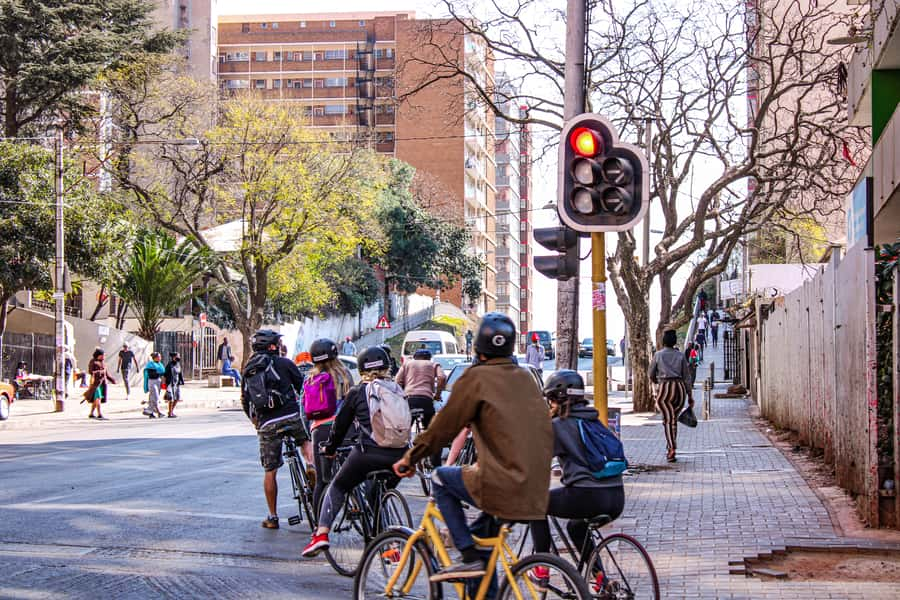
Marshalltown is where the tour turns most clearly toward Johannesburg’s mining past. The city grew from gold, and that origin still shapes its streets, buildings, and identity. Your guide gives this history a local setting instead of presenting it as a list of dates.
This section is valuable because it helps explain why Johannesburg developed in the way it did. The mining story is not an isolated chapter. It connects to the city’s growth, its built environment, and the later changes that affected the inner city.
The stop is more about explanation and seeing the district than entering a mine or visiting a formal museum. If you want underground mining exhibits, this ride will not replace a dedicated museum visit. If you want a quick, place-based introduction while moving through the streets, it works well.
Jewel City and Jeppestown in transition
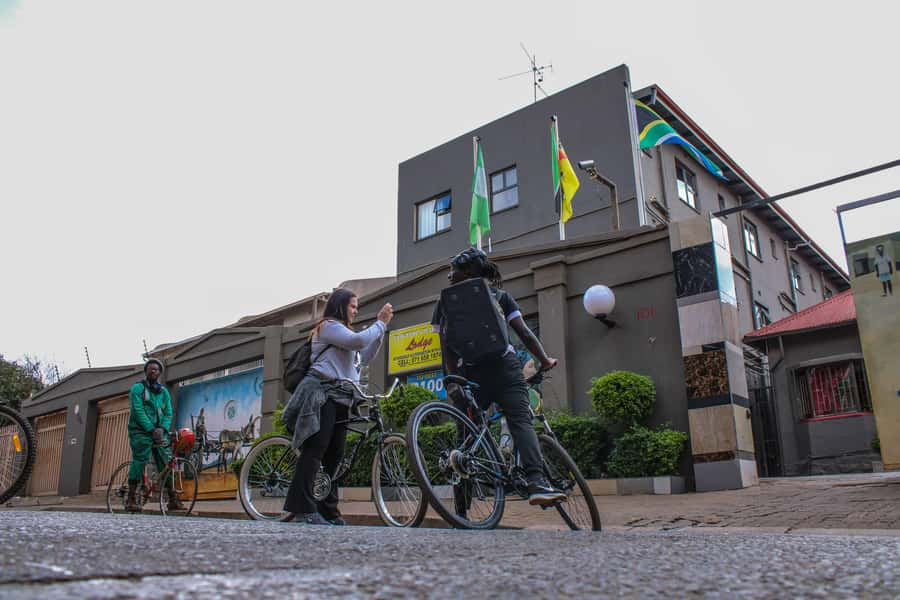
Jewel City and Jeppestown add another layer to the route. Here, the focus is the inner city as a place that has changed over time. The guide describes the shift from the 1990s to the present, helping you see that Johannesburg’s districts are not frozen in one period.
This is one of the reasons I prefer the bicycle format to a simple drive-by tour. You move slowly enough to see the edges between older and newer parts of the city, but quickly enough to cover several districts. The route gives you a sense of movement and change rather than one polished version of Johannesburg.
Do not expect every block to feel tidy or tourist-ready. That is part of the point, but it also means you need to follow the guide closely and remain aware of traffic and your surroundings.
Maboneng, local art, and a closer look

Maboneng is one of the most anticipated areas on the route. The tour includes a meeting with a local artist, which adds a personal element that a standard sightseeing circuit often lacks. Instead of only looking at finished walls or buildings, you get a chance to connect the district with the people making its creative work.
Maboneng is also a useful place to think about the city’s redevelopment. It has a strong creative identity, but the tour’s wider route helps you place it within the larger inner city rather than treating it as a separate pocket.
The experience here can vary depending on the guide and the day’s arrangements. Still, meeting an artist is one of the tour’s more distinctive details. If you are interested in street art, local design, and the social side of urban change, this part adds real value.
Victoria Yards and the creative side of the city
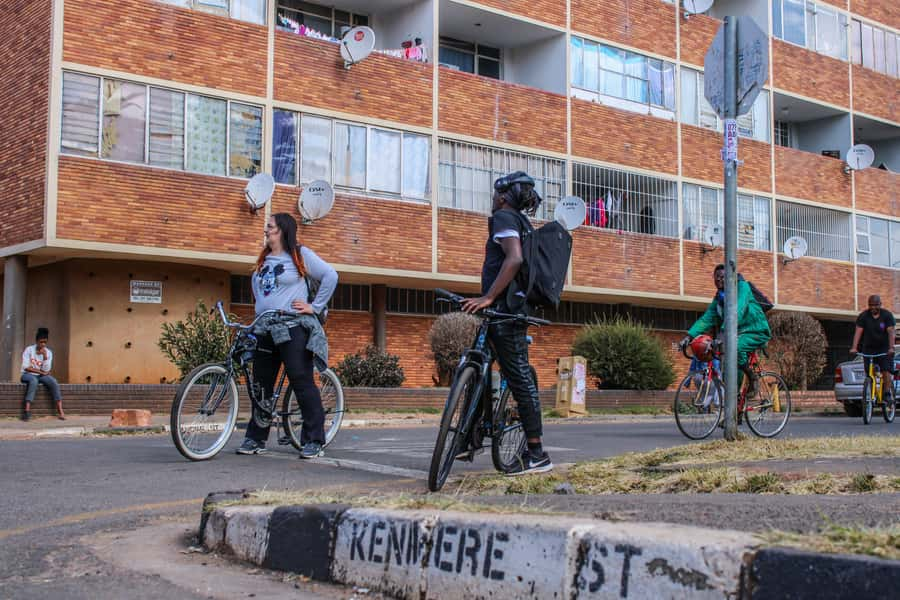
Victoria Yards is another stop tied to local making and neighborhood renewal. The itinerary includes it alongside Maboneng, Braamfontein, and Newtown, giving the day a strong arts and culture thread.
You are not simply checking off famous sights. The route uses creative districts to show how Johannesburg is being reshaped. That makes the tour a good match for you if you want to understand current city life as well as older history.
Because this is a cycling tour, the time at each location may be shorter than on a walking tour. You will see several areas, but you should not expect a long guided visit at every stop. The tradeoff is range: you get a larger picture in one outing.
Ellis Park Stadium and the ride between districts
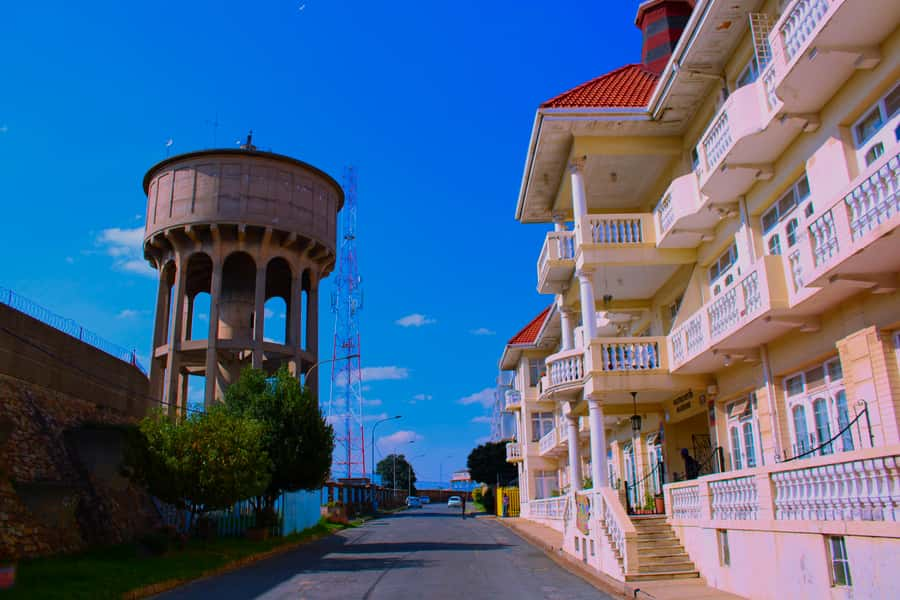
Ellis Park Stadium is one of the more recognizable landmarks on the route. Seeing it alongside Bertrams helps connect major city landmarks with ordinary inner-city neighborhoods.
The stadium is not presented as a full stadium tour, so expect an exterior view and guide commentary rather than access to every part of the venue. Its value is as a reference point. It gives you a clear marker in the city and adds a sports angle to a route otherwise focused on mining, music, and art.
The ride between the stops matters just as much. You see how the city shifts from one district to the next, and that in-between time is where the bicycle earns its place. You get a physical feel for distance that a vehicle can hide.
Traffic, pace, and bike comfort
The route is described as flat and family-friendly, but that should not be confused with effortless. The main challenge is city traffic. One rider called cycling in Johannesburg a test of nerve, noting chaotic roads and the absence of other cyclists. Another rider praised the guide for getting the group through traffic safely.
Both points can be true. A careful guide can make the route feel controlled, while the traffic still demands concentration. Stay in line, follow instructions, and do not treat this as a relaxed park ride.
The single-gear bikes are another consideration. One rider found the heavy gear uncomfortable, while other riders were happy with the equipment and called the bikes good quality. Your experience may depend on your fitness, riding habits, and the particular bicycle supplied that day.
The tour requires moderate physical fitness. It is not suitable for anyone who cannot ride a bike, has a mobility impairment, or has heart problems. Children can take part, but you should judge their comfort around city traffic, not only their ability to pedal.
What the $84 price gets you
At $84 per person, this is not the cheapest way to see Johannesburg. You are paying for a guide, bicycle, helmet, water, and a route that links several districts in one outing. The value is strongest if you want local context and active transport rather than a quick vehicle circuit.
The cost is easier to justify when you consider the range. In two to four hours, you can reach Braamfontein, Newtown, Marshalltown, Jewel City, Jeppestown, Maboneng, Victoria Yards, and Ellis Park Stadium. A walking tour would likely cover fewer areas, while a bus trip would not give you the same street-level feel.
It is less appealing if you dislike cycling, want long visits at each stop, or prefer a fully sheltered way to move through the city. One rider suggested combining a walking tour with a bus tour for a similar sightseeing area. That may suit you better if traffic makes you uneasy.
The free cancellation period is up to 24 hours before the activity, and you can reserve now and pay later. The meeting point varies by booking option, so check that detail before you commit to a hotel transfer or tight same-day plan.
Who will enjoy this ride most
I would recommend this tour to confident city cyclists, first-time Johannesburg visitors, and anyone who prefers seeing how neighborhoods connect. It is also a good fit for people interested in street art, local artists, jazz, mining, and recent urban change.
You will get the most from it if you ask questions. The route covers a lot, and the guide’s explanation is what turns a ride into a meaningful city tour. If you care especially about murals, say so at the start.
I would hesitate to recommend it to nervous cyclists, anyone expecting dedicated cycle lanes, or anyone who wants a slow, quiet sightseeing outing. The route is flat, but the traffic is the real test.
Should you book the Johannesburg cycling tour?
Book it if you want a broad, active introduction to the inner city and feel comfortable riding around traffic. The strongest features are the local guides, the 10 km route, the mix of mining history and present-day art, and the chance to see districts that are hard to connect on foot.
Skip it if you cannot ride confidently or if a single-speed bicycle sounds uncomfortable. In that case, a walking tour combined with a bus tour may be a calmer way to cover similar ground.
For the right rider, this is a useful first look at Johannesburg: broad in scope, personal in tone, and honest about a city still changing.
FAQ
How long does the Johannesburg cycling tour last?
The tour lasts between two and four hours. Check the available start times when booking.
How far do you cycle?
The route is about 10 kilometers long.
Is the cycling route hilly?
The route is on a mostly flat surface with very few hills.
Which Johannesburg areas does the tour visit?
The route includes Braamfontein, Newtown, Marshalltown, Jewel City, Jeppestown, Maboneng, Victoria Yards, Bertrams, and the area around Ellis Park Stadium.
What is included in the price?
The price includes the cycling tour, a guide, a bicycle, a helmet, and water.
Is lunch included?
No. Lunch is not included.
Is hotel pickup included?
No. Hotel pickup and drop-off are not included. The meeting point can vary based on the option you book.
Which languages are available?
Live guiding is available in English and French. An English audio guide is also included.
What should I wear or bring?
Bring comfortable shoes and comfortable clothes.
Can children join the tour?
Yes. The tour is described as child-friendly, but each child must be able to ride a bike and cope with cycling in city traffic.
Is the tour suitable for people with limited mobility?
No. The tour is not suitable for people with mobility impairments, people who cannot ride a bike, or people with heart problems.
Can I cancel the booking?
You can cancel up to 24 hours in advance for a full refund. Reserve-now, pay-later booking is also available.
New rides added around South Africa
- Half-Day Winelands E-Bike Tour with Wine Tasting★ 4.2 · 13 reviews
- Franschhoek: E-Bike Guided Winery Tour★ 4.6 · 96 reviews
- Franschhoek E-Bike & Wine Tour★ 5.0 · 18 reviews
- E-Bike & Hike Jonkershoek★ 5.0 · 12 reviews
- Cape Town: Cultural Cycling Tour★ 4.8 · 19 reviews
- Cape Town Guided City Cycling Heritage Tour – Private Tour★ 5.0 · 27 reviews
- Cape Town: Half-Day e-Bike City Tour★ 4.4 · 35 reviews
- Cape Town: Peninsula Road Bike Tour★ 5.0 · 23 reviews
South Africa Bike Tours, compared.
Guided eBike Tour with Signal Hill and Clifton …
Read our review →

Browse the lists this tour appears in