
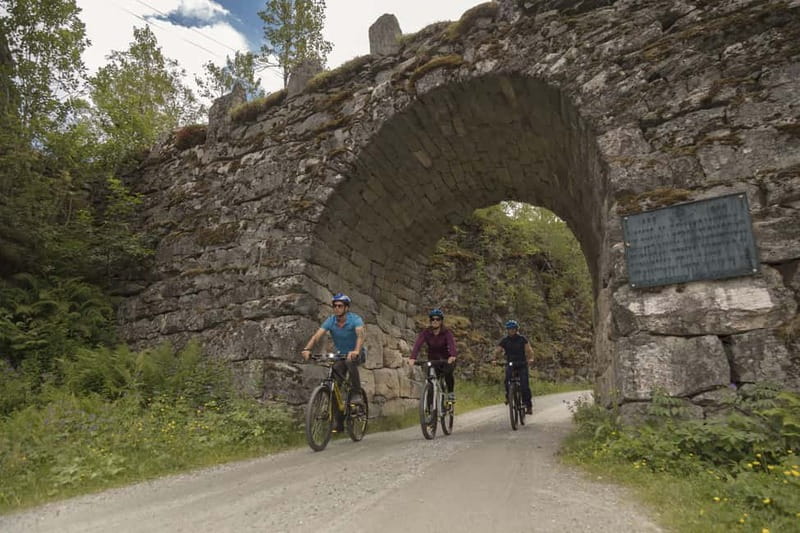
Review · NORWAY
Geiranger Fjord: Downhill Self-Guided Bike Tour
The great hook here is simple: you start high above Geiranger and ride down toward the fjord. The route gives you big mountain views without a long uphill climb, with Djupvatnet Lake at 1,030 meters and famous Flydalsjuvet waiting along the way.
I like the freedom to stop whenever a viewpoint catches your eye, and I like the small group limit of eight. The main catch is the road itself. This is a public route shared with buses, vans, and other traffic, not a quiet mountain-bike trail, so you need solid bike skills and a calm head.
Key points to know before you book
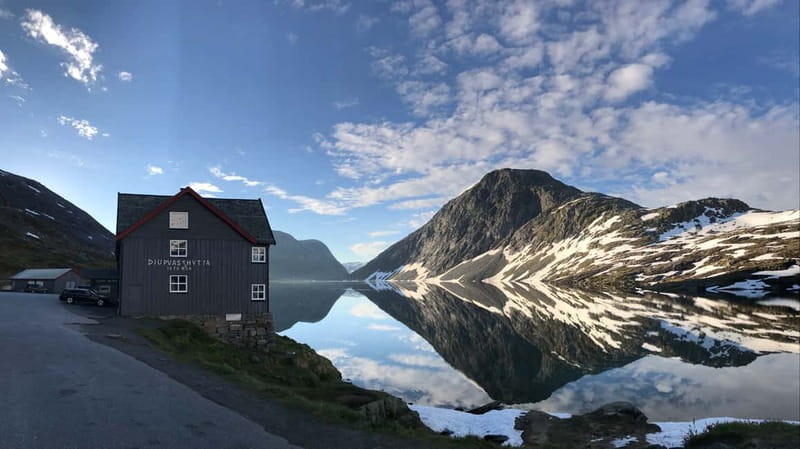
- Start at 1,030 meters: You are driven from Geiranger to Djupvatnet Lake before the downhill ride begins.
- Flydalsjuvet is the star stop: This famous viewpoint gives you one of the finest elevated views toward Geiranger Fjord.
- You ride without a guide: You receive safety instructions and equipment, then manage the route and pace yourself.
- The ride takes about 2.5 hours: The full activity lasts three hours, including preparation and transport uphill.
- Traffic is part of the experience: The road is shared with tour buses, camping vans, and regular vehicles, especially in peak season.
- Bring warm, weatherproof clothing: Conditions can change quickly, and the tour runs only when the weather is suitable.
From Geiranger village to Djupvatnet Lake
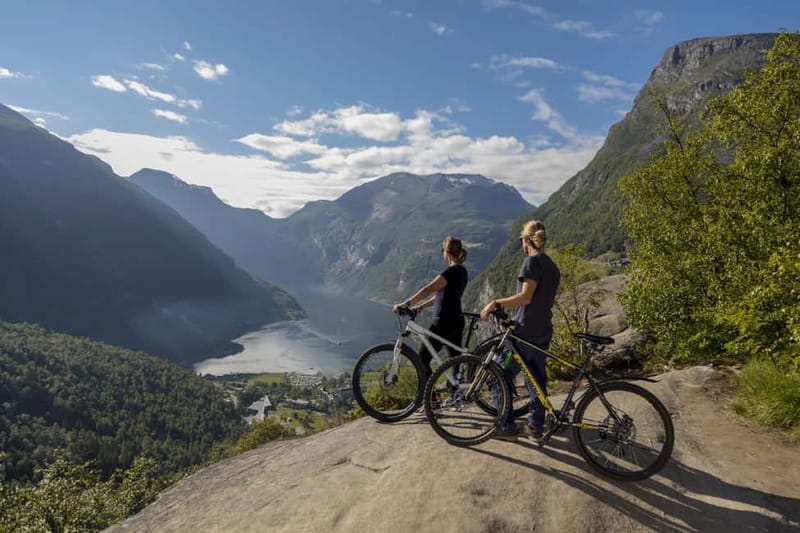
You meet at the local supplier’s office at Geirangervegen 10, directly before Cafe Ole. This is your practical starting point, not the place where you begin pedaling. Allow time to arrive ready for a short safety briefing and equipment fitting.
You receive a bicycle, helmet, bicycle gloves, and visibility vest. The vest matters on a public road, while the gloves are useful in cool weather and during a long descent. You also need to bring your own warm clothing, windbreaker, sportswear, water, and snacks.
After the briefing, transportation takes you uphill to Djupvatnet Lake. The change in elevation is a major part of the appeal. You begin beside a mountain lake at 1,030 meters, then gradually work your way down through a setting that changes as you ride.
If the road to Djupvatnet Lake is closed, the alternative starting point is Eagle Bend viewpoint. That gives you a different launch point, but the experience remains a downhill ride toward Geiranger.
More Mountain Bike Tours in the world:
- From Ubud: Downhill Bike Tour with Rice Terraces and Meal
★ 4.9 · 664 reviews - Waimea Canyon Downhill Bike Ride
★ 5.0 · 650 reviews - Ubud: Downhill Cycling with Volcano, Rice Terraces and Meal
★ 5.0 · 536 reviews
What the first downhill miles feel like
This is a self-guided ride, so you are not following a guide in a line or listening to commentary at every bend. After the safety talk, you decide when to ride, when to slow down, and when to stop for photos.
That freedom is a real advantage. You can ride at your own pace rather than trying to keep up with a group. If you want to stop often, you can. One person may spend several minutes taking pictures while another prefers to keep moving.
The bikes are described as easy to operate, but that does not mean the route is effortless. A downhill road still demands attention. You need to control your speed, watch the road, and remain alert around vehicles.
The ride lasts approximately 2.5 hours, though your exact pace will depend on how often you stop. The activity itself is scheduled for three hours, so you should not treat every viewpoint as an unlimited photo session.
Flydalsjuvet gives you the classic Geiranger view
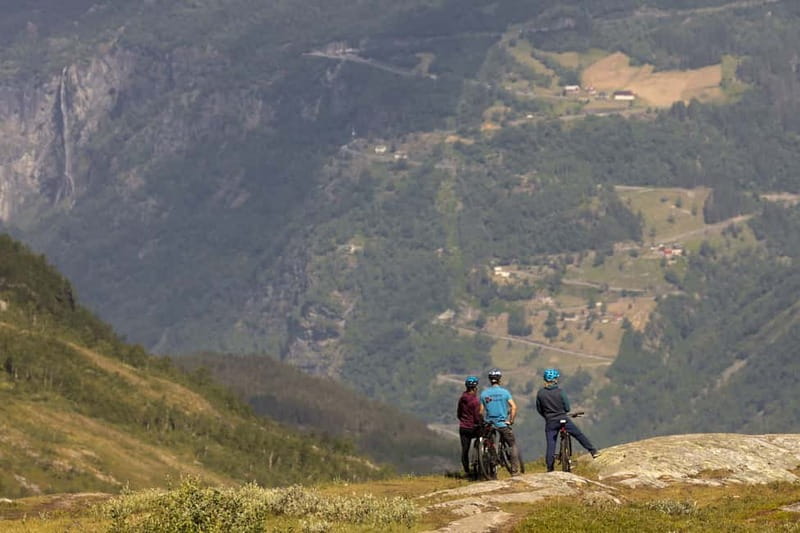
Flydalsjuvet is the major visual reward on the route. From this famous viewpoint, you can look down toward Geiranger and out across the fjord from above. It is the kind of place where stopping is not optional for most people.
The elevated view helps you understand Geiranger’s setting. From the village, the fjord feels close and enclosed by steep mountains. From Flydalsjuvet, you see the road, the village, and the water arranged far below, giving the area a much wider sense of scale.
Bring a phone or camera that is easy to reach safely after you stop. Do not attempt to take pictures while moving. The road requires your full attention, and the best photographs are worth a proper stop at a safe place.
Flydalsjuvet is also where the difference between a guided sightseeing trip and this activity becomes clear. You are not simply being driven to a lookout, you are reaching it under your own control. That adds a small sense of achievement without requiring a full-day cycling expedition.
This is a road ride, not mountain biking
You should book this with the right picture in mind. The route uses the public mountain road, and there is no dedicated mountain-bike trail. During the busy season, you may share the road with large tour buses, camping vans, and other vehicles.
That traffic is the biggest practical concern. You need to be comfortable riding beside vehicles and stopping when conditions require it. A downhill route can sound easy, but sharing a narrow or busy road makes awareness more important than speed.
One assessment of the ride found that a larger guided group could feel safer on this road. That is worth considering if you are nervous around traffic or prefer someone to lead you through each section. This activity does not offer that kind of riding support.
On the other hand, a self-guided format suits people who dislike being rushed. You can keep your speed modest, leave space between yourself and other cyclists, and stop whenever the road or traffic calls for care. The route rewards caution, not bravado.
More Self-Guided Bike Tours in the world:
- Red Rock Canyon Self-Guided Electric Bike Tour
★ 5.0 · 783 reviews - Private Self-Guided E-Bike Ride in Tuscany with Vineyard Visit
★ 5.0 · 775 reviews - Haleakala Sunrise Best Self-Guided Bike Tour
★ 4.5 · 745 reviews - Manly Self-Guided Bike Tour
★ 4.5 · 573 reviews
Weather can change the entire ride
Geiranger’s mountain weather deserves respect. The tour depends on good conditions, and you should arrive prepared for cold air, wind, or rain even if the village feels mild.
A windbreaker is especially important for the descent. Riding downhill creates more wind chill, and temperatures near Djupvatnet Lake may feel cooler than they do lower down. Warm clothing, gloves, water, and snacks belong in your day pack.
Rain does not automatically erase the experience. One rider found the views beautiful and the downhill section exciting even in heavy rain, but also noted that confidence on a bike becomes more important in wet weather. That is a fair warning, not a reason to force the ride.
If you are not comfortable controlling a bicycle on a wet public road, poor weather is a good reason to cancel. Free cancellation is available up to 24 hours before the activity for a full refund, according to the booking conditions.
How the self-guided format affects your day
The English-speaking instructor provides the safety information, but no guide accompanies you during the ride. This means you need to understand the instructions, remember the route, and make your own decisions once you set off.
For many people, that is the point. You get a quieter, more personal outing and can enjoy the scenery without a running commentary. The small group limit of eight also helps during preparation and transport, even though you still ride independently.
For others, the lack of an escort may be a drawback. If you want local stories, route narration, or someone positioned ahead of you to manage traffic, this is not the right format. You are paying for transport, equipment, and access to a memorable route, not for a guided cycling tour.
I would describe the experience as a supported independent ride. The supplier gets you to the mountain, provides the bicycle and safety gear, and explains the basics. You then take responsibility for the actual descent.
What the $156 price really covers
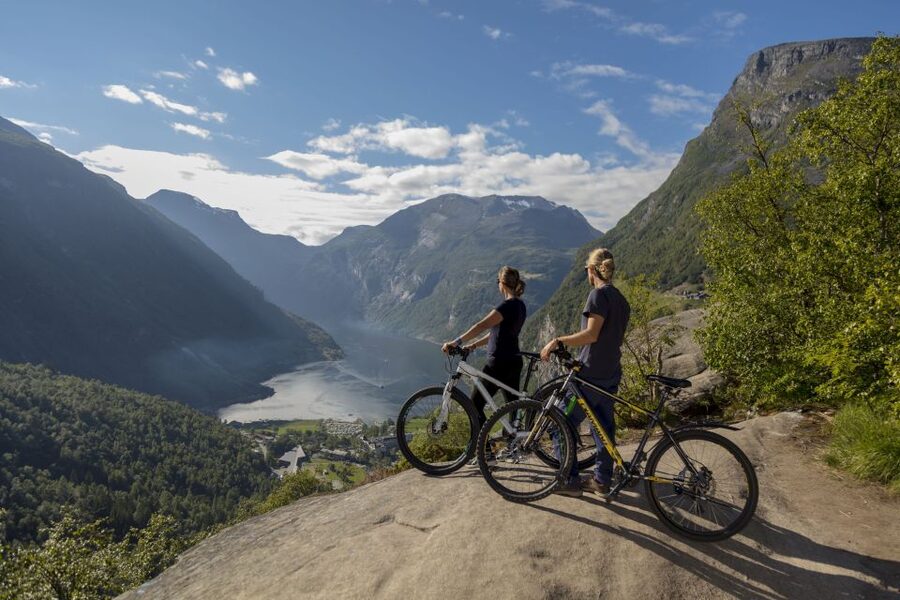
At $156 per person, this is not a cheap bicycle rental. The price includes transportation from Geiranger to the high starting point, a bicycle, helmet, gloves, and visibility vest. The uphill transfer is important because it makes the downhill route possible without requiring you to arrange your own transport.
The value depends on how much you want the complete setup. If you already have a bicycle and a way to reach Djupvatnet Lake, the price may feel high. If you are visiting without cycling equipment, the included gear and transfer save you from solving several practical problems.
The scenery is also part of what you are buying. You are not simply pedaling along an ordinary road. The route links the mountain lake, high viewpoints, Flydalsjuvet, and Geiranger in one three-hour activity.
Food and drinks are not included, and hotel pickup and drop-off are not included. Plan to eat beforehand or carry a snack and water. You must also make your own way to the meeting point in Geiranger.
Who should book this ride?
This tour fits confident cyclists who can ride independently and want a strong view-to-effort ratio. You get downhill movement, mountain scenery, and fjord views without spending the day climbing steep roads.
It is especially suitable for adults, older children, and families with participants aged 12 or more, provided the younger rider is accompanied by an adult. Everyone must be able to ride a bicycle, and unaccompanied minors are not allowed.
I would also recommend it to photographers who like having control over the schedule. You can stop at Flydalsjuvet and other scenic points instead of watching a passing view from a bus window.
It is less suitable for anyone with back problems or heart problems, and the activity is not designed for children under 12. If traffic makes you anxious, or if you are only comfortable cycling on separated paths, think carefully before booking.
Simple ways to make the ride better
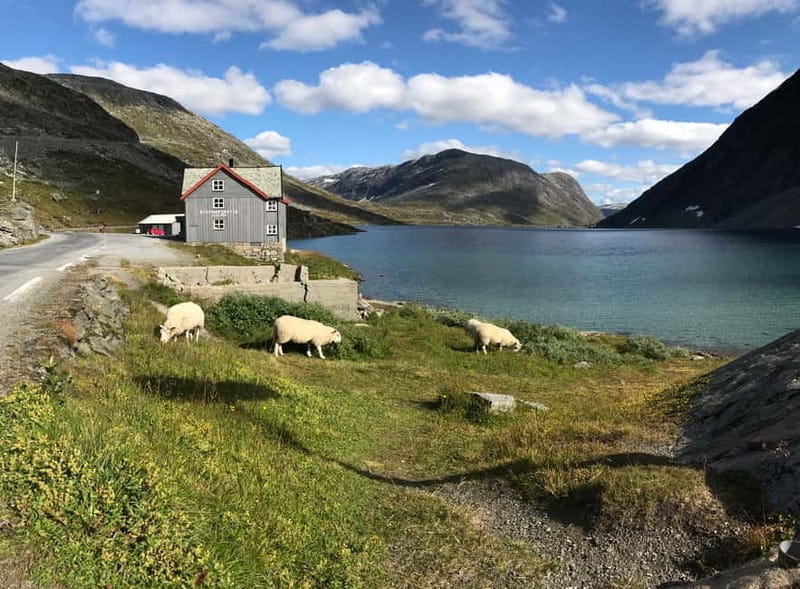
Arrive dressed for the mountain, not just for the village. Wear sportswear, bring a warm layer and windbreaker, and keep water and snacks with you.
Use the safety briefing well. Ask questions about the route, traffic, braking, and the alternative start point if the road to Djupvatnet is closed. Once you leave the group, you will not have a guide riding beside you to answer questions.
Keep your speed under control from the start. The goal is not to finish first. A slower descent gives you more time to enjoy the scenery and makes it easier to react to vehicles, bends, and changing road conditions.
Give yourself enough time for Flydalsjuvet. The viewpoint is one of the main reasons to choose this route, so rushing past it would weaken the value of the outing. At the same time, remember that the ride has a planned duration and you need to finish within the allotted time.
Should you book the Geiranger downhill bike tour?
Book it if you want an active way to see Geiranger from above, feel comfortable riding on a public road, and appreciate the freedom of setting your own pace. The combination of Djupvatnet Lake, downhill cycling, and Flydalsjuvet makes this a memorable use of three hours.
Skip it if you expect true mountain biking, a dedicated trail, or a guide riding with you. The traffic can be heavy in peak season, and rain can make the route demanding.
For the right cyclist, the price buys more than a bike. It buys the transfer to a high mountain start, the equipment, and a route that connects some of Geiranger’s finest views in one compact outing. Just bring warm clothes, ride carefully, and treat the road as a shared public route rather than a private cycle track.
FAQ
Where does the Geiranger downhill bike tour meet?
You meet at the local supplier’s office at Geirangervegen 10, directly before Cafe Ole in Geiranger.
How high is the starting point?
The standard starting point is Djupvatnet Lake, located 1,030 meters above sea level.
Is a guide included during the bicycle ride?
No. You receive a safety talk and English instruction, but no guide accompanies you during the cycle.
How long does the cycling portion last?
The cycle lasts approximately 2.5 hours. The full activity duration is about three hours, including preparation and transportation to the starting point.
What happens if the road to Djupvatnet Lake is closed?
An alternative starting point from the Eagle Bend viewpoint will be offered.
What is included in the price?
The price includes transportation to the starting point, a bicycle, helmet, bicycle gloves, and a visibility vest. Food, drinks, and hotel pickup and drop-off are not included.
New rides added around the world
- Prague: E-Scooter HUGO Bike Rental★ 4.8 · 11 reviews
- Prague Electric Scooter and eBike Grand Tour★ 5.0 · 15 reviews
- Prague E-Bike City Ride tour : 2hrs★ 4.5 · 36 reviews
- Prague: E-Bike or E-Scooter Tour with A Local Guide★ 4.8 · 154 reviews
- Prague: City Viewpoints Tour by Electric Fat Bike★ 5.0 · 43 reviews
- Prague City Bike guided tour★ 3.7 · 10 reviews
- Prague: Classic City Bike Tour★ 4.7 · 149 reviews
- Prague: E-Bike/E-Scooter Viewpoint Tour★ 4.9 · 120 reviews
Norway Bike Tours, compared.
Guided E-Bike Tour in Haugesund: city, vikings, Rising Tides
Read our review →
Browse the lists this tour appears in