Review · BIKE TOURS
From La Paz: The World’s Most Dangerous Road Biking Tour
Death Road earns its fame through sheer contrast. You begin beside snow-covered peaks at 4,700 meters, then roll downhill for 64 kilometers toward hot Yolosita at 1,200 meters, trading icy mountain air for mist, waterfalls, jungle growth, and mud.
I like the strong support system, especially the bike checks, first aid training, mechanics, protective gear, and guides who let you ride at a sensible pace. I also like the finish: a buffet lunch, hot shower, swimming pool, and time to clean up before the long ride back to La Paz.
The main drawback is the transport. You spend about three hours returning to La Paz after lunch, and the van has drawn some complaints. You also need basic bike confidence, a full day, and enough height to fit the equipment, with a minimum stated height of 155 centimeters.
Key points to know before you book
- You descend 3,700 meters: The route starts at 4,700 meters and ends near 1,200 meters, so the temperature changes sharply.
- The famous dirt section is not the whole ride: You first practice on a paved mountain road before reaching the rougher Death Road near Chuspipata.
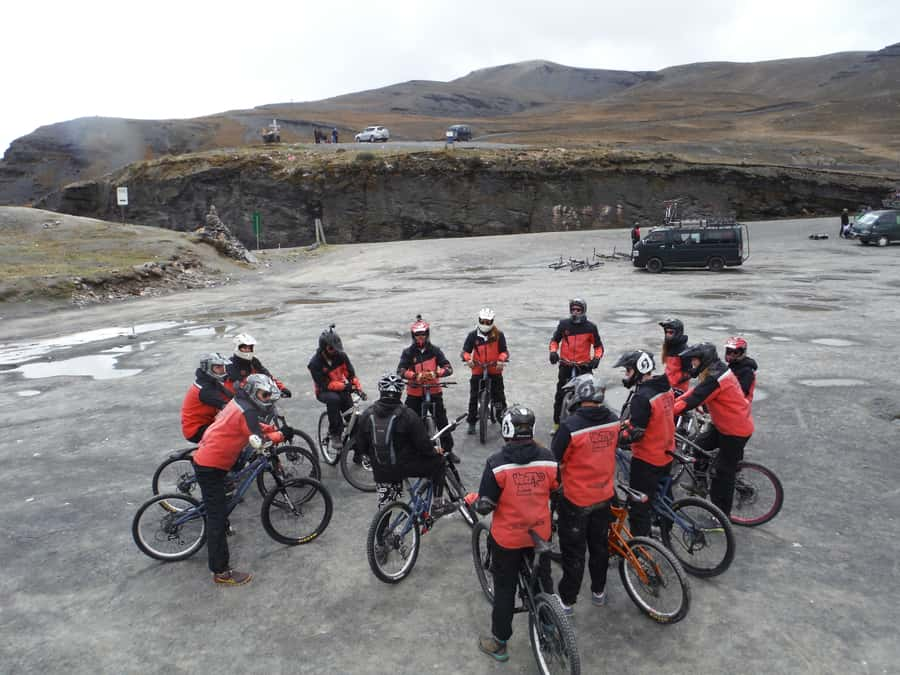
- Safety support is built into the day: You get a full-face helmet, pads, gloves, protective clothing, a full-suspension bike, guides, mechanics, and a support vehicle.
- Water and food are covered: Unlimited water, snacks during the ride, and a buffet lunch are included.
- The finish is unusually comfortable: After getting dusty and wet, you can shower, swim, and relax at the hotel or resort.
- The route suits confident cyclists: You do not need expert racing skills, but you must be able to ride a bike and handle a long downhill route.
From La Cumbre’s cold air to Yolosita’s heat
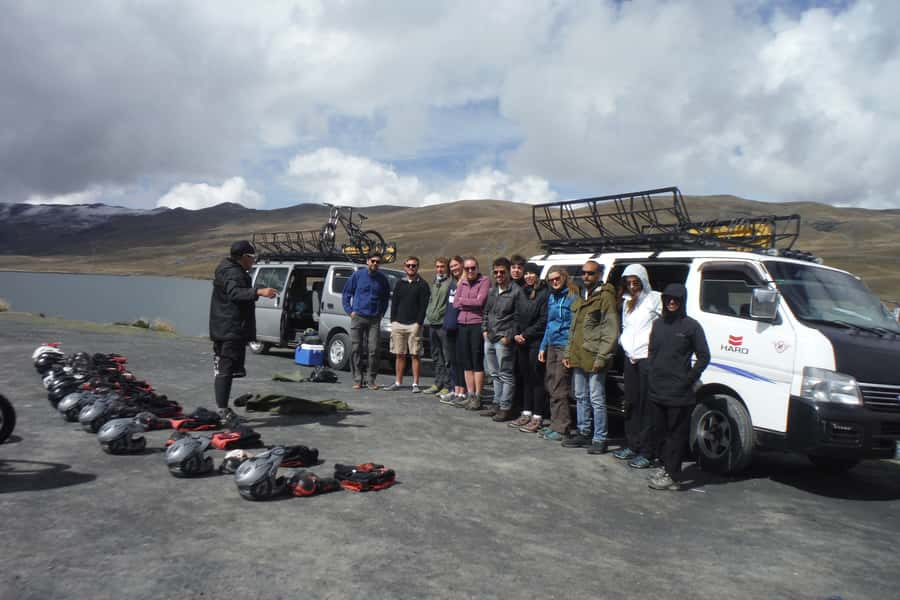
The day begins at the Vertigo Biking office in La Paz. Look for the company office, where the tour bus should be parked outside. Pickup from the meeting point and private transport are included, which keeps the morning simple.
The first drive takes about 45 minutes. You head up to Cristo de la Cumbre, also called La Cumbre, at roughly 4,700 meters. This is a high, cold start, so bring warm clothing even if La Paz feels mild when you leave.
Before riding, you get about 30 minutes for a safety briefing. Guides check the bikes, explain braking and riding technique, and lay out what you can expect on the road. This is useful because the day changes from easy road riding to a much more demanding dirt track.
The altitude can affect you before you even touch the bike. Move slowly while getting ready, drink water, and pay attention to how you feel. The tour includes unlimited water, but you still need to take it regularly.
The views at the start are wide and dramatic, with snow-covered peaks and cold mountain light. This first stop is not just a launch point. It gives you a clear sense of the huge descent ahead.
More bike tours around the world:
- Lion City Bike Tour of Singapore
★ 5.0 · 6,211 reviews - Big Bike tour Amsterdam – See all in 3 unforgettable hours
★ 4.7 · 4,929 reviews - 3-Hour Porto Highlights on a Electric Bike Guided Tour
★ 5.0 · 4,392 reviews
The paved opening gives you time to settle in
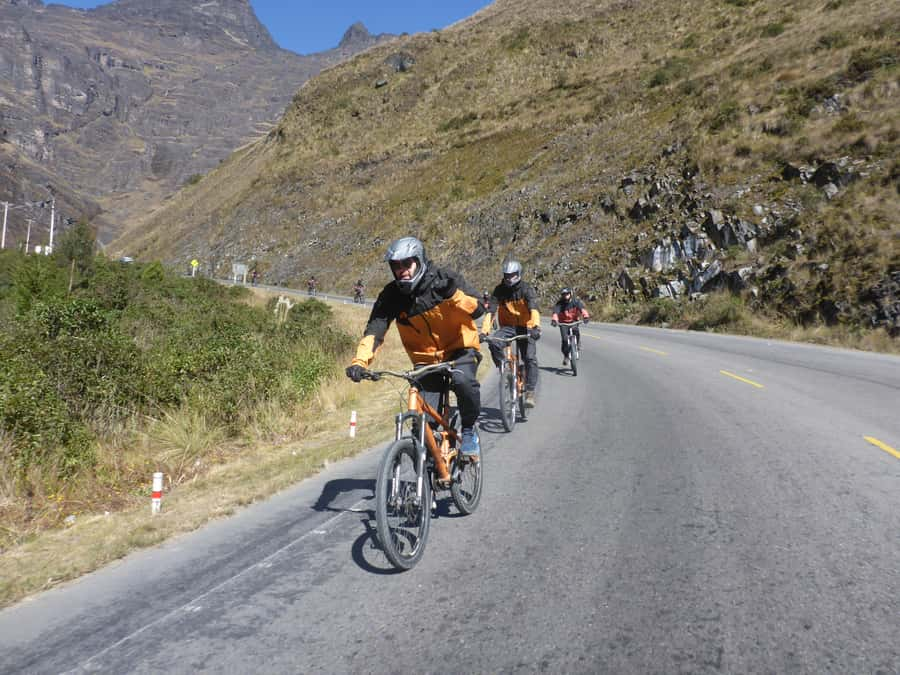
The first riding section follows a paved road for about an hour. You pass small traditional villages and get time to adjust your seat, brakes, gloves, and riding position.
I like this opening because it lets you learn the bike before the rougher section begins. The supplied bikes are full suspension downhill mountain bikes with hydraulic disc brakes. They may not look brand new or high-tech, but the important parts are the suspension and brakes, and the guides check them along the way.
The road section is still a descent, so you need to stay alert. Do not treat it as a free-for-all. The guides stop often for photographs, bike checks, and more instructions. Those pauses help the group stay together and give you a chance to ask questions.
The pace can be flexible. Guides have allowed riders to go ahead on suitable stretches, while still keeping an eye on the group. You should not expect to race, but you are not forced into one rigid speed either.
This is also the part where you learn how the day is organized. You ride, stop, listen, and continue. If you are nervous, the steady rhythm helps. If you already ride mountain bikes, you may find the paved opening less exciting than the dirt section, but it serves a useful purpose.
Chuspipata marks the real Death Road
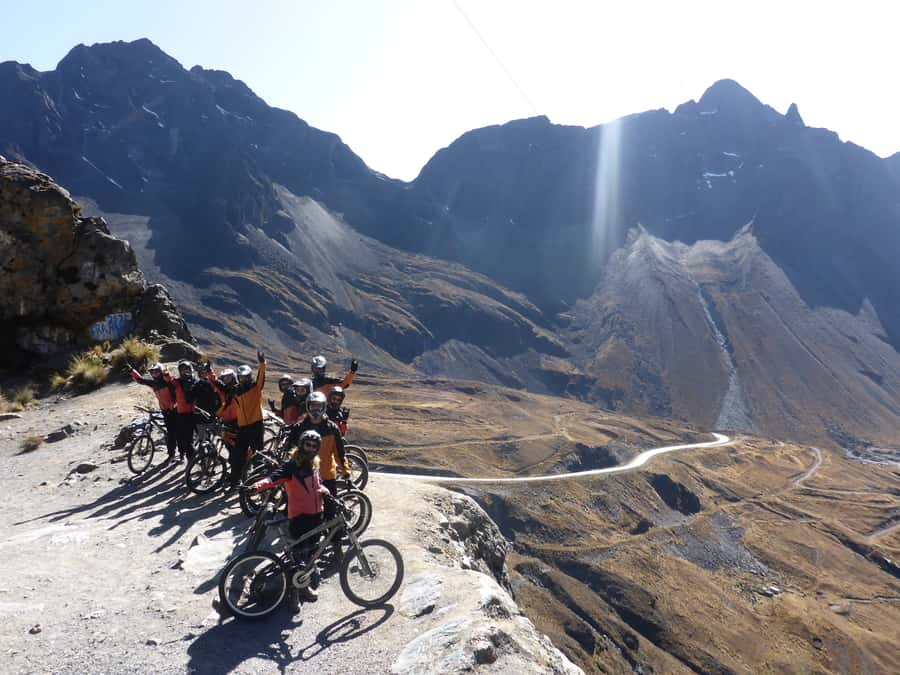
After the opening ride, the group takes transport for about 15 minutes to Chuspipata. This is the start of the actual Death Road section, and the setting changes at once.
The cold open mountain gives way to thicker vegetation, trees, mist, and low cloud. The road becomes dirt, and the surface can be wet. You ride beneath small waterfalls and through tiny rivers, so waterproof assumptions are not wise. You may finish wet from spray, rain, or road water, and certainly dusty or muddy.
The main Death Road ride takes about four hours. That is a long time on a bike, even though the route is mostly downhill. Your hands, arms, back, and legs still work throughout the descent, especially on rough surfaces and tight sections.
The guides remain nearby to offer instructions and check the bikes. First aid training, qualified mechanics, and a support driver matter here because the road conditions can change. One recent ride dealt with small landslides from the previous day, yet the group continued with guide support.
The protective equipment is a major part of the value. You receive a full-face helmet, elbow and knee pads, gloves, pants, and a jacket. These items do not make the road risk-free, but they give you better protection from falls, stones, branches, mud, and cold spray.
You should still ride within your ability. Keep your attention on the surface, use the brakes with control, and follow the guide’s instructions. The word Death in the road’s name may attract attention, but the real question is how comfortably you can handle a long downhill ride on wet dirt.
Waterfalls, mist, and changing temperatures
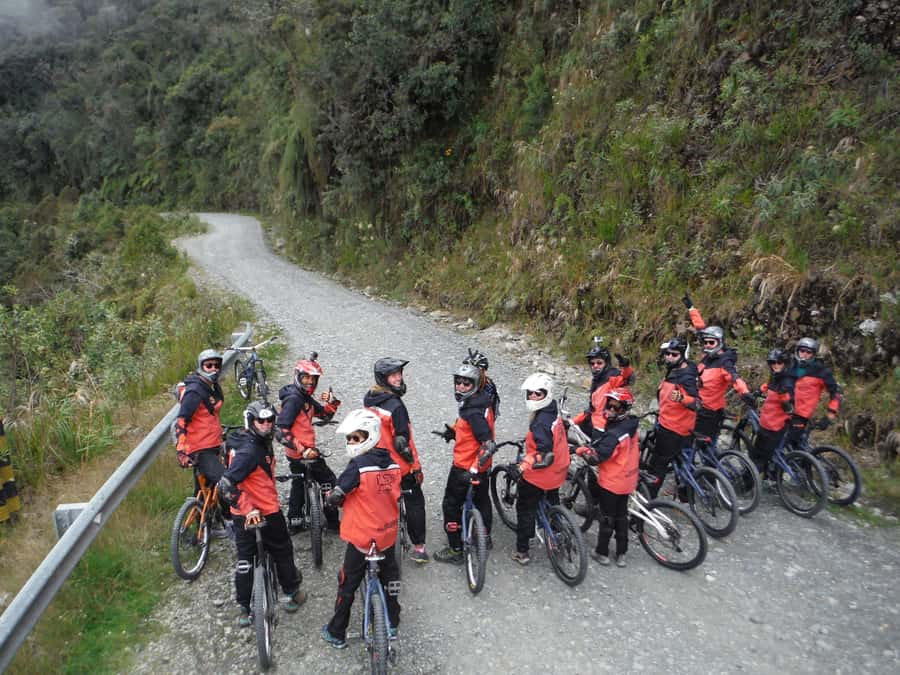
One of the best parts of the route is the rapid shift in weather. You start cold, ride through damp cloud, and finish in warm air. By the time you reach Yolosita, you are likely to want a drink, a shower, and dry clothing.
The small waterfalls and stream crossings give the ride a physical edge. This is not a polished cycle path. You should expect uneven ground, water, dirt, and changing grip. Sunglasses help with spray and glare, while sunscreen remains useful even though much of the ride passes through cloud and trees.
The guides stop for photographs and short breaks. Photos and short videos from the day are uploaded to Dropbox, which means you can concentrate more on riding instead of trying to record every turn yourself.
That said, bring a small daypack rather than a large bag. You need room for the essentials without carrying weight that shifts while you ride. A change of clothes and swimwear are especially useful because the finish includes showers and a pool.
Same wheels, a different route:
- Ninh Binh Full-Day Tour from Hanoi to Hoa Lu, Tam Coc & Mua Cave Via Boat & Bike
★ 5.0 · 4,384 reviews - Small Group Guided Bike Tour of Amsterdam’s Hidden Gems
★ 5.0 · 3,936 reviews - 3-hour Complete Prague Bike Tour
★ 5.0 · 3,674 reviews - Bangkok: Temples, Canals & Local Life Bike Tour
★ 4.9 · 3,511 reviews
The finish at 1,200 meters is part of the reward
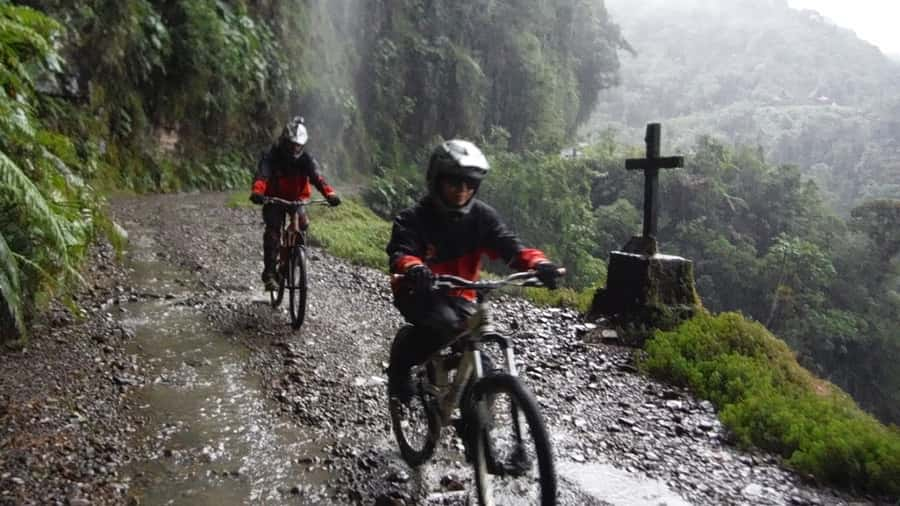
At Yolosita, near the entrance to the Bolivian Amazon, the temperature is much warmer. After several hours on the road, the final stop feels less like a formal ending and more like a reset.
The group takes a short break at a viewpoint, with time for photos and sightseeing. There is also a stop in a traditional village for more photographs and a guided visit. These pauses break up the descent and give you a chance to see how sharply the surroundings change from the high Andes to warmer lowland country.
Transport then takes you to the hotel or resort. The itinerary allows about 105 minutes there, including free time and resort activities. You get a buffet lunch, a shower, and access to the swimming pool.
This is a real advantage over tours that simply finish at the bottom of the road and load you straight into a vehicle. A shower matters after a wet, dusty ride. The pool gives you a place to relax, though your time is limited, so do not expect a full afternoon at the resort.
The food and pool have been praised by several riders, and they add practical value to the $129 price. Lunch alone is not the reason to book this tour, but it makes the day feel better planned and more comfortable.
What $129 gets you
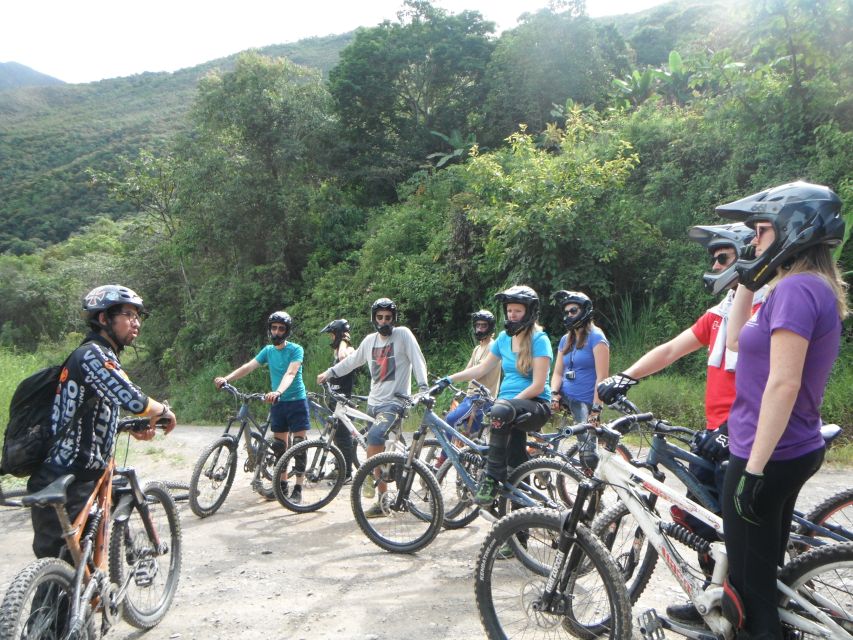
At $129 per person, the tour is not the cheapest way to see the road, but the price covers most of the costs that can catch you out on an adventure day.
You receive:
- Pickup from the meeting point
- Private transport
- A full-suspension downhill mountain bike
- Hydraulic disc brakes
- Full-face helmet
- Pants and jacket
- Elbow and knee pads
- Gloves
- Bilingual English and Spanish guides
- Bike checks and mechanical support
- Snacks and unlimited water
- Buffet lunch
- Shower and pool access
- Photos and short videos uploaded to Dropbox
The Death Road tax is separate and costs 50 bolivianos. A zipline is also available for an extra charge on the day. Keep cash with you for those costs and for any other small purchases.
The value is strongest if you would otherwise need to rent gear, arrange transport, find food, and organize a return from Yolosita. Here, the equipment and support are handled for you. The long return drive is part of the tradeoff, but arranging that journey independently would also take time and money.
Guides, bikes, and the level of support
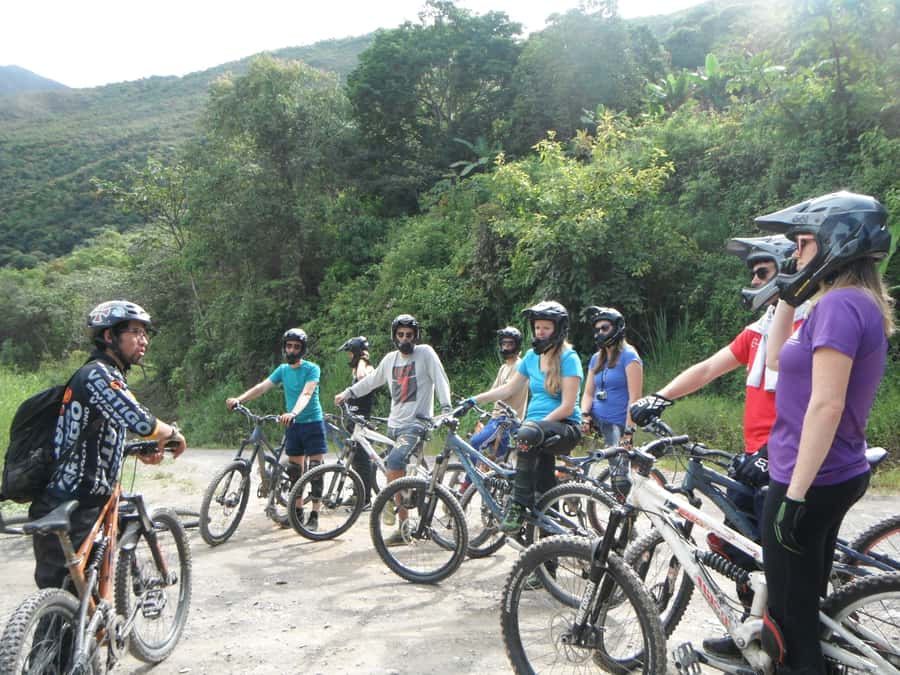
The guide quality is central to this experience. Victor has led rides with fluent English, cultural conversation, and close attention to riders. Freddy has worked both as a guide and driver, with a strong focus on safe transport. Chris, Maury, Javier, and Eddy have also led groups through the route.
Your guide assignment will vary, but you can expect English or Spanish service. The best guides explain each stage, check how people are doing, and give riders room to choose a comfortable pace. That matters more here than a constant stream of commentary.
The bikes are made for downhill riding, with full suspension and hydraulic disc brakes. Do not judge them by appearance alone. This is not a road cycling trip, and the critical concerns are working brakes, sound suspension, and a suitable fit.
The stated minimum height is 155 centimeters. If you are close to that limit, contact the operator before booking so you can confirm the equipment will fit.
The tour leaves with at least two people. If you are booking alone or on a quiet date, check that a group is confirmed. The exact starting time also depends on availability.
What to pack for a wet, cold, and hot day
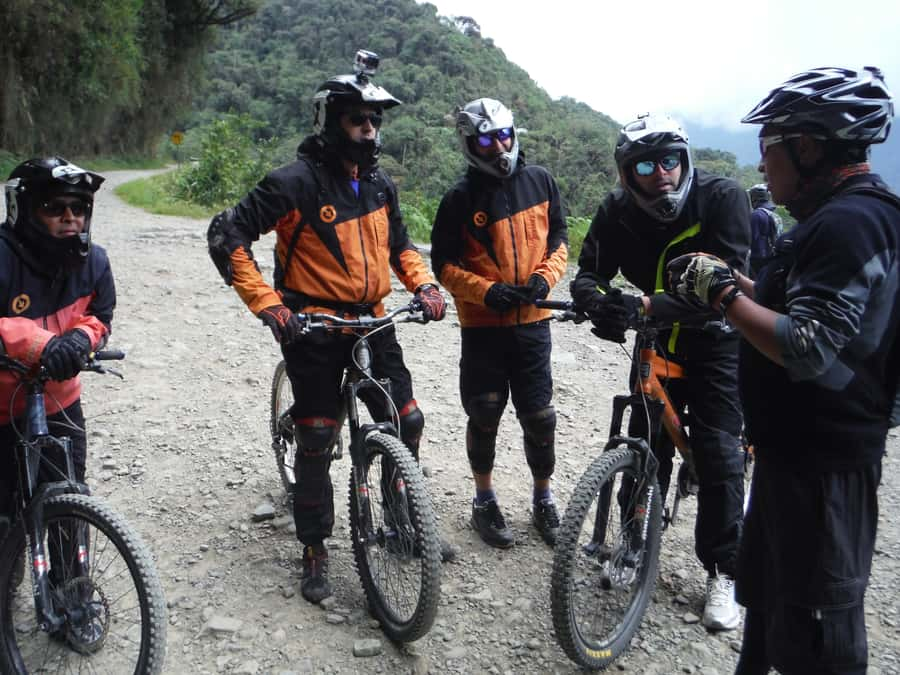
Pack for three climates, not one. You need warm layers at La Cumbre, protection from sun and spray on the road, and light clothing for Yolosita.
Bring:
- Warm clothing
- Sunglasses
- Sunscreen
- Insect repellent
- Swimwear
- A complete change of clothes
- A small daypack
- Cash
- Passport or an accepted copy of your identification
The operator provides riding clothing, but your own spare clothes still matter. You will be grateful for dry socks and a clean shirt after the road section.
Avoid bringing anything that cannot handle water or dirt. Keep your passport or copy protected in your daypack. The tour provides water and snacks, so you do not need to carry a day’s worth of food.
Who should book this Death Road ride?
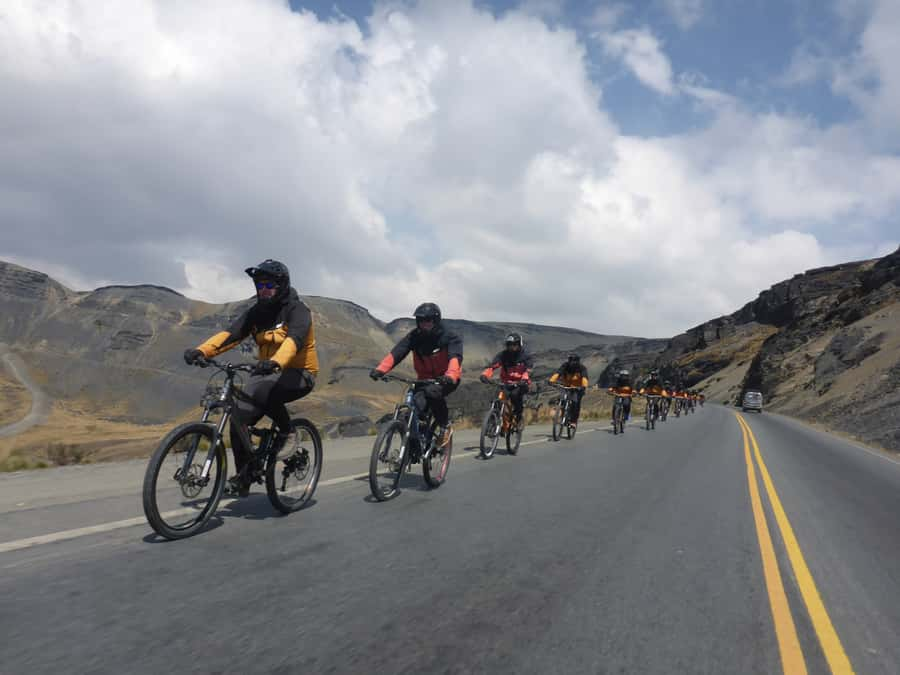
I would choose this trip if you want a full day of activity and like the idea of moving through several climate zones by bike. It suits confident casual cyclists as well as experienced mountain bikers, provided you can manage a long descent and follow instructions.
It is not suitable for people who cannot ride a bike, people with mobility impairments, wheelchair users, or pregnant women. It is also not suitable for anyone under 155 centimeters because of the bike and safety equipment requirements.
You do not need to be a competitive cyclist. You do need comfort with braking, steering, uneven ground, and the possibility of getting wet and dirty. If you dislike heights, rough roads, or long periods on a bike, this may not be the right use of your day in La Paz.
The tour has a 4.7 rating from 68 reviews, with repeated praise for safe driving, patient guides, good bikes, photos, and the food and pool at the end. The few clear drawbacks are the long return transport and the fact that the equipment may look used rather than showroom fresh.
Should you book it?
Book this tour if Death Road is high on your Bolivia list and you want a supported, all-in-one day rather than an independent ride. The strong points are the route, the downhill bikes, protective gear, bilingual guides, support vehicle, food, and comfortable finish.
Think twice if you want a quiet sightseeing day, dislike long vehicle rides, or expect new-looking equipment and a luxury van. For most active visitors based in La Paz, the $129 cost is fair because it covers transport, gear, food, safety support, and the clean-up time that makes the day much more enjoyable.
FAQ
How long does the Death Road biking tour last?
It is a one-day experience. The ride includes a 45-minute transfer to La Cumbre, the cycling sections, about 105 minutes at the hotel or resort, and a return bus journey of about three hours.
How far do you ride?
The full route covers about 64 kilometers. It begins at La Cumbre at approximately 4,700 meters and finishes in Yolosita at about 1,200 meters.
Is the entire route on dirt?
No. The first riding section uses a paved road and lasts about an hour. The actual Death Road section begins at Chuspipata and follows a dirt road through vegetation, mist, waterfalls, and small rivers.
What equipment is included?
You receive a full-face helmet, pants, jacket, elbow and knee pads, gloves, and a full-suspension downhill mountain bike with hydraulic disc brakes.
Is food and water included?
Yes. Unlimited water and snacks are provided during the ride, and a buffet lunch is served at the hotel or resort at the end.
Are showers and swimming included?
Yes. After the ride, you can use the showers and swimming pool at the hotel or resort during the scheduled stop.
Is the Death Road tax included?
No. The Death Road tax costs 50 bolivianos and is paid separately. A zipline is also available for an additional charge on the day.
Who cannot take this tour?
The tour is not suitable for pregnant women, people with mobility impairments, wheelchair users, people who cannot ride a bike, or anyone under 155 centimeters tall.
New rides added around the world
- Prague Electric Scooter and eBike Grand Tour★ 5.0 · 15 reviews
- Prague: E-Scooter HUGO Bike Rental★ 4.8 · 11 reviews
- Prague E-Bike City Ride tour : 2hrs★ 4.5 · 36 reviews
- Prague: E-Bike or E-Scooter Tour with A Local Guide★ 4.8 · 154 reviews
- Prague: City Viewpoints Tour by Electric Fat Bike★ 5.0 · 43 reviews
- Prague City Bike guided tour★ 3.7 · 10 reviews
- Prague: Classic City Bike Tour★ 4.7 · 149 reviews
- Prague: Stunning Viewpoints, Castle, City & Park Bike Tour★ 4.6 · 38 reviews
Bike Tours, compared.
Big Bike tour Amsterdam – See all in 3 unforgettable hours
Read our review →
3-Hour Porto Highlights on a Electric Bike Guided Tour
Read our review →
Small Group Guided Bike Tour of Amsterdam’s Hidden Gems
Read our review →
Hills, Alfama, and Mouraria Tour by Electric Bike
Read our review →