
Review · AUSTRALIA
Electric Bike Tour of Melbourne
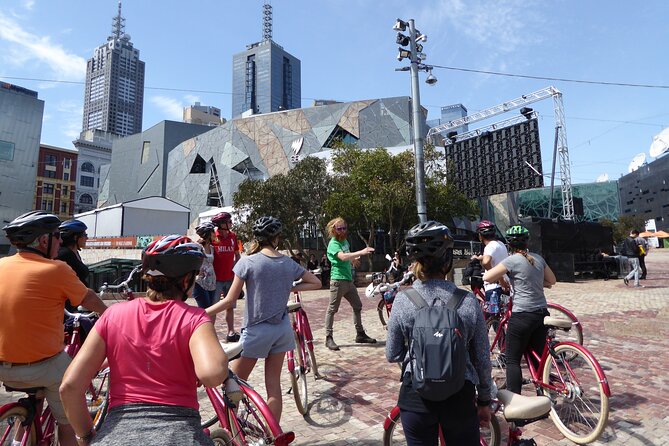
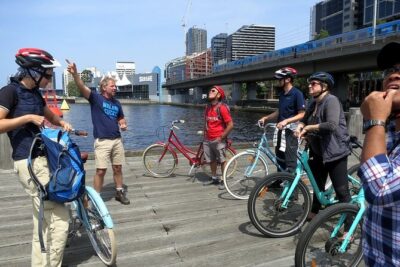
Melbourne’s best introduction may come with two wheels and a small electric motor. This four-hour ride links the Yarra, war memorials, sports grounds, gardens, laneways, Chinatown, and Fitzroy without asking you to tackle the city on foot. The e-bike boost keeps the pace relaxed, and the route is said to be about 95% on bike paths and through parks.
I especially like the frequent stops and the guide-led storytelling. Al, Marcus, Freddie, and Avalon are among the guides praised for clear explanations, good local advice, and careful group handling. I also like the Fitzroy café break, which gives the tour a real neighborhood pause rather than four straight hours of sightseeing. The main consideration is that this is as much a history and orientation tour as a bike ride, so riders hoping to pedal nearly nonstop may find the pace slow.
Key points to know before booking
- About 95% away from traffic: Most of the route uses bike paths and parks, though you still ride through city streets and around pedestrians.
- A proper Melbourne overview: You’ll see the Yarra, the MCG, Fitzroy Gardens, Parliament, Chinatown, Hosier Lane, Fed Square, and more.
- History is central: Expect discussion of the Kulin Nation, Aboriginal rights, settlement, the gold rush, war history, immigration, and sport.
- Lunch costs extra: The Fitzroy café stop is included in the timing, but you pay for your own food and drinks.
- Small group format: The maximum is 10 people, which makes it easier for the guide to keep everyone together.
- Designed for most reasonably active adults: The bikes are easy to operate, but this is still a four-hour cycling activity and is not presented as a children’s tour.
Why an e-bike works so well in Melbourne
Melbourne is broad enough that walking between its main sights can eat up much of a day. A bus can cover the distance, but it leaves you behind glass and often skips the small connections between major landmarks. An e-bike gives you a middle path: you cover ground, stop often, and remain close to the streets, parks, and river.
The electric assistance matters most when the group has mixed fitness levels. One rider in their 60s described the bike as easy to learn with the staff’s instructions, while another called the ride relaxed and suitable for people who are not regular cyclists. That does not make the tour effortless. You still need to balance, steer, watch the path, and manage city riding. But the motor takes some pressure off your legs.
The route is mostly flat, which helps. You can expect a measured pace rather than a workout. The tour covers roughly 10 miles according to one detailed account, though the exact distance and riding time can vary with the group and stops.
The small group limit of 10 is another practical plus. A guide can check that everyone is comfortable, adjust the pace, and keep the group together more easily than on a large coach excursion. Guides such as Al and Marcus are praised for keeping riders safe, while Freddie is noted for giving first-time e-bike users useful instruction.
More E-Bike Tours in Australia
- Sydney: Guided Harbour E-Bike Tour
★ 5.0 · 253 reviews - Electric Bike Tour of Melbourne
★ 4.7 · 210 reviews - E-Bike Hire: Northern Rivers Rail Trail, Trail Side Hire
★ 5.0 · 95 reviews
Starting at Southbank and the Yarra
The meeting point is at 20 Rebecca Walk in Melbourne, with a 10:00 am start and a return to the same place. One piece of practical advice: double-check the exact Rebecca Walk number in your booking details, since one rider found a discrepancy between 2 and 20 Rebecca Walk.
The opening stop is Southbank. Here, the guide acknowledges the Kulin Nation and the fact that the land was never ceded. That gives the tour a more responsible beginning than a simple list of colonial buildings and famous names.
You also begin hearing about the people and forces that shaped Melbourne. The early commentary sets up the rest of the ride, linking the city’s founding, Aboriginal history, settlement, and later growth. If you want quick photographs and little explanation, the opening may feel long. If you like knowing what you are looking at, it gives the city a useful frame.
The Shrine, the MCG, and Melbourne’s public identity
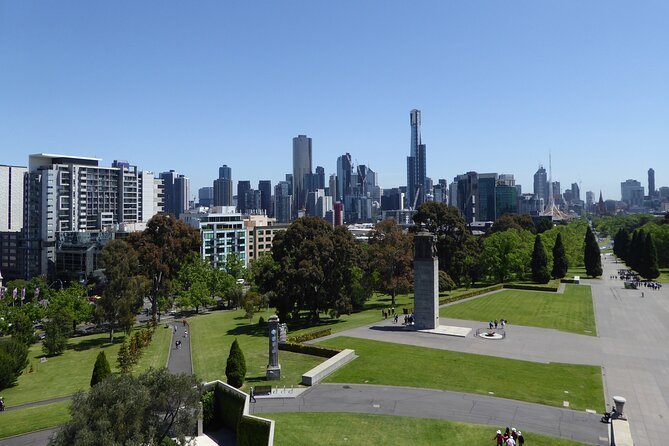
At the Shrine of Remembrance, the focus turns to Victoria’s war memorial and its place in Australian public life. The stop also introduces William Barak, an Aboriginal leader, artist, educator, and advocate whose work remains important to understanding Indigenous history in the region.
The Shrine is a solemn counterpoint to the lighter parts of the day. It is not just another photo stop. You are given a chance to consider how Melbourne remembers war, whose stories have been honored, and how Aboriginal voices fit into the city’s history.
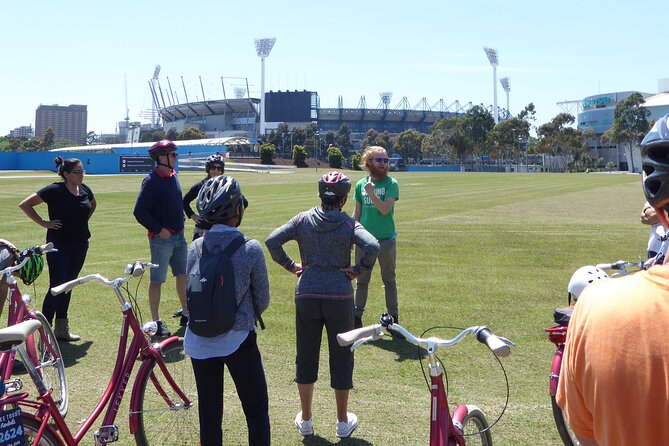
The next major stop is the Melbourne Cricket Ground, or MCG. Even if you are not a cricket fan, the scale of the sporting precinct explains why Melbourne calls itself Australia’s sporting capital. The tour uses the MCG to show how deeply sport is woven into local identity.
You will not be taking a stadium tour as part of this activity. The stop is brief, listed at about five minutes, so think of it as an orientation point and photo opportunity. Sport fans will want to return for a separate match or stadium visit if their schedule allows.
Fitzroy Gardens and Cook’s Cottage
Fitzroy Gardens offers a change of pace. The route brings you to Cook’s Cottage, the small building transported from England and rebuilt brick by brick in Melbourne. That detail alone makes it an entertaining stop, since the cottage feels out of place in an Australian city garden.
The gardens also help break up the urban riding. You move from memorials and stadiums into a greener public space, then continue toward Melbourne’s grand civic buildings. The stop is short, so you receive context rather than a full garden visit.
This is one reason I would take the tour early in a Melbourne stay. You see enough places to mark several return visits. Fitzroy Gardens, the MCG, and the riverfront could each fill more time on your own, but the bike tour helps you decide where to spend that time later.
Same wheels, a different route:
- From Perth: Rottnest Island Full-Day Bike and Ferry Trip
★ 4.7 · 2,548 reviews - Sydney Bike Tours
★ 5.0 · 1,125 reviews - From Fremantle: Rottnest Island Ferry and Bike Day Tour
★ 4.6 · 805 reviews - Famous Melbourne City Bike Tour
★ 5.0 · 779 reviews
Parliament and the Royal Exhibition Building
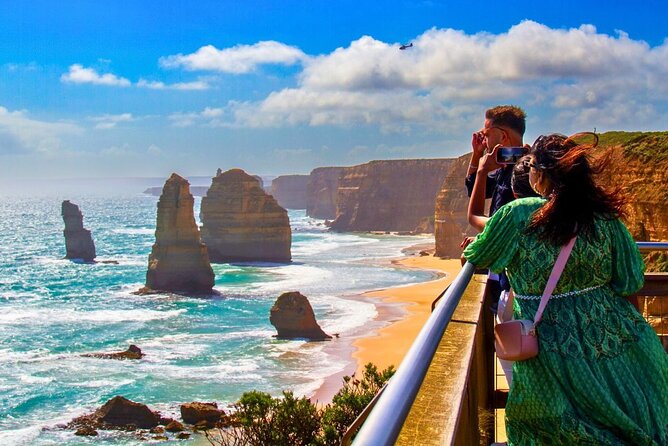
Parliament House of Victoria reflects the wealth created by the gold rush. The building was designed to show that Melbourne had money, ambition, and a desire to be taken seriously on the world stage.
The commentary here connects architecture to economics. You are not only looking at a grand façade. You are seeing what a sudden rush of gold wealth allowed the city to build and how public buildings can express confidence, status, and power.
The Royal Exhibition Building continues that theme. It represents the 19th-century international exhibition movement, when cities used grand halls to display inventions, products, ideas, and cultural achievements. The stop helps explain Melbourne’s links to international trade and public spectacle.
Again, the listed stop times are short. You should not expect an interior tour of every building. The value comes from seeing several major sites in sequence and understanding how they fit into Melbourne’s growth.
A Fitzroy lunch break with your own budget
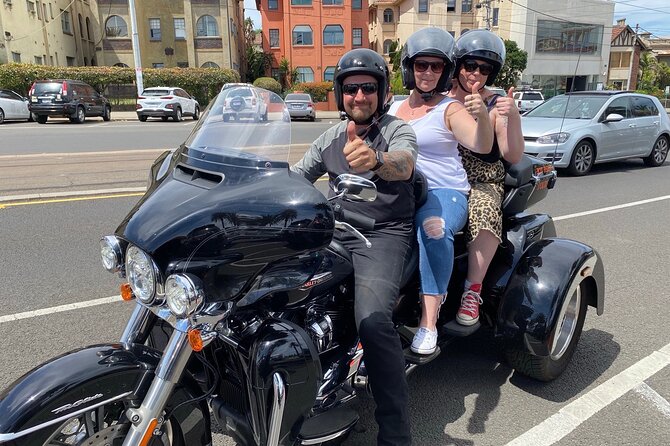
The lunch stop in North Fitzroy is one of the most useful parts of the schedule. You pause at one of the operator’s favorite cafés in an eclectic neighborhood, with time to buy food and take in the surroundings.
Bring extra money. Food and drinks are not included, and the tour does not provide hotel pickup or drop-off. Since the café is part of the experience, you should plan for lunch rather than assuming you can skip the expense.
The stop also gives your legs a break. Four hours on a bike can pass easily when the day is divided into short rides and pauses, but a proper café stop makes the schedule more comfortable. Several accounts describe the lunch venue as a cool or bohemian part of Fitzroy, with good food and a distinct local feel.
There is a tradeoff. The lunch break reduces actual riding time. One critical assessment felt that only about 1.5 hours of a four-hour tour was spent cycling and wanted more back streets and less history. That is a fair warning. Book this tour for a guided city introduction with a café stop, not for continuous cycling.
Chinatown, Hosier Lane, and Fed Square
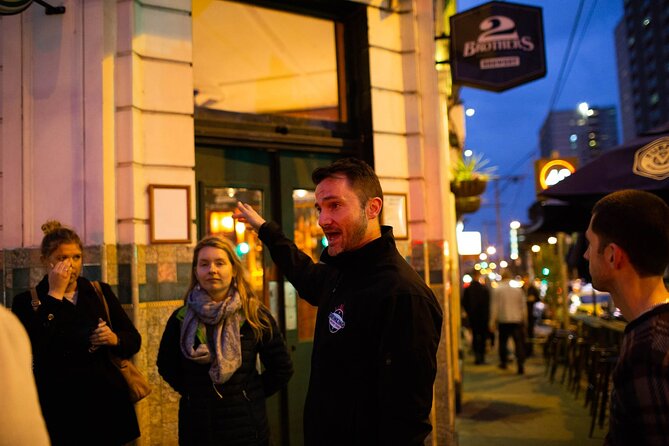
After Fitzroy, the tour returns toward central Melbourne and Chinatown. Founded in 1851 during the gold rush, Melbourne’s Chinatown is presented as the second-oldest Chinatown in the world. The stop adds another layer to the city’s story: migration, commerce, and the communities that helped build Melbourne.
Hosier Lane shifts the mood again. You park the bike and look down a bluestone lane covered in changing street art. This is one of Melbourne’s most recognizable urban scenes, and it is better suited to a short stop than a rushed pass on a moving bicycle.
Fed Square brings you back to the Yarra and the center of the city. The square connects Flinders Street with the river and sits near St Paul’s Cathedral and other heritage buildings. It is a good place to understand Melbourne’s public life, where architecture, transport, arts, and river access meet.
These central stops are useful for first-time visitors because they help you build a mental map. After the ride, you can return on foot, spend more time with the murals, or use Fed Square as a starting point for further exploring.
Immigration, memory, and the ride back
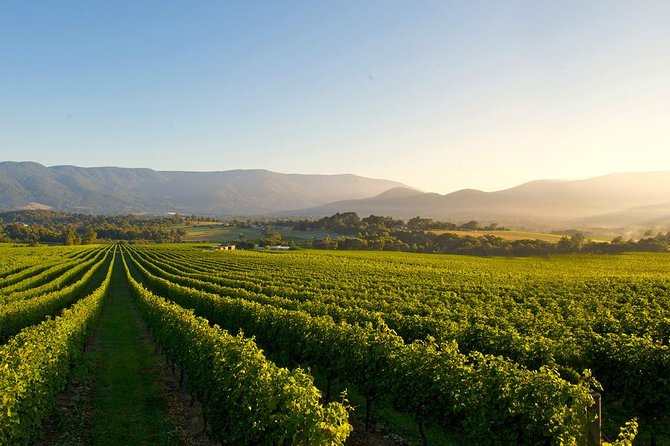
The final listed stop is near the Immigration Museum. From here, the guide considers Melbourne through the experience of its immigrant communities. The city’s population includes people from many backgrounds, and immigration is a key part of how Melbourne developed its food, neighborhoods, business life, and culture.
Ending with immigration gives the tour a wider view than a simple parade of landmarks. The day begins with respect for the Kulin Nation, moves through colonial growth and gold-rush wealth, and finishes by considering the people who have continued to shape the city.
The ride then returns to the meeting point. Since the activity lasts about four hours, the finish should leave you with part of the afternoon available. That makes it practical for a first full day in Melbourne, especially if you want an orientation before choosing which museums, neighborhoods, and sporting sites deserve more time.
How safe and demanding is the cycling?
The route is marketed as mostly off roads, using bike paths and parks. That is reassuring, but it does not mean you are free from city traffic. Some sections involve streets, pedestrians, and changing conditions. One rider described the ride as involving some challenging moments and the need to move between pedestrians and traffic.
The guides appear to take group safety seriously. Al is repeatedly praised for keeping the group together, while other guides are described as attentive and good at adjusting the pace. Still, you need basic cycling confidence and the ability to follow directions.
A helmet is included, as is the e-bike. Most people can participate, but the experience is not framed as a children’s activity. One rider specifically advised against it for kids. I would treat it as best for adults and older teens who can ride comfortably in an urban setting.
The electric bikes are reported as well maintained and easy to operate. If you have never used one, arrive ready to listen during the introduction. The assistance should make the distance manageable, but it does not replace normal cycling awareness.
The guides make the difference
The quality of this tour depends heavily on the person leading it. Al is described as a history-focused guide who offers context at each stop and practical suggestions for restaurants and later sightseeing. Marcus is praised for local knowledge and a calm approach. Freddie is noted for clear e-bike instruction, and Avalon for friendly, informative guiding.
There is also an unusually energetic account of a guide called Max, who mixed Melbourne trivia, humor, Indigenous stories, and personal attention to the group. That style may not appear on every departure, since guide assignments vary, but it shows how much personality can shape the ride.
The best guides do more than recite dates. They explain why the MCG matters, how gold affected the city, what immigration changed, and why a lane covered in street art has become a Melbourne calling card. Some stops may run longer than you expect, especially if the guide has a lot to explain or the group asks questions.
Is the $85.35 price good value?
At $85.35 per person, the tour is not the cheapest way to see Melbourne. You also need to pay for lunch and any drinks. Still, the price includes the bike, helmet, guide, and four hours of organized sightseeing.
I think the value is strongest for a first visit or a short stay. You cover a wide spread of the city without arranging bikes, planning a route, checking paths, or navigating between distant sights. The guide supplies the historical context that a self-guided ride would lack.
The value is weaker if you already know central Melbourne or mainly want exercise. You may spend more time listening and stopping than pedaling. A self-guided rental could give you more freedom and a longer uninterrupted ride, though you would lose the local explanation and group support.
Free cancellation is available until 24 hours before the start time. If the operator cancels because the minimum number is not reached, you are offered another date or experience, or a full refund.
Should you book the Electric Bike Tour of Melbourne?
Book it if you want a friendly, active orientation to Melbourne with a lot of historical explanation. It is especially useful during your first days in the city, when the MCG, Fitzroy Gardens, Chinatown, Hosier Lane, and the river still feel scattered across a large map.
You should also book if you are a reasonably active adult who likes cycling but does not want a hard ride. The e-bike, mostly flat route, frequent stops, and small group make the day approachable.
Think twice if your priority is maximum time in the saddle, quiet back streets, or long visits inside attractions. This tour gives you a broad look, not a deep visit to each site. For most first-time visitors, though, the mix of movement, local history, neighborhoods, and a Fitzroy lunch makes the $85.35 worthwhile.
FAQ
How long does the Electric Bike Tour of Melbourne last?
The tour lasts approximately four hours and starts at 10:00 am.
Where does the tour start and finish?
It starts at 20 Rebecca Walk, Melbourne VIC 3000, Australia, and returns to the same meeting point.
Is the e-bike included?
Yes. The tour includes use of an e-bike and a helmet, along with a guide.
Is lunch included in the price?
No. The tour stops at a café in North Fitzroy, but you pay separately for your own food and drinks. Bring extra cash or another way to pay.
How large is the group?
The activity has a maximum of 10 travelers.
Can I cancel for a full refund?
Yes. You can cancel at least 24 hours before the experience start time for a full refund. Cancellations or changes made less than 24 hours before the start time are not refunded or accepted.
New rides added around Australia
- Yarra River, Melbourne Waterbike Tour★ 5.0 · 13 reviews
- Mclaren Vale Hills Vines and Wines Bike Tour from Adelaide★ 4.9 · 12 reviews
- Sunshine Coast: Maleny Magic Guided e-Bike Tour★ 5.0 · 11 reviews
- From Hobart: Mt Wellington Summit & Rainforest Bike Tour★ 4.9 · 29 reviews
- Electric Bike Tour of Melbourne★ 4.7 · 210 reviews
- Classic Melbourne Bike tour★ 4.8 · 69 reviews
- Byron Bay: Northern Rivers Rail Trail E-Bike Hire & Shuttle★ 5.0 · 15 reviews
- Barossa Valley: Gourmet Food and Wine E-Bike Tour★ 5.0 · 11 reviews
Australia Bike Tours, compared.
Browse the lists this tour appears in