
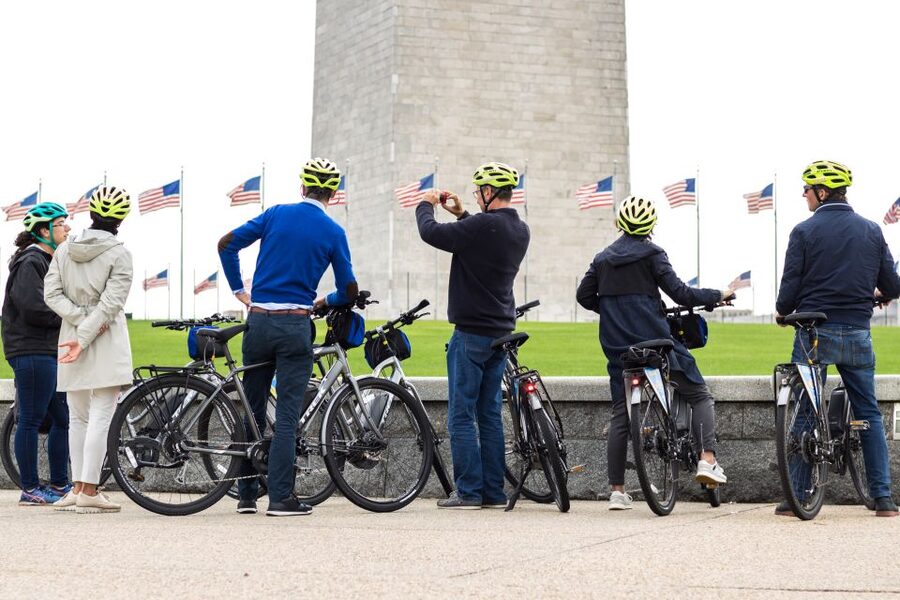
Review · WASHINGTON DC
Washington DC: Monuments and Memorials Bike Tour
Washington’s memorials are spread across a broad, flat stretch of the city, and a bicycle lets you cover the ground without wearing out your feet. In three hours, you can ride from the Jefferson Memorial to the Lincoln Memorial, stopping along the way for short talks, photos, and a closer look at the sites.
I like the easy route and the way a bike keeps the day moving. I also like that guides such as Joe, Wally, MacKenzie, Greg, and Bianca have been praised for adding useful stories, taking photos, and keeping families safe. The tradeoff is simple: ten minutes at each stop gives you a strong first look, but not enough time for a slow, detailed visit inside every memorial.
At a glance: what makes this bike tour useful

- About four miles on flat ground: The route is easy for most riders and largely avoids demanding hills.
- Eight major sights in three hours: You see memorials and landmarks that take much longer to cover on foot.
- Short stops with time to walk around: Each listed stop lasts about ten minutes, with guided commentary and photo opportunities.
- Comfort bikes and helmets included: Cannondale bikes are provided, and helmets are required for everyone.
- A strong choice for families: Toddler trailers and tag-a-longs can be rented for younger children.
- Good value at $65: Bike rental, helmet, guide, and three hours of sightseeing are included.
Why a bicycle works so well on the National Mall
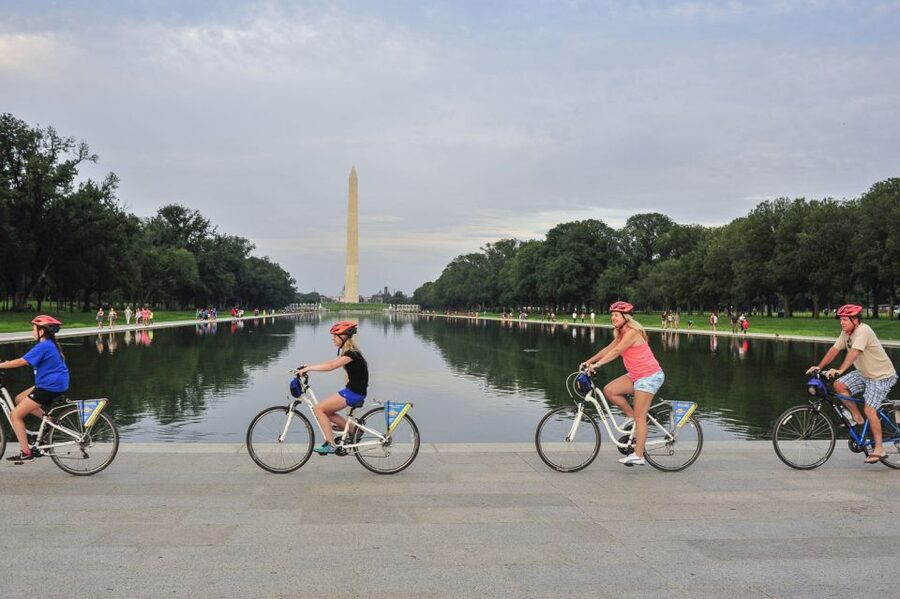
The National Mall looks compact on a map. On foot, it can feel much larger. The Washington Monument, Lincoln Memorial, Jefferson Memorial, and the war memorials are separated by open spaces and long paths, so walking between them can take a surprising amount of time.
A bicycle changes the rhythm. You ride between sites, park near the memorial, then get off to look around. That means less time crossing from one end of the Mall to the other and more time seeing the places you came to visit.
The route covers roughly four miles over flat terrain. That makes it accessible to riders who do not want a strenuous cycling day. Several riders specifically found that no electric bike was needed because the path was flat and much of the route was away from heavy traffic.
You still need to pay attention. The tour is easy, not effortless. You will be riding in a group, stopping and starting, and moving through a busy public area. Comfortable shoes are important, and sandals or flip flops are not permitted.
More bike tours around the USA:
- NYC: Central Park Bike Rentals
★ 4.2 · 2,528 reviews - Red Rock Canyon eBike Half-Day Tour
★ 5.0 · 1,870 reviews - NYC: Central Park Bike Rental
★ 4.1 · 1,651 reviews
Starting at 801 D Street NW
The meeting point is 801 D Street NW, Washington, DC 20004, beside US Navy Memorial Plaza. You meet the guide there, get fitted with a Cannondale comfort bike, and receive a helmet before setting off.
The published information also refers to the Wharf DC, so check the exact meeting instructions attached to your booking before you leave your hotel. The stated meeting address is 801 D Street NW, and the tour returns there at the end.
Arrive early enough to sort out your bike and helmet without rushing. The tour is paced around the group, and one past rider noted that a late start can affect everyone. This is especially worth remembering if you are visiting Washington on a tight schedule.
The bikes have been described as comfortable and well suited to a short city ride. Some equipment has seen regular use, and one rider reported minor brake and gear-shifting issues, but the bikes were still considered fine for the route. If you notice a problem during setup, speak up before leaving.
Jefferson Memorial: starting with Washington’s tidal basin

The first major stop is the Thomas Jefferson Memorial, beside the Potomac Tidal Basin. Its domed shape and position on the water make it one of the most recognizable sights in Washington.
You get a guided introduction, time for photos, and a chance to walk around. The ten-minute stop is enough to see the building, take in the setting, and hear the guide explain why Jefferson has such a prominent place in the capital.
This is one of the tour’s best examples of the benefit of cycling. From the meeting point, the memorials are not arranged in one neat line. Riding lets you reach the Tidal Basin without spending a large part of the morning walking there.
The Tidal Basin is also an attractive place to begin, though it can be busy. Keep your attention on the group when riding and listen for the guide’s instructions around shared paths.
Martin Luther King Jr. Memorial: a powerful riverside stop
The Martin Luther King Jr. Memorial is next. The memorial’s large stone figure and its location facing the Tidal Basin give the stop a different mood from the more traditional memorial buildings.
Your guide explains the site and gives you time to look closely. This is a short visit, so you will not have time for a long personal reflection, but you can see the main design elements and take photographs before moving on.
The order of the tour works well here. The Jefferson and King memorials sit near the water, making this section feel connected rather than like a series of unrelated stops.
Same wheels, a different route:
- Central Park Bike Rental
★ 4.7 · 1,509 reviews - Austin Biker Gang E-Bike Tour
★ 5.0 · 1,399 reviews - Asheville Historic Downtown Guided Electric Bike Tour with Scenic Views
★ 5.0 · 1,234 reviews - Siesta Key Electric Bike Sunset Tour
★ 5.0 · 1,075 reviews
Korean War Veterans Memorial: detail in a small space
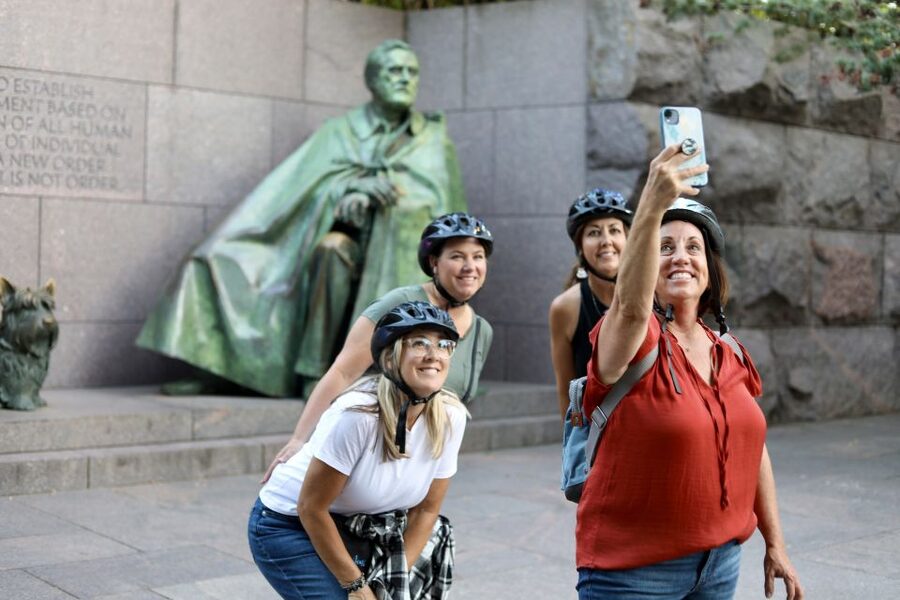
At the Korean War Veterans Memorial, the focus shifts to the soldiers represented by the memorial’s striking figures. It is a smaller stop in physical size than the Lincoln Memorial, but there is plenty to examine.
The guide provides context while you walk around for photographs. Look closely at the detail in the figures and the surrounding design. Ten minutes passes quickly here, especially if you want to take your time with the names and inscriptions.
This is one reason I see the tour as a useful introduction rather than a complete study of every memorial. You get the setting and the main story, then you can return later if one site catches your interest.
Lincoln Memorial: the tour’s grand central moment
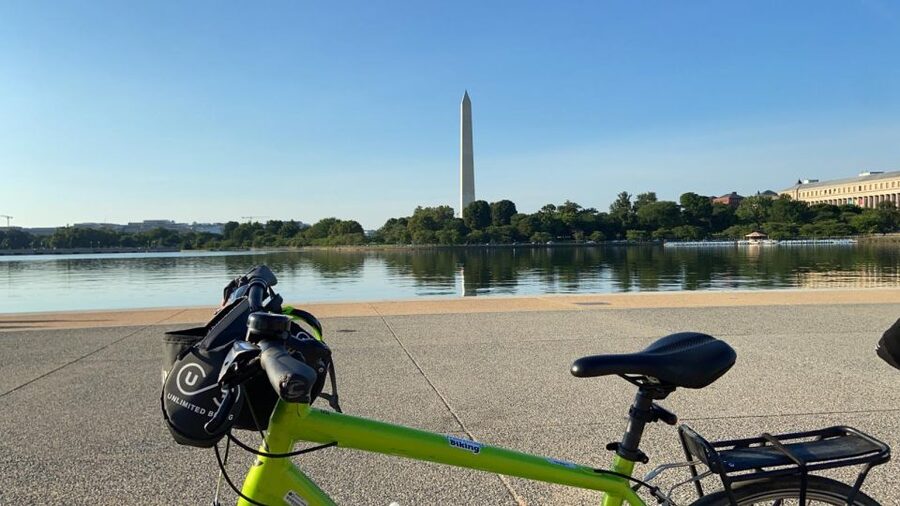
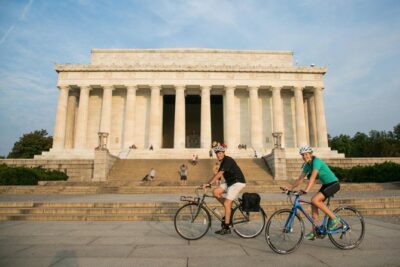
The Lincoln Memorial is likely to be the biggest visual moment of the route. The broad steps, columns, and elevated view toward the Reflecting Pool give you a clear sense of the scale of the National Mall.
You leave the bikes and walk around the memorial. The guide discusses Lincoln and the role of the building, while you have time for photos and a look across the Mall.
The stop is well placed in the itinerary because you have already seen several smaller memorials. By the time you reach Lincoln, the larger setting becomes easier to understand. You can see how the memorial connects to the Reflecting Pool and the Washington Monument.
The limitation is space and time. The Lincoln Memorial draws large crowds, and ten minutes may feel brief if you want to climb the steps, read the inscriptions, and take several photographs. Think of this as your orientation visit.
Vietnam Veterans Memorial: a quieter change of pace
The Vietnam Veterans Memorial brings a more personal and subdued feeling to the route. Its long wall and names require a slower kind of attention than the grand architecture at Lincoln.
The guide gives a short talk, then you can walk around and look at the memorial. If you have a particular name to find, tell your guide early and be realistic about the time available. The tour allows about ten minutes here, so a longer search may need a return visit.
This stop also shows the range of the tour. You are not seeing only presidential buildings and large monuments. The route includes memorials that ask you to think about individual service and loss.
World War II Memorial: a broad, open space
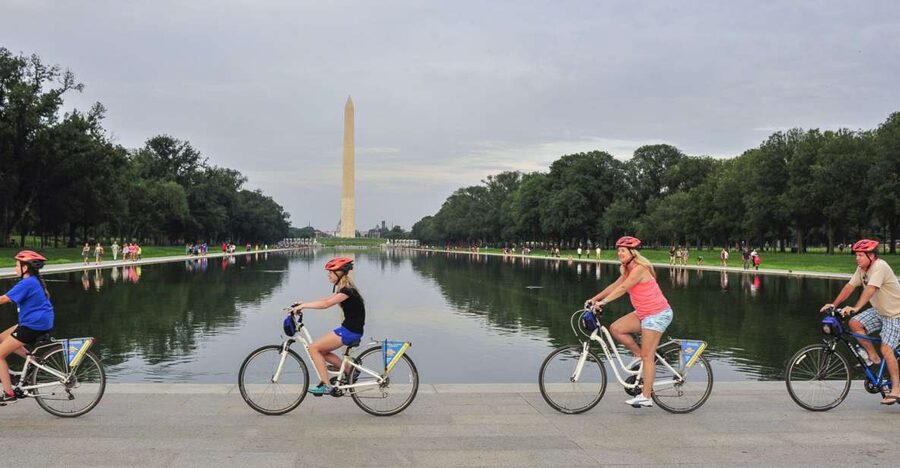
The World War II Memorial sits between the Washington Monument and the Lincoln Memorial. Its open design and central location make it easy to view on a bicycle tour.
You get a guided explanation and time for photos. The group can spread out a little while looking at the pillars, inscriptions, and central water feature, though you should stay close enough to hear when it is time to leave.
The memorial is a good place to appreciate the efficiency of the bike route. It is close to several other major sights, but walking between all of them still takes time. On a bike, you can make the connection quickly and keep the three-hour schedule intact.
Washington Monument: the Mall’s familiar landmark

The Washington Monument is a photo stop and a chance to hear about the monument’s place in the city. You see it from the grounds rather than taking an interior visit.
The guide explains the landmark while you take photographs and look across the Mall. Because the monument is visible from many points in Washington, this stop helps tie the earlier sights together.
Do not expect a long visit or an elevator trip to the top. The tour is designed to show the outside of the monument as part of a wider route. If you want to go inside, plan that separately.
Smithsonian Castle: the final landmark before returning
The route finishes its sightseeing at the Smithsonian Castle. Its red sandstone exterior looks quite different from the white marble memorials, so it provides a welcome change near the end of the ride.
You receive a short guided introduction and time to see the building from outside. The tour does not include a museum visit, so treat this as a final landmark stop rather than an opportunity to browse Smithsonian collections.
After the Castle, you ride back to 801 D Street NW. The return gives you a final chance to enjoy the city by bike, but the tour ends at the stated meeting point rather than at your hotel.
Guides make the difference
The route itself is useful, but the guide shapes the experience. Guides including Joe, Wally, MacKenzie, Greg, Jose, Mark, Bianca, Claire, Kirby, and Noah have been singled out for clear explanations, humor, safety, and help with photographs.
Wally, for example, has been praised for pointing out small details and adjusting the route around a possible Marine One departure from the White House. That kind of local awareness can add an unexpected moment to a standard sightseeing route, though special events are never guaranteed.
MacKenzie has been praised for explaining American history in a clear way, while Joe has been noted for organization and a steady flow of information. Family-focused guides such as Kirby and Bianca have also helped make the ride comfortable for parents and children.
Guide quality can vary from one departure to the next. The consistent strengths to look for are clear safety instructions, useful context at each stop, and a pace that gives you time to get off the bike and look around.
Families, children, and fitness
This is one of the better Washington activities for families who want to see a lot without spending three hours walking. The route is rated easy, flat, and suitable for children of different ages.
Toddler trailers and tag-a-longs are available to rent for younger children. Confirm the arrangement when booking, since the bike setup matters for the whole group.
Teenagers often enjoy the active format more than a conventional vehicle tour. Adults get the practical benefit of covering ground quickly, while children have regular changes of scenery and short stops.
The tour is not suitable for pregnant women. Everyone else should bring comfortable shoes, wear clothing suited to the weather, and remember that helmets are mandatory.
What $65 gets you
At $65 per person, the price is fair if you want a guided introduction to Washington’s major memorials. The fee covers three hours, a professional English-speaking guide, bike rental, and a helmet.
You are paying for more than a bicycle. The useful part is the route planning, the safety lead, and the explanations that help turn a string of monuments into a connected story. A self-guided rental may cost less, but you would need to plan the route, manage navigation, and supply your own context.
The value is strongest on a first visit or during a short stay. If you have only one free morning, this tour gives you a broad look at the city’s main memorial area.
The value is weaker if you prefer long, quiet visits at each site. You may want to return independently to the Lincoln, Vietnam, or Jefferson memorials after the tour.
The activity has a 4.8 rating from 399 reviews, with repeated praise for the guides, route, family appeal, and safety. One rider did report minor bike maintenance issues, and another disliked waiting for late arrivals. Those are useful reminders to arrive early and check your bike before departure.
Practical tips for a smoother ride
Wear closed, comfortable shoes. Sandals and flip flops are not allowed, and you will be getting on and off the bike at every major stop.
Bring identification, as a passport or ID card is listed among the things to bring. Pack water and weather protection for the day, although the supplied information does not specify what is provided beyond the bike and helmet.
Plan your expectations around the clock. Most major stops allow about ten minutes, which is enough for a talk, photos, and a quick walk around. It is not enough for an unhurried visit to every site.
The tour can be canceled if weather creates dangerous riding conditions. If the operator cannot reschedule, a full credit or refund is issued. You can also cancel up to 24 hours in advance for a full refund, and the reserve-now, pay-later option keeps your plans flexible.
Should you book the Washington monuments bike tour?
Book it if you want to see the main memorials efficiently, enjoy a flat ride, and prefer a guide who can explain what you are seeing. It is especially suitable for families, first-time visitors, short Washington stays, and anyone who finds the National Mall too spread out for a walking tour.
Skip it if you want to spend a long time inside each memorial, dislike group pacing, or cannot ride comfortably. You should also avoid it if you are pregnant, since the activity is not considered suitable.
For most visitors, the best plan is to use this tour as your broad introduction to the Mall. You will see the key places, learn which ones deserve more time, and can return later on foot for the memorial that speaks to you most.
FAQ
Where does the Washington DC bike tour meet?
The stated meeting point is 801 D Street NW, Washington, DC 20004, right by US Navy Memorial Plaza. The tour returns to this location.
How long is the tour?
The tour lasts three hours and covers approximately four miles of flat terrain.
Which sights are included?
The route includes the Thomas Jefferson Memorial, Martin Luther King Jr. Memorial, Korean War Veterans Memorial, Lincoln Memorial, Vietnam Veterans Memorial, World War II Memorial, Washington Monument, and Smithsonian Castle.
Is bike rental included?
Yes. Bike rental and a helmet are included in the $65 price. Helmets are mandatory for all participants.
Can young children join?
Yes. Toddler trailers and tag-a-longs are available to rent for children.
What language is the tour offered in?
The live guided tour is offered in English.
What happens if the weather is unsafe?
The tour may be canceled if weather makes riding dangerous. If the local partner cannot reschedule it, a full credit or refund is issued. You can also cancel up to 24 hours ahead for a full refund.
New rides added around the USA
- Portland: Food Carts of the Eastside Bike Tour★ 4.9 · 16 reviews
- Portland: E-Bike Tour at Multnomah Falls★ 4.8 · 20 reviews
- Essential Portland: 2-Hour Guided Bike Tour★ 4.8 · 43 reviews
- Pittsburgh: Beauty of the Burgh Bike Tour★ 4.9 · 37 reviews
- Oahu: Waikiki E-Bike Ride and Manoa Falls Hike★ 4.9 · 28 reviews
- Oahu: Kualoa Electric Bike Tour★ 4.6 · 14 reviews
- NYC: Central Park Guided Bike Tour★ 4.8 · 11 reviews
- NYC: Central Park Guided Electric Bike Tour★ 4.9 · 25 reviews
Washington DC Bike Tours, compared.


Browse the lists this tour appears in