
Review · WASHINGTON DC
Washington DC: Monuments by Night Bike Tour
Washington’s memorials change after dark. The white marble catches the lights, the reflecting pools settle down, and the National Mall feels far calmer than it does in the middle of the day. This three-hour night bike tour covers the capital’s major monuments without asking you to walk miles between them.
I especially like the easy pace and the useful mix of riding, short history talks, and time on foot. Guides such as Joe, Jose, Wally, and Nicole have been praised for keeping groups safe while making the stories fun. The main drawback is timing: in June and July, sunset may come late, so part of your ride can take place in daylight.
- A four-mile route covers the National Mall and Tidal Basin, mostly on flat ground.
- You stop at eight major memorials and landmarks, usually with about 10 minutes to look around.
- Night lighting and lighter evening crowds make the monuments especially appealing.
- The route works well for families, with toddler trailers and tag-a-longs available to rent.
- Your guide supplies the context, while you still get time to walk inside the Lincoln and Jefferson Memorials.
- Helmets, bikes, reflective vests, and safety lights are included in the $65 price.
Why a Night Ride Works So Well in Washington
Washington is easy to admire but surprisingly spread out. The Lincoln Memorial, Jefferson Memorial, Martin Luther King Jr. Memorial, and Washington Monument are all part of the same sightseeing circuit, yet walking between them can take much of an evening.
A bike solves that problem neatly. You keep moving between stops, but you are not trapped in a vehicle that whisks you past the sights. When the group parks, you can walk up to the memorial, take pictures, and get a short explanation from the guide.
The evening timing also helps with heat. Washington summers can be hot and sticky, and several memorials have little shade. Riding after the worst heat has passed makes the outing more comfortable, though you should still bring an ID and wear comfortable closed shoes. Sandals and flip flops are not allowed.
I would book this early in your Washington visit. It gives you a quick sense of the city’s layout and helps you decide which memorials deserve a longer return visit. One family used the ride as its first evening activity, then built the rest of the trip around the places that caught their interest.
Starting at 801 D Street NW
The tour begins at 801 D Street NW, beside the US Navy Memorial Plaza. This is close to the center of downtown and puts you near the National Mall from the start.
Allow enough time to find the meeting point, especially if you do not know Washington well. One past participant found the directions less clear than expected, and the area can be confusing for a first-time visitor. The practical move is to arrive early and have the exact street address ready on your phone.
At the shop, you receive your rental bike, helmet, reflective vest, and safety light. The helmet is mandatory for everyone. The ride is rated easy and covers about four miles, so this is not a serious cycling challenge. Several families have completed it with children, and one group included kids from eight to 13.
Electric bikes may sometimes be available, but they are not listed as a standard inclusion. Do not count on an upgrade. The regular route is intended to be manageable at a relaxed pace.
More Sunset Bike Tours in the USA:
- Siesta Key Electric Bike Sunset Tour
★ 5.0 · 1,075 reviews - Haleakala Sunrise Best Self-Guided Bike Tour
★ 4.5 · 745 reviews - Las Vegas: Red Rock Canyon Sunrise Self-Guided E–Bike Tour
★ 5.0 · 14 reviews
Jefferson Memorial: A Strong Opening by the Tidal Basin
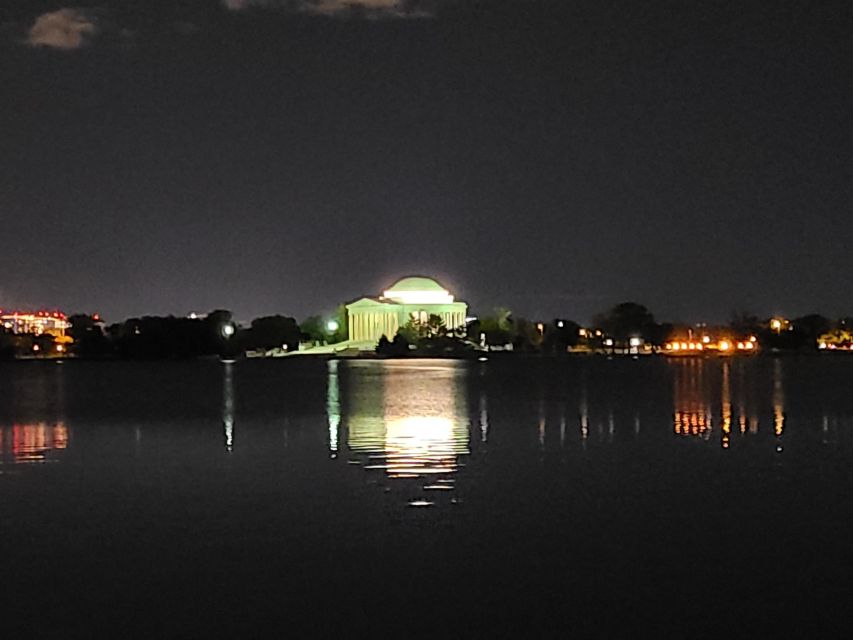
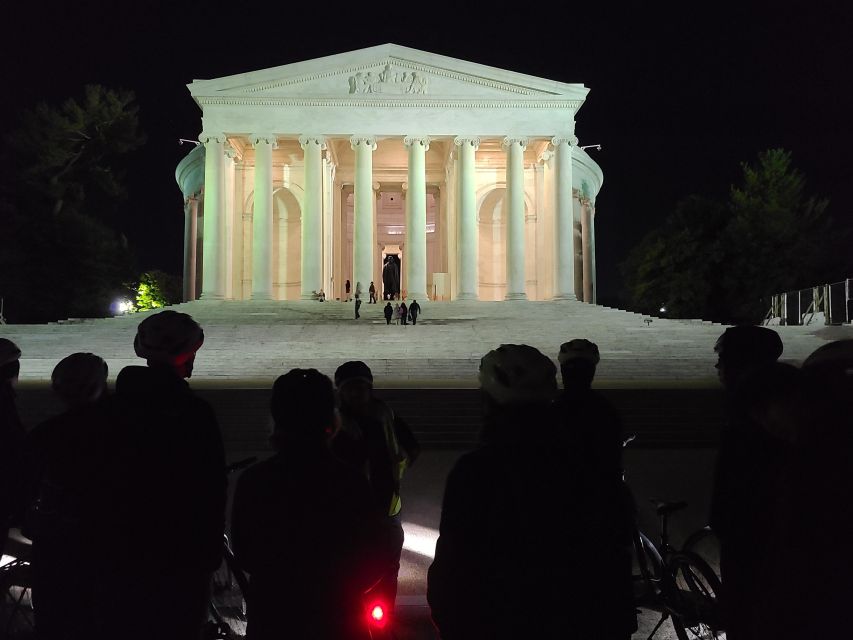
The Thomas Jefferson Memorial is usually the first major stop. Its domed form and pale stone look especially clean at night, reflected in the water of the Tidal Basin.
You will have roughly 10 minutes for a guided introduction, pictures, and a short walk inside. The giant statue of Jefferson gives the building its focus, while the circular interior makes this one of the more visually impressive stops on the route.
The short visit is enough to get oriented, but not enough for a careful reading of every inscription. I would treat this as an introduction, not a full visit. If Jefferson matters to you, return during daylight when you have more time to read and look closely.
The Tidal Basin section is also one reason the bicycle makes sense. The memorials are close enough to feel connected, but far enough apart that walking from one to the next can become tiring.
FDR Memorial: A Longer, More Open Memorial
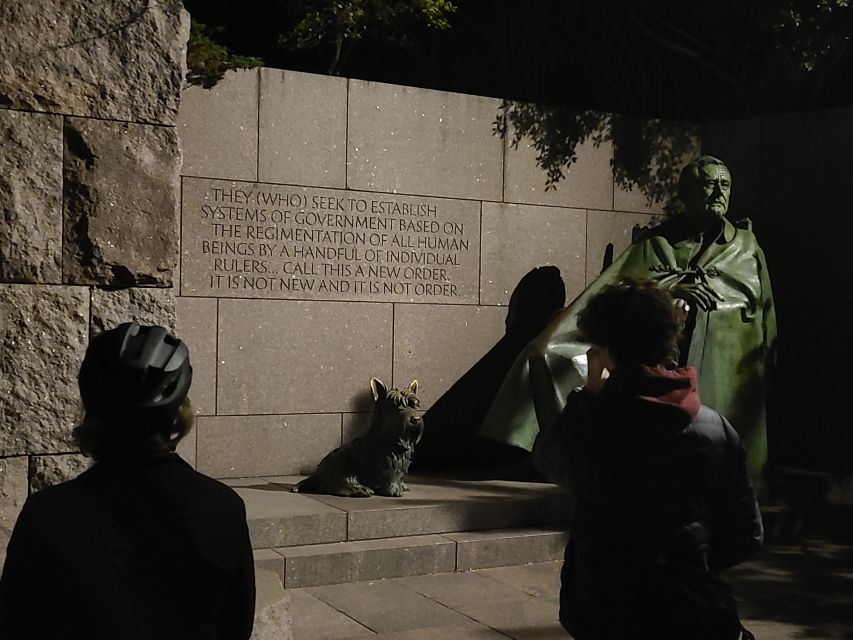
The Franklin Delano Roosevelt Memorial spreads along the Tidal Basin rather than fitting into one enclosed structure. Its walls, waterfalls, sculptures, and quotations tell the story of Roosevelt’s four terms and the hardships of the Great Depression and World War II.
The stop gives your guide a chance to explain the memorial’s scenes before you walk through them. Ten minutes will not cover every detail, but it gives you a useful first look and helps you understand the overall design.
This is one place where a return visit can pay off. The memorial rewards slow reading, and the evening light creates a different mood from the daytime setting. During the bike tour, focus on the main spaces and the guide’s explanation, then come back if you want a closer look.
Martin Luther King Jr. Memorial: A Powerful Night Stop
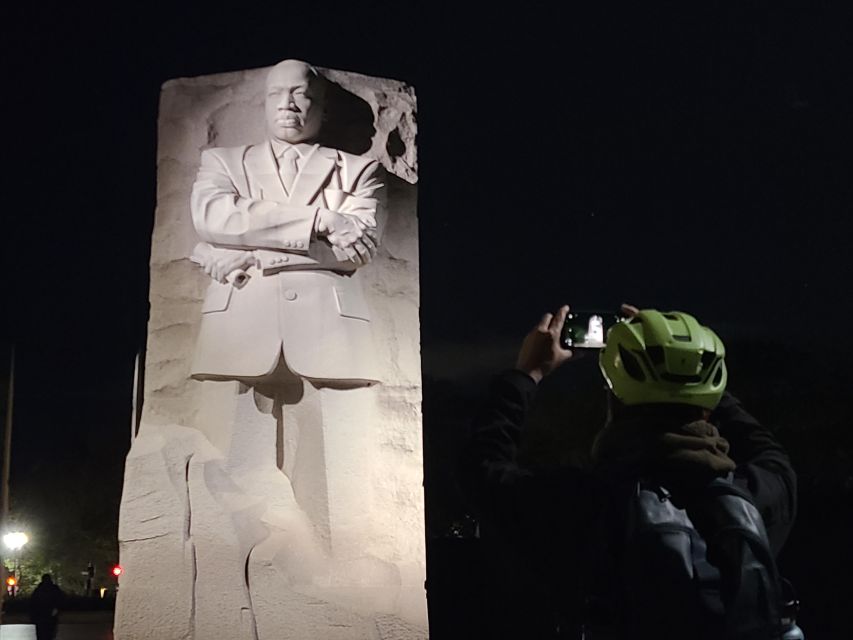
The Martin Luther King Jr. Memorial is another Tidal Basin highlight. The large stone figure of King emerging from the stone wall is easy to recognize and particularly striking when illuminated.
Your guide will provide background before giving you time to walk up to the memorial. The stop is brief, so listen closely and use your free minutes for the statue, inscriptions, and photographs.
This part of the ride is valuable because the memorial sits naturally within the larger story of American leadership and civil rights. It is not just another photo stop. The guide’s explanation helps place it alongside the nearby war memorials and presidential memorials.
More bike tours around the USA:
- NYC: Central Park Bike Rentals
★ 4.2 · 2,528 reviews - Red Rock Canyon eBike Half-Day Tour
★ 5.0 · 1,870 reviews - NYC: Central Park Bike Rental
★ 4.1 · 1,651 reviews - Central Park Bike Rental
★ 4.7 · 1,509 reviews
Korean War and Vietnam Memorials
The Korean War Veterans Memorial and Vietnam Veterans Memorial offer very different experiences, and seeing them together makes that contrast clearer.
The Korean War memorial uses stainless steel figures moving through a field, with expressions and equipment that create a feeling of strain and uncertainty. At night, the lighting gives the figures a ghostly quality. Your guide will explain the memorial before you walk among the statues.
The Vietnam Veterans Memorial is quieter and more personal. Its long black wall carries the names of those who died or remain missing. The wall’s reflective surface lets you see yourself beside the names, which is part of what makes the visit so affecting.
The bike is left behind for these short visits. You can walk up to the memorials, take pictures where appropriate, and absorb the atmosphere without rushing across town. Still, 10 minutes is a tight window at the Vietnam wall if you want to search for a particular name.
Lincoln Memorial: The Tour’s Big Indoor Moment
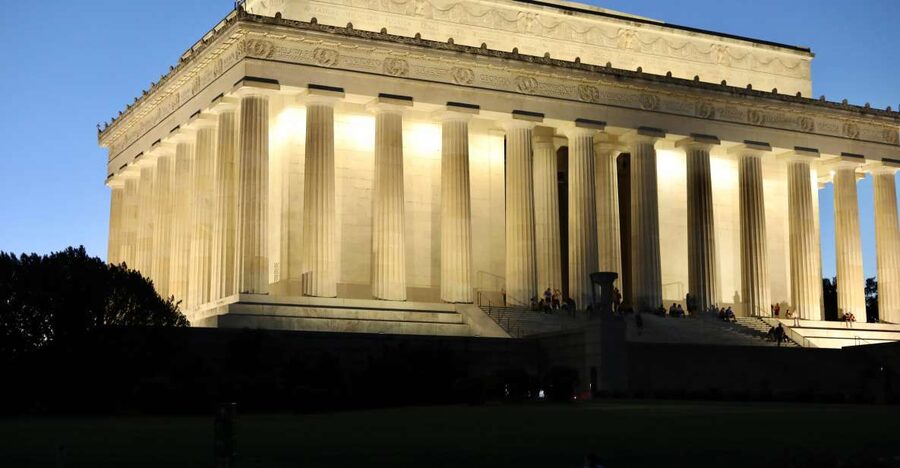
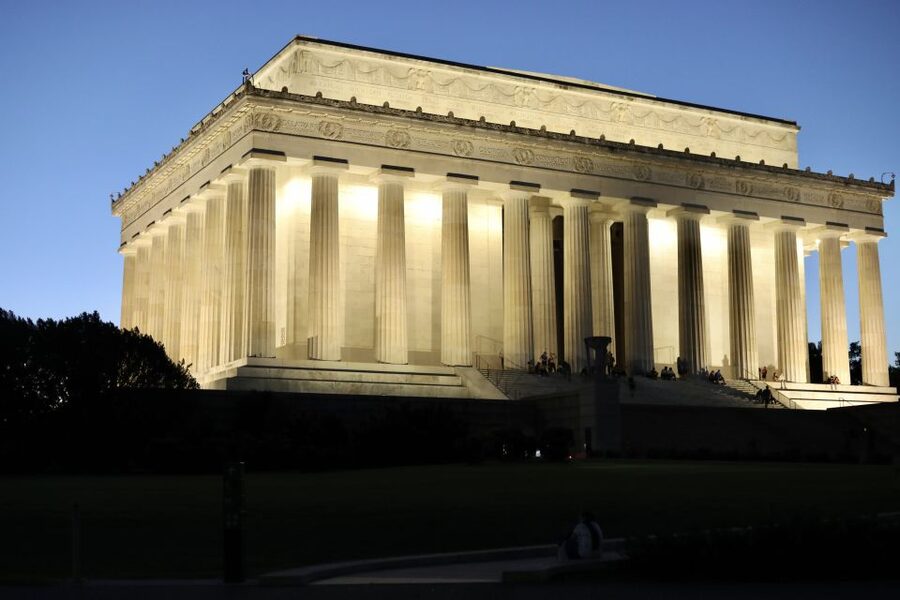
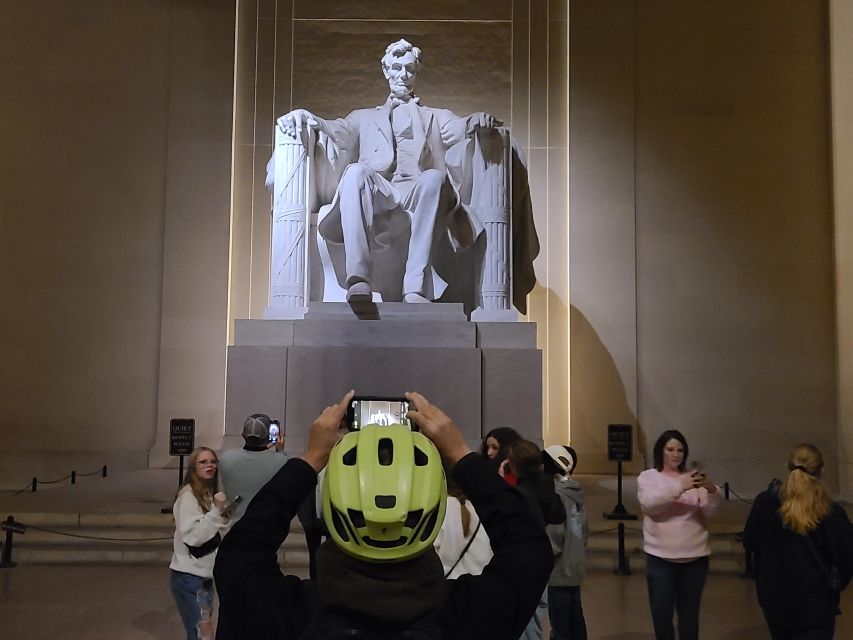
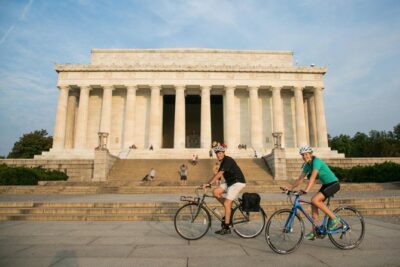
The Lincoln Memorial is among the tour’s most rewarding stops. You ride up to the broad steps, then leave the bike to enter the building and see the giant seated statue of Abraham Lincoln.
At night, the memorial has a quieter feel than during the day, though the exact crowd level can vary. The steps also give you a classic view back toward the Washington Monument and the reflecting pool.
Your guide will talk about Lincoln and the memorial’s place in Washington before you have time to explore. The stop is long enough for the main experience, but not for an extended reading of every inscription. If you want the full words of the Gettysburg Address and Second Inaugural Address, plan a separate visit.
This is also a good point to judge your comfort with the ride. The route remains easy, but there are short periods of walking, stopping, and getting back on the bike. The overall pace is relaxed rather than athletic.
World War II Memorial and Washington Monument
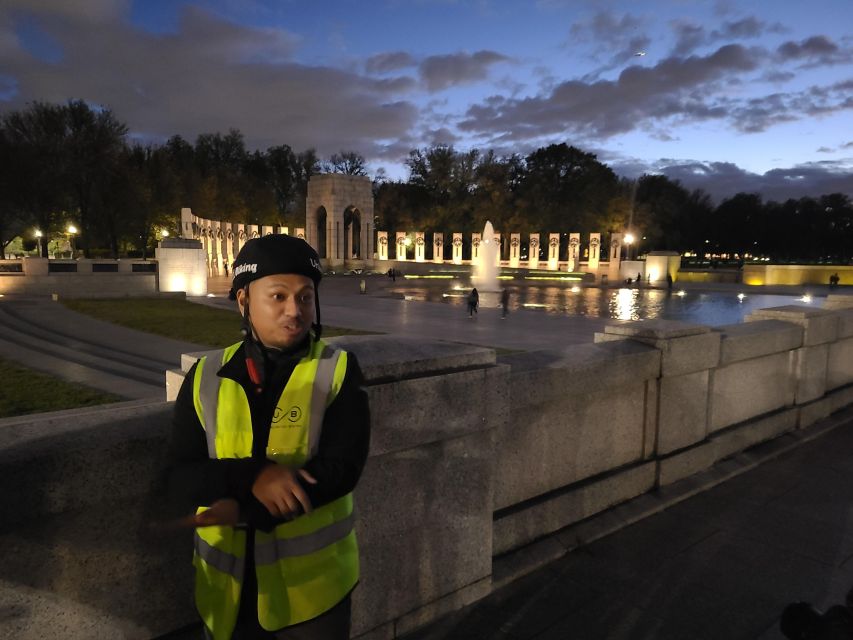
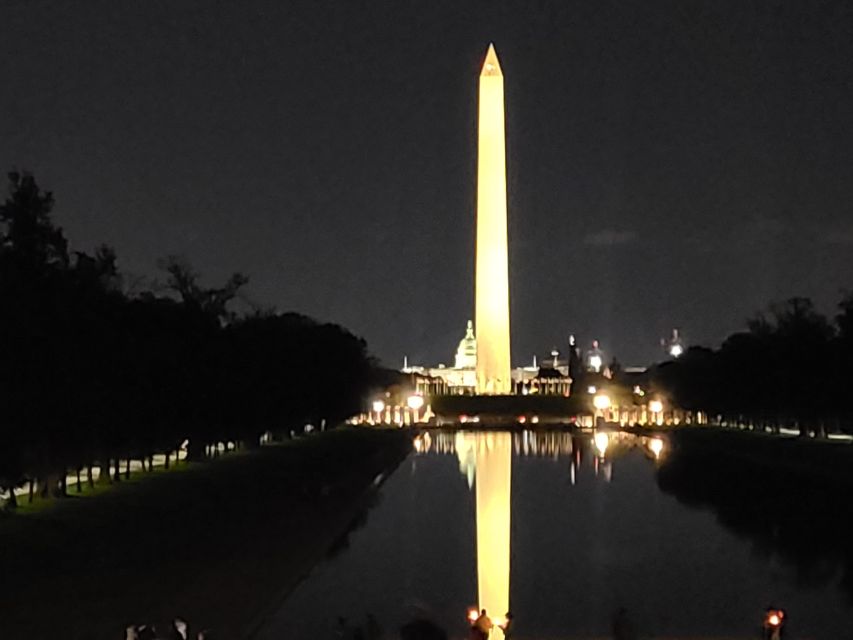
The World War II Memorial connects the Lincoln Memorial area with the Washington Monument. Its fountains, columns, and state markers look polished under the lights, and the open space makes it easy to understand the memorial’s scale.
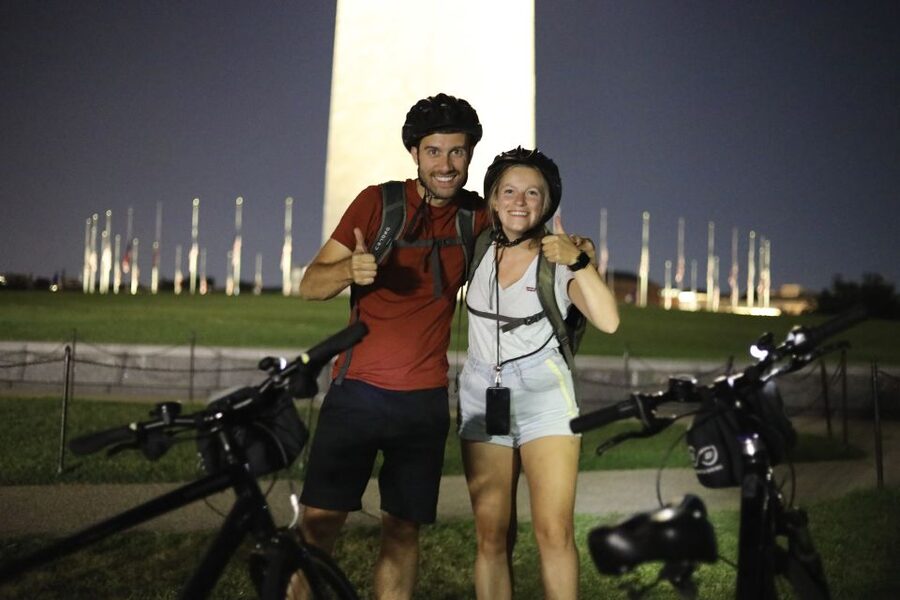
The Washington Monument is the route’s central reference point. You stop here for about 20 minutes, longer than at most of the other landmarks. That extra time gives you room for pictures and a better look at the grounds.
The monument itself may not always be fully visible in the same way from every angle, depending on lighting and conditions, but it remains an essential Washington sight. The guide can also use this pause to explain how the National Mall is arranged.
A night ride is especially useful here because you see the major memorials as part of one connected civic space. On foot, the distances can feel longer. By bike, you get the broad picture without wearing out your legs before the final stops.
White House View and the Ride Back
The tour includes a view of the illuminated White House and the lawn where the presidential helicopter lands. This is generally an exterior viewing point rather than a visit inside the building.
The exact approach can change if security activity or an event restricts access. One guide had to alter the route because something was happening at the White House, but used the detour to add more city facts and point out nearby buildings.
That flexibility matters. This is a live city, not a museum route that can be followed without change. If the White House section shifts, you should still get useful commentary, but do not book the tour expecting a fixed photo angle or guaranteed access to every nearby street.
From there, the group rides back to 801 D Street NW. The entire experience lasts about three hours, including the stops.
How Much $65 Is Really Worth
At $65 per person, this tour is not the cheapest way to see Washington’s monuments. You can walk the Mall for free, and public transportation can move you around the city at a lower price.
The value is in the combination of transportation, bike rental, safety equipment, and live interpretation. You cover a lot of ground in one evening, hear the basic story of each memorial, and avoid spending the next day with sore feet. For a first visit or a short stay, that can be money well spent.
It is also a useful alternative to a bus tour. You are outdoors, close to the memorials, and able to step off the bike at each stop. You do not get an in-depth lecture on every site, but you get a broad and well-paced introduction.
The strongest value comes when you use it as a first-night orientation. If you already know the Mall well and want extended time at each memorial, a self-guided visit may suit you better.
Family Fit, Fitness, and Weather
The ride is suitable for many ages and ability levels, provided each participant can ride or use the available child equipment. Toddler trailers and tag-a-longs can be rented for children, which makes the outing more practical for families with young kids.
Past family groups have included children around eight, 10, 11, 12, and 13. The route is slow and mostly flat, and the guide keeps the group together. Still, three hours is a long outing for a small child, especially with repeated stops and getting on and off the bike.
Pregnant people should not book this activity. Closed, comfortable shoes are required, and helmets are mandatory. Bring an ID or passport, and dress for the temperature after sunset.
Weather can cancel the tour if riding becomes dangerous. If the local operator cannot reschedule, you receive a full credit or refund. This is worth keeping in mind during stormy summer periods or cold early-season evenings.
The Guides Make the Difference
The route is fixed, but the guide shapes the evening. Names praised in past outings include Joe, Jose, Abby, Sydney, Matt, James, Eric, Wally, Nicole, and CJ. The qualities to look for are clear explanations, a calm pace, and careful attention to traffic and group safety.
Joe has been especially effective at adding city facts when the planned White House approach was blocked. Wally kept a mixed-age group moving comfortably, while guides such as James and Jose were singled out for making the history easy to follow.
You should expect short talks rather than a full academic lecture. That is the right format for a bike ride. The guide gives you enough background to make each memorial meaningful, then lets you look around.
Best Time to Book
If your main goal is to see the monuments fully lit, check the sunset time before choosing your date. In late July, one rider found that it was still daylight for most of the trip, with the Jefferson Memorial only becoming properly illuminated near the end.
Spring and autumn offer a better chance of darkness during more of the ride, though evenings can be chilly. Summer gives you relief from daytime heat, but the tour may begin before sunset.
The evening also helps with crowds. The memorials are not guaranteed to be empty, especially around holidays and major events, but the ride generally avoids the heaviest daytime foot traffic. Memorial Day week, for example, can be busy, yet the evening timing still helps.
Should You Book This Washington DC Bike Tour?
Book it if you want to see the major monuments in one organized outing, prefer riding to walking, and value a guide who can explain the basics without turning the evening into a classroom. It is especially good for first-time visitors, families with bike-ready children, and anyone with only a few days in Washington.
Skip it if you want hours at each memorial, dislike cycling, or need a tour guaranteed to be completely dark from start to finish. For most people, though, the easy four-mile route, thoughtful stops, and $65 price make this a practical way to get your bearings and enjoy Washington at its most photogenic.
FAQ
How long is the Washington DC Monuments by Night Bike Tour?
The tour lasts about three hours and covers approximately four miles.
What landmarks does the bike tour visit?
Stops include the Jefferson Memorial, Franklin Delano Roosevelt Memorial, Martin Luther King Jr. Memorial, Korean War Veterans Memorial, Lincoln Memorial, Vietnam Veterans Memorial, World War II Memorial, Washington Monument, and the White House area.
Is the bike ride difficult?
The route is rated easy and covers mostly flat terrain. The pace is described as relaxed and suitable for a range of riding abilities.
Are bikes and safety equipment included?
Yes. Bike rental, a mandatory helmet, a reflective vest, and a safety light are included.
Can children join the tour?
Yes. Toddler trailers and tag-a-longs are available to rent for children. The tour is not suitable for pregnant women.
What should I bring?
Bring a passport or ID card and comfortable shoes. Sandals and flip flops are not allowed.
What happens if bad weather cancels the tour?
Tours may be canceled when weather makes riding dangerous. If the operator cannot reschedule, you receive a full credit or refund. You can also cancel up to 24 hours in advance for a full refund.
New rides added around the USA
- Portland: Food Carts of the Eastside Bike Tour★ 4.9 · 16 reviews
- Portland: E-Bike Tour at Multnomah Falls★ 4.8 · 20 reviews
- Essential Portland: 2-Hour Guided Bike Tour★ 4.8 · 43 reviews
- Pittsburgh: Beauty of the Burgh Bike Tour★ 4.9 · 37 reviews
- Oahu: Waikiki E-Bike Ride and Manoa Falls Hike★ 4.9 · 28 reviews
- Oahu: Kualoa Electric Bike Tour★ 4.6 · 14 reviews
- NYC: Central Park Guided Bike Tour★ 4.8 · 11 reviews
- NYC: Central Park Guided Electric Bike Tour★ 4.9 · 25 reviews
Washington DC Bike Tours, compared.

Browse the lists this tour appears in