
Review · SIEM REAP
Siem Reap: Bike the Angkor Temples – Full-Day 30km Tour
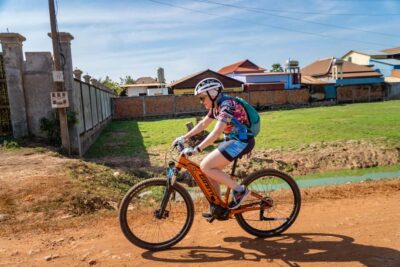
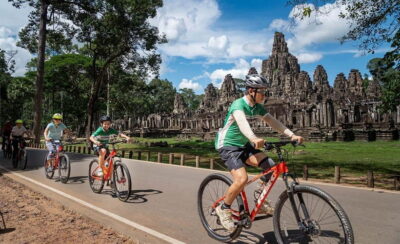
Cycling Angkor gives you something a tuk-tuk cannot: time between the temples to notice village homes, forest paths, rice fields, and the great stone gates from ground level. You begin at Angkor Wat, continue to Bayon and Ta Prohm, and return through quieter back roads rather than simply moving from one monument to the next.
I like the relaxed pace and the care built into the day. Guides such as Chen, Moon, Wich, Mun, and Pat have earned praise for clear storytelling, safety, and helpful pacing. I also like the practical touches: a well-fitted mountain bike, helmet, regular cold water, fruit, lunch if selected, and a cold coconut drink at the end.
The catch is the distance and heat. You will ride about 25 to 30 kilometers, including sandy or bumpy trails, and spend much of the day outside. This suits a reasonably fit cyclist, but it is not the best pick if you want a short, air-conditioned temple tour.
Key points to know before booking
- Angkor Wat comes first: Start with the park’s grandest monument, then move on to Bayon, the terraces, and Ta Prohm.
- The route is more than temples: Forest tracks, small roads, villages, and rural homes are a major part of the appeal.
- Expect a full physical day: The ride is mostly flat, but heat, sand, and rough ground make it more tiring than the distance suggests.
- Small groups help: The maximum group size is 10, and a private upgrade gives you more direct attention from the guide.
- Lunch is an option: Choose the lunch package for a local Khmer meal, or bring your own plan if you select the version without lunch.
- Budget for the temple pass: The $35 tour price does not include the one-day Angkor admission fee of $37.
Why cycling is a smart way to see Angkor
Angkor Archaeological Park covers a huge area, about half the size of New York City. Walking between the main temples is not realistic, while a vehicle can make the park feel like a string of quick photo stops.
A bicycle gives you a useful middle ground. You cover ground efficiently, but you still hear the tires on the dirt, feel the shade change under the trees, and see daily life beyond the major monuments. The route uses paved roads, small lanes, forest tracks, and village roads. Some stretches are rough, sandy, or uneven, so you need basic confidence on a bike.
I especially like the shift in pace. You may spend an hour studying carvings at Angkor Wat, then ride quietly beneath trees before reaching the next temple. That gap matters. It lets the huge park feel like a place, not just an outdoor museum.
The group limit of 10 is another plus. It is small enough for a guide to keep an eye on riders and answer questions without turning the day into a large procession. Some groups include a second guide or support person at the back, which helps with safety and mechanical issues.
More full-day rides in Cambodia:
- Ninh Binh Full-Day Tour from Hanoi to Hoa Lu, Tam Coc & Mua Cave Via Boat & Bike
★ 5.0 · 4,384 reviews - From Perth: Rottnest Island Full-Day Bike and Ferry Trip
★ 4.7 · 2,548 reviews - Versailles Full Day Bike Tour with Palace, Gardens, & Picnic
★ 5.0 · 2,217 reviews
The 7:30 am start and bike fitting
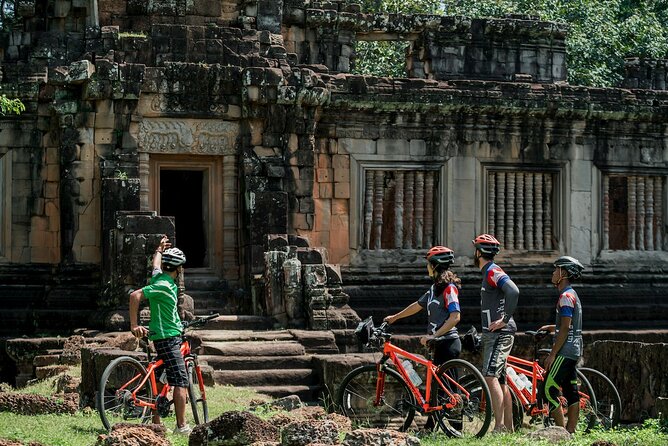
You make your own way to ផ្ទះគ្រូ Café in Siem Reap, the meeting point. The day begins at 7:30 am with introductions, a safety briefing, and bike fitting.
The bicycles are mountain bikes, and the team adjusts them to your height. A helmet is included. Several accounts describe bikes being labeled and carefully prepared, which is a small sign of an organized operation. You should still check your saddle, brakes, and gears before leaving.
The opening ride takes you toward the Angkor entrance. Your guide helps with the Angkor Pass purchase, but the pass itself is extra. A one-day pass costs $37, so add that amount to the $35 tour price when comparing this outing with a tuk-tuk or car tour.
Wear practical cycling clothes, sturdy shoes, sunscreen, and a hat for breaks. Temple rules require covered shoulders and clothing that reaches at least the knees. Sleeveless or see-through tops are not accepted at the monuments.
Angkor Wat: the grand opening
Angkor Wat is the right place to begin. The towers are most dramatic in the morning, and the site gives you an immediate sense of the scale of the Khmer Empire.
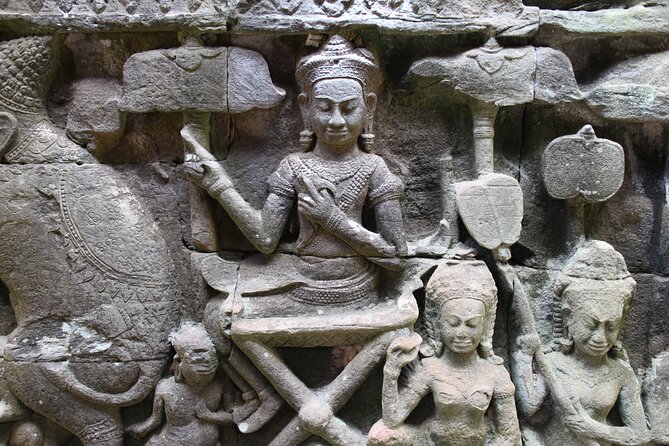
You leave the bicycles and walk through the temple complex with your guide. Expect galleries, carved stone scenes, towers, and long sight lines across the grounds. The carvings include scenes connected to the Hindu epic Ramayana, and a good guide can help you read details that are easy to miss when you are focused only on the famous central view.
The scheduled temple stop is about an hour, though the total time depends on walking, explanation, and the group’s pace. That is enough for an introduction, but not enough to examine every corner of Angkor Wat. If you want a very slow architectural study, a dedicated walking visit on another day would make sense.
Starting here also means you tackle the biggest site while your energy is fresh. Later, the route becomes more shaded and varied, but the heat can build quickly in Cambodia.
Angkor Thom and Bayon’s stone faces
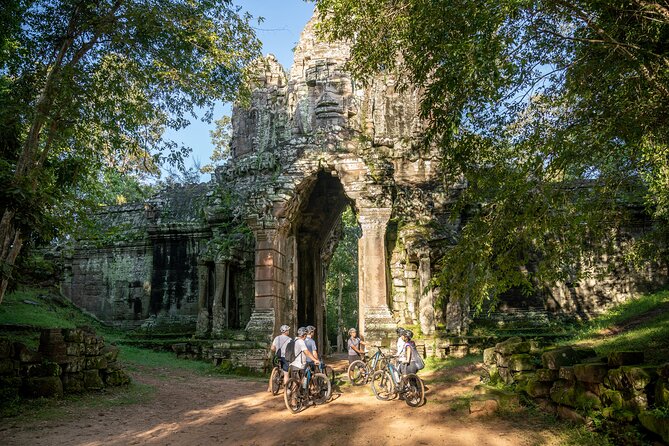
From Angkor Wat, you follow the main road toward Angkor Thom. The approach is part of the show. Stone figures line the great entrance routes, with divinities and demons facing each other in expressive rows.
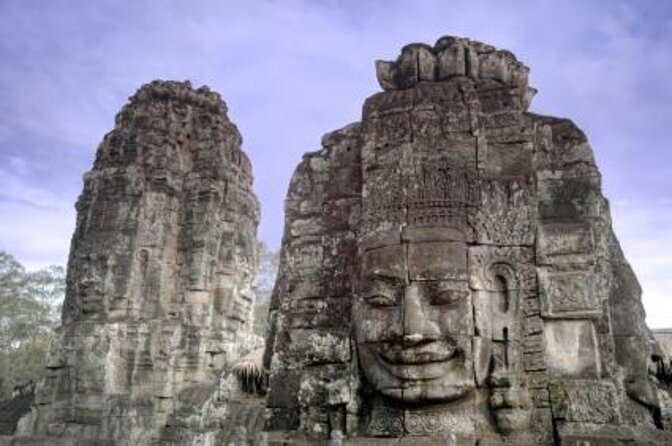
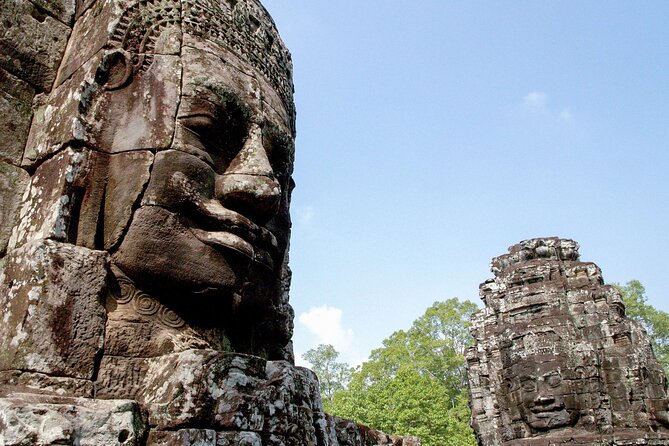
Bayon is the central stop in Angkor Thom. Its towers carry the famous serene faces, often described as bodhisattva faces. Up close, the temple feels less orderly than Angkor Wat. Passages twist around towers, and faces appear from different angles as you walk.
This is where the guide’s skill matters most. A guide such as Chen, Moon, or Sam can add the political and religious background that helps explain why the faces were built and how the temple fits into Angkor’s wider story. The best part is not just hearing dates. It is learning what to look for in the stone.
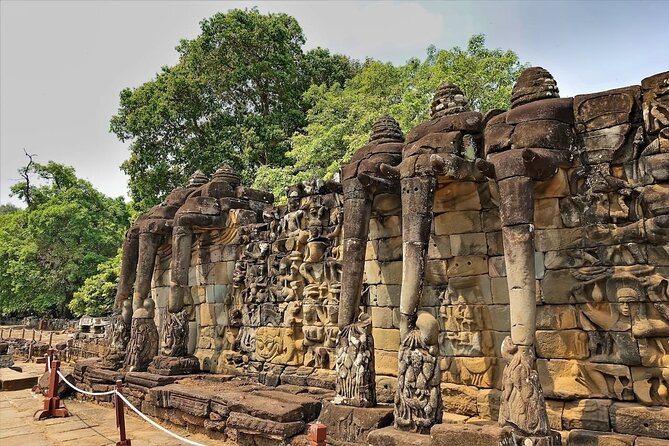
The ride also includes the Terrace of the Leper King, the Terrace of the Elephants, and the Royal Enclosure. These are not simply extra names on a schedule. Together, they show how Angkor Thom functioned as a royal city, with ceremonial spaces, carved processions, and formal boundaries.
More bike tours around Cambodia:
- Siem Reap Countryside Bike Tour / E-Bike or Tuk Tuk
★ 5.0 · 935 reviews - Angkor Sunrise Bike Tour / E-Bike or Tuk Tuk
★ 5.0 · 615 reviews - Phnom Penh Silk Island Bike Tour/ E-Bike or Tuk Tuk
★ 5.0 · 495 reviews - Siem Reap: Angkor Wat Sunrise Bike Tour & Jungle Breakfast
★ 5.0 · 415 reviews
Lunch near the terraces and Srah Srang
Lunch is arranged if you choose the option that includes it. The food is Khmer cuisine, and the break is timed to give your body a real reset rather than a quick snack beside the bikes.
The meal is one of the day’s most useful features. In hot weather, regular food and fluids can prevent the last half of the ride from becoming a slog. Fruit and snacks are also provided, along with bottled water. Some accounts specifically praise the generous meal and the range of local choices.
The itinerary also includes Srah Srang, a large reservoir area associated with Angkor. This part of the day allows time for lunch, snacks, and cultural context. It is less about another grand temple interior and more about seeing how water shaped life in the Angkor region.
If you choose the no-lunch version, confirm what you plan to eat and carry. The tour includes snacks, fruit, and water, but the full meal applies only to the selected lunch option. Tell the operator about dietary needs when booking.
Ta Prohm and the forest ride
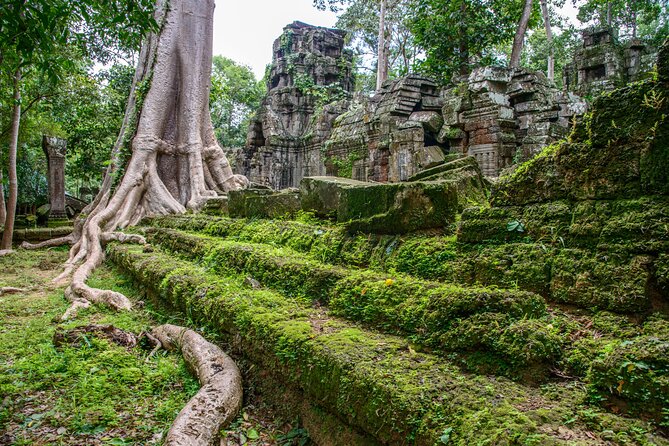
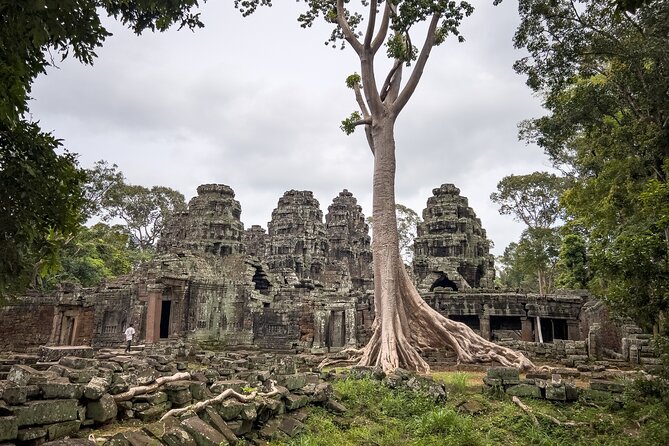
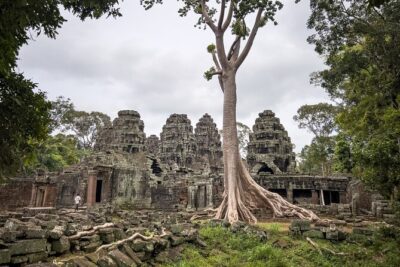
Ta Prohm is the afternoon highlight for many people. Trees and roots push through the old stonework, creating the setting most associated with Angkor’s jungle temples.
The temple is atmospheric, but it can also be busy. Cycling does not remove the crowds inside the monument, yet it gives you a quieter approach through forest corridors and helps the visit feel connected to the surrounding park. You are not simply dropped at a gate after a long vehicle ride.
Allow time to walk slowly here. Roots, moss-covered stones, carved doorways, and collapsed sections reward patience. Your guide can explain the temple’s stories and symbolism, but you also get space for photographs.
Ta Prohm comes after several hours of riding and temple walking. If your legs are tired, take the final temple at a steady pace rather than trying to see every passage. The tour is designed as a full day, not a race.
Village roads and the ride back to Siem Reap
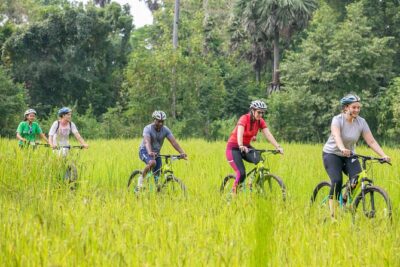
The return route is one of the strongest reasons to book this experience. Instead of staying on the main tourist road, you pedal through small villages and rural areas. You may pass homes, farm yards, wooded stretches, and rice fields.
This is not a staged cultural performance. It is simply the everyday setting around Angkor, seen from a bicycle at a speed that lets you notice it. You get a better sense of how the temple park relates to living communities.
The roads are not always smooth. Dirt, sand, and bumps can make the ride harder on your knees and wrists, especially after lunch. One useful point from the route description is that some trails are not suited to complete beginners. You do not need racing fitness, but you should be comfortable riding for several hours.
Guides generally set a moderate pace and use hand signals on public roads. Some groups have a guide at the front and another at the back, which is reassuring when the road surface changes or the group stretches out.
The tour ends back at the meeting point in Siem Reap. A chilled coconut drink and, in some accounts, a cold towel or retained water bottle add a welcome finish.
Heat, fitness, and what to pack
Cambodia can be very hot, and this is an exposed activity even when parts of the route run under trees. Several riders found the day tiring but rewarding, including people in their 50s and families with children aged 11 and 13.
I would rate the physical demand as moderate. The route is mostly flat, which helps, but the combination of distance, heat, sandy ground, and walking through temples adds up. If you rarely cycle, choose a shorter temple visit instead.
Bring or wear:
- Sunscreen and a hat
- Comfortable cycling clothes
- Shoes that work for both pedals and temple walking
- Clothing covering shoulders and knees
- Extra personal water if you prefer to drink often
- A small day bag for essentials
Child seats are available on request for children weighing up to 14 kilograms. The tour is capped at 10 people, and most people can participate, but anyone with concerns about the distance should ask before booking.
Is $35 good value?
At $35 per person, the tour is well priced for a full day with a bike, helmet, English-speaking cycling guide, bottled water, snacks, fruit, and lunch if selected. The price becomes less modest after adding the $37 Angkor Pass, but you would pay that entrance fee for the park on your own as well.
The value comes from the route and the guide, not just the equipment. You get help with the park entrance, temple explanations, village roads, forest tracks, food, and pacing. A private version costs more, but it may suit couples or families who want more control over stops.
The main limitation is that lunch and the entrance ticket are not part of every booking option. Check the exact package before paying so you know the final cost.
Who should book this Angkor bike tour?
Book it if you want the major temples plus a closer look at the countryside around them. It is especially good for first-time visitors who want an overview, outdoor-minded people, and anyone who finds a day in a vehicle too passive.
It is also a strong choice for history fans. Guides such as Wich, Chen, Moon, Sunchen, Samnang Chan, and Pat have been praised for explaining Cambodia beyond the stones, including links between temple history and present-day culture. Guide assignments can vary, so do not book solely for one named guide.
Think twice if you dislike heat, uneven roads, or long active days. The schedule is generous, but the distance is real. You should also avoid expecting a private, silent experience unless you select the private option.
Should you book it?
I would book this tour if you have one full day in Siem Reap and want Angkor to feel larger than its famous photographs. The temples are the anchor, but the forest tracks, village roads, careful pacing, and local lunch give the day its character.
Choose it with the Angkor Pass cost in mind, dress for temple rules, and arrive ready to pedal for several hours. If that sounds enjoyable rather than demanding, this is one of the better ways to connect Angkor’s great monuments with the countryside around them.
FAQ
Where does the bike tour start?
The tour starts at ផ្ទះគ្រូ Café, 9VH7+X7G, in Siem Reap. You make your own way to the meeting point.
What time does the tour begin?
The scheduled start time is 7:30 am.
How long does the experience last?
The tour lasts about 8 hours and 30 minutes.
How far do you cycle?
You cycle approximately 25 to 30 kilometers, or 15 to 18 miles. The route is mostly flat but includes small roads, dirt trails, sandy sections, and bumpy ground.
Which temples are included?
The route includes Angkor Wat, Bayon, Ta Prohm, the Terrace of the Leper King, the Terrace of the Elephants, and the Royal Enclosure. Srah Srang is also included as part of the day.
Is the Angkor Pass included?
No. The Angkor temple complex entrance fee is not included. A single-day pass costs $37.
Is lunch included?
Lunch is included only when you select the tour option with lunch. Snacks, fruit, and bottled water are included.
What equipment does the tour provide?
The tour provides a mountain bike and helmet. The bike is fitted before departure.
What should I wear to enter the temples?
You need clothing covering your shoulders, and pants or shorts must reach at least the knees. Sleeveless and see-through shirts are not permitted.
Can children join the tour?
Most people can participate, and child seats are available on request for children weighing up to 14 kilograms. The full cycling distance and hot conditions should be considered before booking for a child.
New rides added around Cambodia
- Phnom Penh: Silk Islands Half-Day Bike Tour★ 4.9 · 315 reviews
- Phnom Penh: Mekong Islands Sunset Bike Tour include drinks★ 4.8 · 19 reviews
- Phnom Penh: Mekong Islands & Silk Islands Guided Bike Tour★ 4.9 · 48 reviews
- Cycle Angkor Backroad Bike Tour / E-Bike or Tuk Tuk★ 4.9 · 16 reviews
- Ho Chi Minh City: 2-Day Bike & Kayak Mekong Delta Tour★ 4.9 · 64 reviews
- From Siem Reap: Angkor Wat Sunrise and Temples E-Bike Tour★ 5.0 · 52 reviews
- Small Group Countryside Sunset Bike Tours★ 5.0 · 39 reviews
- Siem Reap: Angkor Wat Sunrise Bike Tour & Jungle Breakfast★ 4.9 · 141 reviews
Siem Reap Bike Tours, compared.
Siem Reap Countryside Bike Tour / E-Bike or Tuk Tuk
Read our review →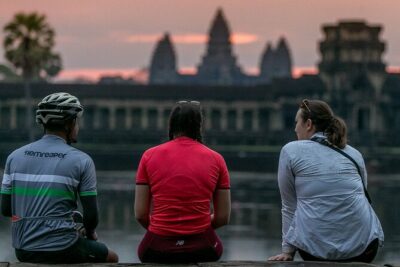
Angkor Wat Sunrise Bike Tour & Jungle Breakfast
Read our review →
Cycle Angkor Backroad Bike Tour / E-Bike or Tuk Tuk
Read our review →Browse the lists this tour appears in