
Review · PORTLAND
Bike Around Portland Oregon: Art, Culture, Bridges, Poetry
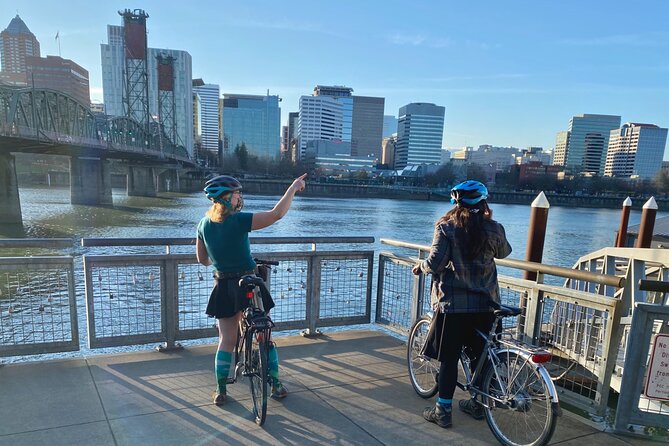
Portland reveals itself best from a bike, not behind a coach window. This three-hour ride links rose gardens, street art, river paths, bridges, poetry, and lived-in neighborhoods, with guides such as Kelly, Sara, Edwin, Angela, and others bringing the city’s quirks into focus. It feels less like a checklist of landmarks and more like a moving introduction to how Portland works.
I especially like the easy pace and the mix of places you would not find by simply walking downtown. Ladd’s Addition, Poet’s Beach, the MAX art corridor, and Tilikum Crossing give you a feel for Portland’s design, politics, and creative streak. The main consideration is that this is still a city ride, so you share streets and paths with traffic, and one bridge climb may feel like work if you rarely cycle.
Key points to know before you book
- Ladd’s Addition starts the story: Rose gardens and a labyrinth-style street plan offer an unusual first look at Portland.
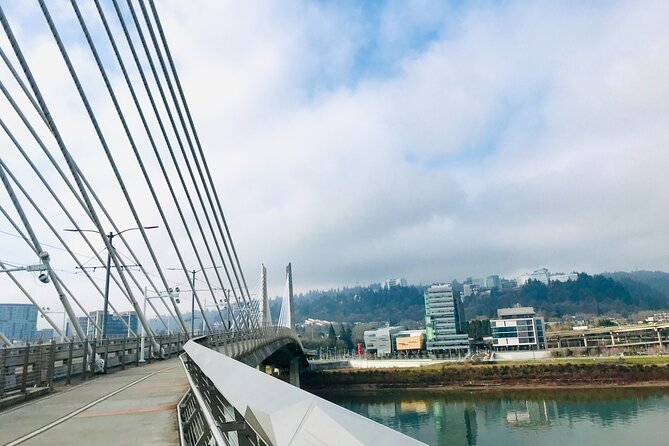
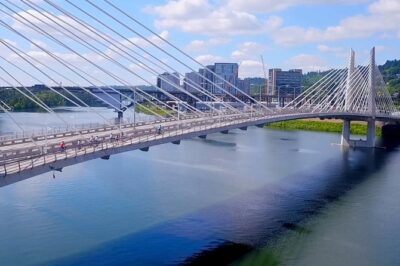
- Tilikum Crossing is the signature ride: You cross Portland’s car-free bridge for views, photos, and a quick lesson in river transport.
- Poet’s Beach adds a local touch: Student poems along the river turn a small sandy shore into a thoughtful stop.
- The route is mostly flat: It suits casual riders, though one bridge climb and normal urban cycling still require confidence.
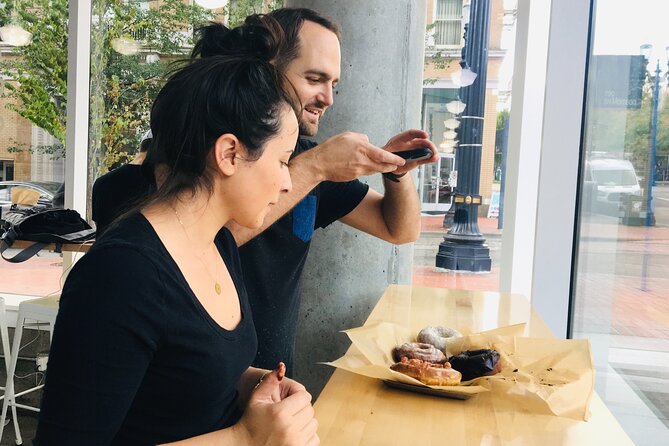
- Food is flexible: Doughnuts, pastries, or ice cream may be offered, but you pay for your own treat and the shop can change.
- The cost covers the basics: For $47, you get a bike, helmet, bottled water, and a guide for roughly three hours.
Why this bike tour shows Portland better than a landmark checklist
Portland is not mainly a city of grand monuments. Its character is spread through neighborhoods, street corners, public art, old industrial edges, greenways, food stops, and the Willamette River. That makes a bike a smart choice. You can cover more ground than on foot, yet still stop often enough to notice a rose garden or read a poem.
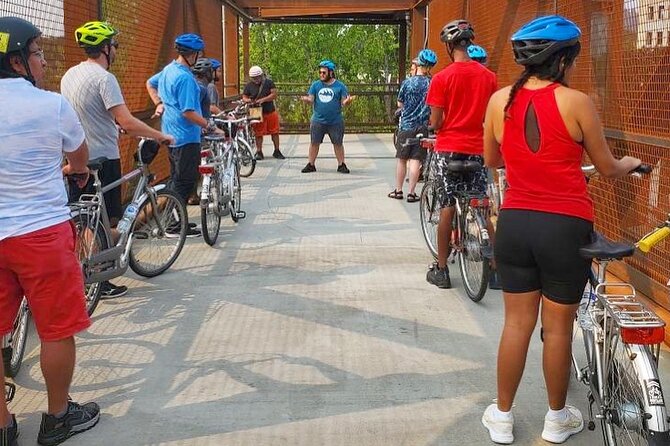
The route begins at Around Portland Tours, 833 SE Main Street, in the inner Southeast. After you are fitted with a bike and helmet, the ride heads through residential streets toward Hawthorne and nearby food cart areas. The pace is designed for sightseeing, not speed, and the frequent stops help keep the outing friendly for families and casual cyclists.
The tour costs $47 per person. I consider that fair value because the price includes the bicycle, helmet, bottled water, guide, and three hours of local orientation. You will need to buy your own doughnut, pastry, or ice cream, and gratuities are not included. Compared with renting a bike on your own, the real value comes from the route and the stories. You do not have to work out where to go or how to connect the neighborhoods.
The group size is described as capped at 15 for a personal feel, while the additional booking details list a maximum of 20. That difference is worth confirming when you reserve. Either way, this is intended to be a small guided outing rather than a large procession.
More bike tours around the USA:
- NYC: Central Park Bike Rentals
★ 4.2 · 2,528 reviews - Red Rock Canyon eBike Half-Day Tour
★ 5.0 · 1,870 reviews - NYC: Central Park Bike Rental
★ 4.1 · 1,651 reviews
Ladd’s Addition and the rose gardens
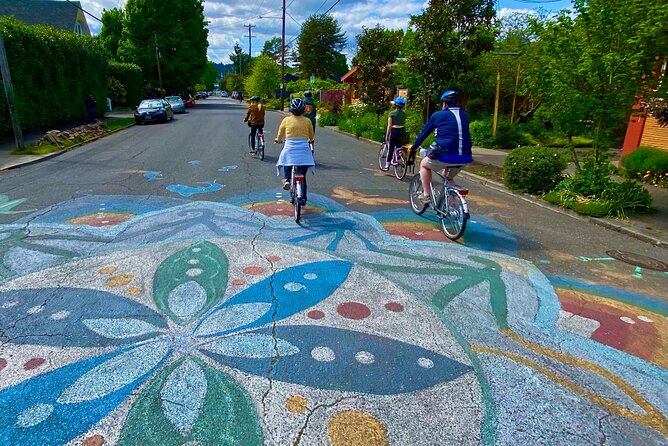
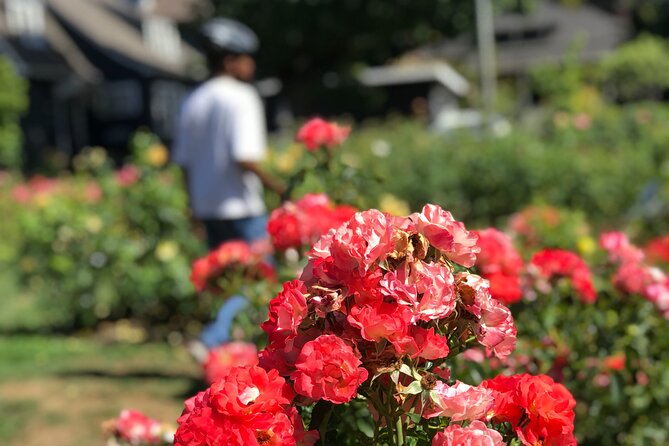
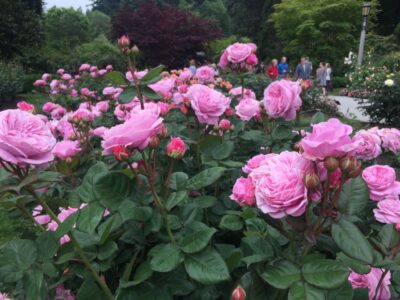
Ladd’s Addition is one of the most memorable parts of the opening stretch. Its streets follow a diagonal, almost maze-like plan rather than the standard Portland grid. The result is a neighborhood of unusual angles, small green spaces, and a layout that rewards a slow roll.
You stop at one of its rose gardens for about ten minutes. This is not a formal garden tour, but it gives you a gentle start and a sense of Portland’s fondness for flowers and neighborhood-scale public spaces. The stop also works well for photos and for adjusting to the bike before the route becomes more varied.
I like this beginning because it sets the tone. You are not rushed toward a famous building. Instead, you begin with a place that shows how Portland’s streets can be playful and human. If you want a fast ride with many major sights, this may feel too relaxed. If you want to understand the city beyond its postcard views, it is a strong opening.
Clinton Street, Hawthorne, and the city’s creative side
The ride continues through the Clinton Street greenway and past an original streetcar stop. The guide also points out the Clinton Street Theater, a long-running neighborhood spot associated with funky, artsy, and cult films when it is open.
The stop is brief, about five minutes, so do not expect time for a film. Its value is in the setting. You see how a small theater, a greenway, and an old transport link fit into daily neighborhood life. The surrounding streets also help explain why Portland’s identity is tied to independent arts and local businesses rather than only large cultural institutions.
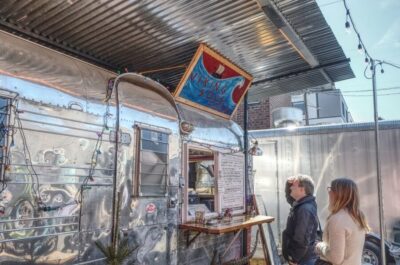
The route passes through Hawthorne and food cart areas, including an older pod and a newer one. Food carts are not a formal tasting component here, but their presence gives you a quick look at one of Portland’s best-known eating traditions. You may leave with restaurant, brewery, distillery, or music suggestions from the guide, which can be useful if this ride takes place near the beginning of your stay.
MAX art and the Fin DAC mural
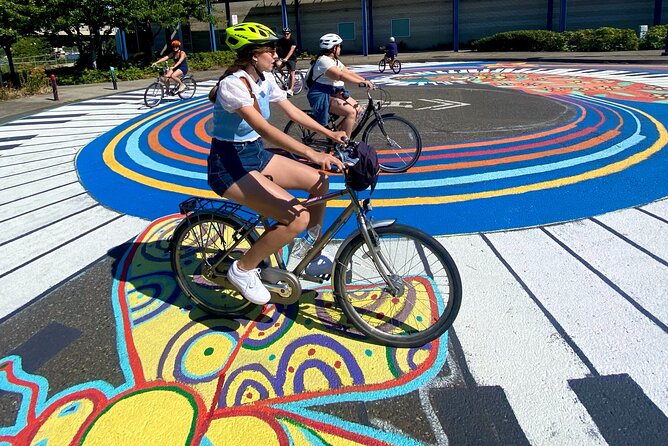
One of the more surprising sections follows the bike path beside the Orange line of the MAX light rail. Instead of treating transit as background scenery, the tour uses it to point out public art. You will see wordplay built into concrete barriers and sidewalks, along with a mural by Irish street artist Fin DAC.
This section suits people who enjoy the details of a city. The art is not gathered inside a gallery. It is part of the route, mixed with rail infrastructure, pavement, walls, and passing city life. The short stop at the Solterra Building gives you time to look closely rather than simply pedal past.
The guide’s explanation matters here. Without context, some public art can look like decoration. With a local pointing out the wordplay and the mural’s place in the area, the corridor becomes a small outdoor exhibition. The tradeoff is that the stop is only about five minutes, so you will get an introduction rather than a full art history lesson.
Same wheels, a different route:
- Central Park Bike Rental
★ 4.7 · 1,509 reviews - Austin Biker Gang E-Bike Tour
★ 5.0 · 1,399 reviews - Asheville Historic Downtown Guided Electric Bike Tour with Scenic Views
★ 5.0 · 1,234 reviews - Siesta Key Electric Bike Sunset Tour
★ 5.0 · 1,075 reviews
Crossing Tilikum Crossing by bike

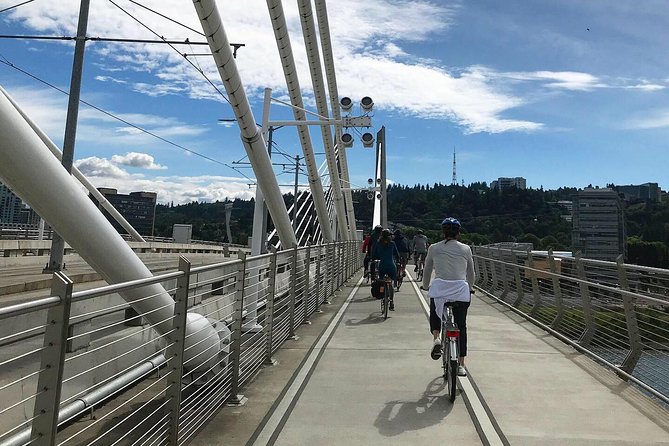
Tilikum Crossing is the visual centerpiece of the ride. It is one of Portland’s most distinctive bridges because it carries light rail, streetcars, buses, bicycles, and pedestrians, but not private cars. The crossing gives you a clear sense of how Portland has chosen to connect its riverfront districts.
You take the slower approach onto the bridge, stop for photos, and hear about its design and place in the city. A device counts cyclists crossing each day and year, so you get counted as part of the bridge’s ongoing record. It is a small detail, but it makes the crossing feel interactive.
The views are likely to be one of the best parts of the outing. You can watch boats and kayaks on the Willamette and see how the city is arranged around its bridges. One practical note: the approach includes a climb. It is not described as a difficult athletic section, and the ride is mostly flat, but less confident cyclists should know that this is not entirely effortless.
South Waterfront and Portland’s aerial tram
After Tilikum Crossing, the route enters the South Waterfront neighborhood. You pass the lower terminal of Portland’s Aerial Tram, a bullet-shaped cabin system connecting the waterfront with the higher medical district.
The guide explains why the tram was built and how much it cost. That detail opens a larger conversation about Portland’s transport choices, public spending, and the way a city links neighborhoods with different elevations and uses. You do not ride the tram during this tour, but seeing its terminal from street level gives you useful context if you plan to return and use it later.
This is one reason I prefer the ride to a basic sightseeing loop. You are not just looking at attractive structures. You are getting the backstory behind systems that shape the city’s daily movement.
A quieter riverfront at South Waterfront Greenway
The South Waterfront Greenway is a calmer stretch along the river. It forms part of Portland’s continuing effort to give people access to the water, with paths and open areas that feel removed from the nearby roads.
You stop for roughly ten minutes. That pause matters after several urban sections because it gives you room to slow down, take in the river, and enjoy the bike without constant turns. The greenway is also a good reminder that Portland’s appeal often comes from the connection between built areas and public outdoor space.
The route does not promise wilderness. You are still in the city, with buildings and transport infrastructure nearby. But the greenway makes the river feel available rather than distant, and that is a useful part of understanding Portland.
Poet’s Beach and student poetry
Poet’s Beach is a small sandy area created through the Human Access Project, which works to connect people more directly with the Willamette so they care more about it. Local students wrote poems that appear along the beach and nearby rocks.
This is one of the most personal stops on the route. The poems give the riverfront a local voice, and they make the stop more than a photo break. You can read a few lines, consider the city’s relationship with its river, and see a public space shaped by community work.
The stop lasts about five minutes, so the emphasis is on discovery rather than lounging on the sand. Still, it is exactly the sort of place that can disappear from a standard city tour. I like it because it shows Portland’s civic personality in a small, direct way.
Riverplace and Tom McCall Waterfront Park
From Poet’s Beach, you follow the Willamette toward Riverplace. This residential and retail development dates to the 1980s and represents an attempt to reshape urban design along the river. The guide uses it to explain how Portland experimented with combining housing, shopping, and waterfront access.
You then ride through Tom McCall Waterfront Park. The guide discusses what occupied this area before the park and how changes in the early 1970s helped reshape central Portland. The story includes Oregon’s governor at the time, described as a reluctant hippie, and the decision to return the riverfront to public open space.
This part gives the tour useful political and planning context. Portland’s waterfront was not always a place for pedestrians, festivals, and public gatherings. Learning how it changed helps you see the park as a civic choice, not just a pleasant strip of grass beside the river.
The park can also be lively, especially on a weekend. You may see local activity and events while riding through. The benefit is a sense of the city as it is now. The drawback is that crowds or busy paths can require extra care and patience.
Hawthorne Bridge and the final return
The route continues beneath the Hawthorne Bridge before returning to the starting point. The guide explains why this historic bridge can rise and lower even when no large ship appears to be passing underneath. It is a quick but memorable engineering detail, and it adds one more layer to Portland’s relationship with river traffic.
By the end, you have crossed two bridges, passed through several districts, seen public art, visited rose gardens, followed river paths, and encountered poetry. The route covers a lot, but the frequent stops keep it from becoming a race.
The food stop varies. Blue Star is currently open only limited days and hours, so the guide may substitute another doughnut shop, pastry shop, or ice cream stop. Past outings have included Blue Star, Voodoo Donuts, Mikiko, and 50 Licks, but you should not book expecting one fixed shop or a complimentary treat. The food is your responsibility, and the snack is best viewed as a pleasant pause rather than a central part of the tour.
Who will enjoy this ride most
I would recommend this experience to first-time Portland visitors who want an introduction before exploring alone. It is also a good fit for people staying only a few days, since the route helps you understand several parts of the city in one afternoon.
Families can do well here. Teenagers have enough movement and variety to stay involved, while the guide can adjust the pace for a nervous or inexperienced rider. One family outing included a young cyclist who began the ride unsure and finished chatting comfortably with the guide. That suggests the tone is patient rather than competitive.
You do not need to be a serious cyclist, but you should be comfortable riding in an urban setting. Wear clothing suited to the weather, and consider bike shorts and sunglasses if those help you ride comfortably. The route is mostly flat, but you should allow for the bridge approach, shared paths, and ordinary city traffic.
This may not suit you if you want a long, athletic ride, a food tour, or a tour focused only on famous downtown sights. It is also not a private experience, although the stated small-group format should keep the group manageable.
Booking, cancellation, and practical details
The tour is offered in English and uses a mobile ticket. It starts and ends at 833 SE Main Street, Portland, Oregon 97214, so you do not need to arrange a separate return transfer. The meeting area is near public transportation.
A bicycle, helmet, and bottled water are included. Snacks are not, and gratuities are appreciated but optional. Service animals are allowed, and the activity states that most people can participate.
The experience is generally booked about 16 days ahead, so reserving early is sensible if your dates are fixed. Free cancellation is available up to 24 hours before the start time for a full refund. Inside that 24-hour window, cancellations and changes are not accepted for a refund. The activity also requires a minimum number of participants. If that minimum is not reached and the outing is canceled, you are offered another date or experience, or a full refund.
Should you book the Portland bike tour?
Yes, if you want to see Portland as a collection of neighborhoods, public spaces, transport choices, art, and river connections. The route has enough sightseeing variety to stay interesting, yet the pace leaves room for conversation and photos. The guides, especially Kelly, Sara, Edwin, Angela, Carrie, and others named for different outings, are presented as warm, patient, and enthusiastic about Portland.
Book it early in your visit if you want restaurant and activity ideas afterward. Skip it if you prefer a strenuous cycle, a private guide, or a tightly scheduled list of major monuments. For $47, the combination of equipment, local guidance, bridges, waterfront access, and three hours on two wheels is a sensible way to get your bearings in Portland.
FAQ
Where does the bike tour start?
It starts at Around Portland Tours, 833 SE Main Street, Portland, Oregon 97214.
Where does the tour end?
The activity ends back at the starting point on SE Main Street.
How long does the tour last?
The ride lasts approximately three hours.
Is a bicycle included?
Yes. The use of a bicycle is included in the price.
Is a helmet provided?
Yes. A helmet rental is included.
Is bottled water included?
Yes. Bottled water is provided.
Are food and snacks included?
No. Doughnuts, pastries, ice cream, and other snacks are not included. The stop may change depending on which shop is open, and you pay for your own treat.
What happens if I need to cancel?
You can receive a full refund if you cancel at least 24 hours before the local start time. Cancellations or changes made less than 24 hours before the start time are not refunded.
Is the tour suitable for most people?
The activity states that most people can participate. It is an English-language ride with a relaxed pace, but you should be ready to cycle through city streets and handle a bridge climb. Service animals are allowed.
New rides added around the USA
- Portland: Food Carts of the Eastside Bike Tour★ 4.9 · 16 reviews
- Portland: E-Bike Tour at Multnomah Falls★ 4.8 · 20 reviews
- Essential Portland: 2-Hour Guided Bike Tour★ 4.8 · 43 reviews
- Pittsburgh: Beauty of the Burgh Bike Tour★ 4.9 · 37 reviews
- Oahu: Waikiki E-Bike Ride and Manoa Falls Hike★ 4.9 · 28 reviews
- Oahu: Kualoa Electric Bike Tour★ 4.6 · 14 reviews
- NYC: Central Park Guided Bike Tour★ 4.8 · 11 reviews
- NYC: Central Park Guided Electric Bike Tour★ 4.9 · 25 reviews
Portland Bike Tours, compared.
Multnomah Falls Ebiking Tour to 6 Columbia River Gorge Waterfalls
Read our review →
Hike and Bike Tour to Columbia River Gorge Waterfalls
Read our review →
Browse the lists this tour appears in