Review · E-BIKE TOURS
Bratislava: City and Iron Curtain and Bunker by E-Bike Tour
Bratislava’s most telling history sits beyond the postcard center, in concrete bunkers built along the old Czechoslovak border. This four-hour e-bike tour links the city’s Blue Church, Danube bridges, and Old Town with BS-4 and BS-8, where the rise of Hitler, Communist border controls, and today’s open European borders all come into focus.
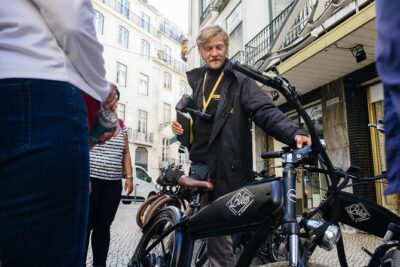
I like the high-quality electric fatbikes, which make the ride practical rather than punishing, and I like the small group limit of eight. Guides such as Juraj add personal stories about life under Communist rule, while bunker specialist Martin can bring the military sites to life. The main drawback is that the opening city section can feel a little slow, and anyone who cannot ride a bike should choose another tour.
Key points to know before you book
- The bunkers are the main event: BS-4 and BS-8 are large concrete fortifications from 1935 to 1938, with BS-8 open inside as a museum.
- You ride an electric fatbike: A short lesson covers the electric assist, useful on hills and longer stretches.
- The route mixes city and countryside: Expect the Blue Church, Hviezdoslav Square, Old Bridge, Danube paths, and the border zone near Petržalka.
- The Iron Curtain story is personal and political: You hear how the border was watched, how illegal crossings could bring the death penalty, and how much free movement has changed.
- The group stays small: With no more than eight people, it is easier to ask questions and hear the guide.
- Bring practical clothing: Wear comfortable biking clothes, check the weather, and bring a camera. A snack and small bottle of water are supplied.
Why the bunker ride gives Bratislava more meaning
Bratislava can be easy to treat as a quick stop between Vienna and Budapest. The old center is compact, attractive, and simple to cover on foot. But the city’s position beside Austria gives it a harder edge. For decades, this was not simply a river city near a neighboring country. It was a border city facing the West.
This tour makes that change visible. You begin among central Bratislava sights, then pedal toward Petržalka and the former Czechoslovak-Austrian border. Along the way, your guide explains how the border changed from a defensive line built before the Second World War into the heavily guarded Iron Curtain of the Communist period.
I appreciate that the experience does not stop at dates and military labels. Guides talk about more recent Bratislava, including life from the 1960s onward. That personal angle helps you understand Communist rule as something people lived through, not just a chapter in a textbook.
The tour costs $93 per person. That is not a bargain-priced city ride, but the fee covers the e-bike, helmet, guide, snack, small drink, and museum entry. You are also getting four hours of transport, sightseeing, and historical interpretation. For me, the value is strongest if you want to see the bunkers without arranging your own bike, route, and museum visit.
More E-Bike Tours in the world:
- 3-Hour Porto Highlights on a Electric Bike Guided Tour
★ 5.0 · 4,392 reviews - Lisbon: Hills, Alfama, and Mouraria Tour by Electric Bike
★ 4.8 · 3,438 reviews - Athens Scenic Electric Bike Tour with optional Acropolis visit
★ 5.0 · 3,350 reviews
Meeting at the Danube and getting comfortable on the bike
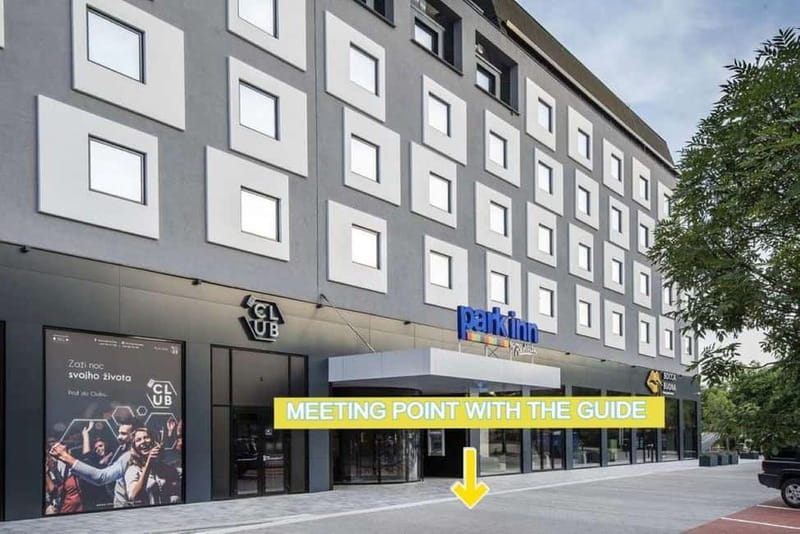
You meet in front of the Park Inn by Radisson Danube Hotel, close to the SNP Bridge. The bikes are not picked up directly at the meeting point, so allow for a short walk of about five minutes before the riding begins. This detail matters because the meeting place is easiest to recognize as the hotel entrance, not as a bike shop.
The first stage includes introductions, a safety briefing, and a welcome refreshment. You learn how the electric assist works and how to control the fatbike. The motor helps on hills and takes some strain out of longer stretches, but you still need to pedal and handle a bicycle confidently.
The bikes received especially strong praise for their quality, which is useful here. You are not riding only a few quiet streets in the center. The route continues along the Danube and out toward the bunkers, so a solid bike makes the four-hour outing more comfortable.
Wear clothes suitable for cycling rather than city dressing. Comfortable shoes matter, and you should check the weather before setting out. Smoking is not allowed during the activity. A camera is worth bringing, especially for the river views, bridge approaches, and stark concrete bunkers.
Bratislava’s center, from SNP Bridge to Hviezdoslav Square
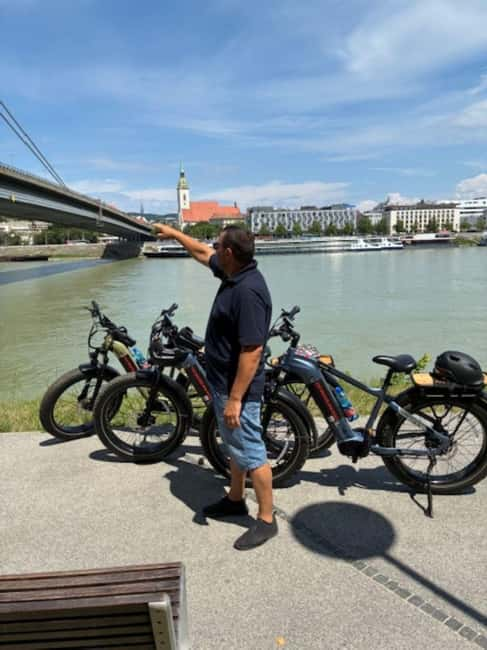
The ride begins with the Bratislava skyline and the SNP Bridge, the city’s famous bridge across the Danube. Its broad span and distinctive tower are easy to spot, and the river gives you a quick sense of Bratislava’s position between Central Europe’s major capitals.
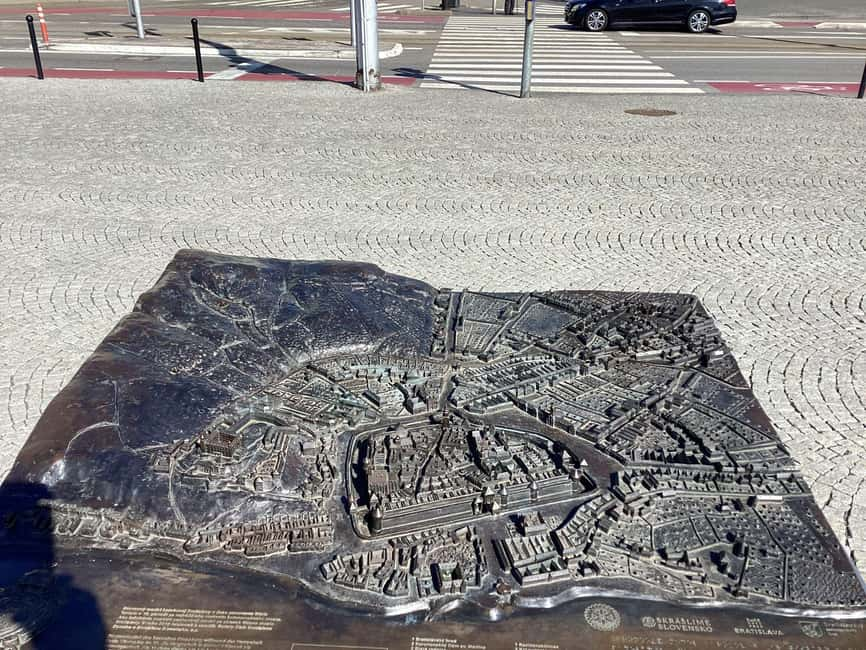
You then pass through or near central sights including Hviezdoslav Square. This is a useful orientation stop, since the square connects the Old Town with the riverfront and gives your guide a chance to explain Bratislava’s older story before the tour turns toward twentieth-century history.
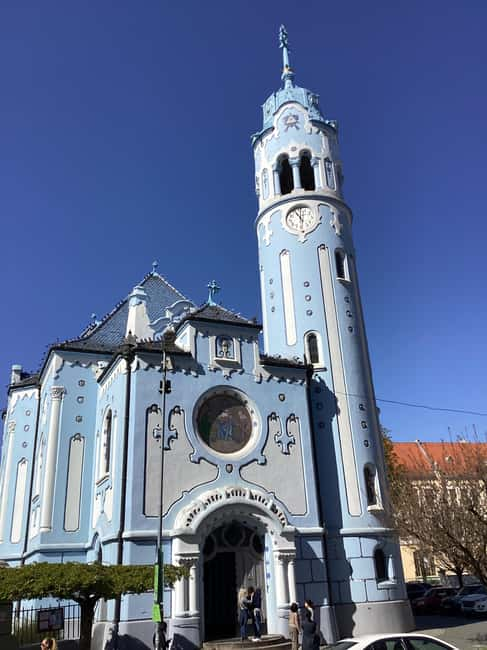
The city portion also includes the Blue Church, one of Bratislava’s most recognizable buildings. Its blue exterior and decorative style make a sharp change from the military concrete you will see later. The guide uses places like this to explain the city rather than simply pointing at them for a photograph.
I would not book this as a pure architecture tour. The stops are relatively brief, with about 10 to 15 minutes listed around some central sights. You get context and photographs, but not a long interior visit at each landmark. That is a fair trade because the real purpose is to connect the city center with the border story outside it.
Old Bridge and the Danube cycling paths
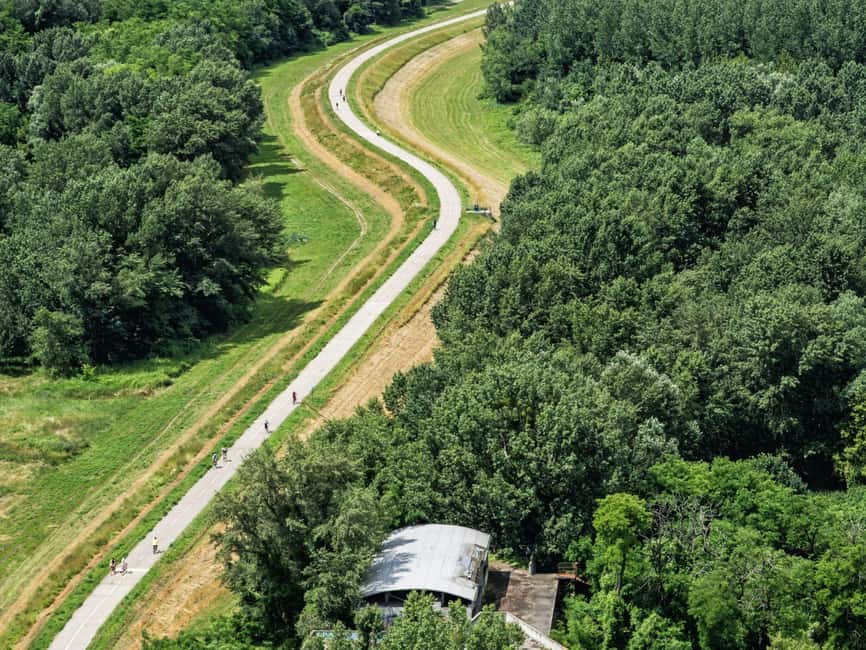
The route continues to the Old Bridge, where the river becomes part of the experience rather than just a backdrop. Cycling paths along the Danube make this section more relaxed, and the electric assist helps keep the group moving without turning the ride into a fitness test.
The exact riding pace can depend on the group. One departure may pause for explanations, photographs, or a small surprise activity, while another may move more directly toward the bunkers. A game break along the Danube has been part of the experience on some tours, and small prizes have also appeared. These extras are not the reason to book, but they add a light touch to a subject that can otherwise feel heavy.
The route gives you a different view of Bratislava from a walking tour. You see how quickly the city gives way to open stretches and how close Austria is geographically. The guide also points out less obvious places between Bratislava and the border, including details you would likely miss from a taxi or sightseeing bus.
A practical note: one guide may adjust the plan if a bunker visit is delayed. On one occasion, extra time allowed a ride toward the castle before the main visit. That flexibility sounds useful, but it also means the exact rhythm can change. If you prefer a tightly timed schedule, ask at the start how the day is expected to run.
More bike tours around the world:
- Lion City Bike Tour of Singapore
★ 5.0 · 6,211 reviews - Big Bike tour Amsterdam – See all in 3 unforgettable hours
★ 4.7 · 4,929 reviews - Ninh Binh Full-Day Tour from Hanoi to Hoa Lu, Tam Coc & Mua Cave Via Boat & Bike
★ 5.0 · 4,384 reviews - Small Group Guided Bike Tour of Amsterdam’s Hidden Gems
★ 5.0 · 3,936 reviews
BS-4 Lány, the first concrete reminder
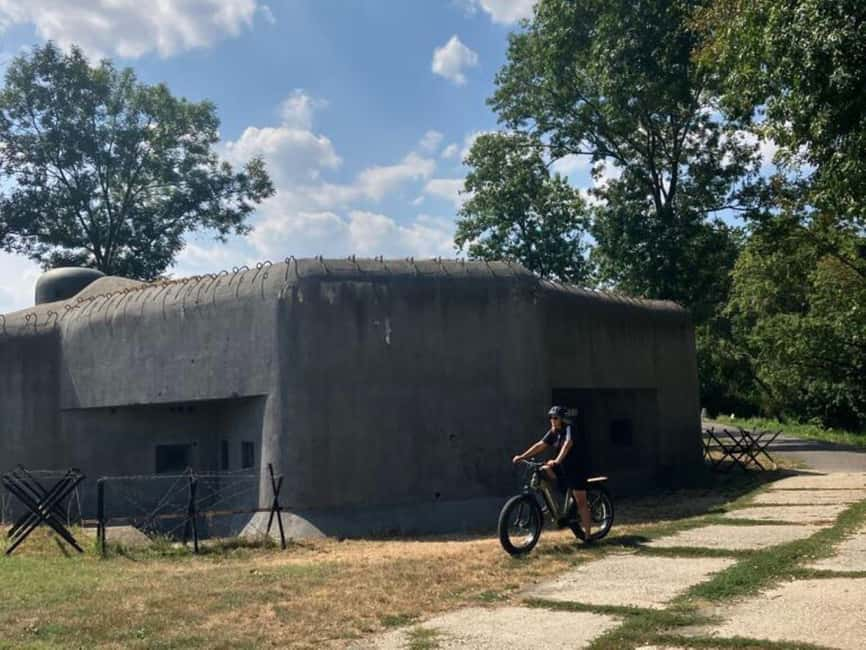
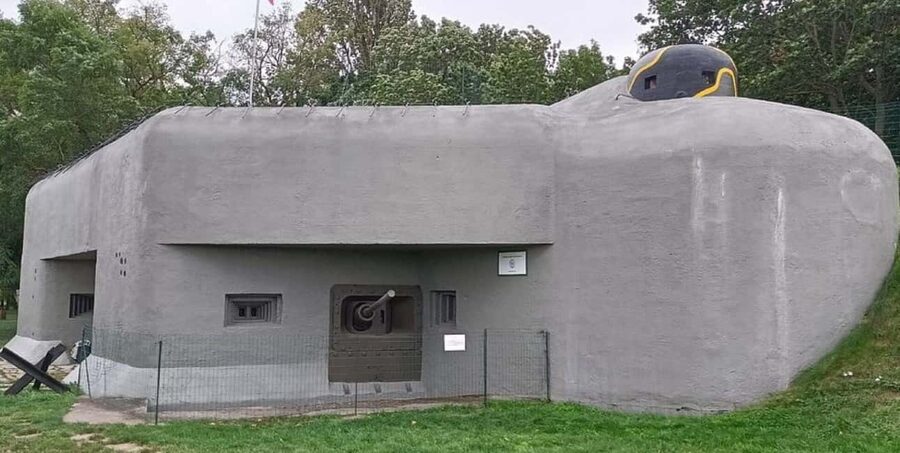
The first major bunker stop is BS-4 Lány. These fortifications were built along Czechoslovakia’s western borders between 1935 and 1938, as the country prepared for the threat posed by Hitler’s Germany.
The site is impressive because of its scale and plainness. It is not a polished palace or a restored military display designed for easy viewing. It is a thick concrete defense structure built for a dangerous moment in European history. Seeing it from the outside helps you understand the effort that went into guarding a border that later became part of a much larger political divide.
The stop is scheduled for around 30 minutes. Your guide explains the bunker’s purpose and the wider defensive line. You get time to look at the structure, take photographs, and ask questions before moving on.
BS-4 is especially useful as an exterior introduction. The later visit to BS-8 offers the fuller museum experience, so you should not expect both bunkers to provide the same kind of access. The pair works well together: one shows the fortification as a solid object in the countryside, while the other explains how it functioned from inside.
BS-8 and the story inside the Iron Curtain
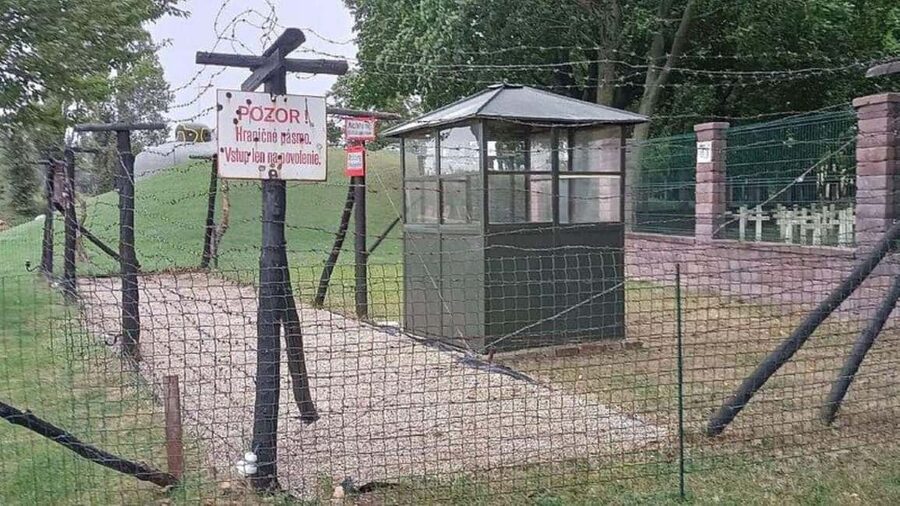
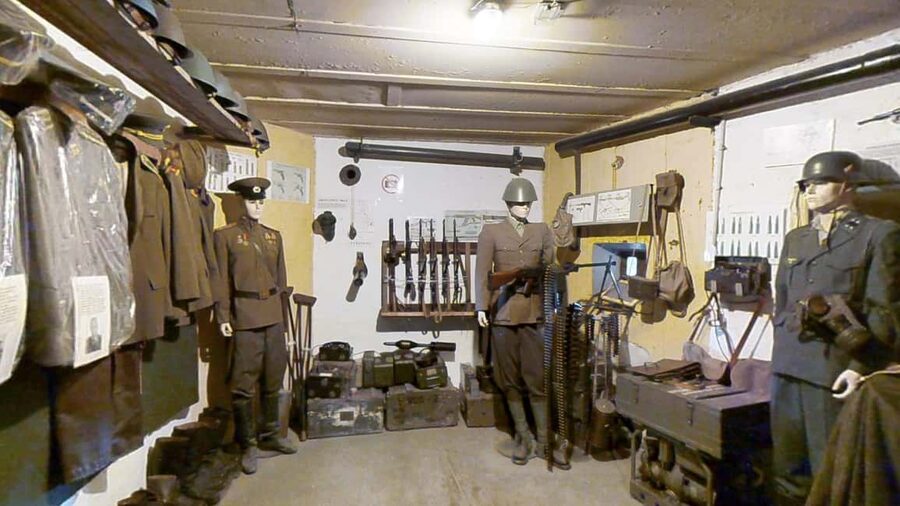
BS-8 is the longer and more detailed stop, with about 45 minutes set aside. This bunker has a museum collection containing original bunker parts, accessories, devices, weapon systems, fortress turrets, and other military material from the period between 1920 and 1938.
You see the bunker both internally and externally. That matters because the outside gives you the physical scale, while the interior shows how such a structure was organized for defense. The museum also covers four main chapters of the bunker’s history, giving the place a timeline rather than treating it as a frozen wartime object.
The tour then moves beyond the prewar construction story to the Iron Curtain. In the early 1950s, Communist authorities built border fortifications and maintained constant surveillance. Attempting to cross the border illegally could lead to prosecution and the death penalty.
That contrast is the heart of the experience. The original bunkers were built to defend Czechoslovakia against an external military threat. Later, the same border region became part of a system that restricted Czechoslovak citizens from leaving. The concrete did not change much, but its political meaning did.
The guide may add war stories and personal accounts of Communist-era life. Martin, described as a bunker specialist, has been part of the explanation at this stage on some outings. If you are particularly interested in military engineering, ask questions here. This is where the tour offers more than a quick photograph and a few dates.
The subject can be sobering, but the guide keeps the tone accessible. That balance works well. You learn about fear, surveillance, and the death penalty without being buried in technical detail.
Returning to the Old Town with a changed view
After BS-8, you cycle back toward central Bratislava. The return trip gives you time to process what you have seen, and occasional stops allow the guide to point out places between Bratislava and Austria that connect the modern city with its border past.
By this point, familiar sights such as the Danube and SNP Bridge carry more weight. The river is not only scenic. The nearby Austrian border was once a line people could not cross freely. Today, movement within the European Union has changed that reality, a point the tour makes clearly.
The ride ends back at the Park Inn by Radisson Danube Hotel. Since hotel pickup and drop-off are not included, you need to make your own way to and from the meeting point. The central location near the river makes it workable if you are staying in Bratislava’s center, but build in time to find the hotel before the start.
How the four hours feel
The advertised duration is four hours, though the tour may run longer if the guide gives extra time or a bunker visit shifts. One participant specifically benefited from a guide who did not rush the experience. That is good news if you want questions answered, but less convenient if you have a train, lunch reservation, or timed attraction immediately afterward.
The opening section can feel slow to some people. You spend time getting organized, learning the bikes, and hearing the first city explanations before reaching the countryside. I would treat that as the setup rather than wasted time, but keep your expectations clear: this is a history ride with several short city stops, not four hours of nonstop cycling.
The small group size is a real advantage. With up to eight people, the guide can speak naturally while riding and stop for questions without creating a large crowd. It also makes the bunker visits easier to follow.
The tour is offered in English. You need to be able to ride a bicycle, and the electric motor does not change that basic requirement. The bike makes hills easier, not bike handling optional.
Who will get the most from this tour
I would choose this experience if you have already seen Bratislava’s main center or want a broader view of the city. It is especially good for people interested in the Second World War, the Cold War, border politics, and everyday life under Communist rule.
It also suits visitors who like active sightseeing but do not want a demanding cycling excursion. The electric assist helps, and the route uses cycling paths for much of the Danube section.
Families with older children may enjoy the bikes and the concrete bunkers, but the historical subject is serious. Children must also be able to ride confidently. The tour is not suitable for anyone who cannot ride a bike.
I would skip it if you want a slow walking tour focused on churches, palaces, and cafés. I would also think twice if your schedule is tight, since the return time can shift. And if you dislike riding in changing weather, check the forecast carefully before booking.
Booking advice, cancellation, and value
At $93, the price makes the most sense when you use all parts of the package: bike rental, helmet, guide, snack, drink, and museum entry. You also avoid arranging transport to two outlying bunkers and trying to understand the sites without context.
Free cancellation is available up to 24 hours before the start, and you can reserve now and pay later. Those terms help if your Bratislava plans are still moving around, but the main decision is less about booking flexibility and more about your interest in the subject.
The experience has a perfect 5 rating from 11 published ratings, with repeated praise for the bikes, clear history, friendly guides, and extra time. I would place the strongest weight on the repeated comments about bike quality and the guides’ personal stories. Those are the parts most likely to shape your day.
Should you book the Bratislava bunker e-bike tour?
Book it if you want to connect Bratislava’s pretty center with the difficult history just beyond it. The best parts are the ride beside the Danube, the contrast between the Blue Church and the concrete bunkers, and the explanation of how a defensive border became the Iron Curtain.
You should also book if you value a guide who can move between dates, local stories, and personal memories. Guides such as Juraj have added warmth and humor, while the bunker explanations give the military sites real purpose.
Skip it if you cannot ride a bike, need a guaranteed four-hour finish, or want a tour devoted only to central Bratislava sights. For most active visitors with an interest in twentieth-century Europe, though, the $93 fee buys a rare combination: fresh air, good bikes, city views, and a direct look at a border that once divided a continent.
FAQ
Where does the Bratislava e-bike tour meet?
You meet in front of the Park Inn by Radisson Danube Hotel, near the SNP Bridge. The group then walks about five minutes to collect the electric bikes.
How long does the tour last?
The planned duration is four hours. The guide may sometimes provide extra time, and delays at a bunker can change the schedule.
Is the tour conducted in English?
Yes. The live tour guide speaks English.
What is included in the price?
The price includes the e-bike rental, helmet, local guide, a snack, a small bottled drink, and entry to the bunker museum.
Do I need to know how to ride an e-bike?
You need to be able to ride a bike. The guide provides a safety briefing and explains how to use the electric assist, but the tour is not suitable for people who cannot ride.
Which bunkers do you visit?
You visit Bunker BS-4 Lány and Bunker BS-8. BS-8 includes a museum collection with original bunker equipment, military material, weapon systems, and fortress components.
What should I wear and bring?
Wear comfortable clothing suitable for biking, check the weather, and bring a camera. Snacks and water are provided, though you may bring your own as well.
New rides added around the world
- Prague: E-Scooter HUGO Bike Rental★ 4.8 · 11 reviews
- Prague Electric Scooter and eBike Grand Tour★ 5.0 · 15 reviews
- Prague E-Bike City Ride tour : 2hrs★ 4.5 · 36 reviews
- Prague: E-Bike or E-Scooter Tour with A Local Guide★ 4.8 · 154 reviews
- Prague: City Viewpoints Tour by Electric Fat Bike★ 5.0 · 43 reviews
- Prague City Bike guided tour★ 3.7 · 10 reviews
- Prague: Classic City Bike Tour★ 4.7 · 149 reviews
- Prague: Stunning Viewpoints, Castle, City & Park Bike Tour★ 4.6 · 38 reviews
E-Bike Tours, compared.
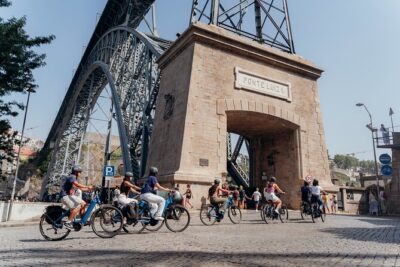
3-Hour Porto Highlights on a Electric Bike Guided Tour
Read our review →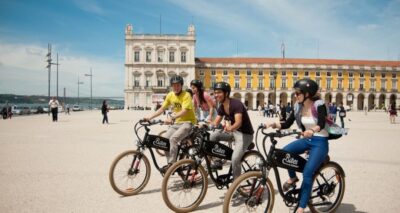
Hills, Alfama, and Mouraria Tour by Electric Bike
Read our review →
Athens Scenic Electric Bike Tour with optional Acropolis visit
Read our review →

Rome EBike Tour: Appian Way, Catacombs & Roman Aqueducts
Read our review →
Top Highlights & Hidden Gems Tour by Cannondale E-Bike
Read our review →