
Review · MARRAKECH
Cycling Adventure in Marrakech
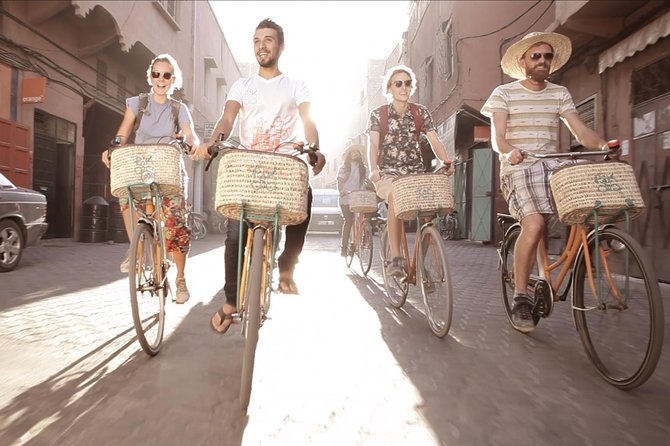
Marrakech makes more sense from a bicycle seat. You move from the Medina’s tight lanes to broad Gueliz streets, passing royal gardens, workshops, markets, and ordinary neighborhood life in one three-hour ride. I like the focus on places you could easily miss, especially the public bakery and traditional hammam. I also like that Pikala trains young Moroccan guides, so the conversation reaches beyond monuments to family, religion, work, and modern Morocco.
The catch is the traffic. Cycling through the old city can feel thrilling, but it is not gentle. Some bikes may not suit every rider, and you need to be comfortable steering around people, scooters, carts, and changing road conditions. This is a good outing for a confident cyclist, not a relaxed spin around a quiet park.
What makes this ride worth considering
- A local view of Marrakech: The route joins major sights with bakeries, workshops, markets, and residential streets.
- Guides with personal stories: Yasser, Hamid, Khawla, Mo, and Zouhair are among the guides praised for clear explanations and warm conversation.
- Two very different cities: You pass from the old Medina into modern Gueliz, making the contrast easy to see.
- Useful cultural stops: A public bakery, hammam, zellij workshop, and cross-cultural cafe put daily life ahead of postcard sightseeing.
- Small-group feel: The maximum group size is 20, with guides sometimes adjusting the group to help different language needs.
- Good value at $33.28: Juice, sweets, bread, bottled water, and a trained local guide are included in the three-hour experience.
Why a bicycle changes the Marrakech experience
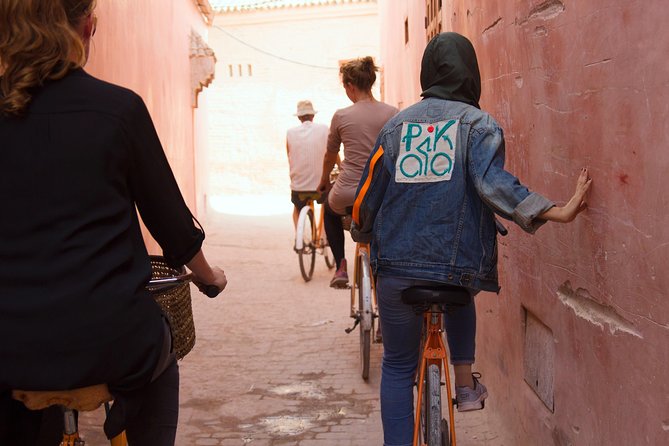
Marrakech can be hard to read on foot. The Medina is a maze of lanes, courtyards, shops, food stalls, and sudden openings. A taxi shows you only the main roads. A walking tour gives you detail but covers less ground. A bicycle lands between the two: you see a lot, stop often, and remain close to street life.
Pikala Bikes takes that middle path. The tour is not built around checking off grand monuments. You do see the Koutoubia, Kasbah, and Agdal gardens, but the main point is the city between those sights. You ride into places tied to work, worship, shopping, food, and family life.
That difference matters. Marrakech is not just a collection of famous buildings. It is also a working city where bread is baked in public ovens, hammams serve neighborhood residents, and workshops keep old crafts going. The bicycle lets you connect those pieces in a single morning or afternoon.
The tour costs $33.28 per person and lasts about three hours. For that price, I see solid value if you want more than a standard sightseeing circuit. You are paying for the guide, bike, route planning, cultural interpretation, snacks, and access to parts of the city you might not reach on your own.
More bike tours around the world:
- Lion City Bike Tour of Singapore
★ 5.0 · 6,211 reviews - Big Bike tour Amsterdam – See all in 3 unforgettable hours
★ 4.7 · 4,929 reviews - 3-Hour Porto Highlights on a Electric Bike Guided Tour
★ 5.0 · 4,392 reviews
Starting at 29 Rue Riad Laarous
The meeting point is at 29 Rue Riad Laarous in Marrakech’s 40000 postal area. The activity finishes at the same place, which keeps the logistics simple. You do not need to arrange a second pickup point or work out where to leave the group at the end.
There are morning and afternoon departures. Choose based on the season, your energy, and how much time you want around the ride. An early departure may feel easier if you are concerned about heat or busy streets. An afternoon ride can fit neatly after a slow morning in the Medina.
The tour accepts mobile tickets, and confirmation is provided at booking. The activity is near public transportation, though the supplied information does not specify a particular bus or taxi connection. Plan to reach the meeting point with enough time to check in and get comfortable with the bicycle.
The group limit is 20 people. That is not an intimate private ride, but it is small enough for a guide to keep the group together with care. One guide, Zouhair, was praised for splitting a group to accommodate different language needs, which suggests some flexibility when the group requires it.
Riding through the Medina without losing the city
The Medina is the most demanding part of the route. Its lanes can be narrow, crowded, and unpredictable. You may need to slow quickly, watch in several directions, and follow the guide’s signals closely. The ride is not presented as a technical cycling trip, but practical bike confidence matters more here than athletic ability.
Several riders found the old-city section exhilarating. Others found it too much for a casual cyclist, especially when traffic and bikes did not match perfectly. Both impressions make sense. The same narrow lane that feels like a thrilling shortcut to one person may feel stressful to another.
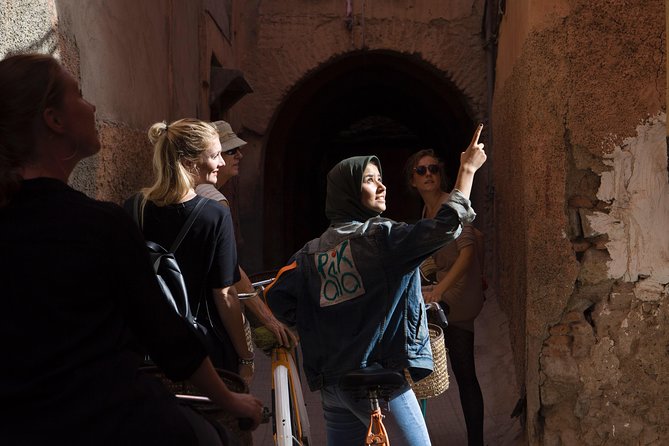
The advantage is access. You can move through the old city in a way that feels immediate and physical. Instead of watching the Medina through a tour group, you are part of its motion for a few minutes. The guide can pause, explain what you are seeing, and help you understand the social rules of the street.
Expect frequent stops rather than a long continuous ride. These pauses give you time to take photographs, ask questions, and let the group regroup. They also reduce the pressure of the route. You are not racing from one site to the next.
Koutoubia, Kasbah, and the Agdal gardens
The Koutoubia is one of Marrakech’s clearest reference points, and seeing it by bike helps you understand how the old city is organized around major landmarks. The tour does not treat the mosque as the entire story. Instead, it uses the monument as one stop within a larger route.
The Kasbah adds another layer. Here, the focus shifts toward the historic southern part of the city and the royal quarter. The ride also passes the gardens near the kings’ palace, according to the route described by riders. These stops give you room to pause and take in the setting before moving back into the city streets.
The Agdal gardens offer a change of pace from the close lanes of the Medina. They are part of the historic fabric of Marrakech, but the route does not suggest an extended garden visit or a formal garden tour. Think of these places as meaningful waypoints, not long museum-style stops.
That is one reason the three-hour format works. You see recognizable sights, but the schedule leaves room for ordinary neighborhoods and local businesses. A longer tour might offer more depth at each monument, but this one gives you a broader sense of how Marrakech fits together.
Same wheels, a different route:
- Ninh Binh Full-Day Tour from Hanoi to Hoa Lu, Tam Coc & Mua Cave Via Boat & Bike
★ 5.0 · 4,384 reviews - Small Group Guided Bike Tour of Amsterdam’s Hidden Gems
★ 5.0 · 3,936 reviews - 3-hour Complete Prague Bike Tour
★ 5.0 · 3,674 reviews - Bangkok: Temples, Canals & Local Life Bike Tour
★ 4.9 · 3,511 reviews
Crossing from the Medina to Gueliz
The route includes both the historic city center and Gueliz, the newer part of Marrakech. The contrast is one of the ride’s strongest features. You can feel the change in street scale, traffic pattern, and urban character as the route leaves the old city.
In the Medina, the challenge is close movement through narrow spaces. In Gueliz, the ride can feel more open and easier. One rider described the new-city section as a welcome relief after the more intense old-city cycling. That makes the route feel balanced rather than relentlessly hectic.
Gueliz also helps correct a common first impression of Marrakech. The city is not frozen in its past. Modern neighborhoods, new businesses, and changing social habits sit alongside old customs and historic buildings. The guides are trained to talk about this tension, including religion, family, modernization, and what it is like to grow up in Morocco.
This is where the local guide matters most. A guide such as Khawla or Kaula, whose personal stories were especially appreciated, can explain the city through lived experience rather than memorized dates. Yasser was also praised for connecting the route to local life, while Hamid was described as patient and open to questions.
The public bakery and traditional hammam
The public bakery is one of the tour’s most useful stops. Bread is part of daily Moroccan life, and a neighborhood bakery shows you the practical side of food production. This is not a polished food demonstration designed only for visitors. It is a look at an everyday service that helps keep a community fed.
The hammam offers another window into local routines. This old traditional bathhouse is not simply a sightseeing object. It carries social and practical meaning, and the guide can explain its role in Moroccan life. The stop is valuable because it gives context to a place you might otherwise pass without understanding.
The tour also includes a zellij workshop or demonstration in some accounts of the route. Zellij is the detailed geometric tile work associated with Moroccan design. Seeing the craft connected to working neighborhoods makes the decorative tile in palaces and religious buildings feel less distant.
These stops are brief, so do not expect a full workshop class or an extended visit inside every location. Their strength is the questions they raise. You get a clearer sense of how the city works, then continue riding with that context in mind.
Markets, snacks, and the cafe stop
The route includes an enormous secondhand market. This is another place where the tour moves beyond the polished center. A secondhand market can reveal what people buy, sell, repair, and reuse, giving you a less staged view of Marrakech.
Food is part of the experience too. Juice, sweets, bread, and bottled water are included along the way. The cross-cultural Cafe Clock stop has been singled out as a pleasant place to sit, enjoy iced tea or juice and cookies, and spend a little time with the group. One outing even included a game of cards there.
That pause matters after the more active parts of the route. It gives you a chance to talk with the guide instead of listening only while moving. It also makes the experience feel social rather than purely instructional.
The food should be treated as a snack, not a meal. If you need a full lunch or have dietary restrictions, plan around the tour. The supplied details do not specify a full menu or alternatives, so ask Pikala directly if that is important to you.
A final stop connected to Marrakech’s seven saints
The tour finishes with a visit to the tomb of one of the seven saints of Marrakech. This adds a religious and local dimension that a standard city ride might leave out. The guide can help you understand why these saints matter within the city’s spiritual identity.
The stop also connects with the tour’s wider approach. You are not simply looking at royal buildings and famous viewpoints. You are seeing places tied to belief, memory, and community life. The experience does not reduce Morocco to a single story, and the guides discuss how religion fits alongside modern life.
As with the other religious and cultural stops, respectful behavior is essential. Listen to the guide’s instructions and follow local customs. The tour information does not promise entry into every site, so think of this as a guided visit to an important place rather than a guaranteed interior tour.
The bicycles, safety, and physical demands
The most important practical question is your comfort on a bicycle. You do not need to be a professional cyclist, but you should be able to ride confidently in changing conditions. The route includes traffic, tight spaces, and sudden obstacles.
Bike quality appears to vary by rider and bicycle. Some people found the bikes modern and easy to ride. Another rider felt that the bikes were not always a good fit and advised choosing the tour only if you are comfortable handling a bike that may not suit you perfectly.
At the start, take a moment to check the seat, brakes, and general fit. Tell the guide if something feels wrong before leaving. A poorly adjusted seat can make three hours much less pleasant, even if you normally enjoy cycling.
Stay alert throughout the Medina section. Traffic may come from more than one direction, and the route can feel chaotic. Follow the guide rather than trying to squeeze ahead. The guides are there to manage the route, and their local experience is one of the main reasons to book this instead of renting a bike alone.
The tour is likely most comfortable outside the hottest and busiest periods. One rider specifically preferred the experience in the off-season and would not recommend it during a very busy summer period for a less experienced cyclist. That is useful advice. If you are uncertain, choose a departure time that avoids the strongest heat and ask Pikala about current street conditions.
The guides and the human side of Pikala
Pikala is a local non-profit project, and the guides are young Moroccans trained by the organization. That mission gives the ride a purpose beyond sightseeing. Your booking supports a social project while putting you in contact with people who can speak about Morocco in personal, direct terms.
The strongest guide experiences have come from clear explanations and easy conversation. Yasser, Hamid, Khawla, Mo, Zouhair, and other guides have been praised for their warmth, patience, humor, and ability to connect the sights with local life.
Names and guide assignments can change, so do not book expecting one specific person unless Pikala confirms it. What you can reasonably expect is a locally trained guide who discusses family, religion, modernization, and growing up in Morocco alongside the route.
That human element is the main reason I would choose this ride over a standard city loop. The Koutoubia and Kasbah are easy to locate. Understanding how people use a bakery, hammam, market, or neighborhood street requires someone who can explain the setting.
Who should book this tour
I would recommend the ride to:
- Confident cyclists who want to cover more ground than a walking tour
- First-time Marrakech visitors seeking local neighborhoods as well as major sights
- Repeat visitors who have already seen the main monuments
- People interested in Moroccan daily life, social customs, and modern change
- Couples and small groups who enjoy an active, conversational outing
- Anyone who wants to support a local non-profit project
I would think twice if you dislike traffic, have trouble handling sudden stops, or want a calm ride with no pressure. The old-city section is not suitable for everyone. If you are a nervous cyclist, ask Pikala about current bike availability, group conditions, and the best departure time before booking.
At 98 percent recommended and a 4.9 rating from 289 reviews, the overall response is unusually strong. Still, the lower ratings point to the one real issue: cycling in Marrakech can be demanding, and bike fit may not be perfect. The high rating should encourage you, not replace your own judgment about safety and comfort.
Booking details and cancellation
The price is $33.28 per person, and the activity lasts about three hours. Morning and afternoon departures are available, with a maximum of 20 people. The ride begins and ends at 29 Rue Riad Laarous.
Mobile tickets are accepted, and booking confirmation is provided at the time of purchase. Free cancellation is available up to 24 hours before the local start time for a full refund. Changes or cancellations made within 24 hours are not accepted for a refund.
Should you book the Pikala Bikes ride?
Book it if you want Marrakech to feel like a living city rather than a list of monuments. The route gives you the Koutoubia, Kasbah, Agdal gardens, Medina, and Gueliz, but the public bakery, hammam, market, cafe, workshop, and saint’s tomb are what make the outing distinctive.
Skip it if you want an easygoing cycle on quiet roads. This is an active city experience, and the Medina can be intense. For a confident rider who accepts that tradeoff, the price is fair, the local contact is valuable, and the three hours offer a useful, memorable look at Marrakech beyond the usual stops.
FAQ
How long is the Cycling Adventure in Marrakech?
The tour lasts approximately three hours.
Where does the tour start and finish?
It starts at 29 Rue Riad Laarous, Marrakesh 40000, Morocco, and finishes back at the same meeting point.
What sights and neighborhoods does the route include?
The route includes the historic Medina, Gueliz, the Koutoubia, Kasbah, Agdal gardens, and areas of Marrakech that many visitors do not normally see.
What local places will I visit?
The experience includes a public bakery, traditional hammam, secondhand market, and a visit connected with zellij tile making. It also finishes with a visit to the tomb of one of Marrakech’s seven saints.
Are food and drinks included?
Yes. Juice, sweets, bread, and bottled water are included. The route also includes a stop at Cafe Clock, where snacks and drinks may be served.
Can I cancel for a full refund?
Yes. You must cancel at least 24 hours before the local start time for a full refund. Cancellations or changes made less than 24 hours before the start are not accepted for a refund.
New rides added around the world
- Prague: E-Scooter HUGO Bike Rental★ 4.8 · 11 reviews
- Prague Electric Scooter and eBike Grand Tour★ 5.0 · 15 reviews
- Prague E-Bike City Ride tour : 2hrs★ 4.5 · 36 reviews
- Prague: E-Bike or E-Scooter Tour with A Local Guide★ 4.8 · 154 reviews
- Prague: City Viewpoints Tour by Electric Fat Bike★ 5.0 · 43 reviews
- Prague City Bike guided tour★ 3.7 · 10 reviews
- Prague: Classic City Bike Tour★ 4.7 · 149 reviews
- Prague: Stunning Viewpoints, Castle, City & Park Bike Tour★ 4.6 · 38 reviews
Marrakech Bike Tours, compared.
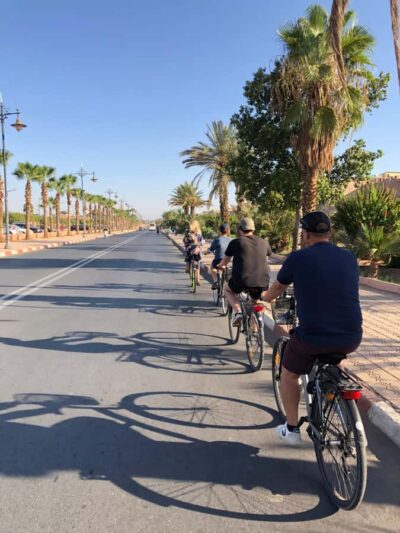
Marrakech:Guided City Cycling Tour – Culture, Colors & Charm
Read our review →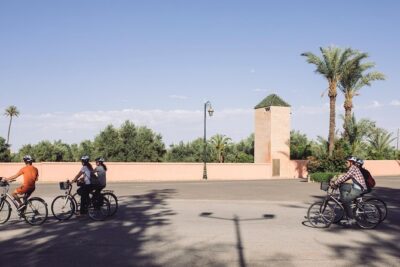
Marrakech’s Best Cycling Tour: Culture, Colors, and Charm
Read our review →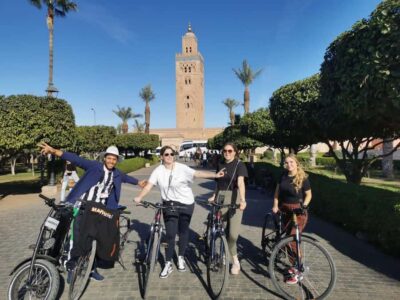

Toubkal National Park Mountain Bike Trip w/Lunch
Read our review →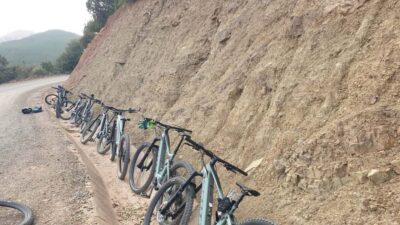
Browse the lists this tour appears in