
Review · MIAMI
Art Deco, History and Crime Bike Tour with Design Enthusiast
Miami Beach is not simply a strip of sand with pretty hotels. Much of it was made by people, and its past includes speculative schemes, segregation, organized crime, celebrity, and a shallow Biscayne Bay that once looked very different. This bike tour brings those layers together while you ride through the city itself.
I like the Art Deco focus and the way Damian connects buildings to the people and scandals behind them. I also like that the route reaches Surfside and Bal Harbour, giving you a broader look at the area than a short South Beach stroll.
The main drawback is the distance. The ride runs about 20 miles round trip, so you need to be comfortable spending three hours on a bicycle. It is sightseeing with a serious pedal count, not a slow ride around one neighborhood.
Key Points Before You Book
- Miami Beach is the main character: Learn how a largely man-made resort city took shape from swampy bayfront land.
- Damian leads the ride: He is a local historian and Art Deco preservation advocate with a strong personal connection to the subject.
- The route goes beyond South Beach: Ride through South Beach, Surfside, and Bal Harbour, with picturesque stops along the way.
- Architecture comes with stories: Study Art Deco, Mediterranean Revival, and MiMo buildings in the places where they were built.
- The darker side is part of the tour: Expect stories about segregation, organized crime, the cocaine cowboys era, Miami Vice, and the murder of Gianni Versace.
- Plan for a full ride: The tour lasts three hours and includes a bicycle and water bottle. A helmet is provided if required.
Why This Miami Beach Tour Is Different
Many Miami Beach sightseeing outings focus on palm trees, famous hotels, and postcard views. This one gives equal weight to the city’s odd beginnings and its uncomfortable chapters. You learn how Miami Beach developed, why its architecture looks the way it does, and how crime, migration, race, religion, and celebrity shaped the place.
The bicycle matters. On foot, you might see a few blocks of Ocean Drive before the heat and traffic wear you down. From a bike, you can cover much more ground and compare several communities in one outing. You also get a better sense of how quickly Miami Beach changes from one district to the next.
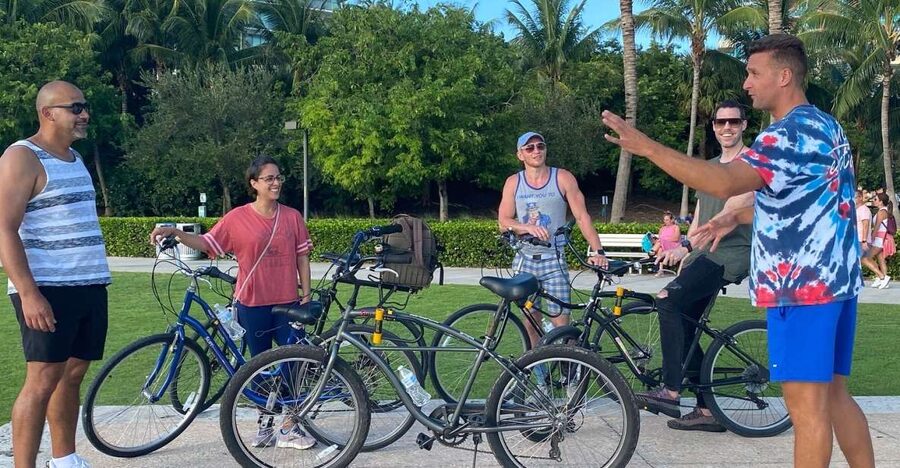
The guide, Damian, is involved with the Miami Design Preservation League and has designed the tour around his own interests in local history and architecture. That gives the outing a clear point of view. You are not just handed a list of dates. You are shown how the buildings, streets, and famous stories fit together.
More Historic Bike Tours in the USA
- Asheville Historic Downtown Guided Electric Bike Tour with Scenic Views
★ 5.0 · 1,234 reviews - Historic Bike Tour in Tucson
★ 5.0 · 553 reviews - Palm Springs Modernism Architecture & History Bike Tour
★ 5.0 · 359 reviews
Starting in South Beach’s Art Deco Core
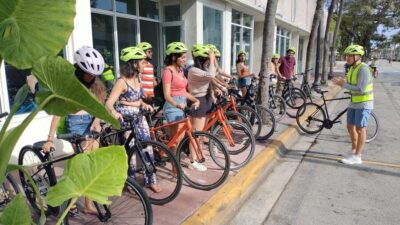
The ride begins at a bicycle rental shop and heads into the heart of Miami Beach. South Beach is the obvious place to start because its Art Deco district puts the city’s visual identity on display in a compact area.
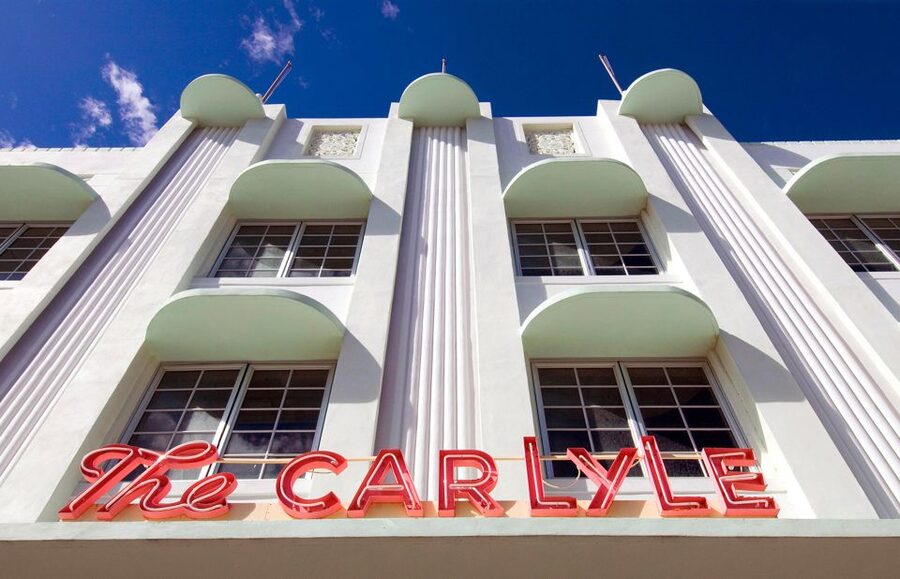
You can expect to see the familiar design features that make the district special: streamlined forms, decorative details, geometric shapes, and buildings that look made for a film set. The tour also takes you into the lobbies of selected Art Deco hotels, where the interiors add another layer to the street facades.
That lobby access is important. From outside, Art Deco can seem like a collection of pastel walls and rounded corners. Inside, you get a better idea of how the style was used to sell modernity, comfort, and glamour. Damian’s preservation work also adds useful context about why these buildings matter and how easily historic districts can lose their identity.
The pace should allow for stops at architectural and historic sites rather than one long ride with commentary shouted over traffic. Still, you are on a bicycle, and the group must keep moving. Bring your attention span as well as your camera. The strongest part of the tour is the connection between what you see and why it was built.
From Swampy Bay to Manufactured Resort
One of the most useful ideas on this tour is that Miami Beach is largely man-made. The city’s polished streets and grand hotels can make the place seem permanent, but the early setting was far less glamorous.
Biscayne Bay was once shallow, swampy land. The resort city grew through land development and ambitious planning, not simply because nature handed over a perfect beach town. That background helps explain Miami Beach’s unusual scale and its constant cycle of reinvention.
You will hear about the city’s early development and its growth through the Great Depression. These subjects are not just background dates. They show how Miami Beach survived hard economic times, attracted new residents and visitors, and developed a style designed to suggest progress even during uncertainty.
I find this kind of context more useful than a simple list of famous buildings. It gives you a way to read the city after the tour ends. A hotel facade becomes evidence of an era, and a broad street becomes part of a development plan rather than just a good place for a photo.
Architecture Beyond Art Deco
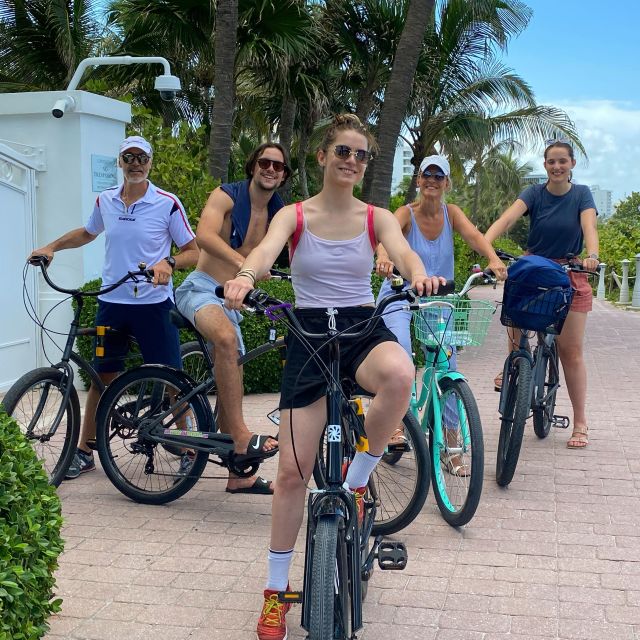
Art Deco gets most of the attention in Miami Beach, but it is only one part of the local design story. The tour also covers Mediterranean Revival and MiMo, two styles that help explain the city’s changing tastes.
Mediterranean Revival buildings reflect an earlier desire to create a resort image tied to European ideas of elegance and old-world charm. MiMo, or Miami Modern, points toward a later period when hotels and apartment buildings favored expressive shapes, practical materials, and a more playful modern look.
Seeing these styles during one bicycle ride makes the changes easier to understand. You are not studying isolated examples in a museum. You are moving through the communities where these buildings still function as hotels, residences, and businesses.
The architecture section should suit anyone who likes design but does not want a formal lecture. Damian’s role in preservation gives the topic local weight, while the bike keeps the experience active. If you only want crime stories, though, you may find the architectural material takes more time than expected. That balance is part of the tour’s appeal, but it is worth knowing before you book.
Same wheels, a different route:
- NYC: Central Park Bike Rentals
★ 4.2 · 2,528 reviews - Red Rock Canyon eBike Half-Day Tour
★ 5.0 · 1,870 reviews - NYC: Central Park Bike Rental
★ 4.1 · 1,651 reviews - Central Park Bike Rental
★ 4.7 · 1,509 reviews
The History Miami Beach Usually Skips
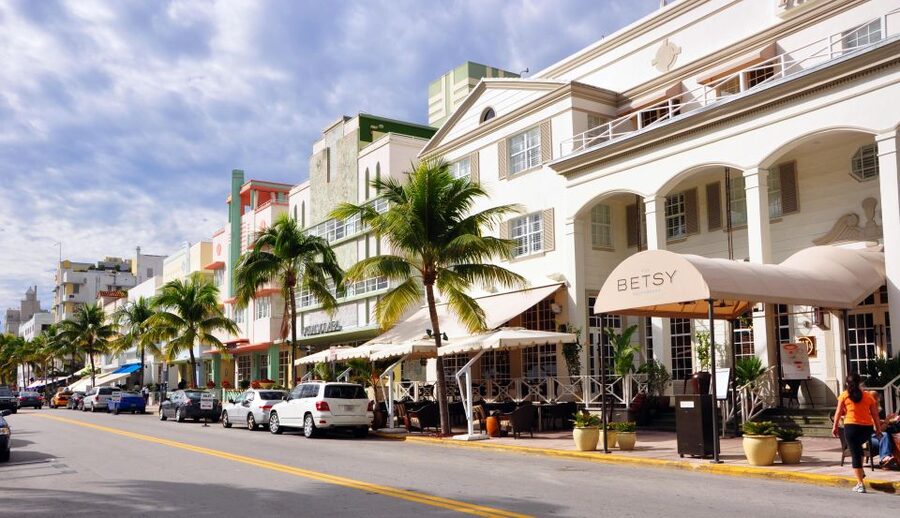
The tour does not present Miami Beach as a simple success story. It covers segregation, Black history, Jewish history, and Cuban migration, all of which are essential to understanding the city.
Segregation shaped where people could stay, gather, and work. Black history is not a side note here, because the growth of Miami Beach depended on many people whose experiences and opportunities were sharply unequal. The tour places those tensions alongside the city’s polished resort image.
Jewish history also matters to Miami Beach’s development and identity. The city became an important place for Jewish residents and visitors, and that story helps explain parts of the social and commercial life you see around the historic districts.
Cuban migration adds another major chapter. Miami’s relationship with Cuba has shaped its population, businesses, politics, food, and sense of place. Even if you have visited Miami before, this portion can help you see the city as part of a much larger Caribbean story.
I appreciate that the tour includes these subjects alongside architecture and crime. A city tour becomes more useful when it explains who built the place, who was welcomed, who was excluded, and how later arrivals changed its character.
Surfside and Bal Harbour by Bicycle
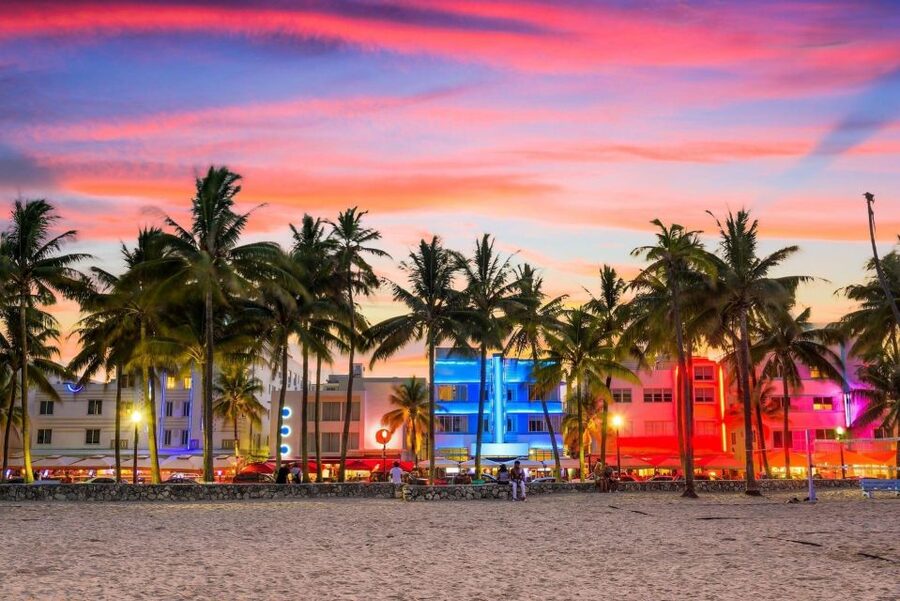
A major advantage of this outing is that it does not stop at the most photographed blocks of South Beach. The route continues north into Surfside and Bal Harbour, two separate municipalities with their own identities.
That longer ride gives you a better sense of the Miami Beach area as a connected chain of communities rather than one single resort strip. You get picturesque sections, different streets, and a change in atmosphere as the route moves away from the Art Deco core.
The full trip covers about 20 miles round trip, according to the tour details. That distance is manageable for a regular cyclist, but it is still a serious outing in warm weather. You should be ready for sustained riding, urban streets, and a few stops rather than expecting a casual five-mile loop.
The reward is range. A short tour can show you one polished slice of Miami Beach. This route lets you compare neighborhoods and see how architecture and development change as you travel north. If you have only one day in the area, that broader view may be worth the extra effort.
Crime, Scandal, and Miami’s Dark Side
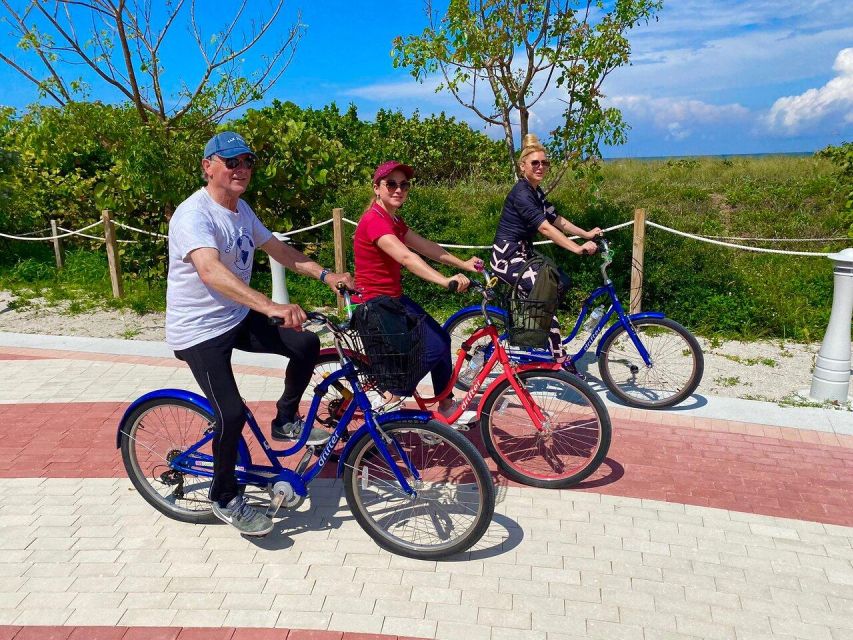
The crime material is not tacked on as a cheap thrill. It is woven into the city’s public image and recent past.
You will hear about the cocaine cowboys era, when Miami became associated with drug money, violence, and fast wealth. The subject helps explain why the city gained such a larger-than-life reputation in the late twentieth century. The influence of Miami Vice is part of that story too, since television helped turn local crime and neon style into a global image.
The tour also covers the murder of Gianni Versace. His former residence is one of Miami Beach’s most famous addresses, and the crime remains tied to the city’s celebrity culture. Hearing about the event in the wider setting of Ocean Drive gives the story more meaning than reading a short caption outside a building.
The tone should appeal to you if you like true crime with historical context. If you prefer a strictly architectural tour, this section may feel grim or sensational at moments. The useful point is that the crime stories show how Miami Beach has been shaped not only by preservation and tourism, but also by fear, money, fame, and media.
Muhammad Ali and Other Surprising Connections
The city’s past includes stories that seem too strange to fit together. One example is Muhammad Ali becoming world boxing champion for the first time in Miami Beach.
That detail gives the tour a wider range than a standard architecture walk. Miami Beach has hosted major sporting moments, political and cultural shifts, migration waves, and celebrity events, all within the same small area.
These connections are valuable because they break up the expected story. You may arrive thinking of Art Deco and beaches, then leave with a sharper sense of how the city became a stage for national and international events.
Damian’s storytelling is central here. The tour’s strongest feature is not simply the number of facts. It is the way the guide ties a building, street, or district to a larger event and makes the setting easier to remember.
Is $79 a Fair Price?
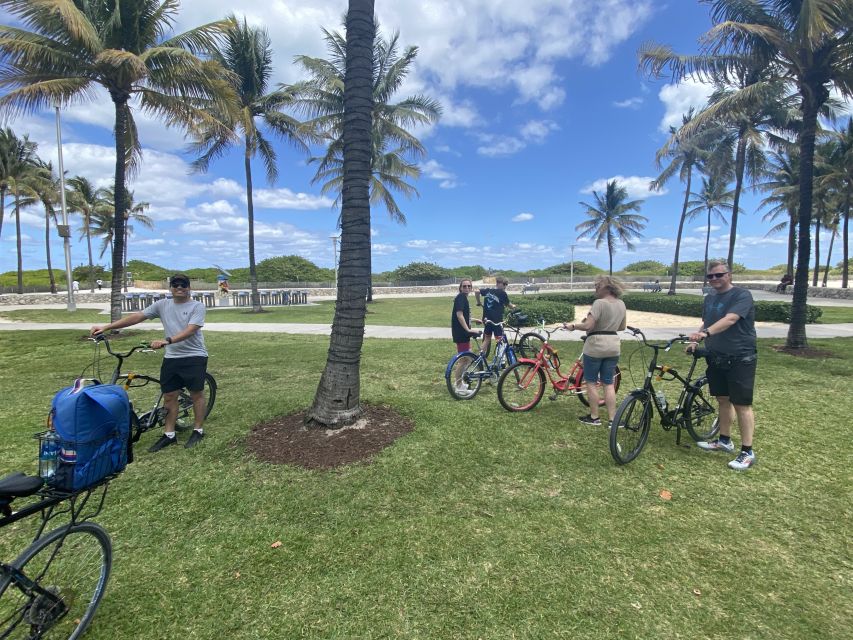
At $79 per person, this tour costs more than renting a bicycle and riding around Miami Beach on your own. The comparison is not quite fair, though. You are paying for three hours of guiding, a bicycle, a water bottle, and a planned route that reaches several municipalities.
The value depends on how much you want from the ride. If you only need transportation and a few photos, rent a bike. If you want a clear explanation of the city’s architecture, development, social divisions, migration, and crime stories, the guided format makes more sense.
The route covers about 20 miles, with picturesque stops along the way. That means you are getting more than a short neighborhood loop, but you are also committing a large part of your morning or afternoon. For someone interested in Miami Beach’s past, the price is reasonable because the guide brings together subjects that would take considerable independent research to connect.
The tour also has practical value early in a visit. You may spot restaurants and places you want to return to later. Since the ride ends back at the starting point, you can continue with your day without arranging a separate pickup.
Who Will Enjoy This Ride Most?
I would recommend this tour to an active visitor who wants more than the standard South Beach picture. It is a strong choice for people interested in architecture, city planning, social history, true crime, or local stories that do not fit neatly into a museum display.
Families can enjoy it too, especially with older children and teenagers. The mix of design, celebrity, crime, and unusual facts gives the tour several ways into the subject. A 16-year-old or college-age visitor may connect with the Miami Vice and cocaine cowboys material, while adults may pay closer attention to preservation, migration, and segregation.
You should think twice if you dislike long bicycle rides or have limited time. Three hours and roughly 20 miles can feel like a lot, particularly in heat. The route includes stops, but it is still an active tour rather than a bus ride with occasional views.
The tour is in English and uses a live guide. A bicycle and water bottle are included, and a helmet is supplied if required. Since the activity begins and ends at the bicycle rental shop, the basic plan is easy to understand.
Should You Book the Art Deco, History and Crime Bike Tour?
Book it if you want Miami Beach explained through its buildings, people, controversies, and strange turns of fate. Damian’s local focus, preservation work, and broad subject range make this more useful than a simple ride past Ocean Drive.
Skip it if you want a short, effortless outing or if 20 miles sounds unpleasant. For everyone else, $79 buys an active introduction to South Beach, Surfside, and Bal Harbour, with enough history to change how you see the city for the rest of your stay.
FAQ
How long is the Art Deco, History and Crime Bike Tour?
The tour lasts three hours. Check availability for the available starting times.
Where does the bike tour begin and end?
You meet at the bicycle rental shop, and the tour ends back at the same meeting point.
Which areas does the bicycle route cover?
The route covers South Beach, Surfside, and Bal Harbour, with stops at architectural, scenic, and historic locations.
Is a bicycle included in the tour price?
Yes. A bicycle and water bottle are included. A helmet is provided if required.
What language is the tour conducted in?
The tour has a live English-speaking guide.
Can I cancel the tour for a full refund?
Yes. You can cancel up to 24 hours in advance for a full refund. You can also reserve now and pay later.
New rides added around the USA
- Portland: Food Carts of the Eastside Bike Tour★ 4.9 · 16 reviews
- Portland: E-Bike Tour at Multnomah Falls★ 4.8 · 20 reviews
- Essential Portland: 2-Hour Guided Bike Tour★ 4.8 · 43 reviews
- Pittsburgh: Beauty of the Burgh Bike Tour★ 4.9 · 37 reviews
- Oahu: Waikiki E-Bike Ride and Manoa Falls Hike★ 4.9 · 28 reviews
- Oahu: Kualoa Electric Bike Tour★ 4.6 · 14 reviews
- NYC: Central Park Guided Bike Tour★ 4.8 · 11 reviews
- NYC: Central Park Guided Electric Bike Tour★ 4.9 · 25 reviews
Miami Bike Tours, compared.
Miami Beach Art Deco & History Bike Tour with Design Enthusiast
Read our review →


Browse the lists this tour appears in