
Review · ROME
Rome: Standard or E-Bike Highlights Guided Tour
Rome makes you work for its famous sights on foot. A bike changes the rhythm. In three hours, you can roll from the Jewish Ghetto to the Colosseum, Trevi Fountain, Pantheon, and Circus Maximus without spending the day on hot pavement. The route is mostly flat, and the headsets let you hear the guide while riding.
I like the mix of major monuments and smaller streets, plus the practical pacing: ride, stop, listen, take a photo, then move on. Guides such as Stefano, Sara, Matt, and Alessandro have been praised for clear history, good humor, and keeping groups together. The tradeoff is cycling beside Roman traffic and over cobblestones, so you should be comfortable on a bike and wear closed-toe shoes.
Key things to know before you ride
- Three hours covers a lot: The route links the Jewish Ghetto, Campo de’ Fiori, Pantheon, Trevi Fountain, Colosseum, and Circus Maximus.
- The route is active but not punishing: Riders describe it as mostly flat, with three-speed bikes and regular stops.
- Headsets are genuinely useful: You can hear the guide even when riding at the back of the group.
- E-bikes are optional: They are helpful in summer heat or crowded streets, but the standard bike is enough for many riders.
- Traffic is the main challenge: Guides give safety instructions and avoid major roads when possible, but Rome remains Rome.
- This is an outside sightseeing tour: You do not go inside the Colosseum, Pantheon, Vatican Museums, or other monuments.
Why a bike is a smart way to see Rome
Rome’s center is compact on a map, but its sights are scattered. The Jewish Ghetto, Pantheon, Trevi Fountain, Colosseum, and Vatican area all belong on a first visit, yet walking between them can eat up much of your day. A bike gives you a quick overview while still letting you pause at the places that matter.
This is not a speed trial. The tour uses a stop-and-go pattern, with short stretches of riding followed by explanations. You will hear stories through a headset as the group moves, then stop for a closer look and photographs. That makes the experience more useful than simply renting a bike and trying to decode Rome on your own.
The price is about $53 per person. For three hours with a bike, guide, headset, and the chance to cover much of the historic center, I consider that fair value. You are paying for the route and the local explanation, not entry tickets. If your main goal is to enter the Colosseum or Vatican Museums, this will not replace a museum reservation. If you want to understand the city’s layout on your first day, it can save both time and tired feet.
More City Bike Tours in Italy
- Rome: Top Highlights & Hidden Gems Tour by Cannondale E-Bike
★ 4.9 · 1,760 reviews - Rome: City Highlights Electric Bike Tour
★ 4.9 · 343 reviews - Highlights & Hidden Gems Tour with Top E-bike
★ 5.0 · 300 reviews
Starting near Piazza Venezia
The meeting point is the Fat Tire Tours office at Via dei Delfini 35/36, about 150 meters from Piazza Venezia. That is roughly a five-minute walk from the piazza and about 1.5 kilometers from the Colosseum.
Arrive 15 minutes before departure. You will receive a cruiser bike, headset, and optional helmet. The supplied information does not give a group size, but the headset system is designed to keep the guide audible as the group rides in formation.
The bikes are described as comfortable cruisers, with three-speed bikes noted by one rider. The route is generally easy in terms of hills, but comfort on a bike is not the same as athletic ability. You need to start, stop, steer, and remain alert around cars, pedestrians, uneven paving, and other cyclists.
From the Jewish Ghetto to Campo de’ Fiori
The first stretch reaches Rome’s Jewish Ghetto, one of the city’s most atmospheric historic districts. This is a good opening because it introduces Rome away from the grandest monuments. Narrow lanes, old buildings, and layers of Jewish and Roman history make the area feel more intimate than the open spaces around the Colosseum.
From there, the ride continues to Campo de’ Fiori. The square is best known for its market and its statue of Giordano Bruno, and it gives the guide a chance to explain how Rome’s public spaces changed over time. You will not linger over every stop, so listen for the details that interest you and save places you want to revisit later.
This early part of the route also gives you time to settle into the bike. Rome’s streets can feel confusing at first. Follow the guide’s signals, keep your spacing, and do not treat the ride like a solo bicycle trip.
The Pantheon, Piazza Navona, and Sant’Ignazio
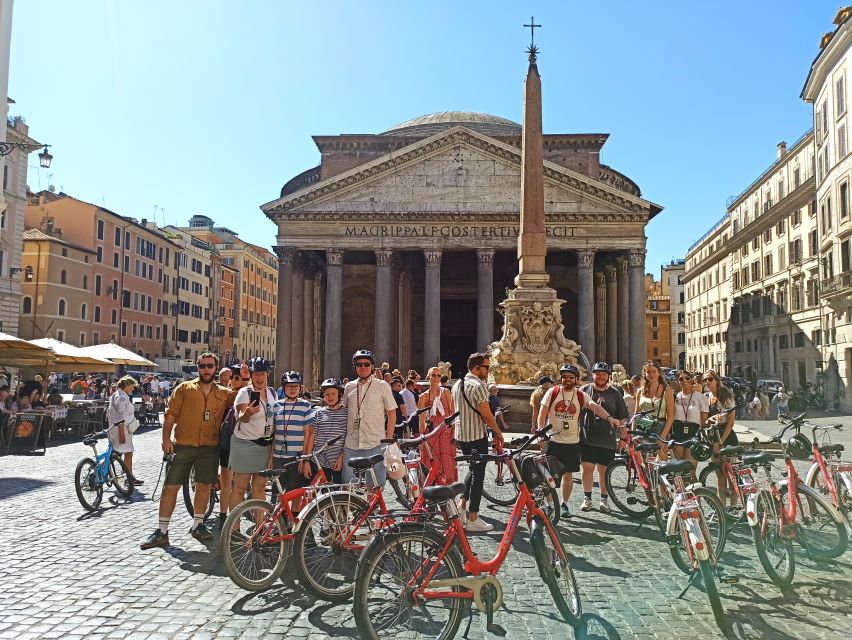
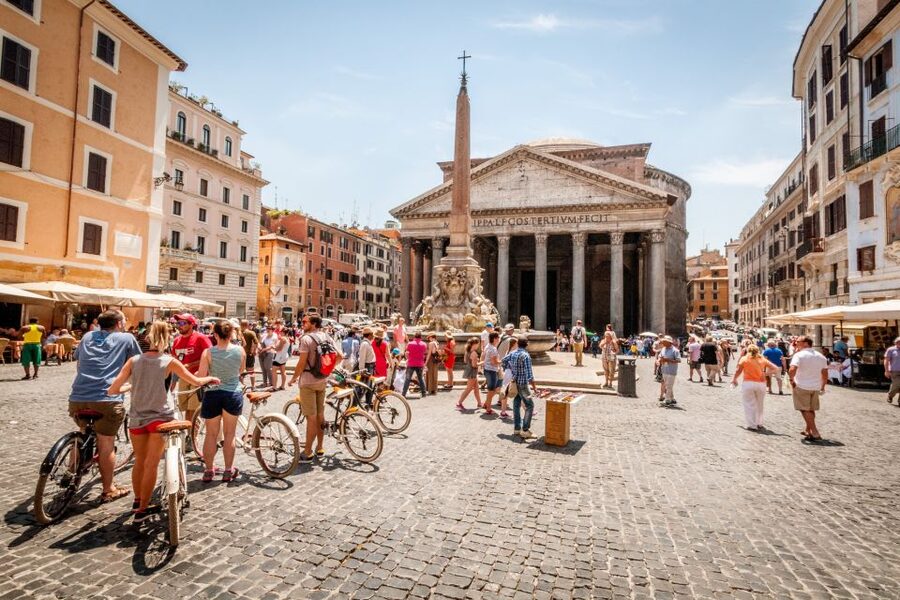
The Pantheon is one of the strongest stops on the route. Its huge concrete dome and Corinthian columns show the engineering confidence of ancient Rome, while its later use as a church explains why the building survived. You see the exterior on this tour, not the interior, so plan a separate visit if stepping inside matters to you.
Next comes Piazza Navona, one of Rome’s grandest urban spaces. The long oval shape reflects its ancient use as a stadium, while the fountains and palaces give it the Baroque character you see today. A bike lets you approach the square without making it a long walk from the Pantheon.
The Church of Sant’Ignazio di Loyola offers another useful contrast. Its exterior and nearby streets show how Rome can shift from ancient ruins to grand Catholic architecture within a few minutes. The tour does not turn into a church interiors program, so think of this stop as part of the city’s visual story rather than a formal church visit.
More City Bike Tours in Rome
- Rome’s Best by E-bike: Guided City Tour (Small Group or Private)
★ 5.0 · 207 reviews - Private Rome City Bike Tour with quality Cannondale EBike
★ 5.0 · 176 reviews
Hadrian’s Temple and the ride to Trevi Fountain
The Temple of Hadrian is a compact ancient remnant tucked into a modern city setting. Its surviving columns are a reminder that Roman ruins do not always appear as a single grand monument. Sometimes they are part of a street corner, surrounded by offices, shops, and daily life.
The ride to the Trevi Fountain takes about 20 minutes according to the planned route. That longer cycling section helps connect the historic center, but it is also where you may notice the practical challenges of Rome. Pedestrians step into the road, streets narrow, and cobbles can jolt the bike.
At the Trevi Fountain, you get one of the tour’s best photo stops. The Baroque fountain is large, ornate, and usually crowded, so do not expect a quiet, private look. You will have time to admire the stonework and take pictures, but the guide must also keep the group moving.
Trajan’s Column and Piazza Venezia
Trajan’s Column is easy to miss if you are walking quickly through the center. Its carved spiral relief tells a long military story around the column, and the monument helps explain the scale of ancient Rome’s public building projects.
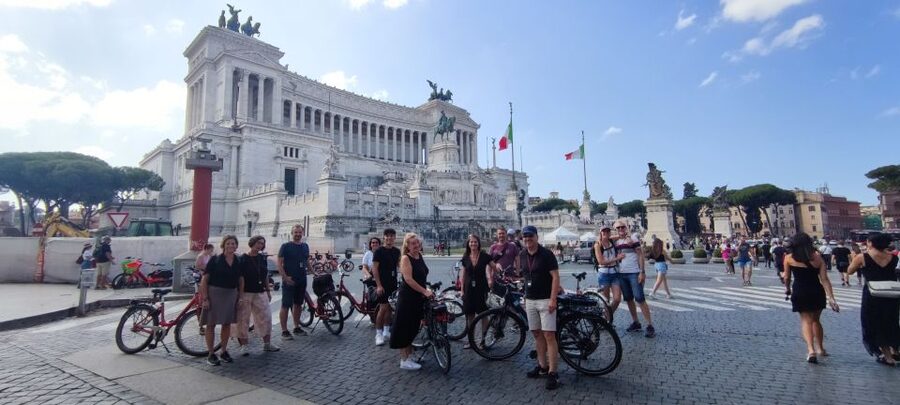
The route then reaches Piazza Venezia, a major traffic hub dominated by the Vittoriano monument. This is one place where the value of a guide is clear. You can see the scale and position of the square, then understand how it connects the ancient center, the Capitoline area, and the roads leading toward the Colosseum.
The meeting point is close by, so the route begins and ends in a convenient central location. That makes the tour easy to pair with dinner, a walk around Piazza Venezia, or another central sight afterward.
The Colosseum and Arch of Constantine
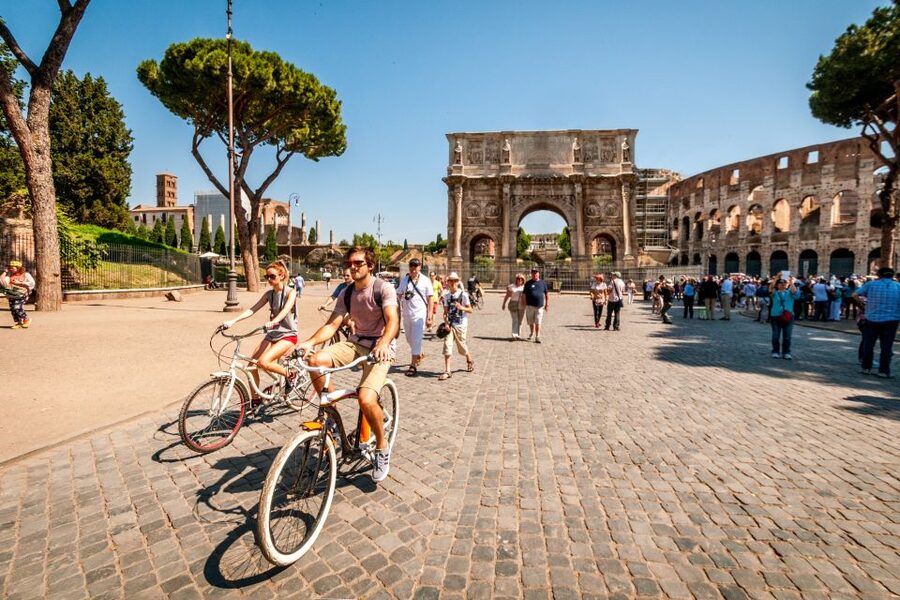
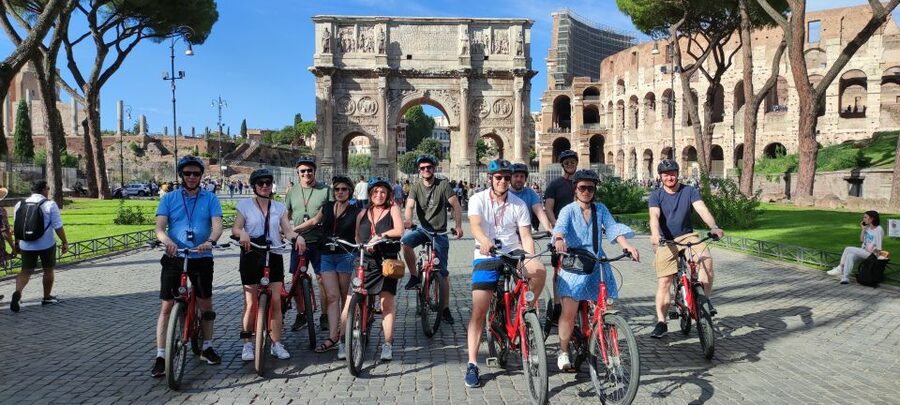
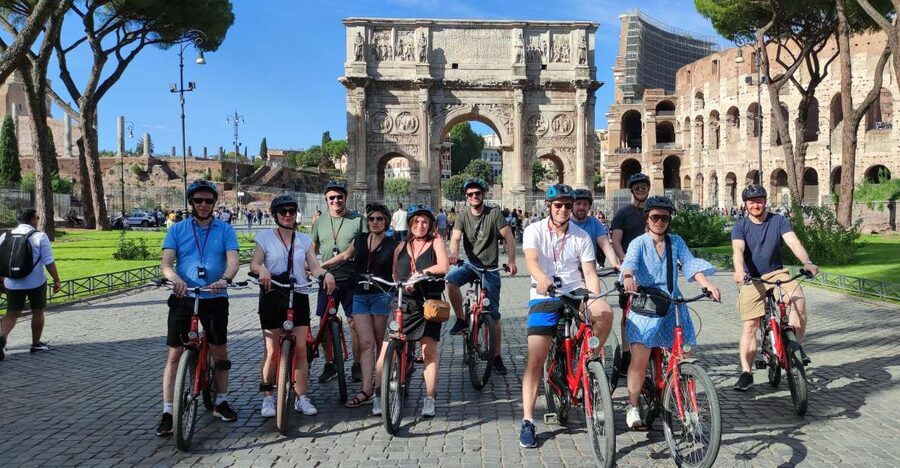
The Arch of Constantine appears just before the Colosseum. Its reliefs and reused carvings reveal how Roman monuments were built, altered, and reused across different periods. It is a quick stop, but a useful one before the main ancient sight.
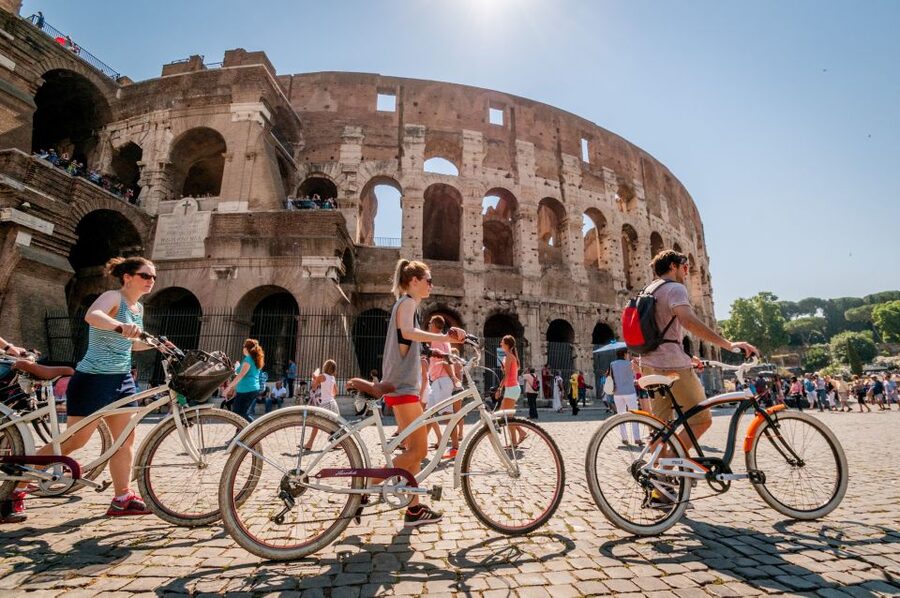
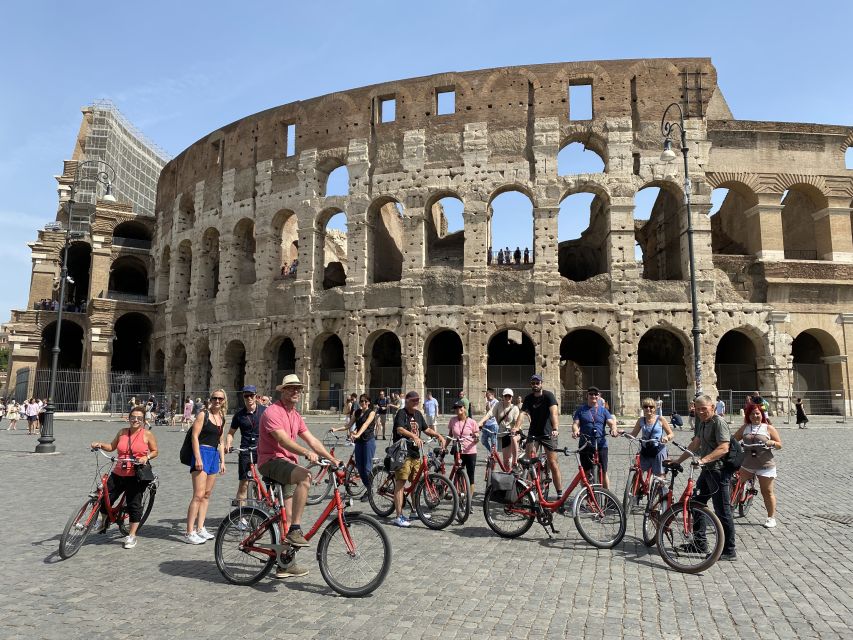
The Colosseum is the route’s major visual payoff. Built in AD 72 during Emperor Vespasian’s reign, the amphitheater remains one of the clearest symbols of ancient Rome. You will see it from outside and hear the guide explain its purpose and place in Roman public life, but entry is not included.
Do not confuse this tour with a Colosseum ticket. The outside view gives you scale and context, while an interior visit requires separate planning. For a first-day orientation, the exterior stop works well. For anyone determined to see the arena, underground levels, or upper tiers, book that experience separately.
Several riders found the ride past the Colosseum especially enjoyable, and the flat route makes this part feel easy when the group is moving. The guide’s job becomes important here because the area is busy with pedestrians, vehicles, and sightseeing groups.
Circus Maximus and the ride back
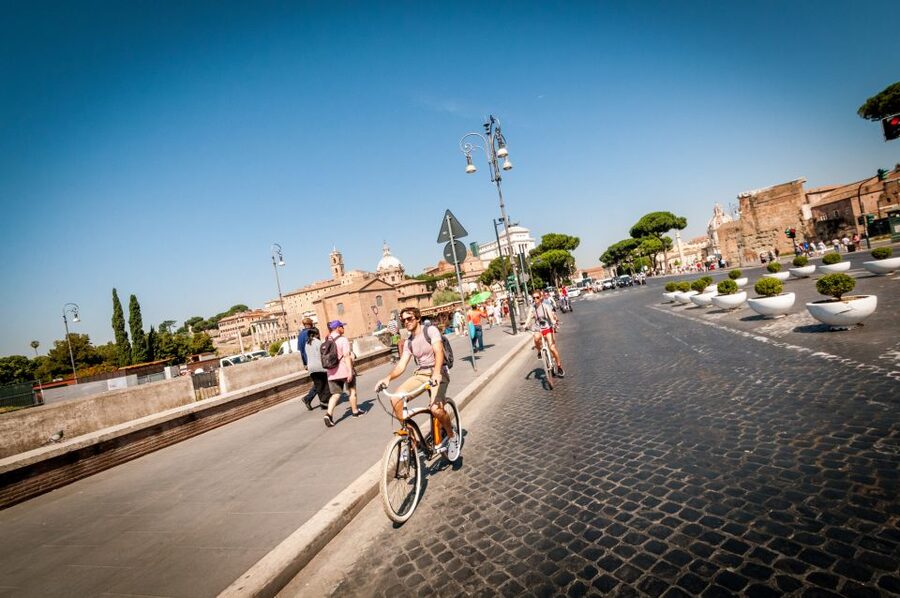
The final major stop is Circus Maximus, the enormous valley once used for chariot races. It is less visually complete than the Colosseum, but that is exactly why the guide’s explanation helps. You need context to picture the scale of a stadium that now appears as a broad open space.
The route spends about 20 minutes cycling by the Circus Maximus before returning to the office. This final section gives you a different view of Rome. Instead of stopping at a single intact monument, you see how ancient spaces fit into the modern city.
The tour does not include a dedicated Vatican City stop in the detailed route supplied here. The general description refers to Vatican City and its major sights, but the listed itinerary ends at Circus Maximus and returns to Via dei Delfini. If Vatican City is your main reason for booking, confirm the exact departure route before paying.
Standard bike or e-bike?
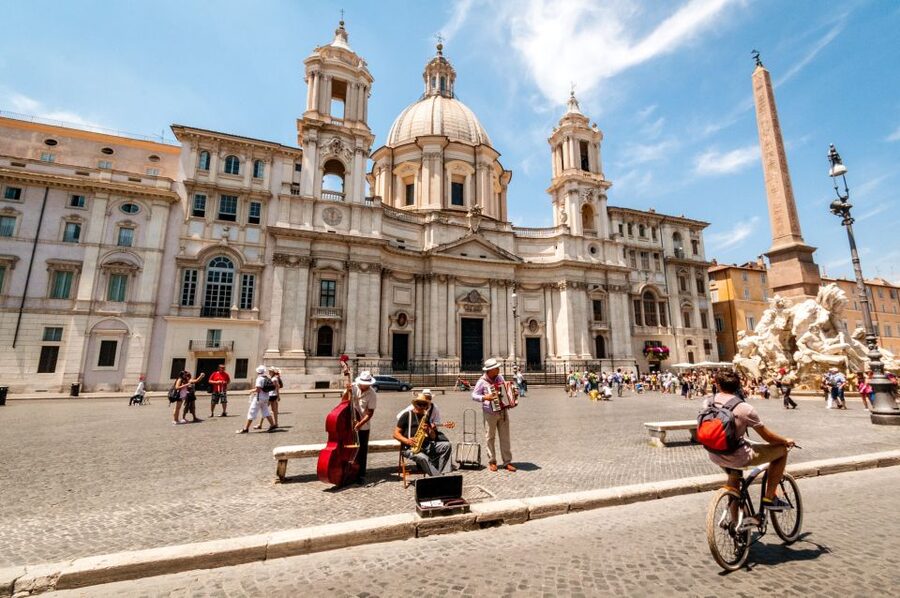
For many riders, the standard cruiser is enough. The route is described as mostly flat, and one rider who upgraded to an e-bike found the extra power fun but not necessary. You still need to pedal and manage the bike through crowded streets.
An e-bike makes more sense if you are riding in August heat, want help maintaining pace, or feel less confident on a bicycle. One afternoon group found the e-bikes especially useful on a hot day, with the guide using shade and quieter streets to keep the ride comfortable.
The important point is that an e-bike does not remove the traffic challenge. It may make the physical part easier, but you still need good balance, attention, and confidence. Ask the operator about the available bike for your height and any child-sized equipment when booking.
Traffic, cobblestones, and safety
This is an urban bike tour, not a protected cycle-path outing. You may ride near cars and through crowded areas. Several guides, including Mattia, Stefano, Marco, and Matt, were praised for keeping groups together and giving clear safety instructions. That matters more in Rome than a polished speech about ancient architecture.
The feedback is not perfectly carefree. Riders found some roads tricky, especially around traffic and pedestrians. Cobblestones can be uncomfortable, and the ride is not recommended for pregnant women or children who are uneasy on a bike.
Wear comfortable, closed-toe shoes. Open-toed shoes are not allowed. Dress for the weather, bring water, and expect the tour to operate in rain or shine. Ponchos are available in wet weather, and the cost is fully reimbursed if you do not use one.
The headset is one of the most useful pieces of equipment. You can hear the guide while riding, including when you are near the back of the group. One rider found a guide spoke too quickly at times, so ask for clarification if you miss a name or date.
Who will enjoy this Rome bike tour?
I would choose this tour for a first or short visit to Rome, especially if you want a broad introduction before deciding where to spend more time. It also suits families with confident older children, active adults, and anyone who would rather ride than walk between monuments.
Children under 18 must be accompanied by an adult. Children under 10 need to ride their own bike and have an excellent level of cycling, and staff can decline participation if they do not feel the child is ready. The tour is offered in English only.
You should skip it if you dislike city cycling, have trouble riding over uneven surfaces, or need a slow, private visit at each monument. It is also not suitable for pregnant women. The tour moves at a group pace, and the monuments are viewed from outside.
Should you book it?
Book this tour if you want to see a large portion of central Rome in three hours, hear useful context as you go, and enjoy the city from street level. The strongest reasons are the mostly flat route, practical headsets, friendly guides such as Stefano and Sara, and the efficient connection between ancient, Baroque, and modern Rome.
Do not book it as a substitute for Colosseum or Vatican entry. Think of it as an overview and orientation ride. For confident cyclists who want maximum sightseeing without wearing out their feet, $53 is a sensible use of three hours.
FAQ
How long is the Rome bike tour?
The tour lasts three hours.
What language is the tour offered in?
The live tour guide and activity are offered in English only.
Where does the tour start?
It starts at the Fat Tire Tours office at Via dei Delfini 35/36, 00186 Rome.
How close is the meeting point to Piazza Venezia?
The office is about 150 meters from Piazza Venezia, roughly a five-minute walk.
How early should I arrive?
You should arrive 15 minutes before the tour departure.
Is a helmet included?
A helmet is available, but wearing it is optional.
Are e-bikes available?
The experience offers a choice between a standard bike and an e-bike. The provided information does not specify the price difference for upgrading.
Does the tour enter the Colosseum or other monuments?
No. The tour does not visit inside monuments or museums.
Can children join the tour?
Children under 18 must be accompanied by an adult. Children under 10 must ride their own bike and have an excellent level of cycling.
What happens if it rains?
The tour operates rain or shine. Rain ponchos are available, and their cost is fully reimbursed if they are not used.
More E-Bike Tours in Rome
- Rome by Night – Ebike Small Group Tour – Food and Wine (Option)
★ 5.0 · 1,275 reviews - Rome by Night: E-bike Small Group Tour -Food & Wine (Option)
★ 4.9 · 1,233 reviews - Appian Way, Catacombs and Aqueducts Park Tour with Top E-Bike
★ 5.0 · 735 reviews - Rome: Appian Way E-Bike Tour Catacombs, Aqueducts & Picnic
★ 4.6 · 727 reviews
More E-Bike Tours in Italy
- Rome EBike Tour: Appian Way, Catacombs & Roman Aqueducts
★ 5.0 · 1,766 reviews - Rome: Appian Way & Aqueducts E-Bike Tour (Catacombs & Food)
★ 4.9 · 1,498 reviews - Rome: Appian Way, Catacombs, & Roman Aqueducts E-bike Tour
★ 4.9 · 1,421 reviews - Rome City Small Group Bike Tour with quality Cannondale EBike
★ 5.0 · 1,380 reviews
New rides added around Rome
- Night Tour of Rome with Top E-bike & optional Italian Dinner★ 4.9 · 108 reviews
- Rome E-Bike Tour: Ultimate Street Food and Market Feast★ 4.9 · 50 reviews
- Rome: Appian Way, Catacombs & Aqueducts by eBike + Transfer★ 4.9 · 421 reviews
- Rome E-Bike Small Group Tour of the Appian Way with Private Option★ 5.0 · 130 reviews
- Rome’s Best by E-bike: Guided City Tour (Small Group or Private)★ 5.0 · 207 reviews
- Rome: Appian Way, Aqueducts & Catacombs (Small Group or Private)★ 5.0 · 103 reviews
- Private Rome City Bike Tour with quality Cannondale EBike★ 5.0 · 176 reviews
- Highlights & Hidden Gems Tour with Top E-bike★ 5.0 · 300 reviews
Rome Bike Tours, compared.

Rome EBike Tour: Appian Way, Catacombs & Roman Aqueducts
Read our review →
Top Highlights & Hidden Gems Tour by Cannondale E-Bike
Read our review →
Appian Way & Aqueducts E-Bike Tour (Catacombs & Food)
Read our review →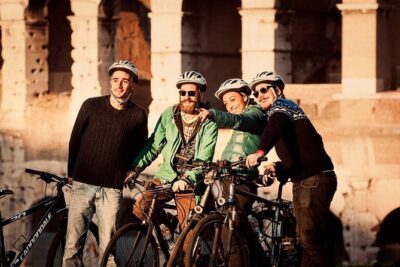
Rome City Small Group Bike Tour with quality Cannondale EBike
Read our review →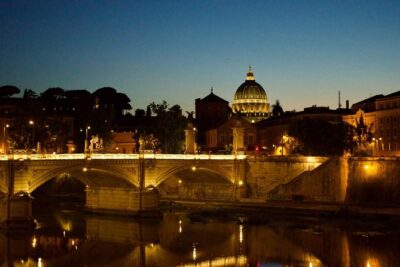
Rome by Night – Ebike Small Group Tour – Food and Wine (Option)
Read our review →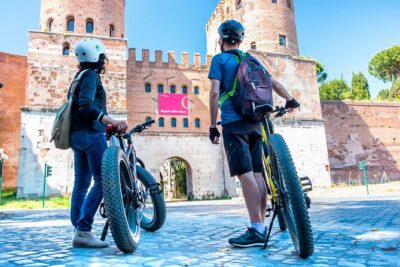
Appian Way Aqueducts Bike Tour (Catacombs & Lunch Option)
Read our review →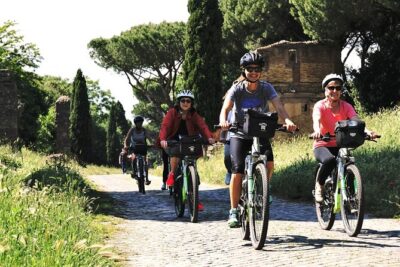
Appian Way, Catacombs and Aqueducts Park Tour with Top E-Bike
Read our review →
Appian Way & Catacomb Sunset E-bike Tour with Aperitif
Read our review →Browse the lists this tour appears in