
Review · PORTO
Porto: 3-Hour Bike Tour
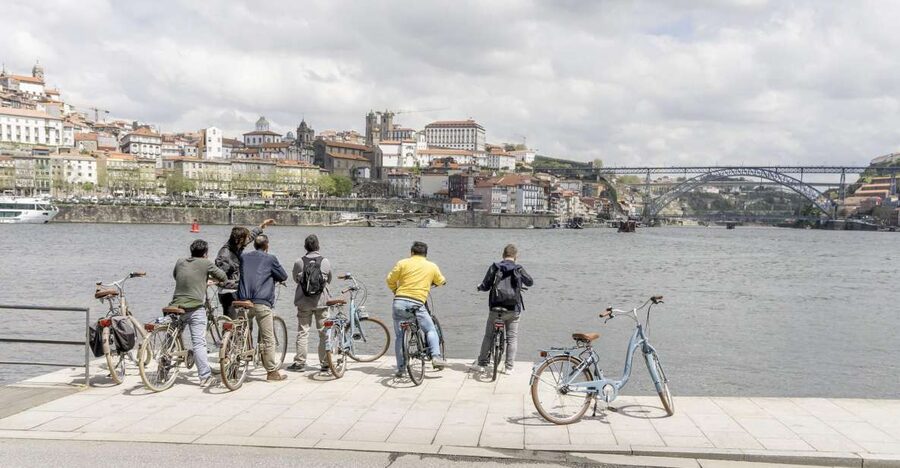
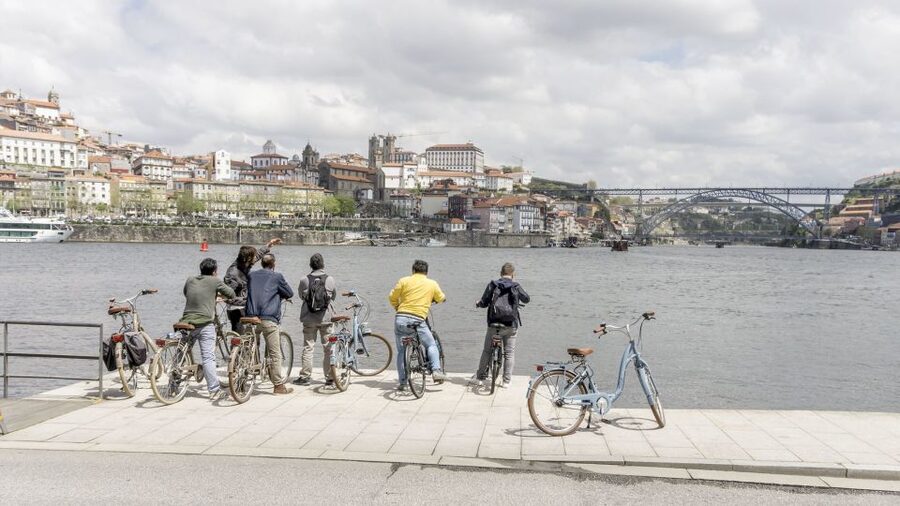
Porto opens up when you leave its steep lanes and follow the Douro River toward the Atlantic. This three-hour ride takes you from the old customs house and electric tram museum to beaches, parks, lighthouses, and the mouth of the river, covering far more ground than you could on foot.
I like the mostly flat route and the chance to see parts of Porto that sit well beyond the usual old-town circuit. I also like the personal touch: guides such as Felipe, Pedro, Clara, and Emanuel have adjusted explanations to match group interests, shared local food tips, and kept riders safe around traffic.
The main catch is the weather. Porto’s coast can be wet and windy, and rain may affect the bike choice or make tram tracks awkward. You will also face a couple of modest hills, though the route is manageable for reasonably active riders and electric bikes have been available when needed.
Key points to know before you ride
- The route reaches the Atlantic: Follow the Douro through Foz do Douro to Matosinhos Beach and Castelo do Queijo.
- You see more than the old town: Parks, beaches, bridges, museums, gardens, and waterfront districts fill the route.
- The ride is generally easy: Much of it is flat, with a few slight or medium hills and some care needed near tram tracks.
- Guiding is a major strength: Felipe, Pedro, Clara, Emanuel, Hélio, and others are praised for local stories, good humor, and safe riding.
- Your booking includes useful basics: A bike, helmet, local guide, bottled water, and fruit are provided.
- It works well early in a Porto stay: You get a quick sense of the city and practical ideas for places to revisit later.
From Porto’s old lanes to the Douro waterfront
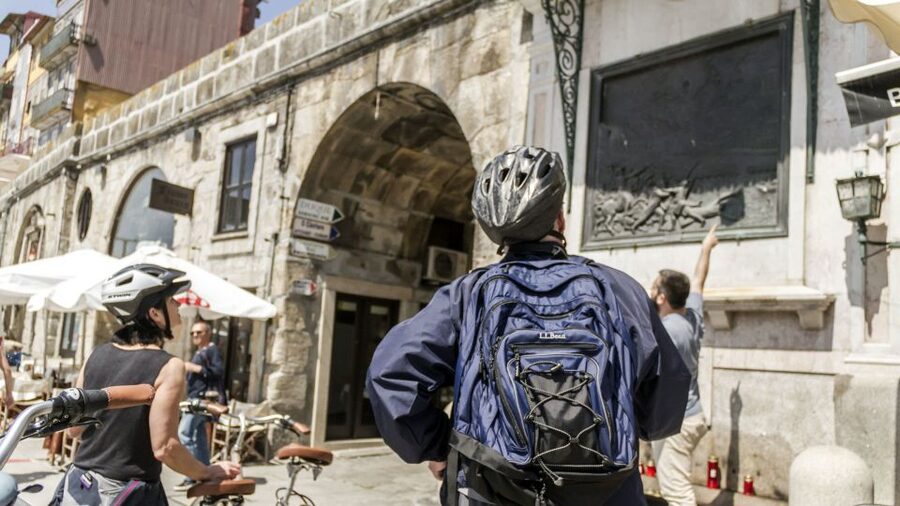
The tour begins at Biclas & Triclas, a bike rental and tour shop. Arrive 15 minutes early so the team can fit your bike and helmet, explain the route, and make any needed adjustments.
The first section gives you a quick look at Porto’s urban character. You pass the Mira mural by Daniel Eime, then head toward Alfândega do Porto, the former customs house now used as a congress center. This is a useful introduction to the riverfront because it shows how Porto’s working port past has been folded into its modern city life.
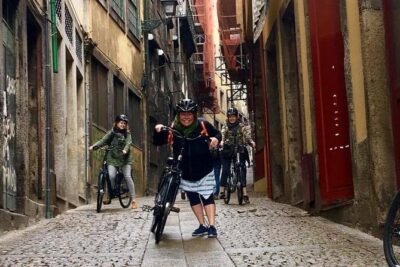
From there, the ride follows Cais das Pedras and passes the Parish Church of Massarelos. The waterfront here mixes old stone buildings, river views, and road traffic. Your guide will usually pause or slow down to explain what you are seeing, but this is not a tour built around long visits inside monuments. Think of it as a moving introduction, with short stops and plenty of time in the saddle.
The Museu do Carro Eléctrico, or Tram Museum, is another useful landmark. Porto’s old trams are part of the city’s identity, and the museum helps explain the transport system you may use later. You pass rather than tour the interior, so plan a separate visit if vintage trams are high on your list.
More three-hour rides in Porto:
- 3-Hour Porto Highlights on a Electric Bike Guided Tour
★ 5.0 · 4,392 reviews - Porto: City Highlights 3-Hour Guided Electric Bike Tour
★ 4.8 · 3,092 reviews - Porto: 3-Hour Old Town & Riverside Bike Tour – Guided Experience
★ 5.0 · 481 reviews
Bridges, riverfront neighborhoods, and the road to Foz
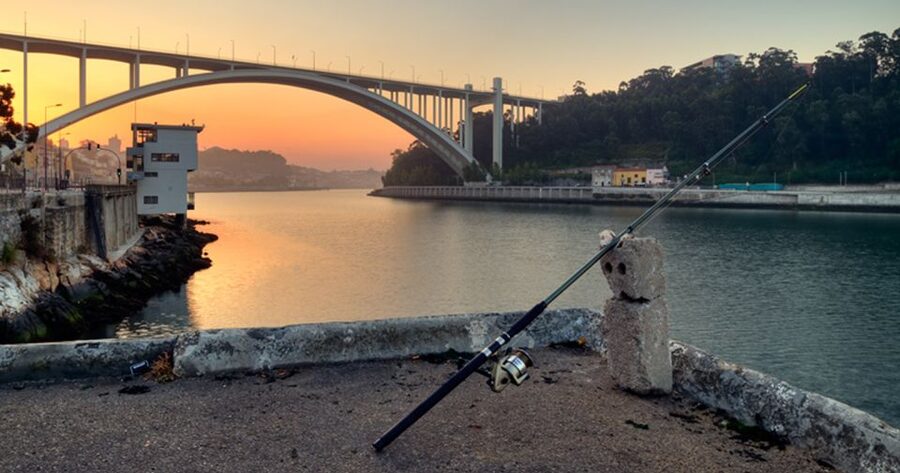
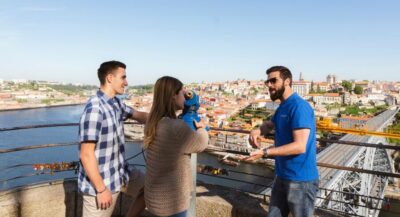
The Arrábida Bridge is one of the route’s big visual moments. Its broad concrete span crosses the Douro between Porto and Vila Nova de Gaia, and from below you get a better sense of its scale than you do from a city street.
The ride continues past the Monumento aos Tripeiros, a tribute connected with Porto’s traditional nickname and local identity, then reaches Fonte da Cantareira. This old waterfront area marks the point where the city begins to feel more maritime than urban.
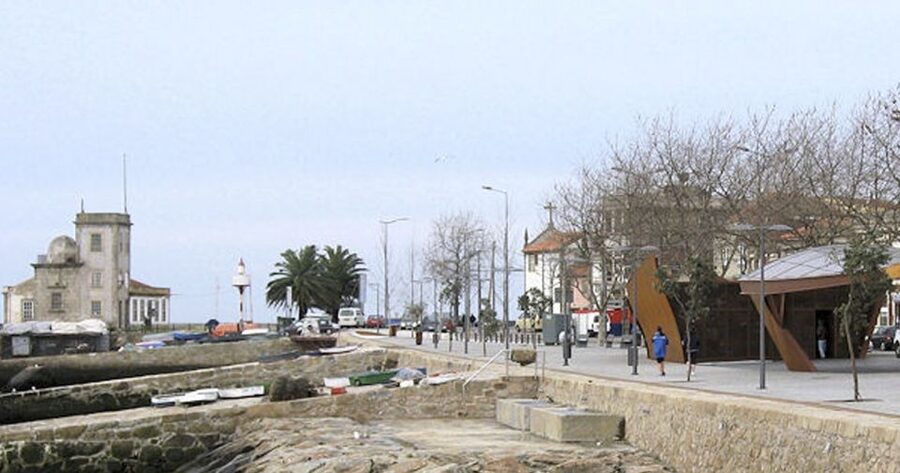
At the Lighthouse of São Miguel-o-Anjo, you are close to the river’s meeting point with the sea. The route then passes through Jardim do Passeio Alegre, a pleasant garden near Foz do Douro. This section is one of my favorite reasons to choose the tour. You are no longer simply ticking off monuments. You are watching Porto change from historic river city to Atlantic resort.
The pace matters here. A bike lets you cover the distance without spending much of the three-hour outing waiting for buses or walking beside busy roads. At the same time, you should not expect a quiet country ride. Some stretches share space with pedestrians, traffic, or uneven surfaces, and your guide’s instructions are important.
Foz do Douro and Porto’s Atlantic edge
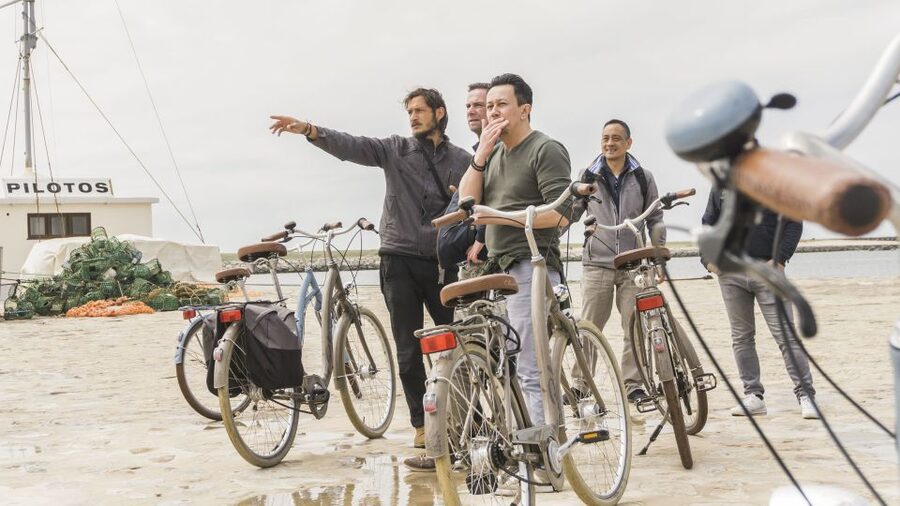
Foz do Douro is where the Douro reaches the Atlantic, and the ride gives you several ways to see this meeting point. You pass the Pérgola da Nevogilde, with its distinctive seaside columns, then continue along Homem do Leme Beach.
This is a more open, breezy side of Porto. The fine sand, sea air, and long waterfront make a clear contrast with the narrow lanes around Ribeira. If your time in Porto is limited, this coastal section gives you a side of the city many first-time visitors miss.
The route reaches Castelo do Queijo, or Cheese Castle, formally known as São Francisco do Queijo. The fortress remains are set beside the sea, making this one of the most memorable photo stops. The name is unusual enough to stick, but the site also helps explain Porto’s defensive position at the mouth of the Douro.
Next comes She Changes, the large anemone-shaped sculpture at the entrance to Matosinhos. It is a modern counterpoint to the forts, churches, and old waterfront buildings earlier in the ride. You then reach Matosinhos Beach, one of the broadest stretches of sand on the route.
The beach stop is mainly a sightseeing pass-by, not a swimming break. Keep that distinction in mind when planning your day. You will see the coast and get time for photographs, but the tour still has to cover the return route and the parks inland.
City Park, Pasteleira, and a quieter side of Porto
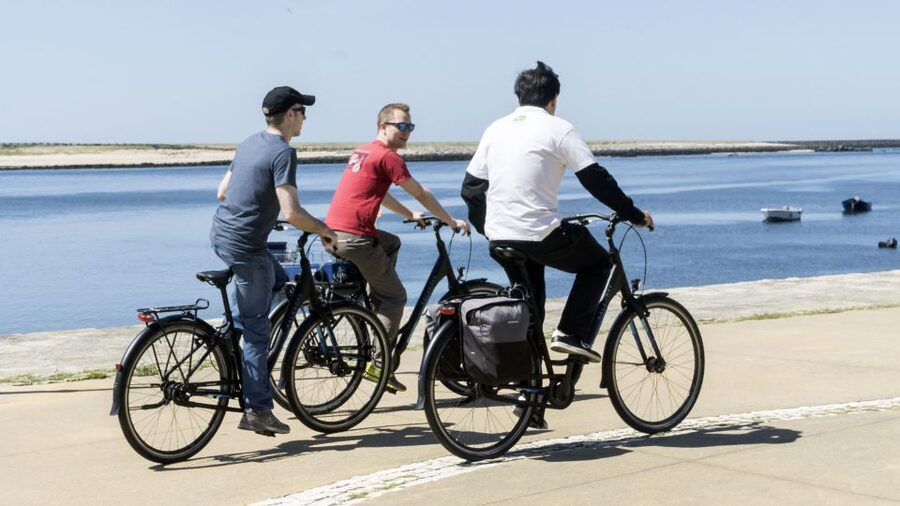
From Matosinhos, the route turns toward Parque da Cidade do Porto. This is a major highlight for anyone who prefers green space to traffic. The park has dedicated bike paths, so you get a calmer section after the busier coastal roads.
The 10-minute pass through City Park is short, but it gives you a real sense of the park’s scale. The change of setting is refreshing: open paths and planted areas replace the hard surfaces of the city center. You may want to return on foot later if you like parks, but the bike tour gives you an efficient first look.
The route also passes Pasteleira Park and the Museu do Porto, Reservatório. These stops are less famous than the bridge or the beach, yet they help show how Porto’s attractions extend beyond the postcard views. The former reservoir is particularly useful for understanding the city’s public infrastructure, though the tour does not include a museum visit.
Jardim do Cálem is the final major stop before returning to Biclas & Triclas. The garden is a good place to slow down and look for local birdlife. It also brings you back toward the Douro and the city’s port wine connections.
The route includes the location of the Port Wine Museum, the Tram Museum, and Museu Serralves, Porto’s contemporary art museum. You pass these places rather than enter them. I see that as a strength for a first-day orientation, but you should reserve separate time if any museum is a priority.
More bike tours around Porto:
- Porto: Highlights in 3 Hours E-Bike Tour
★ 4.9 · 448 reviews - Porto: Riverside Panoramic E-Bike Tour
★ 4.6 · 312 reviews - Experience Porto by Bike: 3-Hour Private Tour
★ 5.0 · 212 reviews - From Porto with view to Gaia: Private Bike Tour #DuckSideOfPorto
★ 5.0 · 124 reviews
What the three hours feel like on the bike
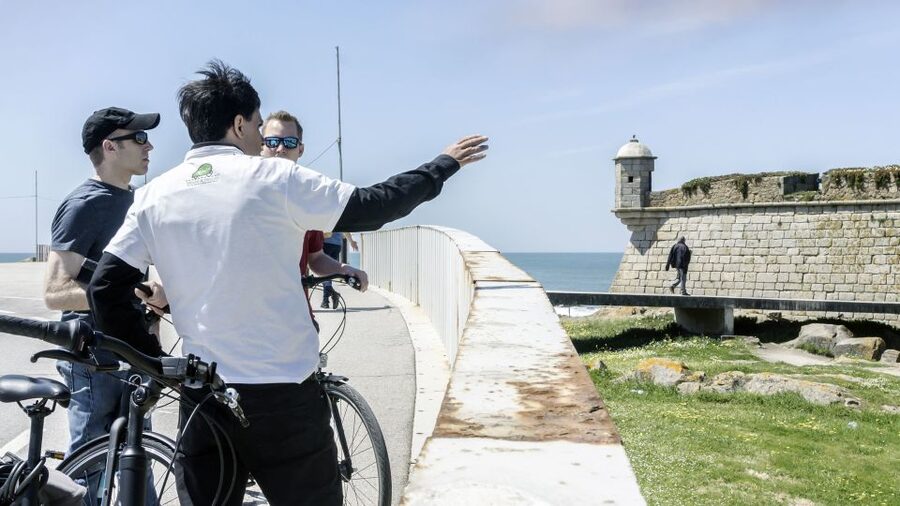
The tour is designed to cover distance, not to provide a long guided walk at every landmark. You will pedal, pause for explanations, take photographs, and move on. That balance is why the experience works well for someone who wants an overview before choosing where to spend more time.
The route is described as mostly flat, especially along the river and coast. Several riders have found the hills manageable, including one moderately fit rider in their 50s who completed the non-electric version without trouble. Still, you should expect a couple of slight or medium hills, and you may feel them later in the day.
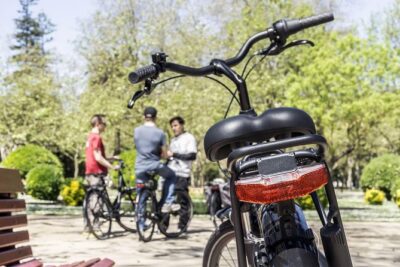
The bikes are described as high-quality urban models from Germany with seven-speed hubs. Helmets are included, and child seats and children’s helmets are available at no extra cost. The equipment has generally been a strong part of the experience, though heavy rain has sometimes meant using standard city bikes rather than electric models.
Electric bikes have been used successfully on this route, and switching to one has been possible when needed. Because the basic description lists bike rental without promising an electric bike for every departure, check the available bike type when you book if assistance on hills is important to you.
Tram tracks deserve attention. In wet weather, they can be harder to cross safely, and one rider specifically found them difficult during a rainy outing. Listen to your guide, slow down, and cross at a sensible angle rather than rushing over them.
The guides make the route work
The strongest part of this experience is the guiding. Felipe has been praised for clear explanations, friendly conversation, and adapting the tour to individual interests. Pedro has handled city history, bike instructions, and bad-weather changes with patience. Clara has been especially good at linking Porto’s parks and streets to the city’s past.
Other guides named in the feedback include Emanuel, Hélio, Eduardo, Lucas, Antonio, Netza, and Philipe. The repeated pattern is useful: expect a personal guide rather than a recorded commentary, with stories added as you move through the city.
Several guides have also shared practical advice for the rest of a Porto visit. One group followed restaurant suggestions after the ride, while another enjoyed a short stop for a pastel de nata. Food is not included, so treat any snack stop as an optional local recommendation rather than part of the fixed package.
The tour is offered in English, Portuguese, Spanish, and French. A guide may also speak other languages, but those are the languages listed for the activity. The group type is private, which can make it easier to ask questions and adjust the pace around your interests.
Weather, safety, and what to bring
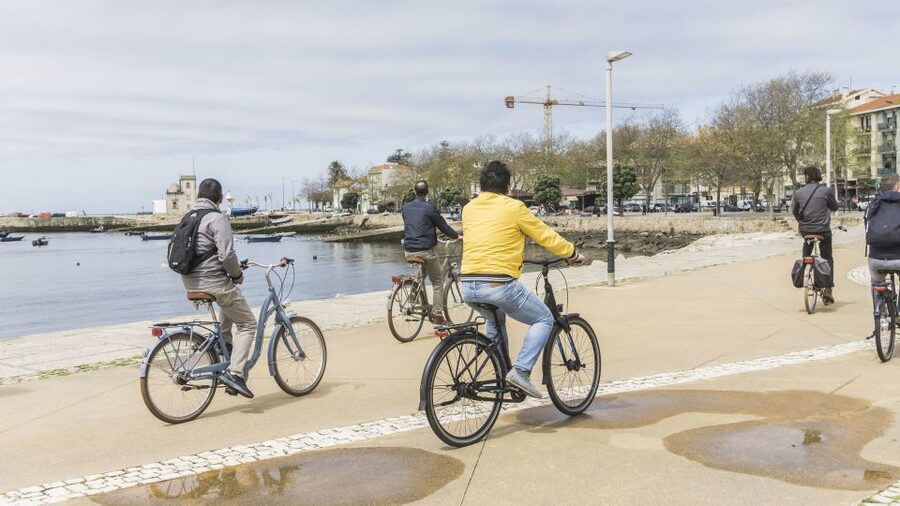
Porto’s weather can change the character of the ride. Rain has not always stopped the tour, but it can make the coast less comfortable, reduce visibility, and affect which bikes are used. The route has still operated in showers, with a coffee break added during one particularly wet ride.
Bring sunscreen even on a cool day, since parts of the coast and riverfront are exposed. A camera is worthwhile for the bridges, lighthouse, Cheese Castle, beaches, and She Changes. A water bottle is also sensible, although bottled water and fruit are included.
Wear clothes suited to active riding and shoes that feel secure on pedals. The tour is not described as a demanding athletic event, but three hours on a bike is still exercise. If you are unsure about fitness, ask about an electric bike before setting out.
The guides have a strong safety role because the route mixes bike paths, roads, pedestrians, and urban crossings. That matters more than a fast pace. The aim is to see Porto safely and comfortably, not to race to the ocean.
Is $57 good value for Porto?
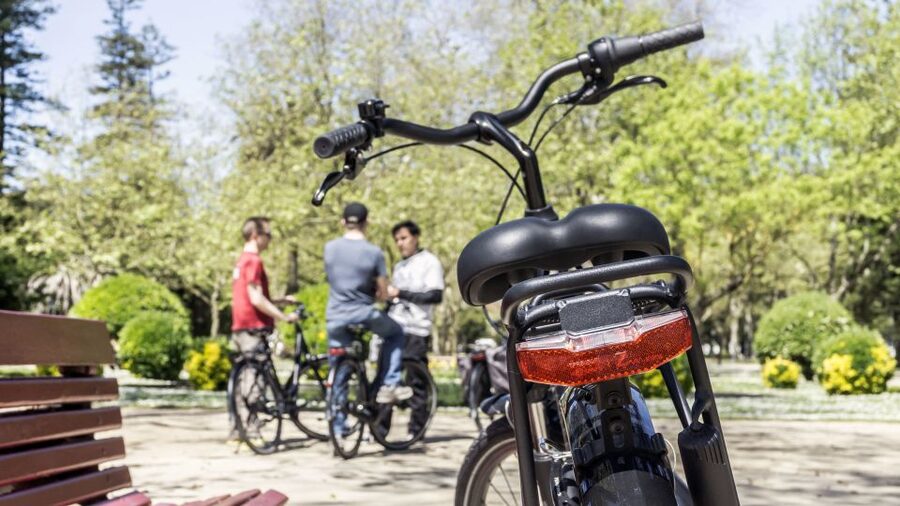
At $57 per person, the tour is not the cheapest way to see one or two Porto sights. It is good value if you want transport, guiding, equipment, and a broad city orientation in one three-hour outing.
You cover the old waterfront, Arrábida Bridge, Foz do Douro, several beaches, City Park, Pasteleira Park, and the Douro Estuary area. Doing that independently would require a mix of walking, public transport, and route planning. The guide also provides context and local suggestions that you would not get from simply renting a bike.
The value is strongest when you book it near the start of your stay. You can return later to Serralves, the Tram Museum, the Port Wine Museum, Matosinhos Beach, or Foz with a better sense of where each place sits.
The value is weaker if your priority is a slow museum visit, a long beach stop, or a relaxed food tour. This is a sightseeing ride with many brief stops, not a deep visit to any single attraction.
Who should book this Porto bike tour?
I would choose this tour if you want to see Porto beyond Ribeira and the main church circuit. It suits active couples, families with older children, and first-time visitors who like to get their bearings quickly.
It also works well for people who already enjoy guided bike tours in new cities. The route is broad rather than strenuous, and the private-group format gives you a better chance to ask questions or request attention to a particular part of Porto.
Families should note that child seats and helmets are available at no extra cost. Anyone concerned about hills should ask about an electric bike before the tour begins. If you dislike rain, avoid treating the booking as a fixed highlight until you have checked the forecast.
You should skip it if cycling feels uncomfortable, if you want long indoor visits, or if you prefer to explore at a very slow pace. The tour gives you a lot of Porto, but it does so by moving steadily.
Should you book it?
Book this tour if you want a practical introduction to Porto that reaches the river mouth, Atlantic beaches, City Park, and the Cheese Castle in one morning or afternoon. The excellent equipment, included helmet and water, and consistently strong guiding make the $57 price fair for the amount of ground covered.
I would especially recommend taking it early in your visit. Choose a dry day if possible, bring sun protection, and leave room in your schedule to revisit the places that catch your eye. For a first look at Porto’s many sides, this is a useful and enjoyable ride.
FAQ
How long is the Porto bike tour?
The tour lasts three hours.
Where does the tour start and finish?
It starts and ends at Biclas & Triclas, Port Rent a Bike and Tours.
How early should I arrive?
Arrive 15 minutes before the activity begins.
What does the price include?
The price includes bike rental, a helmet, a local guide, bottled water, and fruit.
Are electric bikes included?
The tour uses urban bikes, and electric bikes have been available on some outings. The activity description does not guarantee an electric bike for every booking, so check availability if you need one.
Is the route suitable for children?
Child seats and helmets are available at no extra cost. The tour is listed as a private group activity.
Which languages are offered?
Guiding is available in English, Portuguese, Spanish, and French.
Can I cancel the booking?
You can cancel up to 24 hours before the activity for a full refund. Reserve now and pay later is also available.
New rides added around Porto
- Porto: Riverside Panoramic E-Bike Tour★ 4.6 · 312 reviews
- Porto Riverbank Tour on an e-bike: Atlantic Coast, Gardens★ 4.7 · 11 reviews
- Porto Sunset Bike Tour★ 4.5 · 39 reviews
- Porto: Porto Bike or E-Bike Atlantic Route★ 5.0 · 10 reviews
- Porto: Private Bike Tour with a Local Guide★ 4.9 · 79 reviews
- Porto: Guided e-bike tours in Porto and Gaia★ 4.6 · 25 reviews
- Porto Downtown and Sightseeing Bike Tour★ 4.5 · 43 reviews
- Porto: Historic e-Bike Tour with a guide★ 5.0 · 14 reviews
Porto Bike Tours, compared.
3-Hour Porto Highlights on a Electric Bike Guided Tour
Read our review →
3-Hour Old Town & Riverside Bike Tour – Guided Experience
Read our review →
From Porto with view to Gaia: Private Bike Tour #DuckSideOfPorto
Read our review →
Porto Private E-Bike Tour: Douro River, Parks & Beaches
Read our review →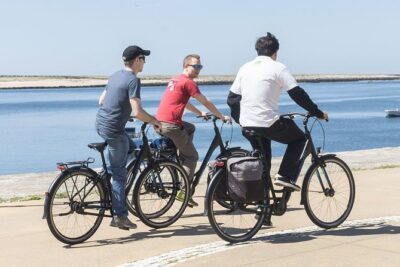
Browse the lists this tour appears in