
Review · NEW ZEALAND
Queenstown: Arrowtown To Queenstown Biking Adventure
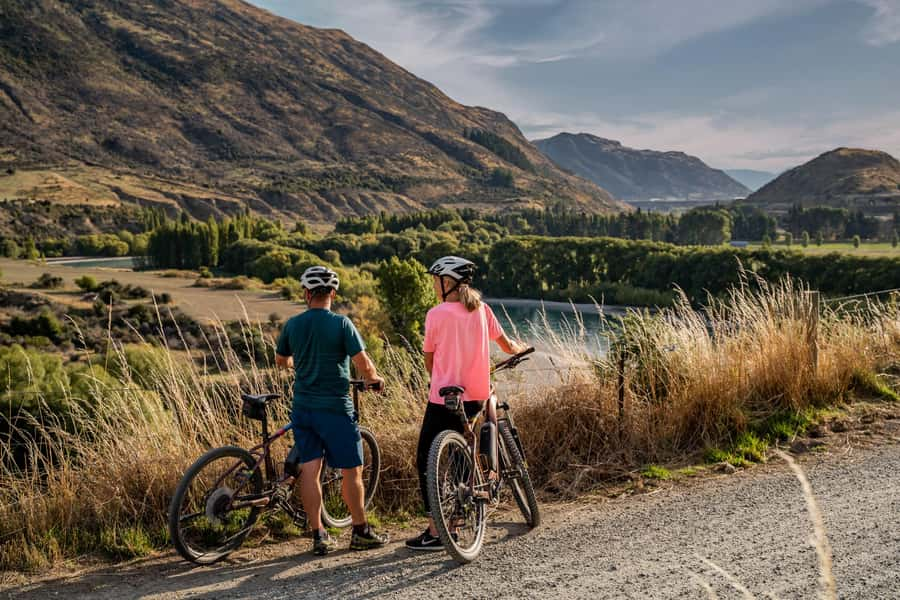
A 35-kilometre ride links two of the South Island’s best-known towns by way of rivers, bridges, foothills, and Lake Whakatipu. You start in Arrowtown, a former gold-mining settlement, and finish back in central Queenstown. It is a self-guided trip, so you set the pace and decide where to stop.
I like the freedom of this setup, and I like the scenery: the Arrow River Trail, old bridges, the Kawarau and Shotover rivers, and views toward The Remarkables. The map and briefing make the route manageable, but there are several proper hills and rough gravel sections. An e-bike is a smart choice for many riders.
- 35 km one-way route: Ride from Arrowtown to Queenstown, with no need to turn around.
- 25-minute shuttle: Your morning transfer takes you from the Queenstown shop to the trailhead.
- Three river systems: Follow the Arrow, Kawarau, and Shotover rivers on the way south.
- Old Shotover Bridge: Pause for broad views toward the surrounding ski areas.
- Self-guided freedom: Stop for coffee, a picnic, a swim, or a brewery visit at your own pace.
- E-bike advantage: The electric option helps with the hills and leaves more energy for the views.
Starting in Queenstown, Then Riding Back
You check in at Around The Basin Bike Queenstown at 3 Searle Lane, 10 minutes before the scheduled shuttle leaves. The day begins with a 25-minute bus ride to Arrowtown, which is a practical arrangement. You do not have to arrange a taxi, and you avoid riding the same route twice.
The shuttle drops you near the start of the ride. Staff provide your standard mountain bike or e-bike, helmet, route map, and safety briefing. The briefing takes about 10 minutes and covers the trail, route markers, bike operation, and the main points where you need to pay attention.
That introduction matters because this is not a guided ride with someone leading from the front. You need to read the map, follow the signs, and make your own decisions about pace and breaks. The instructions have generally been clear, but pay close attention to changes in marker colours. One rider followed the orange markers past a turn where the route changed to blue and added about 5 extra kilometres.
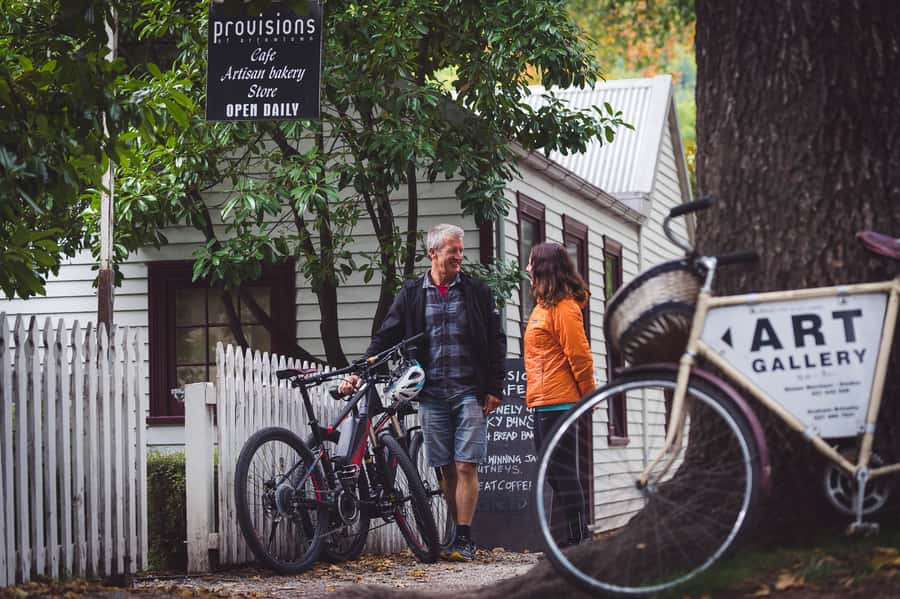
You may also have time for coffee in Arrowtown before setting off. This is more than a filler stop. Arrowtown’s old streets and gold-mining past give the day a sense of place, and a coffee or small breakfast can help before a long ride.
Arrowtown and the First River Miles
The route begins on the Arrow River Trail, heading downstream from Arrowtown toward Morven Ferry. This first section gives you a gentle introduction to the day, with open views and a clear sense that you are leaving town behind.
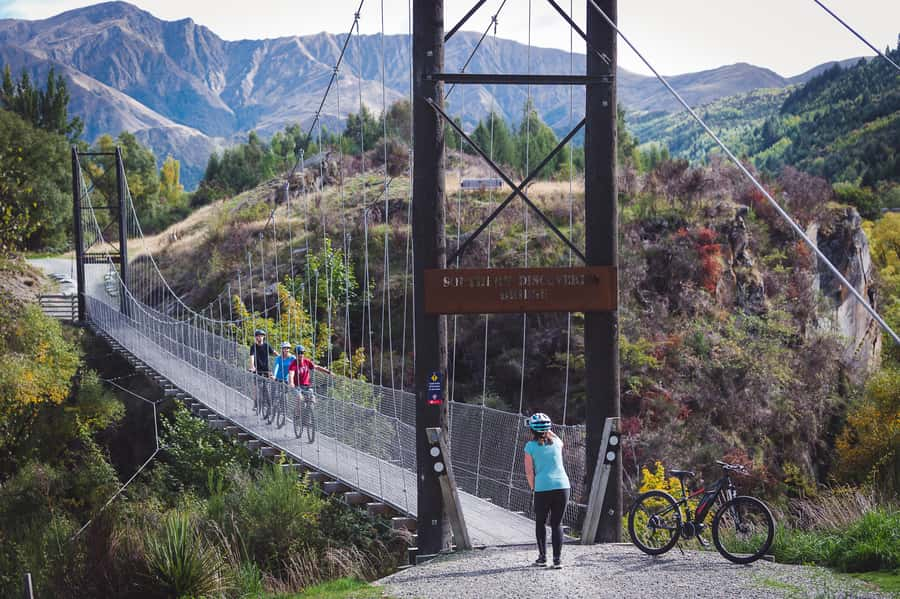
The route crosses the Arrow River on several striking bridges. These crossings are useful photo stops, but they also break up the riding nicely. You are not simply pedalling along one long, unchanging path. The trail shifts between river edges, bridges, rural stretches, and wider views of the surrounding hills.
The surface is mainly broad gravel, not smooth pavement. That distinction is important. If your cycling experience comes mainly from commuting on sealed roads, you may find the loose and rocky sections slower than expected. Take extra care on descents, especially where the trail becomes uneven or steep.
The route is graded 2 or 3, with a few decent hills. The overall ride is manageable for a confident cyclist with good fitness, but the advertised four-hour riding time should not be treated as a relaxed stroll. Add time for coffee, food, photos, mechanical stops, and simply looking around.
More bike tours around New Zealand:
- The Classic: our most popular electric bike tour of Auckland’s Highlights
★ 5.0 · 497 reviews - Self-Guided Wine Tours by Bike with Lorelle & Greg
★ 5.0 · 304 reviews - Otago Central Rail Trail One Day Wonder Cycle tour
★ 5.0 · 300 reviews
Morven Ferry and the Twin Rivers Trail
Around Morven Ferry, the ride joins the Twin Rivers Trail. This is one of the strongest parts of the trip because the route begins to connect the Kawarau and Shotover rivers with the mountain scenery beyond.
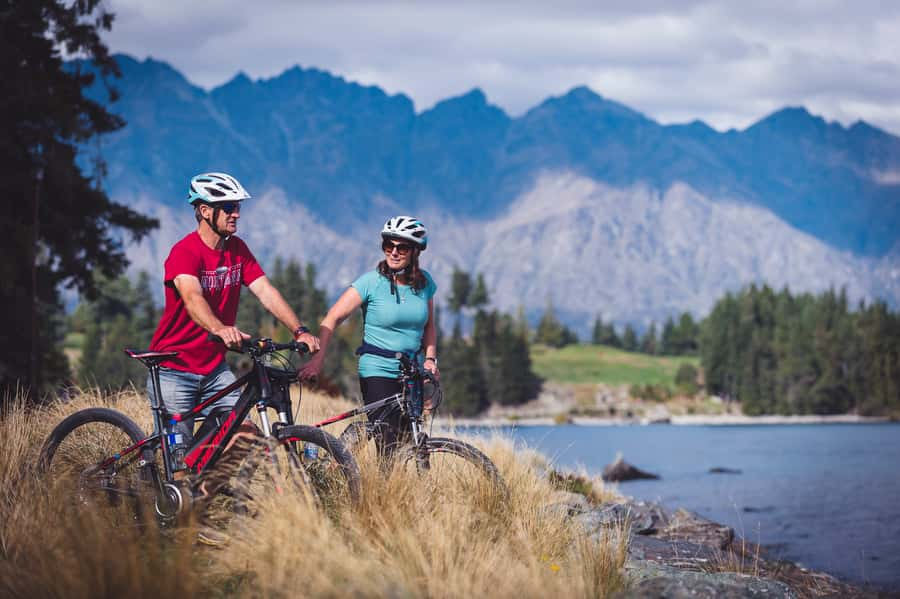
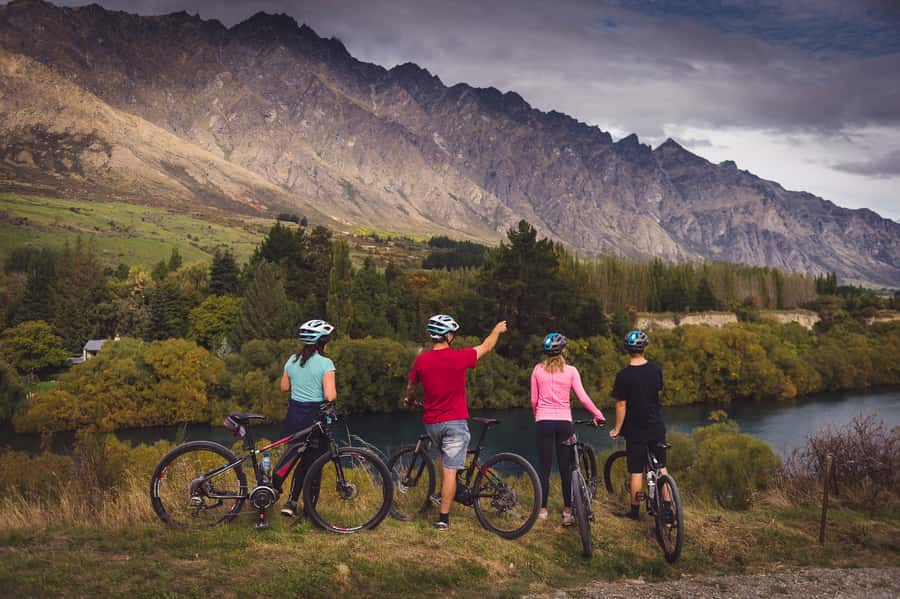
You follow the river corridors toward Lake Whakatipu, with The Remarkables rising in the distance. The route has a rural feel, and one of its pleasures is the lack of ordinary road traffic for much of the ride. You get the open-air experience of a long bike trip without spending the day beside a busy highway.
The hills are the main test here. Some riders find the route easier than expected, especially on an e-bike. Others discover that the ride is more demanding than the word easy suggests. A standard bike is possible if you are fit and comfortable on gravel, but an e-bike can change the whole day. It lets you climb without burning all your energy early, and it makes it easier to stop and enjoy the scenery instead of watching the clock.
The e-bike controls are explained before you leave. Several riders have found the bikes easy to operate, and the supplied bikes are generally described as being in good condition. Still, check your gears, chain, brakes, seat position, and battery before setting off. A few mechanical problems have occurred, including a dropped chain, a flat tyre, and one e-bike that temporarily stopped working. The company has provided replacement assistance when needed, but a self-guided ride means you should know how to contact the operator and avoid rushing into a problem.
Old Shotover Bridge and Mountain Views
The Old Shotover Bridge is a memorable marker on the route. It has crossed the river for more than a century and gives you wide views across the water and toward two ski areas. This is the kind of stop that makes the trip feel more like a small journey than a bike rental.
The views keep changing as you move from the Arrow River toward the larger river valleys and the lake. You get close-up water, open farmland, rocky hills, and the sharp profile of the mountains. The scenery is the star, but you only get the full benefit if you allow time to stop.
I would not plan this ride as a race. A standard bike may get you back to Queenstown within the suggested four-hour riding window, but a slower pace is more enjoyable. On an e-bike, you can take longer breaks without worrying as much about the remaining distance.
Pack food and plenty of water. There are no regular water stops along the rural part of the trail, and food options are limited until the final section near Queenstown. A packed lunch beside the river is one of the better ways to use the freedom of a self-guided trip.
The Final Miles Beside Lake Whakatipu
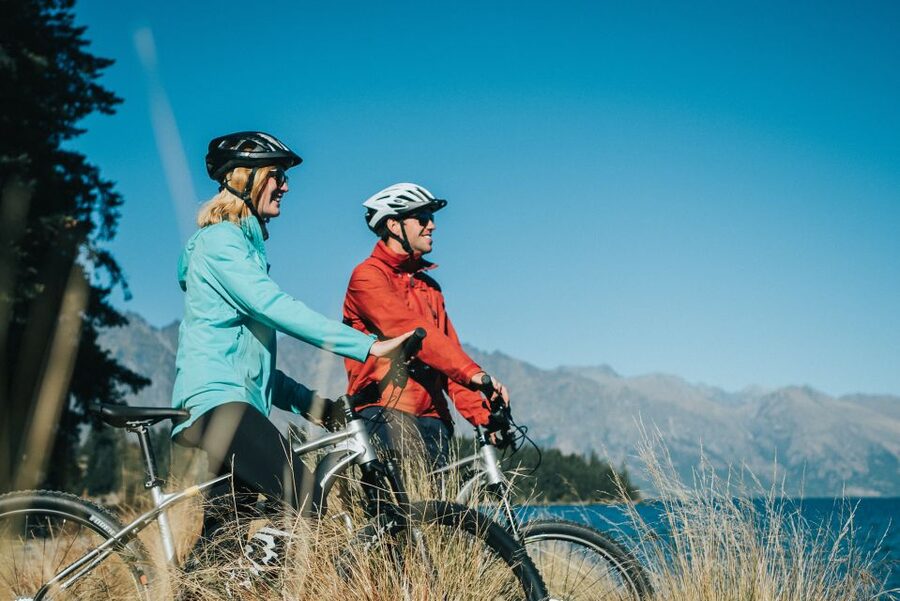
The final section becomes gentler as the route approaches Lake Whakatipu and Queenstown. You ride along the lake edge, passing cafés and a brewery before returning to the city centre at 3 Searle Lane.
This section provides an easier finish after the rural trails and hills. It also gives you options. You can keep riding toward the finish, stop for a drink, or take a longer break by the water. The exact timing depends on your pace and the stops you choose.
For most of 2026, a detour is in place because the Frankton Track beside the lake is closed. You will use a pedestrian footpath beside the Main Road instead. That changes the feel of the final section, so expect less of the uninterrupted lakeside riding described for the usual route. Follow the directions given at the briefing and use care around other path users.
The return to central Queenstown is convenient. You finish where you started, without needing to arrange a second transfer or return a bike in another town.
Same wheels, a different route:
- CHP Bike Rentals Cromwell
★ 5.0 · 280 reviews - Marlborough: Full-Day Self-Guided Biking Wine Tour
★ 4.7 · 221 reviews - Guided Wellington Tour by Electric Bike
★ 5.0 · 210 reviews - Bike & Wine Tour: Arrowtown to Valley of the Vines
★ 5.0 · 207 reviews
How Hard Is the 35-Kilometre Ride?
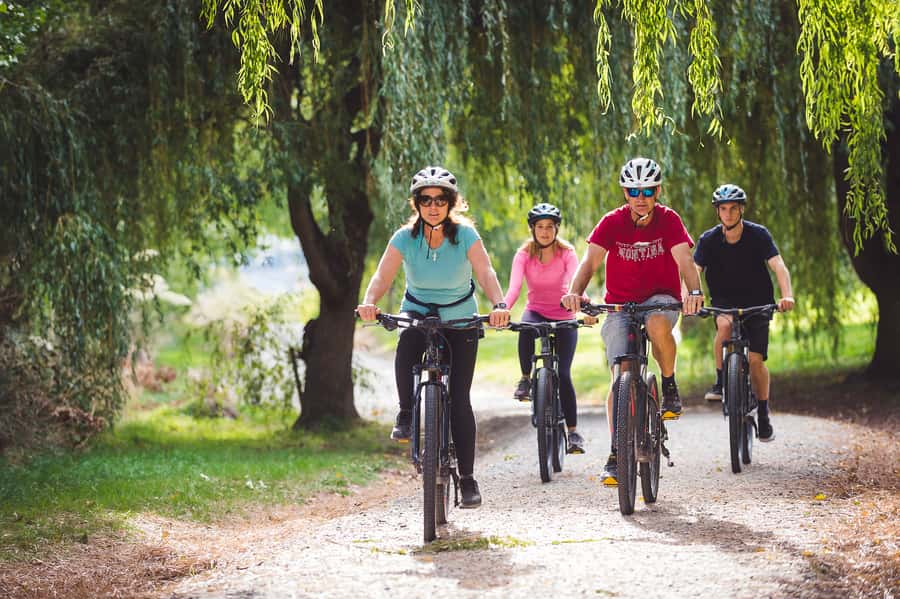
The distance is 35 kilometres, or about 21 miles, and the ride includes hills. The route is not suitable for someone who cannot ride a bike or has a low level of fitness. It is best for a confident cyclist who can handle gravel, uneven surfaces, and a long day in the saddle.
You might manage a standard bike if you regularly ride longer distances and feel comfortable climbing on loose surfaces. The ride is not all uphill, but the difficult sections can arrive after you have already spent time pedalling. The downhill parts are not automatically easy either, because gravel and bumps require control.
An e-bike is the safer recommendation for many people. That includes riders who are fit but unfamiliar with gravel, families riding with older children, and anyone who wants to focus on the alpine views rather than physical effort. It also helped riders with joint or hip problems complete the route, though you still need to be comfortable riding a bicycle and handling uneven ground.
The seat can become uncomfortable over a full day, and one rider found the repeated bumps particularly hard. Adjust the saddle before leaving, wear practical clothing, and bring water. If the weather is wet, mudguards would be useful, but the available bikes may not have them. Wet paths can spray mud onto your back.
What the Self-Guided Format Gets Right
The best feature here is control. You are not tied to a group moving at one speed, and you do not have a guide calling every stop. You can take a quiet break by the river, explore Arrowtown, stop for a picnic, or continue when the trail feels good.
The route is supported rather than abandoned. You receive a map, signs help with navigation, and the staff briefing explains the main turns and route changes. The team also checks that riders understand the bikes and feel ready before setting off.
That balance suits independent cyclists. You get the safety net of organised transport and equipment, but the day still feels personal. You can ride alone, as a couple, or with a family group. One large family group covered more than 50 kilometres by adding extra exploration along the way.
There are limits. You do not have a guide beside you to repair every issue or explain the area as you ride. If you miss a turn, suffer a mechanical problem, or misjudge the distance, you must take the first steps yourself. The operator can assist, but this is still an independent ride.
Price, Equipment, and Overall Value
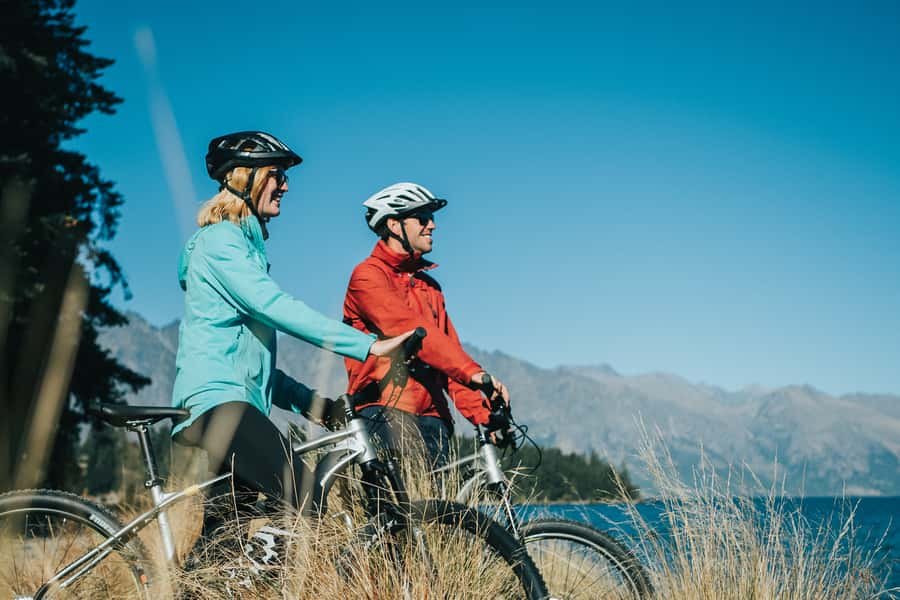
The listed price is $56 per person. That includes the Queenstown to Arrowtown shuttle, bike or e-bike rental, helmet, map, and route briefing. Food, drinks, and a guide riding with you are not included.
For a five-hour experience, the standard-bike price offers good value if you want transport and equipment for a full point-to-point outing. Booking the shuttle separately, finding a suitable bike, and arranging a return plan would be more work and might cost more.
The real value depends on the bike you choose. The e-bike upgrade costs extra, though the exact amount is not provided here. For many riders, that extra cost is worthwhile because it reduces the effort on hills and gives you more freedom to stop. If you are choosing between a cheaper standard bike and an e-bike, think about enjoyment rather than pride. This is a scenic day, and saving energy for the scenery is a sensible trade.
Cancellation is flexible: you can cancel up to 24 hours before departure for a full refund, and you can reserve now and pay later. Check the available start times when booking, since the shuttle runs on a schedule.
What to Pack for a Better Day
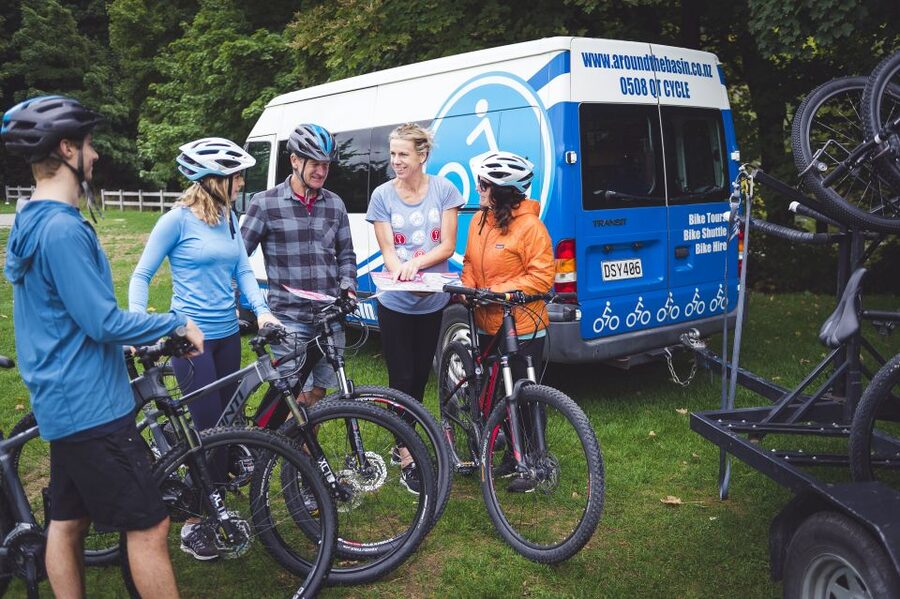
Keep your luggage light, but do not set off empty-handed. I would bring:
- Plenty of water, since there are no regular water stops on the rural sections
- A packed lunch or substantial snacks
- Sun protection, especially in summer
- Comfortable clothing for a long ride
- A phone for contacting the operator if needed
- A small layer for changing alpine weather
- Extra care and patience for wet or muddy trail conditions
Sun protection matters. The open trail provides little reason to assume you will stay shaded, and one rider specifically found summer sun a concern.
Food planning is also important. You may find cafés and a brewery near the end, but you should not count on buying lunch during the rural middle section. A riverside picnic is both practical and enjoyable.
Who Should Book This Ride?
Book it if you want an active way to connect Arrowtown and Queenstown, enjoy independent travel, and feel comfortable covering 35 kilometres. It is especially good for couples, families with confident older children, solo cyclists, and visitors who prefer scenery to a tightly managed group tour.
Choose the e-bike if you have doubts about your fitness, are not used to gravel, want time for stops, or simply want an easier day. Riders who commute by bike should not assume that commuting fitness guarantees an easy ride, since gravel, hills, and distance create a different challenge.
Skip it if you cannot ride confidently, dislike uneven surfaces, or want a guide explaining every point along the way. It is also a poor match if you want a short, effortless cycle. The route is beautiful, but it asks for real time and energy.
Should You Book the Arrowtown to Queenstown Ride?
I would book this for the scenery, the point-to-point design, and the freedom to make the day your own. The route brings together historic Arrowtown, three river corridors, old bridges, The Remarkables, Lake Whakatipu, and Queenstown in one well-organised outing.
My clear advice is to choose the e-bike unless you are a strong cyclist who regularly rides long gravel routes. Pack lunch and water, listen carefully for the marker-colour changes, and allow more than the bare riding time if you want to enjoy the stops. With those preparations, this is one of the most rewarding active ways to see the area without spending the day in a vehicle.
FAQ
How long is the Arrowtown to Queenstown bike ride?
The route is 35 kilometres, or about 21 miles, one way. The full activity lasts about five hours, including the shuttle, briefing, and riding time.
Where does the experience begin?
You check in at Around The Basin Bike Queenstown, 3 Searle Lane, Queenstown. You should arrive 10 minutes before the scheduled shuttle departure.
Is transport to Arrowtown included?
Yes. A scheduled shuttle takes you from Queenstown to Arrowtown, and the ride begins there. You then cycle back to central Queenstown.
Are bikes and helmets included?
Yes. The package includes a standard bike or e-bike, a helmet, a route map, and a detailed safety and route briefing.
Is the ride guided?
No. This is a self-guided ride. Staff explain the route and equipment before you leave, but no guide rides with you.
Do I need an e-bike?
An e-bike is not required, but it is recommended. The route includes a few decent hills, gravel surfaces, and 35 kilometres of riding, so the electric option can make the day more comfortable.
New rides added around New Zealand
- Nelson to Mapua: Full-Day Cycling Self-Guided Adventure★ 4.5 · 23 reviews
- Napier: Cruise Self-Guided Cycle Ride to Winery – Half Day★ 4.6 · 19 reviews
- Napier: Cape Coast Winery Tour on E-Bikes★ 4.7 · 67 reviews
- Napier: Art Deco Bike Ride and Wineries Loop★ 4.0 · 19 reviews
- Marlborough: Half Guided and Half Self-Guided Bike Wine Tour★ 4.8 · 42 reviews
- Hawke’s Bay: Self Guided Coast to Vineyards Cycle Tour★ 4.9 · 29 reviews
- From Wellington: Remutaka Rail Trail eBike Tour★ 4.9 · 54 reviews
- Queenstown: Self-Guided Bike Ride on the Arrow Bridges Trail★ 4.8 · 96 reviews
New Zealand Bike Tours, compared.

our most popular electric bike tour of Auckland’s Highlights
Read our review →
Self-Guided Wine Tours by Bike with Lorelle & Greg
Read our review →
Otago Central Rail Trail One Day Wonder Cycle tour
Read our review →


Bike & Wine Tour: Arrowtown to Valley of the Vines
Read our review →
Browse the lists this tour appears in