
Review · MEXICO
Mérida: Montejo Boulevard and Historic Center bike tour
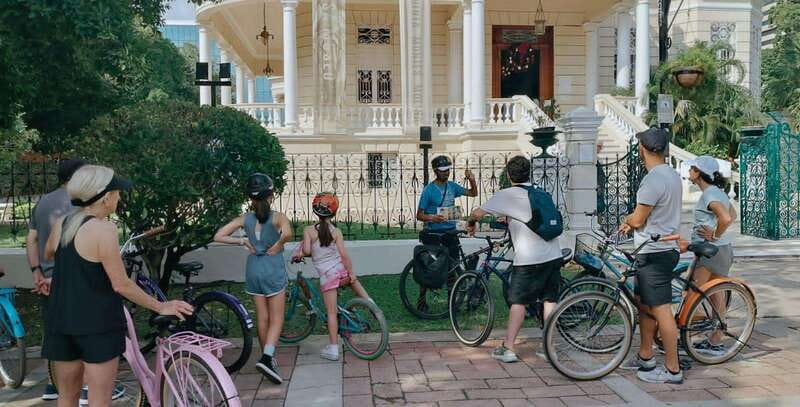
Mérida is spread out enough that walking can turn sightseeing into a sweaty chore. This 2.5-hour bicycle tour links Paseo de Montejo, the grand central plaza, colonial buildings, and less obvious city corners at a gentle pace, with shade stops and a cold fruit drink along the way.
I like the way the tour combines Yucatecan mansions and colonial landmarks, rather than focusing on only one period of the city’s past. I also like the practical side: Ivan uses a speaker while riding, answers questions in English or Spanish, and gives restaurant and nightlife suggestions you can use after the tour.
The main thing to consider is the condition of the bicycles. Most feedback praises the route and guide, but two recent ratings specifically found the bikes shabby or in need of better maintenance. You should also be comfortable riding in city streets, even though much of the route uses bike lanes and the pace is relaxed.
Key points at a glance
- About 7 kilometers on flat ground: The route is manageable for casual cyclists, with no hills and a slow pace.
- Paseo Montejo’s mansions: You’ll hear who lived in four major homes and how they relate to Yucatán’s prosperous henequen era.
- A strong guide-led history lesson: Ivan explains buildings from the saddle, using a speaker and sometimes a handheld laser to point out details.
- A useful Mérida orientation: The route connects Paseo Montejo with Plaza Grande, Casa Montejo, the cathedral, La Plancha, and a local market.
- Family bike choices: Child bicycles, seats for children aged two and five, tandem bikes, and adult tricycles are available.
- A refreshing finish: A nonalcoholic fruit drink is included at a historic neighborhood market.
Why a bicycle is a smart way to see Mérida
Mérida’s center is walkable, but its sights are not all packed into one small square. Paseo de Montejo begins north of the historic core, while Plaza Grande and the colonial buildings sit farther south. Covering that distance on foot in Yucatán’s heat can leave you tired before the interesting part begins.
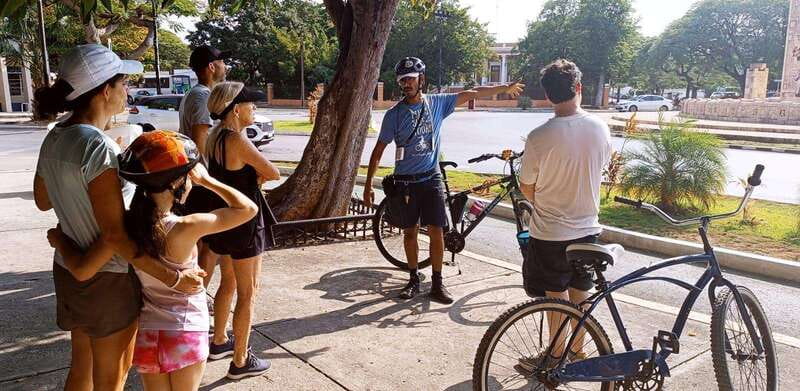
The bicycle solves that problem without turning the tour into a race. The route covers roughly 4 miles, or 7 kilometers, over entirely flat ground. The pace is described as leisurely, and the guide makes regular stops for explanations, photos, and short walks around certain sights.
The first portion uses bicycle lanes along Paseo de Montejo. Trees and palms provide some protection from the sun, though you should still bring water and wear a hat. Later, the group moves onto streets in the historic center, where traffic is part of the experience. The route is designed with safety in mind, and the guide rides at the front while speaking through a loudspeaker.
That setup is particularly useful if you want to look around instead of staring at a phone map. A past participant also appreciated the guide’s use of a handheld laser to point to architectural details that might otherwise be easy to miss.
More Historic Bike Tours in Mexico:
- Mérida: The E-bike tour with history and culture
★ 4.9 · 36 reviews - Mexico City: Chapultepec & Reforma Historic Bike Experience
★ 4.5 · 30 reviews - Historical Singapore Bike Tour on Full-Sized Bicycles
★ 5.0 · 1,421 reviews
Meeting Ivan outside Palacio Cantón
The meeting point is the corner of Calle 43 and Paseo de Montejo, outside the Museo Regional de Antropología, also called Palacio Cantón. This matters because the bicycles are not necessarily lined up directly at the museum entrance. You meet the guide at the museum corner and walk with him to the bikes on a nearby side street.
Ivan is the guide named most often for this experience. He speaks English and Spanish, begins by learning where people are from, and adjusts the pace to the group. Several accounts describe him as careful about road safety and willing to stop whenever the group needs a break.
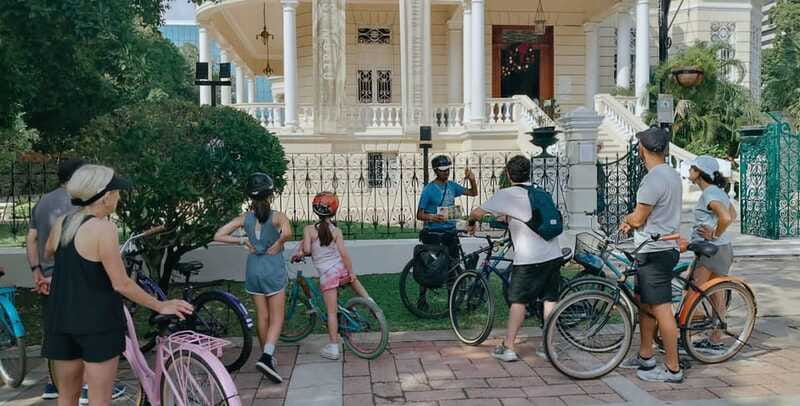
Bike fitting is handled before departure. Standard bicycles come in different sizes and colors and can be adjusted to your height. Helmets are provided, and larger riders have reported that the guide was able to find suitable frames.
The equipment deserves a realistic note. Two ratings specifically criticized the bikes as shabby or below the quality expected on an urban cycling tour. That does not erase the strengths of the route, but it is worth checking your brakes, tires, seat height, and gears before leaving the meeting area.
Monument to the Homeland: Mérida’s bold opening statement
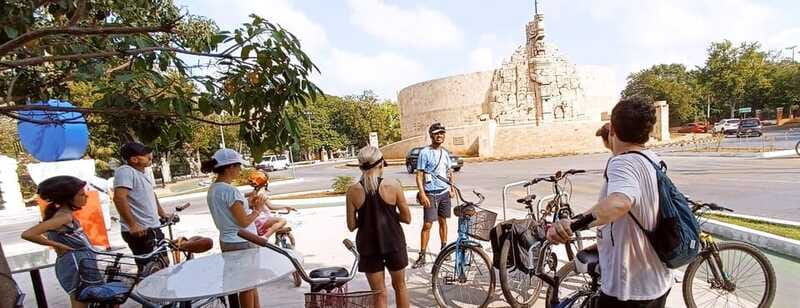
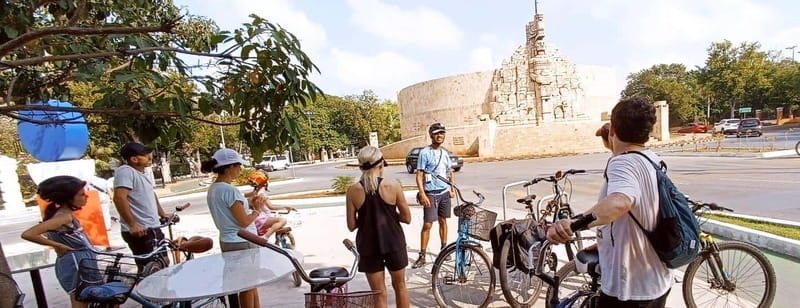
The first major stop is the Monument to the Homeland, a large carved monument at the southern end of Paseo de Montejo. You get about 15 minutes for a guided explanation and photographs.
This is a good first stop because it gives you a visual introduction to Yucatán’s identity. The monument is not a small roadside statue that you glance at while passing. It is a substantial work with carved scenes and figures, and the guide uses it to explain local symbols and the region’s place in Mexican history.
You will have time to walk around and take pictures. That pause also lets the group settle into the bikes and the warm weather before continuing along the boulevard.
The monument can be busy with traffic nearby, so listen carefully for instructions and stay with the group. The guide’s speaker is helpful here, since you can stand a short distance away and still follow the explanation.
Paseo de Montejo and the mansions of the henequen era
Paseo de Montejo is the most elegant stretch of the ride. Its broad avenue, palms, and grand houses reflect the wealth that flowed into Yucatán during the henequen boom, when the region’s agricultural economy made certain families very rich.
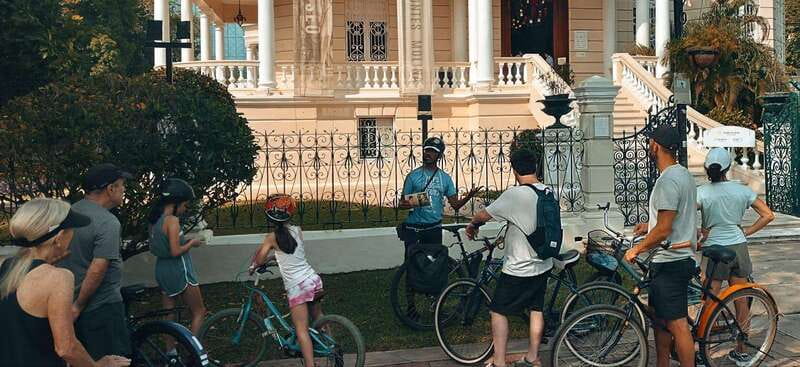
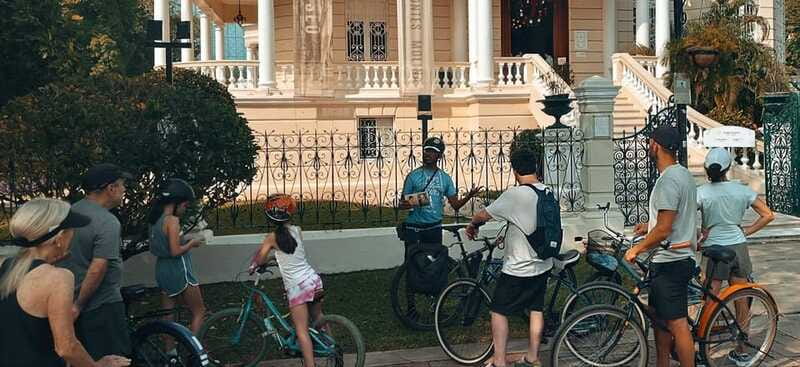
The tour pauses at four mansions. Ivan explains who lived in them and how those families connected to Mérida’s prosperous period. This is more useful than simply cycling past ornate facades, because the buildings become part of a social story about money, status, and the city’s growth.
You are given a 20-minute break along Paseo de Montejo, with shade available at the stops. That is a practical advantage in Mérida. The tour is not asking you to pedal continuously under the midday sun, and the breaks make the route reasonable for people who ride occasionally rather than every week.
Look closely at the details while you are stopped: balconies, carved stonework, elaborate doorways, and the way the houses face the avenue. Some of the mansions are best appreciated from outside, so do not expect an interior-house tour. The value is in seeing several residences together and understanding why this boulevard feels so different from the older streets downtown.
More bike tours around Mexico:
- Electric Bike Beach Adventure with Tequila Tasting and Lunch
★ 5.0 · 1,162 reviews - Frida Kahlo VIP [Museum Tickets Included] Bike, Markets & Churros
★ 5.0 · 1,072 reviews - Mexico City; ART NACO : Murals & Street Art Bike Tour
★ 5.0 · 284 reviews - Mexico City Highlights E-Bike Tour With Foodie Stops
★ 5.0 · 226 reviews
Entering Plaza Grande and Mérida’s colonial center
The second half follows a safer, direct street toward Plaza Grande, Mérida’s central square. Here the focus shifts from 19th-century wealth to the city’s colonial buildings and public spaces.
The plaza brings several major sights into one compact area. You see the cathedral, Casa Montejo, parks created in the 19th century, and other buildings connected with Mérida’s Spanish colonial past. The guide explains the setting while you walk short distances at the stops.
The cathedral is covered in a brief guided visit from the outside, listed at about five minutes. That is enough for a quick orientation, but not enough for an extended architectural study. If the cathedral matters greatly to you, plan to return independently with more time.
Casa Montejo Museum receives a longer explanation, around 10 minutes. The house is especially useful for understanding the city’s earliest Spanish period and the people who shaped it. Again, the focus here is on the exterior and the surrounding plaza rather than a lengthy museum visit.
The main theater is also viewed from outside. This is a useful reminder that the tour is designed as a city overview. You see a broad selection of places, but you are not stopping for full admissions or long indoor visits.
Casa Montejo, the cathedral, and the value of context
A guide can make a short stop at a facade worthwhile, but only if the explanation connects the building to the city around it. Ivan’s best-known strength is his ability to answer questions about Mérida, the Maya, and Mexico beyond the basic facts printed on a plaque.
That makes the colonial-center section more than a sequence of photo stops. You begin to see how Mérida’s public spaces, religious buildings, wealthy residences, and modern neighborhoods sit beside one another.
I would treat this part as an orientation rather than a final museum visit. The tour gives you enough context to decide which buildings deserve a return visit. It also helps you recognize places when you walk downtown later on your own.
Because the group is on bicycles, explanations may be delivered from the road or sidewalk rather than from inside a building. Stay close enough to hear the speaker. One useful criticism of the tour was that the group occasionally spread out, making it harder to catch every explanation. The guide may need to remind riders to regroup, especially at intersections.
La Plancha and the market drink
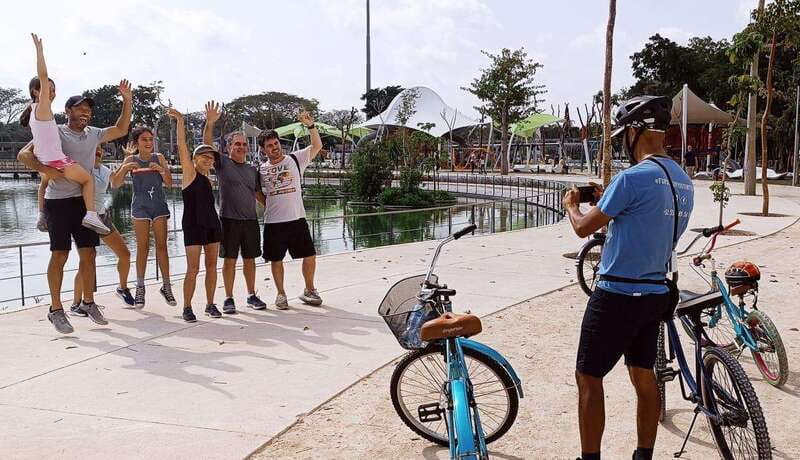
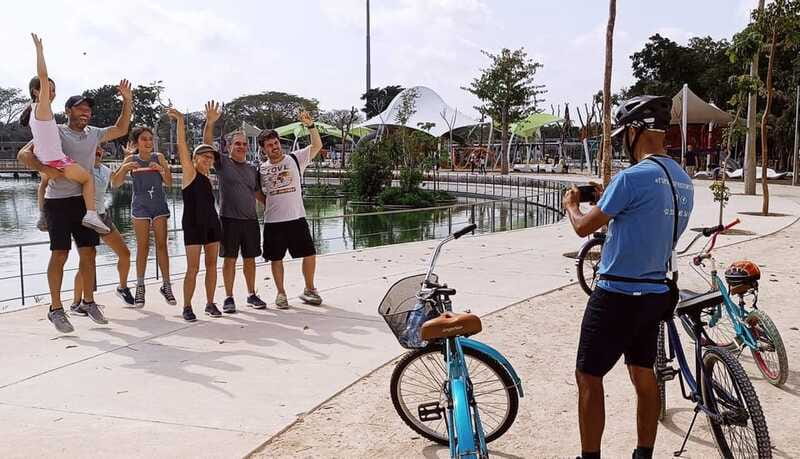
The itinerary includes a 25-minute stop at La Plancha for photos, a visit, and more explanation. This newer public area gives you a change of scene after the older architecture and central plaza.
The route also includes a stop at a local market in a historic neighborhood, described as Santa Anna, where you receive a nonalcoholic drink. Options include a fruit drink, and past participants have also enjoyed fresh coconut. The exact timing can be halfway through or at the end of the tour.
This is one of my favorite practical touches. A cold drink is not a grand attraction, but in Mérida’s heat it can make the final stretch much more pleasant. It also brings the tour briefly into ordinary local life instead of keeping you only among monuments and mansions.
Do not expect a full food tour. The drink is included, but the experience does not promise a meal or a long market tasting. The real benefit is the chance to pause, cool down, and ask Ivan what to eat or where to go later.
His restaurant and bar recommendations are a genuine part of the value. Several participants appreciated receiving specific suggestions after the ride, and Ivan has even followed up with dining and lodging ideas for later stops on a trip.
Safety, weather, and how hard the ride feels
The entire route is flat, and the cycling pace is gentle. That makes it a good choice if you want to cover more ground than walking allows but do not want a strenuous athletic outing.
You still need basic cycling confidence. The tour is not suitable for people who cannot ride a bicycle, and the route includes city streets during the historic-center portion. Cars are described as patient around cyclists, but traffic conditions can change, so this is not a closed-road ride.
The guide places strong attention on safety, and much of the first half uses dedicated bicycle lanes. At stops, there is shade, and some attractions are reached by walking a short distance.
Heat and rain can change the route. The tour keeps the same two-and-a-half-hour duration, but the guide may choose a more suitable path for safety. Bring water, comfortable clothes, and a hat. Alcohol and drugs are not allowed.
The activity is not suitable for wheelchair users, people with epilepsy, or people with a low level of fitness. The booking information also gives several different upper weight limits, ranging from 309 to 350 pounds, or about 140 to 159 kilograms. Because those figures are inconsistent, confirm the applicable limit with Flip’s Side of History Tours before booking if that affects you.
Is $40 a fair price?
At $40 per person, this is not the cheapest way to see Mérida, especially if you are comfortable walking and already know where you want to go. But the price includes the bicycle, helmet, guide, route planning, historical explanations, and a nonalcoholic drink.
The value improves if you are visiting for the first time. In one morning or afternoon, you connect the boulevard with the historic center without arranging your own rental bike, choosing safe streets, or stopping to search for each building’s background.
The small-group format also matters. A smaller group gives you more chance to ask questions and makes it easier to adjust the pace. It is not a private tour, and the group can spread out, but the format is more personal than a large city ride.
The weak point is the bike quality. If you expect polished, high-end rental equipment, this may disappoint. The tour makes better financial sense if you see the bicycle as transportation and the guide as the main product.
Who should book this Mérida bike tour?
I would choose this tour if you are visiting Mérida for the first time, enjoy light activity, and want a clear introduction to the city before exploring on your own. It suits couples, families with cycling children, and anyone who finds long hot walks tiring.
The available equipment is unusually flexible. You can request child bicycles, seats for children aged two and five, tandem bicycles, or an adult tricycle that carries two passengers behind one person who pedals and steers. Confirm the exact setup when booking, especially for young children.
This is less suitable if you want long interior visits, a demanding cycling workout, or a polished fleet of new bicycles. It is also not the right choice if you cannot ride confidently in an urban setting.
Book it if you value a relaxed overview, direct answers, and useful dining suggestions. Skip it if your priority is museum entry or luxury equipment. For most first visits, the combination of Paseo Montejo, the mansions, Plaza Grande, La Plancha, and a cooling market drink gives you a sensible and enjoyable introduction to Mérida.
FAQ
How long is the Mérida bike tour?
The tour lasts 2.5 hours and covers about 4 miles, or 7 kilometers.
Where does the tour begin and end?
You meet outside the Museo Regional de Antropología, Palacio Cantón, at the corner of Calle 43 and Paseo de Montejo. The tour returns to the same meeting area.
Which languages are available?
The live guide speaks English and Spanish.
Are bicycles and helmets included?
Bicycles are included, with different sizes and adjustable frames. Helmets are provided. Child bicycles, child seats, tandem bicycles, and adult tricycles are also available.
What sights are included?
The route includes the Monument to the Homeland, Paseo de Montejo and four mansions, Plaza Grande, Casa Montejo, Mérida Cathedral, La Plancha, and a local market stop.
Is a drink included?
Yes. You receive one nonalcoholic drink, such as a fruit drink, at a market either during the tour or near the end.
New rides added around Mexico
- Oaxaca City: Bike Tour with Professional Guide+Art workshop★ 4.8 · 23 reviews
- Oaxaca: Guided Bike Tour to the Largest Tree in the World★ 5.0 · 16 reviews
- 🟢Street Food Bike Tour Mexico City🟢★ 5.0 · 15 reviews
- Mexico City: Guided Bike Tour of Culture and Local Taste★ 5.0 · 14 reviews
- Mexico City: Private Chapultepec Park Bike Tour★ 4.8 · 16 reviews
- Mexico City: Chapultepec & Reforma Historic Bike Experience★ 4.5 · 30 reviews
- Mérida: The E-bike tour with history and culture★ 4.9 · 36 reviews
- From Mexico City: Teotihuacan Pyramids and Bike Tour★ 4.7 · 20 reviews
Mexico Bike Tours, compared.
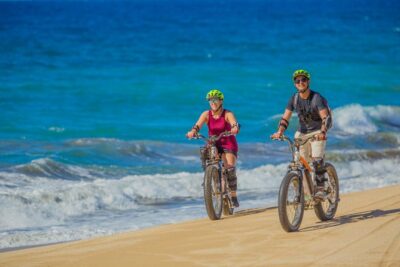
Electric Bike Beach Adventure with Tequila Tasting and Lunch
Read our review →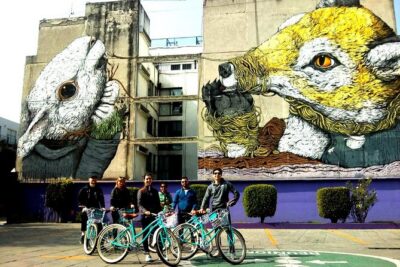
Mexico City; ART NACO : Murals & Street Art Bike Tour
Read our review →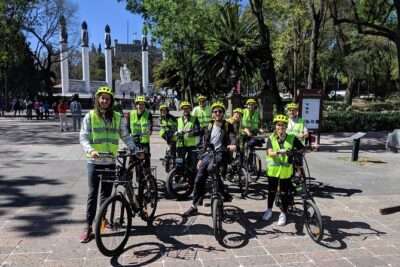
Mexico City Highlights E-Bike Tour With Foodie Stops
Read our review →

Street Food Bike Tour / Mexico is not only Tacos / All Inclusive
Read our review →
Cenotes trail jungle bike tour in Tulum with lunch
Read our review →
E-Bike City Tour though Cozumel & Taco Tasting Tour
Read our review →Browse the lists this tour appears in