
Review · MADRID
Madrid: Street Art Bike Tour
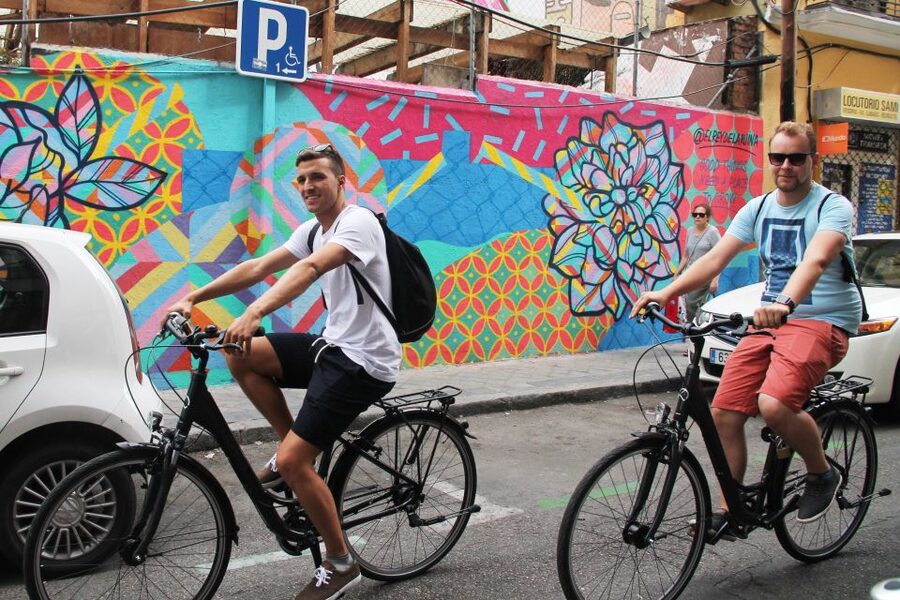
Madrid’s street art is not confined to a museum, and this bike tour takes you straight to the walls, shutters, traffic posts, and community spaces where the city’s art scene grew. A local graffiti artist explains the work, from Muelle’s preserved 1989 tag to pieces by Boa Mistura and artists linked to Pinta Malasaña.
I like the mix of street art and recent Madrid history, and I like that the route reaches Malasaña and Lavapiés rather than circling only the grand central sights. The chance to see community-run spaces such as Esto es una Plaza gives the ride a more local purpose. The main caution is cycling ability: Madrid traffic, narrow urban streets, and one uphill stretch can challenge anyone who is not comfortable riding in a city.
Key points to know before booking
- Muelle’s 1989 tag: See one of Madrid’s earliest surviving marks from the city’s graffiti movement.
- Malasaña festival art: Ride through the neighborhood and find works connected with the annual Pinta Malasaña festival.
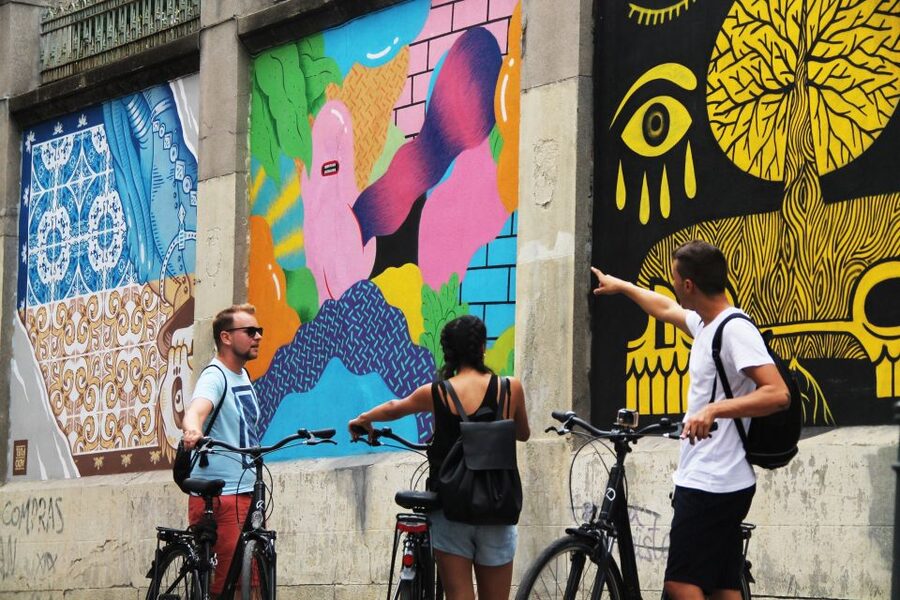
- A graffiti artist as your guide: Learn about spray techniques, tags, murals, shutters, and other forms of urban art.
- Lavapiés community spaces: Visit Solar Antonio Grilo and Esto es una Plaza, former abandoned sites now used by local communities.
- A medium-level city ride: The route includes traffic and one uphill section, so basic urban cycling skills matter.
- Practical inclusions: Your bike, helmet, lock, map, restroom break, and live English or Spanish guide are covered.
Why Madrid makes a good street art tour city
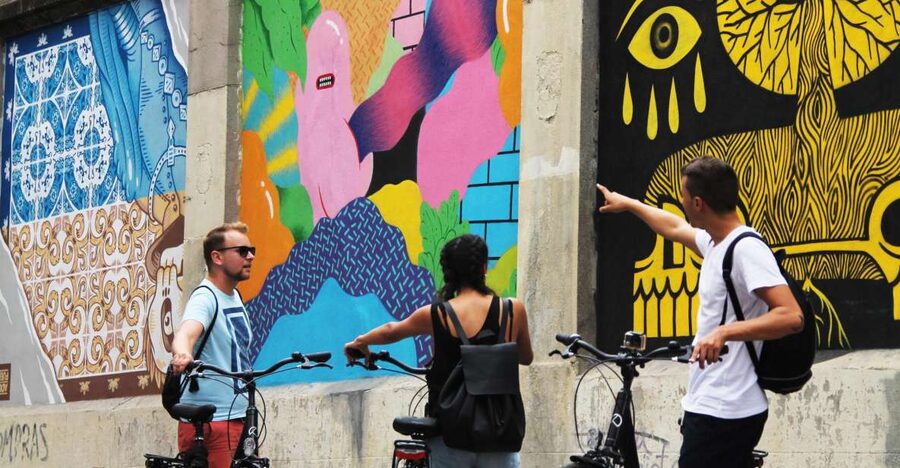
Madrid’s street art scene has several layers. You will see personal tags, large painted walls, festival commissions, decorated street furniture, and art built into community projects. That range matters because graffiti is not one single style. A quick photo stop can look impressive, but an artist guide can explain why one mark is a tag, another is a mural, and another is part of a broader neighborhood project.
This tour also gives you a glimpse of Madrid beyond the postcard route. The meeting point is at the Carrefour Express on C/Montera 32, close to Gran Vía and Sol. That puts you in the center of the city, but the ride then moves toward neighborhoods where daily life, independent culture, and public art overlap.
You will ride rather than walk, so you can cover more ground in two and a half hours. The bicycle also lets you connect separate pockets of art without spending the whole time underground on the Metro. The tradeoff is simple: you need to watch the road while trying to look at the walls.
More Street Art Bike Tours in Madrid:
- London Bike Tour: Landmarks, Secret Gems, Pub Stop & Street Art
★ 5.0 · 943 reviews - London: Landmarks & Secrets Bike Tour with Pub & Street Art
★ 4.9 · 314 reviews - Mexico City; ART NACO : Murals & Street Art Bike Tour
★ 5.0 · 284 reviews
Muelle and the beginnings of Madrid graffiti
One of the most worthwhile early stops is the surviving tag by Muelle. His name refers to a spring, and he is regarded as a pioneer of Madrid’s graffiti movement. The preserved mark dates from 1989, giving you a direct link to a young artist who helped shape a new cultural movement in the city.
This stop adds useful context. Muelle’s tag is not just old paint on a wall. It shows how personal signatures helped establish graffiti as a visible part of Madrid’s urban culture. The guide explains the background and the techniques used by graffiti artists, including work on walls, metal shutters, and other city surfaces.
I appreciate this kind of beginning because it gives the rest of the tour a timeline. You are not simply moving from one colorful wall to the next. You start with an early figure, then see how Madrid’s street art developed into larger festival projects and community-led spaces.
Bring a passport or ID card, as requested for the activity, and wear comfortable shoes. You will be on a bicycle for much of the outing, and easy footwear makes the ride and stops more pleasant.
Alonso Martínez and Boa Mistura’s first piece
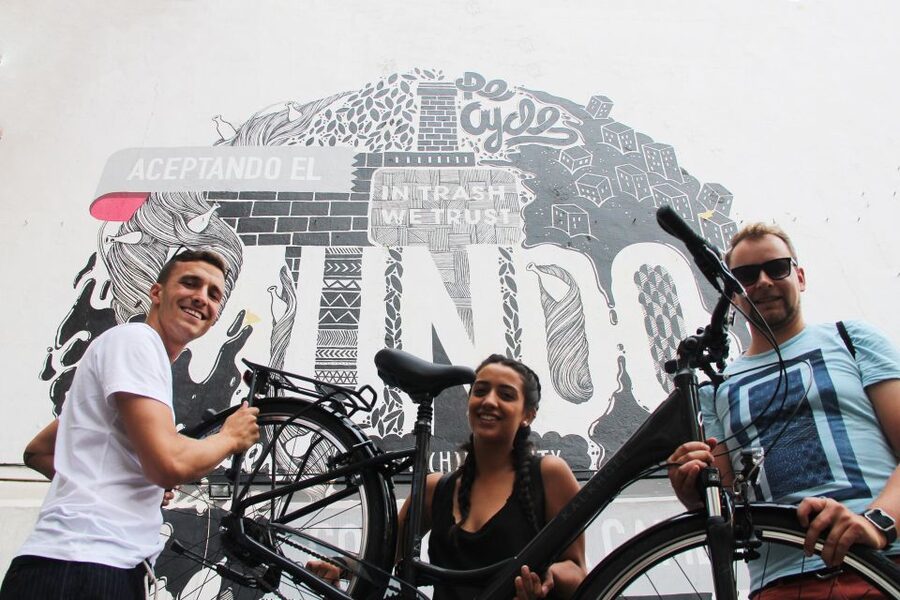
After the initial introduction and bicycle safety briefing, the route heads toward Alonso Martínez. Here you stop to photograph the first piece created by Boa Mistura, a Madrid-born crew that began in the city’s outskirts and later worked on street art projects around the world.
Boa Mistura is an important name on this route because the group shows how Madrid street artists can move between neighborhood walls and major international projects. Seeing an early local piece gives you a more grounded view of that progression. It also helps you notice design choices that may be missed when you simply pass a mural on foot.
The guide’s role is especially useful here. You can ask about the work as you look at it, rather than trying to identify artists from a tour handout or a plaque. The included Madrid map can help you remember the route and orient yourself after the ride.
You should also expect ordinary city conditions at this point. This is not a closed gallery or a quiet art park. You will share the streets with traffic, pedestrians, and other cyclists. Keep your attention on the guide and road when moving, then study the artwork once the group stops.
Malasaña and Pinta Malasaña’s painted streets
Malasaña is one of Madrid’s most fashionable and alternative neighborhoods, and the tour uses it as a major section of the route. You will pass works by Spanish artists connected with the 2017 edition of Pinta Malasaña, a festival that brings new art to the neighborhood during April.
The festival setting is part of the appeal. Street art can be temporary, and a piece painted for a festival may later disappear beneath new work, renovation, or ordinary wear. Seeing festival art in its neighborhood setting helps you understand how public art changes the feel of a street without needing a formal exhibition space.
Plaza Dos de Mayo is the center of this part of the route. Look for Bolardo Voy, Bolardo Vengo, a colorful treatment of traffic posts. It is a good example of how street art can reach beyond walls. Small urban objects that normally fade into the background become part of the artwork.
This is also a good place to notice the limits of the experience. You may stop often for explanations and photographs, but the route is still a working bike ride. If you want to examine every mural at length, two and a half hours may feel short. The tour works best if you enjoy seeing a broad range of work and hearing the story behind selected pieces rather than conducting a detailed art study at every stop.
More bike tours around Madrid:
- Madrid Highlights Bike Tour
★ 5.0 · 1,731 reviews - Best of Madrid: 3-Hour Guided Bike Tour in Small Groups
★ 4.8 · 1,417 reviews - Madrid: City Highlights Guided Vintage Bike Tour
★ 4.9 · 1,159 reviews - Madrid: 3 hour Guided Highlights Bike Tour with Optional Tapas
★ 5.0 · 443 reviews
Noviciado and Lavapiés community projects
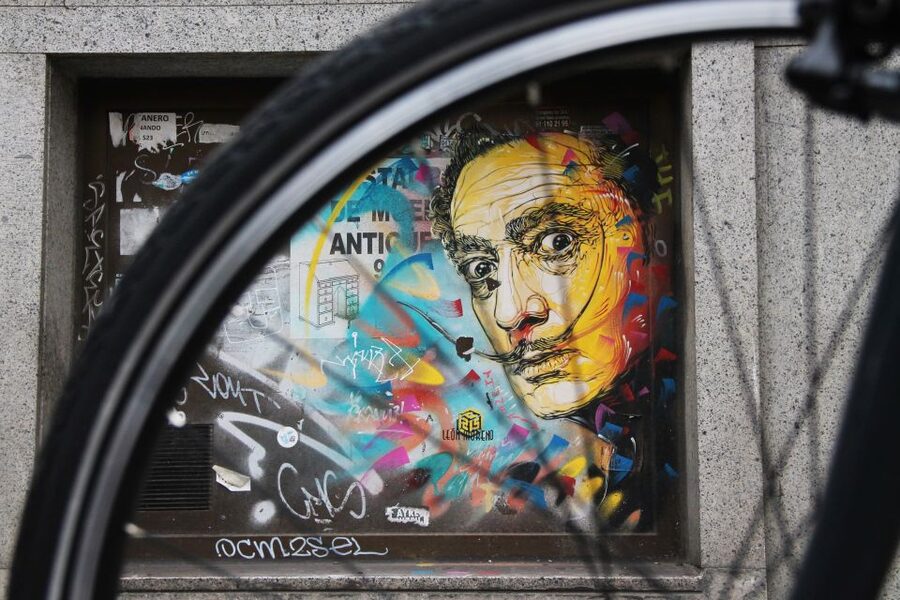
The route continues toward Solar Antonio Grilo and Esto es una Plaza, two former abandoned spaces that have been turned into local community hubs. They combine urban gardens with street art and show how residents can reclaim neglected places for shared use.
These stops give the tour a wider focus. You are not only looking at art made for visual impact. You are seeing public spaces shaped by community needs, with gardens, creative work, and local activity sharing the same setting. The tour presents them as examples of hybrid economy systems that have attracted interest from other communities around the world.
In Noviciado and Lavapiés, you will encounter work linked to artists such as El Rey de la Ruina, Cassassola, Ze Carrión, and Por Favor. The route includes many more artists, so the guide becomes your filter. You can learn which details to notice instead of treating every painted surface as background decoration.
Lavapiés is a particularly useful contrast with Malasaña. Malasaña’s festival work gives the ride a strong event-based focus, while the community spaces in Lavapiés show how art can be tied to neighborhood projects and shared public life. The two areas make the tour feel varied rather than repetitive.
The route’s biggest practical issue: city cycling
The ride is described as a medium-level activity, with one uphill section. The supplied timing is listed as both two and a half hours and three hours, so allow roughly half a day around the activity rather than scheduling a tight appointment immediately afterward.
A past participant found the tour excellent but noted that slower cyclists faced a challenge with Madrid traffic and uphill sections. The guide adjusted the ride as much as possible, but you should still be comfortable controlling a bicycle in an urban setting. This is not the right choice if you rarely cycle or feel uneasy riding near cars.
A family with a seven-year-old child completed the tour with the child riding his own bicycle, which suggests that confident younger cyclists may manage it. Still, the route’s traffic and medium-level rating matter more than age alone. Judge your child by cycling ability, road awareness, and comfort in a group.
Your rental includes a helmet and lock. Use the helmet, keep the lock with you, and listen carefully during the safety briefing. The live guide speaks English or Spanish, so you can choose the language that lets you follow road instructions and art explanations most easily.
What the $46 price includes
At $46 per person, the tour is priced above a simple bicycle rental but below many full-day guided excursions. The value comes from combining transport, a specialist guide, and access to a route that would be difficult to plan efficiently on your own.
You receive the bicycle, helmet, lock, Madrid city map, live English or Spanish guide, and a restroom break. You do not receive beverages, so bring or buy water before setting off. The activity ends where it begins, at the Carrefour Express on C/Montera 32.
For me, the strongest value is the guide’s street art background. You could locate Malasaña murals independently, but you would need to research the artists, identify surviving festival pieces, find Muelle’s tag, and connect the community sites into one ride. The guide brings those pieces together and explains the techniques and local story as you go.
The price makes the most sense if you want an active introduction to Madrid and prefer neighborhoods over a standard monument tour. If your priority is a slow art walk with long viewing time, a walking route may suit you better. Here, the bicycle is the tool that lets you cover a wider area.
Guide quality and the personal side of the ride
The guide’s local connection is central to the experience. You are led by a graffiti artist rather than a general sightseeing guide, so the focus stays on how urban art is made, where it appears, and what it means in Madrid.
Javier was specifically praised for being friendly and experienced, and for making the booking, bicycle pickup, and ride feel easy for a family group. You may not have Javier on your departure, but his example shows the kind of personal, relaxed guiding this activity aims for.
The guide also has to manage different cycling speeds. That can affect the rhythm of the group. Strong cyclists may need to slow down, while less confident riders may need extra time at crossings or uphill sections. The upside is that the guide can adjust the pace when possible. The basic requirement remains that you can ride safely in city conditions.
Who should book this Madrid bike tour?
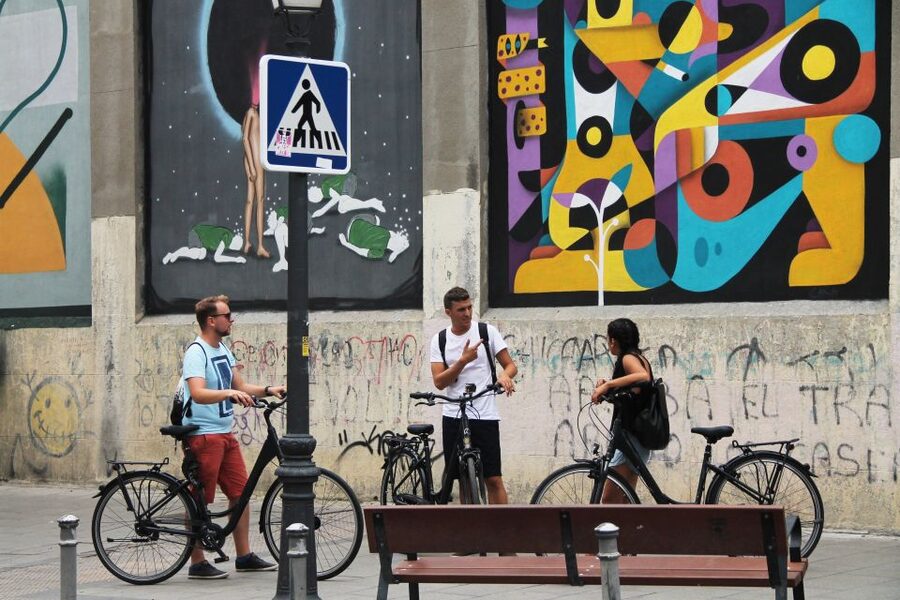
I would choose this tour if you want to connect Madrid’s neighborhoods through art rather than spend the morning inside formal museums. It suits adults, active families, and anyone curious about graffiti, design, and the way residents use public space.
It is also a good fit for a repeat visitor who has already seen the Royal Palace, Prado area, or central plazas. Malasaña and Lavapiés offer a different view of Madrid, and the route adds context to places you might otherwise visit without understanding their artistic role.
You should think twice if you dislike cycling in traffic, need a completely flat route, or prefer a quiet and slow-paced outing. The tour is not presented as a difficult athletic ride, but it is still a medium-level urban activity with an uphill stretch. Comfortable shoes and sensible clothing will help.
Free cancellation is available up to 24 hours before the activity, and you can reserve now while paying later. Those terms are useful if your Madrid schedule is still shifting, but the more important booking decision is your cycling comfort.
Should you book it?
Book this tour if you want a local artist’s view of Madrid’s street art, plus enough cycling to connect Malasaña, Noviciado, and Lavapiés in one outing. The preserved Muelle tag, Boa Mistura’s early work, Pinta Malasaña pieces, and the two community spaces give the route real variety.
Skip it if you want a relaxed art walk or are not comfortable riding near traffic. For confident city cyclists, the $46 cost is fair because it covers the bike and safety gear while giving you an informed route through parts of Madrid that are easy to miss.
FAQ
Where does the Madrid Street Art Bike Tour start?
It starts at the entrance of the Carrefour Express supermarket at C/Montera 32. The nearest Metro stations are Gran Vía and Sol.
Where does the tour end?
The activity ends back at the meeting point on C/Montera 32.
How long does the tour last?
The tour is listed as two and a half hours. The important information also describes it as a three-hour medium-level activity, so allow extra time in your schedule.
Which languages are available?
The live guide speaks English or Spanish.
Is bicycle equipment included?
Yes. The price includes bicycle rental, a helmet, and a lock. A Madrid city map is also included.
What cycling ability do I need?
The activity is rated as medium level and includes city traffic plus one uphill section. You should be familiar and comfortable with urban cycling.
New rides added around Madrid
- Madrid: Sunset and Night Lights Bike Tour★ 3.5 · 11 reviews
- Madrid: Sunset and Night Lights eBike Tour★ 4.9 · 16 reviews
- Madrid: Magic Retiro Park Bike Tour★ 4.8 · 58 reviews
- Madrid: Guided Electric Bike Tour. City center & Retiro Park★ 4.7 · 40 reviews
- Madrid: 3-Hour Sightseeing Tour by Electric Bike★ 4.6 · 192 reviews
- Madrid: Literary Quarter & Retiro Park Electric Bike Tour★ 4.8 · 31 reviews
- Madrid: Highlights & Parks with Electric Bike Private Tour★ 4.8 · 115 reviews
- Private Madrid Bike Tour | Exclusive Guided Tour | From 30€★ 5.0 · 22 reviews
Madrid Bike Tours, compared.
Best of Madrid: 3-Hour Guided Bike Tour in Small Groups
Read our review →
3 hour Guided Highlights Bike Tour with Optional Tapas
Read our review →
Madrid City Guided Bike/E-Bike Tour for Small Groups
Read our review →
Highlights & Parks with Electric Bike Private Tour
Read our review →
Madrid at Night: Vintage Bike Tour of City Highlights
Read our review →Browse the lists this tour appears in