

Review · LYON
Lyon: Guided City Bike Tour
Lyon reveals itself quickly from a bike seat. In three hours, you cross from the old center to the modern Confluence district, roll beside two rivers, pass the silk-making hill of Croix-Rousse, and reach huge Tête d’Or Park. The route gives you a useful first map of the city instead of leaving you focused on one neighborhood.
I like the wide range of sights and the protected bike lanes used for much of the ride. I also like the practical setup: a 10-minute bike briefing, helmets, and rain ponchos when needed. The main drawback is that the tour keeps moving, so you get less detailed explanation at each stop than on a walking tour. There is also no planned coffee or toilet break.
The ride suits anyone who can comfortably handle a bike and wants to cover ground without tiring out their feet. Guides such as Lauren, Luc, Luce, Inès, Cecilia, and Roman have been singled out for their friendly, careful approach. Still, the pace and route make this a sightseeing ride, not a slow museum-style lesson.
Key points at a glance

- Three hours across Lyon: Start near Vieux Lyon and finish at the Confluence after covering the city from north to south.
- A useful first look: See Tête d’Or Park, Croix-Rousse, Place Bellecour, the Rhône, the Saône, and the old town in one outing.
- Mostly easy riding: City bikes are supplied, and much of the route uses bike paths or protected lanes.
- Local guiding in two languages: Tours can run in French and English at the same time.
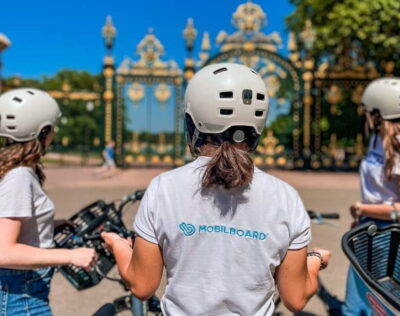
- Practical equipment included: Helmets are required, a short training session comes first, and ponchos are available in wet weather.
- Know the limits: You must know how to ride, be at least 150 centimeters tall, and be accompanied by an adult if under 16.
Why a bike is a smart way to meet Lyon
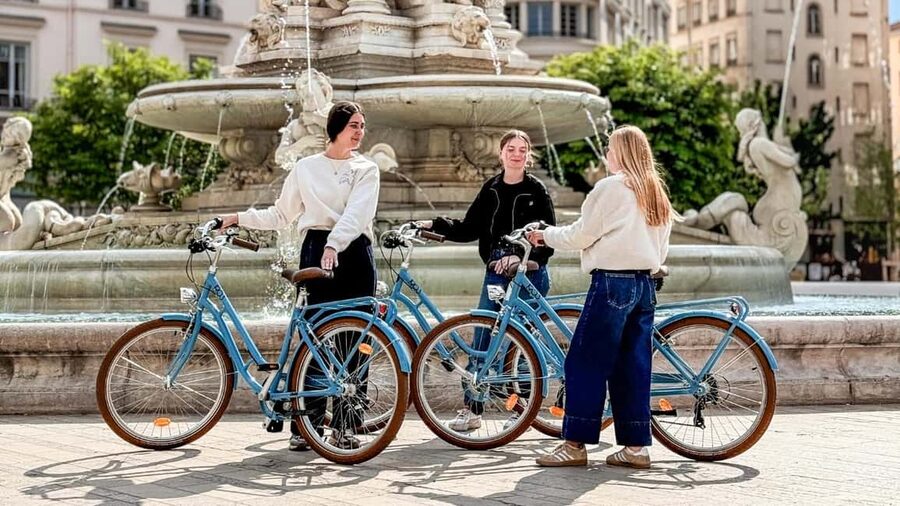
Lyon is spread along the Rhône and Saône, with the old center, the Croix-Rousse hill, northern parkland, and the newer southern district all pulling you in different directions. Walking between these areas would take much of a day. A bike lets you connect them while still moving slowly enough to see the streets, bridges, riverbanks, and buildings.
This is not a race. The ride is designed around an easy city bike and a group pace. A 10-minute practice session and briefing give you time to get used to the bike before heading out. If you normally prefer extra assistance, an e-bike upgrade may be available in the shop for €5, subject to availability, for riders aged 14 and over.
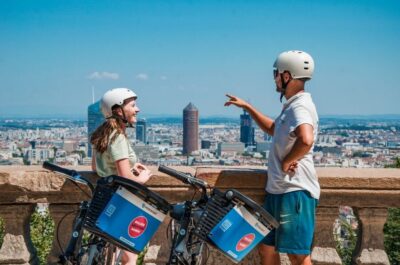
The route also gives you useful orientation. After the ride, you will know which river runs where, how Vieux Lyon relates to Bellecour, where the park sits north of the center, and how far the Confluence is from the historic core. That makes the tour a strong first activity on a Lyon visit.
The tradeoff is depth. You will hear history and cultural detail from the guide, but the stops are mainly riding pauses rather than long visits. One four-star assessment noted that the amount of information was lighter than expected, while many other riders praised the guides for explaining Lyon clearly. I would treat this as an introduction that helps you decide where to return later.
More City Bike Tours in France
- Paris: City Highlights Bike Tour
★ 4.7 · 1,835 reviews - Highlights of Paris Bike Tour w/ a Local Guide (English or Dutch)
★ 4.5 · 1,176 reviews - Paris Highlights Bike Tour: Eiffel Tower, Louvre and Notre-Dame
★ 5.0 · 853 reviews
From 7 Quai Romain Rolland into Vieux Lyon
The meeting point is at 7 Quai Romain Rolland, beside the Saône and close to the old town. You begin with the bike briefing, helmet fitting, and a quick check that everyone is ready for city riding. Flat shoes and casual clothes are the sensible choice.
The first look at Vieux Lyon places you among one of the city’s most atmospheric areas. Its position beside the Saône makes it an easy starting point for understanding Lyon’s older center. You spend about 15 minutes biking through or around this area, followed by another 15 minutes along the Quais de Saône.
Do not expect an extended visit inside a church, museum, or courtyard. The value here is visual and geographic. You see how the river frames the old quarter and how the Saône differs from the Rhône, a distinction that becomes clearer as the ride continues.
The start can feel busy because you are still getting used to the group, the bike, and city traffic. Pay attention to the guide’s signals and keep a little space from the rider ahead. The guides have been praised for taking care with traffic rules and keeping the group together.
The Saône and the story of Croix-Rousse
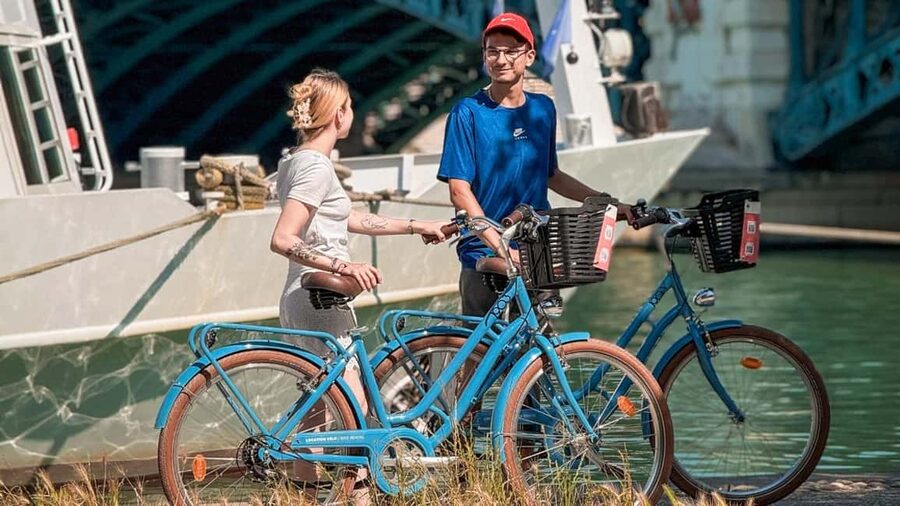
The Saône section gives you a calmer stretch beside the water before the route turns toward the Croix-Rousse area. This hill is closely tied to Lyon’s silk industry, so it adds an important piece of the city’s story beyond the grand squares and riverside views.
One of the tour’s distinctive features is the mode doux tunnel through the Croix-Rousse hill. This long passage is shared by soft transport such as bikes and pedestrians, and it allows the group to cross the hill without the strain of a steep climb. You get a change of setting while still moving at a comfortable pace.
The tunnel is more about efficient travel than sightseeing. You will not stop for a long presentation there, but it helps explain why cycling works well in Lyon. Instead of fighting uphill streets, you use a route built for non-motorized travel.
The Croix-Rousse portion is also where the guide can connect the city’s working past with its streets and slopes. If silk history interests you, listen closely and make a note of the district for a later walk. The bike tour gives you the outline, not every detail.
Forty-five minutes in Tête d’Or Park
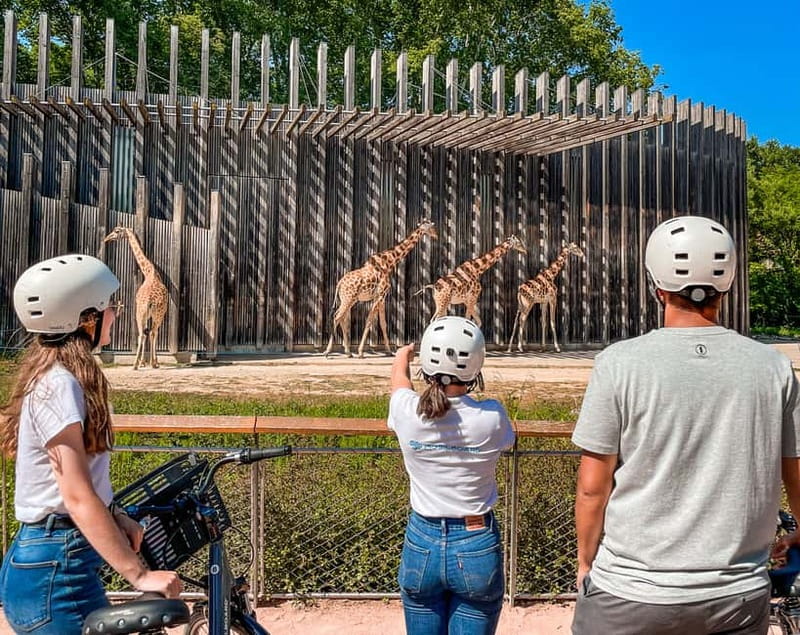
Tête d’Or Park is the longest part of the itinerary, at about 45 minutes. At 117 hectares, it gives the tour room to breathe after the central streets. The name means Golden Head, and the guide explains the curious story behind it.
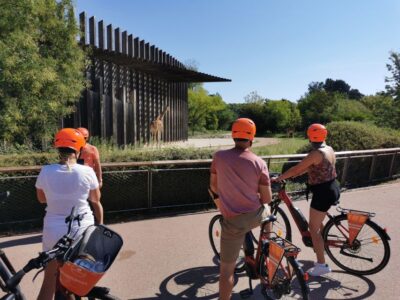
The park is a highlight for good reason. You trade dense urban streets for broad paths, open greenery, and a more relaxed riding rhythm. Several riders have singled out this section as their favorite, and it is easy to see why. You get a sense of how Lyon residents use a major city park, not just a quick photograph of a monument.
The park also makes the value of a bike clear. Its size means you can see more of it without spending the morning walking from one end to the other. The pace remains gentle, but the time is long enough to make this feel like a real part of the outing rather than a passing glimpse.
There is a practical limit. The park is not a scheduled picnic or rest stop, and the tour does not include drinks. If you need a toilet or coffee, plan ahead because there are no toilet facilities at the departure point and the ride does not promise a break. That is worth considering before you set off.
Same wheels, a different route:
- Versailles Palace Bike Tour with Market & Marie-Antoinette hamlet
★ 5.0 · 2,680 reviews - Paris: Charming Nooks and Crannies Bike Tour
★ 4.8 · 2,585 reviews - Versailles Full Day Bike Tour with Palace, Gardens, & Picnic
★ 5.0 · 2,217 reviews - From Paris: Versailles Bike Tour w/ Palace, Gardens, & Picnic
★ 5.0 · 2,150 reviews
Place des Terreaux and the city center
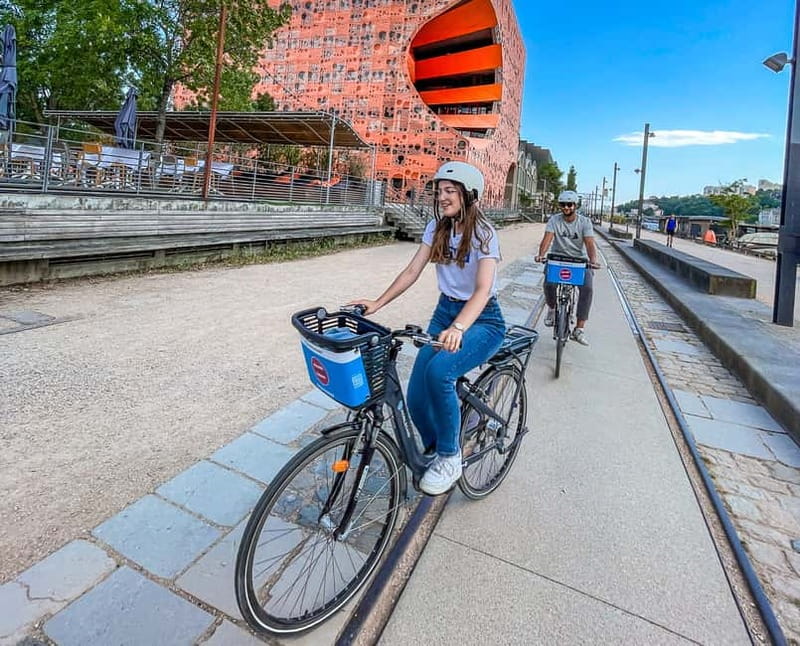
The route then reaches Place des Terreaux, with about 25 minutes allocated to this part of the ride. This is one of Lyon’s major public squares and a useful place to connect the city’s cultural center with its older streets.
The square helps balance the green space of Tête d’Or Park with a more built-up view of Lyon. You can take in the scale of the open plaza while the guide adds context about the surrounding civic and cultural buildings. Since you are on a bike, the group will not linger as long as a walking tour might.
The ride briefly returns toward Vieux Lyon for about five minutes, then continues to Place Bellecour for around 15 minutes. This back-and-forth may look odd on paper, but it gives you a good sense of the city’s layout. Vieux Lyon, the central squares, and the riverfront are close enough to connect by bike, yet distinct enough to feel like separate chapters.
Place Bellecour is an especially useful orientation point. From here, you begin to understand the broad central axis of Lyon before heading along the Rhône. I like this part because the route does not limit you to one old-town loop. It shows how Lyon’s major public spaces fit together.
The Rhône banks and the city’s bike network
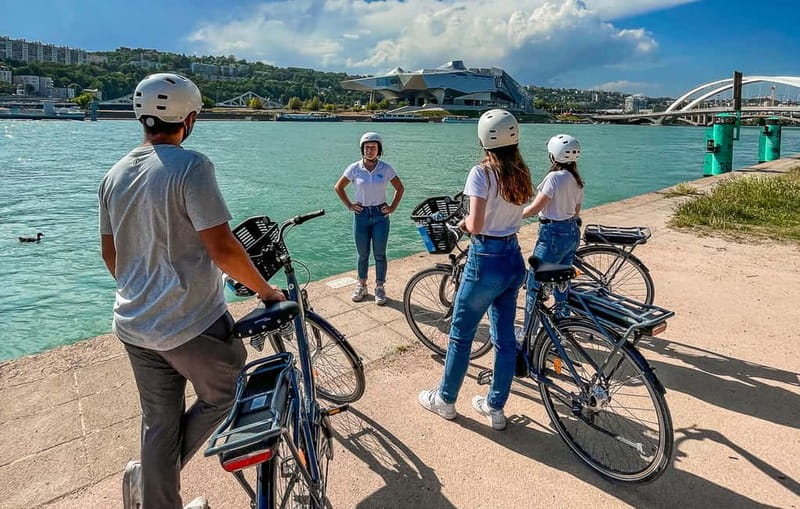
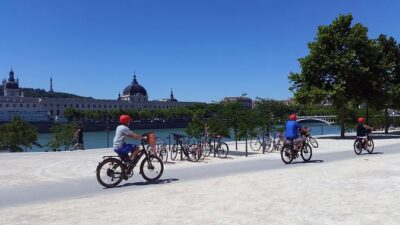
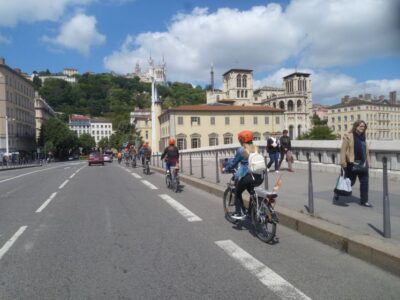
About 20 minutes are spent on the Berges du Rhône, the riverfront paths along the Rhône. This is where the bike becomes especially practical. The route offers a long, open stretch and, according to the tour details, often uses dedicated or protected bike lanes.
That separation from traffic matters. You can look around more comfortably when you are not constantly negotiating with cars. Riders who have taken the tour on e-bikes have described the bikes as comfortable and easy to use, with one outing covering roughly 15 miles in three hours. That distance will vary by group and route conditions, but it gives you a sense that this is an active ride, not a short pedal between photo stops.
The Rhône banks also provide a different view from the Saône. The Saône feels closely tied to Vieux Lyon and the old center, while the Rhône section opens the city up and gives the ride more breathing room. Your guide helps sort out those differences, which is useful if you are new to Lyon.
Wind can be a factor along the river. One rider found an e-bike helpful on a particularly windy day. You can request an upgrade in the shop for €5, but it is not guaranteed, so do not book the tour assuming an e-bike will be waiting.
Forty minutes in the Confluence district
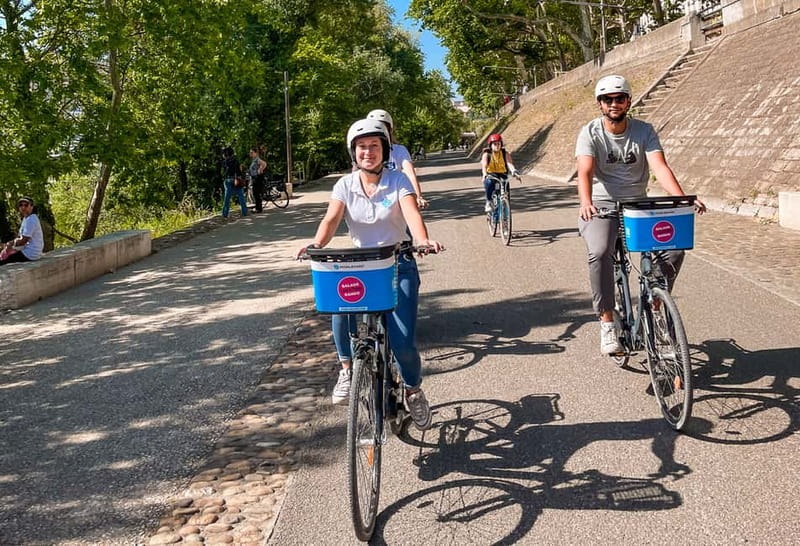
The final major section is Confluence, with about 40 minutes of riding. At the southern end of Lyon, the Rhône and Saône meet, creating the geographic idea at the heart of the city. The district also shows Lyon’s newer face, with contemporary buildings and reminders of its industrial past.
This is a strong finish because it contrasts sharply with Vieux Lyon. Earlier, you ride beside historic streets and hear about silk production. Here, you see a district shaped by redevelopment and industry. The route lets you connect those eras without treating Lyon as an old city frozen in time.
The actual meeting point of the rivers is part of the wider experience, but the tour remains a moving overview. You may want to return on foot or by bike later if you want more time for photos or closer looks at the architecture. The 40-minute segment is long enough to give Confluence proper attention, yet the group still needs to reach the starting point.
From Confluence, the ride returns to 7 Quai Romain Rolland. By then, you have crossed a large portion of Lyon and seen the city’s main geographic divisions. You may be ready for lunch, especially because the schedule does not include a formal break.
Guides, pace, and how much you learn
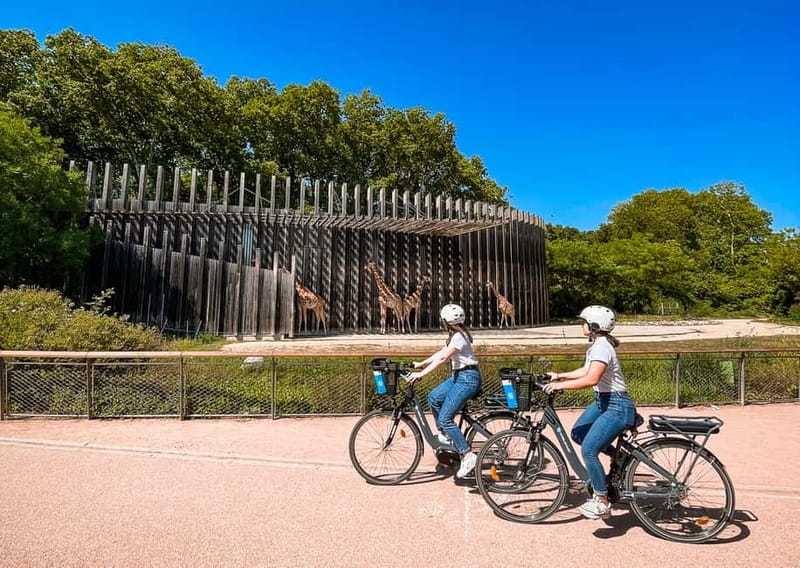
The guide can make or break a city bike tour, and the strongest reports here focus on warmth, energy, and careful leadership. Lauren has been praised for her city knowledge and friendly manner. Roman was described as enthusiastic and well informed, while Luc, Luce, Inès, Cecilia, and Laurien have also guided rides that left strong impressions.
You should expect live guiding in French, English, or both languages at the same time. A bilingual group may mean that explanations take slightly longer or feel less tailored to one language. Still, the format makes the activity useful for mixed-language groups.
The pace is generally gentle. The route has been described as easy to follow, with careful attention to traffic rules and plenty of riding on protected lanes. That said, you need basic bike skills before arriving. This is not a lesson for someone learning from scratch.
A few riders have found the historical detail somewhat light, especially compared with a walking tour. I would choose this activity for the balance of movement and explanation. If your top goal is a detailed account of every building, book a museum or walking visit as well.
Price, equipment, and who gets the best value
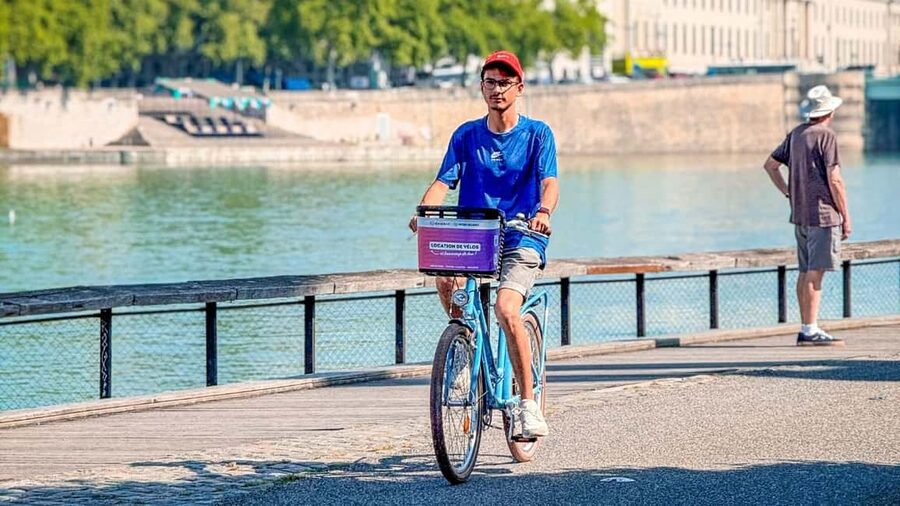
At $56 per person, the tour is not the cheapest way to see Lyon, but it covers three hours, a bike, a helmet, a briefing, a guide, and a route that reaches several distant areas. You are paying for time saved and for the confidence of being led through the city’s bike network.
The value is strongest if you have only a short stay or want an overview early in your visit. You see more than you could comfortably cover on foot, then you can return to Vieux Lyon, Croix-Rousse, Tête d’Or Park, or Confluence on your own.
The cost is less attractive if you already know Lyon well or want long stops at individual sights. Drinks and personal expenses are extra, and there is no stated coffee or toilet stop. Rain does not automatically cancel the outing, since tours operate in all weather and ponchos are provided.
Children’s bikes and child seats can be requested. Anyone under 16 must ride with an adult, and unaccompanied minors are not allowed. The tour is not suitable for pregnant women or anyone under 150 centimeters tall.
Should you book the Lyon city bike tour?
Book it if you want a fast but useful introduction to Lyon, can ride comfortably for three hours, and like seeing how neighborhoods connect. It is especially good near the start of a visit, when you want to choose where to spend more time later.
The tour is less suitable if you need frequent rests, a guaranteed bathroom break, or a long lecture at each sight. It also requires casual clothes, flat shoes, and comfort with riding in a city setting.
For most active adults, the route offers solid value. You get Tête d’Or Park, the Rhône and Saône, Vieux Lyon, Bellecour, Croix-Rousse, and Confluence in one well-planned sweep. Bring water, use the toilet before departure, ask about an e-bike if hills or wind worry you, and listen closely during the shorter historical stops. That preparation lets you enjoy the best part of the experience: seeing the whole shape of Lyon in one morning or afternoon.
FAQ
How long is the guided city bike tour?
The tour lasts three hours, including the cycling route and the initial 10-minute bike training session and briefing.
Where does the tour start and finish?
It starts and returns to 7 Quai Romain Rolland.
Which languages are available?
The tour is offered in French and English. It can operate in both languages at the same time.
Do I need to bring a helmet?
No. Helmets are provided and required during the ride.
Does the tour operate in bad weather?
Yes. The bike tours operate in all weather conditions, and ponchos are provided when necessary.
Can I use an e-bike?
An e-bike upgrade may be available in the shop for an additional €5. It is subject to availability and is offered from age 14.
Can children join the tour?
Children’s bikes and child seats are available on request. Anyone under 16 must be accompanied by an adult, and unaccompanied minors are not permitted.
Is the tour suitable for everyone?
You must know how to ride a bike and be at least 150 centimeters tall. The tour is not suitable for pregnant women.
New rides added around France
- Paris: Versailles Palace and Queen Hamlet E-Bike Tour★ 5.0 · 126 reviews
- Paris: Versailles Golf Cart & Bike Tour with Palace Entry★ 4.8 · 58 reviews
- Paris: Street Art Open-Air Museum Bike Tour★ 4.8 · 51 reviews
- From Marseille: Calanques National Park E-Mountain Bike Tour★ 4.7 · 123 reviews
- Paris: Night Small-Group Bike Tour & Boat Cruise★ 4.9 · 57 reviews
- Paris : Private guided tour in Rickshaw bike – Napoléon★ 4.5 · 23 reviews
- Paris : Private guided tour Rickshaw bike – Saint-Germain★ 4.7 · 15 reviews
- Paris: Private guided tour in Rickshaw bike – Gustave Eiffel★ 4.6 · 22 reviews
Lyon Bike Tours, compared.
2h – Electric Bike Tour of Lyon with a Local Guide
Read our review →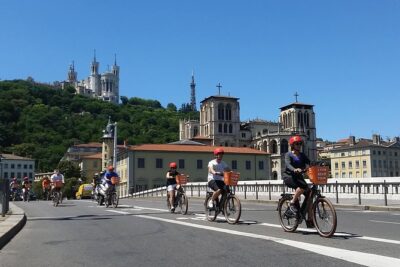
4h Complete Lyon Experience: E-Bike, Food Tasting & Old Town Walk
Read our review →
4h Complete Lyon Experience – E-Bike, Tasting & Walk
Read our review →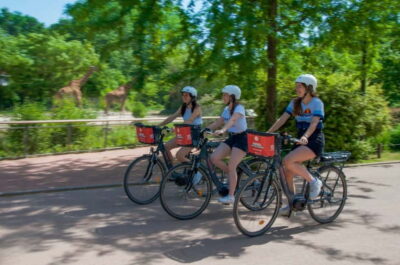
Browse the lists this tour appears in