
Review · MOUNTAIN
La Paz: Mountain Bike Down the World’s Most Dangerous Road
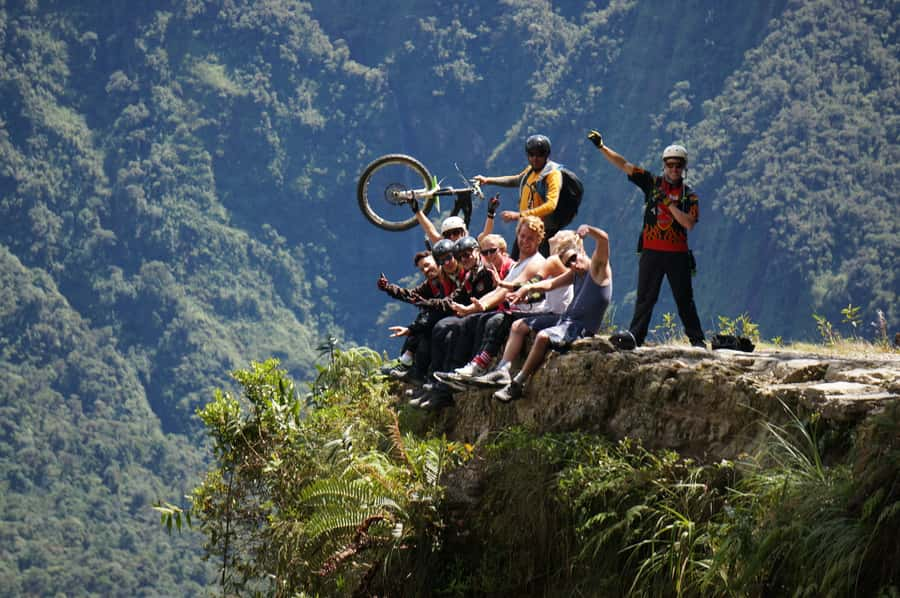
Death Road earns its name with a 64-kilometer descent from the cold, open Andes into warm Yungas jungle. You start at 4,700 meters, ride past snow peaks and llamas, then tackle a narrow dirt road cut into the mountain. The scenery changes fast, and so does the air.
I like the high-quality downhill bikes and constant mechanical checks, which matter on rough ground. I also like the support vehicle, patient guides, snacks, photos, and the finish at an animal refuge rather than a simple roadside pullout. The catch is the price, $145, plus a 50-boliviano road tax, and the long ride back to La Paz can make this a very late day.
Key points to know before you ride
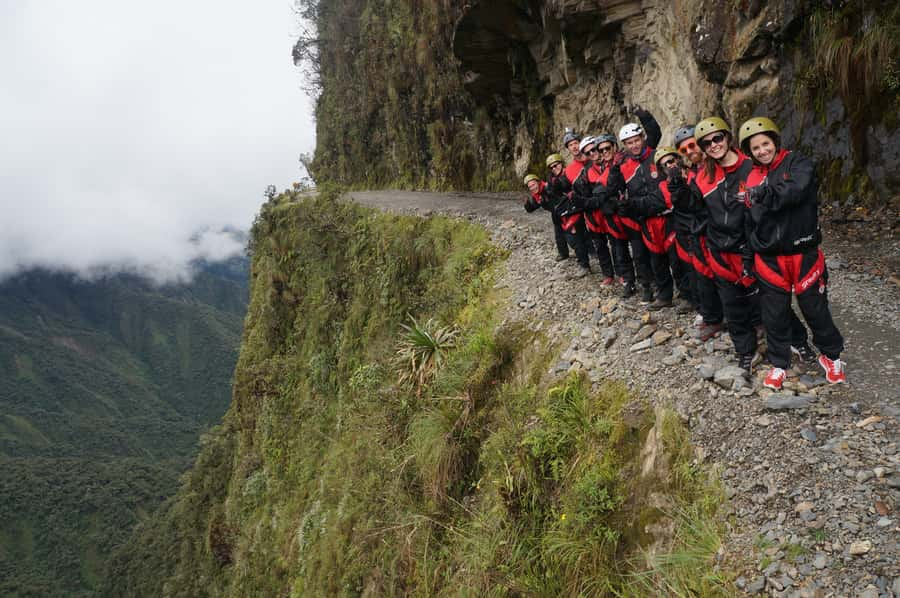
- The route drops 3,500 meters: You begin among snow-covered Andean peaks and finish in hot, dusty Yungas country.
- The rough section is not a casual bike path: The narrow dirt road has cliffs, mist, loose dust, and sharp turns.
- A mechanic joins every group: Bikes are checked during stops, while a private vehicle follows the riders.
- You ride at your own pace: The guides explain each section, and you can board the bus if you need a break.
- The day ends at La Senda Verde: Lunch, showers, animals rescued from the black market, and a chance to support the refuge are included.
- This is a premium Death Road trip: The cost covers food, gear, transport, photos, safety support, and a small group of no more than 14.
Why Death Road is such a memorable ride
The appeal here is not just the danger. It is the sudden change in altitude, climate, and scenery over one long day.
You leave La Paz by vehicle and climb toward La Cumbre. At 4,700 meters, the air is thin and cold. The high point feels stark and exposed, with broad views toward snow-covered peaks. Llamas and alpacas graze near the road, and small settlements appear in the distance.
Then the bike points downhill.
The first part uses a twisting asphalt road. This section gives you time to adjust to the bike, brakes, gloves, and altitude before the rougher road begins. You can stop for photos and refreshments while the guides explain what comes next. I consider this warm-up important, especially if you have ridden bikes before but have little experience on a downhill mountain bike.
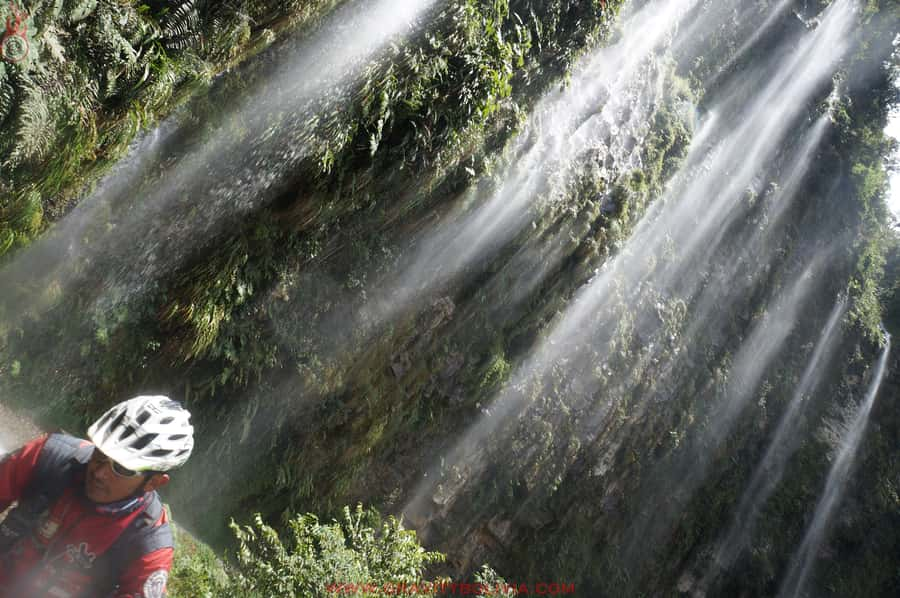
The route eventually leaves the open high country and enters thicker, greener vegetation. The temperature rises, the air gets heavier, and the road becomes more enclosed by cliffs and plants. By the final part, you are riding through mist, low cloud, dust, and heat.
That range is what makes the day special. One ride gives you ice-cold mountain air, wide Andean views, cliff walls, tiny villages, jungle vegetation, and a hot finish far below.
More Mountain Bike Tours in the world:
- From Ubud: Downhill Bike Tour with Rice Terraces and Meal
★ 4.9 · 664 reviews - Waimea Canyon Downhill Bike Ride
★ 5.0 · 650 reviews - Ubud: Downhill Cycling with Volcano, Rice Terraces and Meal
★ 5.0 · 536 reviews
Meeting the team outside Café del Mundo
The meeting point is outside Café del Mundo. Breakfast is included, with meat, eggs, ham and cheese, vegetarian, and vegan choices. Several riders have singled out the breakfast as a useful and generous start, particularly before a long day on the bike.
The early meal also gives you time to meet the guides and sort out your equipment. The team speaks English and Spanish. Guides named Damian, Kenny, Noel, Ruben, Abel, and others have led recent groups, but your exact guide depends on the date.
The company limits groups to 14 people. Each group has a guide, a mechanic, and a private safety vehicle. That arrangement is more useful than it may sound. You are not left waiting for a distant support truck, and the mechanic can check the bikes while you rest or take photographs.
The vehicle follows the group down the route. You can get on it at any point if you feel tired, uncomfortable, or unsure about continuing. The guide can also place you on the bus for your own safety or the safety of the group. That is not a failure. It is a sensible option on a road where conditions can change quickly.
Gear that earns its place on the road
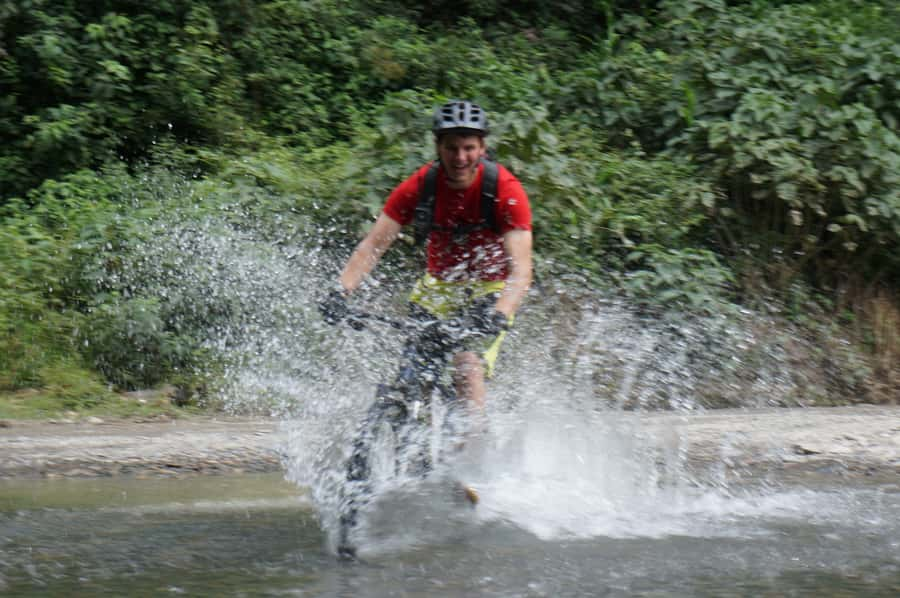
Gravity supplies full-suspension downhill mountain bikes with hydraulic disc brakes. The suspension helps on the rough dirt sections, while strong brakes give you better control on steep descents.
You also receive a standard or full-face helmet, depending on the equipment provided for your ride, plus elbow and knee pads, gloves, cold and wet-weather clothing, and a buff to keep. The package includes warm jackets and pants, which are useful at the start because La Cumbre can be cold even when the Yungas is hot.
The guides check the bikes repeatedly during the day. Tires and brakes are inspected at stops while you take photos, eat snacks, or rest your hands. This is one of the clearest reasons to choose a more expensive operator for Death Road. A cheap bike is a poor bargain when you are depending on it for braking and control.
A mechanic joins every trip. Recent rides have included moments when equipment needed attention, and the team handled those situations with calm organization. You should still ride within your limits. Good equipment reduces risk, but it does not remove it.
The smooth opening: La Cumbre to the first rough section
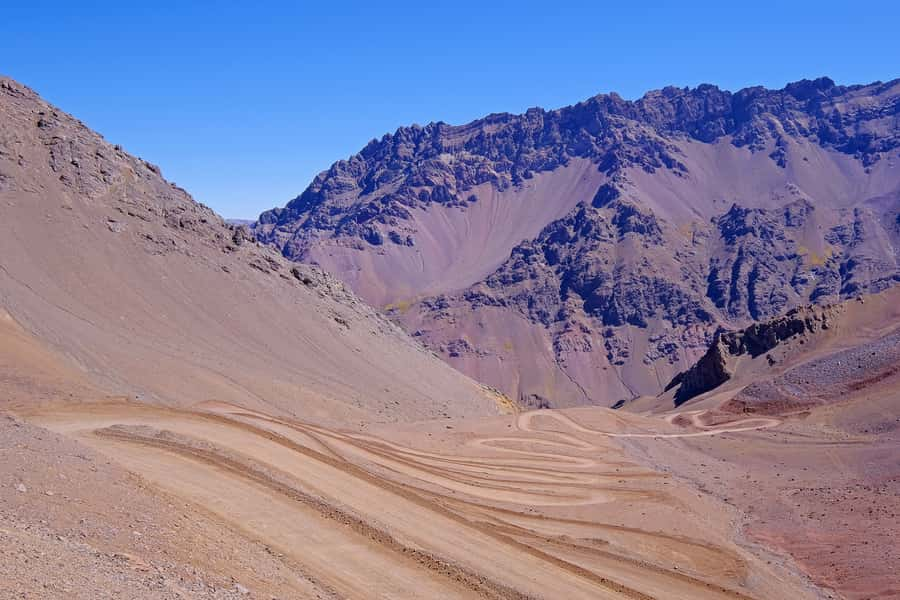
The ride begins in the high Andes on asphalt. At first, the main challenge is getting used to the altitude and the bike. You will likely feel the cold, thin air more than the physical effort because much of the route is downhill.
The road twists among high peaks and open slopes. This is a good time to settle into the group and learn how the guides communicate. They explain the road ahead, point out hazards, and set the pace for each section.
Stops break up the ride. You can take photographs, drink water, have one of the included snacks, and give your hands a rest. The guides use the pauses to check bikes and prepare you for the next section rather than simply racing everyone to the bottom.
That relaxed approach matters. Some operators appear to push groups through the route with fewer breaks. Gravity’s style is more measured. You can go quickly if you have the skill and confidence, but the day is not treated as a race.
More bike tours around the world:
- Lion City Bike Tour of Singapore
★ 5.0 · 6,211 reviews - Big Bike tour Amsterdam – See all in 3 unforgettable hours
★ 4.7 · 4,929 reviews - 3-Hour Porto Highlights on a Electric Bike Guided Tour
★ 5.0 · 4,392 reviews - Ninh Binh Full-Day Tour from Hanoi to Hoa Lu, Tam Coc & Mua Cave Via Boat & Bike
★ 5.0 · 4,384 reviews
Entering the famous dirt road
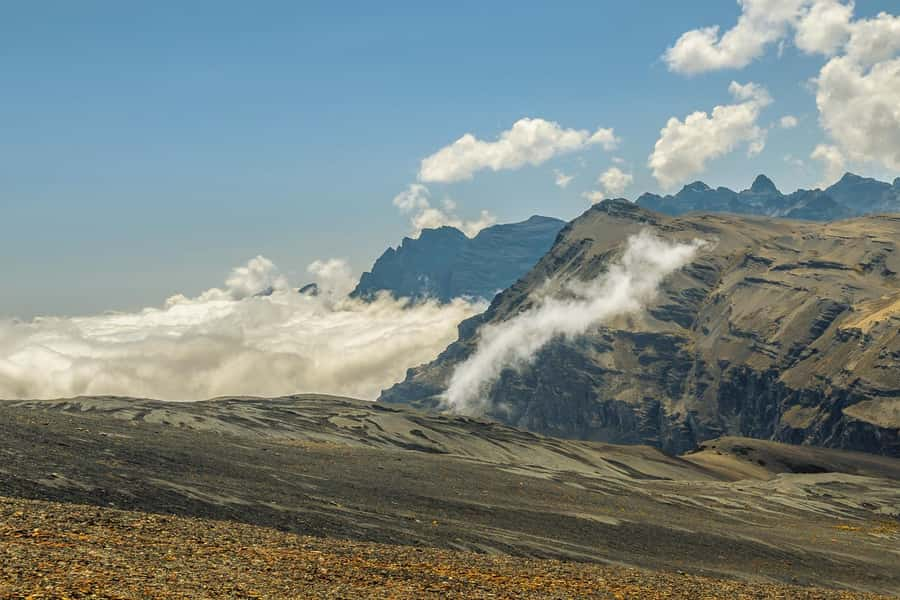
The roughest section is the reason most people book the trip. This narrow dirt road is cut into the mountainside and drops about 2,000 meters through the Yungas. It is dusty, uneven, and exposed, with steep drops beside the road.
You will encounter mist and low cloud in some sections. Later, the road becomes warmer and dustier as you lose altitude. The surface can feel more demanding than the opening asphalt, so listen carefully when the guides describe the next stretch.
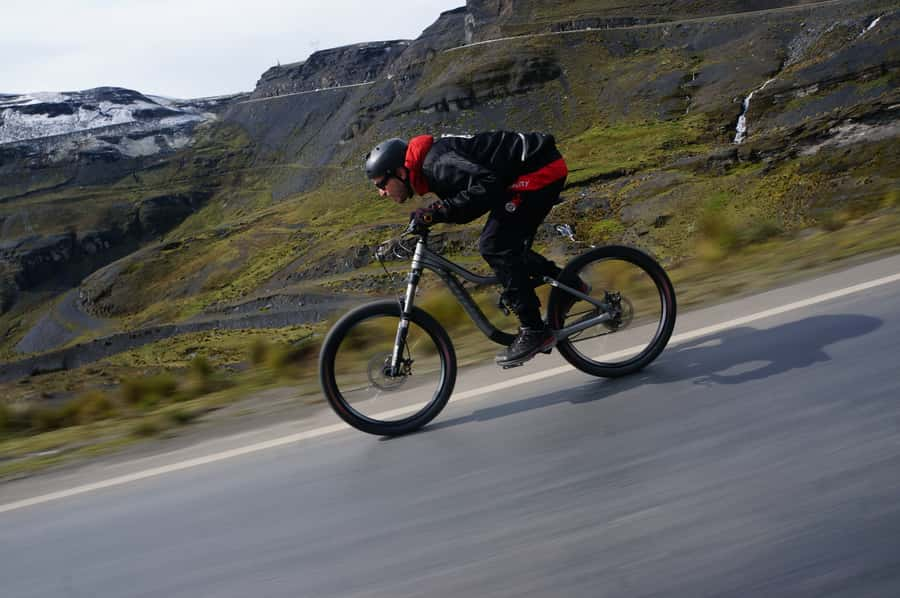
You do not need to attack every turn. In fact, you should not. The guides repeatedly encourage you to choose a speed that feels comfortable. Experienced riders can move faster, while less confident riders can slow down, stop at designated points, or use the support vehicle.
This is where the quality of the guiding matters most. Guides such as Damian, Kenny, Noel, and Ruben have received especially strong praise for clear instructions, humor, and close attention to riders who are nervous or new to mountain biking. You get encouragement without being pushed into showing off.
The road is still dangerous. Its nickname is not just marketing. Stay focused, keep your hands ready on the brakes, and leave room between yourself and the rider ahead. The scenery can pull your eyes toward the cliffs and mountains, but the road deserves your full attention.
Photo stops, food, and a support vehicle
The day includes two snacks, unlimited water, and a box lunch. Breakfast comes at the start, while lunch is served later at La Senda Verde Animal Refuge.
The guides also take hundreds of photos during the ride and upload them for you to access afterward. This is valuable because taking your own camera out on rough ground is awkward and can distract you from riding. The photos also capture the group, the bikes, the road, and the changing scenery.
Expect regular stops rather than one long uninterrupted descent. You will pause to rest, hear instructions, look at the route ahead, and let the mechanic inspect the bikes. Some people will appreciate the breathing room. Strong riders who want a nonstop downhill challenge may find the pace slower than expected.
The safety vehicle carries supplies and gives you a way out if you need it. You can change clothes, collect water, or sit out a section. This is especially useful because the day moves from cold to hot, and many riders finish sweaty, dusty, and tired.
Ending at La Senda Verde Animal Refuge
You finish near Yolosa, about 3,500 meters below your starting point. After the last section, the experience shifts from adventure ride to animal refuge visit.
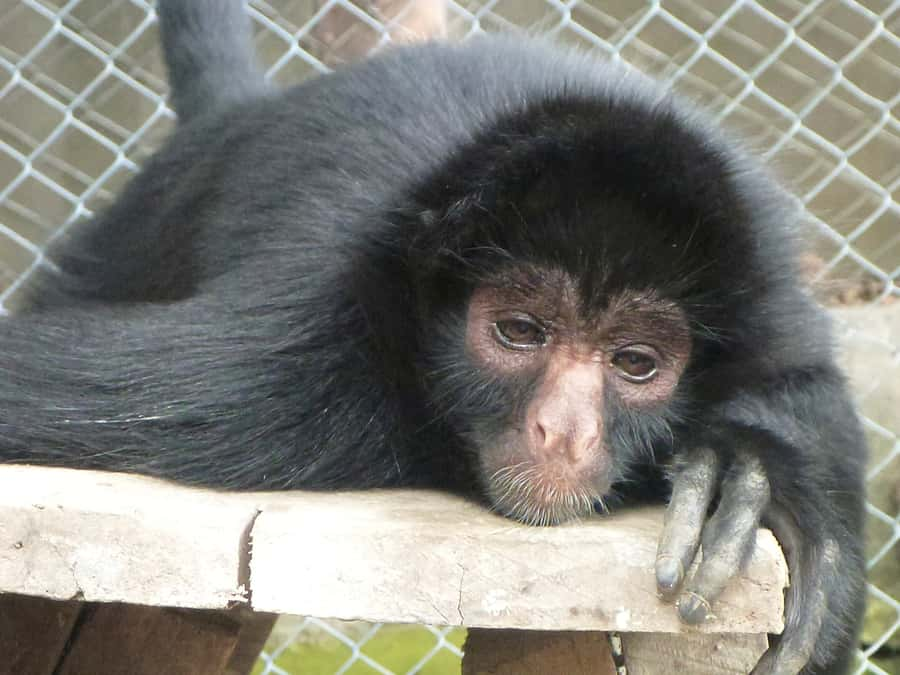
La Senda Verde provides the day’s buffet lunch. The refuge is home to animals rescued from the black market, including monkeys, an Andean spectacled bear, capybaras, and many birds. Your entrance fee helps support the refuge’s rescue work.
This finish gives the trip more substance than a meal at an ordinary restaurant. You can clean up, eat, and see animals that are being cared for after illegal trade or captivity. Several riders have also enjoyed the chance to have a beer and visit the refuge after the ride.
Hot showers, shampoo, and towels have been available at the refuge, a welcome detail after the dusty final section. Bring a change of clothes and hiking shoes in your daypack. You will be much happier at lunch in dry clothes than in damp riding gear.
There is also an optional extended visit available for an additional cost, according to the experience details. If you care about the refuge and have enough time, this may be worth considering. The regular visit already gives the day a satisfying finish.
The long return to La Paz
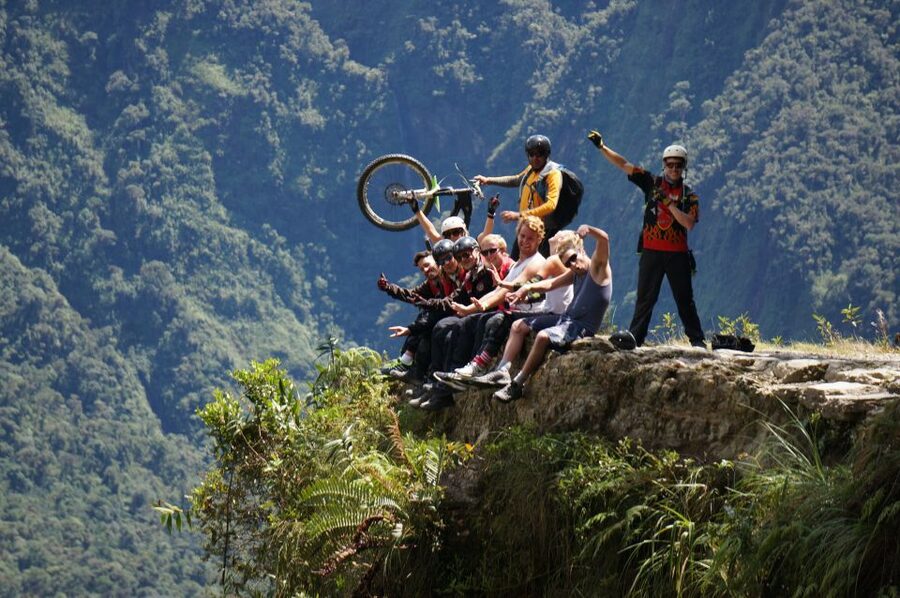
Do not judge the day only by the time spent riding. The return journey can take several hours, and some riders have arrived back in La Paz around 8:30 p.m.
That late return is the main practical drawback. Lunch and the refuge visit are worthwhile, but you should not schedule an evening flight, bus, or fixed dinner reservation afterward. If you have an early start the next morning, the combination of altitude, exertion, and a late transfer may leave you worn out.
On the other hand, the long return is part of the full-day format. The trip starts high in the mountains, ends deep in the Yungas, and has to climb back to La Paz. Plan for a full day rather than a quick half-day activity.
Is $145 good value?
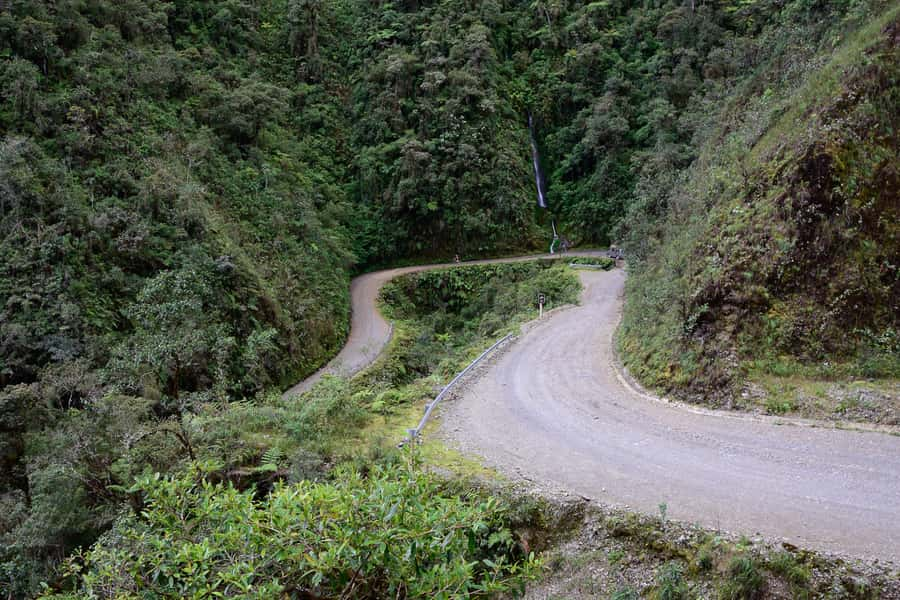
At $145 per person, this is one of the more expensive Death Road options. You also pay a 50-boliviano road tax, which is not included.
The price includes transport from La Paz, breakfast, lunch, snacks, water, protective gear, a full-suspension bike, a mechanic, guide support, private safety vehicle, entrance to La Senda Verde, and a large set of photos. It also includes warm and wet-weather clothing, gloves, a buff, and protective pads.
That is a lot of practical coverage. The real value comes from the bike condition, guide-to-rider attention, mechanic, and support vehicle. On a steep mountain road, those are not decorative extras.
You can find cheaper Death Road rides. The question is what you are giving up. A lower price may mean older bikes, less protective gear, fewer staff, or less flexibility if you struggle. I would pay more for a service that checks brakes and tires, follows the group with a vehicle, and lets you stop without embarrassment.
The price is harder to justify if you are already a highly experienced downhill rider and mainly want the lowest possible cost. For most visitors, though, the equipment and safety structure make the premium reasonable.
Who should book this ride?
This trip suits adults who can ride a bicycle and want a serious adventure with professional support. You do not need extensive mountain-bike experience. The guides work with beginners, explain the road clearly, and allow you to use the support vehicle if the ride becomes too much.
You should feel comfortable with heights, rough roads, sudden changes in weather, and a long day outdoors. You must also accept that the road has real hazards. Confidence helps, but caution is more useful than bravado.
The ride is not suitable for pregnant people, wheelchair users, people with mobility impairments, people who cannot ride a bike, or children under 120 centimeters. Bring identification, warm clothes, sunglasses, sunscreen, insect repellent, cash, a change of clothes, hiking shoes, and a daypack.
I would also bring a calm attitude. The best day is not necessarily the fastest one. Let confident riders pass, use the breaks, and stay at a speed you can control.
Should you book Gravity Bolivia’s Death Road ride?
I would book it if you want the classic Death Road experience with a strong safety setup, good bikes, plenty of food, and a meaningful final stop. The combination of an experienced guide, mechanic, support vehicle, protective equipment, and small group is worth paying for on this route.
Book it with realistic expectations. You may be cold at the start, dusty and hot near the finish, and back in La Paz late. The road is thrilling but not a theme-park ride, and you need to pay attention throughout.
For a first Death Road trip, this is a well-supported choice. Guides such as Damian, Kenny, Noel, and Ruben have shown the friendly, careful style you want on a difficult route. If your budget allows $145 plus the road tax, the equipment, support, meals, photos, and animal refuge make this a strong value.
FAQ
Where does the Death Road bike tour meet?
Meet outside Café del Mundo in La Paz.
How long is the activity?
It is a full-day activity. Check availability for the exact starting time, and allow for a late return to La Paz. Some rides have arrived around 8:30 p.m.
How far do you ride?
The route covers about 64 kilometers of descent, dropping roughly 3,500 meters from La Cumbre to the Yungas.
What is included in the price?
The price includes transportation from La Paz, breakfast, lunch, snacks, unlimited water, a mountain bike, helmet, protective pads, gloves, cold and wet-weather clothing, guides, a mechanic, private safety vehicle, entrance to La Senda Verde Animal Refuge, a buff, and photos from the day.
Can I stop riding if I feel unsafe or tired?
Yes. The bus follows the group, and you can get on it at any point. The guide may also put you on the bus for your safety or the safety of the group.
Do I need mountain-bike experience?
You must know how to ride a bicycle, but extensive mountain-bike experience is not required. The guides provide instructions and help you ride at a comfortable pace.
What is not included?
A zipline is available to buy on the day, and the 50-boliviano road tax is not included.
New rides added around the world
- Prague: E-Scooter HUGO Bike Rental★ 4.8 · 11 reviews
- Prague Electric Scooter and eBike Grand Tour★ 5.0 · 15 reviews
- Prague E-Bike City Ride tour : 2hrs★ 4.5 · 36 reviews
- Prague: E-Bike or E-Scooter Tour with A Local Guide★ 4.8 · 154 reviews
- Prague: City Viewpoints Tour by Electric Fat Bike★ 5.0 · 43 reviews
- Prague City Bike guided tour★ 3.7 · 10 reviews
- Prague: Classic City Bike Tour★ 4.7 · 149 reviews
- Prague: 3–Hour Communism and World War 2 E-Bike Tour★ 4.9 · 56 reviews
Mountain Bike Tours, compared.
Downhill Cycling with Volcano, Rice Terraces and Meal
Read our review →
Best Haleakala Downhill Self-Guided Bike Tour with Maui Sunriders
Read our review →
Downhill Bike Tour with Rice Fields, Volcano and Meal
Read our review →
Chiang mai Hike & Downhill Bike Adventure –Suthep National Park
Read our review →
Guided Mountain Bike Tour of Mustang Trail in Red Rock Canyon
Read our review →Browse the lists this tour appears in