
Review · FLORENCE
Florence: Guided Bike Tour with Piazzale Michelangelo
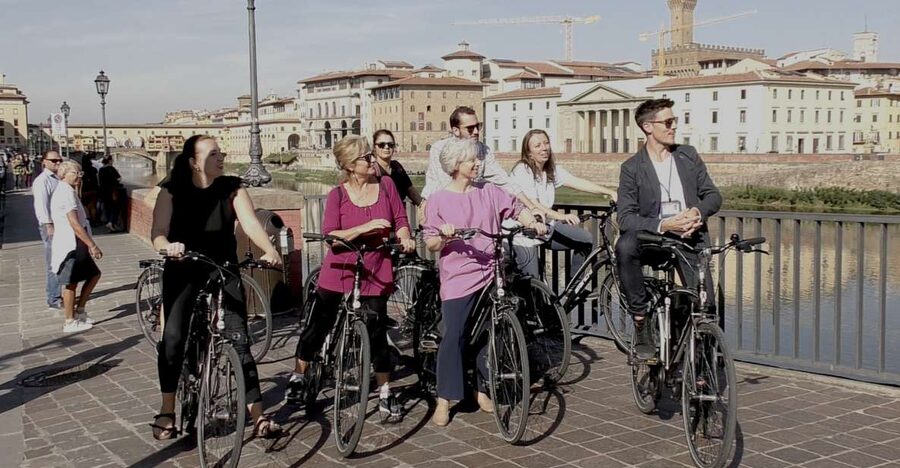
Florence is compact enough to walk, but a bike gets you farther and helps connect neighborhoods that feel separate on foot. This 2.5-hour ride links the Duomo, Ponte Vecchio, Santa Croce, Santo Spirito, and Piazzale Michelangelo without asking you to spend the whole day marching between sights.
I like the broad city overview and the stop at Piazzale Michelangelo, where Florence opens up below you. I also like the local food angle: your guide points out places for gelato, bistecca alla fiorentina, truffles, and the city’s curious wine windows. The main caution is pace. One recent booking described a guide who moved quickly and left slower riders behind, while another found the history excellent but had little room for questions. You need to be comfortable keeping up.
Key points before you book
- Piazzale Michelangelo is the payoff: You get one of Florence’s best views over the Arno, bridges, domes, and rooftops.
- The route covers a lot: The Duomo, Medici sights, Ponte Vecchio, Santa Croce, Palazzo Pitti, and several central piazzas fit into one outing.
- You get useful food advice: The guide points out places associated with gelato, bistecca alla fiorentina, truffles, and wine windows.
- A bike reaches more than your feet can: The route uses paths and streets that are too narrow for buses and farther apart than many first-time visitors expect.
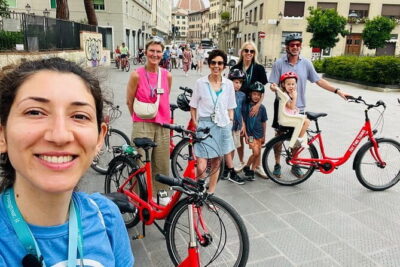
- The ride is led in English: A professional guide, headset, helmet, and regular bike are included.
- The pace may not suit everyone: Mobility limitations, poor cycling confidence, or a need for long stops can make this a frustrating choice.
Why a bike works well in Florence
Florence is often treated as a city of short walks between famous buildings. That is true in the center, but the city’s key sights are not all packed into one square. Santo Spirito and Palazzo Pitti sit across the river. Piazzale Michelangelo rises above the center. Santa Croce is east of the Duomo, while San Lorenzo and the Mercato Centrale lie to the north.
A bike helps you connect these places in one sweep. You will not simply pedal past everything, either. The guide stops at major points for short explanations, photographs, and city stories. The route is designed to give you orientation first, then leave you with a better sense of where to return on foot.
You should expect a sightseeing ride rather than a leisurely cycling excursion. The advertised duration is 2.5 hours, with the central sightseeing portion described as about two hours. Stop lengths vary, and one booking reported a tour shortened by roughly 45 minutes, so confirm the expected timing and bike type before setting your plans around the final minute.
More guided departures in Florence:
- Florence: Guided E-Bike Tour to Piazzale Michelangelo
★ 4.4 · 1,204 reviews - Florence: 2-Hour Guided Sightseeing Bike Tour
★ 4.5 · 1,004 reviews - Private Self-Guided E-Bike Ride in Tuscany with Vineyard Visit
★ 5.0 · 775 reviews
Starting at the Duomo and San Lorenzo
You meet at Florence Tours, Enjoy Biking, then collect your bike, helmet, and headset. The headset matters in a city where traffic, pedestrians, and stone streets can make it hard to hear a guide while riding.
The first major stop is the Duomo complex, officially the Cathedral of Santa Maria del Fiore and its surrounding buildings. Even without entering, the exterior gives you a fast introduction to Florence’s scale and ambition. The colorful marble, enormous dome, and crowded square make this a useful first landmark.
The route also covers the San Lorenzo district, with stops near Palazzo Medici Riccardi, the Cappelle Medicee, and the Mercato Centrale. This is where the story of Florence’s ruling Medici family connects with everyday food culture. You may not have time to visit the chapel interiors or shop inside the market, since entrance tickets and food are not part of the ride, but the guide can help you understand where these places fit into the city.
That distinction matters. This is not an interior tour of Florence’s museums and churches. You are seeing the outside, learning the context, and saving detailed visits for later.
Piazza della Repubblica and the heart of old Florence
From the Duomo area, the bike moves toward Piazza della Repubblica. The broad square marks the center of Roman and later urban Florence, and its open shape feels very different from the narrow streets nearby.
You stop here for photographs and a short explanation. It is a good place to get your bearings because several important streets lead away from it toward the Duomo, Palazzo Vecchio, and the river. If this is your first morning in Florence, note the streets and landmarks carefully. The guide’s city overview can save you time later.
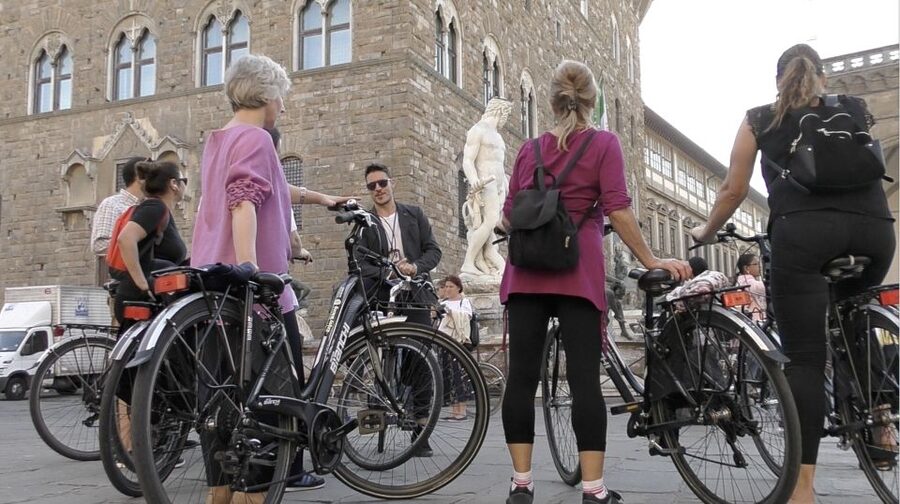
The ride then reaches Casa di Dante, associated with the poet Dante Alighieri, and Piazza della Signoria. Casa di Dante is presented as a photo and information stop rather than an included museum visit. Piazza della Signoria is more rewarding from the outside, with its open-air sculpture displays and Palazzo Vecchio anchoring the square.
You should expect short visits here, not a detailed art lecture. One useful piece of feedback about the guiding is that the historical background can be strong, while discussion of art and questions may receive less attention if the group is moving quickly. If you want a particular fact explained, ask early and clearly.
Crossing the Arno near Ponte Santa Trinita
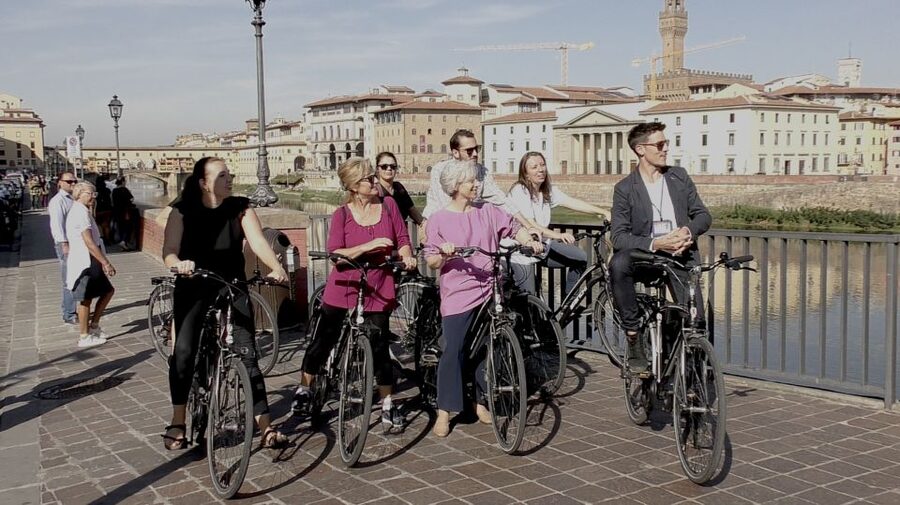
The route reaches Ponte Santa Trinita, one of the most attractive bridges for viewing the Arno and the more famous Ponte Vecchio nearby. The stop includes scenic views and time for photographs, with the river providing a welcome change from the tight streets of the historic center.
This is one of the places where a bike tour earns its keep. You can connect the central squares with the Oltrarno side of Florence without spending a large part of your afternoon walking back and forth. The route also gives you a better sense of how the Arno divides the city without truly separating it.
At this point, the guide may point out details that are easy to miss while walking, including Florence’s small wine windows. These openings in old buildings were used to sell wine directly, and they are one of the city’s more distinctive local features. The tour does not include a drink, but you will know what to look for later.
More bike tours around Florence:
- Tuscany Bike Tours Through the Chianti Hills with Wine Tasting
★ 5.0 · 1,300 reviews - Florence: 2-Hour Guided Bike Tour
★ 4.7 · 646 reviews - Florence Vintage Bike Tour–guided, small group or private option
★ 4.5 · 524 reviews - Florence: Guided Bike Tour in Small Group
★ 4.6 · 432 reviews
Santo Spirito, Palazzo Pitti, and the Oltrarno
Across the river, you enter the Oltrarno district and stop around Santo Spirito. This area is useful for seeing another side of Florence. The streets feel less focused on the Duomo and more connected to neighborhood life, workshops, squares, and local food.
The route also includes Palazzo Pitti. You will see the palace from outside and hear about its place in Florence’s story, but admission is not included. If you plan to visit the palace, the Boboli Gardens, or other paid sights afterward, leave enough time and buy separate tickets.
Santo Spirito is also a practical food stop in the broadest sense. Your guide can point out places for gelato, bistecca alla fiorentina, and truffles. Treat this as a short list of ideas, not a tasting tour. Food and drinks cost extra, and the tour does not promise reserved tables or samples.
The Oltrarno portion is especially useful if you have only one day in Florence. It introduces you to a district that many first-time visitors reach only after spending hours at the Duomo and Uffizi area.
Ponte Vecchio and the return toward the center
Ponte Vecchio is one of the route’s longer stops. The bridge is famous for its shops, river views, and close connection to Florence’s ruling families. From the bridge, you can look along the Arno and see how the city’s main sights cluster around the water.
It can be crowded here, and bicycles may not be practical on every section of the bridge. Follow the guide’s instructions and expect to pause or walk the bike if conditions require it. The attraction is the setting, not speed.
The ride’s sunset timing can make Ponte Vecchio especially pleasant, but the exact light depends on the start time and season. Check availability rather than assuming every departure reaches the bridge at sunset.
The climb to Piazzale Michelangelo
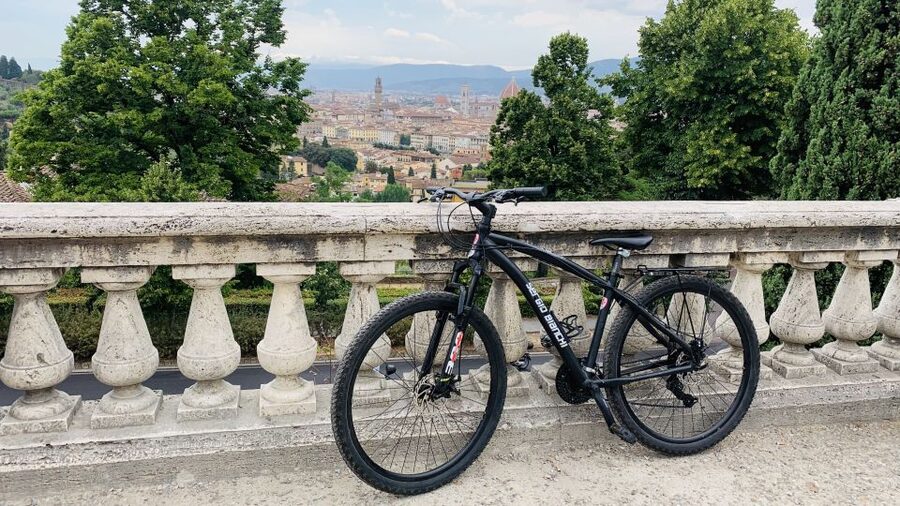
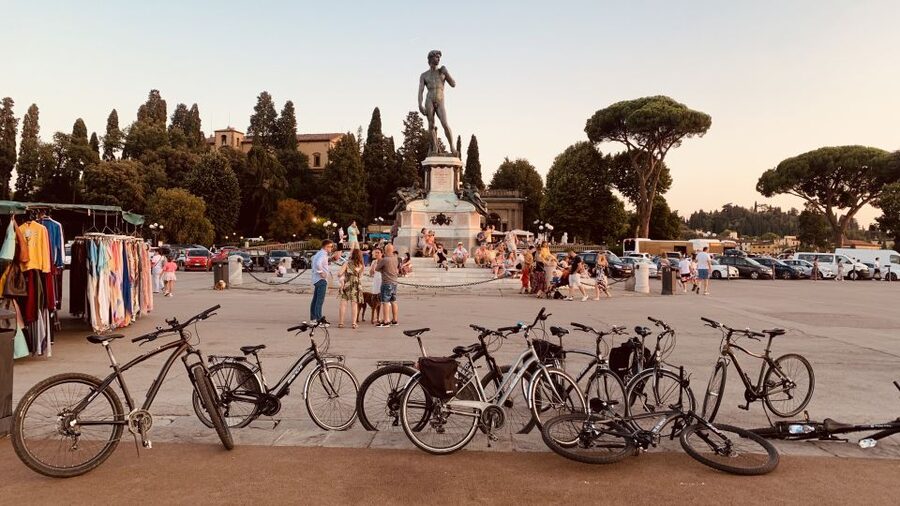
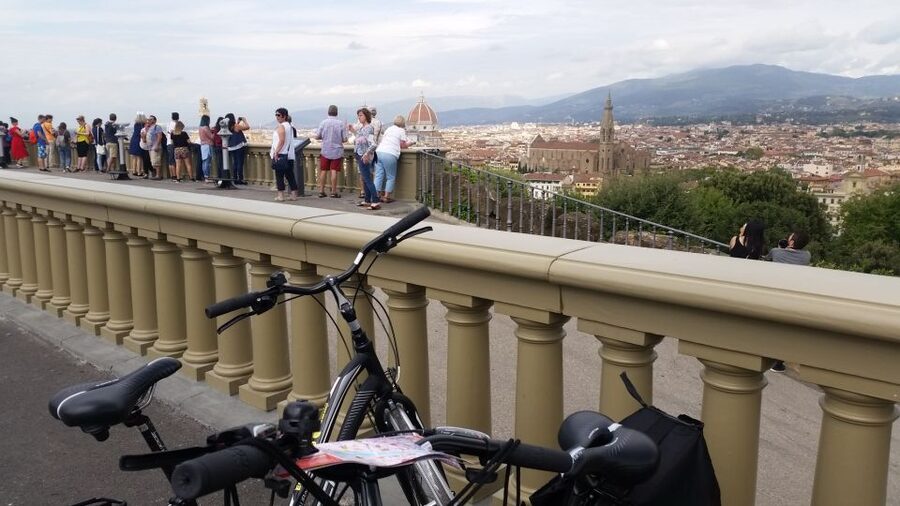
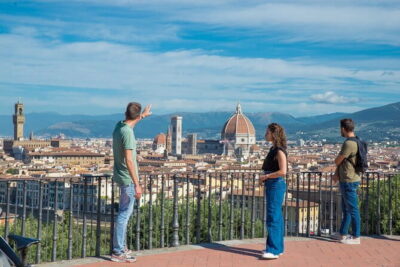
The big physical and visual moment is Piazzale Michelangelo. The square sits above Florence and gives you the broad view that is difficult to find from street level. You can see the Duomo, Palazzo Vecchio, the Arno, and the city’s terracotta rooftops spread below.
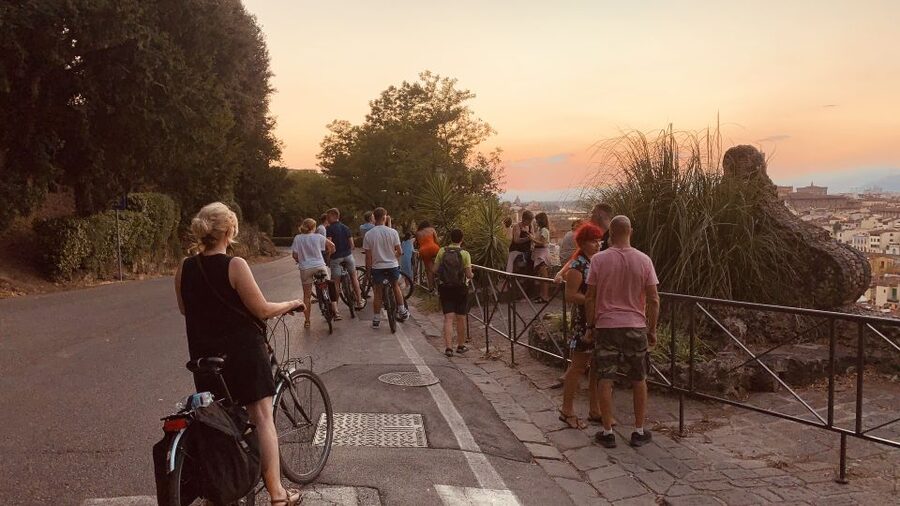
The stop lasts about 20 minutes in the planned route. That is enough for photographs and a quick look, but it is not a long rest break. The climb is also the part most likely to test your cycling comfort, even if the tour uses regular bikes or, in some cases, electric bikes.
This is why I would not book the ride simply because the price looks reasonable. You need to be able to pedal uphill and stay with the group. The activity is specifically not suitable for people with mobility impairments. If you are an inexperienced cyclist, ask the operator whether an electric bike is available and whether it changes the price or tour length.
The view is worth the effort, especially if you are trying to see Florence efficiently. You get a visual map of the city that makes the later walking much easier. After the stop, the guide leads the group back toward the center.
Santa Croce and the final monuments
The route continues to the Basilica of Santa Croce, where you stop for photographs and an explanation. The basilica is one of Florence’s major church complexes, known for its connection with famous Italian figures and its important art. This activity does not include entry, so plan a separate visit if you want to see the interior.
From Santa Croce, the group returns toward Piazza della Signoria and the cathedral area. These final stops help tie the route together. You see the city’s political center at Piazza della Signoria, revisit the Duomo district, and finish back at the bike agency.
The itinerary includes many landmarks, but do not expect every stop to receive equal time. A 2.5-hour ride cannot provide a museum-level explanation of each building. Its value is in the connections: you understand how the districts, river, bridges, palaces, churches, markets, and viewpoints relate to one another.
What the guide adds, and where the pace matters
The guide is the main reason to choose this over renting a bike on your own. You receive history, local food suggestions, stories about the city, and an explanation of sights that may otherwise blur together. The strongest part of the guiding appears to be the historical overview.
The tradeoff is the group pace. A guide focused on reaching each point can leave slower riders working hard to catch up. This is particularly important if your group includes mixed cycling abilities. Stay near the front, keep your headset on, and tell the guide early if you need a slower pace.
The supplied experience information does not name an individual guide, so you should not book expecting a particular person. The tour is conducted in English by a live guide, and guide quality can affect how much time you get for questions.
The headsets should help you follow the explanation while riding, but they cannot solve every problem in a busy street. Listen for instructions, watch the riders ahead, and treat the ride as active sightseeing rather than a relaxed park cycle.
Is $53 a fair price?
At $53 per person, the price is reasonable if you value coverage and orientation. You receive the bike, helmet, headset, and professional guide, and you see a large part of Florence in one outing. You also avoid paying for multiple taxis or spending several hours walking between the central sights and Piazzale Michelangelo.
The price is less attractive if you want long visits inside monuments. Entrance tickets, food, and drinks are extra, and the ride is mainly an exterior sightseeing experience. You are paying for the route, the guide’s commentary, the equipment, and the time saved.
I would compare it with the cost of renting a bike separately, but remember that a rental does not provide the same historical context or food advice. On the other hand, independent cyclists can stop whenever they like and set their own pace.
Free cancellation is available up to 24 hours before departure, and you can reserve now and pay later. The ride operates rain or shine, so check the forecast and dress for changing conditions. A wet ride can make the streets less comfortable, especially around bridges and uphill sections.
Who should book this Florence bike tour?
I would choose this tour if you have limited time, want a city overview, and feel comfortable cycling in an urban setting. It suits first-time visitors who want to see both sides of the Arno and get to the hilltop view without planning the route themselves.
It is also useful early in a Florence stay. Afterward, you can return to the Duomo, Santa Croce, Mercato Centrale, Palazzo Pitti, or a favorite food stop with a clearer idea of where everything sits.
I would think twice if you need a slow pace, frequent rest stops, or detailed art discussions. The tour is not suitable for people with mobility impairments, and the uphill ride to Piazzale Michelangelo requires a reasonable level of comfort on a bike.
Should you book it?
Book this ride if your priority is seeing a lot of Florence in one sweep, with a guide handling the route and giving you a practical history lesson. The Piazzale Michelangelo view, the Oltrarno crossing, and the food pointers add more than a simple checklist of central monuments.
Skip it if you want a gentle ride, extensive time inside museums, or complete control over every stop. Before paying, confirm whether your departure uses a regular bike or an electric bike, how long the ride is expected to last, and how the guide handles riders with different speeds. If those points work for you, $53 buys a useful first look at Florence.
FAQ
How long does the Florence bike tour last?
The advertised duration is 2.5 hours. The sightseeing portion is also described as about two hours, and the exact length may vary.
What language is the tour conducted in?
The live tour guide conducts the experience in English.
Is Piazzale Michelangelo included?
Yes. The route includes a stop at Piazzale Michelangelo for photographs, sightseeing, and views over Florence.
Are bike equipment and helmets included?
Yes. A regular bike, helmet, and headset are included, along with the guided tour and professional guide.
Are entrance tickets or food included?
No. Entrance tickets, food, and drinks are not included.
What happens if it rains?
The tour operates rain or shine. You can cancel up to 24 hours before departure for a full refund, according to the stated policy.
New rides added around Florence
- From Florence: Tuscan Hills Biking with Farm Tour and Lunch★ 4.9 · 32 reviews
- Tuscany Hills Bike Tour with Lunch at farm and Wine Tasting★ 4.9 · 18 reviews
- Florence: Untold Small Group Bike Tour★ 4.8 · 80 reviews
- Florence Medici Bike Tour – Cycle Through History and Power★ 4.2 · 23 reviews
- Florence Premium E-Bike Tour + Photo Shoot and Tastings★ 5.0 · 34 reviews
- Florence: Night Tour by Electric Bike★ 4.9 · 111 reviews
- Florence: Guided Tour by E-Bike with Gelato & optional Lunch★ 4.9 · 10 reviews
- Florence: Guided Electric Bike Tour with Gelato★ 4.9 · 76 reviews
Florence Bike Tours, compared.
Tuscany Bike Tours Through the Chianti Hills with Wine Tasting
Read our review →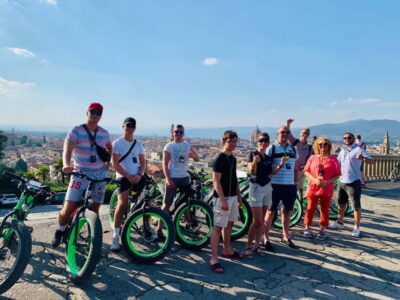
Private Self-Guided E-Bike Ride in Tuscany with Vineyard Visit
Read our review →
Florence Vintage Bike Tour–guided, small group or private option
Read our review →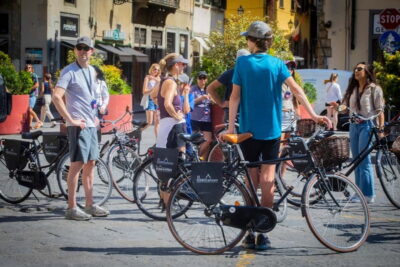
Browse the lists this tour appears in